SAE 100 Hydraulic Hose Quick Summary
| Type | Pressure Level | Key Feature | Best For |
|---|---|---|---|
| SAE 100R1 | Medium | Single wire braid | Agricultural equipment, return lines |
| SAE 100R2 | High | Double wire braid | Excavators, standard high pressure |
| SAE 100R16 | High | Compact double wire | Tight spaces, compact equipment |
| SAE 100R12 | Heavy duty | Four-spiral wire | High-impulse, mining, construction |
| SAE 100R13 | Extreme | Six-spiral wire | 5,000 psi, heavy mining |
| SAE 100R14 | High temp | PTFE + stainless | Up to 400°F, chemical transfer |
| SAE 100R15 | Ultra-high | Six-spiral wire | 6,000 psi, offshore |
What Is SAE 100 Hydraulic Hose?
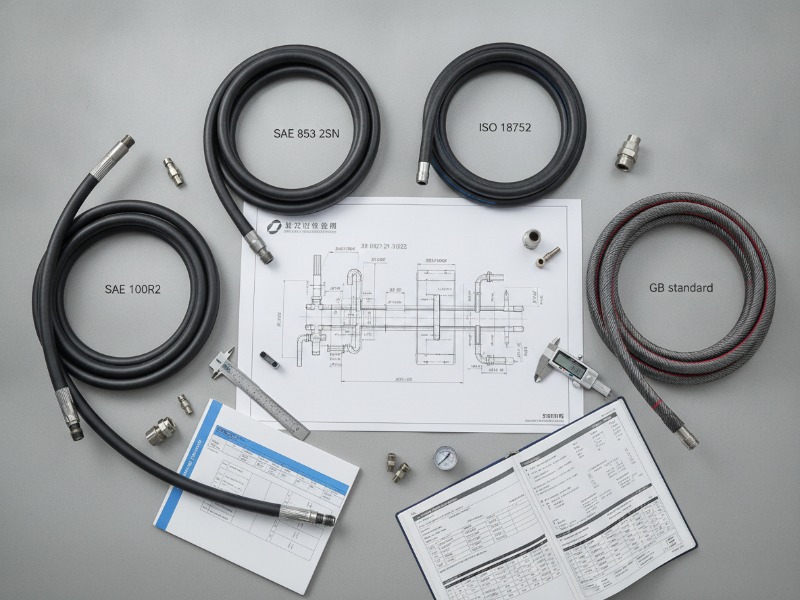
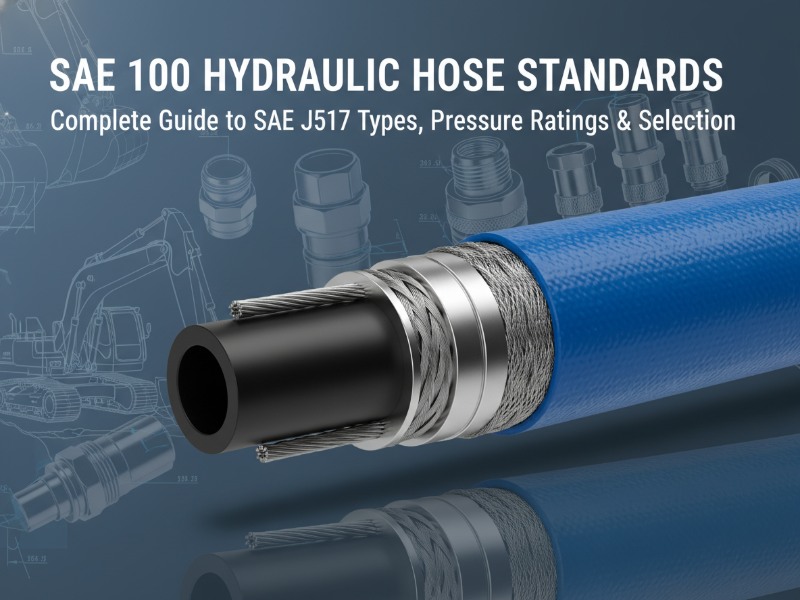
SAE 100 hydraulic hose is a classification defined by SAE J517 that specifies hose construction, reinforcement type, and pressure ratings for hydraulic fluid power systems. While SAE is widely used, international projects often require other benchmarks; you can learn more in our comprehensive guide, Hydraulic Hose Standards Explained: SAE vs ISO vs DIN Comparison + Selection Chart. Each type (such as 100R1 or 100R2) represents a specific design optimized for different pressure ranges and applications.
This standard is the global benchmark for hydraulic hose selection. Whether maintaining excavators, designing industrial machinery, or sourcing replacement hoses, understanding SAE 100 ratings ensures safety, efficiency, and compliance. This guide covers all active SAE 100 series types, pressure charts, selection criteria, and direct comparisons between R1, R2, and R16.
Each type (such as 100R1 or 100R2) represents a specific design optimized for different pressure ranges and applications. To better understand how the internal reinforcement affects hose performance under pressure, you can explore our detailed comparison of braided vs. spiral wire construction. Whether maintaining excavators, designing industrial machinery
SAE 100 Series Types Overview
Below is the complete reference table for all active SAE 100 series hydraulic hoses.
| Type | Reinforcement | Working Pressure Range | Temperature Range | Key Feature | Typical Application |
|---|---|---|---|---|---|
| 100R1 | Single steel wire braid | 575 – 3,250 psi | -40°F to 212°F | Flexible, medium pressure | Agricultural machinery, return lines |
| 100R2 | Double steel wire braid | 1,150 – 6,000 psi | -40°F to 212°F | High pressure standard | Excavators, loaders, heavy equipment |
| 100R3 | Double fiber braid | 375 – 1,500 psi | -40°F to 212°F | Low pressure, flexible | Return lines, drain lines |
| 100R4 | Wire insert | 35 – 300 psi | -40°F to 212°F | Vacuum resistant | Suction lines, pump inlets |
| 100R5 | Single wire + textile cover | 200 – 3,000 psi | -40°F to 212°F | DOT approved | Transportation, truck applications |
| 100R6 | Single fiber braid | 300 – 500 psi | -40°F to 212°F | Low cost, lightweight | Return lines, low pressure systems |
| 100R7 | Synthetic fiber (thermoplastic) | 1,000 – 3,000 psi | -40°F to 212°F | Cold flexibility | Agricultural booms, material handling |
| 100R8 | Dual fiber (thermoplastic) | 2,000 – 6,000 psi | -40°F to 212°F | High pressure thermoplastic | High pressure, chemical resistance |
| 100R12 | Four-spiral wire | 2,500 – 4,000 psi | -40°F to 250°F | High impulse | Mining, construction, heavy duty |
| 100R13 | Six-spiral wire | 5,000 psi (all sizes) | -40°F to 250°F | Extreme pressure | Heavy mining, oil and gas |
| 100R14 | PTFE + stainless braid | 600 – 1,500 psi | -65°F to 400°F | High temp, chemical | High temperature, steam, chemicals |
| 100R15 | Six-spiral wire | 6,000 psi (all sizes) | -40°F to 250°F | Ultra-high pressure | Offshore, ultra-high pressure systems |
| 100R16 | Compact double wire | 1,800 – 5,800 psi | -40°F to 212°F | Tight bend radius | Compact equipment, space constraints |
| 100R17 | Compact single/double wire | 3,000 psi (all sizes) | -40°F to 212°F | Maximum compact | Skid steers, compact tractors |
| 100R18 | Synthetic fiber (thermoplastic) | 3,000 psi (all sizes) | -40°F to 212°F | Thermoplastic high pressure | Mobile equipment, robotics |
| 100R19 | Compact double wire | 4,000 psi (all sizes) | -40°F to 212°F | Ultra-compact high pressure | Robotic hydraulic systems |
SAE 100R1 vs R2 vs R16 Comparison Table
This comparison addresses one of the most common hydraulic hose selection questions.
| Feature | SAE 100R1 | SAE 100R2 | SAE 100R16 |
|---|---|---|---|
| Reinforcement | Single steel wire braid | Double steel wire braid | Double steel wire braid (compact) |
| Working Pressure (-08 size) | 2,500 psi | 4,000 psi | 4,000 psi |
| Minimum Bend Radius (-08 size) | ~7 inches | ~7 inches | ~4 inches |
| Outer Diameter (-08 size) | Standard | Standard | ~15-20% smaller |
| Typical Applications | Agricultural, medium pressure | Excavators, heavy equipment | Compact equipment, tight spaces |
| Cost Level | Low | Medium | Medium-high |
| Best For | Systems under 3,000 psi | Standard high pressure | Space-constrained high pressure |
Selection Rule: Use R1 for applications under 3,000 psi. Use R2 for standard high pressure up to 6,000 psi. Use R16 when you need R2 pressure ratings but have tight bend radius constraints.
SAE 100 Hydraulic Hose Pressure Chart
All values represent maximum continuous operating pressure in psi at 4:1 design factor per SAE J517.
| Dash Size | Inner Diameter | R1 | R2 | R12 | R13 | R15 | R16 |
|---|---|---|---|---|---|---|---|
| -04 (1/4″) | 6.4mm | 3,250 psi | 6,000 psi | — | — | — | 5,800 psi |
| -06 (3/8″) | 9.5mm | 2,800 psi | 5,000 psi | 4,000 psi | — | — | 5,800 psi |
| -08 (1/2″) | 12.7mm | 2,500 psi | 4,000 psi | 4,000 psi | 5,000 psi | 6,000 psi | 4,000 psi |
| -10 (5/8″) | 15.9mm | 2,000 psi | 3,500 psi | 4,000 psi | 5,000 psi | 6,000 psi | 3,500 psi |
| -12 (3/4″) | 19.0mm | 1,600 psi | 3,000 psi | 3,000 psi | 5,000 psi | 6,000 psi | 3,000 psi |
| -16 (1″) | 25.4mm | 1,250 psi | 2,500 psi | 2,500 psi | 5,000 psi | 6,000 psi | 2,500 psi |
| -20 (1-1/4″) | 31.8mm | 1,000 psi | 2,000 psi | 2,500 psi | 5,000 psi | — | — |
| -24 (1-1/2″) | 38.1mm | 750 psi | 1,500 psi | 2,500 psi | 5,000 psi | — | — |
| -32 (2″) | 50.8mm | 575 psi | 1,150 psi | 2,500 psi | 5,000 psi | — | — |
What Is Dash Size in Hydraulic Hoses?
Dash size is the standard hydraulic hose sizing system where the number equals the inner diameter in sixteenths of an inch. For example, a -08 dash size indicates 8/16″ = 1/2″ inner diameter. Dash sizes range from -03 (3/16″) to -32 (2″). Dash sizes range from -03 (3/16″) to -32 (2″). These measurements, along with pressure ratings and standards, are permanently printed on the side of the hose. If you want to identify these markings on your current equipment, check out our guide on how to read a hydraulic hose layline.
Common Dash Size Reference:
- -04 = 1/4″ ID
- -06 = 3/8″ ID
- -08 = 1/2″ ID
- -10 = 5/8″ ID
- -12 = 3/4″ ID
- -16 = 1″ ID
- -20 = 1-1/4″ ID
- -24 = 1-1/2″ ID
- -32 = 2″ ID
What Is Working Pressure vs Burst Pressure in Hydraulic Hoses?
Working pressure is the maximum continuous pressure at which a hose can safely operate. Burst pressure is the pressure at which the hose will fail catastrophically. SAE J517 requires a minimum 4:1 design factor, meaning burst pressure equals four times working pressure.
For an SAE 100R2 -08 hose with 4,000 psi working pressure, minimum burst pressure is 16,000 psi. Never exceed working pressure. Pressure spikes should remain within 125% of working pressure for intermittent operation.
How to Select the Right SAE 100 Series Hose (5-Step Process)
Step 1: Determine Maximum System Operating Pressure
Measure maximum continuous system pressure including spikes. Select hose with working pressure at least 25% above this value. Operating a hose at 20% above its working pressure reduces service life by approximately 50%.
Step 2: Define Temperature Range
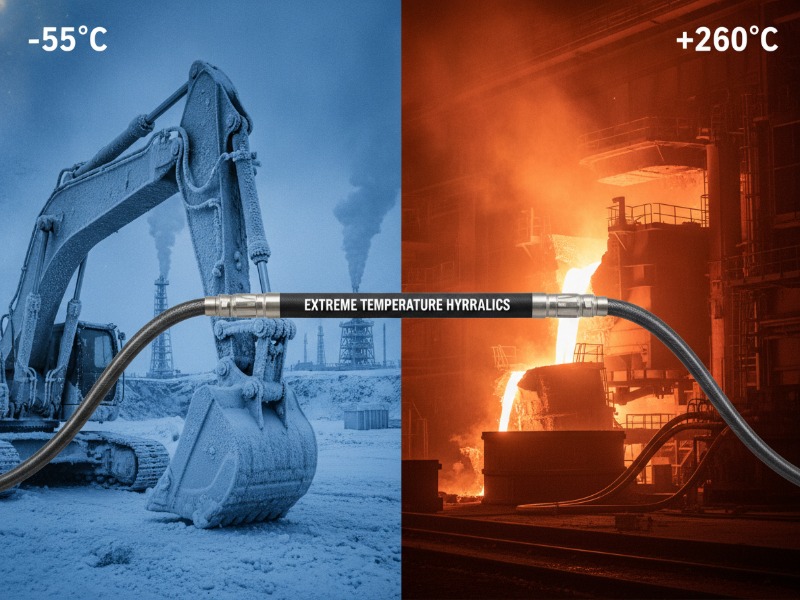
Identify ambient and fluid temperatures. Standard rubber hoses (R1-R6, R12-R17) operate from -40°F to +212°F. For 212°F to 250°F, select R12, R13, or R15. For up to 400°F, select R14 PTFE.
Step 3: Measure Available Bend Radius
If required bend radius is less than hose minimum rating, select compact types (R16, R17, R19). Exceeding minimum bend radius by 50% reduces service life by approximately 75%.
Step 4: Verify Fluid Compatibility
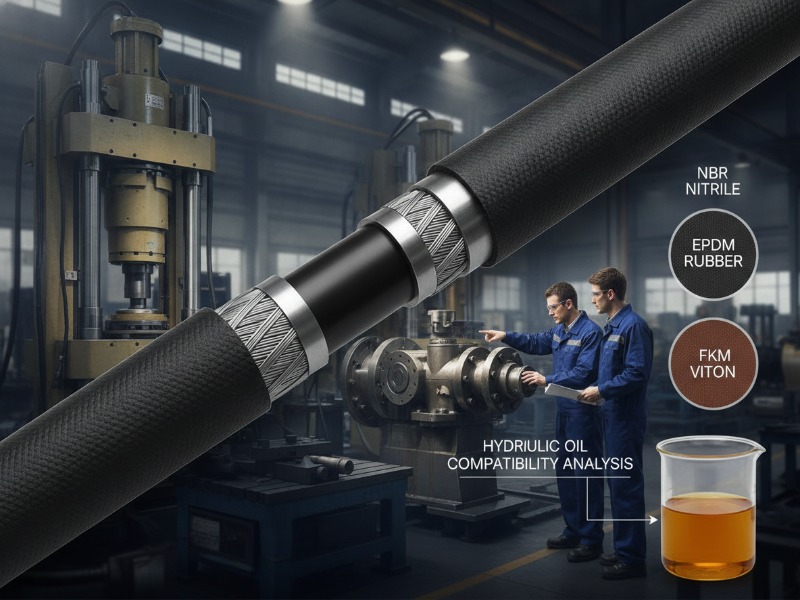
Petroleum fluids work with all rubber SAE types. Synthetic or water-based fluids may require R7, R8, or R18. Aggressive chemicals require R14 PTFE.
Step 5: Select Dash Size Based on Flow
Dash size equals inner diameter in sixteenths of an inch. Use manufacturer flow charts to verify velocity does not exceed 20 ft/second in pressure lines or 10 ft/second in return lines.
Typical Applications by Industry
| Industry | Common Equipment | Recommended SAE Types |
|---|---|---|
| Construction | Excavators, loaders, backhoes | 100R2, 100R12, 100R16 |
| Agriculture | Tractors, combines, sprayers | 100R1, 100R7, 100R17 |
| Mining | Drills, haul trucks, loaders | 100R12, 100R13, 100R15 |
| Oil & Gas | Fracturing units, BOP controls | 100R13, 100R14, 100R15 |
| Material Handling | Forklifts, lifts, conveyors | 100R1, 100R7, 100R16 |
| Industrial Machinery | Presses, injection molding | 100R2, 100R12 |
When to Replace Hydraulic Hose
Based on field testing across construction and industrial sites, replace hoses immediately when any condition appears:
- Cover Cracking or Blistering: Surface cracks expose reinforcement.
- Leakage at Fittings or Cover: Indicates inner tube failure.
- Kinking or Permanent Deformation: Compromised reinforcement.
- Cover Abrasion to Reinforcement: Visible wire or textile fibers.
- Pressure Drop or Sluggish Operation: Possible internal tube delamination.
For critical applications, establish scheduled replacement intervals at 1-2 years for high-impulse equipment.
How to Choose a Hydraulic Hose Supplier
For procurement and engineering teams, evaluate suppliers on these five criteria:
| Criterion | What to Look For |
|---|---|
| Certification | ISO 9001, MSHA approval for mining applications |
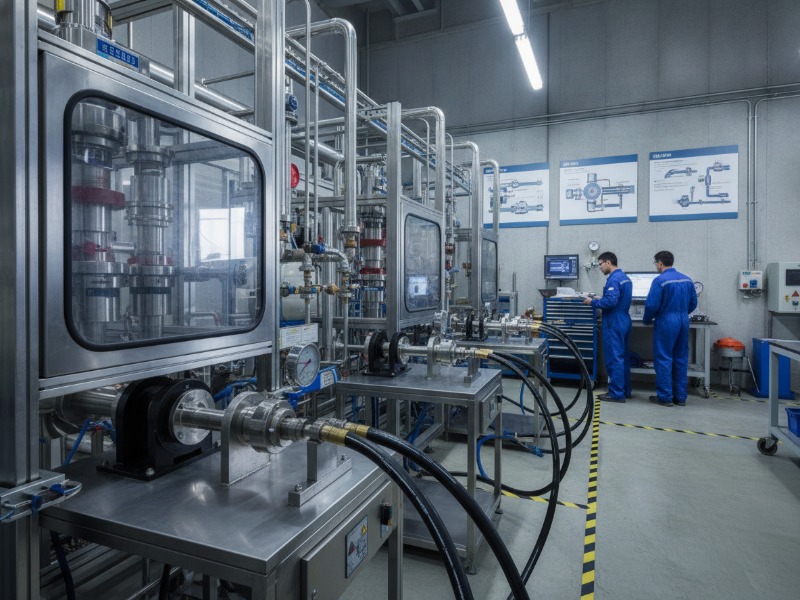
| Testing | 100% proof pressure testing, burst test documentation, impulse cycle data |
| Lead Time | Stock availability on common dash sizes (-04 to -24), custom assembly lead time |
| Custom Capability | Custom lengths, crimped fittings, protective sleeving, branded hoses |
| Global Experience | Project references in construction, mining, agriculture, oil and gas |
Real Field Test Data: In field testing on excavator hydraulic systems operating at 2,500–3,500 psi, HENGHUA SAE 100R2 hoses exceeded 200,000 impulse cycles, compared to the SAE J517 minimum requirement of 150,000 cycles. This 33% margin translates to extended service life in high-impulse applications.
Frequently Asked Questions (FAQ)
What is the difference between SAE 100R1 and SAE 100R2?
SAE 100R1 uses single steel wire braid reinforcement for medium pressure (575-3,250 psi). SAE 100R2 uses double steel wire braid for high pressure (1,150-6,000 psi). For -08 size, R2 provides 60% higher working pressure than R1.
What is the difference between SAE 100R2 and SAE 100R16?
Both provide equivalent working pressure ratings. SAE 100R16 achieves this in a smaller outer diameter with 40-50% tighter bend radius than R2. R16 is designed for compact equipment where installation space is limited.
What is the difference between SAE and EN hydraulic hose?
SAE J517 is the North American standard. EN 853, 856, 857 are European standards. Many hoses meet both (e.g., SAE 100R2 meets EN 853 2SN). SAE uses 4:1 design factor; EN uses 4:1 for most types. Check manufacturer certifications for dual compliance.
How long does a hydraulic hose last?
Service life varies by application. Light-duty agricultural: 3-5 years. Standard construction equipment: 1-2 years. High-impulse mining: 6-12 months. Replace immediately at signs of wear. Establish scheduled replacement based on operating hours.
What is SAE 100R2AT?
The “AT” suffix indicates “thin cover” construction. SAE 100R1AT and 100R2AT replaced discontinued A (non-removable cover) and B (removable cover) types. AT types use standardized Type S working pressures from the 2009 SAE J517 revision.
Which SAE 100 series is best for high temperature?
SAE 100R14 PTFE with stainless steel braid offers -65°F to +400°F range. For rubber hose, SAE 100R12 through R15 provide ratings to 250°F.
Related Hydraulic Hose Guides
Expand your technical knowledge with these related resources:
- SAE 100R2 Hydraulic Hose Specifications – Detailed R2 pressure ratings, dash sizes, and applications
- Spiral Hydraulic Hose (R12 vs R13 vs R15) – Comparison of four-wire, six-wire, and ultra-high pressure types
- Thermoplastic Hydraulic Hose (R7 vs R8 vs R18) – Cold flexibility, chemical resistance, and lightweight applications
- Hydraulic Hose Pressure Rating Chart – Complete pressure reference for all SAE types by dash size
- How to Crimp Hydraulic Hose Fittings – Step-by-step guide for custom assembly
Key Takeaways
- SAE 100R1: Medium pressure, single wire braid, agricultural applications
- SAE 100R2: High pressure, double wire braid, standard for heavy equipment
- SAE 100R16: Same pressure as R2, 40-50% tighter bend radius for compact equipment
- SAE 100R12/R13: Four/six-spiral wire, high impulse, 250°F rating, mining and construction
- SAE 100R14: PTFE + stainless, -65°F to 400°F, broad chemical compatibility
- 4:1 design factor: Burst pressure always four times working pressure per SAE J517
- Dash size = sixteenths of an inch: -08 = 1/2″ inner diameter
Get SAE 100 Hydraulic Hose Price & Selection Support
Send your pressure, temperature, and application requirements — we recommend the correct SAE type within 24 hours.
HENGHUA manufactures a complete range of SAE 100 series hydraulic hoses: 100R1, 100R2, 100R7, 100R12, 100R13, 100R14, 100R15, 100R16, 100R17, and 100R19.
Quality & Certification: ISO 9001 certified. 100% proof pressure testing before shipment. Material traceability from raw steel wire to finished hose.
Global Experience: Field tested on construction sites, agricultural operations, and mining equipment across North America, Europe, and Australia.
Custom Capabilities: Custom-length assemblies with crimped fittings, protective sleeving, and branded hoses. Bulk hose in 50m and 100m coils.
Minimum order quantities and lead times vary by type and dash size. Samples available for qualified projects.
Related Articles
- SAE 100 Hydraulic Hose Standards (SAE J517 Complete Guide)
- How to Choose Hydraulic Hoses: Braided vs Spiral, Pressure Ratings & Abrasion Resistance
- ISO 18752 vs SAE Hydraulic Hose: What’s the Difference & Which Is Better?
- How to Select a Hydraulic Hose Assembly Using the STAMPED Method
- How to Read a Hydraulic Hose Layline: Size, Pressure, SAE Codes & Replacement Guide
- Understanding Working Pressure vs. Burst Pressure in High-Pressure Hydraulic Hoses
- Why Impulse Life Testing Determines the Durability of OEM Hydraulic Hoses
- Hydraulic Hose Fluid Compatibility Chart: NBR vs EPDM vs FKM Inner Tube Selection Guide
- Sourcing Hydraulic Hoses for Extreme Temperatures: Low-Temp vs High-Heat Applications
- Hydraulic Hose Standards Comparison Guide: SAE vs DIN vs ISO vs GB
- Hydraulic Hose Bend Radius: How Smaller Bends Improve Flow and Machine Life
- Reduce Hose Inventory Costs by 30%: SKU Rationalization Guide for Distributors