
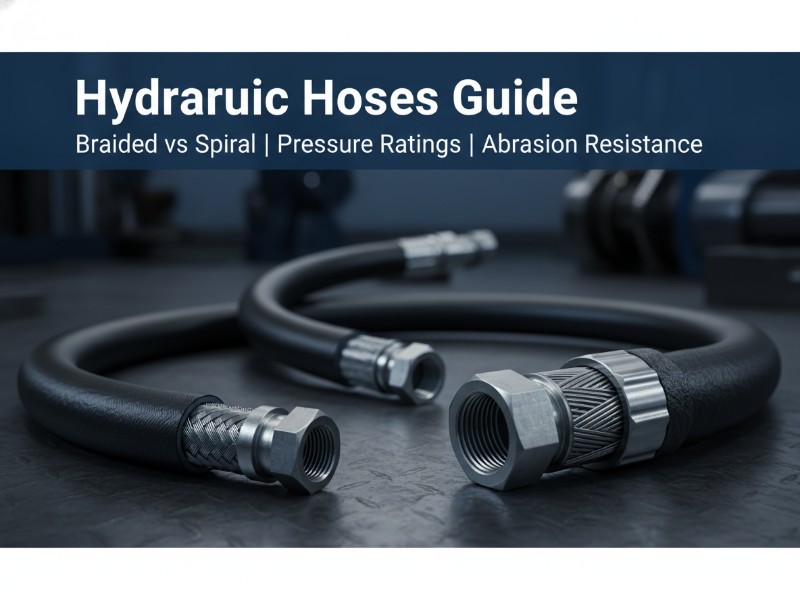
Hydraulic hose selection depends on three key factors: pressure rating, abrasion resistance, and reinforcement type (braided vs spiral hydraulic hose). Braided hydraulic hoses are ideal for flexible, medium-pressure systems (under 5,000 PSI), while spiral hydraulic hoses are designed for high-pressure, high-impulse applications such as excavators and mining equipment.
This guide covers SAE pressure ratings, ISO abrasion standards, installation best practices, and a direct comparison of braided vs spiral hydraulic hose difference. You will learn how to prevent hydraulic hose failure, select the correct assembly for excavator hydraulic hose replacement, and understand total cost of ownership.
This guide is based on field data from construction and mining hydraulic systems, combined with international standards such as SAE J517 and ISO 18752.
Why Abrasion Resistance Matters in Hydraulic Systems
Abrasion is the physical wearing away of the hose outer cover due to friction against machine components, debris, or rough surfaces. Once the rubber cover wears through, the steel wire reinforcement becomes exposed to moisture and corrosion, leading to catastrophic burst failure.
What the Data Shows
Field experience in hydraulic maintenance shows abrasion accounts for over 45% of hydraulic hose failures in heavy equipment. In excavators and material handlers, hoses routed near moving parts fail within 500 operating hours without proper protection.
How Abrasion Resistance Is Measured
Manufacturers use ISO 6945 to quantify durability. A tool steel blade rubs against the hose cover at 100 Hz until the reinforcement is exposed.
Abrasion Resistance Comparison:
| Cover Type | Minimum Abrasion Cycles | Best Application |
|---|---|---|
| Standard rubber | ~100,000 | General industrial |
| Nylon / Polyamide sleeve | 50,000+ (MSHA approved) | Mining, tunneling |
| High-abrasion compound | 450,000+ | Heavy construction, demolition |
Pro tip: For mining applications, always specify an abrasion resistant hydraulic hose cover or MSHA-approved nylon sleeves with a visual wear indicator (yellow inner layer showing through black outer).
Braided vs Spiral Hydraulic Hose: Core Differences
The distinction lies in how the steel wire reinforcement is arranged around the inner tube.
Braided hydraulic hose: Steel wires woven in a crisscross (over-under) pattern. This creates a tight, flexible mesh that bends easily but has lower impulse tolerance.
Spiral hydraulic hose: Steel wires wound helically in opposing angles, typically 4 or 6 layers separated by rubber. This parallel arrangement distributes high pressure evenly.
Braided vs Spiral Hydraulic Hose Summary
| Feature | Braided Hose | Spiral Hose |
|---|---|---|
| Flexibility | More flexible, tighter bend radius | Less flexible, larger bend radius |
| Cost | Lower cost | Higher cost |
| Pressure range | Best for under 5,000 PSI | Best for over 5,000 PSI |
| Impulse resistance | Standard | Superior, ideal for excavators and mining |
| Typical lifespan (abrasive conditions) | Standard | 2-4 times longer |
| Installation | Easier routing | Requires more space |
Why the Structure Affects Performance
In braided hoses, intersecting wires rub against each other under extreme impulse spikes, eventually causing wire fatigue. In spiral hoses, the rubber adhesion layers between wire bundles prevent metal-to-metal contact, enabling over 1 million impulse cycles at maximum pressure.
Pressure Ratings and SAE Standards
Selecting the wrong reinforcement type is a safety hazard. Always match the hose standard to your system’s maximum operating pressure and impulse severity.
Pressure Ratings and SAE Standards Quick Reference:
- SAE 100R1: 1-wire braided hose, up to 3,000 PSI, used for low-pressure return lines
- SAE 100R2: 2-wire braided hose, up to 6,000 PSI, suitable for agriculture and light construction
- SAE 100R12: 4-spiral hose, up to 6,000 PSI, designed for high-impulse heavy equipment
- SAE 100R13: multi-spiral hose, 7,500+ PSI, used in mining and extreme-duty systems
- ISO 18752: compact constant-pressure hose, 6,000+ PSI, ideal for tight routing
If you’re unsure whether to specify an SAE or ISO-rated hose, read our detailed comparison of ISO 18752 vs SAE hydraulic hose standards to understand the differences in pressure classification, testing methods, and application selection.
What Is the Difference Between SAE 100R2 and SAE 100R12?
SAE 100R2 uses two braided layers, offering good flexibility and medium pressure handling. SAE 100R12 uses four spiral-wound layers, providing superior impulse life and burst resistance for high-cycle applications like excavator arm hydraulics.
For applications requiring a high pressure hydraulic hose 6000 psi rating, both SAE 100R2 (braided) and SAE 100R12 (spiral) technically meet the pressure requirement, but spiral offers significantly longer impulse life.
Understanding the differences between SAE hose families is only part of the selection process. Our Hydraulic Hose Standards Explained guide also compares ISO 18752 and DIN EN standards, helping you choose the correct specification for global OEM and replacement applications.
How to Choose the Right Hydraulic Hose for Your Equipment
Follow this step-by-step selection process:
- Determine maximum system pressure (include spike peaks, not just operating pressure)
- Measure required bend radius (tighter spaces demand braided or compact spiral). Choosing the correct bend radius is just as important as pressure rating. Learn how hydraulic hose bend radius affects flow, fatigue life, and installation before finalizing your hose selection.
- Assess abrasion environment (rub points, debris, vibration frequency)
- Select SAE/ISO standard (R2 for braided, R12/R13 for spiral)
- Choose cover protection (standard, nylon sleeve, or high-abrasion compound)
When Should You Use Spiral Hydraulic Hose?
Use spiral hoses when:
- Pressure exceeds 5,000 PSI
- The system has high impulse frequency (rapid pressurization cycles)
- Equipment operates in mining, demolition, or heavy earthmoving
- SAE 100R12 or R13 is specified by the OEM
- You need longer spiral hose vs braided hose lifespan advantage
When Should You Use Braided Hydraulic Hose?
Use braided hoses when:
- Working pressure is under 5,000 PSI
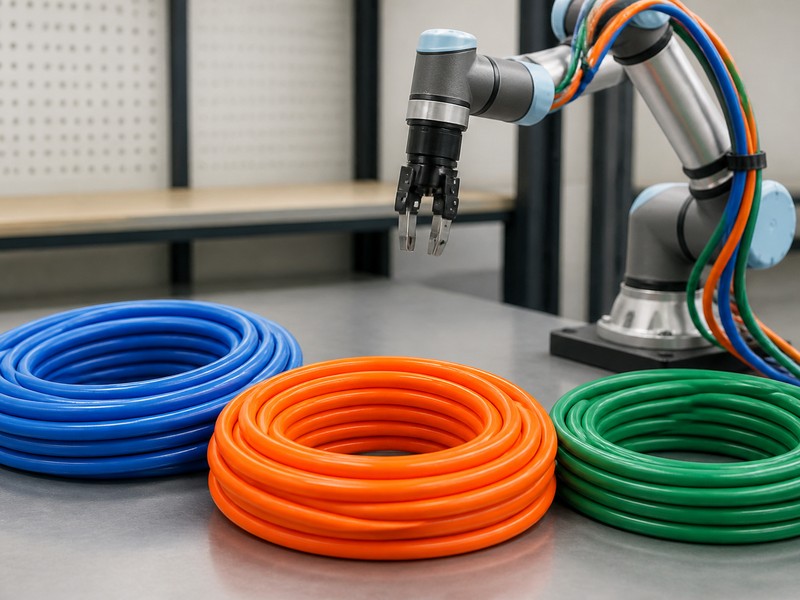
- Tight bend radii are required (engine compartments, robotic arms)
- Cost is a primary constraint
- SAE 100R1 or R2 meets OEM specifications
Installation Best Practices to Prevent Failure
Even a premium spiral hose fails with poor routing. Field experience in hydraulic maintenance shows three non-negotiable rules:
- Eliminate contact points – Hoses touching metal edges or other hoses will fail. Use clamps every 24 inches to secure assemblies.
- Respect bend radius at the fitting – Allow at least 2 inches of straight hose before any bend to prevent wire pull-out.
- Apply protective sleeves at abrasion zones – Nylon or polyamide sleeves add 50,000+ abrasion cycles.
How Long Do Hydraulic Hoses Typically Last?
Under normal industrial conditions, expect 2–5 years of service. However, in high-abrasion or high-impulse environments, lifespan drops to 6–12 months without protective covers or spiral reinforcement.
Frequently Asked Questions (FAQs)
What is the difference between SAE 100R1 and SAE 100R2?
SAE 100R1 has a single wire braid for lower-pressure applications (typically under 3,000 PSI). SAE 100R2 uses two braided layers for higher working pressure (up to 6,000 PSI) and better impulse resistance.
Can I use a braided hose instead of a spiral hose to save money?
Only if your system’s maximum pressure is below 5,000 PSI and impulse frequency is low. Substituting a braided hose in a spiral-rated system voids warranties and risks catastrophic burst.
What is ISO 18752 hydraulic hose?
ISO 18752 is a performance standard for constant-pressure hydraulic hoses with tight bend radii. It covers both braided and compact spiral constructions, offering flexibility similar to braided hoses with pressure ratings approaching spiral grades.
How do I know if my hydraulic hose needs abrasion protection?
Inspect for wear marks, exposed wire, or rubber dust around contact points. If any of these are present, install nylon sleeves or reroute immediately. An abrasion resistant hydraulic hose cover is recommended for all mining and construction applications.
What is the best hydraulic hose for excavators?
Excavator arm and bucket circuits typically require SAE 100R12 or ISO 18752 spiral hoses rated for 5,000+ PSI with MSHA-approved abrasion sleeves due to continuous rubbing against boom components. For excavator hydraulic hose replacement, always verify the original SAE rating.
Which hydraulic hose lasts longer, braided or spiral?
Spiral hydraulic hoses typically last longer in high-pressure and high-impulse environments due to reduced wire fatigue and better load distribution. In abrasive conditions, lifespan can be 2–4 times longer than standard braided hoses when properly protected.
Watch: Braided vs Spiral Hydraulic Hose Explained
*[Embed video here: Side-by-side demonstration showing flexibility difference, cutaway comparison, and abrasion test results. Video length: 3-5 minutes.]*
Need Help Selecting Hydraulic Hoses?
We help contractors, distributors, and OEM buyers select the right hydraulic hose based on pressure rating, application, and working environment.
Contact us for:
- OEM hydraulic hose assemblies (SAE 100R1 to R13)
- High-abrasion spiral hoses for mining and construction
- Spiral hydraulic hose for mining applications with MSHA-approved sleeves
- SAE 100R2 braided hydraulic hose for agriculture and light construction
- Hydraulic hose protection sleeve options (nylon, polyamide, high-abrasion compounds)
- Bulk pricing for international buyers
- Fast delivery and custom branding (private label available)
Related Articles
- SAE 100 Hydraulic Hose Standards (SAE J517 Complete Guide)
- How to Choose Hydraulic Hoses: Braided vs Spiral, Pressure Ratings & Abrasion Resistance
- ISO 18752 vs SAE Hydraulic Hose: What’s the Difference & Which Is Better?
- How to Select a Hydraulic Hose Assembly Using the STAMPED Method
- How to Read a Hydraulic Hose Layline: Size, Pressure, SAE Codes & Replacement Guide
- Understanding Working Pressure vs. Burst Pressure in High-Pressure Hydraulic Hoses
- Why Impulse Life Testing Determines the Durability of OEM Hydraulic Hoses
- Hydraulic Hose Fluid Compatibility Chart: NBR vs EPDM vs FKM Inner Tube Selection Guide
- Sourcing Hydraulic Hoses for Extreme Temperatures: Low-Temp vs High-Heat Applications
- Hydraulic Hose Standards Comparison Guide: SAE vs DIN vs ISO vs GB
- Hydraulic Hose Bend Radius: How Smaller Bends Improve Flow and Machine Life
- Reduce Hose Inventory Costs by 30%: SKU Rationalization Guide for Distributors

 English
  Spanish
  Portuguese
  French
  German