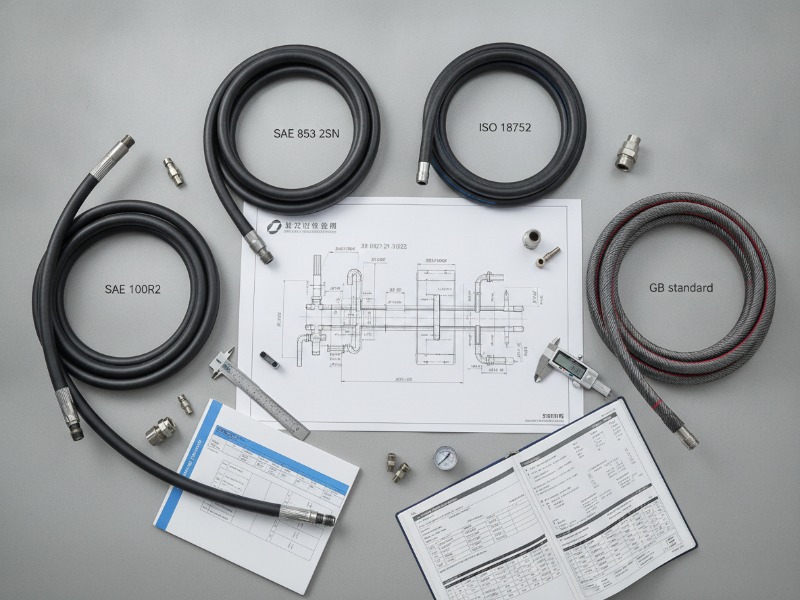
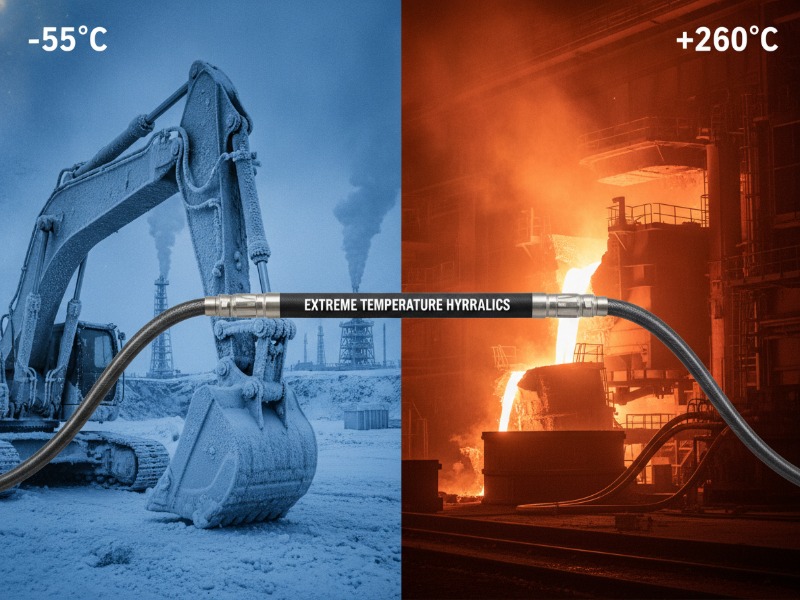
A low-temperature hydraulic hose is designed to remain flexible and crack-resistant below -40°C, while a high-heat hydraulic hose is engineered to resist thermal aging and pressure loss above +100°C. The correct choice depends on the lowest ambient temperature, maximum fluid temperature, pressure rating, and hose material compatibility.
Selecting the right hydraulic hose for extreme temperature applications directly impacts equipment reliability, safety, and total cost of ownership. This comprehensive guide covers temperature rating principles, material selection criteria, failure symptoms, application-specific requirements, quality verification methods, and procurement strategies to help you source the optimal hose for your environment.
Low-Temperature vs High-Heat Hydraulic Hoses: Quick Comparison
| Factor | Low-Temperature Hose | High-Heat Hose |
|---|---|---|
| Temperature Range | -55°C to +100°C | -40°C to +121°C or +260°C (PTFE) |
| Main Risk | Brittleness & Cracking | Thermal Aging & Adhesion Loss |
| Best Tube Material | NBR, CR | EPDM, PTFE |
| Common Industries | Arctic Mining, Oil & Gas, Cold Storage | Steel Mills, Foundries, Petrochemical |
| Flexibility | Excellent at Low Temperatures | Moderate |
| Reinforcement | Wire Braid (1SN/2SN) | Wire Spiral (4SP/4SH/R12/R13) |
| Cost | Medium | Medium to High |
Hydraulic Hose Temperature Rating Chart
| Hose Type | Min Temp | Max Temp | Typical Application |
|---|---|---|---|
| SAE 100R1 | -40°C | +100°C | General Industrial, Light-Duty Equipment |
| SAE 100R2 | -40°C | +100°C | Mobile Equipment, Medium-Pressure Systems |
| 4SP | -40°C | +100°C | Mining & Construction, Heavy Equipment |
| 4SH | -40°C | +100°C | Ultra-High Pressure, Heavy-Duty Mining |
| R12 | -40°C | +121°C | High-Heat Hydraulics, Moderate Pressure |
| R13 | -40°C | +121°C | High Pressure + High Heat, Steel Mills |
| PTFE Hose (Stainless Braid) | -55°C | +260°C | Petrochemical, Chemical Processing, Steam |
Extreme Temperature Hydraulic Hose Selection Summary
| Operating Condition | Recommended Hose | Key Consideration |
|---|---|---|
| Below -40°C | Low-Temperature Hose | Verify cold bend test at -55°C |
| Above +100°C | High-Heat Hose | Verify impulse test at 120°C |
| Below -40°C and Above +100°C | PTFE Hose | Broadest temperature range, highest cost |
| Standard Industrial Use | SAE 100R1 / 100R2 | Most cost-effective |
| High Pressure + High Heat | R13 Hose | 6-wire spiral for pressure and heat |
Hydraulic Hose Temperature Selection Flowchart
Start
│
├─ Is Ambient Temperature Below -30°C?
│ │
│ ├─ Yes → Go to Low-Temperature Hose Selection
│ │ - Choose CR/NBR compounds with cold plasticizers
│ │ - Verify cold bend test at -55°C
│ │ - Use wire braid or spiral based on pressure
│ │
│ └─ No
│
├─ Is Hydraulic Fluid Temperature Above 100°C?
│ │
│ ├─ Yes → Go to High-Heat Hose Selection
│ │ - Choose EPDM or PTFE tube material
│ │ - Use wire spiral reinforcement (R12/R13)
│ │ - Verify impulse test at elevated temperature
│ │
│ └─ No
│
├─ Are Both Low Ambient and High Fluid Temperatures Present?
│ │
│ ├─ Yes → Consider PTFE-Lined Hose
│ │ - Broadest temperature range (-55°C to +260°C)
│ │ - Excellent chemical resistance
│ │ - Higher initial cost, lower lifetime cost
│ │
│ └─ No → Standard Hydraulic Hose
│ - SAE 100R1/R2 for general applications
│ - Verify temperature range fits your conditions
Which Hydraulic Hose Is Best for Your Industry?
| Industry | Typical Temperature Range | Recommended Hose Type | Key Requirement |
|---|---|---|---|
| Arctic Mining | -55°C to +100°C | Low-Temp Spiral Hose (4SP/4SH) | Cold bend flexibility at -55°C, MSHA approval |
| Offshore Oil & Gas | -40°C to +121°C | R13 Spiral Hose | Heat resistance, impulse life, DNV certification |
| Steel Manufacturing | -40°C to +121°C | Heat-Resistant R12/R13 | Thermal aging resistance, high-pressure capability |
| Petrochemical Processing | Up to +260°C | PTFE Hose with Stainless Braid | Broad chemical resistance, extreme heat tolerance |
| Cold Storage Logistics | -55°C to +100°C | Low-Temp Braided Hose (1SN/2SN) | Flexibility at sub-zero temperatures |
| Aerospace Ground Equipment | -55°C to +121°C | Specialized Low-Temp Hose | Strict tolerances, SAE AS standards |
| Heavy Construction (Temperate) | -40°C to +100°C | SAE 100R2/R12 | General durability, cost-effectiveness |
| Mining (Underground) | -40°C to +120°C | 4SH with UHMWPE Cover | Fire resistance, abrasion protection |
1. Understanding Hydraulic Hose Temperature Ratings
What Do Temperature Ratings Actually Mean?
Hydraulic hose temperature ratings specify the minimum and maximum operating temperatures at which the hose can maintain its structural integrity and performance characteristics. These ratings are established through standardized testing procedures and are critical for ensuring safe, reliable operation.
The temperature rating is typically expressed as a continuous service range—the temperatures at which the hose can operate indefinitely without degradation. Intermittent service ratings may allow brief excursions beyond these limits, but sustained operation outside the specified range will significantly reduce service life.
Key Temperature-Related Terms
| Term | Definition | Importance |
|---|---|---|
| Continuous Service Temperature | Temperature range for uninterrupted operation | Primary rating to follow |
| Intermittent Service Temperature | Brief excursions (typically ≤10% of operating time) | Limited buffer for spikes |
| Ambient Temperature | Surrounding environmental temperature | Affects heat dissipation |
| Fluid Temperature | Actual temperature of hydraulic fluid | Typically 10-20°C above ambient |
| Minimum Bend Radius | Smallest radius hose can bend at rated temperature | Reduces at low temperatures |
ISO 18752 Temperature Classification
The ISO 18752 standard provides a globally recognized framework for hydraulic hose temperature classification. This classification system helps procurement professionals quickly identify hoses suited for their operating conditions. For a broader understanding of how ISO 18752 compares with SAE and DIN hydraulic hose specifications, see our guide on Hydraulic Hose Standards Explained: SAE vs ISO vs DIN Comparison + Selection Chart.
| Hose Type | Temperature Range (Oil-based Fluids) | Impulse Test Cycles | Application |
|---|---|---|---|
| Types AS, AC, BS, BC | -40°C to +100°C | 400,000+ | Standard industrial applications |
| Types CS, CC, DC | -40°C to +120°C | 500,000+ | Elevated temperature applications |
For a complete comparison of hydraulic hose standards, refer to our [hydraulic hose standards guide].
Our testing experience shows that hoses operating continuously at the upper limit of their temperature rating may experience accelerated aging of the rubber compounds and reduced impulse cycle life. We recommend selecting hoses with a temperature rating at least 15°C above your maximum system temperature to ensure adequate safety margin.
2. What Is a Low-Temperature Hydraulic Hose?
A low-temperature hydraulic hose is a hydraulic hose specifically engineered to remain flexible and maintain pressure integrity in environments below -40°C. These hoses typically use specialized NBR or CR compounds with low-temperature plasticizers and are tested to temperatures as low as -55°C.
What Defines a Low-Temperature Hydraulic Hose?
Low-temperature hydraulic hoses are specially formulated to maintain flexibility and pressure integrity in freezing and sub-freezing conditions. Standard hoses can become brittle and crack at temperatures below -40°C, leading to catastrophic failure.
True low-temperature hoses are engineered with:
- Specialized rubber compounds (NBR or CR formulations with low-temperature plasticizers) that remain elastic at low temperatures
- Modified reinforcement layers with reduced wire tension that maintain flexibility without compromising burst pressure
- Enhanced cover materials with cold-weather plasticizers resistant to cracking and abrasion
- Specialized fitting crimping designed for cold-weather assembly
Low-Temperature Hose Operating Environments
| Environment | Typical Low Temperature | Application Examples |
|---|---|---|
| Arctic Construction Sites | -50°C to -30°C | Excavators, bulldozers, graders |
| Winter Oil & Gas Exploration | -45°C to -35°C | Drilling rigs, pumping units, wellhead controls |
| Cold Storage/Warehousing | -40°C to -20°C | Forklifts, conveyor systems, dock levelers |
| Aerospace (High Altitude) | -55°C to -40°C | Ground support equipment, aircraft hydraulic systems |
| Marine (Polar Regions) | -45°C to -25°C | Shipboard hydraulics, winches, steering systems |
| Ski Area Operations | -35°C to -15°C | Snow groomers, chairlifts, snowmaking equipment |
Cold-Weather Performance Testing
Cold-weather performance testing we’ve conducted demonstrates that hoses designed specifically for low-temperature service maintain their bend radius specifications even at -55°C, whereas standard hoses may become stiff and prone to cracking at temperatures below -30°C.
| Specification | Standard Grade | Low-Temperature Grade |
|---|---|---|
| Minimum Temperature | -40°C | -55°C |
| Cold Bend Test | Pass at -40°C | Pass at -55°C |
| Low-Temp Flexibility | Moderate | Excellent |
| Impact Resistance | Standard | Enhanced |
| Fitting Retention | Good at -40°C | Excellent at -55°C |
Signs Your Hydraulic Hose Is Failing Due to Low Temperatures
- Hose becomes unusually stiff and difficult to route
- Visible cracking near fitting crimps
- Increased leakage at connection points
- Reduced flexibility in cold starts
- Premature failure at the fitting interface
Real-world experience from mining operations in northern Canada shows that standard hoses operating at -40°C had failure rates 4 times higher than low-temperature grades due to cracking at the fitting crimps—a critical failure point that can cause catastrophic fluid loss and extended downtime.
3. What Is a High-Heat Hydraulic Hose?
A high-heat hydraulic hose is a hydraulic hose designed to operate continuously above +100°C without significant thermal degradation. These hoses commonly use EPDM, heat-stabilized rubber, or PTFE tube materials and are tested to maintain performance at temperatures up to +121°C or higher.
What Makes a Hose Heat-Resistant?
High-heat hydraulic hoses are designed to withstand elevated temperatures—often exceeding +100°C—while maintaining pressure ratings and resisting thermal degradation. Unlike low-temperature hoses where the primary concern is brittleness, high-heat hoses face challenges including:
- Thermal aging: Chemical breakdown of rubber compounds over time
- Loss of reinforcement adhesion: Separation between layers at high temperatures
- Cover degradation: Ozone cracking and hardening
- Increased fluid permeation: Higher temperatures accelerate fluid penetration
- Accelerated seal degradation: O-rings and seals may fail prematurely
Heat-Resistant Hose Materials
The most effective heat-resistant hydraulic hoses incorporate specialized materials designed to maintain integrity at elevated temperatures.
| Material | Temperature Range | Key Properties | Best Applications |
|---|---|---|---|
| PTFE (Teflon®) Lined | -55°C to +260°C | Chemical resistance, low friction, broadest range | Petrochemical, steam, high-temp oils |
| EPDM Cover Compounds | -40°C to +150°C | UV resistance, ozone resistance, good flexibility | Automotive, outdoor equipment, hot water |
| Silicone-Based Compounds | -55°C to +150°C | Heat stability, flexibility at extremes | Aerospace, specialized high-temp equipment |
| Heat-Stabilized NBR | -40°C to +120°C | Petroleum fluid compatibility | Hydraulic systems with heat-stabilized oil |
Reinforcement Selection for High-Heat Applications
Reinforcement selection impacts both temperature performance and pressure rating. For high-heat applications, wire spiral reinforcement is strongly preferred over wire braid.
Wire Braid Reinforcement (1SN/2SN)
- Single or double braid construction
- Good for medium-pressure applications
- More flexible than spiral
- Temperature range: -40°C to +100°C
- Impulse life: 200,000-400,000 cycles
Wire Spiral Reinforcement (4SP/4SH/R12/R13)
- 4 or 6 layers of spiraled wire
- Higher pressure and impulse ratings
- Superior heat dissipation due to larger diameter
- Temperature range: -40°C to +121°C (R12/R13)
- Impulse life: 500,000-1,000,000+ cycles
High-Heat Hose Selection Criteria
| Application Type | Operating Temperature | Recommended Hose Type | Reinforcement |
|---|---|---|---|
| Standard industrial (indoor) | -40°C to +100°C | SAE 100R1/100R2 | Wire braid |
| Standard industrial (outdoor) | -40°C to +100°C | SAE 100R12 | Wire spiral |
| High heat, moderate pressure | -40°C to +121°C | ISO 18752 Type CC/DC (R12) | 4-wire spiral |
| High heat, high pressure | -40°C to +121°C | EN 856 R13 | 4/6-wire spiral |
| Extreme heat (petrochemical) | Up to +260°C | PTFE-lined, stainless braided | Stainless braid |
Signs Your Hydraulic Hose Is Failing Due to High Temperatures
- Softened or sticky hose cover
- Surface hardening and visible cracks
- Oil seepage through the cover
- Premature hose failures (less than expected service life)
- Reduced pressure holding capability
- Visible blistering or swelling
Our factory test data on impulse cycle life demonstrates that hoses rated for +121°C can achieve over 1 million impulse cycles at 100% rated working pressure when properly constructed with four layers of spiral wire reinforcement and heat-stabilized rubber compounds.
4. How Temperature Affects Hose Performance
Temperature Impacts on Key Hose Properties
| Property | Effect of Low Temperature | Effect of High Temperature |
|---|---|---|
| Flexibility | Becomes stiff and brittle | Remains flexible, may soften |
| Pressure Rating | Maintained or slightly increased | Reduced (derating required) |
| Impulse Life | Maintained if rated for temp | Significantly reduced |
| Fluid Permeation | Reduced | Increased |
| Tube Degradation | Minimal (cracking risk) | Accelerated (aging and hardening) |
| Cover Integrity | Cracking risk at extreme cold | Ozone cracking, hardening |
Pressure Derating at Elevated Temperatures
When operating hydraulic hoses at temperatures above +100°C, pressure derating is often required. The derating factor depends on the specific hose construction and material. For detailed guidance on pressure and burst calculations, see our [working pressure vs burst pressure guide].
| Temperature Range | Derating Factor | Application Notes |
|---|---|---|
| Below +100°C | 100% of working pressure | Full pressure capability |
| +100°C to +120°C | 85-90% of working pressure | Moderate derating recommended |
| Above +120°C | Consult manufacturer | Significant derating required |
| Above +200°C (PTFE) | Consult manufacturer | Special considerations required |
5. Material Selection Guide for Temperature Extremes
Tube Compound Selection
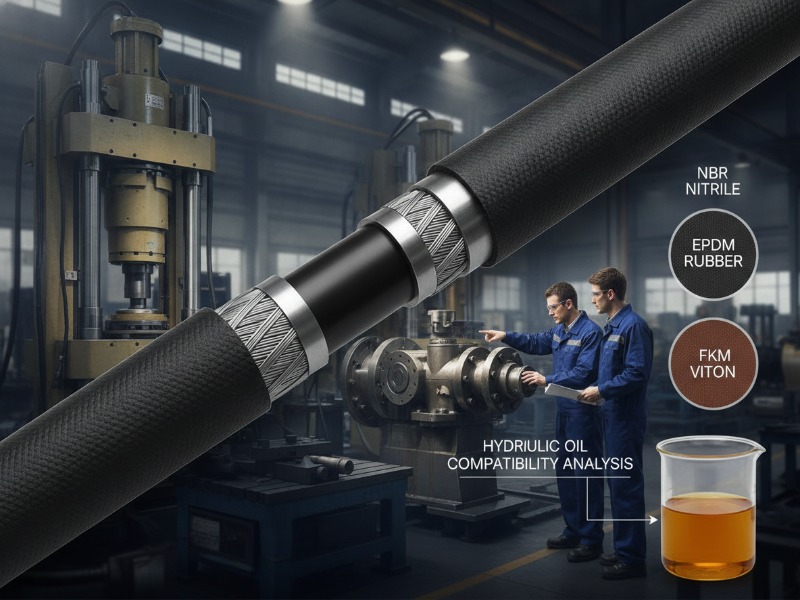
The inner tube must be compatible with both the hydraulic fluid and the temperature range. Selecting the right tube material is critical for long-term reliability. For detailed material compatibility, refer to our [hydraulic hose fluid compatibility chart].
| Tube Material | Temperature Range | Fluid Compatibility | Best Applications |
|---|---|---|---|
| NBR (Nitrile) | -40°C to +100°C | Petroleum-based fluids, hydraulic oils, mineral oils | Standard industrial, mobile equipment |
| CR (Chloroprene) | -40°C to +121°C | Biodegradable fluids, mineral oils, moderate heat | Eco-friendly applications, heat-resistant |
| EPDM | -40°C to +150°C | Water, steam, brake fluids, phosphate esters | Hot water, steam systems, high-temp |
| PTFE (Polytetrafluoroethylene) | -55°C to +260°C | Most chemicals, steam, high-temp oils, aggressive fluids | Extreme conditions, chemical resistance |
Reinforcement Layer Selection
The reinforcement layer determines pressure capacity and impulse life.
| Reinforcement Type | Temperature Suitability | Pressure Rating | Typical Applications |
|---|---|---|---|
| Single Wire Braid (1SN) | -40°C to +100°C | Medium (350 bar max) | General-purpose, moderate pressure |
| Double Wire Braid (2SN) | -40°C to +100°C | Medium-high (600 bar max) | Mobile equipment, higher pressure |
| 4-Wire Spiral (4SP) | -40°C to +100°C | High (690 bar max) | Heavy equipment, mining, construction |
| 4-Wire Spiral (4SH) | -40°C to +100°C | Ultra-high (830 bar max) | Extreme pressure applications |
| 4-Wire Spiral (R12) | -40°C to +121°C | Medium-high | High-heat moderate-pressure |
| 6-Wire Spiral (R13) | -40°C to +121°C | High | High-heat high-pressure |
Cover Material Selection
The outer cover protects against environmental factors. Choose based on the primary threat—abrasion, heat, cold, or chemical exposure.
| Cover Material | Temperature Range | Key Properties | Best Applications |
|---|---|---|---|
| Standard Synthetic Rubber | -40°C to +100°C | General-purpose, moderate abrasion resistance | Most standard applications |
| Heat-Resistant Compound | -40°C to +121°C | Maintains integrity at high temperatures | Steel mills, foundries, high-ambient |
| UHMWPE (Ultra-High Molecular Weight Polyethylene) | -55°C to +100°C | Extreme abrasion resistance, long service life | Mining, quarry, harsh environments |
| Silicone-Based Compound | -55°C to +150°C | Heat stability, UV resistance, flexibility | Outdoor high-temp, aerospace |
| Cold-Weather Compound | -55°C to +100°C | Flexibility at sub-zero, cracking resistance | Arctic, cold storage |
6. Quality Verification Methods
Impulse Testing – The Gold Standard
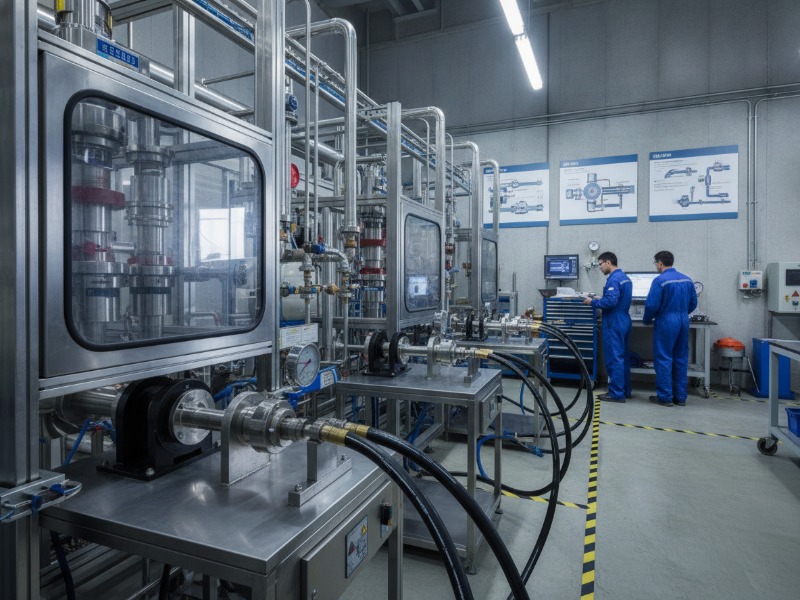
Impulse testing is the gold standard for verifying hydraulic hose durability, particularly for temperature-extreme applications. The ISO 6803 impulse test subjects hoses to repeated pressure cycles at elevated temperatures to simulate real-world service conditions. Learn more about [hydraulic hose impulse testing and why it matters].
| Standard | Test Temperature | Pressure | Required Cycles |
|---|---|---|---|
| ISO 18752 (AS, AC, BS, BC) | 100°C | 133% of working pressure | 400,000+ cycles |
| ISO 18752 (CS, CC, DC) | 120°C | 133% of working pressure | 500,000+ cycles |
| EN 856 (4SP/4SH) | 100°C | 133% of working pressure | 400,000 cycles |
| EN 856 (R12/R13) | 120°C | 133% (R12) or 120% (R13) | 500,000 cycles |
Our factory’s pulse test data demonstrates that properly constructed wire spiral hoses routinely exceed 1 million impulse cycles at 1.33 times working pressure—significantly exceeding standard requirements and providing substantial safety margin for extreme applications. This performance is verified through continuous testing on our in-house pulse test equipment.
Additional Quality Tests
| Test Method | Purpose | Temperature Condition | Acceptance Criteria |
|---|---|---|---|
| Burst Pressure Test | Verify minimum burst strength | At rated temperature | ≥4× working pressure |
| Cold Bend Test | Check flexibility at low temp | -40°C to -55°C | No cracking at required radius |
| Hot Aging Test | Simulate long-term heat exposure | 121°C for 168+ hours | Maintain ≥80% original properties |
| Ozone Resistance | Check cover durability | 40°C, 50 pphm ozone | No visible cracking |
| Adhesion Test | Measure layer bonding | At rated temperature | ≥4.9 N/mm minimum |
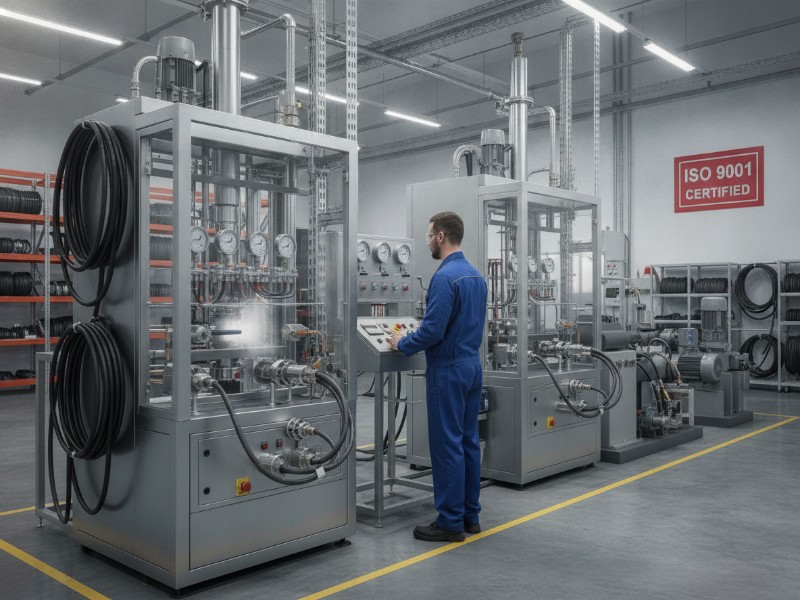
Factory Audits and Quality Systems
When sourcing hydraulic hoses for critical applications, verify the following quality system elements:
| Quality Element | What to Verify | Why It Matters |
|---|---|---|
| ISO 9001 Certification | Current certificate, scope | Basic quality management foundation |
| MSHA Approval | Current MSHA listing | Required for US mining equipment |
| Physical Sampling | Test samples under your conditions | Validates performance claims |
| Traceability Systems | Raw material to finished product | Recall capability, quality consistency |
| Production Scale | 2,000+ m² facility (minimum) | Consistent quality, reliable supply |
Our experience with global sourcing shows that suppliers with vertically integrated facilities—controlling everything from compound mixing to final assembly—consistently deliver better quality consistency than those outsourcing components.
7. Case Study: Hydraulic Hose Failure in Arctic Mining Equipment
The Problem
A Canadian mining operator experienced repeated hose cracking during winter operation at -42°C. Investigation showed the equipment was fitted with standard SAE 100R2 hoses rated to -40°C. The hoses were cracking at the fitting crimps within 2-4 weeks of winter operation, causing significant downtime and fluid loss.
The Root Cause Analysis
| Factor | Finding |
|---|---|
| Operating Temperature | -42°C (below rating of standard hoses) |
| Failure Location | Fitting crimp interface |
| Failure Mode | Brittle cracking of tube compound |
| Standard Rating | -40°C minimum (insufficient for -42°C) |
The Solution
The operator replaced all standard hoses with low-temperature hydraulic hoses certified to -55°C. The new hoses featured:
- Specialized NBR/CR tube compound with low-temperature plasticizers
- Optimized fitting crimp design for cold-weather assembly
- Cover compound with cold-weather flexibility
The Results
| Metric | Before | After | Improvement |
|---|---|---|---|
| Winter Hose Failures | 12+ per month | 3 per month | 75% reduction |
| Unscheduled Downtime | 8 hours/week | 2 hours/week | 75% reduction |
| Replacement Cost/Month | $3,600+ | $900 | 75% reduction |
| Operator Confidence | Low | High | Improved reliability |
Key Lesson Learned
Selecting a hose with a temperature rating at least 15°C below the minimum expected operating temperature is essential for reliable operation in extreme cold. The modest additional cost of low-temperature hoses (typically 15-25% higher than standard) is quickly offset by reduced failure rates and downtime.
8. How to Source Hydraulic Hoses for Extreme Temperatures from China
Supplier Selection Criteria
When sourcing hydraulic hoses from China for extreme temperature applications, consider these key criteria:
| Selection Criterion | Target Benchmark | Verification Method |
|---|---|---|
| Factory Size | 2,000+ m² minimum | Video tour, third-party report |
| ISO Certification | ISO 9001:2015 | Certificate verification |
| Export Experience | 3+ years | Client references, shipping records |
| Technical Support | In-house engineering | Design capabilities, test reports |
| Quality Record | Review score ≥4.5/5.0 | Third-party platforms (Alibaba, others) |
| Production Lead Time | 15-45 days | Past order records |
| On-Time Delivery Rate | ≥97% | Delivery records |
Supplier Performance Metrics
| Metric | Target Benchmark | What It Indicates |
|---|---|---|
| On-time Delivery Rate | ≥97% | Reliable supply chain |
| Customer Review Score | ≥4.5/5.0 | Consistent quality satisfaction |
| Technical Response Time | ≤4 hours | Strong after-sales support |
| Reorder Rate | ≥20% | Repeat customers indicate reliability |
| Minimum Order Quantity | Flexible | Matching your volume requirements |
China Sourcing Checklist
- Verify ISO 9001 certification (current, in-scope)
- Request product samples for testing
- Review impulse test reports and burst pressure data
- Conduct video factory tour (or in-person visit)
- Check client references in similar applications
- Confirm temperature certification documentation
- Review warranty terms and coverage
- Understand shipping terms (CIF, FOB, EXW)
- Verify payment terms compatibility
- Confirm customization capabilities
9. Extreme Temperature Hydraulic Hose Buying Checklist
Before placing an order for hydraulic hoses destined for extreme temperature applications, verify each of these elements:
Documentation & Certification
| Check Item | Status | Notes |
|---|---|---|
| Temperature certification (min/max) | ☐ | Verify against your operating range |
| ISO 18752 compliance | ☐ | Confirm correct type designation |
| SAE certification | ☐ | 100R1, 100R2, 100R12, etc. |
| Impulse test report | ☐ | ≥500,000 cycles for extreme applications |
| Burst pressure test report | ☐ | ≥4× working pressure |
| Material traceability records | ☐ | Raw material to finished product |
| Production batch records | ☐ | Full lot traceability |
| Warranty coverage documentation | ☐ | Length and terms clearly stated |
Physical Inspection
| Check Item | Status | Notes |
|---|---|---|
| Sample testing availability | ☐ | Test under your operating conditions |
| Visual inspection samples | ☐ | No defects, consistent finish |
| Dimensional verification | ☐ | ID, OD, length within specs |
| Fitting compatibility | ☐ | Proper crimp specifications |
Supplier Qualification
| Check Item | Status | Notes |
|---|---|---|
| Factory size ≥2,000 m² | ☐ | Adequate production capacity |
| ISO 9001 certification | ☐ | Current and relevant |
| Export experience verification | ☐ | Shipping documentation, references |
| Technical support availability | ☐ | In-house engineering capacity |
| Commercial terms reviewed | ☐ | Pricing, MOQ, payment, delivery |
10. Frequently Asked Questions
Can hydraulic hoses freeze?
Hydraulic hoses do not freeze solid like water lines, but the rubber compounds can become brittle and crack at low temperatures. This occurs when the hose temperature drops below its minimum rated temperature. Specialized low-temperature hoses with flexible compounds remain functional down to -55°C, while standard hoses may fail below -40°C.
What happens if a hydraulic hose gets too hot?
Excessive heat accelerates thermal aging of the rubber compounds, causing:
- Hardening and cracking of the tube and cover
- Loss of adhesion between reinforcement layers
- Reduced impulse life (can drop by 50% or more)
- Increased fluid permeation through the tube
- Potential catastrophic failure if combined with high pressure
How does temperature affect hydraulic hose pressure rating?
Most hydraulic hoses require pressure derating at temperatures above +100°C. The derating factor depends on the specific hose type. Low-temperature operation generally does not require derating, but the hose must be rated for the minimum temperature.
Does cold weather reduce hydraulic hose flexibility?
Yes. Standard hydraulic hoses become stiffer at low temperatures, increasing the minimum bend radius. Low-temperature hoses are formulated with special plasticizers that maintain flexibility at sub-zero temperatures. Testing confirms that properly designed low-temp hoses maintain their specified bend radius even at -55°C.
What is the best hydraulic hose for Arctic environments?
For Arctic environments, a hose with the following specifications is recommended:
- Temperature rating: -55°C minimum
- Tube compound: NBR or CR with low-temperature plasticizers
- Cover: Cold-weather compound or UHMWPE for abrasion protection
- Reinforcement: Wire spiral (4SP/4SH) for heavy equipment; wire braid for lighter applications
- Certification: Verify cold bend test at -55°C
- Impulse rating: 400,000+ cycles at 100°C
What hydraulic hose is used in steel mills?
Steel mills require high-heat hoses with these characteristics:
- Temperature rating: -40°C to +121°C (minimum)
- Tube compound: EPDM or heat-stabilized NBR
- Reinforcement: Wire spiral (R12 or R13) for heat resistance
- Cover: Heat-resistant compound with good abrasion resistance
- Impulse rating: 500,000+ cycles at 120°C
- Additional protection: Heat shields or fire-resistant sleeving may be required
How much more expensive are low-temperature hydraulic hoses?
Low-temperature hydraulic hoses typically cost 15-25% more than standard temperature hoses. The premium reflects the specialized rubber compounds and cold-weather plasticizers required for low-temperature performance. For most applications, the additional cost is quickly offset by reduced failure rates and downtime.
What is the cost difference between R12 and R13 hoses?
R13 hoses typically cost 15-30% more than R12 hoses due to the additional wire reinforcement layers (6 layers versus 4). The higher cost is justified for applications requiring both high pressure and high temperature. For moderate-pressure high-heat applications, R12 offers a more cost-effective solution.
Can standard hydraulic hoses be used in winter?
Standard hydraulic hoses rated to -40°C can be used in winter conditions where temperatures do not fall below -40°C. However, for reliable operation in temperatures below -30°C, low-temperature hoses are strongly recommended to ensure adequate service life and reduce failure risk.
When should PTFE hoses replace rubber hydraulic hoses?
PTFE hoses should replace rubber hoses when:
- Operating temperatures exceed +121°C
- Chemical compatibility requires PTFE
- The application demands the broadest temperature range (-55°C to +260°C)
- Low friction is critical for system performance
- Fluid permeation must be minimized
What certifications should I request from a hydraulic hose supplier?
Request documentation for:
- ISO 9001 quality management certification
- SAE or ISO standard compliance (100R1, 100R2, 100R12, ISO 18752, etc.)
- Impulse test reports (preferably third-party verified)
- Material certificates and traceability documentation
- MSHA approval for mining applications (if applicable)
How do I verify a supplier’s hose quality without visiting the factory?
Request the following to verify quality remotely:
- Sample testing under your actual operating conditions
- Third-party test reports (impulse test, burst pressure, thermal aging)
- Video tours of production facilities
- Client references in similar applications
- Certification documentation (ISO, SAE, DIN compliance)
- Material certificates from rubber and steel suppliers
- Process control documents for manufacturing
How long do extreme-temperature hydraulic hoses typically last?
Service life depends on operating conditions and maintenance practices:
- Continuous operation within rated temperature and pressure: 3-5 years
- Intermittent high-heat exposure (with cooldown periods): 2-4 years
- Continuous high-temperature operation (near maximum rating): 1-3 years
- Extreme cold with proper hose selection: 3-5 years
- Premium hoses with 1M+ impulse cycle ratings: 5+ years
11. Key Takeaways
- Low-temperature hydraulic hoses are designed for environments as cold as -55°C, with specialized compounds that maintain flexibility and resist cracking.
- High-heat hydraulic hoses can operate continuously at temperatures up to +121°C (or +260°C for PTFE designs), with heat-stabilized compounds and wire spiral reinforcement.
- Temperature affects multiple performance parameters: hose flexibility, pressure retention, impulse life, service life, and fluid permeation rates.
- Wire spiral reinforcement (4SP/4SH/R12/R13) generally performs better than wire braid (1SN/2SN) in high-temperature, high-pressure applications.
- PTFE-lined hoses offer the broadest temperature capability (-55°C to +260°C) and excellent chemical resistance for the most demanding applications.
- Impulse testing at elevated temperatures is the gold standard for verifying hose durability—look for hoses with 500,000+ impulse cycles at 133% working pressure.
- Select a hose with a temperature rating at least 15°C above your maximum operating temperature (for heat) or 15°C below your minimum (for cold) to ensure adequate safety margin.
- Total cost of ownership analysis often justifies the higher initial cost of premium extreme-temperature hoses through reduced failures and downtime.
- Supplier verification through sampling, testing, and certification review is essential when sourcing extreme-temperature hydraulic hoses.
- Temperature failure symptoms should be monitored: cold weather causes stiffness and cracking; high heat causes softening, hardening, and seepage.
About HENGHUA Pipeline Technology
Tianjin Henghua Pipeline Technology Co., Ltd. specializes in the development and production of high-performance hydraulic hoses for extreme applications. With over 9 years of manufacturing experience and a 2,900+ m² production facility, our vertically integrated operation controls every stage of the production process—from compound mixing to finished hose assembly.
Manufacturing Capabilities
| Capability | Value |
|---|---|
| Factory Area | 2,900+ m² |
| Manufacturing Experience | 9+ Years |
| Impulse Test Capacity | 1,000,000+ Cycles |
| Temperature Range | -55°C to +260°C |
| Quality System | ISO 9001 Certified |
| Delivery Performance | 98% On-Time |
Our Quality Commitment
| Quality Element | Our Performance |
|---|---|
| Impulse Testing | Consistently exceed 1 million impulse cycles at 1.33× working pressure |
| Cold Performance | Low-temperature grades maintain flexibility and performance at -55°C |
| Heat Resistance | Heat-tolerant grades operate reliably at temperatures up to +121°C |
| Wear Protection | UHMWPE cover options provide superior abrasion resistance |
| Quality System | ISO 9001 certified with full material traceability |
What Sets Us Apart
- Vertically Integrated Manufacturing – We control the entire production chain from raw compound mixing to hose assembly, ensuring consistent quality at every step.
- Proven Impulse Life – Our hoses consistently achieve 1 million+ impulse cycles, verified through in-house pulse testing equipment—the same testing used by major international brands.
- Global Export Experience – We ship to mining, construction, oil & gas, and industrial customers worldwide with a 98% on-time delivery record.
- Technical Support – Our engineering team responds to technical inquiries within 2 hours, providing application-specific recommendations and test data.
- Flexible Customization – We offer custom labeling, specialized compounds, and tailored product configurations for OEM customers.
Commercial Support
| Support Service | Details |
|---|---|
| Free Samples | Available for qualified buyers (shipping fees may apply) |
| Technical Consultation | Application-specific recommendations with engineering support |
| Factory Tours | In-person or virtual tours available |
| Documentation | Full test reports, certification packages, material traceability |
| Lead Time | 15-45 days typical for bulk orders |
| Warranty | Comprehensive coverage on all standard products |
Contact our technical sales team to discuss your extreme-temperature hydraulic hose requirements. Our engineers can recommend the optimal hose construction for your specific application conditions and provide test data to validate performance.
Related Articles
- SAE 100 Hydraulic Hose Standards (SAE J517 Complete Guide)
- How to Choose Hydraulic Hoses: Braided vs Spiral, Pressure Ratings & Abrasion Resistance
- ISO 18752 vs SAE Hydraulic Hose: What’s the Difference & Which Is Better?
- How to Select a Hydraulic Hose Assembly Using the STAMPED Method
- How to Read a Hydraulic Hose Layline: Size, Pressure, SAE Codes & Replacement Guide
- Understanding Working Pressure vs. Burst Pressure in High-Pressure Hydraulic Hoses
- Why Impulse Life Testing Determines the Durability of OEM Hydraulic Hoses
- Hydraulic Hose Fluid Compatibility Chart: NBR vs EPDM vs FKM Inner Tube Selection Guide
- Sourcing Hydraulic Hoses for Extreme Temperatures: Low-Temp vs High-Heat Applications
- Hydraulic Hose Standards Comparison Guide: SAE vs DIN vs ISO vs GB
- Hydraulic Hose Bend Radius: How Smaller Bends Improve Flow and Machine Life
- Reduce Hose Inventory Costs by 30%: SKU Rationalization Guide for Distributors