
A composite hose table reduces to four columns, and the specifications reduce to the values in them: type, bore, pressure and temperature. Everything else in a catalogue is a variant of those four. A database built on them can answer a tender question in a minute and can be quoted without the risk of mixing values from two different tables.
This page sets out the classification values, the bore and bend radius range, and the pressure bands by duty, in a form that can be read by a person and lifted by a search engine.

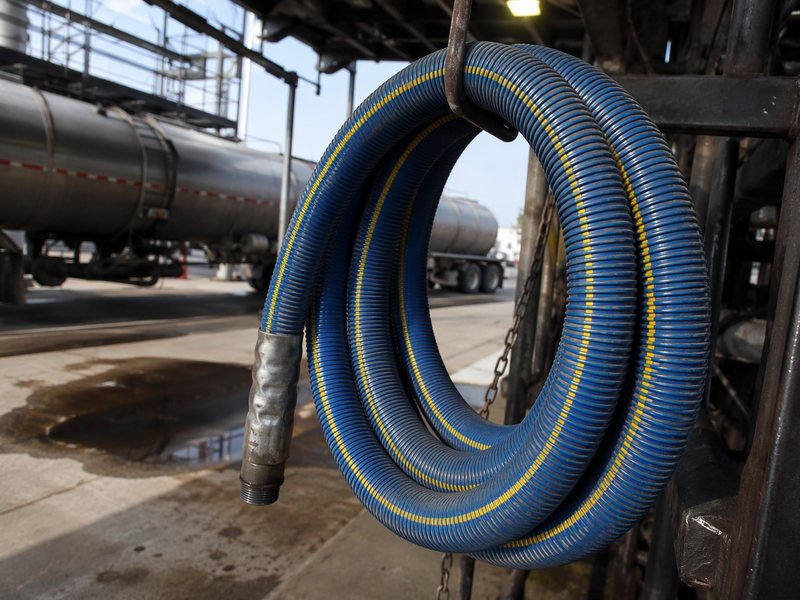
Figure 1. Coiled hoses on wall brackets. Each coil hangs on its own bracket, with its marking band facing out.
What Are the Four Types in the Specification Table?
The classification in EN 13765 gives four types, distinguished by the pressure they carry and the temperature they tolerate. The values below are the published type table.
| Type | Max working pressure | Proof pressure | Min burst | Vacuum | Temperature |
|---|---|---|---|---|---|
| Type 1 | 4 bar | 6 bar | 16 bar | 0.5 bar | −20 to +60 °C |
| Type 2 | 10 bar | 15 bar | 40 bar | 0.9 bar | −30 to +80 °C |
| Type 3 | 14 bar | 21 bar | 56 bar | 0.9 bar | −30 to +80 °C |
| Type 4 | 14 bar | 21 bar | 56 bar | 0.9 bar | −30 to +150 °C |
Table 1. Composite hose specifications by type, from the classification table. Type 1 is intended for vapour service, Types 2 to 4 for liquids.
Two readings follow. Type 4 carries the same pressure as Type 3 and adds temperature, which is why hot product work lands there. And the vacuum column is what makes a suction duty possible at all.
The table describes minimum requirements. A manufacturer may publish a higher working pressure for a build, and then the proof and burst values behind that rating need to be shown, because the type designation alone no longer explains them.
Which Bores Do These Composite Hose Specifications Cover?
The standard tabulates internal diameters from 25 mm to 300 mm, with tolerances that tighten at small bore. The practical range for most terminals runs from 1 in (DN 25) to 8 in (DN 200).
| Bore | Bend radius, Types 1 and 2 | Bend radius, Types 3 and 4 |
|---|---|---|
| 25 mm (1 in) | 125 mm | 200 mm |
| 50 mm (2 in) | 200 mm | 225 mm |
| 80 mm (3 in) | 300 mm | 350 mm |
Table 2. Bore and minimum bend radius for the common sizes. Radius values rise with type because the wall is heavier.
The three bores above are the ones quoted most often in enquiries. The standard tabulates every size between 25 mm and 300 mm, so the bend radius for a bore not listed here should be read from the edition in force rather than interpolated.
Bend radius is the column that prevents most field damage, and the sizing guide converts it into a route. A 3 inch hose bent inside 300 mm kinks at the helix, and the flow loss stays after it straightens.
Where a route is tight, the answer is usually a smaller bore with more length, not a tighter bend, as the bend radius data explains.

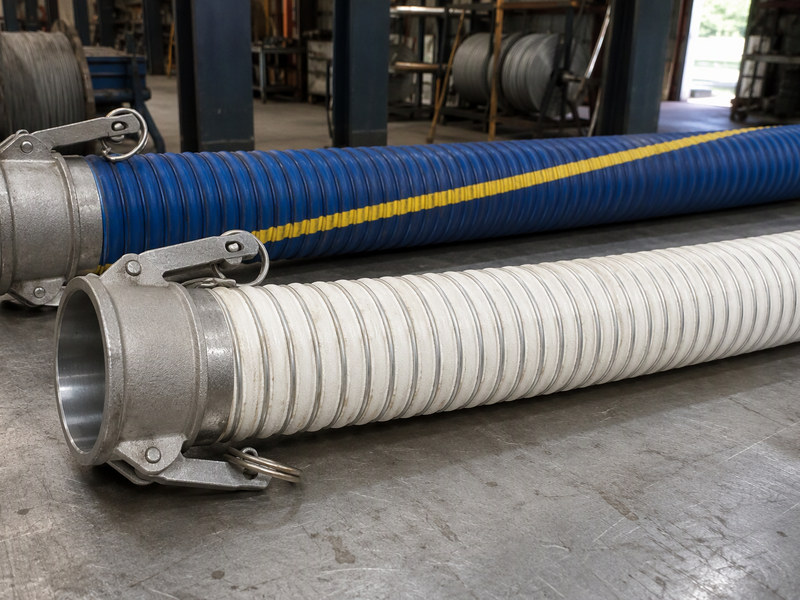
Figure 2. One coil and one flange end on a workshop floor, with a tape measure across the coil. The type and the bore are both read off the build itself.
What Pressure Applies to Which Duty?
A composite hose pressure rating is a ceiling, not a working point. The type table gives the ceiling. Reading the row against the duty is the whole skill, and it is learned in an afternoon. The duty gives the working point, which is usually lower, and the gap is where a composite hose table earns its keep.
| Duty | Typical build | Working pressure |
|---|---|---|
| Vapour recovery | Type 1 | 4 bar |
| Chemical transfer, general | Type 2 | 10 bar |
| Dock and tanker transfer | Type 3 | 14 bar |
| Hot chemical or hot oil | Type 4 | 14 bar |
| High-pressure wash and transfer | Heavy-duty build | 20 bar |
Table 3. Composite hose specifications by duty. The high-pressure build sits above the type table and needs its own test values.
The last row of these composite hose specifications is worth a note. A 20 bar build is a legitimate product and it sits above the standard type table, which means the buyer should ask for proof and burst values rather than assuming a type number applies.
How Do You Read the Table in a Tender?
Read the composite hose specifications backwards. Start with the duty, find the type, then check bore and bend radius against the route, then confirm the temperature.
Three questions resolve most tender ambiguities. Is the pressure quoted at the duty temperature or at ambient. Is it the hose or the assembly. And does the temperature range cover cleaning, not just product.
Where an offer quotes a pressure without a temperature, treat the figure as ambient and ask for the derated value before comparing. That single question removes most of the apparent price differences between offers, because the cheaper hose is often rated at a lower temperature and cannot serve the duty at all. It also protects the buyer who signs the comparison, since the file will show what was asked and what was answered.
Where Does Temperature Change the Numbers?
Every type has a ceiling, and pressure capability falls as the temperature approaches it. The derating curve, not the headline figure, governs hot duty.
For a Type 3 hose running at 60 °C, the working pressure is below the 14 bar ceiling. For the same hose at 20 °C, it may be at the ceiling. Two terminals with the same hose and different product temperatures are running different duty cases.
EN 13765 tabulates the ceiling, not the derated value, so the curve behind the rating has to come from the supplier.
A composite hose pressure rating always travels with a temperature, and that is why a hose specification database entry should carry the temperature with the pressure rather than in a separate column. A specification should also state the maximum product temperature and, separately, the maximum cleaning temperature. The higher of the two sets the derating basis.
What Do Certification and Marking Add?
Certification confirms that a design met the type tests, and the certificate walkthrough explains how to read the scope. Marking ties a delivered hose to that design and to a batch.
Neither changes the four columns, and both matter at audit. A hose with the right values and no marking cannot be traced, and an untraceable hose is treated as unproven regardless of its rating.
When a project requires third-party approval, the certificate scope should name the types and bores supplied. A certificate that covers a design family without naming the bore leaves the delivery outside its scope.
Where Do These Specifications Stop?
Three boundaries are worth stating plainly, because buyers cross them by assumption, and every composite hose specifications table should carry them as footnotes. The standards map shows which document applies outside them.
Scope: this table covers multilayer thermoplastic hose for chemical and hydrocarbon duty. Aviation fuelling, retail dispensing, oil burners, LPG, LNG, fire fighting and refrigeration each sit under a different document.
A build rated above the type table is outside the classification for that value, which is why the test record matters. And a hose approved for 14 bar is not approved for 20 bar because the bore is smaller.
How Do You Keep the Table Current?
A specification table goes stale in three ways: the standard is revised, the range changes, and the product pages drift from the table.
Revision control is the easy part. Note the edition the table was built from and review it when a new edition appears. The 2018 edition is the current text, and any table without an edition reference should be treated as undated.
Range changes are harder. A new build at 20 bar or a new liner changes what can be offered without changing the standard, and the table needs a column or a footnote for it.
Drift is the most common. The table says one thing and the product page says another because they were updated in different months. A quarterly comparison between the table and the pages that link to it prevents the contradiction that destroys trust in both.
What Changes Between Bores at the Same Type?
Three things: bend radius, weight and the practical pressure limit of the fittings.
Bend radius rises with bore inside the same type, which is why a 3 inch hose needs more room than a 1 inch one even at the same pressure. Route drawings that were valid at small bore often fail at large bore for this reason alone.
Weight rises faster than bore suggests, because the wall thickness grows and the helix gets heavier. Two people can handle a 2 inch assembly; a 6 inch one needs a cradle or a crane.
The fitting limit is the one that surprises buyers. A camlock at 6 inch is rated lower than the same style at 2 inch, so the assembly rating falls even though the hose rating does not. The composite hose pressure rating in a catalogue is a hose figure, and the assembly figure belongs in the offer.
How Do You Quote From These Tables?
Quote three composite hose specifications and one qualifier, and keep the quote inside the bidirectional pressure frame that buyers already understand. Type, bore and pressure at temperature, plus the assembly rating if the order includes fittings.
Where a tender asks for a single pressure figure, give the derated value at the stated temperature and note the ambient figure separately. That answers the question without hiding the difference.
Where a tender asks for a hose specification database entry, a row is enough: type, bore, working pressure, proof, burst, vacuum, temperature and bend radius. Eight cells, and the row can be checked against the standard in a minute.

Figure 3. A marking band turned toward a clipboard. The row is only useful if the marking matches it.
Where Does the Composite Hose Table Stop Being Useful?
At the edge cases. A build above the type table, a cryogenic duty, an LNG transfer, or a liner that the table does not list. Each of those needs a written offer rather than a catalogue row, and each should be flagged as outside the table when it appears in a tender.
In those cases the table is a starting point rather than an answer, and the offer should carry its own test values. The table tells you what the standard guarantees; the offer has to tell you what the product does beyond it.
The table is a reference, not a quotation. Every value above should be confirmed against the build offered, and the offer should cite the edition it was checked against.
A table is only as good as the row a buyer actually needs. Most enquiries resolve to one of four or five rows, and the rest of the page exists to show where those rows sit relative to the limits. Read the limits first, then the row.
Three readers use the same table differently. A buyer comparing offers reads the pressure column first. A maintenance planner reads the bend radius first. A project engineer reads the temperature column first, because that is the value the derating depends on.
Frequently Asked Questions
How many types are in the standard?
Four, distinguished by pressure and temperature. Type 1 is the vapour type, and Types 2 to 4 cover liquids with Type 4 extending to higher temperature.
What is the highest pressure in the type table?
14 bar maximum working pressure for Types 3 and 4, with 21 bar proof and 56 bar burst. Builds above that sit outside the table.
Which bore should I choose for a tanker unloading line?
Usually 3 inch or 4 inch, subject to the flow and the loading time. Check the bend radius against the arm geometry before fixing the bore.
Can a Type 4 hose be used below freezing?
Down to −30 °C per the table. Below that, the liner and the bond need separate data, and cryogenic duty is outside this standard entirely.
Does the specification include the end fittings?
No. The type table describes the hose. The assembly rating depends on the fittings and should be stated separately.
Is a higher type always better?
No. Type 1 exists because vapour duty does not need 14 bar and a lighter build handles better. Overspecifying adds weight and cost without benefit.
Where can I check a supplier’s claimed values?
Against the type table and the test record. If a value exceeds the table, ask for the proof and burst figures that support it.
About HENGHUA
HENGHUA publishes build-level specifications rather than a single series sheet, so the type, bore, pressure and temperature for the hose you order are on one page. Our range covers 10 bar, 15 bar and heavy-duty builds from DN 25 to DN 200, with liners from PP to PTFE.
Send the duty and the route, and we will return the specification row that fits, including the derated pressure at your temperature.
 English
 Spanish
 Portuguese
 French
 German
 Arabic
 Russian
 Indonesian
 Japanese
 Korean