
A hydrocarbon hose fails on the lining long before it fails on the reinforcement. Aromatic content is the variable that decides which lining survives, because benzene, toluene and xylene swell polyolefins and pass through them faster than aliphatic streams do. The same hose that handles diesel for years can soften in weeks on a high-aromatic cut.
This guide sets out how aromatic content, temperature and exposure time interact, which lining to specify for each combination, and how to read a compatibility chart without turning a supplier’s tick into a warranty you cannot enforce.
For most terminal duty the lining answer is PP for low-aromatic distillate, UHMWPE for mixed and slop lines, and PTFE for high-aromatic or hot product.
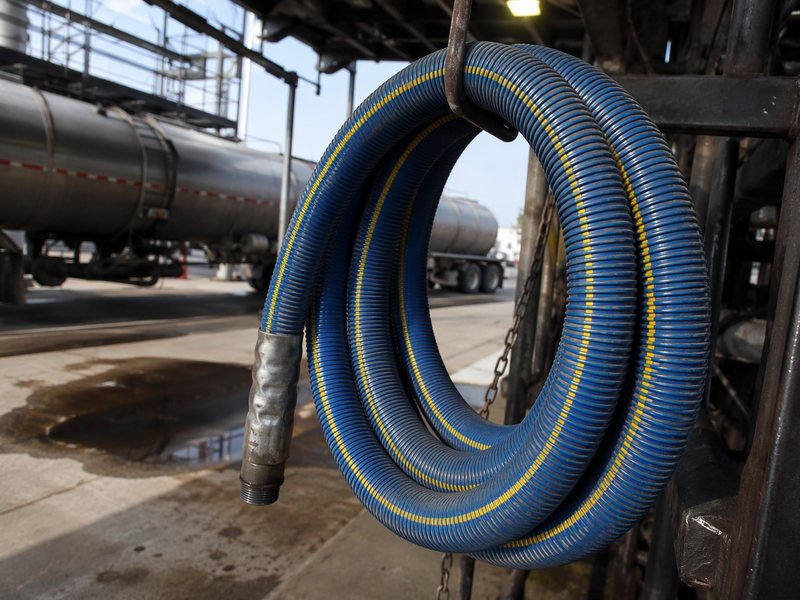
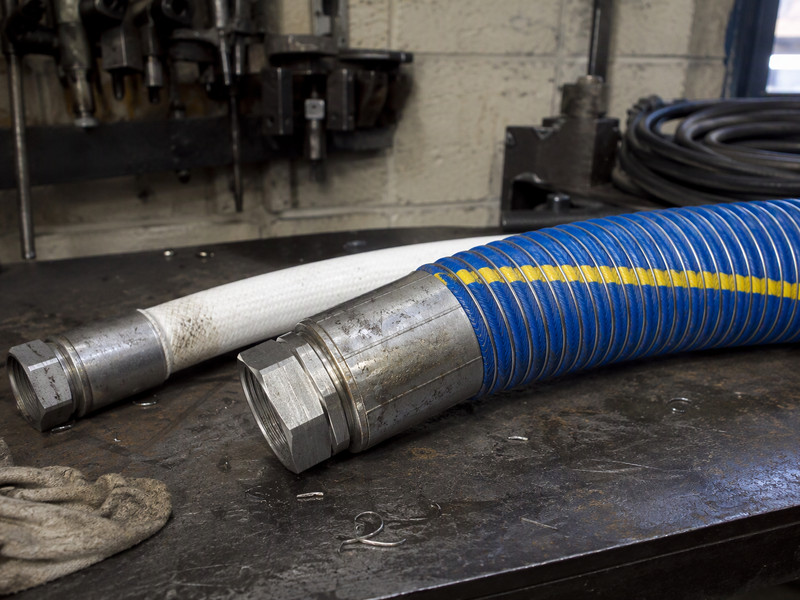
Figure 1. Terminal duty usually mixes streams. The lining has to survive the most aromatic product in the rotation, not the average.
Why Do Aromatics Decide the Lining?
Aromatic hydrocarbons are solvents with a similar polarity to many polymers. They enter the liner, push the polymer chains apart and leave the material softer, heavier and more permeable. The process is reversible up to a point and permanent beyond it.
Aliphatic streams such as diesel, kerosene and base oil do far less of this. That is why a hose can run for years on gasoil and then fail within months when the terminal starts handling a gasoline blend with a higher aromatic share.
The failure is rarely a burst, and the permeation behaviour of the wall explains most of what an operator notices first. It shows up as swelling at the couplings, a soft section where the hose rested on a saddle, taste and odour complaints downstream, and a cover that blisters as vapour accumulates under it.
What Does Each Lining Do in Aromatic Service?
Lining behaviour follows polymer chemistry rather than brand. The table below gives the direction of behaviour, which is what a specification decision needs at the shortlisting stage.
| Lining | Low-aromatic streams | High-aromatic streams | Temperature ceiling (typical) |
|---|---|---|---|
| PP | Good | Poor, swells and softens | Around 100 °C |
| UHMWPE | Good | Moderate, slower swell than PP | Around 80 °C |
| XLPE | Good | Moderate | Around 90 °C |
| PTFE | Excellent | Excellent | Far above hydrocarbon duty needs |
Table 1. Directional behaviour of common linings in hydrocarbon service. Percentages and grade limits come from the supplier’s compatibility data, not from this table.
Two practical readings follow. PP is the economical choice for diesel, kerosene and low-aromatic distillates, and it is the wrong choice when the stream carries a meaningful aromatic fraction. PTFE costs more and removes the question entirely, which is often worth it on a multi-product terminal.
UHMWPE and XLPE sit between the two. They tolerate aromatic exposure better than PP and cost less than PTFE, and they suit terminals that handle one blend family rather than a full slate.

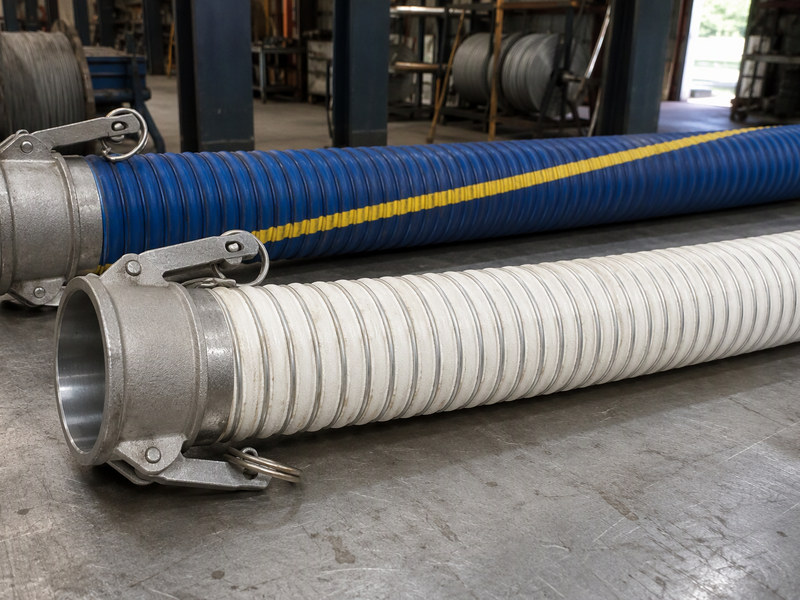
Figure 2. Three ends on one rack. The lining decides which product each one can carry.
Where Does Temperature Change the Answer?
Temperature accelerates everything. Swelling that takes a season at ambient can take a month at 60 °C, and the mechanical strength that the liner retains falls at the same time.
The combined effect is not additive in a simple way. A lining at its aromatic limit is serviceable at ambient. At 60 °C the same lining moves outside its limit, because the polymer is softer and diffusion is faster.
A hydrocarbon hose specification should state the maximum product temperature rather than the ambient temperature, because the two set different duty cases. A terminal that loads cold diesel in winter and warm gasoline in summer is running two different duty cases through one hose.
Does Aromatic Content Affect Permeation?
Yes, and permeation is the consequence buyers notice last. Aromatic molecules pass through polyolefin liners more readily than aliphatic ones, so a hose can be mechanically sound and still release vapour through the wall.
Permeation matters for odour, for worker exposure and for vapour recovery accounting. It also explains why a hose that passes a pressure test can still be condemned on smell alone.
Where permeation is the governing issue, the answer is usually a fluoropolymer liner rather than a thicker polyolefin one. Thickness slows permeation; it does not change the chemistry driving it.
How Do You Read a Compatibility Chart Without Guessing?
A compatibility chart is a screening tool, not a guarantee, and the liner data behind it is what a specification should cite. Three readings make it useful.
First, find the concentration, not just the chemical name. A chart entry for gasoline at 100 percent is not the same as a 10 percent blend in diesel. Second, find the temperature the rating applies to, because most charts assume ambient. Third, find out whether the rating describes the lining or the finished hose, since adhesives and fabric can fail before the film does.
When the chart is silent, ask one question: what is the highest aromatic content this liner has run in service, and for how long. A supplier with field data answers with a case. One without answers with a repetition of the chart.
Which Hydrocarbon Hose Build Suits a Tank Farm?
Terminal duty is usually a compromise between one hose that covers everything and several that each do one job well, and the type table sets the pressure envelope around that choice. The table below is the shortlist we see work in practice.
| Duty | Lining | Why |
|---|---|---|
| Diesel and gasoil transfer | PP | Lowest cost, adequate resistance |
| Multi-product loading arm | PTFE | Removes aromatic and permeation questions |
| Gasoline blend with high aromatics | PTFE or UHMWPE | Swell control, permeation control |
| Slop and interface lines | UHMWPE | Tolerates mixed streams and water |
| Vapour recovery line | PTFE or conductive polyolefin | Low permeability, static control |
| Tank farm internal transfer, warm product | PTFE | Temperature rules out polyolefins |
Table 2. Lining shortlist by terminal duty. Confirm each against the compatibility data for the specific grade.
One pattern is worth noting: the lines that fail first are almost never the ones carrying the cleanest product. They are the slop lines and the interface lines, where the stream changes without a specification change.
What About Ethanol and Biodiesel Blends?
Oxygenated fuels behave differently from pure hydrocarbons. Ethanol absorbs water, and biodiesel is a family of fatty acid methyl esters rather than a single substance. Both attack liners that handle mineral diesel comfortably.
The practical consequence is that a hose approved for B7 is not automatically approved for B100, and a hose approved for E10 is not automatically approved for E100. The blend ratio belongs in the specification alongside the product name.
The liner compatibility data covers oxygenated fuels in more depth, but the headline for lining choice is simple: when the oxygenate share rises, move up the lining ladder rather than adding a hose.
How Do You Prove the Choice in a Tender?
Write three numbers and one statement. Maximum aromatic content, maximum product temperature, and maximum continuous exposure time. Then the statement: the lining grade offered must be supported by compatibility data at those values.
Add a service reference if you can. A supplier who has run the same liner on a comparable stream for two years has answered the question empirically, which is stronger than any chart.
Finally, put the retirement criteria in the contract. Swelling at the coupling, a soft section, a cover blister or a permeation complaint are objective triggers, and agreeing them before delivery removes the argument after it.
What Do Aromatics Do to the Fabric and Wire?
The film is the first casualty and the reinforcement is the second. A swollen liner passes vapour into the fabric, and the fabric carries it along the wall to the couplings, where it escapes under the ferrule.
Any hydrocarbon transfer hose that has been on aromatic duty for a season often shows a soft, fuel-smelling band just behind each end fitting, and a second band where the hose rested on a support. That is wicking, not a fitting fault, and tightening the ferrule makes it worse by compressing an already softened wall.
The helix is less affected chemically and more affected mechanically. As the liner swells, it grips the internal wire more tightly, and the wire loses the small amount of movement it needs when the hose bends.
How Does Flow Rate Change the Exposure?
Continuous flow refreshes the aromatic concentration at the liner surface, while static holding lets the liner reach equilibrium with the product. Counter-intuitively, the static case is often the harsher one for swelling, and the flowing case is harsher for permeation.
An aromatic hydrocarbon hose on a line that is loaded twice a week and drained afterwards sees a different duty from one that stays full for a month. The first recovers between exposures; the second accumulates.
The duty cycle belongs in the specification alongside the product, because a drained line and a line that stays full are different requirements. A hydrocarbon hose that is emptied between transfers is a different product requirement from one that is not. Two terminals handling the same gasoline can need different linings because one drains and one does not.
What About Water and Interface Layers?
Hydrocarbons and water do not mix, and the interface between them is where a hose sees its least predictable chemistry. Interface layers pick up additives, salts and oxygenates, and they sit in the low points of a coiled hose.
A BTEX hose specification that ignores water is incomplete for any terminal that handles gasoline, because water bottoms are normal in storage and in transit. The lining has to tolerate both phases.
Practically, this argues for a lining with low water uptake as well as aromatic resistance.
A hydrocarbon transfer hose ordered for a terminal with water bottoms should be specified with both properties in the same document. UHMWPE earns its place here, and PTFE removes the question at higher cost.
Which Tests Prove Aromatic Resistance?
Three tests are worth asking for, and none of them is a marketing claim.
The first is a volume swell test in a representative aromatic mixture at the service temperature. The second is a mass change and hardness check after immersion, because a liner can swell without softening and vice versa. The third is a permeation measurement on the finished wall, which is the number that predicts odour complaints.
Ask for the test conditions as well as the result. A swell figure at 23 °C tells you very little about a line running at 60 °C, and a test on a film coupon tells you nothing about the adhesive that bonds it to the fabric.
If a supplier has no test data on the aromatic duty you are specifying, the honest answer is a trial with inspection intervals. That is a legitimate engineering path, provided the intervals are written down and the retirement criteria are agreed before the hose goes into service.
How Do You Write the Specification?
A hydrocarbon hose order that survives contact with a real terminal has six lines of text. Product name, aromatic content by volume, maximum temperature, duty cycle, bore and length, and the lining grade required.
The first two lines do the most work. Without an aromatic figure, the lining decision defaults to whatever the supplier stocks, which is usually PP. With the figure, the offer can be challenged or defended on data.
The duty cycle line is the one buyers forget. A hydrocarbon hose that is drained after each transfer behaves differently from one that holds product for weeks, and the difference shows up in swelling rather than in pressure.
Add a line for the vapour space if the line is used for recovery, and treat the aromatic hydrocarbon hose on that line as a separate specification from the liquid side. An aromatic hydrocarbon hose on vapour duty sees a different concentration than the same hose on liquid duty, and a btex hose on vapour service needs the permeation figure rather than the swell figure.
Then the evidence line: which compatibility data the offer relies on, and at what temperature it was generated. A hydrocarbon transfer hose offered with a chart measured at ambient, on a line that runs warm, is an offer with a gap. Ask for the proof and burst values behind the rating as well.
Finally, name the retirement triggers. Swelling at the coupling, a soft band behind the ferrule, a blistered cover or a permeation complaint. Written before delivery, they turn a future dispute into a maintenance instruction.
Frequently Asked Questions
Is a BTEX hose specification different from a gasoline hose?
Yes, and the difference is the aromatic figure. Name the aromatic content by volume and the maximum temperature, and the lining can be defended on data. A gasoline-only specification leaves both open, and the offer then defaults to PP.
How do I know if my stream is high-aromatic?
Ask the refinery or supplier for the aromatic content by volume, and for the benzene content separately. If neither is available, the product name alone is not enough to specify a lining.
How do I compare two offers for the same line?
Compare them on the aromatic figure they were rated for, not on the price per metre. A hydrocarbon hose rated at a lower aromatic content is a different product, and the cheaper offer usually reflects that difference.
Does swelling mean the hose has failed?
Not immediately. Some swell is normal and reversible. Swelling that does not recover after draining, or that softens the wall at a support point, is a retirement trigger.
Why does the cover blister on aromatic service?
Vapour permeates the liner, accumulates under the cover and lifts it. It is evidence of permeation rather than a cover defect, and it usually appears before any pressure loss.
Are composite hoses suitable for crude oil?
Yes, within the lining limits. Crude varies widely in aromatic and sulphur content, so the specification should follow the assay rather than the name.
Should I derate pressure for temperature on hydrocarbon duty?
Yes. Working pressure falls as temperature rises, and the derating curve should come from the supplier rather than from a rule of thumb.
About HENGHUA
HENGHUA builds composite hose for hydrocarbon duty with PP, XLPE, UHMWPE and PTFE linings, so the specification can follow the stream rather than the catalogue. Terminals that rotate products can be supplied with a single PTFE build, and single-product sites with a polyolefin build that costs less and does the same job.
Send the product slate, the aromatic content and the maximum temperature, and we will tell you which lining the duty actually needs, including where the cheaper option is the correct one.

 English
 Spanish
 Portuguese
 French
 German
 Arabic
 Russian
 Indonesian
 Japanese
 Korean