

Chemical hose suppliers should be compared on five verifiable capabilities, a defined document pack, and a scored audit, rather than on a quoted price alone. A structured framework lets a buyer confirm in-house liner extrusion, reinforcement and cover building, coupling and crimping, laboratory testing, and warehouse logistics before the first purchase order is released.
Vendor selection for chemical transfer also touches material compatibility, coupling integrity, static control, and documentation that has to survive a customer audit. This guide sets out the capability matrix to request, the paperwork to collect, the weighted questionnaire to score, the sample run to approve, and the scorecard that keeps performance visible after delivery.
About a 14-minute read at 250 words per minute; the tables are built to be copied into your own sourcing file.
A Comparison Framework for Chemical Hose Suppliers
Qualification is an evidence exercise, not a conversation. A vendor can describe a clean process on a call, and yet the same claims have to hold up when a batch fails and a claim is filed. Comparing candidates on one shared framework keeps the decision on record and makes a later review defensible.
Score every candidate on the same dimensions, using the same scale, so that the shortlist reflects evidence rather than impressions. Process capability asks how many critical steps happen in-house, while document control covers the drawings, test reports, and inspection documents behind each claim. Quality system weighs how a nonconformance and a corrective action were handled, and sampling and first article measure conformity and repeatability on a rehearsal build. Warehouse and logistics follow batch control through to the shipping dock. Post-order support sits outside this questionnaire and is measured by the scorecard in Table 5.
Hose sourcing decisions are usually made once and then inherited for years, because a hose that performs well becomes the default specification. That makes the first qualification round the most valuable one to get right.
A named standard gives the comparison a fixed reference point. EN 12115:2021 separates Type D delivery hoses from Type SD suction and delivery hoses. It also covers four electrical classes and a working range of −20 °C to +65 °C at a working pressure of 10 bar. A supplier qualification file should therefore reference standards by name and number, not by claim.
Ask for the measurement behind every adjective. When a vendor describes a hose as conductive, ask which class it meets and how the resistance was measured. When a vendor states a pressure rating, ask for the hydrostatic record behind it. The framework in our complete guide to chemical hose follows the same logic.
Building the Capability Matrix for Chemical Hose Suppliers
A capability matrix turns a vendor’s claims into checkable rows. It answers one question: can this supplier make the hose, fit the ends, test the result, and ship it under batch control without subcontracting a critical step? Fill the matrix during a plant visit rather than from a questionnaire alone.

Figure 1. The five capability areas that separate a hose producer from an assembler, and the evidence each one should leave behind.
The five areas below cover the steps that decide how much control a chemical hose manufacturer really holds over its own output:
Table 1. Capability matrix: what to observe on site and what evidence to request.
| Capability | What it proves | Evidence to request |
|---|---|---|
| Liner extrusion or tube making | The inner layer is produced in-house instead of bought as loose tube. | Resin grade, liner thickness range, extrusion line count. |
| Reinforcement and cover building | The carcass and cover are built and bonded in one controlled process. | Construction drawing, textile and helix specification, adhesion data. |
| Coupling and crimping | Ends are assembled and tested with the hose, not bought as separate parts. | Crimp settings, pull-off and burst results for the joint, coupling material data. |
| In-house testing laboratory | Pressure, impulse, abrasion, and resistance claims are measured on site. | Hydrostatic records, resistance measurements, calibration certificates. |
| Warehouse and logistics | Batch control reaches the finished assembly and the shipping dock. | Batch coding, curing and shelf records, dispatch traceability. |
Walk the line in the order the matrix is written, and stop at each row to ask for the evidence. A short loop between the extrusion line and the crimping station is a useful sign. It means a liner can be fitted to an end while both are still traceable to the same batch. A long loop, with tubes stored loose and ends sourced elsewhere, is worth questioning before it becomes a delivery problem.
Verified capability also sets the ceiling on the specification you can ask for. Suction and delivery duty is a good test of that ceiling. A hose built for full vacuum needs a steel helix inside the carcass, while a delivery-only hose does not. Common chemical hose working pressures sit at 150 PSI, close to 10 bar, and at 16 bar.
One XLPE suction and delivery construction in wide use pairs a white synthetic rubber cover with an XLPE liner, synthetic textile cord, a steel helix, and two crossed antistatic copper wires. It carries a working pressure of 17 bar. Coupling choice is a separate decision, and the material boundaries are set out in our guide to chemical hose coupling materials (planned URL — publish before linking).
The Document Pack to Request From a Chemical Hose Manufacturer
Documents are the part of a qualification that travels with the goods. Ask a chemical hose manufacturer for the full pack before the first order, then file each item against the batch number after delivery. A vendor that discusses every technical question but sends no drawings or test data is likely reselling rather than building the hose.
Request the following pack in a single list, and set a deadline for it:
Table 2. Document pack checklist and the standard each item should reference.
| Document | Reference to expect | What it confirms |
|---|---|---|
| Liner material data sheet | Resin type; FDA 21 CFR 177.1520 or EU 10/2011 where food contact applies. | The basis for chemical compatibility and any food-contact claim. |
| Dimensional drawing | Bore, outside diameter, bend radius, and length tolerance. | Fit with existing couplings, clamps, and routing. |
| Electrical resistance report | EN ISO 8031, class M at or below 10⁶ Ω or class Ω at or below 10⁹ Ω. | Static control for flammable and non-conductive service. |
| Hydrostatic test report | ISO 1402. | Pressure integrity at the declared working pressure. |
| Impulse test data | ISO 6803. | Service life under repeated pressure pulses. |
| Abrasion data | ISO 4649. | Cover wear resistance for dragging service. |
| Inspection documents | EN 10204 inspection documents, 3.1 or 3.2 type. | Traceability of metal parts such as couplings and flanges. |
| Assembly declaration | EN 12115:2021, Type D or Type SD. | Declared working conditions, such as 10 bar and −20 °C to +65 °C. |
Read the pack for gaps rather than for polish. A drawing becomes usable for routing once it states a bend radius. A resistance figure becomes comparable only when the test method travels with it. An inspection document that names a type but carries no heat number does not support the traceability it claims. None of these gaps needs a debate about trust; each one is simply an unanswered question.
Keep the naming honest while you build the file. Ask a supplier which EN 10204 document type it can actually issue, whether 3.1 or 3.2, and check the traceability record behind the metal parts. Assuming that any vendor already holds one is the wrong starting point. The same discipline applies to hose sourcing across a whole program: request the document, read the reference, and only then record the vendor as qualified. Where the question turns into a country-level one, the checks differ, as our China chemical hose factory buyer guide explains (planned URL — publish before linking).
A Scored Audit Questionnaire for Supplier Qualification
A questionnaire only produces a decision if it produces a number. Weight each category, score it on a fixed scale, and agree the pass mark before the audits begin. This stops a strong presentation from outranking a stronger factory.
Use the weighted scorecard below as the spine of the audit, and score each category from one to five:
Table 3. Weighted scorecard for supplier qualification, scored from one to five in each category.
| Category | Weight | What the auditor scores | Evidence source |
|---|---|---|---|
| Process capability | 25 | How many critical steps are performed in-house. | Plant walk against Table 1. |
| Document control | 20 | Completeness and traceability of the document pack. | Table 2 checklist. |
| Quality system | 20 | Calibration, nonconformance handling, corrective action. | Records and interviews. |
| Sampling and first article | 20 | Conformity and repeatability of the first article. | Sample run results. |
| Warehouse and logistics | 15 | Batch control, packing, and dispatch accuracy. | Warehouse visit. |
The weights above are an example allocation for a buyer who values production control over documents. Shift them to match your own risk profile, but fix them before the first audit and apply the same scale to every candidate. Write down what a score of one, three, and five looks like for each row, so that two auditors score the same evidence the same way.

Figure 2. A repeatable audit workflow: matrix first, documents second, scored questionnaire third, and a sample run before any commitment.
Score the questionnaire with the evidence in front of you, not from memory. A category that cannot be scored because the evidence is missing should be recorded as a gap and scored accordingly, not left blank. Two or three gaps in the same category usually point to a real weakness rather than a filing problem, and that pattern is exactly what the weighted total is meant to expose. The same question set also works when a system is being assembled from several parts, as described in our guide to the chemical hose system approach (planned URL — publish before linking).
The Sample Run and First-Article Approval Loop
A sample run is a low-cost way to watch a process behave. Order one assembly to the drawing, ask for its test data, and treat the exercise as a rehearsal for the series. The approved first article then becomes the physical reference for later batches.
Run the loop in a fixed order, and hold the series order until the loop closes:
Table 4. Sample run and first-article approval loop, stage by stage.
| Stage | Owner | Output | Release criterion |
|---|---|---|---|
| Sample request | Buyer | Drawing, material callout, service conditions. | The package is complete and unambiguous. |
| Sample build | Vendor | One assembly with its test data. | Built to the drawing with recorded settings. |
| Dimensional check | Buyer | Measurement report. | Within drawing tolerance. |
| Pressure and resistance check | Vendor or third-party lab | Hydrostatic and resistance results. | Meets ISO 1402 and EN ISO 8031 requirements. |
| First-article approval | Buyer | Signed approval record. | Approved for series production. |
| First batch release | Both | Batch certificate and inspection record. | The batch matches the approved first article. |
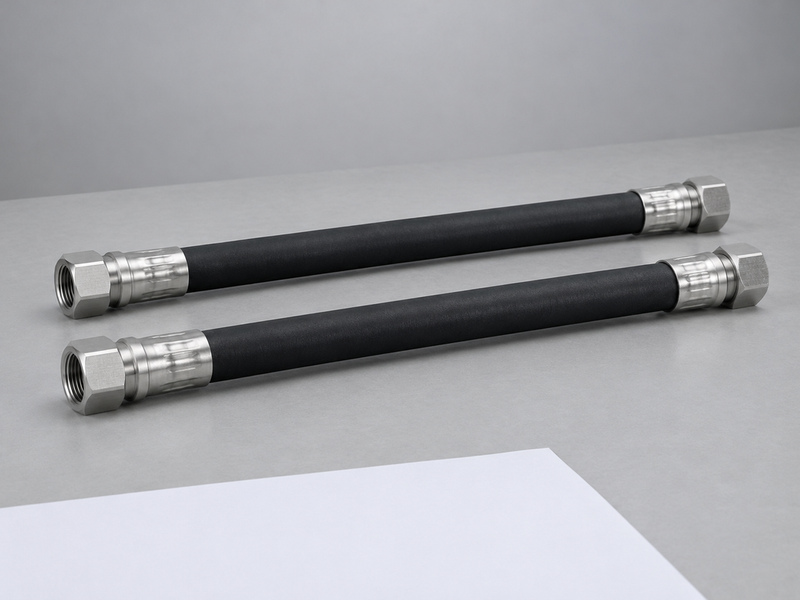
Figure 3. The sample approval loop, with a hold point at each stage, so a nonconforming first article is held back before series production.
Two outcomes matter at this stage. The first is conformity: does the sample match the drawing and the declared performance? The second is repeatability: can the vendor reproduce the sample without a special setup? A first article that passes only when a senior operator stands at the machine is a warning, not an approval. The same loop applies to a full flanged or fixed-end assembly, which is covered in our composite hose assembly guide (planned URL — publish before linking).
Keeping the Supplier Scorecard Alive After the Order
The audit ends when the contract is signed, and that is exactly when attention tends to fade. A live scorecard keeps the same evidence discipline in place once production starts. It also turns a year of deliveries into a trend line instead of a series of isolated events.
Track a small set of metrics that map back to the audit categories:
Table 5. Post-order scorecard metrics and review cadence.
| Metric | How it is measured | Review cadence |
|---|---|---|
| On-time delivery | Confirmed dispatch date against actual dispatch. | Monthly. |
| First-pass acceptance | Conforming assemblies as a share of the batch received. | Per shipment. |
| Documentation completeness | Pack lines present for each batch. | Per shipment. |
| Claim rate and closure | Claims per batch and the days needed to close each one. | Quarterly. |
| Drift from first article | Measured deviation from the approved reference. | Quarterly. |
Set a re-audit trigger alongside the metrics. If first-pass acceptance drops, or a claim stays open past the agreed window, run the scored questionnaire again on the affected category instead of waiting for the annual review.
Treat a rising claim rate on a stable product as a process signal, and treat a documentation gap as a leading indicator of a later dimensional one. Keep the scorecard open between audits, because hose sourcing is a continuing activity rather than a single purchase. Review the numbers against the current chemical hose product range, so that a specification change is never mistaken for a quality drop.
Chemical hose suppliers that improve against the same scorecard for several quarters are the ones worth deepening, because the framework has already proved that it can measure them.
Common Mistakes When Comparing Chemical Hose Suppliers
Most bad sourcing decisions are not caused by missing information. They come from comparing chemical hose suppliers on the wrong things, or from treating a document as a substitute for a process.
Price is compared before capability, which ranks vendors on the least durable signal. A certificate copy is read as proof that a test was performed on the actual batch. The first-article step is skipped, and a dimensional drift appears only at the receiving dock. A material data sheet is accepted because it names a resin, without the liner construction behind it. Warehouse and logistics are ignored until a claim is filed. The scorecard lapses once the first order ships, so the next audit restarts from zero.
Each mistake has a cheap countermeasure. Compare capability first and price later, because the price signal belongs to a separate analysis of cost structure. Ask for batch-linked test data rather than certificate copies. Release the series only after the first article is signed. Read the material data sheet together with the construction drawing, not on its own. Visit the warehouse at least once. Keep the scorecard running between audits.
It also helps to keep the comparison anchored to published standards rather than to vendor vocabulary, as the standards comparison guide sets out.
Chemical Hose Suppliers FAQs
What does supplier qualification mean for chemical hose?
It means replacing trust with evidence. A buyer checks which production steps a vendor performs in-house, collects drawings and test data, scores a weighted questionnaire, and approves a first article before placing a series order. The output is a file that records why a vendor was chosen and what was verified, so a later claim or a replacement decision can be handled on facts instead of memory.
How do I check whether a vendor makes its own liner?
Ask for the resin grade, the liner thickness range, and the number of extrusion lines, then walk the floor and look at the extruder. A producer can show the resin feed, the die, and the cooling trough. A reseller can only show a warehouse. If the liner arrives as loose tube from a third party, the vendor’s control over wall thickness and bond quality is limited.
Which test reports should I request from chemical hose suppliers?
Request data, not just certificates. Ask for electrical resistance measured to EN ISO 8031, hydrostatic results to ISO 1402, impulse data to ISO 6803, and abrasion results to ISO 4649 where dragging service is expected. Each report should name the batch or sample it belongs to. A figure without a method cannot be compared with another vendor, so the reference matters as much as the number.
What is EN 10204 in a hose document pack?
EN 10204 describes types of inspection document for metal products. Type 3.1 and type 3.2 are the levels usually discussed for couplings and flanges, because they link a metal part to its heat or test record. Ask whether a supplier can issue such a document, and read the reference on the paper. Do not assume that any supplier holds one before the document is in front of you.
How many chemical hose suppliers should I shortlist?
Three to five is usually enough to compare without spreading the audit too thin. One is a risk, and ten wastes time. Score the shortlist on the same questionnaire, then keep two approved vendors for each critical assembly so that a single plant interruption does not stop your own deliveries. The shortlist size is a planning figure you set, not a fixed industry number.
What should a first-article approval include?
A signed record that ties the approved sample to a drawing revision, a batch number, and the test data behind it. It should state what was measured, what the acceptance limits were, and who approved it. Keep the physical first article or a photo record with the paperwork. Later batches are then compared against that reference, so drift becomes visible before it reaches the end user.
How should I score a supplier audit questionnaire?
Fix the category weights and the pass mark before the first audit, then rate every row against written definitions for each point on the scale. Two auditors should reach the same score from the same evidence. Record gaps as gaps rather than skipping the line, and treat repeated gaps in one category as a real weakness. The number is only useful if the method behind it is consistent.
Can a distributor act as a chemical hose manufacturer?
Sometimes, and what matters for qualification is not the label but which evidence the party can issue itself. A distributor may hold stock, cut lengths, and fit ends, yet buy its liner and carcass from another supplier. That can be perfectly workable for standard items. For a critical assembly with a declared pressure class, ask who performs each production step, and confirm which party issues the test data attached to the batch.
How do I keep a supplier scorecard useful after the order?
Review a small set of metrics on a fixed cadence: on-time delivery monthly, first-pass acceptance and documentation per shipment, and claim rate quarterly. Add a re-audit trigger so that a falling score starts a fresh questionnaire on the affected category. Share the numbers with the vendor, and compare quarters rather than single shipments. A scorecard that is never read is the same as no scorecard at all.
Which standards should chemical hose suppliers name?
The ones that fit the duty. EN 12115:2021 covers rubber and thermoplastic chemical hose assemblies and their classes and working conditions. EN ISO 8031 covers electrical resistance, ISO 1402 covers hydrostatic testing, and ISO 4649 covers abrasion. For food contact, FDA 21 CFR 177.1520 and EU 10/2011 are the usual references. A vendor who names a standard should also be able to show the test result behind it.
Next Steps Before the First Order
A qualification file is only as strong as its weakest row, so build it once and reuse it. Few chemical hose suppliers pass the full loop on the first attempt, and that is expected. Start with the capability matrix, request the document pack, score the questionnaire, approve a first article, and then keep the scorecard live. The same loop standardizes hose sourcing across several product lines, because one evidence pack answers most of the buyer questions that recur.
Before the next order is placed, a short sequence of steps is worth completing. Build the capability matrix and verify it on a plant visit, because a matrix filled in from a brochure is worth little. Request the full document pack and file it by batch number so that a later claim can be traced. Fix the questionnaire weights and the pass mark in advance, then approve a first article before any series commitment. Finally, put a re-audit trigger behind the post-order scorecard.
About HENGHUA
HENGHUA is a professional hose and coupling manufacturer supplying global distributors, retailers, and OEM brands. The chemical hose line includes UHMWPE (UPE), XLPE, and PTFE liners, plus rubber constructions in EPDM and oil-resistant synthetic rubber, with high-strength textile reinforcement and a steel helix for suction duty. Coupling options cover camlock (cam and groove), flange, threaded, and clamp-style terminations. Factory-crimped assemblies, custom lengths, jacket printing, private label, and OEM/ODM programs are available, with factory-direct pricing, short bulk lead times, and a warranty.
About the author. This guide was prepared by the HENGHUA hose engineering team, which supports chemical transfer, petroleum, and industrial hose specification for distributors and OEM programs. Questions about a specific service condition can be sent through the contact page.





 English
  Spanish
  Portuguese
  French
  German
  Arabic
  Russian
  Indonesian
  Japanese
  Korean