
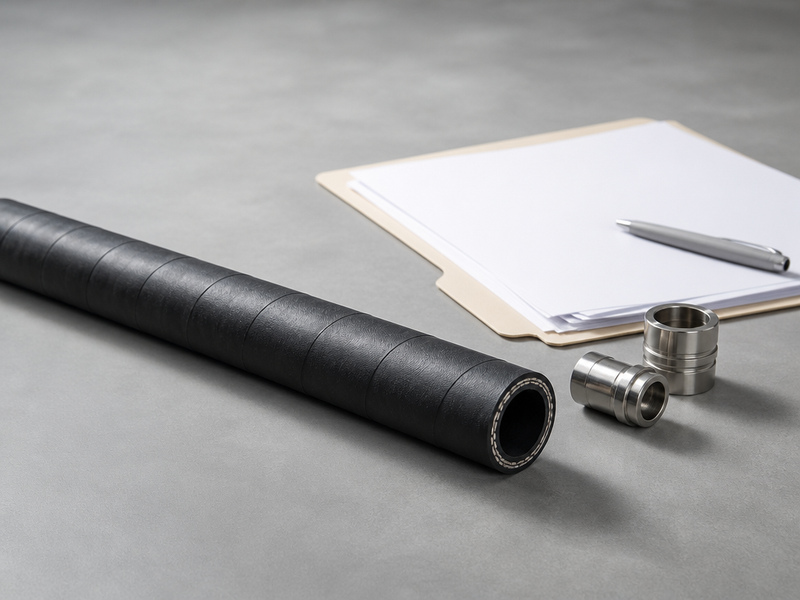
A chemical hose price is rarely a single number copied from a shelf label. It is the sum of a liner choice, a reinforcement build, a cover compound, a bore and length mix, and a batch size a factory can actually run. This guide explains what really moves that figure and how the minimum order quantity behind it is set by real production steps rather than an arbitrary rule.
It is written for buyers and engineers who want to read a quote as a cost structure instead of a sticker, and to compare offers that were never priced the same way. The companion chemical hose complete guide covers the wider product family, while this article stays on the commercial logic of the figure itself.
About a 14-minute read at 250 words per minute; it covers cost drivers, MOQ logic, and a quotation-comparison checklist.
What Actually Drives the Chemical Hose Price
Unit price is a stack of measurable inputs, not a marketing position. The liner sets the chemical barrier, the reinforcement sets the pressure and vacuum capability, and the cover protects both from abrasion and weather. Bore, length, and end finishing then turn that construction into a finished assembly. A hose quotation that shows only one figure hides this stack, which is why two suppliers can look far apart on paper yet sit close in real cost.
The practical split is material cost versus conversion cost. Material cost scales with mass per meter, so liner family, wall thickness, and reinforcement mass set the floor. Conversion cost scales with how often the line has to stop, reset, and re-test, so it follows batch size and end finishing rather than raw polymer.
A cost view also fits the wider chemical hoses and fittings system approach (planned URL — publish before linking), because hose, coupling, and gasket costs are usually decided together rather than one at a time.
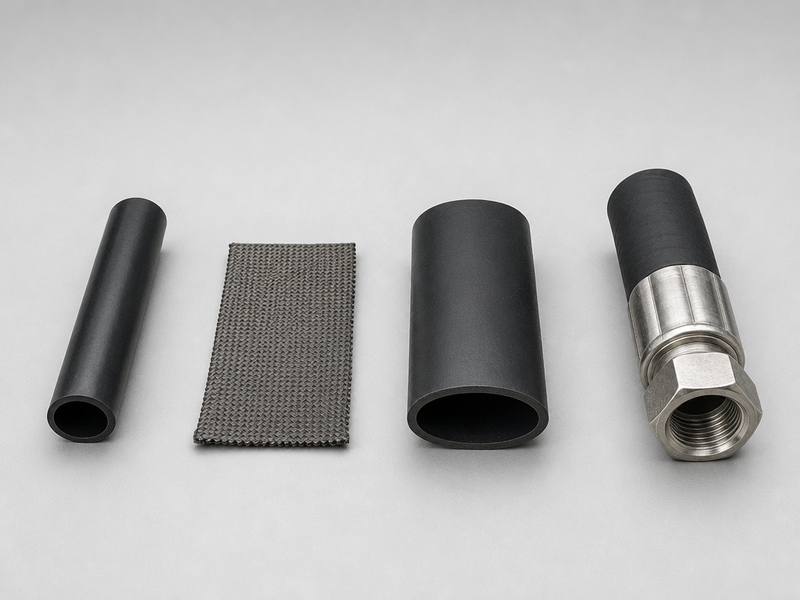
Figure 1. Construction cost stack: liner, reinforcement, cover, and end finishing; each layer adds mass or labor before freight.
Table 1. Cost drivers that move the chemical hose price and where a buyer has leverage
| Cost driver | What actually moves it | Buyer leverage |
|---|---|---|
| Liner material and gauge | Polymer family and wall thickness | Standardize one family per duty |
| Reinforcement build | Number and type of textile plies | Match to pressure, not to margin |
| Cover compound | Abrasion and weather resistance | Upgrade only on harsh routes |
| Bore and length mix | Diameter steps and cut lengths | Consolidate the common bore |
| Run length versus minimum order quantity | Continuous extrusion time | Order at the setup break point |
| Coupling and end finishing | Crimping, threading, and welding time | Fix one termination standard |
| Pressure and electrical testing | Sample testing versus full testing | Agree the test basis upfront |
| Marking and packaging | Print, label, and carton setup | Reuse one label layout |
| Freight and Incoterms | Density, volume, and transport term | Quote every offer on one Incoterm |
Liner Material and Gauge: The Biggest Cost Lever
The liner is usually the first item to move the chemical hose price. Changing a liner to a thicker wall also changes flexibility, weight, and the pressure the assembly can hold, so the whole construction is re-confirmed rather than the liner alone. Gauge is quoted in millimeters or as a nominal wall, and each step adds mass along the whole length.
The polymer family matters more than any single gauge value. UHMWPE (UPE), XLPE, and PTFE liners sit at different points on the cost and temperature scale, while EPDM and oil-resistant synthetic rubber constructions serve a different band of duties. The chemical hose product line groups these liners so a buyer can see the trade-offs at a glance.
Wall thickness and liner density set the cost per meter of the tube before any reinforcement is applied. A heavier liner also raises weight and reduces flexibility, which then feeds into handling and freight. Gauge should therefore be matched to the chemical duty rather than chosen for margin.
Availability also interacts with gauge, because a factory may stock a standard wall in the common bores while a special gauge is extruded to order. A stock liner often shortens the path to a first shipment, while a bespoke gauge may carry a longer planning cycle. Neither choice is wrong; the point is to price the option rather than assume it.
Reinforcement, Cover, and Bore: How Structure Changes the Chemical Hose Price
Reinforcement is priced by build, not by a single word. More textile plies raise burst capability and stiffness, while a steel helix adds the vacuum support that separates a suction and delivery hose from a delivery-only hose under EN 12115:2021. Each added layer is more material and more line time, and the cost step is usually larger than a buyer expects.
Cover compound then sets abrasion and weather life. EPDM and similar rubber covers resist sunlight and scuffing, while a lighter thermoplastic cover may be enough for a fixed indoor route. The cover is rarely the biggest driver, but it is often the easiest place to over-specify.
Bore diameter is the next lever because mass grows with the wall circumference. Moving from one common bore to the next larger size adds material per meter and often lowers the pressure rating. The hose size selection guide is the fastest way to confirm which nominal bore a duty actually needs.
The hose structure also has to survive handling, not only pressure. A stiffer, heavily reinforced hose resists kinking on tight bends, which can remove the need for extra supports or a longer route. That saving rarely appears on the offer itself, yet it can offset part of the higher unit cost over the life of the line.
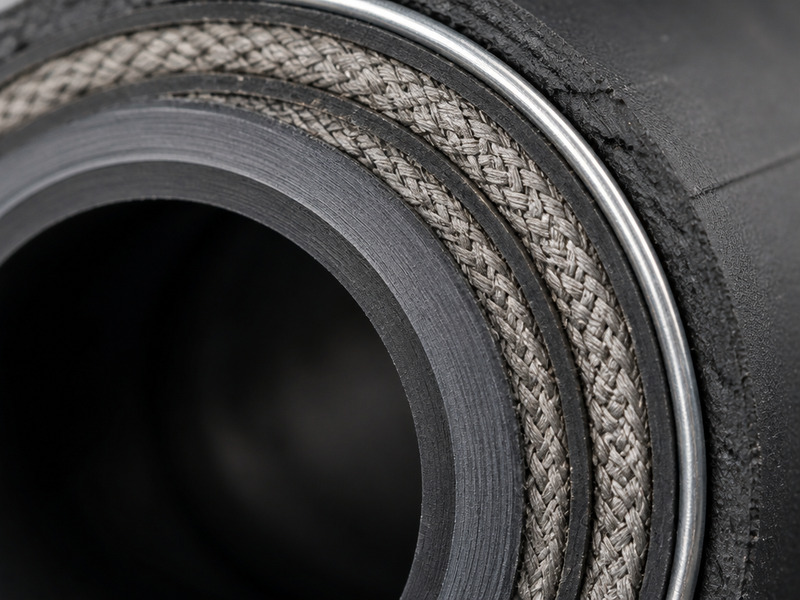
Figure 2. Liner gauge and textile plies form the material core of the assembly; a steel helix is added for suction duty, and bore steps and cut lengths add the rest.
Table 2. How each construction choice shifts the cost per meter of a finished hose
| Construction choice | Effect on mass per meter | Effect on conversion steps | Selects it when |
|---|---|---|---|
| Thicker liner gauge | Rises along the whole length | Little change | The duty needs a stronger barrier |
| Extra textile ply | Rises | One more forming pass | The pressure class is higher |
| Steel helix for suction | Rises sharply | Adds a winding step | Suction duty is specified |
| Heavier abrasion cover | Rises slightly | Little change | The route abrades or sits outdoors |
| Larger nominal bore | Rises with circumference | Pressure rating may fall | Flow demand exceeds the smaller bore |
| Factory crimped ends | Unchanged | Adds crimp and test time | The site wants a finished assembly |
How Chemical Hose MOQ Follows Extrusion and Crimping Setup
MOQ means minimum order quantity, and the chemical hose MOQ is a production artifact, not a sales mood. The minimum order quantity is set by two changeovers: the extrusion run that forms the tube, and the crimping or assembly setup that fits the ends. Both consume machine time that has to be recovered across the batch, so the number reflects the line rather than the catalog.
On the extrusion side, a run has to be long enough to stabilize wall thickness before the tube is cut to length. On the assembly side, a crimp program and its test coupons are set once and then amortized across the order. That is why the chemical hose MOQ you see on a quote usually tracks the smaller of the two setup costs.
A buyer who needs several bores and lengths in one order often finds the minimum applies per construction, not per shipment, because each build is its own run. Grouping similar bores, or agreeing a mixed batch, can soften that constraint. The wholesale supply guide (planned URL — publish before linking) looks at the stocking side of the same question.
Setup is not only machine time. A new build also needs a first article, a dimensional check, and a test coupon, and those steps run once regardless of order size. Spreading them across a larger batch lowers their share, which is the real reason a longer run tends to look cheaper on paper.
Table 3. What each term in a minimum order clause actually fixes
| Clause term | What it fixes | Why the factory sets it |
|---|---|---|
| Minimum run length | Meters per continuous run | Stabilize wall thickness |
| Minimum batch per construction | One build, one setup | Recover changeover time |
| Minimum order value | Blended handling cost | Cover paperwork and picking |
| First article approval | Sampled piece and test | Confirm the specification |
| Mixed batch allowance | Similar bores in one run | Reduce idle line time |
Run Length vs Minimum Order Quantity: Where the Chemical Hose Price Steps Down
Run length and minimum order quantity pull in opposite directions. A long continuous run spreads setup over many meters and lowers the cost per meter, while a short run spreads the same setup over few meters and pushes unit cost up. The point where the unit cost drops is a planning figure that depends on the line, not a published schedule.
The sensible move is to order at the break point rather than at the smallest possible quantity, provided the extra length can be consumed within its shelf life. Storage cost and the risk of a material change over time both matter, so the lowest unit cost and the lowest total cost can be different numbers.
The chemical hose MOQ and the run length also interact, because a factory may accept a small first order if it can schedule it inside a longer planned run. Asking when the line already runs a similar build is often more useful than asking for a discount.
Demand planning shapes the answer as well. A distributor who can forecast a year of steady consumption can commit to a longer run and hold the lower figure, while a buyer who needs a single delivery pays for flexibility. The trade is deliberate, so the right length depends on how the hose will be consumed, not only on the order itself. A first-time importer, a distributor stocking several bores, and an OEM on a scheduled program therefore reach three different answers.
Couplings, End Finishing, Testing, and Marking Costs
End finishing is labor, and labor is quoted per assembly rather than per meter. Camlock (cam and groove), flange, threaded, and clamp-style terminations each need different parts, tools, and handling time; the hose couplings guide covers the selection side, while this article stays on cost.
Testing is a separate line that buyers often miss. A pressure test under ISO 1402 (hydrostatic proof and burst) and an electrical resistance and conductivity measurement under EN ISO 8031 both take time, and a full-batch routine costs more than a sample-based one. The standards comparison guide explains how pressure classes and test bases differ between systems.
Marking is small but not free, and it is easy to underestimate. Sheath printing, a label, and a carton each add a setup and a per-unit cost, so extra layouts for individual customers cost more than one design reused across a family. The same hose body can therefore carry a noticeably different chemical hose price once the ends, marks, and pack are fixed.
Documentation is part of that line as well. An inspection document prepared to EN 10204 and a material or test record add administrative time, and they are worth agreeing early rather than requesting after the order. The scope you accept should match the evidence your own quality system needs to release the goods.
Packaging, Freight, and Incoterms in the Quoted Chemical Hose Price
Freight closes the gap between a factory figure and a landed cost. Coiled hose is bulky, so volumetric weight, carton size, and pallet count can matter more than the mass on the scale. The packaging and transport decisions here attach directly to the cost per meter a buyer finally pays.
Incoterms decide who owns the transport leg, the insurance, and the risk at each point. Comparing an Ex Works figure with a delivered figure is not a comparison at all, so the Incoterm should be fixed before any offer is judged. Two quotes on different terms can differ by more than the product itself.
Packaging protects the tube from crushing and ultraviolet exposure, and it also has to survive the handling chain. A heavier coil may need stronger wrapping, which adds cost and mass. A buyer who plans the container load early can often reduce both.
Currency and payment terms sit beside the Incoterm in the same discussion. A figure quoted in one currency and settled in another carries an exchange risk that neither party controls, and a payment schedule changes the working capital each side has to fund. Agree the currency, the schedule, and the term together, so the comparison stays clean. A quotation also carries a validity window, because polymer and freight costs move between the inquiry and the order.
Table 4. Line items that change the chemical hose price when two quotes use a different basis
| Line item | Basis A | Basis B |
|---|---|---|
| Liner and gauge | Stated family and wall | Generic description |
| Reinforcement | Plies and helix given | Pressure class only |
| Bore and length | Fixed list of cut lengths | Random lengths allowed |
| End finishing | Named coupling and crimp | Bare hose, no ends |
| Testing | Sample or full, stated | Unstated |
| Marking and packaging | Print and carton defined | Bulk coil only |
| Incoterm | One consistent term | Mixed terms |
| Quote validity | Named validity window | Open-ended |
Comparing Two Chemical Hose Quotations on the Same Basis
A hose quotation is only comparable when the basis is identical. Before judging the figure, line up the liner, the reinforcement, the cover, the bore and length, the coupling type, the test regime, the marking, the packaging, and the Incoterm. Anything left unstated is a hidden difference waiting to appear after the order.
The quickest method is to build a comparison sheet with one row per attribute and one column per supplier, then mark every cell that is not like for like. Where a line cannot be matched, ask for a restated offer rather than guessing. A second offer on the corrected basis is far more useful than a long negotiation on the wrong one.
When two offers sit close after normalization, the decision usually turns on service and documentation rather than the headline figure. Ask who owns the tooling, how a claim is handled, and what the test certificate covers. Those answers protect the saving a buyer worked to obtain.
A normalized sheet also makes the discussion shorter, because both sides argue about the same cells instead of two different documents. Where a supplier cannot match a line, the gap is visible and specific, and a change to one attribute can be priced on the spot. That is more productive than a blanket request to improve the figure.
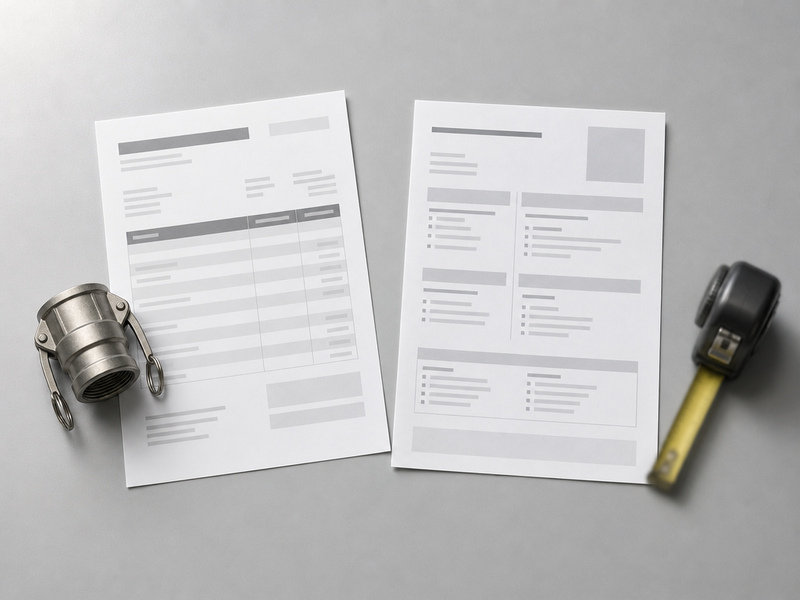
Figure 3. Normalizing two offers onto one basis exposes the line items that caused a real gap rather than a headline difference.
Table 5. A hose quotation comparison checklist for two offers
| Check | Why it matters | Confirm in writing |
|---|---|---|
| Same liner and gauge | Barrier and mass differ | Family and wall thickness |
| Same reinforcement | Pressure and vacuum differ | Ply count and helix |
| Same bore and length | Material usage differs | Cut length tolerance |
| Same coupling and finish | Labor differs | Coupling type and crimp |
| Same test regime | Cost and evidence differ | Test standard and scope |
| Same marking and packaging | Setup differs | Label layout and carton |
| Same Incoterm | Landed cost differs | Named term and place |
Turning Cost Drivers into a Buying Plan
Price and MOQ are best treated as outputs of a construction and a production plan, not as fixed market rates. Decide the liner and gauge for the duty, fix the bore and length mix, standardize the end finishing, and order at the run break point. Then compare every offer on the same basis, so the chemical hose price you are quoted reflects the hose you actually need.
Scope: this article covers rubber and thermoplastic chemical hose assemblies. Constructions outside that range follow a separate cost model.
Start with a defined duty and a sample. Get a quote and free samples to confirm liner, bore, and end finishing for your application before a full order is placed, and use the checklist above to keep every offer on one basis.
Chemical Hose Price and MOQ FAQs
What actually drives a chemical hose quote?
Four groups dominate. The liner family and gauge set the chemical barrier and the mass. The reinforcement sets pressure and vacuum capability, while the cover sets abrasion and weather life. Finally, the bore, length, end finishing, testing, and packaging convert the tube into a shippable assembly. Setup time on the line then spreads across the batch, so quantity and construction both matter.
Does a larger bore always raise the unit price?
Material cost rises with every bore step, while total cost can move either way. A larger bore needs more compound and reinforcement per meter, so the tube cost rises. At the same time, a larger bore may carry more flow, which can reduce the number of parallel lines a plant needs. Match the bore to the duty rather than buying the smallest or the largest option.
Why does the minimum order quantity change between builds?
Each construction is its own run. A build with a different liner, reinforcement, or cover needs a fresh extrusion setup and a fresh crimp program, so its changeover has to be recovered from that order alone. Similar bores and lengths grouped in one run reduce the number of setups and can lower the effective minimum.
Is a thicker liner always better?
No. A thicker liner costs more, weighs more, and reduces flexibility, so it only pays where the chemical duty demands it. For many duties a standard gauge is enough. Over-specifying the gauge raises the unit price without improving service life, and it can make handling harder on site.
Do factory-crimped ends cost more than bare hose?
Yes, because ends add parts, skilled labor, and testing. A bare hose is priced per meter, while a finished assembly adds the coupling, the crimp or thread, and any pressure or electrical test. If your team already owns the tooling, buying bare hose and finishing locally may cost less overall.
Do test certificates add cost?
They can, depending on scope. Routine sample testing is usually built into the figure, while full-batch pressure testing or an individual inspection document adds labor and time. Agree the required scope before the order, and state which standard applies, so the cost line matches the evidence you actually need.
How should I compare two offers?
Normalize both to one basis first. Line up liner, gauge, reinforcement, cover, bore, length, coupling, test scope, marking, packaging, and Incoterm, then mark every cell that is not like for like. Ask for a restated offer where a line cannot be matched. Only then does the headline figure become a fair comparison.
Can a supplier lower the minimum for a first order?
Sometimes, if the requested build can ride inside a run that is already planned. That avoids a dedicated setup and makes a small first order practical. Ask when a similar construction is scheduled, and treat the answer as a planning input rather than a promise. Sample orders are often handled this way.
Are setup costs included in a hose quotation?
Usually yes, though the line is often hidden inside the unit price. A supplier recovers the extrusion setup, the crimp program, and the first-article check somewhere, either as a separate setup charge or as a higher rate on a short run. Ask which of the two applies before comparing offers, because an offer that shows no setup line has simply folded it into the rate.
Does packaging affect the landed cost?
Yes. Coiled hose is bulky, so carton size, coil diameter, and pallet count can drive the freight charge more than the mass does. Stronger wrapping adds cost and weight but prevents crushing. Planning the container load early, and standardizing packaging, keeps the landed figure predictable.
What is the fastest way to get an accurate quote?
Send the full duty, not a single number. State the chemical, concentration, temperature, pressure, bore, length, and end finishing, plus any test or marking requirement. With that basis, a supplier can quote one construction that matches the application, and you avoid comparing offers that were never equivalent.
About HENGHUA
Written by the HENGHUA technical team. HENGHUA supports chemical hose and coupling projects for distributors, retailers, and OEM brands, and reviews application details before quoting.
HENGHUA is a professional hose and coupling manufacturer supplying global distributors, retailers, and OEM brands. The chemical hose line covers UHMWPE (UPE), XLPE, and PTFE liners and rubber constructions such as EPDM and oil-resistant synthetic rubber, with high-strength textile reinforcement and a steel helix for suction duty. On the coupling side, HENGHUA offers camlock (cam and groove), flange, threaded, and clamp-style terminations, plus factory crimped assemblies, custom lengths, sheath printing, and private label or OEM/ODM programs. Commercial terms include a factory-direct price, batch short lead time, and warranty.






 English
  Spanish
  Portuguese
  French
  German
  Arabic
  Russian
  Indonesian
  Japanese
  Korean