
A brewery hose, like a dairy hose or a beverage transfer hose, spends its life moving liquids that are sensitive to oxygen and temperature. The vessels it connects are cleaned on a fixed cycle, and that cycle shapes the specification. The specification is therefore driven by cleaning and by flavour, not by pressure. Most brewery lines run below 6 bar; almost all of them are cleaned daily.
This guide covers the three plants that share this duty, the liners that suit each transfer point, and the questions that separate a hose that lasts years from one that taints a batch in its first month.

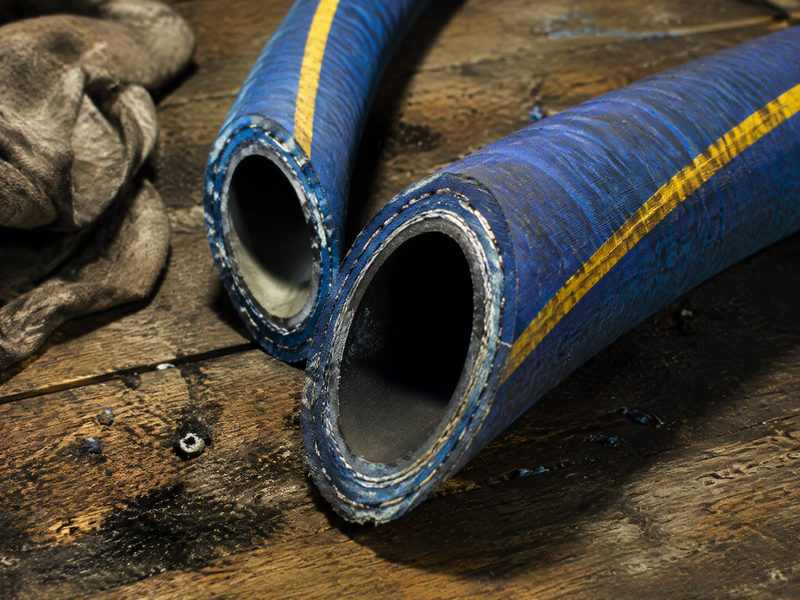
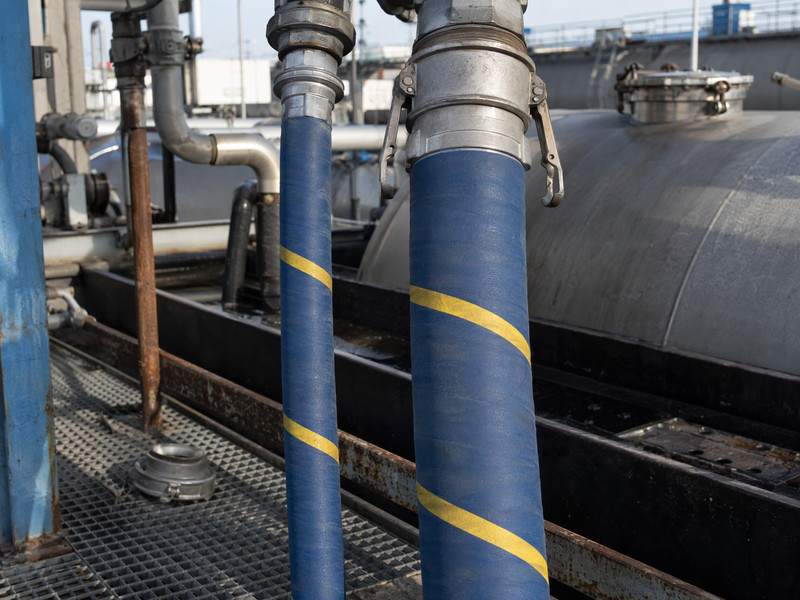
Figure 1. Condensation runs down the tank wall behind the outlet, and the hose hangs slack to the floor.
What Do Brewery Hoses Actually Carry?
Four families of fluid, each with its own demand.
A brewery hose carries wort first: hot, sugary and prone to depositing protein on a liner that runs cool. Beer is cold, carbonated and sensitive to oxygen pickup and to aromatic contamination from a previous product. Cleaning chemicals are hot caustic and acid. And water, in large volumes, at every stage.
Those four fluids explain why the liner choice often lands on polypropylene, as the food grade lining comparison sets out. It handles all four, cleans well, and costs less than the fluoropolymers. The failure mode to watch is temperature: wort at the end of the boil is close to the polyolefin ceiling.
Gases and compressed air need a different conversation, and a brewery hose used for CO2 or air should be specified separately rather than borrowed from the beer store.
Which Liner Suits Which Transfer Point?
| Transfer point | Usual liner | Why | Watch point |
|---|---|---|---|
| Wort from kettle to fermenter | PP | Broad approval, low cost | Temperature close to ceiling |
| Green beer and bright beer | PP or UHMWPE | Cleanability, low flavour pickup | Aroma carry-over between products |
| Yeast and slurry | UHMWPE | Abrasion resistance | Cleaning is harder than transfer |
| CIP supply | PP or UHMWPE | Caustic resistance | Concentration and temperature |
| Deaerated water | PP | Low extractables | Oxygen ingress at fittings |
| Barrel and cask filling | PTFE or PP | Aroma neutrality | Small bore, frequent handling |
Table 1. Liner starting points for brewery duty. Confirm each against the cleaning regime rather than the product name alone.
Aroma carry-over is the brewery-specific problem, and the liner comparison explains where PTFE earns its cost. A liner that has held a strongly hopped beer can leave a note in the next light product, and the note is not removed by a normal caustic cycle.
PTFE is the practical answer where that matters, and dedicated hoses per product family are the cheaper answer where the volumes justify them.
What Changes in a Dairy?
A dairy hose faces a different mix: raw milk, pasteurised product, cream, and a cleaning regime that is stricter and more frequent than a brewery’s.
The critical difference is temperature and protein. Milk proteins deposit on a warm surface and bake on at cleaning temperatures if the pre-rinse is skipped. A liner with a smooth finish releases them; a scored or swollen liner holds them and stops cleaning.
White liners dominate here for the reason covered in the colour guide: residue visibility. The colour supports the cleaning check; the liner still has to be food-contact approved and documented.
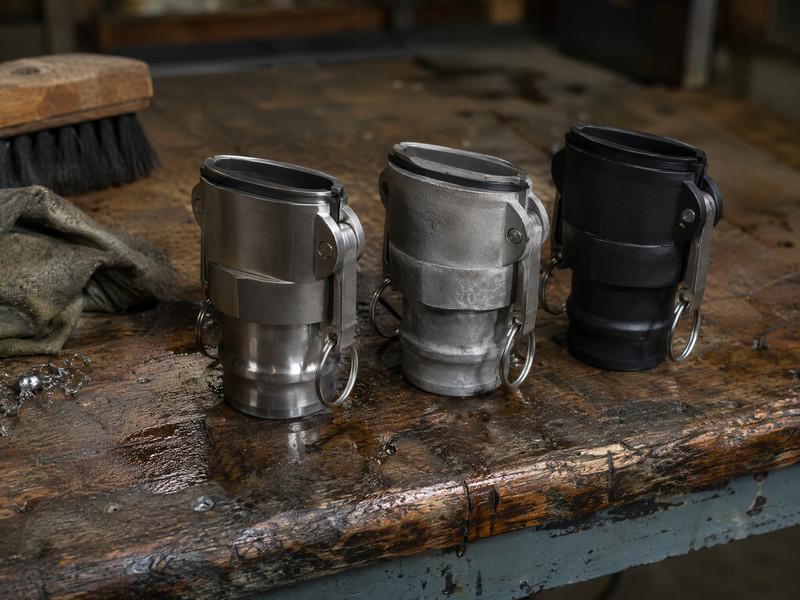
Dairy plants also run more couplings per metre than a brewery, because lines are broken and re-made between products. That puts the end fittings under repeated handling, and a camlock that is slightly worn becomes the leak that nobody traces back to the fitting.
Where Does Beverage Transfer Differ?
Soft drinks, juice and water plants run continuous lines with less product changeover and more attention to oxygen and sterility.
In these plants the hose is often part of a validated cleaning loop, as the CIP and SIP guide describes, so it is cleaned as part of a circuit rather than on its own. That changes the specification: the hose has to drain, and it has to hold pressure during a cleaning cycle that may run at a higher flow than the product duty.
Juice adds an acid load and a pulp load. The acid is manageable; the pulp settles in low points and is the reason a coiled hose smells after a week.

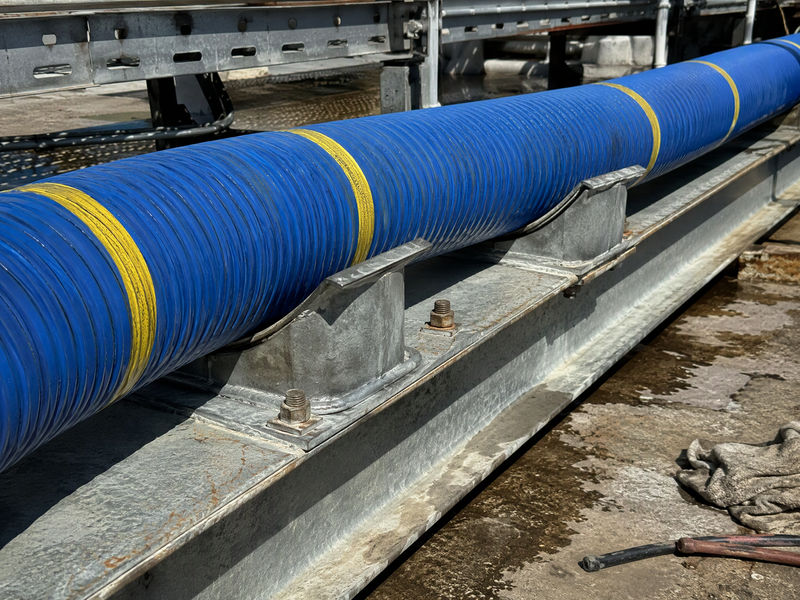
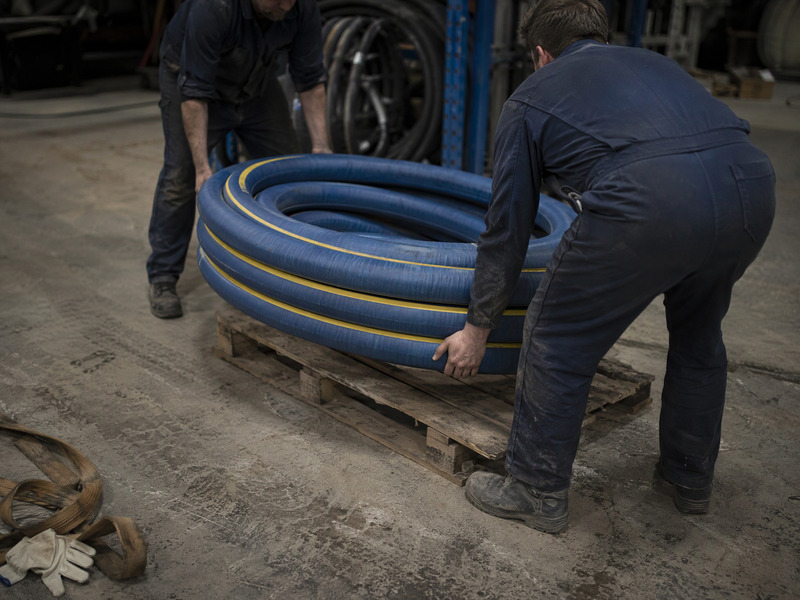
Figure 2. The drain grate sits directly under the brackets, so anything leaving a hose lands in it.
| Stage | Transfer point | Hose length | Handling |
|---|---|---|---|
| Brewhouse | Kettle to whirlpool | Short, fixed | Supported |
| Cellar | Fermenter to conditioning | Medium | Moved daily |
| Filtration | Filter to bright tank | Short | Fixed |
| Packaging | Bright tank to filler | Medium | Moved per run |
| CIP | Skid to loop | Long | Coiled |
Table 2. Transfer points by stage. The handling column decides the fitting and the weight, more often than the pressure does.
Why Does Bore Matter More Than Pressure Here?
Because these plants move volume at low pressure, and the cost of a wrong bore shows up in time rather than in failure.
A 2 inch line filling a fermenter at 4 bar takes longer than a 3 inch line at the same pressure, as the sizing guide works through. In a brewery the transfer time is the constraint on the brewing day. Undersizing a hose is a schedule problem, not a safety problem, which is why it survives review.
Oversizing has its own cost. A 4 inch hose holds more product, weighs more, drains worse and takes longer to clean. On a line that changes product twice a day, the residual volume is a real loss.
For the brewery hose and for a beverage transfer hose alike, the right bore is usually the one that matches the pump and the vessel connection rather than the one that minimises transfer time in isolation.
How Do You Handle Winery Duty?
A winery hose sees juice, must, wine, tartrate and cleaning chemicals, and it sees them at harvest in a rush.
Two duties dominate in a winery hose. Must transfer is abrasive and sugary, which favours UHMWPE. Wine transfer is aroma-sensitive and often at low flow, which favours PTFE or a dedicated PP hose that never carries anything else.
The harvest constraint is time. Hoses are bought in a hurry in September, and the specification is often copied from the previous year. Keeping a written specification in the cellar file prevents the annual scramble from becoming an annual downgrade.
What Documents Do These Plants Ask For?
Three, and they are consistent across breweries, dairies and beverage plants.
A food-contact declaration for the liner, naming the regulation and the grade. A cleaning recommendation with concentration, temperature and contact time. And batch marking that ties the hose to both.
Larger groups add a fourth: an allergen statement, which is a declaration that the hose does not introduce a listed allergen. That is easier to produce for a thermoplastic liner than for a rubber one, and it is worth asking for at quotation stage.
How Do You Keep a Hose Store Under Control?
A brewery hose store is where specifications go to die. Hoses arrive, get used, get cleaned and get put back without a label, and within a year nobody can say which hose is food-contact approved.
Three simple controls fix it. Mark every hose with an asset number and a liner code at goods-in. Keep a one-page register that lists those numbers against the transfer points they are allowed on. And hang hoses rather than coil them on the floor, so the ends stay off the ground.
The register does more than compliance. It is also the only record of which hose has been cleaned how many times, which is the number that predicts a liner failure. It shows when a hose has moved from beer to CIP duty, which is exactly when a liner starts to fail, because the cleaning load rose and nobody recorded it.
The same register discipline applies with a shorter inspection interval on milk duty. Milk soils are harder to see on a white liner than beer soils on a clear one, and the register is what prompts an inspection rather than a complaint.
What Does a Changeover Cost?
Changing product on a line costs time, product and cleaning. The hose is a small part of that cost and a frequent cause of it.
A hose that does not drain adds product loss at every changeover. A hose that carries aroma adds a quality hold. A hose that is over-specified adds cleaning time because the bore is larger than the duty needs.
Those three are the practical reasons to re-check the specification when the line takes on a new product family, before the old hose is asked to do the new job. A beverage transfer hose bought for one product family can be the wrong hose two years later without anything about it changing.
The review itself is short. List the transfer points, note the product families and the cleaning cycle, then check the liner and the bore against both. Keep the note with the register rather than in a personal notebook, because the next person to run the review will not have the notebook. An afternoon is enough, and the review usually removes one hose from the store. A brewery hose that has been on three duties is rarely the right hose for any of them, and the register is what makes that visible without an argument.
Häufig gestellte Fragen
Is a brewery hose the same as a food grade hose?
It is a food grade hose specified for brewery duty. The approval is the same; the liner, bore and cleaning envelope are set by the process.
Can one hose serve wort, beer and CIP?
Often yes with PP, provided the temperature stays inside the liner ceiling and the hose drains between uses. Many breweries still dedicate hoses per product family to avoid aroma carry-over.
What bore do most breweries use?
Two inch and three inch cover most cellar transfers, with larger bores on wort cooling and transfer mains. Match the pump and the vessel connection rather than a rule of thumb.
Do dairies need a different hose from breweries?
The liner can be the same; the cleaning regime is stricter and the protein load is higher. A dairy hose usually needs a smoother finish and more frequent inspection.
Why does my beverage hose smell after cleaning?
Usually aroma rather than residue, and the order of the check tells them apart. Drain the hose and smell the outlet: a note that survives a full cycle has gone into the liner, while a stale smell at the low point is residue sitting in liquid. Rule the low points out first, because a coiled hose traps liquid there.
Are composite hoses suitable for CO2 and compressed air?
Only where the hose is specified for gas duty and the fittings are suited to it. A beer hose borrowed for air is a common and avoidable mistake.
How often should a winery hose be replaced?
On inspection, with the criteria written down: staining that will not clean, liner swelling, cover cracking or a flavour complaint traced to the line.
Über HENGHUA
HENGHUA supplies composite hose to breweries, dairies and beverage plants with PP, UHMWPE and PTFE liners, in the bores these plants actually use. White and blue covers, camlock or flanged ends and batch marking are specified at order.
Send the transfer point, the cleaning regime and the product family, and we will confirm the liner and the documents that go with it.
 English
 Spanish
 Portuguese
 French
 German
 Arabic
 Russian
 Indonesian
 Japanese
 Korean