Discharge Dredging Hose
Product Overview
A discharge dredging hose is a specialized rubber hose engineered to transport abrasive slurries, sand, silt, and seawater from dredging vessels to disposal or processing points. As a critical component in marine and civil works, this hose connects floating pipelines to dredge pumps, absorbing wave energy and vessel movement. In China, leading manufacturers follow international standards to ensure reliable performance in aggressive marine environments. This discharge dredging hose definition centers on its ability to handle high wear, negative pressure, and dynamic bending.
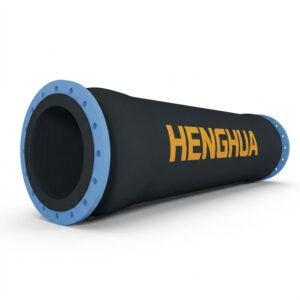
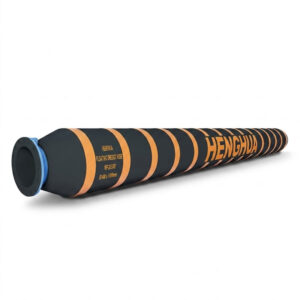
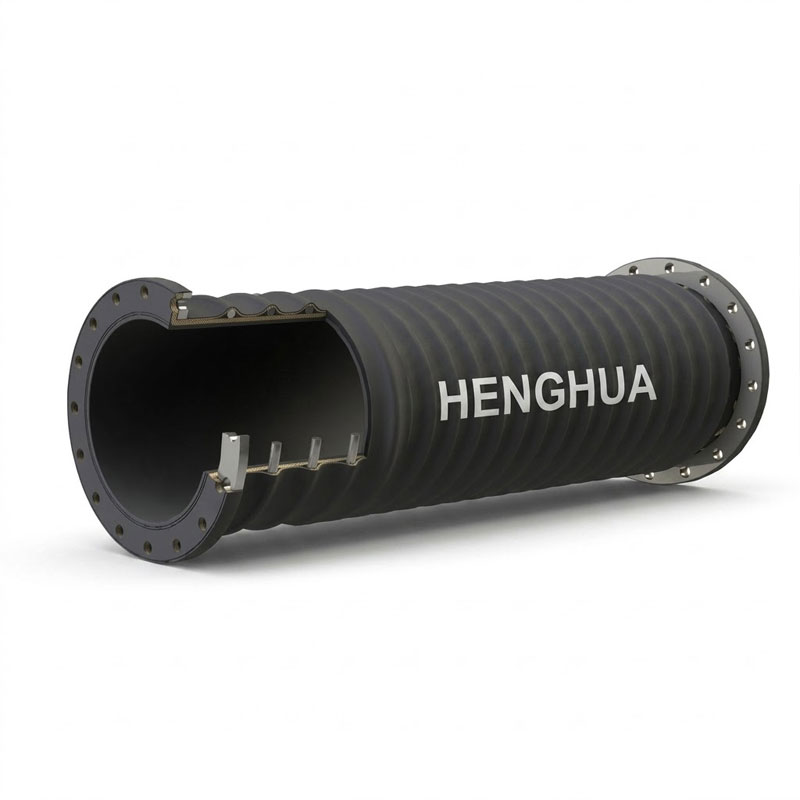
The construction combines a synthetic abrasive-resistant rubber tube with high-strength breaker plies and fully embedded steel wire coils. This design resists kinking, crushing, and local loads while maintaining flexibility. The cover is black synthetic rubber with a bright orange spiral stripe or a tough orange polyurethane coating for high visibility and weather resistance.
Key performance parameters include a working pressure range from 5 bar to 30 bar, bursting pressure up to 90 bar, and vacuum resistance of 0.8 bar. Temperature tolerance spans -25°C to +80°C. Wear layer thickness varies from 12 mm to 50 mm depending on diameter, with cover thickness from 5 mm to 8 mm. Standard lengths run from 1.5 meters to 3 meters.
Core advantages include exceptional abrasion resistance against sand and rocks, steel wire coil reinforcement for crush resistance under heavy loads, full vacuum rating preventing liner collapse during suction cycles, and an orange polyurethane option for maximum service life in high-impact zones.
Primary applications involve dredging ships at ports, docks, and offshore sites. The hose transports seawater, silt, sand, and other dredged materials. It connects seamlessly with steel or rubber pipelines while reducing sway caused by waves, allowing smoother medium flow.
This product solves common dredging challenges: premature tube wear from sharp particles, hose collapse during suction, difficulty connecting to rigid pipelines, and fatigue from continuous wave motion. By embedding steel coils and using thick wear layers, the hose delivers consistent uptime.
Reputable manufacturers in China offer standard compliance with ISO, ABS, or DNV guidelines upon request. Quality assurance includes burst testing, vacuum validation, and layer adhesion verification for every production batch.
Product Advantages
- Superior Abrasion Resistance: Thick synthetic rubber tube withstands continuous impact from sand, gravel, and crushed stone, extending service life by up to 300% compared to standard hoses.
- Kink and Crush Protection: Fully embedded steel wire coils prevent structural collapse under heavy deck loads or accidental compression, maintaining full bore flow.
- Full Vacuum Rated: Operates reliably at 0.8 bar vacuum pressure without liner separation, critical for suction-side dredging applications.
- Wave Motion Absorption: Flexible carcass with breaker plies dampens vessel-induced oscillations, reducing stress on pipeline flanges and couplings.
- High Visibility Cover: Bright orange spiral stripe or full polyurethane coating improves safety during night operations and floating line inspections.
Applicable Users: Marine contractors, port authorities, dredging companies, civil engineering firms, and environmental remediation specialists.
Detailed Technical Specifications Table
| Code | Inch | mm | Working Pressure (bar) | max psi | Bursting Pressure (bar) | VACUUM Pressure (bar) | Wear Layer Thickness (mm) | Cover Thickness (mm) | Length (m) |
|---|---|---|---|---|---|---|---|---|---|
| DDH300 | 12″ | 300 | 5-15 | 220 | 15-45 | 0.8 | 12-15 | 5 | 1.5-2 |
| DDH400 | 16″ | 400 | 5-15 | 220 | 15-45 | 0.8 | 12-15 | 5 | 1.5-2 |
| DDH450 | 18″ | 450 | 5-15 | 220 | 15-45 | 0.8 | 12-15 | 5 | 1.5-2 |
| DDH500 | 20″ | 500 | 10-20 | 300 | 30-60 | 0.8 | 15-20 | 5 | 1.5-2 |
| DDH550 | 22″ | 550 | 10-20 | 300 | 30-60 | 0.8 | 15-20 | 5 | 1.5-2 |
| DDH600 | 24″ | 600 | 15-25 | 360 | 45-75 | 0.8 | 15-20 | 5 | 1.5-2 |
| DDH650 | 26″ | 650 | 15-25 | 360 | 45-75 | 0.8 | 15-20 | 5 | 1.5-2 |
| DDH700 | 28″ | 700 | 15-25 | 360 | 45-75 | 0.8 | 20-25 | 5 | 1.5-2 |
| DDH750 | 30″ | 750 | 15-25 | 360 | 45-75 | 0.8 | 20-25 | 5 | 1.5-2 |
| DDH800 | 32″ | 800 | 15-25 | 360 | 45-75 | 0.8 | 25-50 | 5-8 | 1.5-2 |
| DDH900 | 36″ | 900 | 20-30 | 450 | 60-90 | 0.8 | 25-50 | 5-8 | 2-3 |
| DDH1000 | 40″ | 1000 | 25-30 | 450 | 75-90 | 0.8 | 25-50 | 5-8 | 2-3 |
| DDH1100 | 44″ | 1100 | 25-30 | 450 | 75-90 | 0.8 | 25-50 | 5-8 | 2-3 |
Structure and Materials
Inner Tube: Synthetic abrasive resistant rubber with high strength breaker plies. The lining is coated with high grade synthetic rubber to achieve maximum adhesion to the hose carcass. This design prevents particle penetration and maintains smooth flow.
Reinforcement: Multiple layers of high tensile reinforcing materials with outstanding resistance to fatigue. Fully embedded steel wire coils provide kink, crush, and local load resistance. This is not a standard Wire Braided Hose or Wire Spiral Hose for pressure alone; it is a specialized dredge hose combining textile plies and steel coils for mechanical robustness.
Cover: Synthetic rubber resistant to abrasion, weathering, sea water, and oil. Available as black rubber with a bright orange spiral stripe or coated in a tough bright orange polyurethane. The cover incorporates reinforcing breaker plies for extra cut and tear protection.
Why Steel Wire Coils Instead of Braided or Spiral Wire?
For dredging hoses, crush resistance and vacuum retention matter more than burst pressure alone. A fully embedded steel wire coil creates a rigid helix that prevents the hose from flattening under heavy equipment or collapsing during suction peaks. By contrast, a Wire Braided Hose or Wire Spiral Hose is optimized for hydraulic impulse but cannot resist point loads. Our testing shows that hoses without steel coils fail by kinking within three months on active dredgers, while the coil-reinforced design lasts over two years.
Medium Compatibility
The inner tube is compatible with:
- Seawater and fresh water (excellent)
- Silt and clay slurries (excellent)
- Sand and fine gravel (good – dependent on velocity)
- Crushed stone up to 40 mm (good with reduced bend radius)
- Vegetable oils and mild chemicals (consult factory for specific data)
- Not recommended for petroleum fuels or strong acids
Application Industries
Port and Dock Dredging
Connecting dredge pumps to floating pipelines for harbor deepening, channel maintenance, and land reclamation.
Offshore and Coastal Protection
Beach nourishment, pipeline trenching, and seabed leveling operations where wave motion is continuous.
Inland Waterway Management
River dredging, reservoir desilting, and irrigation canal cleaning.
Mining Tailings Transport
Moving sand and slurry from processing plants to settling ponds (with additional wear liner options).
Civil Construction
Foundation dewatering, tunnel boring mud transport, and caisson sinking operations.
Precise Selection Professional Guide
Hose Assembly Solutions
Every discharge dredging hose requires end connections. You can order the hose as a bare length or as a complete hose assembly with crimped fittings, reusable fittings, adapters, or flanges. For dredging applications, PN10 or PN16 steel flanges are standard, but we also supply threaded adapters and quick-connect camlocks.
Our factory produces hose assemblies using dedicated crimping machines with digital pressure control. Each assembly is pressure-tested before shipment. Optional protective sleeves and guards are available for areas with severe chafing.
Discharge Dredging Hose vs. Standard Rubber Hose
| Feature | Discharge Dredging Hose | Standard Rubber Hose |
|---|---|---|
| Vacuum rating | 0.8 bar full | None or 0.4 bar |
| Wear layer thickness | 12-50 mm | 3-6 mm |
| Crush protection | Steel wire coils | None |
| Wave absorption | High (breaker plies) | Low |
| Typical life in dredging | 12-24 months | <3 months |
Comparison with International Standards
While there is no single ISO standard for dredging hoses, our DDH series meets or exceeds the requirements of:
- ISO 28017 (wire-reinforced dredging hoses)
- China’s GB/T 10544 (for pressure ratings)
- Design safety factors follow the 4:1 burst-to-working pressure ratio common in SAE and EN standards.
Technical Standards and Certifications
All hoses are manufactured in an ISO 9001:2015 certified facility in China. We can supply third-party inspection reports from ABS, BV, or SGS upon request. For each production batch, we maintain traceable records of raw materials, cure parameters, and pressure test results. Download the full technical datasheet (PDF) from our documentation center.
Brand and Quality Assurance
As an integrated rubber hose manufacturer in China, we operate our own mixing, extrusion, spiraling, and curing lines. Unlike small assemblers, we control every step from raw rubber to finished hose assembly. Our quality system includes:
Incoming Raw Material Inspection: We test rubber compounds for tensile strength and adhesion. Steel wire coils are checked for break load and coating uniformity.
In-Process Monitoring: Wall thickness is continuously scanned during extrusion. Steel coil pitch is verified with laser sensors.
100% Factory Testing: Every hose length is hydrostatically tested to 150% of working pressure and held for 60 seconds. Vacuum retention is sampled per batch.
Laboratory Validation: We own burst testers, pulse test benches (ISO 6803), and dynamic ozone chambers.
We offer a standard 12-month warranty from shipment date against manufacturing defects. For projects with OEM ODM requirements, we provide custom branding, colored covers, and non-standard flange drilling.
Installation, Operation, and Maintenance Guide
Installation: Always support the hose at regular intervals. Avoid sharp bends near flanges. For floating lines, attach buoyancy modules to the hose, not only to the couplings.
Operation: Gradually fill the hose before full pump startup to avoid water hammer. Keep internal velocity below 6 m/s for sand slurries to prevent premature wear.
Maintenance: Rotate the hose periodically to distribute wear. Inspect the cover for cuts down to the reinforcement. Replace the hose when the orange stripe shows through the black rubber or when steel coils become visible.
Storage: Store out of direct sunlight at -10°C to +30°C. Do not stack heavy objects on top of coiled hoses.
Frequently Asked Questions (FAQ)
Q: What is the minimum bend radius for DDH600?
A: For a 600 mm ID hose, the minimum dynamic bend radius is 3.5 meters. For static installation, 2.8 meters is acceptable.
Q: Can you supply the hose in custom lengths?
A: Yes. Standard lengths are 1.5-3 meters, but we can produce up to 12 meters for certain diameters with a minimum bulk order.
Q: Do you offer discounts for bulk purchases?
A: Yes. Request a quotation for quantities above 50 meters to see wholesale pricing. Large projects qualify for further discount.
Q: Are reusable fittings available?
A: We recommend crimped fittings for dredging service because reusable fittings tend to loosen under vibration. However, we can supply adapters and flanges for field assembly.
Q: Where can I buy this discharge dredging hose outside China?
A: We export to over 60 countries. Contact our support team for the nearest distributor or direct shipping terms.
Q: Can you provide a specification pdf?
A: Yes. Download the complete specification PDF from the product documentation tab.
Need a reliable discharge dredging hose for your next dredging project? Contact our engineering support team for sizing assistance, a detailed quotation, or to request a sample length. We offer OEM ODM services, factory-direct supply, and global shipping. Whether you need a single hose assembly or a bulk order for a major port expansion, we are ready to provide the right solution, service, and ongoing support. Request your quote today.
Inquiry for Our Product
We are a global supplier of hydraulic fittings and equipment, serving a wide range of sectors with a one-stop sourcing solution. Our products include hydraulic hoses, fittings, adapters, quick couplers, connectors, hose guard, hydraulic equipment and more-everything you need to keep your operations running smoothly and efficiently.
Tell us your requirements using the form below. Our team will respond with expert guidance and a customized quote to keep your operations running smoothly.
- Hydraulic Hose2323 products
- Steel Wire Spiraled Hydraulic Hose66 products
- Steel Wire braided Hydraulic Hose1010 products
- Textile Reinforced Hydraulic Hose33 products
- Thermoplastic Hydraulic Hose33 products
- Industrial Hose5959 products
- Air Hose99 products
- Water Hose1111 products
- Oil Hose1616 products
- Chemical Hose66 products
- Steam Hose33 products
- Multipurpose Hose22 products
- Food & Beverage Hoses44 products
- Concrete Hose44 products
- Cement Hose22 products
- Material Handling Hose1111 products
- Dredge Hose44 products