
A composite hose assembly carries its end load through the inner helix, not through the film. That single fact explains why the ends are the most engineered part of the product and why three different attachment methods exist. A crimped end is made once at the factory; a reusable end can be assembled in a workshop; a helical shank locks the wire itself into the fitting.
This guide compares the three approaches on grip, service life, repairability and risk, and sets out how to specify the end that suits a duty rather than the one that happens to be in the catalogue.
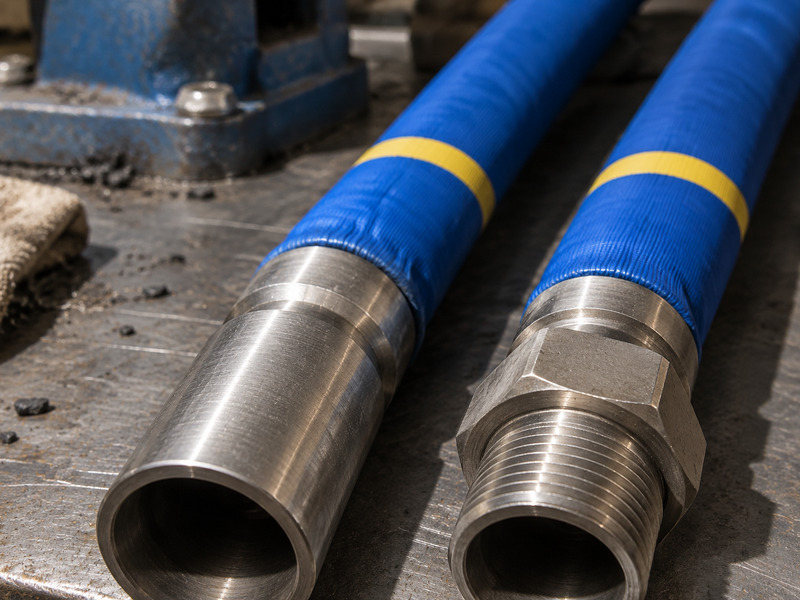
Figure 1. The ferrule on the left is a continuous sleeve; the fitting on the right has flats for a spanner.
Why Does a Composite Hose Assembly Need a Special End?
Because the wall is thin and the load is concentrated.
A composite wall is a stack of films and fabric, typically a few millimetres thick, held around a wire helix. Under pressure the film wants to pull out of the fitting, and under tension the whole hose wants to slide off the shank. A clamp alone cannot hold it.
The fitting therefore does two jobs. It compresses the wall onto a shank to seal it, and it anchors the helix so the axial load has a path into the metal. A composite hose assembly that loses the helix anchor loses the hose, whatever the seal is doing, which is why the inner wire is part of the end design.
That is why a composite hose assembly uses longer ends than a rubber hose, and why the ferrule is matched to the shank rather than chosen by bore alone.
What Are the Three Attachment Methods?
| Method | How it grips | Where it is made | Reusable |
|---|---|---|---|
| Crimped | Swaged ferrule compresses the wall | Factory | No |
| Reusable | Threaded or interlocking ferrule, field assembly | Workshop | Yes, with new ferrules |
| Helical shank | Shank engages and locks the inner helix | Factory or workshop | Depends on design |
Table 1. The three attachment methods used on a composite hose assembly. The column that matters in a breakdown is the last one.
Each method solves the same problem differently. Crimping applies a controlled radial compression. Reusable fittings apply compression through a mechanical thread or interlock. Helical shank designs add a positive engagement with the wire, which is the most direct way to carry axial load.
How Does a Crimped End Work?
A crimped composite hose end is swaged onto the prepared hose with a die set to a measured diameter. The compression is calculated, not judged, and the result is a joint that cannot be adjusted afterwards.
The advantages are consistency and integrity. Every assembly made on the same machine with the same die has the same compression, which is why crimped ends dominate industrial supply.
The disadvantage is that the assembly is fixed. A hose that is 200 mm too short after crimping is scrap, and a damaged end means a new assembly rather than a repair.
Crimping also requires the right preparation: a square cut, the correct insertion depth and no damage to the inner film. Most crimp failures we see trace back to preparation rather than to the die.
What About Reusable Fittings?
Reusable hose fittings are designed to be assembled and disassembled with hand tools, which makes them attractive for a site that needs a hose today rather than next week.
The trade is skill. A reusable fitting depends on the assembler getting the insertion depth, the lubrication and the torque right, and there is no machine to compensate for a mistake. On a composite wall the margin is smaller than on a rubber hose, because the film is thin and easy to crease.
Reusable designs also vary in how they anchor the helix. Some do it directly; others rely on compression alone and are not suitable for high axial loads.
The camlock and flanged ends pages cover the connection side; this section is about the attachment. Reusable hose fittings earn their place in a spares cabinet rather than on a critical transfer line, because the assembly depends on the person holding the tools.
Reusable ends suit emergencies and sites with trained staff. They do not replace a factory assembly on a critical line, and where a plant standardises on them the assembly procedure should be written down and the test after assembly should be mandatory.
What Is a Helical Shank End?
A helical shank end is built around the wire. The shank has a groove or a thread that engages the inner helix, so the axial load transfers from the wire into the fitting rather than from the film.
That engagement is why this design handles tension, vibration and pressure cycling well. The hose cannot pull off the shank without the wire deforming, which is a much higher threshold than film friction.
The cost is assembly complexity, and the benefit is a joint that survives being lifted by its coupling once too often. The helix has to be exposed cleanly, aligned with the shank and locked, and the ferrule then compresses the wall over it. Done correctly, it is the most robust of the three. Done carelessly, it is the source of a leak at the wire.
A helical shank end is also the design most sensitive to hose cut quality. A ragged cut leaves wire ends that puncture the film from inside, and the failure appears weeks later as a pinhole near the ferrule.
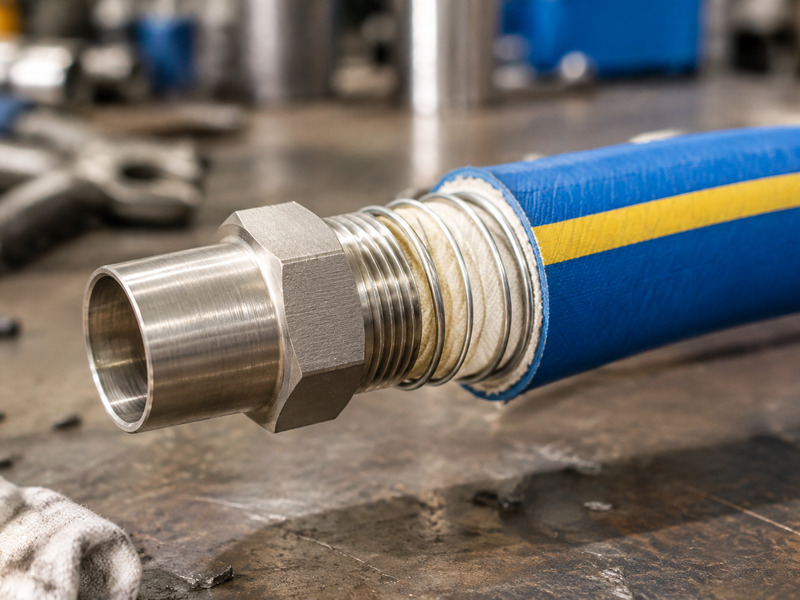
Figure 2. Wire ends show at the cut edge, and the shank sits inside them.
What Makes a Composite Hose Assembly Fail at the End?
Four modes, in order of frequency.
Preparation comes first. A cut that is not square, an insertion that is too shallow or a creased film produces a joint that leaks under pressure or develops a pinhole later.
Wire fatigue comes second. At a fitting the hose cannot flex, so all the bending happens just behind the ferrule. A hose that is lifted by its coupling or bent sharply at the end concentrates cycles in one place.
Liner extrusion is third. Under pressure and heat, a soft liner can creep into the gap between shank and ferrule. The joint swells or weeps, and the fault is more common where the temperature sits at the top of the liner’s range.
The fourth is corrosion. A galvanised helix under a breached cover corrodes at the ferrule, where moisture collects, and the wire loses section exactly where the load is highest.
| Duty | Attachment | Reason |
|---|---|---|
| Dock and tanker transfer | Crimped, helical shank | Tension and pressure cycling |
| Fixed plant line | Crimped | Consistent, factory tested |
| Emergency repair | Reusable | Available on site |
| Site-assembled spares | Reusable with new ferrules | Stock flexibility |
| High-vibration service | Helical shank | Wire carries the load |
| Food and pharma | Crimped, smooth bore | Cleanability at the joint |
Table 2. Attachment choice by duty. The middle rows are where a plant policy matters more than a product feature.
How Do You Test an Assembly?
Test the assembly, not the hose, as the pressure rating guide explains for the rating itself. A factory proof test on the hose says nothing about the joint that was made afterwards.
The standard practice is a hydrostatic proof test at the pressure the specification requires, held long enough to reveal a weep, with the ends visible. For critical duty, add a vacuum check where the line can be drained by suction.
Record three things: the pressure, the duration and the result, against the assembly’s marking. An untested assembly with a certificate for the hose is an assembly with no evidence.
Where a site assembles its own ends, the test is not optional and the record is the only proof that the procedure was followed.
How Do You Specify a Composite Hose Assembly?
Six lines, each closing a failure mode.
End type and material, with the size standard. Attachment method, including whether field assembly is permitted. The helix anchoring requirement, stated explicitly for high-tension duty. The proof test pressure and record. The marking scheme, including the assembly number. And the bend radius at the end, because it decides how much fatigue the joint will see.
Add a seventh line for spares. A plant that holds ferrules and fittings instead of assemblies is a plant that can respond, provided the assembly procedure and the test are in place.
How Do You Handle a Fleet of Assemblies?
A plant with two hundred hose assemblies has a data problem before it has a purchasing problem, and the data is cheaper to fix than the purchasing. Each assembly has an end type, a length, a liner and a test date, and none of that survives on a paper tag for long.
Three records carry it. An assembly number marked on the ferrule. The end type, recorded once at build. And the last proof test date, updated on every test.
With those three, a failure can be traced to a batch, and a batch can be traced to a procedure. Without them, a leak is an isolated event and the pattern that would have prevented it never appears. A plant that records all three spends less on ends than one that records none, because it stops replacing the same joint every quarter.
The pattern matters because end failures cluster, and the inspection programme is where the pattern is usually found. A run of leaks behind the ferrule usually points to a bending habit, a support problem or a batch of ferrules, and only a record can tell which.
What Should the Assembly Drawing Show?
A crimped composite hose assembly should come with a drawing, and the drawing should show four things.
Which size standard the end is made to, marked on the drawing rather than assumed. The insertion depth the ferrule was swaged to. The bend radius allowed immediately behind the fitting. And the orientation, where a floating flange or an angled fitting makes it matter.
A drawing also settles arguments about who built an assembly, which is useful when two suppliers have quoted the same joint. That drawing is what a replacement is built from. Without it, the second assembly is a copy of the first by eye, and copies drift.
Where reusable hose fittings are used, the drawing should also carry the torque or the number of turns, because that is the part the assembler has to get right and the part a new starter will guess.
How Do You Decide Between Repair and Replacement?
Three questions settle it, and the first two are answered by the file rather than by the hose.
Is the wall damaged, or only the end? A creased film or a soft section means replacement; a damaged ferrule on a sound wall can sometimes be re-terminated at the factory.
Is the assembly inside its test interval? If not, the repair decision is also a test decision.
And is the hose a standard length? A non-standard assembly is worth repairing; a standard one is usually cheaper to replace than to re-terminate and re-test.
For a crimped composite hose, the answer is usually replacement, because the repair costs more than the assembly at common bores. For large bore dock assemblies, the arithmetic reverses and repair is worth the freight. The crossover is usually somewhere between 3 inch and 4 inch, and it is worth checking rather than assuming.
Frequently Asked Questions
Can a composite hose be assembled on site?
Yes, with reusable fittings and a written procedure, followed by a proof test. The margin for error is smaller than on a rubber hose.
Is a crimped end stronger than a reusable one?
Usually, because the compression is controlled by a machine rather than by hand. It is also permanent, which is the trade.
What is a helical shank end for?
It locks the inner helix into the fitting so axial load bypasses the film. It is the design to specify where the hose sees tension or vibration.
Can a ferrule be reused?
No. A ferrule that has been swaged cannot be re-swaged, and reusing one is a common cause of pull-off.
Why does my hose leak just behind the ferrule?
Usually wire fatigue or a creased film from assembly. The fitting is rigid, so all bending happens immediately behind it.
How often should an assembly be proof tested?
At manufacture and at the interval your inspection programme sets, usually annually for critical duty. The record matters as much as the test.
Our rack takes caustic from rail cars and urea from ISO tanks on the same arm. Can one attachment cover both?
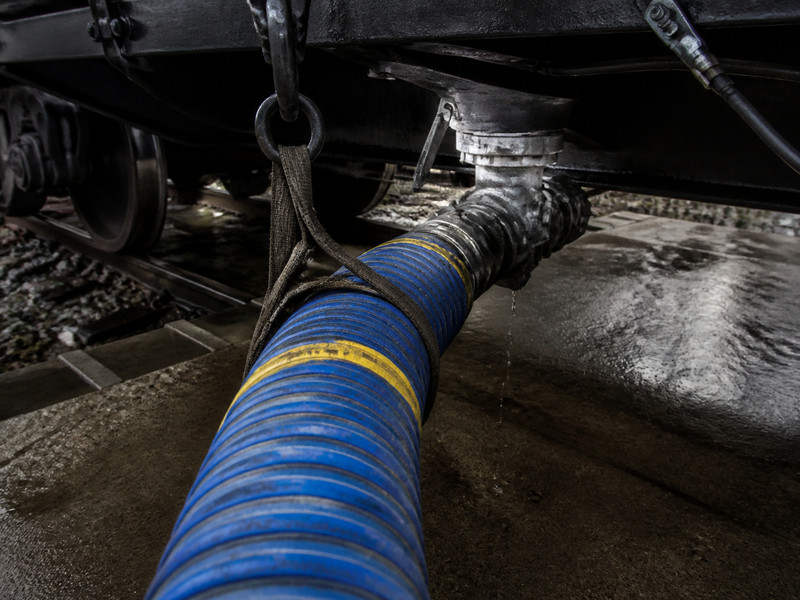
Only if the harder case sets the end. Rail unloading puts tension and vehicle movement on the joint, so the rail position wants a helical shank. The ISO hose travels with a pump set and can use a crimped end, provided the pump cannot dead-head against it. On that point the assembly rating is the lowest of the hose and the fittings. Two ends on one rack is normal, and one end for both duties is the compromise that fails first.
Does the end fitting affect the pressure rating?
Yes. The assembly rating is the lowest of the hose and the fittings, and the fitting is often the lower of the two.
About HENGHUA
HENGHUA builds composite hose assemblies with crimped, reusable and helical shank ends, and states which attachment suits the duty rather than offering one answer for all. Every assembly is proof tested and marked with its own number.
Send the connection at each end, the pressure, the temperature and how the hose is handled, and we will answer with the attachment method and the test record that goes with it.
Reviewed by the HENGHUA technical team. Last updated 11 November 2026.




 English
 Spanish
 Portuguese
 French
 German
 Arabic
 Russian
 Indonesian
 Japanese
 Korean