
Dock Oil Transfer Hose / Bunkering Hose
What Is a Bunkering Hose?
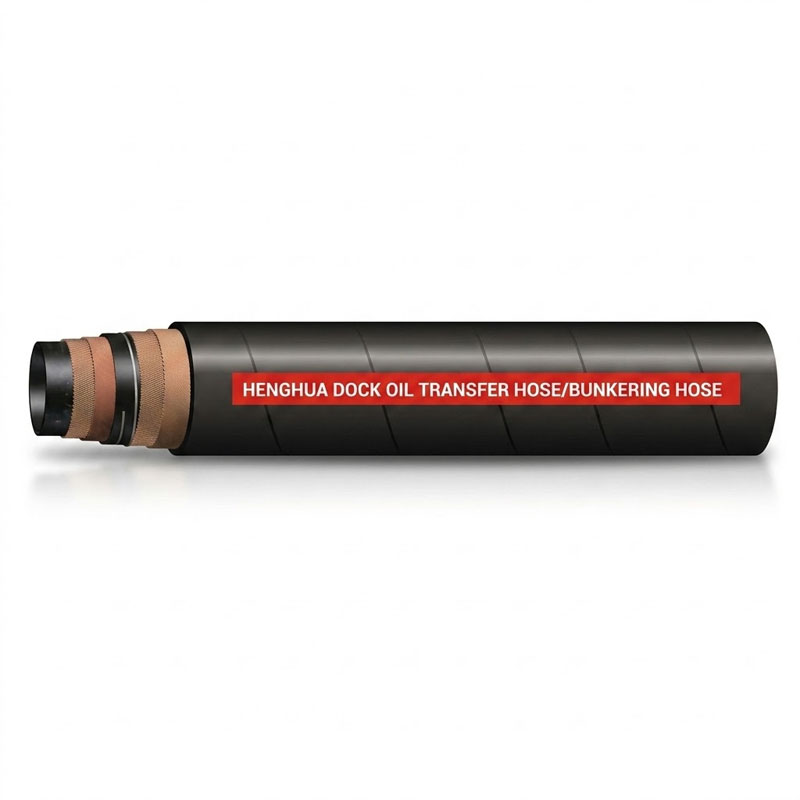
A bunkering hose is a heavy-duty marine fuel hose used to transfer petroleum products between ships, barges, and shore terminals. It is designed to handle high pressure, full vacuum conditions, and fuels with high aromatic content, while ensuring electrical conductivity to prevent static discharge during marine fuel transfer operations.
Product Overview
A Dock Oil Transfer Hose (also known as a Bunkering Hose, Marine Fuel Hose, Fuel Transfer Hose, or Petroleum Transfer Hose) is a specialized rubber hose engineered for the safe transfer of petroleum products including diesel, fuel oil, gasoline blends, and marine fuels with up to 50% aromatic content. This flexible fuel hose serves as an industrial oil hose and oil suction hose capable of both pressure and vacuum service.
Manufactured under international standard requirements including EN 1765 Type S/D and OCIMF guidelines, this rubber fuel hose delivers reliable performance in ship-to-ship bunkering, offshore fuel transfer, and terminal operations.
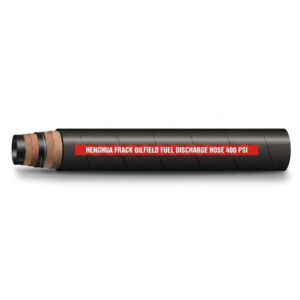
The hose features a black, smooth nitrile synthetic rubber tube, reinforced with multiply heavy-duty synthetic tire cord supported by helix wire and anti-static wires. The black synthetic rubber cover provides high resistance to abrasion, ozone, and weather exposure.
Key performance parameters include a working pressure of 20 bar (300 psi), a burst pressure of 60 bar (900 psi) providing a 3:1 safety factor, and an operational temperature range from -40°C to +100°C (-40°F to +212°F). The hose maintains full vacuum capability without collapse.
Key Features at a Glance
- Working pressure: 20 bar (300 psi)
- Burst pressure: 60 bar (900 psi) – 3:1 safety factor
- Temperature range: -40°C to +100°C
- Aromatic resistance: Up to 50%
- Vacuum capability: Full (helix wire reinforced)
- Anti-static: Embedded conductive wires
- Cover: Ozone, UV, and abrasion resistant
- Standard: EN 1765 Type S/D, OCIMF compliant
Compared to standard fuel hoses, bunkering hoses offer higher aromatic resistance, anti-static protection, and full vacuum capability. Compared to industrial water hoses, a marine bunkering hose requires anti-static properties and aromatic resistance.
Technical Specifications
| Code | I.D. | O.D. | W.P. | B.P. | Length |
|---|---|---|---|---|---|
| DOT076 | 3″ (76.2mm) | 96mm | 20 bar | 60 bar | 61m |
| DOT100 | 4″ (101.6mm) | 126mm | 20 bar | 60 bar | 61m |
| DOT125 | 5″ (127mm) | 155mm | 20 bar | 60 bar | 30.5m |
| DOT150 | 6″ (152.4mm) | 185mm | 20 bar | 60 bar | 30.5m |
| DOT200 | 8″ (203.2mm) | 242mm | 20 bar | 60 bar | 11.8m |
| DOT250 | 10″ (254mm) | 298mm | 20 bar | 60 bar | 11.8m |
Standards & Compliance
This bunkering hose is manufactured to meet:
- EN 1765 Type S/D – Rubber hoses for oil suction and discharge services
- OCIMF – Oil Companies International Marine Forum guidelines
- 3:1 Safety Factor – Burst pressure to working pressure ratio
- Electrical continuity: Anti-static wire resistance tested to <10 ohms per length
For offshore applications requiring API 17K, please consult our technical team.
How to Choose a Bunkering Hose
Selecting the correct fuel transfer hose requires evaluation of these factors:
Diameter: Match flow rate and pump capacity. 3″-4″ for smaller barges and truck loading; 6″-10″ for main terminal transfers and ship-to-ship bunkering.
Pressure rating: Ensure rating exceeds system maximum operating pressure including potential spikes. This hose provides 20 bar WP, suitable for most marine fuel transfer systems.
Standard: EN 1765 Type S/D is recommended for marine use. Verify whether your project requires OCIMF compliance.
Electrical continuity: Required for fuel safety to prevent static discharge. This hose includes embedded anti-static wires.
End fittings: Options include flanges, camlock, or threaded connections. Factory hose assembly is recommended.
Length: Minimize pressure loss and handling risk. Standard lengths (61m, 30.5m, 11.8m) are available.
Applications
- Ship-to-ship bunkering
- Ship-to-shore fuel transfer
- Offshore fuel transfer
- Oil terminal operations
- Refinery tank farm connections
- Marine fueling systems
- Industrial bulk oil transfer
- Petroleum suction and discharge
Dock Hose vs. Other Hoses
| Feature | Bunkering Hose (This Product) | Standard Fuel Hose | Water Suction Hose |
|---|---|---|---|
| Aromatic Resistance | Up to 50% | <15% | N/A |
| Working Pressure | 20 bar | 10-15 bar | 5-10 bar |
| Vacuum Rating | Full | Partial | Full |
| Anti-Static | Yes | Often no | No |
| Marine Cover | Yes | Limited | No |
Pricing Factors for Oil Transfer Hose
The cost of a bunkering hose depends on:
- Diameter: 10″ hoses cost significantly more than 3″
- Length: Standard lengths are more economical than custom
- Fittings: Flanges, crimped fittings, or adapters add to base price
- Certification: EN 1765 or OCIMF compliance may affect cost
- Quantity: Bulk orders qualify for discount pricing
For a specific bunkering hose price or oil transfer hose cost, contact our team with your requirements.
Hose Assembly Solutions
A complete hose assembly integrates the bunkering hose with end connections:
- Crimped fittings – Permanent, most reliable
- Reusable fittings – Field-attachable for emergencies
- Flanges – For connection to fixed piping
- Adapters – Transition between thread types
- Protective sleeves & guards – For high-wear areas
Factory hose assembly is recommended for critical applications to ensure correct crimping and pressure testing.
Frequently Asked Questions
What is a bunkering hose?
A bunkering hose is a heavy-duty marine fuel hose used to transfer petroleum products between ships, barges, and shore terminals, designed for high pressure, full vacuum, and static dissipation.
What is OCIMF hose?
OCIMF (Oil Companies International Marine Forum) publishes guidelines for bunker hose construction, testing, and inspection. Compliance indicates suitability for marine petroleum transfer.
How long does a bunkering hose last?
Industry best practice recommends replacement every five years of service. Replace immediately if cover cracking, reinforcement exposure, bulging, or fitting damage is visible.
What is EN 1765 hose?
EN 1765 is the European standard specifying requirements for rubber hoses used in oil suction and discharge services, including construction, pressure ratings, temperature ranges, and testing methods.
What is the difference between oil suction hose and oil discharge hose?
A true oil suction and discharge hose (like this product) is rated for both vacuum (suction) and pressure (discharge). Discharge-only hoses collapse under suction. This hose’s helix wire reinforcement enables full vacuum capability.
What pressure rating is required for marine fuel transfer?
Most bunkering and terminal operations require 20 bar (300 psi) working pressure, providing margin for typical pump pressures and pressure spikes.
Can I buy custom lengths?
Yes. OEM ODM custom lengths are available for bulk orders.
Why Choose HENGHUA
- EN 1765 Type S/D and OCIMF compliant manufacturing
- 100% factory hydrostatic testing at 30 bar (1.5× WP)
- Batch traceability with serial numbers
- PDF specification sheets and test certificates available
- OEM ODM customization for bulk orders
- Global supply as exporter, distributor, and wholesaler
Need a reliable dock oil transfer hose that meets EN 1765 and OCIMF standards? Contact our China-based manufacturer for a discount price on bulk or wholesale orders. Request your PDF specification sheet or discuss your hose assembly requirements with crimped fittings, flanges, or protective sleeves.
Inquiry for Our Product
We are a global supplier of hydraulic fittings and equipment, serving a wide range of sectors with a one-stop sourcing solution. Our products include hydraulic hoses, fittings, adapters, quick couplers, connectors, hose guard, hydraulic equipment and more-everything you need to keep your operations running smoothly and efficiently.
Tell us your requirements using the form below. Our team will respond with expert guidance and a customized quote to keep your operations running smoothly.
- Hydraulic Hose2727 products
- Steel Wire Spiraled Hydraulic Hose66 products
- Steel Wire braided Hydraulic Hose1010 products
- Textile Reinforced Hydraulic Hose33 products
- Thermoplastic Hydraulic Hose33 products
- Industrial Hose5959 products
- Air Hose99 products
- Water Hose1111 products
- Oil Hose1616 products
- Chemical Hose66 products
- Steam Hose33 products
- Multipurpose Hose22 products
- Food & Beverage Hoses44 products
- Concrete Hose44 products
- Cement Hose22 products
- Material Handling Hose1111 products
- Dredge Hose44 products
- Hydraulic Fittings162162 products
- Reusable Hose Fittings66 products
- Socketless Hose Fittings88 products
- JIC Hydraulic Fittings1515 products
- Metric Hydraulic Fittings3838 products
- NPT Hydraulic Fittings66 products
- BSP Hydraulic Fittings2626 products
- SAE Hydraulic Fittings3030 products
- Banjo Hydraulic Fittings44 products
- ORFS Hydraulic Fittings1111 products
- Ferrule1111 products
- Flange Fittings2626 products
- One Piece Fittings2323 products
- Hydraulic Adapters2929 products
 English
  Spanish
  Portuguese
  French
  German