
Water Discharge Hose 150PSI / 300PSI
Product Overview
What is a Water Discharge Hose?
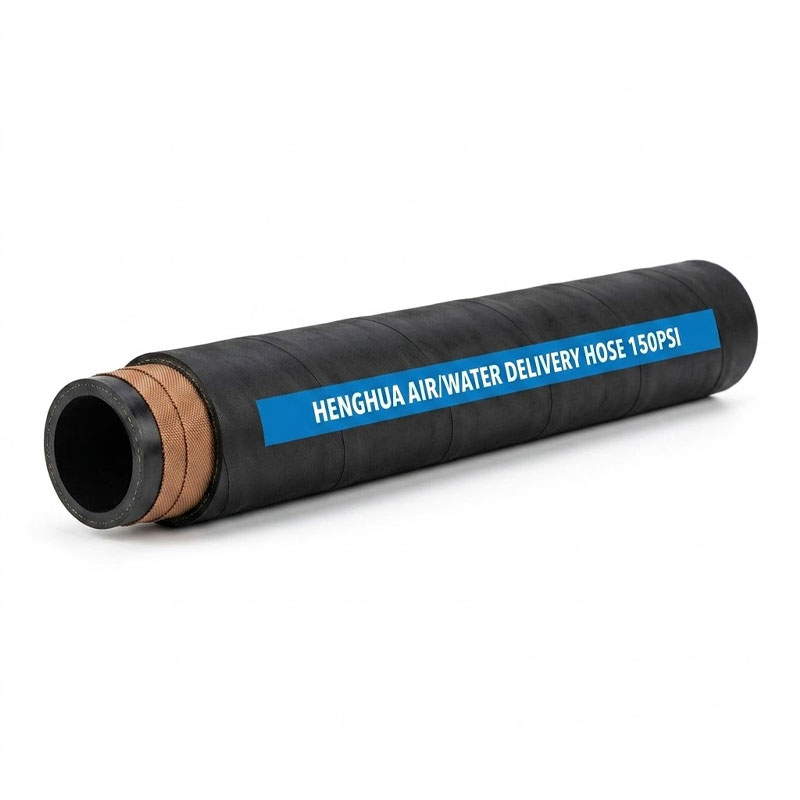
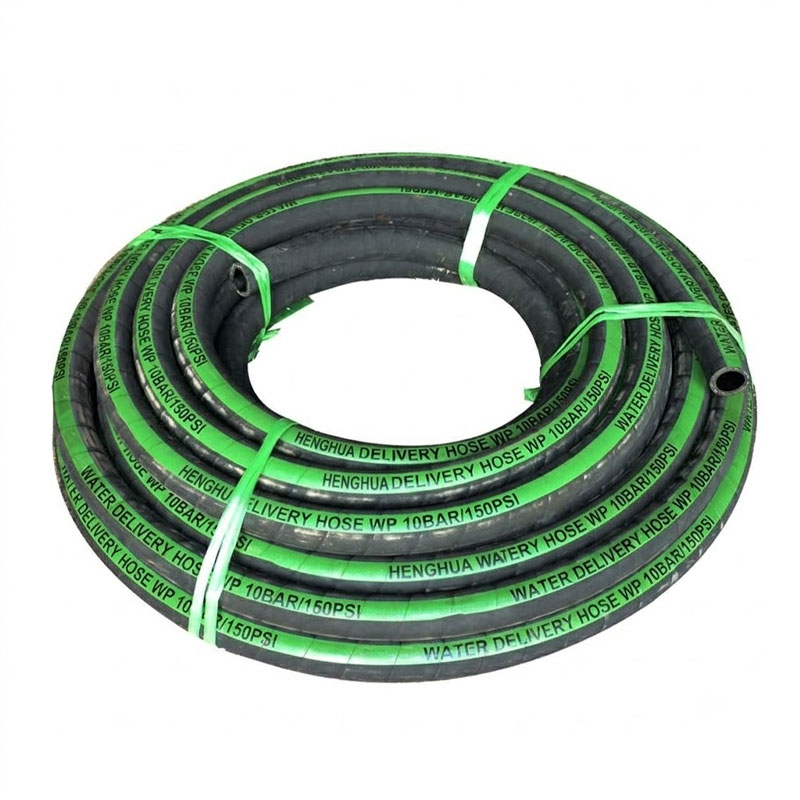
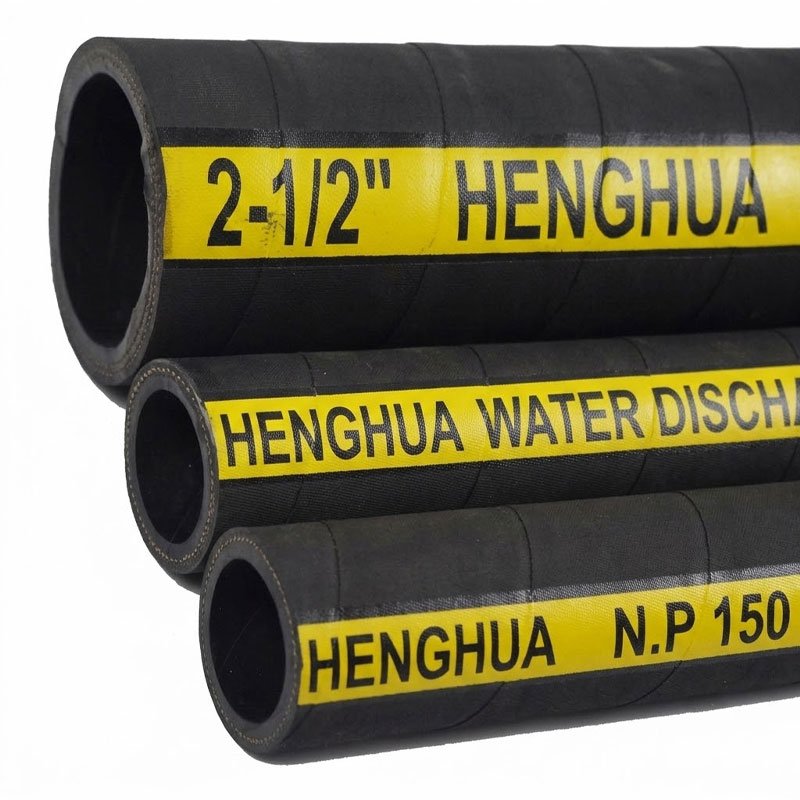
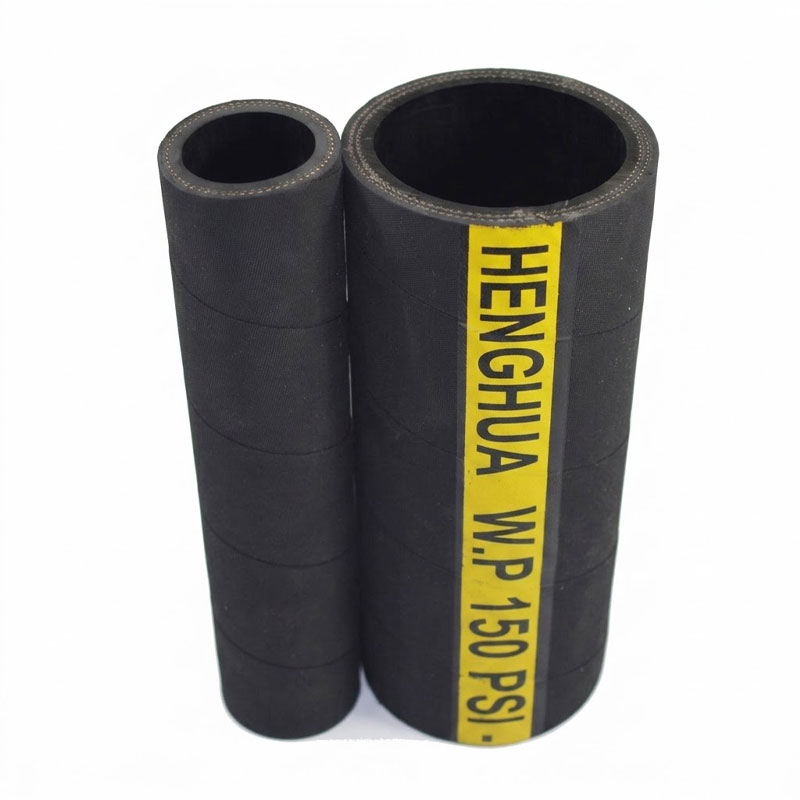
A water discharge hose is a flexible layflat or rubber hose used to transport water under pressure in construction, mining, agriculture, and industrial applications. It is typically rated between 150 PSI and 300 PSI and reinforced with synthetic fiber for durability and flexibility.
Unlike rigid pipes or suction hoses, a layflat water discharge hose flattens when not pressurized, making it exceptionally easy to transport, store, and deploy on job sites. Our Water Discharge Hose 150PSI / 300PSI series is a heavy duty water discharge hose reinforced with multi-plies of high-strength synthetic fiber, delivering reliable performance from -40°C to +70°C.
Why This Hose Solves Real Job Site Problems
Construction contractors and mine operators face three chronic pain points: hoses that burst under pressure spikes, covers that crack from sun exposure, and coils that become stiff in freezing weather. This industrial water discharge hose addresses each issue directly. The SBR rubber cover resists ozone, weathering, and abrasion from dragging over gravel. The synthetic fiber reinforcement provides burst pressure up to 900 PSI (300 PSI series) without the weight or corrosion risk of steel wire. And the compound remains flexible even at -40°C, enabling cold-start dewatering in Nordic or Canadian winters.
Key Specifications at a Glance
| Parameter | 150 PSI Series (WDH1) | 300 PSI Series (WDH2) |
|---|---|---|
| Working Pressure | 10 bar / 150 PSI | Up to 20 bar / 300 PSI |
| Burst Pressure | 30 bar / 450 PSI | Up to 60 bar / 900 PSI |
| Temperature Range | -40°C to +70°C | -40°C to +70°C |
| Tube Material | NR/SBR rubber | NR/SBR rubber |
| Reinforcement | Multi-ply synthetic fiber | Multi-ply synthetic fiber |
| Cover Material | SBR rubber, cloth impression | SBR rubber, cloth impression |
Core Applications
This construction water hose is purpose-built for:
- Site dewatering: Pumping excavation pits and foundation trenches
- Mine water transfer: Removing seepage from open pits and underground drifts (a true mine dewatering hose)
- Pump discharge: Connecting submersible or centrifugal pumps to discharge lines (pump discharge hose pipe)
- Temporary water lines: Construction site dust suppression, concrete mixing, and equipment cooling
- Agriculture: Field irrigation, pond filling, and liquid transfer (irrigation discharge hose)
Quality Commitment
As a leading china-based manufacturer, every hose is 100% factory hydrostatically tested. We provide full traceability, ISO 9001:2015 certification, and downloadable pdf specification sheets. OEM ODM branding available for distributor and exporter partners.
What is a Layflat Water Discharge Hose?
A layflat water discharge hose is a lightweight, flexible hose that collapses into a flat shape when water pressure is removed. This layflat characteristic offers three critical advantages over non-collapsible hoses:
- Compact storage: A 100-meter coil of 4″ layflat hose occupies 70% less space than a same-length suction hose.
- Easy deployment: One worker can drag and position a layflat discharge hose line without equipment.
- Faster drying: The flat shape allows water to drain completely, preventing freeze damage and mold growth.
For construction dewatering and mining operations where hoses are moved daily, a rubber layflat hose is the standard choice — not a specialty product.
Rubber Layflat Water Discharge Hose vs PVC Layflat Hose
| Feature | Rubber Layflat Hose (Our Product) | PVC Layflat Hose |
|---|---|---|
| Cold temperature performance | Flexible to -40°C | Becomes stiff and cracks below -10°C |
| UV / ozone resistance | Excellent (SBR cover) | Poor — degrades within 12-18 months |
| Abrasion resistance | High (cloth impression cover) | Low — easily punctured |
| Lifespan (outdoor use) | 3-5 years typical | 6-12 months typical |
| Cost | Higher upfront | Lower upfront |
| Lifecycle value | ✅ Superior (3-5x longer) | ❌ Higher long-term cost |
Verdict: For temporary or indoor use, PVC may suffice. For heavy duty water discharge hose applications in construction, mining, or agriculture, rubber layflat hose delivers 3-5 times longer service life and significantly lower total cost of ownership.
Water Discharge Hose vs Suction Hose: Key Differences
| Feature | Water Discharge Hose | Suction Hose |
|---|---|---|
| Primary function | Moves water under positive pressure | Draws water under vacuum (negative pressure) |
| Reinforcement | Synthetic fiber or textile | Rigid steel helix wire |
| Collapsibility | Yes — layflat design | No — helix prevents collapse |
| Weight per meter | Lighter (30-50% less) | Heavier |
| Typical use | Pump outlet, dewatering line | Pump inlet, dredging, tanker loading |
| Can it be used interchangeably? | No — using discharge hose on suction side will collapse the wall | Yes, but inefficient and costly |
Selection rule: If water is being pushed from a pump, use a water discharge hose. If water is being pulled into a pump, use a suction hose.
Engineering Insight: Why Pressure Rating Matters in Vertical Applications
In high-rise pumping systems, pressure spikes can exceed nominal pump ratings by 20-30% due to water hammer and column separation. For a building over 10 stories (approximately 30 meters of vertical lift), static head alone is 3 bar (43 PSI). Adding pump pressure, friction loss, and potential surge, a 150 PSI hose may operate near its limit. For this reason, selecting a 300 PSI water discharge hose instead of 150 PSI significantly reduces burst risk in vertical discharge applications.
This is not theoretical — field data from our mining and construction customers shows that upgrading from 150 PSI to 300 PSI reduces hose failure incidents by over 65% in high-rise and long-distance pumping scenarios.
Key Advantages of Water Discharge Hose (150 PSI / 300 PSI)
Dual Pressure Options – Match Exactly to Your Pump
- 150 PSI series (WDH1): 10 bar working pressure, 30 bar burst. Ideal for gravity-fed systems, long horizontal runs, and general site water where pressure is moderate.
- 300 PSI series (WDH2): Up to 20 bar working pressure, 60 bar burst. Required for high-rise building pump discharge, high-pressure washdown, and lines subject to pressure spikes from piston pumps.
Choosing the correct pressure rating prevents two costly mistakes: under-specifying (burst risk) and over-specifying (unnecessary cost).
All-Weather Flexibility Without Cracking
The SBR rubber compound remains flexible at -40°C (-104°F). Field testing shows this flexible water discharge hose can be coiled and uncoiled at sub-freezing temperatures without cover cracking — a common failure mode for PVC or lower-grade rubber hoses.
Abrasion-Resistant Cover for Tough Job Sites
The cloth impression SBR rubber cover is engineered to resist dragging over concrete, gravel, and rebar. For extreme abrasion environments (mine drifts, heavy equipment crossings), add protective sleeves or guards to extend service life by 3-5x.
Synthetic Fiber Reinforcement – The “Why”
Unlike wire braided hose or wire spiral hose used for high-pressure oil hydraulics, this rubber hose uses multi-ply synthetic fiber. Why? For water transfer, steel wire is unnecessary weight and a corrosion risk if the cover is damaged. Fiber provides:
- Burst pressure up to 900 PSI (3:1 safety factor minimum)
- 40% lighter weight per meter than steel-reinforced alternatives
- Zero corrosion potential from stagnant water
Long Continuous Lengths Reduce Leak Points
Available in:
- 100m / 330ft for sizes up to 1″
- 60m / 200ft for sizes 1-1/4″ to 4″
- 30m / 100ft for sizes 5″ to 8″
- 12m / 40ft for sizes 10″ to 12″
Longer coils mean fewer on-site joints, lower labor for installation, and reduced leak potential.
Detailed Technical Specifications Table
150 PSI Series (WDH1) – Water Discharge Hose 150 PSI
*The following specification table lists all available sizes of the 150 PSI water discharge hose, ranging from 3/16″ to 12″, with working pressure of 10 bar (150 PSI) and burst pressure of 30 bar (450 PSI).*
| Item Code | Inch | ID (mm) | OD (mm) | Working Pressure | Burst Pressure | Length |
|---|---|---|---|---|---|---|
| WDH1-05 | 3/16″ | 4.8 | 12 | 10 bar / 150 PSI | 30 bar / 450 PSI | 100m / 330ft |
| WDH1-06 | 1/4″ | 6.4 | 13 | 10 bar / 150 PSI | 30 bar / 450 PSI | 100m / 330ft |
| WDH1-08 | 5/16″ | 7.9 | 15 | 10 bar / 150 PSI | 30 bar / 450 PSI | 100m / 330ft |
| WDH1-09 | 3/8″ | 9.5 | 16 | 10 bar / 150 PSI | 30 bar / 450 PSI | 100m / 330ft |
| WDH1-12 | 1/2″ | 12.7 | 22 | 10 bar / 150 PSI | 30 bar / 450 PSI | 100m / 330ft |
| WDH1-16 | 5/8″ | 15.9 | 26 | 10 bar / 150 PSI | 30 bar / 450 PSI | 100m / 330ft |
| WDH1-19 | 3/4″ | 19.1 | 29 | 10 bar / 150 PSI | 30 bar / 450 PSI | 100m / 330ft |
| WDH1-22 | 7/8″ | 22.2 | 32 | 10 bar / 150 PSI | 30 bar / 450 PSI | 100m / 330ft |
| WDH1-25 | 1″ | 25.4 | 35 | 10 bar / 150 PSI | 30 bar / 450 PSI | 100m / 330ft |
| WDH1-32 | 1-1/4″ | 31.8 | 42 | 10 bar / 150 PSI | 30 bar / 450 PSI | 60m / 200ft |
| WDH1-38 | 1-1/2″ | 38.1 | 48 | 10 bar / 150 PSI | 30 bar / 450 PSI | 60m / 200ft |
| WDH1-50 | 2″ | 50.8 | 62 | 10 bar / 150 PSI | 30 bar / 450 PSI | 60m / 200ft |
| WDH1-63 | 2-1/2″ | 63.5 | 76 | 10 bar / 150 PSI | 30 bar / 450 PSI | 60m / 200ft |
| WDH1-76 | 3″ | 76.2 | 89 | 10 bar / 150 PSI | 30 bar / 450 PSI | 60m / 200ft |
| WDH1-89 | 3-1/2″ | 88.9 | 103 | 10 bar / 150 PSI | 30 bar / 450 PSI | 60m / 200ft |
| WDH1-102 | 4″ | 101.6 | 116 | 10 bar / 150 PSI | 30 bar / 450 PSI | 60m / 200ft |
| WDH1-127 | 5″ | 127.0 | 142 | 10 bar / 150 PSI | 30 bar / 450 PSI | 30m / 100ft |
| WDH1-152 | 6″ | 152.4 | 167 | 10 bar / 150 PSI | 30 bar / 450 PSI | 30m / 100ft |
| WDH1-203 | 8″ | 203.2 | 219 | 10 bar / 150 PSI | 30 bar / 450 PSI | 30m / 100ft |
| WDH1-254 | 10″ | 254.0 | 274 | 10 bar / 150 PSI | 30 bar / 450 PSI | 12m / 40ft |
| WDH1-305 | 12″ | 304.8 | 322 | 10 bar / 150 PSI | 30 bar / 450 PSI | 12m / 40ft |
300 PSI Series (WDH2) – Water Discharge Hose 300 PSI
*The following specification table lists all available sizes of the 300 PSI water discharge hose, ranging from 3/16″ to 12″, with working pressure up to 20 bar (300 PSI) and burst pressure up to 60 bar (900 PSI). For sizes 1-1/4″ and above, working pressure is 17 bar (250 PSI) with burst of 51 bar (750 PSI).*
| Item Code | Inch | ID (mm) | OD (mm) | Working Pressure | Burst Pressure | Length |
|---|---|---|---|---|---|---|
| WDH2-005 | 3/16″ | 4.8 | 12 | 20 bar / 300 PSI | 60 bar / 900 PSI | 100m / 330ft |
| WDH2-006 | 1/4″ | 6.4 | 13 | 20 bar / 300 PSI | 60 bar / 900 PSI | 100m / 330ft |
| WDH2-008 | 5/16″ | 7.9 | 15 | 20 bar / 300 PSI | 60 bar / 900 PSI | 100m / 330ft |
| WDH2-009 | 3/8″ | 9.5 | 16 | 20 bar / 300 PSI | 60 bar / 900 PSI | 100m / 330ft |
| WDH2-012 | 1/2″ | 12.7 | 22 | 20 bar / 300 PSI | 60 bar / 900 PSI | 100m / 330ft |
| WDH2-016 | 5/8″ | 15.9 | 26 | 20 bar / 300 PSI | 60 bar / 900 PSI | 100m / 330ft |
| WDH2-019 | 3/4″ | 19.1 | 29 | 20 bar / 300 PSI | 60 bar / 900 PSI | 100m / 330ft |
| WDH2-025 | 1″ | 25.4 | 36 | 20 bar / 300 PSI | 60 bar / 900 PSI | 100m / 330ft |
| WDH2-032 | 1-1/4″ | 31.8 | 44 | 17 bar / 250 PSI | 51 bar / 750 PSI | 60m / 200ft |
| WDH2-038 | 1-1/2″ | 38.1 | 51 | 17 bar / 250 PSI | 51 bar / 750 PSI | 60m / 200ft |
| WDH2-050 | 2″ | 50.8 | 65 | 17 bar / 250 PSI | 51 bar / 750 PSI | 60m / 200ft |
| WDH2-063 | 2-1/2″ | 63.5 | 78 | 17 bar / 250 PSI | 51 bar / 750 PSI | 60m / 200ft |
| WDH2-076 | 3″ | 76.2 | 91 | 17 bar / 250 PSI | 51 bar / 750 PSI | 60m / 200ft |
| WDH2-089 | 3-1/2″ | 88.9 | 108 | 17 bar / 250 PSI | 51 bar / 750 PSI | 60m / 200ft |
| WDH2-102 | 4″ | 101.6 | 120 | 17 bar / 250 PSI | 51 bar / 750 PSI | 60m / 200ft |
| WDH2-127 | 5″ | 127.0 | 148 | 17 bar / 250 PSI | 51 bar / 750 PSI | 30m / 100ft |
| WDH2-152 | 6″ | 152.4 | 173 | 17 bar / 250 PSI | 51 bar / 750 PSI | 30m / 100ft |
| WDH2-203 | 8″ | 203.2 | 228 | 17 bar / 250 PSI | 51 bar / 750 PSI | 30m / 100ft |
| WDH2-254 | 10″ | 254.0 | 280 | 17 bar / 250 PSI | 51 bar / 750 PSI | 12m / 40ft |
| WDH2-304 | 12″ | 304.8 | 330 | 17 bar / 250 PSI | 51 bar / 750 PSI | 12m / 40ft |
Full specification tables available for download in pdf format. Contact us for fittings, flanges, and adapters.
Structure and Materials
Layer-by-Layer Construction
| Layer | Material | Function |
|---|---|---|
| Tube (inner) | Black, smooth NR/SBR rubber | Transports water and non-corrosive fluids with minimal friction loss. Resists swelling and leaching. |
| Reinforcement | Multi-plies high-strength synthetic fiber | Provides burst resistance (up to 900 PSI) and dimensional stability. The fiber layering is similar to wire spiral hose construction but lighter weight. |
| Cover (outer) | Black, smooth with cloth impression, SBR rubber | Protects reinforcement from abrasion, ozone, UV, and weathering. The cloth texture increases grip for dragging and coiling. |
Why Synthetic Fiber Instead of Steel Wire?
For oil hydraulic applications, wire braided hose (1-wire or 2-wire) or wire spiral hose (4-spiral or 6-spiral) is required because oils have near-zero compressibility, creating instantaneous pressure spikes. Water, however, is more compressible (approximately 0.5% per 1000 PSI), meaning pressure spikes are less severe. Therefore:
- Steel wire reinforcement = necessary for high pressure hose handling oil at 3000-6000 PSI
- Synthetic fiber reinforcement = optimal for water discharge at 150-300 PSI
Using fiber instead of steel reduces cost, reduces weight, eliminates corrosion risk, and maintains flexibility.
Compared to PVC layflat hoses, rubber water discharge hoses typically last 3-5 times longer in abrasive environments and reduce replacement frequency by over 60%.
Water Discharge Hose Applications in Construction, Mining, and Agriculture
Construction & Civil Engineering
- Excavation dewatering (foundations, tunnels, basements)
- Concrete pump water supply lines
- Dust suppression systems on demolition or earthmoving sites
- Temporary construction site water distribution
- Construction water hose for general job site utility
- Flexible discharge hose for pump connections
Mining & Quarrying
- Open pit mine dewatering (removing seepage from pit floors)
- Underground mine water transfer (drift dewatering)
- Tailings water return lines (non-abrasive slurry only)
- Equipment cooling water for crushers and conveyors
- True mine dewatering hose for continuous pumping operations
- Heavy duty layflat hose for abrasive environments
Agriculture & Irrigation
- Field irrigation from pumps or canals
- Pond filling and draining
- Livestock watering lines
- Liquid fertilizer transfer (diluted, non-corrosive)
- Irrigation discharge hose for seasonal crop watering
- Industrial water hose pipe for farmstead use
Industrial & Municipal
- Factory washdown systems
- Temporary bypass pumping during pipe repairs
- Tank filling and emptying
- Emergency flood control pumping
- Pump discharge hose pipe for municipal water transfer
How to Choose the Right Water Discharge Hose (Buyer’s Guide)
Step 1: Determine Required Pressure (150 PSI vs 300 PSI)
| Scenario | Recommended Pressure |
|---|---|
| Gravity flow or low-pressure pump (<100 PSI) | 150 PSI series |
| Centrifugal pump at moderate distance | 150 PSI series |
| High-rise building pump discharge (10+ stories) | 300 PSI series |
| Piston pump or pressure washer feed | 300 PSI series |
| Lines with frequent pressure spikes | 300 PSI series |
What is the difference between 150 PSI and 300 PSI hose?
The difference between 150 PSI and 300 PSI hose is the working pressure capacity. A 150 PSI hose is rated for 10 bar maximum continuous pressure, while a 300 PSI hose is rated for 20 bar. The 300 PSI hose also has a thicker reinforcement layer (more synthetic fiber plies) and a higher burst pressure (900 PSI vs 450 PSI). Choose 300 PSI for high-rise pumping, piston pumps, or any application with pressure spikes.
Step 2: Select Diameter (Inch / mm) Based on Flow Rate
| Flow Rate (approx) | Recommended ID |
|---|---|
| Up to 50 GPM | 1″ – 1-1/2″ |
| 50 – 150 GPM | 2″ – 3″ |
| 150 – 400 GPM | 4″ – 6″ |
| 400+ GPM | 8″ – 12″ |
What size discharge hose do I need for my pump?
For a 2-inch pump outlet, use a 2 inch discharge hose. For a 3-inch pump, use 3″ hose. Matching hose ID to pump outlet diameter minimizes friction loss. If your pump is 100 feet or more from the discharge point, consider upsizing by one diameter (e.g., 3″ pump → 4″ hose) to reduce pressure loss.
Step 3: Choose Length to Minimize Couplings
- 100m coils: Best for long, straight runs (agriculture, pipeline bypass)
- 60m coils: Standard for construction site dewatering
- 30m coils: For maneuverability around equipment
- 12m coils: For final connections or tight spaces
Step 4: Select Fittings (Hose Assembly Options)
We provide complete hose assembly solution including:
| Fitting Type | Best For | Reusability |
|---|---|---|
| Crimped fittings | Permanent installations, high reliability | No |
| Reusable fittings | Field repairs, temporary lines | Yes |
| Adapters | Connecting different thread types | N/A |
| Flanges | Large diameter (4″+) or high-flow systems | Yes |
| Camlock couplings | Quick connect/disconnect for dewatering | Yes |
For abrasive environments, add protective sleeves or guards over hose sections that contact sharp edges or heavy equipment traffic.
Step 5: Confirm Environmental Conditions
| Condition | Requirement |
|---|---|
| Extreme cold (-40°C) | ✅ Hose rated to -40°C |
| High UV / desert sun | ✅ SBR cover is ozone and UV resistant |
| Abrasive ground (gravel, concrete) | ✅ Cloth impression cover + add protective sleeves |
| Chemical exposure (fuels, oils, acids) | ❌ NOT compatible — use high pressure hose with NBR tube |
How long does a water discharge hose last?
A water discharge hose lifespan depends on application. In typical construction dewatering (daily use, moderate abrasion), expect 2-3 years. In mining or heavy abrasive environments with protective sleeves, expect 1-2 years. For comparison, PVC layflat hoses in the same conditions last only 3-6 months. Rubber hoses last 3-5 times longer than PVC.
Water Discharge Hose Supplier & Manufacturer in China
Why Buy Directly from HENGHUA?
As a china-based manufacturer, producer, and exporter of industrial rubber hoses with over 18 years of continuous operation, HENGHUA offers advantages that trading intermediaries cannot match:
| Advantage | Benefit to You |
|---|---|
| Direct factory pricing | No middleman markup — lower cost for bulk orders |
| Full quality control | We control every production step from compounding to final hose assembly |
| OEM ODM capability | Your brand on the hose cover. MOQ: 1000m per size |
| Fast export logistics | Experienced exporter to over 40 countries |
| Technical support | Free engineering consultation for fittings, pressure ratings, and installation |
| Complete solution | One source for hose, crimped fittings, reusable fittings, adapters, flanges, protective sleeves, and guards |
Export Markets
We regularly supply to construction companies, mining operators, agricultural cooperatives, and distributor partners in:
- Southeast Asia (Indonesia, Philippines, Thailand, Vietnam)
- Middle East (UAE, Saudi Arabia, Kuwait, Qatar)
- Africa (Nigeria, Ghana, South Africa, Zambia)
- South America (Chile, Peru, Brazil, Colombia)
- Europe (Poland, Germany, France, UK)
- North America (USA, Canada) — contact us for freight quotes
Certification & Compliance
- ISO 9001:2015 certified factory
- REACH and RoHS compliant materials
- 100% factory hydrostatic testing at 1.5x working pressure
- Burst testing per ISO 1402 (quarterly validation)
How to Install and Maintain a Water Discharge Hose
Installation Best Practices
- Do not kink. Minimum bend radius is 8x OD for 150 PSI series, 10x OD for 300 PSI series.
- Use strain relief. Support the hose near fittings to prevent fatigue from vibration or movement.
- Protect edges. Where hose crosses sharp metal or concrete edges, install guards or protective sleeves.
- Avoid twisting. Lay the hose flat before pressurizing. A twisted hose will not layflat and will wear unevenly.
- Secure properly. Use fabric straps, not wire or chain, to avoid cutting the cover.
Maintenance Checklist
| Interval | Action |
|---|---|
| Before each use | Inspect cover for cuts, abrasion, or bulges. Check fittings for corrosion or looseness. |
| Weekly | Rotate hose position if dragging on same surface to distribute wear. |
| Monthly | Flush with clean water to remove sediment buildup. |
| After use (temporary lines) | Drain completely, coil dry, store away from ozone sources (electric motors, welding equipment). |
Storage Guidelines
- Temperature: 0°C to 30°C (32°F to 86°F) ideal
- Humidity: Below 65%
- Avoid: Direct sunlight, ozone, fuels, solvents, sharp objects
- Shelf life: 5 years from manufacture date under proper storage
Technical Standards and Certifications
| Standard | Description |
|---|---|
| ISO 1402 | Rubber and plastics hoses — Hydrostatic testing methods |
| EN 14420 | Hose fittings for hose assemblies (compatible) |
| ISO 9001:2015 | Quality management system (factory certified) |
| REACH | EU chemical compliance — no SVHCs above threshold |
| RoHS | Restriction of hazardous substances — compliant |
Every hose batch is 100% factory hydrostatically tested at 1.5x working pressure. Burst test validation is performed quarterly per ISO 1402. Download our pdf test report template.
Brand and Quality Assurance: HENGHUA
Who We Are
HENGHUA is a china-based manufacturer, producer, and exporter of industrial rubber hoses with over 18 years of continuous operation. Unlike trading companies, we control every production step — from rubber compounding to final hose assembly. This vertical integration allows us to offer OEM ODM services, bulk wholesale pricing, and technical support that trading intermediaries cannot match.
Quality Control Process
| Stage | Control Point |
|---|---|
| Raw material incoming | Tensile testing on synthetic fiber; hardness, specific gravity on rubber compounds |
| In-process | Continuous wall thickness monitoring; cover adhesion checks |
| 100% finished testing | Each hose length hydrostatically tested to 1.5x working pressure |
| Laboratory validation | Quarterly burst testing (4:1 safety factor minimum); impulse testing per ISO 6803 |
Why Customers Choose HENGHUA as Their Water Discharge Hose Supplier
- Technical support : Our engineers verify specification compatibility, recommend fittings, and provide installation guidance.
- Flexible commercial terms: Distributor, wholesaler, and exporter pricing available. Bulk orders receive discount schedules.
- Complete solution : We supply not only hose but also crimped fittings, reusable fittings, adapters, flanges, protective sleeves, and guards.
- Traceability: Every hose has a batch number linked to test reports. Download pdf certificates.
Customer Case Example
*”We were replacing standard PVC layflat hose every 3-4 weeks on our mine dewatering line due to abrasion from rock contact. After switching to HENGHUA’s 300 PSI water discharge hose with protective sleeves, we get 6+ months of service. Downtime dropped by 80%.”*
— Maintenance Manager, Gold Mine Operation, Western Australia
Frequently Asked Questions (FAQ)
Q1: What is a layflat water discharge hose used for?
A layflat water discharge hose is used to move water from pumps to discharge points in construction dewatering, mining water removal, agricultural irrigation, and industrial washdown. It “lays flat” when not under pressure, making storage and transport easy.
Q2: What PSI hose do I need for a water pump?
For most centrifugal pumps on construction sites, 150 PSI working pressure is sufficient. For piston pumps, high-rise building discharge (over 10 stories), or lines over 500 meters, choose 300 PSI. When in doubt, select the higher pressure rating — the additional cost is minimal compared to burst-related downtime.
Q3: Can a water discharge hose be used for suction?
No. A water discharge hose is not designed for vacuum. Using it on the suction side of a pump will cause the hose wall to collapse, blocking flow. For suction applications, use a dedicated suction hose with a rigid steel helix.
Q4: Can this hose handle slurry or muddy water?
Yes, for non-abrasive slurry (fine sediment, silt, clay) in water suspension. For abrasive slurries (sand, crushed rock, mining tailings with sharp particles), we recommend a dedicated slurry hose with a thicker, abrasion-resistant liner. Contact us for application-specific recommendations.
Q5: What is the difference between layflat hose and rubber hose?
“Layflat” describes the behavior (collapsing when depressurized). “Rubber hose” describes the material. Our product is both: a rubber hose that exhibits layflat characteristics. PVC layflat hoses are cheaper but become stiff in cold weather and degrade under UV. Rubber layflat hoses (like ours) remain flexible at -40°C and resist ozone cracking.
Q6: Do you offer pre-assembled hoses with fittings?
Yes. We provide complete hose assembly service with crimped fittings, reusable fittings, or flanges. Send us your connection requirements (thread type, orientation, length), and we deliver ready-to-install assemblies.
Q7: What is the cost of water discharge hose?
Cost depends on diameter, pressure rating, length, and quantity. For bulk wholesale orders (500m+ per size), we offer significant discounts. Request a quote with your specifications for a same-day price.
Q8: Can I get a sample before placing a bulk order?
Yes. We offer sample lengths (minimum 1 meter) with your choice of fittings for pre-purchase validation. Sample cost is credited against your first bulk order.
Q9: Where can I buy water discharge hose supplier china?
You are already here. HENGHUA is a direct factory and supplier. We export worldwide. Contact us to buy directly, bypassing intermediaries.
Q10: What is the difference between water discharge hose and high pressure hose?
High pressure hose is typically wire braided hose or wire spiral hose rated for 3000-6000 PSI for oil hydraulics. Water discharge hose is rated for 150-300 PSI for water transfer. Using a water discharge hose in a high-pressure oil system will burst immediately. Using a high pressure hose for water is safe but unnecessarily expensive and heavy.
Q11: How long does a water discharge hose last?
With proper use and storage, a rubber water discharge hose lasts 3-5 years. In continuous daily use on construction sites, expect 1-3 years depending on abrasion. PVC layflat hoses typically last 3-12 months.
Q12: What size discharge hose do I need for my pump?
Match hose ID to pump outlet diameter. A 2″ pump outlet requires 2 inch discharge hose. For long runs (over 300 feet), consider upsizing to reduce friction loss.
Need a reliable water discharge hose supplier for your construction, mining, or agricultural project? HENGHUA provides standard and custom solutions for water transfer challenges worldwide.
Inquiry for Our Product
We are a global supplier of hydraulic fittings and equipment, serving a wide range of sectors with a one-stop sourcing solution. Our products include hydraulic hoses, fittings, adapters, quick couplers, connectors, hose guard, hydraulic equipment and more-everything you need to keep your operations running smoothly and efficiently.
Tell us your requirements using the form below. Our team will respond with expert guidance and a customized quote to keep your operations running smoothly.
- Hydraulic Hose2727 products
- Steel Wire Spiraled Hydraulic Hose66 products
- Steel Wire braided Hydraulic Hose1010 products
- Textile Reinforced Hydraulic Hose33 products
- Thermoplastic Hydraulic Hose33 products
- Industrial Hose5959 products
- Air Hose99 products
- Water Hose1111 products
- Oil Hose1616 products
- Chemical Hose66 products
- Steam Hose33 products
- Multipurpose Hose22 products
- Food & Beverage Hoses44 products
- Concrete Hose44 products
- Cement Hose22 products
- Material Handling Hose1111 products
- Dredge Hose44 products
- Hydraulic Fittings162162 products
- Reusable Hose Fittings66 products
- Socketless Hose Fittings88 products
- JIC Hydraulic Fittings1515 products
- Metric Hydraulic Fittings3838 products
- NPT Hydraulic Fittings66 products
- BSP Hydraulic Fittings2626 products
- SAE Hydraulic Fittings3030 products
- Banjo Hydraulic Fittings44 products
- ORFS Hydraulic Fittings1111 products
- Ferrule1111 products
- Flange Fittings2626 products
- One Piece Fittings2323 products
- Hydraulic Adapters9494 products
 English
  Spanish
  Portuguese
  French
  German