

A fuel line hose is a flexible, fuel-resistant hose that carries gasoline, diesel, or ethanol-blended fuel between the tank, the pump, and the engine, and the correct choice depends on three things: inner diameter, tube material, and the SAE or marine standard printed on the cover. This guide explains which fuel line hose size fits carbureted, EFI, diesel, marine, and small-engine systems, compares rubber, PTFE, and nylon materials, decodes ratings such as SAE 30R7, 30R9, and 30R14, and ends with a selection and installation checklist you can apply directly to your vehicle or project.
What Is a Fuel Line Hose?
A fuel line hose is a low-to-medium-pressure hose designed specifically to contain liquid fuel without swelling, hardening, or leaking vapor through the wall. The terms “fuel line” and “fuel hose” are often used interchangeably, but strictly speaking a fuel line is the whole fuel-carrying path — hard metal or nylon tubing plus short flexible hose sections — while the flexible hose itself is the rubber or PTFE section that absorbs vibration and connects moving parts.
Every hose in this family shares the same three-layer anatomy, and each layer has one job:
- Inner tube — the fuel-compatible layer that touches the gasoline, diesel, or ethanol blend. Nitrile rubber (NBR) is the standard for gasoline and diesel; fluoroelastomer (FKM), barrier compounds, and PTFE take over for ethanol and low-permeation duty.
- Reinforcement — polyester or aramid fiber, braided or spiral-wound, that carries the pressure. It is what separates a 50 PSI carburetor hose from a 250–300 PSI injection hose.
- Outer cover — an oil-, heat-, and abrasion-resistant layer that protects the reinforcement from the engine bay.
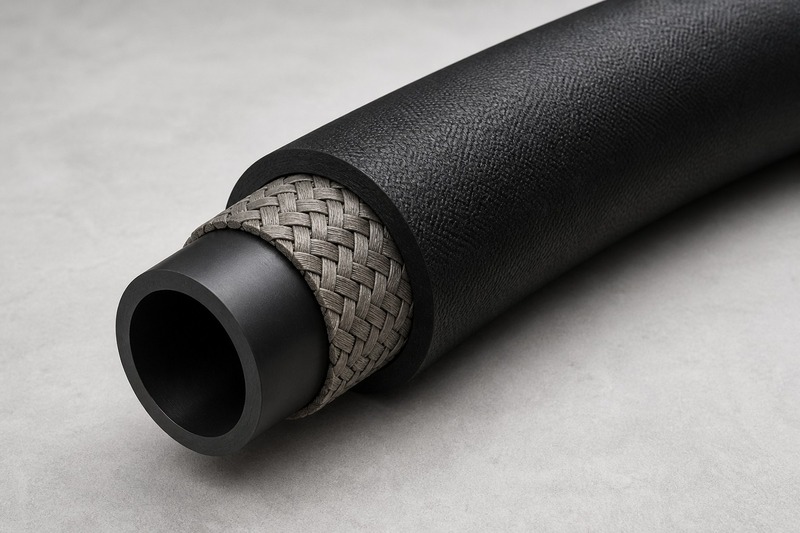
Figure 1. The tube resists the fuel, the reinforcement carries the pressure, and the cover survives the engine bay.
Not every rubber hose is fuel-rated. EPDM coolant hose and general-purpose rubber soften and swell in contact with gasoline, which is why using heater hose as a fuel line fails within months — the tube dissolves from the inside and sheds particles into the fuel system. A true fuel-rated hose is built around a fuel-compatible tube and rated for three fuel-specific properties: permeation (how much vapor escapes through the wall), ethanol resistance, and — in transfer and dispensing service — static dissipation. In our production experience, the most common specification error we see is not the size but the rating: a customer replaces an EFI line with a cheap 50 PSI carburetor hose, and the hose balloons or weeps fuel at the first hot restart.
Fuel Line Hose Sizes: Which Diameter Does Your Engine Need?
Fuel line hose is always sized by inner diameter (ID), because ID decides how much fuel can flow. Do not measure the outside of the hose — two hoses with the same OD can have different wall thicknesses and different IDs. If you are replacing an existing line, read the size printed on the cover or measure the ID with a caliper; if the hose is already off the vehicle, the barbed fitting it slides onto is the reliable reference.
Automotive fuel line hose sizes follow inch fractions — 1/4, 5/16, and 3/8 inch are the three most common — while metric OEM systems use 6 mm, 8 mm, and 10 mm. As a general rule, a 1/4 inch line feeds carbureted engines and small engines, 5/16 inch is the classic OEM feed size for older EFI and carbureted cars, and 3/8 inch (or 8–10 mm metric) feeds modern EFI systems. Handheld equipment such as string trimmers and chainsaws commonly uses 3/16 inch (about 5 mm) fuel hose, and walk-behind mowers usually take 1/4 to 5/16 inch.
Fuel line hose size chart — common inner diameters and where each size is used
| Inner diameter (in) | Inner diameter (mm) | Typical system | Notes |
|---|---|---|---|
| 3/16 | 4.8 (5 mm) | String trimmers, chainsaws, small engines | Low pressure, short runs |
| 1/4 | 6.4 (6 mm) | Carbureted engines, lawn mowers, fuel return lines | Most common small-engine size |
| 5/16 | 7.9 (8 mm) | OEM carbureted and older EFI feed lines | Common GM, Ford, and Subaru OEM size |
| 3/8 | 9.5 (10 mm) | Modern EFI feed lines, performance builds | 8 mm and 10 mm are common metric OEM sizes |
| 1/2 | 12.7 | High-flow EFI, diesel feed and return, transfer hose | Usually paired with pumps rated for high volume |
The table above is a planning guide, not a substitute for the vehicle manual: always match the hose to the pump flow rate and the original line size. A hose that is too small starves the pump, raises pressure drop, and makes the pump run hot; a hose that is far too large is wasted cost and harder to route. For fuel line hose sizes in performance work, the AN (Army-Navy) dash system is the common language: each dash is 1/16 inch of nominal size, so -4AN is 1/4 inch, -6AN is 3/8 inch, and -8AN is 1/2 inch.
AN fuel line sizes and typical naturally aspirated horsepower range (planning values)
| AN size | Nominal size (in) | Typical use | Planning hp range |
|---|---|---|---|
| -4AN | 1/4 | Return lines, low-flow circuits | Up to about 250 hp |
| -6AN | 3/8 | Feed lines on street performance EFI | About 450–650 hp |
| -8AN | 1/2 | High-horsepower feed lines | About 650–1,000 hp |
| -10AN | 5/8 | Large-volume and race feed lines | Over 1,000 hp |
Those horsepower figures assume naturally aspirated gasoline at normal EFI pressure; boosted engines and E85 fuel roughly double the fuel volume needed, so move up one AN size. When in doubt, consult a fuel pump flow chart: the pump’s required flow rate at system pressure, not the engine’s rated power, is the number that sizes the line.
Fuel Line Hose Materials: Rubber, PTFE and Nylon Compared
The material of the inner tube decides what fuels the hose can carry and for how long. Three material families dominate: rubber compounds (NBR, FKM, and HNBR-based barrier constructions), PTFE (polytetrafluoroethylene, sold as Teflon-lined hose), and nylon tubing used in OEM hard lines.
Fuel line hose materials compared by fuel compatibility and service class
| Material | Fuel compatibility | Typical temperature range | Pressure class | Typical use |
|---|---|---|---|---|
| NBR (nitrile) rubber | Gasoline up to E10, diesel, kerosene; not E85 | -40 to +125 °C (typical) | Up to 50 PSI (SAE 30R7 class) | Carbureted engines, small engines, return lines |
| FKM (fluoroelastomer) | Gasoline, E85, diesel, aggressive fuels | -34 to +135 °C | 250–300 PSI class (SAE 30R9) | Fuel injection hose for EFI feed lines |
| HNBR with vapor barrier | Gasoline, E85, multi-fuel | Engine-bay duty | 250 PSI class (SAE 30R14) | Low-permeation EFI hose, emissions-conscious builds |
| PTFE (Teflon-lined) | All fuels including E85 and race fuel | Very wide (about -70 to +230 °C typical) | High (braid-dependent) | Racing, E85, long-term installations |
| Nylon 11/12 tubing | Gasoline to E10 per OEM spec | About -40 to +110 °C | OEM feed pressure (quick-connect systems) | Factory hard lines, 6 mm and 8 mm metric |
Rubber fuel hose is the default for most vehicles because it is flexible, easy to cut and clamp, and inexpensive. Standard NBR-based hose handles gasoline blends up to about E10 and all diesel fuel; it is the material of SAE 30R6 and 30R7 hose for carbureted systems. The limitation is high ethanol: E85 swells ordinary nitrile rubber, so rubber fuel hose for E85 must use a fluoroelastomer or a barrier construction instead.
PTFE fuel hose is the answer when nothing else is good enough. The PTFE liner is chemically inert, so it survives E85, methanol, and race fuel indefinitely, and its vapor permeation is near zero — the reason race cars and long-term EFI builds use it. PTFE hose is sold with a stainless steel or nylon braid and requires special fittings and assembly tools, which is why it costs more and why the rubber-versus-PTFE decision usually comes down to fuel type: rubber for street gasoline and diesel, PTFE for E85 and serious builds.
Nylon fuel line tubing is what most modern cars leave the factory with: rigid 6 mm or 8 mm nylon lines joined by quick-connect fittings. It is fuel-compatible, light, and cheap to install on an assembly line, but it is not a flexible hose — repairs and retrofits cut it out and splice in rubber or PTFE hose with barbed fittings.
In our own testing of fuel hose compounds, the pattern is consistent: a hose fails chemically before it fails mechanically when the fuel is wrong, and mechanically before it fails chemically when the fuel is right. That is why we always ask customers for the exact fuel blend — E10, E85, diesel, or a race fuel — before recommending a tube compound.
Fuel Line Hose Standards: What Do SAE 30R7, 30R9, 30R10 and 30R14 Mean?
The printed rating on a fuel hose is a promise backed by a standard, and the SAE J30 series is the one that matters for automotive fuel hose. Each class defines the construction, the test pressure, and the permeation behavior the hose must meet:
SAE J30 fuel hose classes and what each rating means
| SAE class | Working pressure | Typical service | Key property |
|---|---|---|---|
| SAE 30R6 | 50 PSI or less | Carbureted engines, low-pressure feed | General-purpose fuel hose |
| SAE 30R7 | 50 PSI or less | Carbureted engines, TBI systems | Improved wall and cover |
| SAE 30R9 | About 250–300 PSI (burst roughly 1,000–1,200 PSI) | High-pressure EFI feed lines | Rated to 135 °C, lower permeation |
| SAE 30R10 | Low pressure | Submersible fuel hose inside the tank | Withstands continuous fuel immersion |
| SAE 30R14 | About 250 PSI | Low-permeation EFI hose | Engineered to pass CARB/EPA low-permeation limits |
The practical translation: 30R6 and 30R7 hose belongs on carbureted engines and low-pressure systems at or below 50 PSI; 30R9 is the EFI feed-line hose, where rail pressure reaches about 43.5 PSI in return-style systems and 58 PSI in returnless systems, and where the margin between working and burst pressure matters; and 30R14 is the low-permeation upgrade that keeps fuel vapor — and the fuel smell — inside the hose. A 30R9 hose must never be submerged in the tank; that is what 30R10 (or the European DIN 73379-E class) is for, and substituting a non-submersible hose inside the tank is a failure you can expect within weeks, not years.
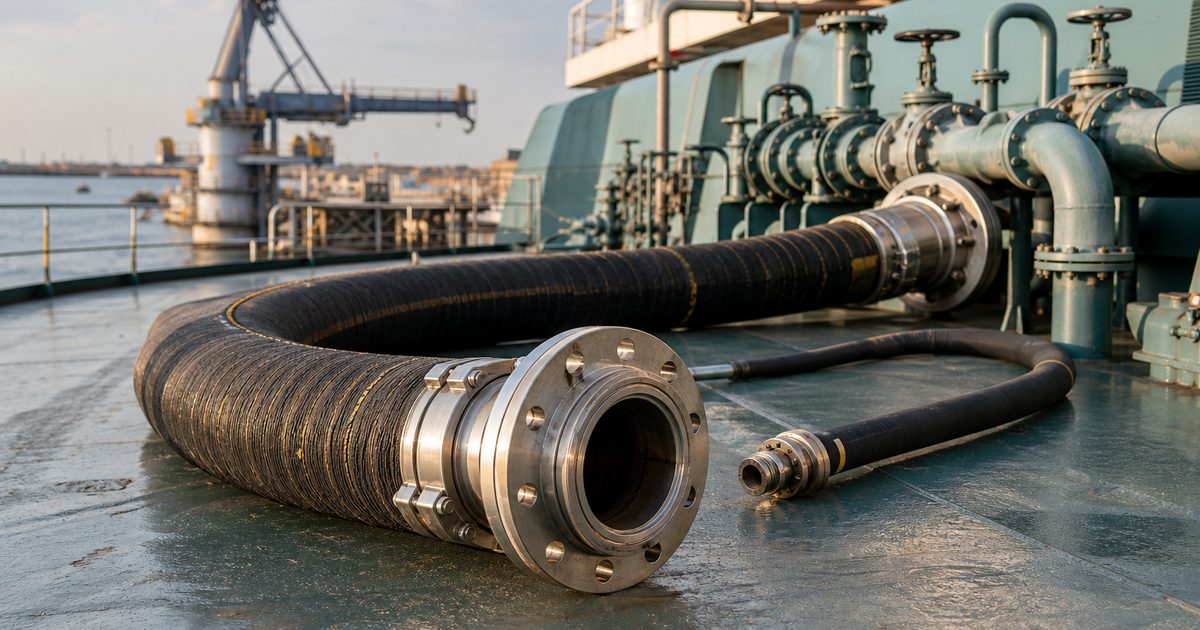
Marine installations follow a different rulebook. Boats with gasoline engines in enclosed compartments must use USCG-certified fuel hose meeting Type A1-15 requirements (defined under SAE J1527), which includes a 15-minute fire-resistance test; ISO 7840 Type A1 is the international equivalent, and ABYC H-24 and H-33 cover the installation side. The marine fuel hose vs automotive fuel hose difference is real: an automotive fuel hose is not fire-rated and is not legal for below-deck marine gasoline service, regardless of how new it looks.
Whatever the class, the rating is only trustworthy when it is printed on the hose. Check the cover markings for the SAE class and the date code (for example, “SAE 30R9 3/8\” 2026″), and treat an unmarked hose as unrated — in our inspection work, unmarked “fuel hose” is often general-purpose rubber that fails the permeation and ethanol checks on the first test.
Applications: Where Each Type of Fuel Line Is Used
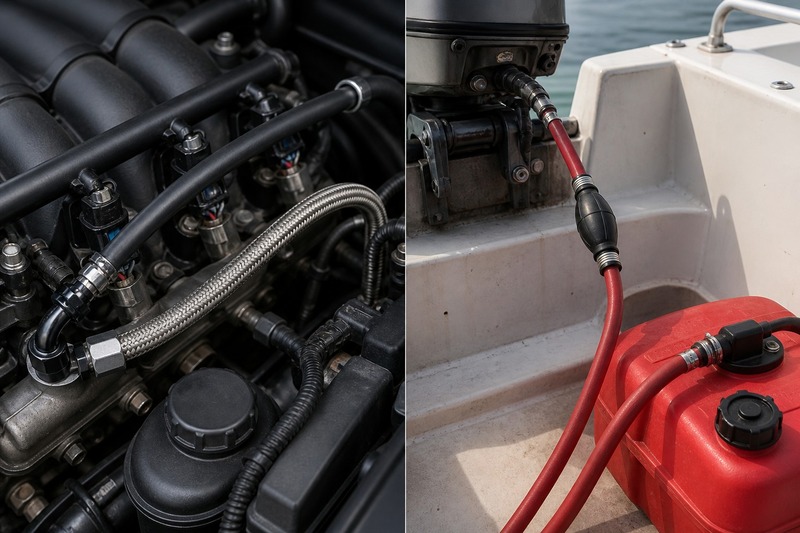
Figure 2. Automotive EFI and marine installations both demand the correct SAE or USCG rating, not just a hose that fits.
- Carbureted gasoline engines — mechanical fuel pumps deliver 4–7 PSI, so SAE 30R6/30R7 rubber fuel hose in 5/16 or 1/4 inch handles feed and return lines.
- EFI systems (return and returnless) — electric pumps run at 43.5 PSI (return-style) or 58 PSI (returnless), so feed lines use SAE 30R9 or 30R14 fuel injection hose in 3/8 inch; return lines can step down to 5/16 inch.
- Diesel vehicles — the injection pump and injectors are fed at low pressure on the suction side, and return lines run warm diesel back to the tank; a diesel fuel hose in 5/16 to 1/2 inch is standard. Common-rail pressures above 2,000 bar are carried in steel lines, never hose.
- Marine engines — inboard gasoline engines need USCG Type A1-15 marine fuel hose; outboards and above-deck installations follow the same ISO 7840 or SAE J1527 classes.
- Small engines — lawn mowers, generators, string trimmers, and chainsaws use 3/16 to 1/4 inch fuel hose at a few PSI, where ethanol-compatible tube and proper clamps matter more than pressure rating.
- Motorcycles, ATVs, and powersports — compact routing with vibration makes flexible hose sections mandatory; metric 5 mm to 8 mm sizes are common.
- Performance and race cars — -6AN and -8AN PTFE or braided hose with AN fittings handles E85, race fuel, and high pump flow.
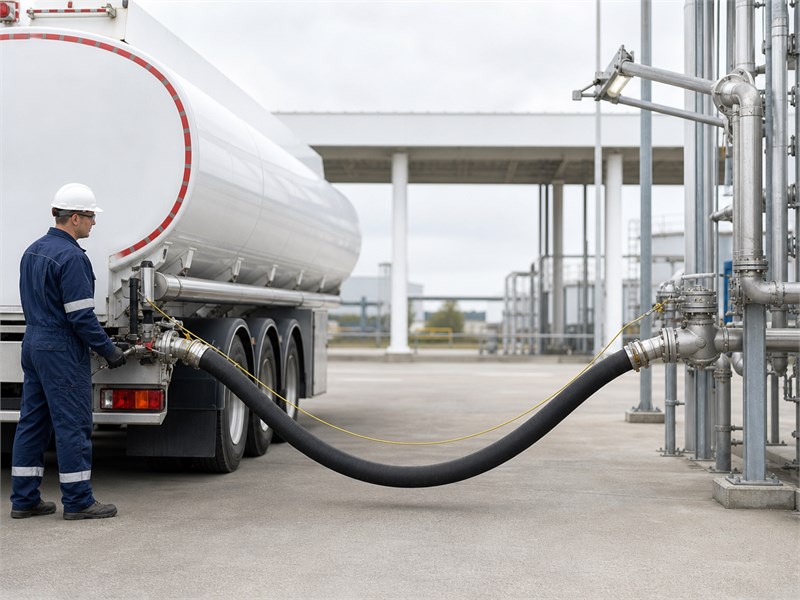
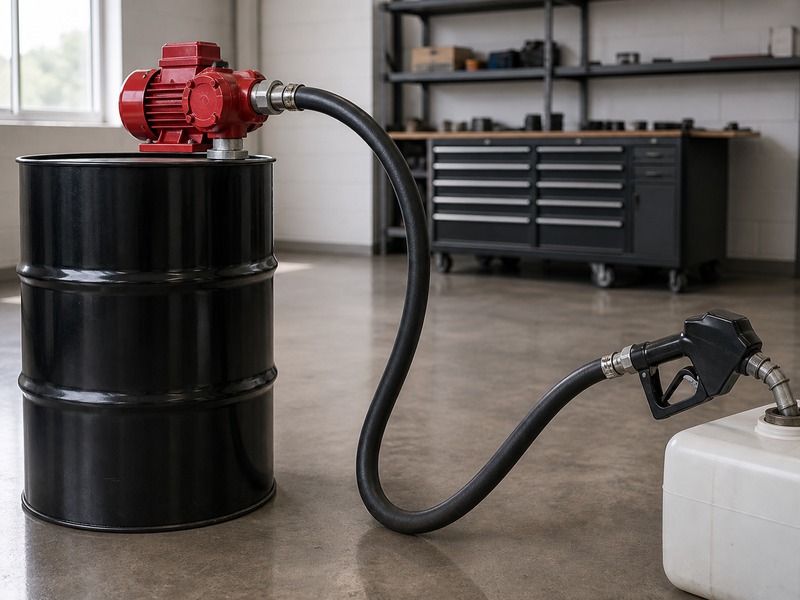
- Bulk fuel transfer and dispensing — moving fuel from drums, tanks, or pumps to equipment is a different hose family (larger bores, static-dissipative construction); see our oil transfer hose guide for that selection process.
The application decides the pressure class, and the pressure class decides the hose. A lawn mower runs happily on 30R7; a modern EFI car needs 30R9 or 30R14; a boat needs a USCG rating that no automotive hose carries. Specifying for the actual system — not for “the hose that was in the drawer” — is the single biggest factor in fuel system reliability.
How to Select the Right Fuel Line Hose
Selection is five decisions in order: fuel and temperature, pressure, size, fittings, and environment. Work through them in sequence and the correct hose selects itself.
Step 1: Identify the Fuel and the Temperature First
Confirm exactly what the hose will carry — gasoline E10, E15, E85, diesel, or a race fuel — and how hot the location gets. E10 and below are fine with NBR rubber; E85 demands an FKM, barrier, or PTFE tube; a diesel fuel hose is easy on NBR but often hot on the return side. Underhood fuel hose should be rated for sustained heat: SAE 30R9 is qualified to 135 °C, which covers exhaust-adjacent routing that a 100 °C general hose cannot.
Step 2: Match the Working Pressure to the System
Fuel pressure tells you the SAE class. Carbureted systems run 4–7 PSI (30R6/30R7); return-style EFI regulates to about 43.5 PSI and returnless systems to about 58 PSI, so feed lines need a fuel injection hose rated well above that (30R9 or 30R14, roughly 250 PSI class). Never size a fuel line by burst pressure alone — the working pressure rating is the number that must exceed system pressure with margin for hot fuel and pump pulsation.
Step 3: Pick the Size from the Fuel Line Hose Size Chart
Use the inner diameter that matches the original line or the pump flow requirement. On modern vehicles, measure the OEM line or check the manual before assuming a size — metric 8 mm (about 5/16 inch) and 10 mm (about 3/8 inch) are common on European and Asian cars. For performance work, use the AN chart above and step up one size for boosted or E85 builds.
Step 4: Choose the Fittings and Clamps
The hose is only as reliable as its connections. Low-pressure systems use barbed fittings with fuel-rated clamps — spring clamps or constant-tension EFI clamps are preferable to worm-gear clamps, which cut into the hose as it ages. Performance systems use push-lock hose with push-on fittings, or AN fittings with braided or PTFE hose, where the fitting is assembled onto the hose with a wrench or a special tool. Factory-style repairs may call for quick-connect fittings and nylon line. Match thread types at both ends — mixing NPT with metric or AN threads guarantees a leak (see our NPT vs BSP thread guide for how to tell thread families apart).
Step 5: Check the Environment and the Standard
Heat shields, abrasion points, and UV exposure shorten hose life — route clear of the exhaust, add a protective sleeve where the hose rubs a bracket, and use the printed SAE or marine rating as the final gate. If the installation is marine, the USCG/ISO class is not optional.
Selection Checklist
- Fuel blend (E10, E15, E85, diesel, race fuel) and temperature exposure
- System pressure (carbureted 4–7 PSI, EFI 43.5/58 PSI, diesel return) and required SAE class
- Inner diameter from the size chart, matched to the original line or pump flow
- Length with 5–10% routing allowance and a bend radius above the hose minimum
- Fittings and clamps (barbed + EFI clamp, push-lock, AN, quick-connect)
- Environment: heat, abrasion, UV, and marine certification requirements
- Markings: SAE class and date code printed on the cover
How to Install and Maintain a Fuel Line Hose
Installation mistakes cause more premature failures than manufacturing defects, and the pattern repeats in every market we supply. Four rules cover most of it.
Route the hose with bends above its minimum bend radius — a tight kink creases the reinforcement and the hose fails at that point, often months later and on a hot restart; if the routing forces a sharp turn, use a 90° fitting instead of bending the hose. Keep the hose away from exhaust manifolds and catalytic converters; even a correctly rated 135 °C hose fails early when it touches a 400 °C surface, so install heat shield sleeving wherever contact is possible. Support long runs with clamps every 300–500 mm, and let short flexible sections do their job — do not stretch a hose tight between two rigid points, because vibration then concentrates at the fittings. Finally, double-clamp or use EFI clamps on pressurized injection lines, and verify every clamp sits behind the barb shoulder, not on the straight section.
For fuel transfer and dispensing hose, static electricity is the hazard that rubber hose alone does not solve: use a static-dissipative construction and bond the end fittings to the tank and receiving vessel so charge cannot build up. A conductive hose with ungrounded ends is no safer than a standard one.
Inspection is a five-minute habit that prevents a breakdown. Look for fuel smell around the fittings (permeation or a weeping clamp), cover cracks or hard spots (aging), soft or bulging sections (tube breakdown), and fittings that spin on the hose. Replace the hose when you see any of these signs:
- Fuel odor near the line or fittings
- Cover cracks, blisters, or hard spots
- Soft, swollen, or bulging sections along the body
- Leaks or wetness at the clamps
- Kinks that will not straighten
- Fittings that rotate on the hose end
A practical service-life reference for rubber fuel hose is 5–10 years from the date code on the cover, with high-ethanol fuel and underhood heat at the short end of the range. When you replace a line, copy the printed markings from the old hose — the SAE class, size, and date code contain the entire specification — and replace the clamps at the same time, because a reused clamp is the most common cause of a leak on a new hose.
How Much Does a Fuel Line Hose Cost?
Price tracks construction and rating. Rough retail ranges per foot: SAE 30R6/30R7 rubber hose runs about $1–$3, SAE 30R9 injection-rated hose about $2–$5, low-permeation 30R14 hose about $4–$9, and PTFE braided hose from about $8–$18 depending on AN size and braid; a 1/2-inch diesel fuel hose for transfer work typically runs $3–$6 per foot at retail. Fittings add $3–$35 per end depending on type — barbs and clamps at the low end, AN and PTFE fittings at the high end. Factory-direct manufacturers typically undercut retail by 20–40% on identical standard constructions because no distributor margin sits in the middle.
Compare the whole package when quoting, not just the per-foot price: unit price, MOQ (minimum order quantity), lead time, whether assemblies come pre-crimped or with hose ends, and warranty terms. A clear warranty covering manufacturing defects signals that the manufacturer stands behind its testing; ask for a sample and a test report before any bulk order, and confirm the warranty in writing.
Frequently Asked Questions
What size fuel line hose do I need?
Match the inner diameter to the system: 3/16 inch for trimmers and chainsaws, 1/4 inch for lawn mowers and carbureted returns, 5/16 inch for older OEM carbureted and EFI feed lines, and 3/8 inch (or 8–10 mm metric) for modern EFI feed lines. When replacing a hose, measure the ID of the old hose or read the size printed on its cover.
Can I use 30R7 fuel hose for fuel injection?
Only if it is rated for the pressure. Standard SAE 30R6/30R7 rubber hose is limited to about 50 PSI and belongs on carbureted systems; EFI feed lines run at 43.5–58 PSI and need SAE 30R9 or 30R14 fuel injection hose, which is rated to roughly 250 PSI and to 135 °C.
Is PTFE fuel hose worth it for E85?
Yes, for vehicles that run E85 regularly. Ordinary NBR rubber swells in high-ethanol fuel, while the PTFE liner is chemically inert, shows near-zero permeation, and survives E85, methanol, and race fuel indefinitely. The trade-off is cost and assembly — PTFE fuel hose needs special fittings and tools — so street cars on E10 can stay with rubber, but E85 and race builds justify PTFE.
What is the difference between marine fuel hose and automotive fuel hose?
Marine fuel hose is built to USCG Type A1-15 requirements under SAE J1527 (with ISO 7840 Type A1 as the international equivalent), which includes a 15-minute fire-resistance test; automotive fuel hose is not fire-rated. Boats with gasoline engines in enclosed compartments must use certified marine-rated hose, and automotive hose is not a legal or safe substitute.
How long does fuel line hose last?
A practical reference is 5–10 years from the date code printed on the cover, with high-ethanol fuel and underhood heat at the short end of the range. Replace the hose earlier if you see fuel smell, cover cracks, soft or bulging sections, or leaks at the clamps — age signs beat the calendar.
Can I use an oil hose or heater hose as a fuel line?
No. Heater hose (EPDM) and general-purpose oil hose are not compounded for fuel permeation or ethanol, so gasoline softens the tube and escapes as vapor; in a hot engine bay this is a fire and emissions risk. The safe direction is one-way: a certified fuel-rated hose resists oil well enough for light oil service, but an oil hose is not automatically fuel-rated — if the line carries fuel, use a hose marked fuel-rated.
Final Verdict: Match the Hose to the System
Choose the right hose by answering five questions — fuel blend and heat, system pressure, inner diameter, fittings, and the printed SAE or marine rating — and the correct hose is the one that satisfies all five, not the cheapest one that fits the barb. Get the rating right and the hose becomes an invisible, reliable component; get it wrong and it becomes the most likely cause of a fuel smell, a stall, or a fire. HENGHUA manufactures rubber fuel hose in the SAE 30R7, 30R9, and 30R14 classes plus marine-certified constructions, with factory-crimped assemblies, proof-tested lines, and custom lengths and printing. Send us your application — fuel type, pressure, size, and quantity — and our engineers will confirm the correct fuel line hose and quote within one working day — request a quote and samples.

 English
  Spanish
  Portuguese
  French
  German