
The Versilon steam hose in the manufacturer’s catalog is a high-temperature EPDM hose with a black steel-wire-reinforced tube, rated 400 °F and 250 psi maximum working pressure. Its published size table lists one bore. This guide explains what the product is, how it differs from the PTFE line sold under the same name, and where the range stops.
The guide distinguishes the two families sold under the Versilon name, so a buyer can order from the right one. Availability is a distributor question rather than a catalog fact: stock and the current datasheet are confirmed before a purchase order.
About a 13-minute read at 250 words per minute; the tables carry the specifications and the prose explains the limits.
What the Versilon Steam Hose Actually Is
In the Saint-Gobain catalog this hose sits in the rubber and PVC line, not in the fluoropolymer line. The entry calls it a high-temperature EPDM steam handling hose, and that filing decides which published figures belong to it.
Steam duty sets the construction. The reinforcement is steel wire rather than textile braid, and the outer layer is perforated.
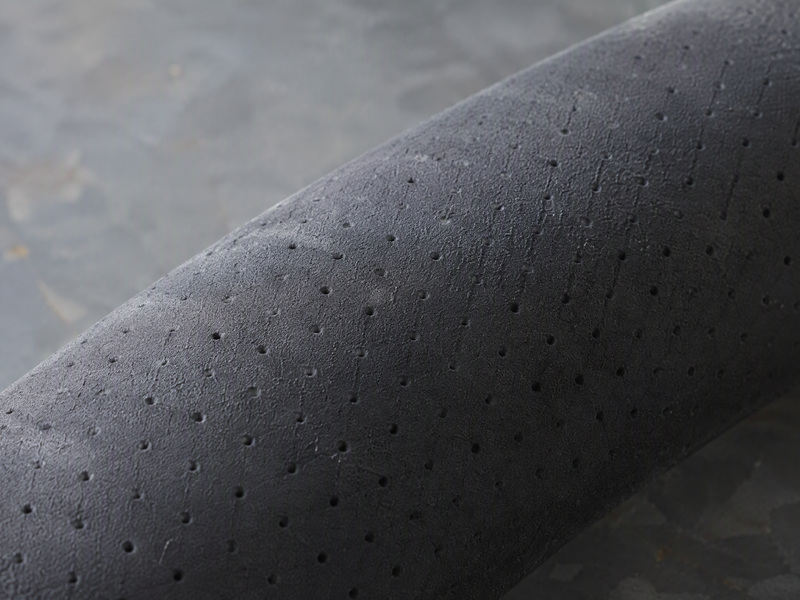
Figure 1. Close-up of the outer cover of a black rubber hose, patterned with small pin pricks.
Two published properties carry the service life. Within its normal service life the hose will not harden or crack, which holds while it is drained after every use and kept free of cover abrasion. The perforated cover resists blistering.
The distinction is not academic. A distributor who orders from the wrong line will receive a hose with a different tube, a different reinforcement and a different temperature range. Reading the family name before the model name prevents that error.
A reader who wants to compare material families in general terms can start with the site’s guide to types of flexible hose materials.
The Published Versilon Steam Hose Specification Table
This hose publishes one construction, one bore and one pressure class; Table 1 lists every figure the manufacturer releases for this hose.
Table 1. Published specifications for this hose, with the buyer reading beside each value.
| Artículo | Published value | What it means for a buyer |
|---|---|---|
| Product family | Rubber and PVC hose line; high-temperature EPDM steam handling hose | The steam item sits in the EPDM family, not in the fluoropolymer family |
| Tube and reinforcement | Black tube, steel wire reinforcement | Standard construction for saturated steam duty |
| High-temperature rating | 400 °F | The thermal figure most searches quote |
| Maximum working pressure | 250 psi (17.2 bar) | The single pressure class the range publishes |
| Published size | ID 0.75 in (19.05 mm); OD 1.25 in (31.75 mm); 250 psi (17.2 bar) | One bore only, with its matching outside diameter |
| Service properties | Will not harden or crack during normal service life; its perforated cover resists blistering | Two named failure modes the design targets |
| Listed uses | Cleaning pumps, valves and tubing | Equipment connections at pumps, valves and tubing |
The published size table has one entry, so a buyer who needs a half-inch bore or a two-inch bore will not find it in this line. The pressure side is just as narrow, because 250 psi is the only maximum working pressure published for this Versilon steam hose.
A figure absent from the manufacturer’s published data cannot be claimed for the product. Nothing here should be filled in from a similar hose, because a rating belongs to the construction that carries it.
Specifications quoted for the named product are those the manufacturer publishes; confirm them against the maker’s current datasheet before you order.
Why “Versilon Steam Hose” Searches Land on PTFE Data
The name covers more than one hose family, and that is the source of most confusion. Next to the EPDM steam item, the same catalog carries a fluoropolymer line made from PTFE with a 304 stainless steel braid. Those hoses are cataloged as TS and TB and are rated from −73 °C to +232 °C continuous, with +260 °C intermittent. A search for a Versilon steam hose can therefore land on PTFE steam hose data that does not describe this EPDM product at all.
A fluoropolymer page describes a plastic tube, a stainless braid and a temperature range that reaches far colder and slightly hotter than the rubber item. The EPDM product in this article describes a black rubber tube, steel wire reinforcement and a 400 °F rating.

Figure 2. Two hoses side by side: a matte black rubber hose with pin pricks, and a translucent tube under a stainless braid.
Table 2. Two families sold under the same catalog name, compared by published data.
| Attribute | EPDM steam handling hose | Fluoropolymer TS and TB hose |
|---|---|---|
| Catalog line | Rubber and PVC hoses | Fluoropolymer line |
| Tube material | Black EPDM | PTFE |
| Refuerzo | Steel wire | 304 stainless steel braid |
| Published temperature | 400 °F high-temperature rating | −73 °C to +232 °C (450 °F) continuous; +260 °C intermittent |
| Published duty | Steam handling at plant temperature and pressure | Chemical and thermal resistance where a steam rating is not the driver |
| Typical search result | This item, with one bore and one pressure class | PTFE steam hose pages for the fluoropolymer family |
The rubber and fluoropolymer lines overlap only in the name. A buyer who needs the EPDM item should ask for the rubber and PVC catalog family, quote the 0.75 in bore and the 250 psi class, and treat any PTFE steam hose figure as belonging to a different product.
The practical test is simple. If a data sheet mentions PTFE, a stainless braid or a continuous rating far below zero, it describes the fluoropolymer family. If it mentions a black EPDM tube, steel wire and 400 °F, it describes the hose in this article.
One Bore, One Pressure Class: What the Versilon Steam Hose Range Does Not Cover
One bore and one pressure class is the whole published range, and that is a boundary rather than a marketing choice. The 0.75 in bore fixes the fittings and the routing; the 250 psi class fixes the system pressure the line can serve.
For a buyer who needs other sizes, the consequences are narrow but firm. A published table with one entry gives a distributor nothing to quote against, so a special order has no published basis. A hose at a different bore has to come from a range that publishes that bore.
Table 3. What the published range fixes, and what a buyer must source elsewhere.
| Requirement | Published position | Where that leaves the buyer |
|---|---|---|
| Bore | One entry at 0.75 in (19.05 mm) ID | Other bores must come from another range |
| Outside diameter | 1.25 in (31.75 mm) | Fittings and routing are matched to this size |
| Presión de trabajo | 250 psi (17.2 bar) | One pressure class only, not a ladder of options |
| Temperatura | 400 °F high-temperature rating | The rating belongs to the EPDM hose, not to the fluoropolymer line |
| Length options | Not stated in the published size table | Confirm length and tolerance with the distributor |
Where the range is silent, the buyer should stay silent too. A quotation that invents a second bore or a second pressure class is not supported by the published data and should be treated with caution.
Construction and the Vented Cover in Practice
A black EPDM tube resists hot condensate, steel wire carries the pressure load, and a perforated outer layer lets vapor that has crossed the wall escape to atmosphere. The vented cover is not cosmetic. Without a path to the outside, trapped vapor blisters the cover and separates it from the carcass.
This is also why a steam hose must be drained after every use. Residual liquid left inside the bore causes the inner tube to bubble and crack in a pattern the trade calls popcorning, and that damage ends the hose well before its rating would suggest. Draining is a maintenance step, not an optional one.
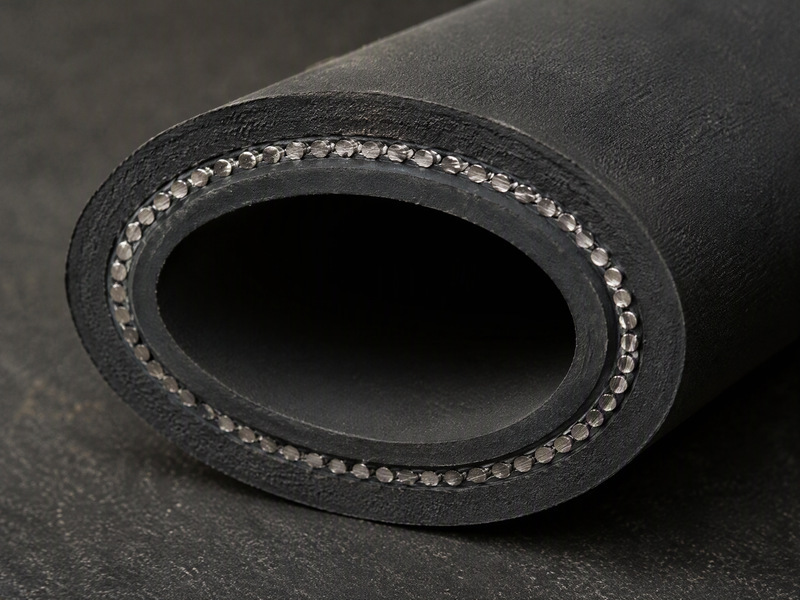
Figure 3. The cut end of a hose, showing a thick black inner wall, a ring of steel wire and the outer cover.
Table 4. A smooth cover marks a hose built for a different duty; a steam hose is perforated.
| Layer | Material | Function | How to recognize it |
|---|---|---|---|
| Tube | Black EPDM | Resists hot condensate and steam | Black bore, smooth and matte |
| Refuerzo | Steel wire | Carries the internal pressure load | Wire can be felt through the wall; the hose resists crushing |
| Cover | EPDM, perforated | Protects the carcass and vents vapor | Pin-hole pattern visible on the surface |
| Venting | Perforated outer layer | Releases vapor that crosses the wall and prevents blistering | Small holes on the surface; a smooth cover signals a different duty |
The tube handles chemistry and heat, the wire handles force, and the perforated cover handles the vapor that inevitably crosses the wall. A hose that is strong but unvented will blister, and a hose that is vented but under-reinforced will fail at pressure.
The site’s Guía sobre los materiales de las mangueras flexibles explains how tube and cover materials are chosen for heat and chemical duty.
Where the Versilon Steam Hose Fits: Cleaning Pumps, Valves and Tubing
The listed uses are cleaning pumps, valves and tubing, which points to equipment connections. In that role the hose is short, handled often and used close to a pump or a valve body. The published properties line up with that job: a hose that will not harden or crack within normal service life, and a cover that resists blistering when steam crosses the wall.

Figure 4. A short hose jumper clamped to a valve body beside a pump, with two metal band clamps.
A line plan should separate fixed pipe from the flexible connections at equipment. The flexible pieces are where this class of hose belongs, and the fixed runs are where a different product is needed.
Table 5. Listed uses, with the service condition each one implies.
| Listed use | Service condition it implies | What the hose must handle |
|---|---|---|
| Cleaning pumps | Connection at the discharge side of a cleaning pump | Pulsing flow, heat and frequent handling |
| Valves | Short jumpers at a valve body | Tight bends and repeated connect and disconnect |
| Tubing | Short runs between fixed equipment | Routing in confined spaces with abrasion at contact points |
The limit on run length comes from the published range, not from the use list: with one size and no published length, a long line needs a range that publishes both. A buyer planning one should treat this item as a component and specify bore and length.
Steam Hose Limits: Pressure, Temperature and Service Life
Every steam hose limit has two layers: the pressure the maker publishes as a working limit and the pressure at which the hose actually fails. The published 250 psi is a working figure, not a burst figure. Steam hose design factors are commonly published between 10:1 and 20:1 depending on the family, so the gap between working and burst pressure is wide by design.
Steam hose limits in temperature and pressure move together. Saturated steam at a higher pressure is also hotter, so a pressure ceiling is quietly a temperature ceiling as well. The ISO 6134 Type 2 duty is defined at 18 bar and 210 °C, and the Type 1 duty at 0.6 MPa (6 bar) and 164 °C. The published 250 psi (17.2 bar) and 400 °F (204 °C, calculated) figures both sit just below the Type 2 duty.
Service life is the third of the steam hose limits, and it is the one operators control. A hose can be rated correctly and still fail early if it is not drained, if the cover is abraded, or if the working pressure limit is treated as a target rather than a ceiling. The published service-life claim assumes normal service, and normal service includes the drain step.
For the difference between a working figure and a burst figure, see working pressure vs burst pressure. For the general case, the site’s note on EPDM steam hose for saturated steam sets out how pressure and temperature pair on a steam line.
How to Specify an Equivalent Steam Hose When the Range Stops Short
When the published range stops short, the buyer’s task is to translate a duty into a specification rather than to hunt for the same item under another label. Start from the bore, the working pressure, the temperature and the connection. Then add the service conditions that decide real life, such as flexing, abrasion and whether the hose is drained daily.
Table 6. Six fields decide whether another range can replace this one.
| Campo | Published value for this hose | Fill in for the replacement |
|---|---|---|
| Bore | 0.75 in (19.05 mm) | Required bore at the connection |
| Outside diameter | 1.25 in (31.75 mm) | Space available and clamp size |
| Presión de trabajo | 250 psi (17.2 bar) | System pressure plus margin |
| Temperatura | 400 °F rating | Highest temperature the line will see |
| Cover | Vented cover, to resist blistering | Confirm the replacement is perforated |
| Maintenance | Drain after every use | The same rule applies to the replacement |
Fill the right-hand column before contacting anyone. A distributor can match a specification, but cannot invent one. If the replacement comes from a different bore, quote the bore and the pressure separately, because a smaller bore with the same wall may not carry the same rating.
HENGHUA is not affiliated with, and does not distribute, the named brand.
Matching This Hose to a Real Steam Duty
The decision comes down to one question: does the duty match the published range, or does it need something the range does not publish? If the duty is a 0.75 in connection at or below 250 psi and 400 °F, this hose is a candidate. If the duty needs another bore, a higher pressure class, a longer run or superheated steam above the published rating, the answer is a different range.
Before ordering, confirm the current datasheet, check the connection and clamp method, and plan the drain step into the shift routine. A clamped or banded assembly can reduce the working pressure of the assembly below the hose rating, so the connection deserves the same attention as the hose.
Two links help frame the decision. The steam hose category page shows how a full range is organized by duty, and the food and beverage hose line is the right starting point when a washdown duty also touches food contact. For company background, see about HENGHUA.
Solicita un presupuesto y muestras gratuitas
Versilon Steam Hose FAQs
Is This Hose an EPDM or a PTFE Product?
It is an EPDM product. The manufacturer catalogs it in the rubber and PVC hose line as a high-temperature EPDM steam handling hose, with a black tube and steel wire reinforcement. The PTFE material belongs to a different family sold under the same name, the TS and TB fluoropolymer line with a 304 stainless steel braid. A PTFE steam hose page therefore describes a different product.
What Is the Published Working Pressure?
It is 250 psi, which Saint-Gobain also publishes as 17.2 bar. That is the only maximum working pressure the range lists, and it applies to the single published bore rather than to a family of options. Anything above 250 psi needs a hose from a range that publishes a higher class, because a working limit is a ceiling and not a target.
What Temperature Can the Versilon Steam Hose Handle?
The manufacturer publishes a 400 °F high-temperature rating for this EPDM hose. That rating belongs to the rubber and PVC family, not to the fluoropolymer line, which is published at a different range entirely. Keep the two sets of figures apart, and confirm the current datasheet before you specify the hose for a steam duty.
Why Is the Published Size Table So Short?
The size table has one entry because Saint-Gobain publishes one bore for this item: ID 0.75 in (19.05 mm) with an OD of 1.25 in (31.75 mm). A range with one published size is a specific item rather than a family. A buyer who needs another bore has to source it from a different range that publishes that size.
What Does a Vented Cover Mean on a Steam Hose?
A perforated outer layer lets vapor that crosses the hose wall escape instead of collecting under the cover. The manufacturer publishes that this perforated cover resists blistering, which is the failure that appears when vapor is trapped. The same rule applies to any steam hose, because an unperforated cover on a steam duty will separate and blister.
Can This Hose Serve a Steam Cleaning Machine?
The published uses are cleaning pumps, valves and tubing, and they do not name a steam cleaning machine. Matching the duty rather than the label is the safe approach. Confirm the actual pressure and temperature at the hose, then compare those figures with the published 250 psi and 400 °F rating.
What Are the Main Steam Hose Limits to Watch?
The limits fall into three groups. Pressure is capped by the published working figure, not by the burst pressure. Temperature is capped by the 400 °F rating for this EPDM item. Service life is capped by maintenance, because a hose that is not drained after every use can develop inner-tube popcorning and fail early. Watch all three together rather than one at a time.
Can This Hose Carry Superheated Steam?
The published data describes a high-temperature EPDM steam handling hose with a 400 °F rating, and it does not separate saturated from superheated service. Superheated steam places a greater thermal demand on hose materials than saturated steam does. If the duty is superheated, treat the temperature as the governing figure and confirm it against the datasheet before ordering.
How Should the Hose Be Stored and Maintained?
Drain the hose after every use and let it dry with the ends open. Residual liquid inside the bore is the main cause of early failure, because it drives inner-tube popcorning. Store the hose off the floor, away from sharp edges and out of direct sun, so the cover is not abraded. Check the cover for blisters and the couplings for movement at each inspection.
What Should a Buyer Check Before Ordering?
Check three things. Confirm the current datasheet for the 400 °F rating and the 250 psi working pressure. Confirm the connection and the clamp method, because a clamped assembly can reduce the rated working pressure of the assembly. Finally, confirm the bore, since the published range offers one size and a different bore means a different product.
About HENGHUA
HENGHUA makes hoses and couplings and supplies distributors, retailers and OEM brands worldwide. Its steam line is built with an EPDM or CR tube, one or two layers of steel wire braid or four to six layers of steel wire spiral, and a pin-pricked cover. Bore sizes run from 3/8 in to 4 in, with saturated steam duty to 210 °C and superheated duty to 230 °C. A separate food-grade hose line covers food and beverage work.
The company operates a 35,000 m² site with 95 production lines and exports to more than 70 countries. Its quality systems are ISO 9001, IATF 16949 and ISO 14001, and it runs its own laboratory for hydrostatic testing to ISO 1402 and impulse testing to ISO 6803. Factory-direct pricing, short lead times on volume and a warranty apply, and OEM/ODM work covers custom lengths to a ±1% tolerance, cover printing and private label.
 English
 Spanish
 Portuguese
 French
 German
 Arabic
 Russian
 Indonesian
 Japanese
 Korean