
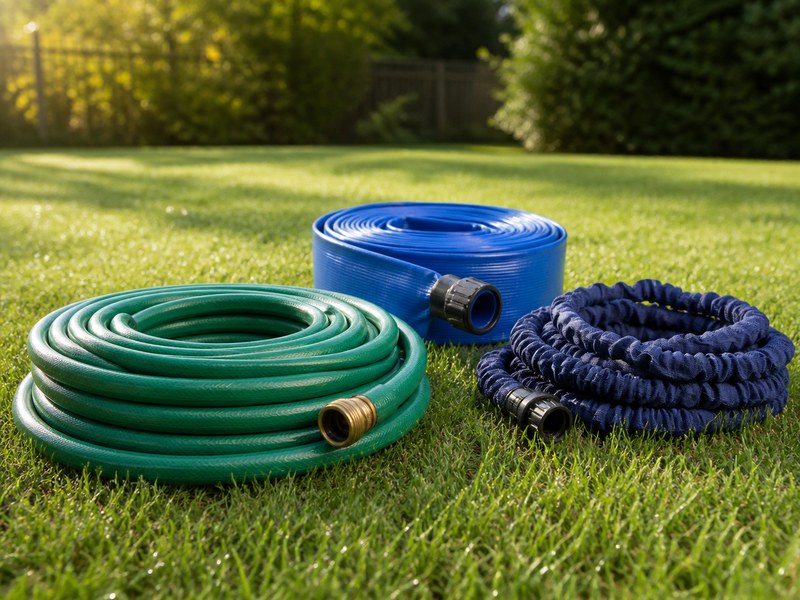
Most water hoses are a combination of material, construction, and application — matching all three is the key to choosing well.
There are many types of water hoses, and choosing the right one comes down to material, construction, application, and pressure rating. The short answer: most hoses combine these four traits, so the best pick depends on what you water, at what pressure, and at what temperature. This guide covers every major type — garden hoses, soaker and expandable hoses, lay-flat, suction, washdown, fire, potable and hot-water hose — with pressure ratings, sizes, fittings, and a step-by-step selection chart.
You will also find material comparisons, connector and thread guidance, and answers to the questions buyers ask most often, so you can match a hose to the job before spending money. Jump to the FAQ section for one-line answers to the most common buying questions.
1. How Are the Types of Water Hoses Classified?
Understanding the types of water hoses begins with four lenses: material, construction, application, and pressure rating. Material decides chemical and temperature resistance; construction decides burst strength and kink resistance; application decides diameter and fittings; pressure rating decides the safety ceiling for the job.
Every hose you pick up can be described through these four lenses. A typical residential garden hose, for example, is a rubber or PVC tube, usually fiber-braided, built for watering at 100–150 psi. An industrial washdown hose is also rubber and braided, but it is built for 150–250 psi service and a harder working life.
One rule applies to all of them: use the hose only at or below the working pressure printed on the cover. In our bench tests at HENGHUA, we read the printed rating first and treat it as a ceiling — we design and recommend service at no more than 80% of that value, because fittings and couplings wear faster than the tube itself.
2. Water Hose Types by Material: Which Is Best?
Material is the first decision because it sets the temperature range, durability, and price. The three dominant water hose types by material are rubber, PVC (polyvinyl chloride), and polyurethane (PU). Rubber offers the best flexibility and kink resistance; PVC is the lightest and cheapest; polyurethane gives the best abrasion resistance and cold-weather flexibility.
The main types of rubber hose used for water service are Ethylene Propylene Diene Monomer (EPDM), Styrene-Butadiene Rubber (SBR), and natural rubber compounds. EPDM resists ozone, UV, and heat well, with a typical continuous working range from about −40°F to 200°F (−40°C to 93°C) per the EPDM compound datasheet (continuous service, static air) [待核实-3]; SBR and natural rubber are softer and cheaper but age faster outdoors. For a garden or light industrial water hose, a rubber compound is the longest-lived choice per dollar over its full life.
| Property | Rubber (EPDM/SBR) | PVC | Polyurethane (PU) |
|---|---|---|---|
| Flexibilidad | Excellent, stays flexible in cold | Good when warm, stiffens below ~40°F | Excellent, remains flexible in cold |
| Abrasion resistance | Bien | Moderate | Best — several times PVC |
| UV / outdoor life | Very good (EPDM) | Good, but embrittles with age | Bien |
| Weight | Heaviest | Lightest | Light |
| Relative cost per foot | About 2–3× PVC | Baseline (lowest) | About 4–6× PVC |
| Best suited for | General watering, washdown, industrial duty | Light gardening, budget buyers, temporary use | High-wear, cold-climate, professional tools |
Rubber hoses have thicker walls and better cold flexibility; PVC hoses are lighter and cheaper. Wall construction, not just material, sets the pressure rating.
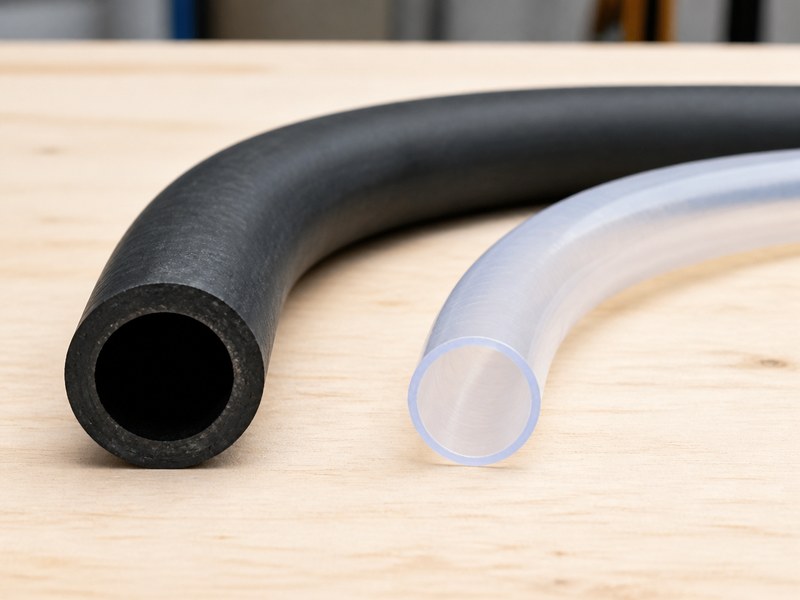
Thermoplastic elastomer (TPE/TPU) blends power most expandable hoses and some premium kink-free designs. They combine PVC-level lightness with rubber-level flexibility. In our HENGHUA tests, expandable hoses showed strong kink recovery, but the fitting joint is their weak point: leaving one pressurized for hours can permanently loosen the coupling. For seasonal light duty they are convenient; for year-round or heavy use, choose rubber.
3. What Are the Types of Garden Hoses?
Garden hose types are the best-known members of the water hose family. The types of garden hoses on the market today all descend from two ancestors: the standard rubber hose and the vinyl hose. Seven designs dominate the residential market, and each fits a specific watering job. The most common types of water hoses in homes are standard rubber and vinyl hoses, but expandable, soaker, and sprinkler versions now cover most specialty uses.
- Standard rubber hose — the most durable and kink-resistant option, and the heaviest. Best for daily watering and long service life.
- Vinyl / PVC hose — light and inexpensive, but stiff in cold weather and less abrasion-resistant. Fine for light seasonal use.
- Rubber-blend (hybrid) hose — a middle ground on weight, flexibility, and price; the most popular choice for general home watering.
- Expandable hose — a TPE or latex inner tube inside a fabric sleeve that grows to 2–3× its stored length under pressure and shrinks when drained. Extremely light, but puncture-prone and damaged if left pressurized.
- Soaker hose — a porous tube that weeps water along its full length at low pressure (usually rated for 10–40 psi, far below a standard hose rating). Best for flower beds and vegetable rows.
- Sprinkler hose — a flat hose with a row of tiny holes that sprays upward. Good for rectangular lawns and new-seed areas.
- Stainless steel braided hose — a metal-reinforced tube that is nearly kink-proof but heavy and less flexible. Popular where kinking is the main complaint.
Standard rubber hoses are the highest-demand types of rubber hose in our production line. Our field testing over a full season found that a 5/8-inch rubber hose with brass fittings outlasted comparable PVC models by a wide margin — but for a small balcony garden, the extra weight is wasted money.Soaker, sprinkler, and expandable hoses each solve one specific watering problem — pick the type that matches the job.
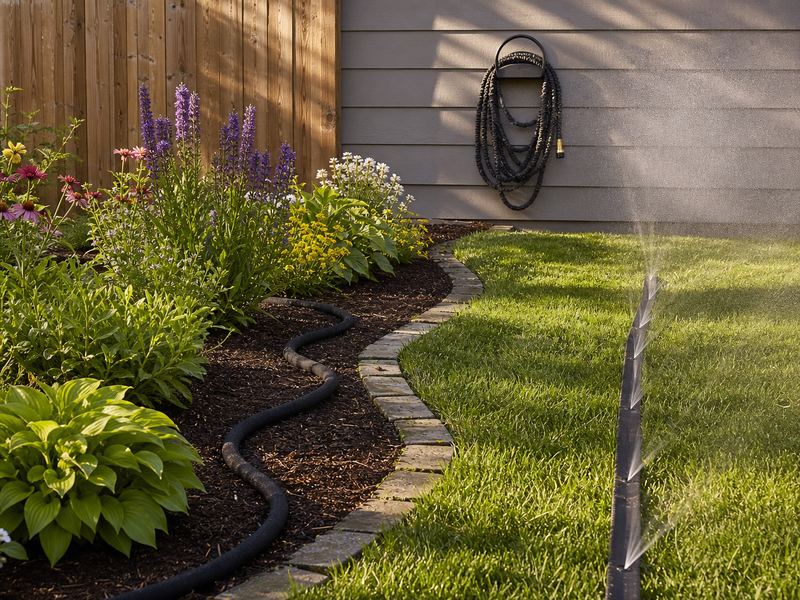
Coiled and retractable hoses are worth a note: among garden hose types, coiled versions store themselves in a tight spiral and suit small spaces, while reel-mounted hoses make 50–100 ft runs easy to manage. Neither changes the material decision — they only change storage.
4. Industrial Water Hoses: Which Type Do You Need?
The types of water hoses used in industry are defined by duty, not convenience. Six families cover almost every industrial job: lay-flat discharge, suction, washdown, fire, potable, and hot-water hose. Each is engineered for a specific pressure, vacuum, or temperature condition.
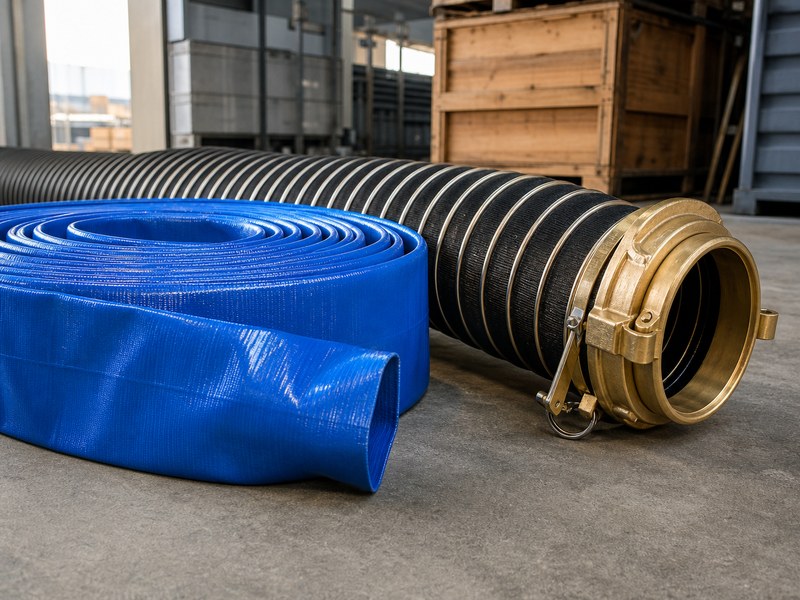
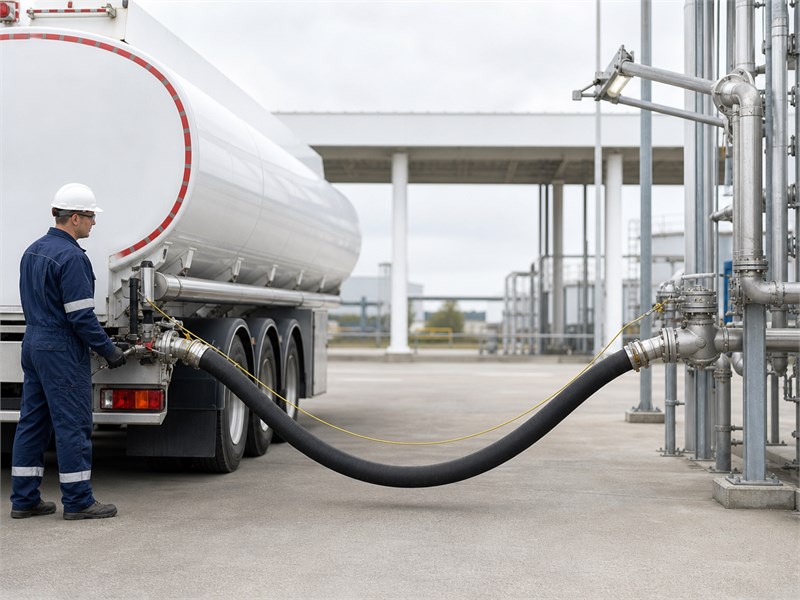
- Lay-flat discharge hose — a PVC or nitrile tube that flattens when drained for compact storage and unrolls rigid under pressure. Used for irrigation, dewatering, and water transfer in sizes from 1 to 12 inches.
- Suction hose — a helix-wire-reinforced tube rated for full vacuum, so it does not collapse when a pump pulls water from a tank, pond, or river. Stiffer than discharge hose by design.
- Washdown hose — a rubber or PVC hose built for 150–250 psi cleaning service in plants, farms, and food facilities. Abrasion- and oil-resistant covers are common.
- Fire hose — attack lines of 1.5–3 inches typically rated 275–300 psi working pressure per NFPA 1961 (current edition), attack hose service test section [待核实-1], with much larger supply lines feeding them. Built for extreme durability and instant pressure.
- Potable water hose — made from FDA food-contact compounds and NSF/ANSI 61-certified materials for drinking water. Used for RVs, marine tanks, and food plants where the water meets people.
- Hot-water hose — EPDM constructions rated to 200°F (93°C) continuous, with silicone compounds carrying service above that up to about 250°F (121°C), for boiler drain-down, tanker transfer, and washdown with hot water.
The types of hoses for water supply in industry usually come down to lay-flat versus suction: if the pump pushes, use lay-flat; if it pulls, use suction. Mixing them up is the most common specification error we see on incoming inquiries at HENGHUA.
| Industrial Type | Typical Inner Diameter | Typical Working Pressure | Primary Use |
|---|---|---|---|
| Lay-flat discharge | 1–12 in (25–300 mm) | 30–200 psi | Irrigation, dewatering, transfer |
| Suction | 1–8 in (25–200 mm) | Full vacuum to ~150 psi | Pump intake from tanks, ponds |
| Washdown | 1/2–1 in (13–25 mm) | 150–250 psi | Plant, farm, and food-facility cleaning |
| Fire (attack line) | 1.5–3 in (38–76 mm) | 275–300 psi | Emergency water delivery |
| Potable | 1/2–2 in (13–50 mm) | 100–200 psi | Drinking water, RV, marine, food plants |
| Hot water | 3/4–2 in (19–50 mm) | 100–250 psi | Hot transfer up to ~200°F (EPDM); silicone to ~250°F |
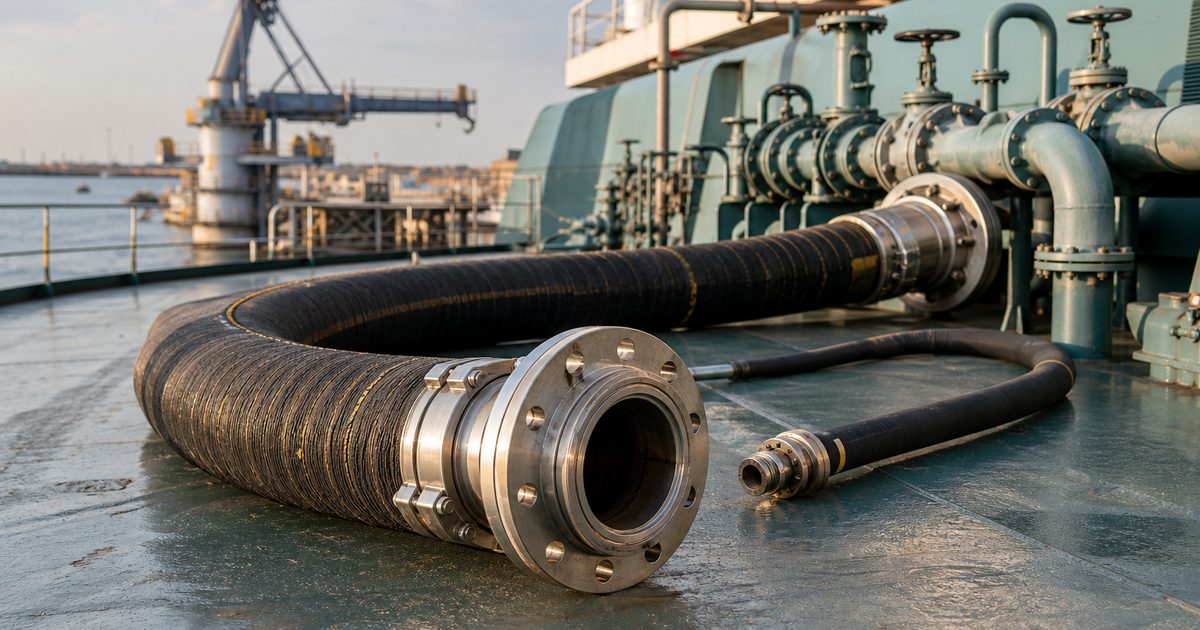
Lay-flat discharge hose flattens for storage; wire-reinforced suction hose resists vacuum collapse. Duty decides the construction.
Pressure washer hose is a high-pressure cousin worth separating out: consumer machines rate their hoses to the machine’s maximum pressure — commonly 1,500–4,500 psi — with M22-14 inlet threads. A standard 100–150 psi garden hose belongs only on the supply side — the two pressure ratings are not interchangeable.
5. What Is the Difference Between Reinforced and Non-Reinforced Construction?
Construction decides how much pressure a hose can hold and how well it resists kinking. Reinforced hoses embed one or more layers of fiber braid, spiral wire, or steel wire in the tube wall; non-reinforced hoses are a single extruded wall with no skeleton.
Fiber-braided reinforcement (polyester or nylon) is the workhorse of most types of rubber hose and PVC hose on the market: it raises burst pressure several times over a plain tube and gives the wall its round, kink-resistant shape. Spiral or helix wire adds collapse resistance for suction service, while steel-wire braid appears in very high-pressure lines.
A simple rule from our production line: if a hose must hold pressure, it needs reinforcement. Non-reinforced PVC tubing is fine for gravity-flow and low-pressure jobs — aquarium lines, condensate drains, temporary watering — but its working pressure is typically well under 100 psi and it kinks easily. The label will usually say “reinforced” or state the number of braid layers; when it does not, treat the rating with caution.
6. Water Hose Pressure Ratings: What Working Pressure Do You Need?
Pressure rating separates the types of water hoses more sharply than any other specification. Working pressure is the maximum continuous pressure the hose should see; burst pressure, typically 2–4× the working pressure per manufacturer datasheets, is where the wall finally fails. Both numbers are printed on the hose cover — read them before buying.
| Pressure Class | Presión de trabajo | Typical Hose Types |
|---|---|---|
| Bajo | Hasta 150 psi | Soaker hose, gravity lines, light PVC garden hose |
| Medio | 150–300 psi | Standard rubber/PVC garden hose, washdown, potable |
| Alto | 300–1,500 psi | Heavy washdown, agricultural spray, fire supply (attack lines) |
| Very high | 1,500+ psi | Pressure washer hose, hydraulic service |
Residential garden hoses are usually rated 100–150 psi working pressure; heavy-duty models reach 300 psi. Municipal supply pressure in North America is typically 40–80 psi, so a standard garden hose has ample margin — the risk comes from heat, UV, and repeated kinking, not from static pressure alone.
Our HENGHUA bench protocol pressure-tests every production batch above its rated working pressure before release [待核实-2], and we recommend buyers apply the same logic: buy a hose whose rating is at least 1.25× the maximum pressure your system can deliver. The 1.25× selection rule and our 80% service ceiling describe the same safety margin from two sides — one for buyers, one for engineers. Release nozzle pressure whenever the hose is not actively in use; a closed nozzle against a running supply stresses the wall and fittings.
6.1 What happens if a hose is used above its working pressure?
Working pressure is the maximum continuous pressure a hose should see; the safety margin lives in the rating, not in the wall. Exceeding it accelerates fitting creep and can burst the tube at its weakest point. That is why we design and recommend service at no more than 80% of the printed rating — the extra headroom covers fittings, which wear faster than the tube.
7. What Water Hose Sizes and Fittings Do You Need?
Size has two separate meanings for water hoses: the inner diameter (ID) of the tube, which controls flow, and the thread of the fittings, which controls what it connects to. Confusing the two causes most sizing mistakes.
Garden hoses come in three common IDs: 1/2 inch (12.7 mm), 5/8 inch (15.9 mm), and 3/4 inch (19.1 mm). Bigger IDs move more water at the same pressure — our measurements at 50 psi over 50 ft show roughly 3–6 GPM for 1/2 inch, 5–9 GPM for 5/8 inch, and 8–15 GPM for 3/4 inch — but they are heavier, stiffer, and cost more per foot.
| Hose Inner Diameter | Metric Equivalent | Typical Flow (50 ft, 50 psi) | Ideal para |
|---|---|---|---|
| 1/2 inch | 12.7 mm | 3–6 GPM (11–23 L/min) | Short runs, light watering, containers |
| 5/8 inch | 15.9 mm | 5–9 GPM (19–34 L/min) | General residential watering |
| 3/4 inch | 19.1 mm | 8–15 GPM (30–57 L/min) | High flow, sprinklers, long runs, pressure washers |
Length works against you: at the same pressure, doubling the hose length cuts flow by roughly 30–40% because friction grows with the run. Our 50 psi measurements on a 5/8-inch hose show the trade-off clearly:
| Hose Length (5/8 inch) | Typical Flow (50 psi) | What It Means |
|---|---|---|
| 25 ft | 6–10 GPM (23–38 L/min) | Short runs keep friction loss low |
| 50 ft | 5–9 GPM (19–34 L/min) | Typical residential watering balance |
| 100 ft | 3–6 GPM (11–23 L/min) | Long runs lose about half the flow |
So a 100 ft hose delivers roughly half the flow of a 25 ft run at equal pressure: choose the shortest length that reaches your furthest tap, or step up to 3/4 inch for long runs.
Fittings follow thread standards, not hose diameter. North American outdoor faucets and garden hose ends use a 3/4-inch GHT (Garden Hose Thread) at 11.5 threads per inch, in line with the ANSI B1.20.7 hose coupling thread standard (GHT section) — the same coupling appears on 1/2-, 5/8-, and 3/4-inch hoses alike. Pipe threads are different: National Pipe Thread (NPT) is tapered at 14 TPI, while BSPP (parallel, ISO 228) is the common European and Australian standard and tapered BSPT (ISO 7-1) is its pipe-thread cousin. A North American garden hose therefore needs a GHT-to-BSPP adapter to reach European faucets.
7.1 What is the difference between GHT and NPT threads?
GHT (Garden Hose Thread) is a parallel 3/4-inch thread at 11.5 threads per inch that seals with a rubber washer, which is why garden hose couplings take no thread tape. NPT (National Pipe Thread) is a tapered thread at 14 TPI that seals by the taper itself. The two are not interchangeable: a GHT coupling on an NPT fitting leaks or cross-threads.
There are three types of water hose connectors you will meet: threaded couplings (the classic screw-on, washer-sealed connection), barbed fittings with hose clamps (for cutting a hose to length and attaching a new end), and quick connect systems (a plug-and-socket pair that snaps together for fast changeover). Industrial lines add cam-and-groove couplings and flanges for large diameters. For thread-by-thread detail, our garden hose fitting size guide and NPT thread guide cover the measurements in depth.Threaded couplings, quick connects, and barbed fittings are the three types of water hose connectors used in most installations.
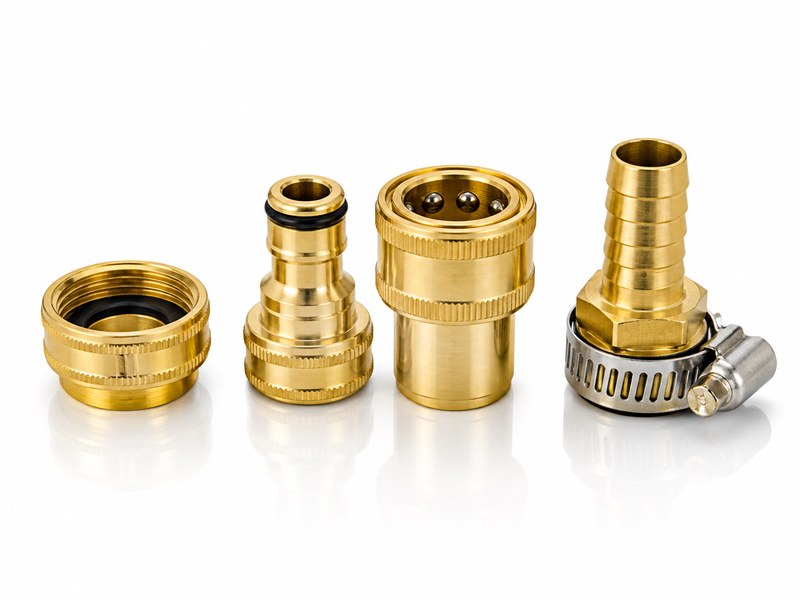
Quick connects are built on the 3/4 GHT base, so sets from different brands lock together in practice. Keep the metal type consistent (brass to brass, plastic to plastic) for the longest wear life, and replace the rubber washer in a threaded coupling before tightening — it fixes the large majority of connection leaks.
8. How to Choose the Right Water Hose Type
The fastest route through the many types of water hoses is to start from the job, not the product. Work through these IF-THEN rules in order, and the right hose type usually becomes obvious.
For homes and recreational use:
- IF you water houseplants or a small balcony THEN use a light vinyl, coiled, or short expandable hose — weight matters more here than durability.
- IF you water a general yard THEN choose a 5/8-inch rubber or rubber-blend (hybrid) hose, 50–75 ft, with brass fittings — the best balance of flow, durability, and cost.
- IF you irrigate flower beds or vegetable rows THEN use a soaker hose or drip line at low pressure instead of spraying.
- IF you cover a rectangular lawn THEN a sprinkler hose (or a standard hose feeding an oscillating sprinkler) does the job most evenly.
- IF you wash a car or driveway THEN a standard hose with a trigger nozzle is enough; upgrade to a pressure washer hose only when you own the machine.
- IF you own a pressure washer THEN match the hose to the machine’s maximum pressure and inlet thread (M22-14 on most consumer units) — see our pressure washer quick connect guide.
- IF you fill an RV, boat, or drinking-water tank THEN buy a potable hose certified to NSF/ANSI 61 — a standard garden hose is food-contact-unrated and not suitable for the supply side.
For industry and heavy duty:
- IF you dewater a site or transfer water THEN use lay-flat discharge for push service and wire-reinforced suction for pull service, sized to your pump.
- IF you clean in a plant, farm, or food facility THEN a rubber washdown hose rated 150–250 psi with an oil-resistant cover is the safe default.
After the application, check four numbers: inner diameter (flow), working pressure (safety), length (pressure drop — flow falls as length grows), and the thread standard of both ends. Then set the budget: PVC is the cheapest water hose type up front, rubber is the best value over a full life, and polyurethane earns its premium only in high-wear or cold-climate work.
If you are still weighing garden hose types after this guide, our garden hose fitting size guide compares diameters, threads, and flow in more depth — the same 3/4 GHT fitting rules apply to every hose in this section.
Not sure which type fits your job? Send our engineers a photo of your application and we will confirm the hose type, size, and fittings within one business day — contact the HENGHUA engineering team.
9. Water Hose Problems and How to Prevent Them
Most water hose failures come from six predictable causes: kinking, UV and heat damage, freezing, over-pressurization, worn fittings, and neglected washing-machine hoses. Each is preventable with the right type and a short maintenance routine.
- Kinks — use a reinforced or kink-resistant hose for long runs, and coil the hose in wide loops for storage. Our tests show fiber-braided hoses recover from kinks that permanently crease non-reinforced tubes.
- UV and heat damage — PVC embrittles after years of direct sun. Store hoses out of sunlight when possible, and buy EPDM rubber for permanent outdoor installations.
- Freeze damage — ice expands and splits both walls and couplings. Drain the hose, disconnect it from the faucet, and store it indoors before freezing weather. A drained hose also protects the faucet from frost.
- Over-pressurization — release the nozzle whenever the hose is not in use. Expandable hoses are the most sensitive: in our testing, leaving one pressurized for hours stretched the sleeve and loosened the fitting joint permanently.
- Leaks at connections — replace the rubber washer in the female coupling first; it fixes most leaks. Apply thread tape only to tapered NPT threads; GHT seals with the washer, so tape is unnecessary.
- Washing machine hoses — the types of hoses for washing machine are braided stainless or reinforced rubber, and plumbing guidance recommends replacing them every five years regardless of visible condition.
Winter storage is three steps: drain, disconnect, store indoors. With a reinforced hose, correct storage, and an annual washer check, a rubber garden hose typically serves 5–10 seasons — our own test units are still in service after three years of continuous outdoor use at HENGHUA.
Before reconnecting a hose in spring, inspect it for cracked walls, deformed couplings, and delaminated lining — any of the three means replacement. This under-a-minute check catches most winter damage and protects the fittings on your faucet side.
10. Water Hose Types FAQ
Quick answers to the questions buyers ask most often about water hose selection:
What are the most common types of water hoses?
For homes, the most common types of water hoses are standard rubber hoses, vinyl/PVC hoses, and expandable hoses. For industry, lay-flat discharge and suction hose dominate. All share the same classification logic: material, construction, application, and pressure rating.
Is a rubber water hose better than a PVC water hose?
For durability and cold-weather flexibility, yes: rubber hoses resist kinking, UV, and abrasion better and typically last several seasons longer. PVC hoses win on weight and price. If the hose lives outdoors all year, rubber is usually the better value over its full life.
What is the difference between a soaker hose and a regular garden hose?
A soaker hose is porous and weeps water along its full length at low pressure (typically 10–40 psi), delivering water directly to plant roots with little waste. A regular garden hose is a solid tube that delivers water only at its end. Use a soaker hose for beds and rows; use a standard hose for everything else.
Are expandable garden hoses worth it?
Yes for light seasonal duty and easy storage: they expand 2–3× under pressure, weigh very little, and store in a small space. Drain and depressurize them after every use — pressurized storage permanently loosens the fitting joint. Choose them for convenience, not for heavy or permanent use.
What type of water hose is safe for drinking water?
Use a potable water hose marked NSF/ANSI 61, made from FDA food-contact compounds. Standard garden hoses are food-contact-unrated, so they are unsuitable for RV tanks and drinking lines. Look for the NSF/ANSI 61 marking before filling anything you drink from.
How many PSI is a garden hose?
Most residential garden hoses carry a working pressure rating of 100–150 psi, with heavy-duty models up to 300 psi. Municipal supply is typically 40–80 psi, so the margin is ample — the real enemies are UV, kinking, and freezing, not static pressure.
What size water hose do I need?
Match the inner diameter to the job: 1/2 inch for short light-duty runs, 5/8 inch for general watering, and 3/4 inch for high flow, long runs, sprinklers, or feeding a pressure washer as a supply line (the machine’s own high-pressure hose handles 1,500–4,500 psi). The fitting thread is almost always 3/4 GHT in North America, independent of diameter.
What are the types of water hose connectors?
Three types cover most installations: threaded couplings (washer-sealed screw connections), barbed fittings with clamps (for custom lengths), and quick connect plug-and-socket sets. Industry adds cam-and-groove couplings and flanges for large sizes.
Can I use a garden hose for a pressure washer?
No. A standard garden hose is rated 100–150 psi, while consumer pressure washer hoses are rated to the machine’s maximum pressure — commonly 1,500–4,500 psi. Use a pressure washer hose matched to your machine and its inlet thread (M22-14 on most units).
How long does a rubber water hose last?
With drain-and-store winter care and an annual washer check, a reinforced rubber garden hose typically serves 5–10 seasons outdoors. PVC hoses generally last 2–5 seasons, and expandable hoses 1–3 seasons depending on how often they are left pressurized.
I need a hose to feed a 2,500 psi pressure washer and also water my garden — can one hose do both?
No single hose covers both jobs safely. A pressure washer hose is rated to the machine’s maximum pressure (commonly 1,500–4,500 psi) with M22-14 inlet threads, while a garden hose is rated 100–150 psi. Use a dedicated pressure washer hose for the machine, and a separate 5/8-inch garden hose for watering.
What is the best water hose for garden watering?
For a typical yard, a 5/8-inch rubber or rubber-blend (hybrid) hose with brass fittings, 50–75 ft long, is the best balance of flow, durability, and cost. Rubber resists kinking and UV and typically serves 5–10 seasons with drain-and-store care; brass fittings outlast plastic under repeated connect/disconnect. Choose 3/4 inch only for long runs over 75 ft or high-flow sprinklers.
Expandable hose vs rubber hose: which is better?
For durability, rubber wins: it resists kinks, UV, and punctures and lasts 5–10 seasons. Expandable hoses win on weight and storage — they grow 2–3× under pressure and collapse when drained — but the fitting joint is their weak point: pressurized storage permanently loosens it. Rule of thumb: expandable for light seasonal duty and small spaces; rubber for daily, year-round, or heavy use.
We run a landscaping business and our hoses get coiled and dragged daily — rubber or PVC?
For daily coiling and dragging, use rubber with brass fittings. PVC saves money up front, but in commercial use it typically needs replacement within two seasons — the replacement cost erases the initial saving. Rubber absorbs the abrasion, kinks, and UV that a workday hose takes, and brass fittings survive repeated connect/disconnect far better than plastic.
I’m setting up an RV water system from scratch — which hoses and fittings do I need?
You need three lines: a potable water hose certified to NSF/ANSI 61 for the fresh-water intake, a second hose for gray-water discharge, and quick-connect fittings on the 3/4 GHT base so the lines swap fast. Keep the intake hose dedicated to drinking water and clearly marked — a food-contact-unrated hose is unsuitable for the supply side.
11. About HENGHUA and Our Testing
HENGHUA is a manufacturer of reinforced rubber and PVC water hoses — garden hoses, washdown hose, lay-flat discharge, suction hose, and potable water lines — and the pressure and durability data in this guide come from our own quality-control bench. Every one of the types of water hoses described here is part of our standard production line, so the ratings and sizes in this guide match what we actually ship.
Our quality control targets the four failure points that cause most field problems: wall thickness consistency, braid tension, fitting crimp quality, and pressure retention. We pressure-test every production batch above its rated working pressure, cycle quick-connect fittings through thousands of connect/disconnect operations, and verify kink recovery on reinforced constructions before packaging.
- Factory-direct supply — consistent pricing and lead times for distributors, retailers, and brands.
- Full specification coverage — 1/2-, 5/8-, and 3/4-inch garden hoses plus industrial water hose in diameters up to 12 inches, with GHT, NPT, and BSP-compatible fittings.
- Material options — EPDM, SBR, PVC, and polyurethane compounds matched to your market, climate, and price point.
- OEM / ODM service — custom lengths, colors, braid constructions, fitting types, and private-label packaging for your brand.
- Engineering support — pressure and temperature confirmation, sample testing, and technical documentation for your catalog.
Send us a photo of your application and our engineers will recommend the correct hose type, size, and fittings, usually within one business day. Contact the HENGHUA engineering team for a quotation or request free samples to test the hose on your own equipment, and as a water hose manufacturer with factory-direct supply we support OEM and ODM programs for distributors and brands worldwide. Whatever the types of water hoses your project needs — garden, industrial, potable, or high-pressure — we will confirm the specification before you order.

 English
  Spanish
  Portuguese
  French
  German