
A composite hose supplier is a factory when it controls the winding, bonding, crimping and pressure testing of the assembly on its own site. It is a trader when it buys finished hose and resells it. The difference shows up in change control, test records and who answers when a batch fails. Verifying which one you are dealing with takes four documents and one set of technical questions, not a factory visit alone.
This guide sets out the documents that are hard to fake, the questions that separate a manufacturer from a reseller, and the checks you can run without travelling. It also covers the case where a distributor is genuinely the better partner, and the scoring method that turns a stack of brochures into a shortlist. Every check here is one a buyer can run before the first order.
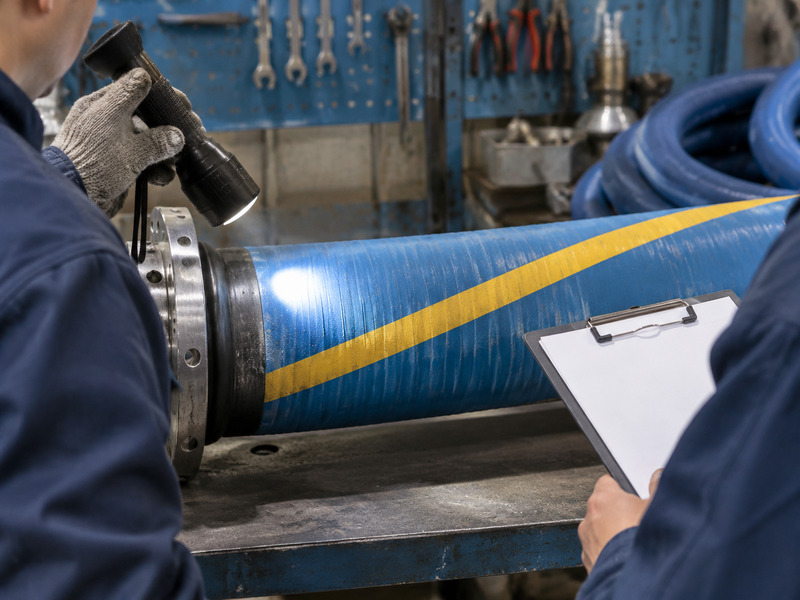
Figure 1. A buyer and a factory engineer checking a hose assembly on a bench, with the batch record open beside it.
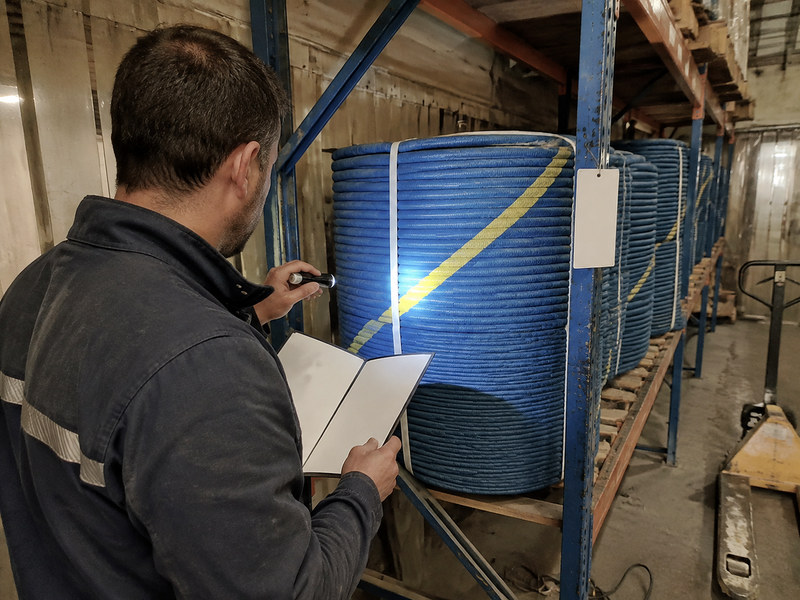
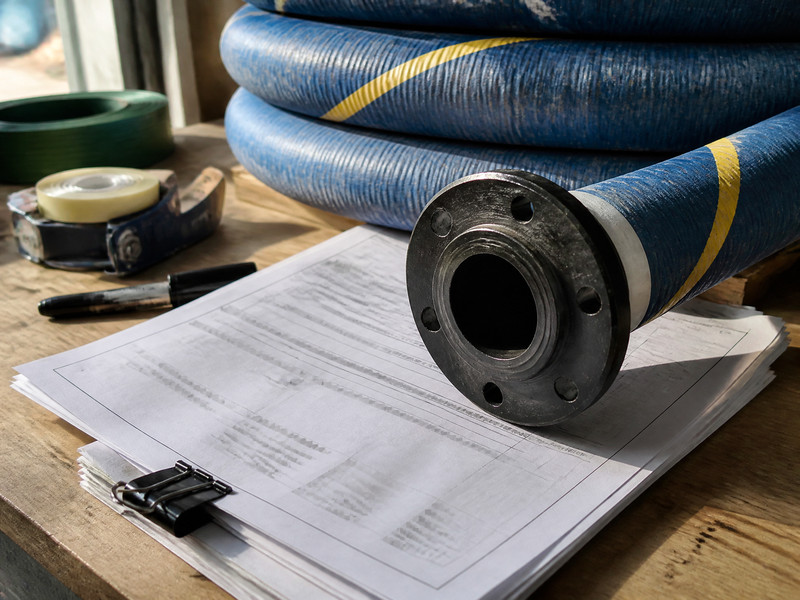
Figure 2. A torch for the cover and the marking band, a folder for the documents that should match what is on the rack. Documents settle the obvious mismatches, questions test depth, and process evidence decides the shortlist, as set out below.
Why Does Factory Status Change the Risk?
Factory status changes who can fix a problem: the maker re-runs the batch, while the trader forwards the complaint and waits. A factory can trace a batch to its film lot, its fabric roll and its crimping record, then adjust the process. A trader has to relay the question to someone else, and the answer usually arrives without the underlying record. When a terminal rejects a hose at inspection, that difference decides how fast you get a replacement.
It also changes what a specification means: a factory can quote a deviation, while a reseller can only pass it on. A factory can confirm that the liner is the grade you asked for, because it buys the film. A trader can confirm what its supplier told it, which is a different level of assurance. Neither is dishonest; the buyer simply needs to know which assurance they hold.
The commercial consequence is quieter but real. A trader’s price includes a margin on someone else’s cost, and that margin can move when the factory raises prices. A direct manufacturer’s quote is tied to its own material and labour, so it stays stable for the validity period it states.
What Documents Are Hard to Fake?
| Document | What it proves | What to check |
|---|---|---|
| Business licence or registration | The legal entity and its registered activity | Activity wording covers hose manufacture, not only trade |
| Test report with equipment details | That a pressure test was performed | Test bench identification, calibration date, serial numbers |
| Type test or certificate scope | Which designs were tested, and where | Site address matches the manufacturing address |
| Product marking on delivered hose | Traceability to a batch | Type, bore, working pressure, date of manufacture |
| Process photographs with context | That the claimed equipment exists | Winding, bonding, crimping and test bench in one sequence |
| Export and customs records for your order | That the entity shipped the goods | Consignor matches the contracting party |
Table 1. Evidence that carries weight in a supplier audit. The strongest items link a document to a physical object, a serial number or a site address.
Documents fail as evidence when they are generic. A certificate that names no site, a test report with no equipment identifier and a photograph with no context can all be genuine and still prove nothing about your order. The test is always the same: does this document connect to the thing I am buying?
Is Your Composite Hose Supplier a Manufacturer?
Ask for the manufacturing address in writing, then compare it with the address on the certificate, the business licence and the shipping documents. Three matching addresses is a good sign. A certificate issued to a different company, in a different city, with no explanation, is the most common mismatch we see.
The second question is about process ownership. Who winds the helix, who bonds the film and fabric, who crimps the ends and who runs the proof test? A manufacturer answers with departments or work centres. A trader answers with a partner’s name, which is useful information but not the same thing.
The third question is about change control. If the film supplier changes, who approves the substitution and what testing follows? A factory has a procedure, even a simple one. A reseller has a phone call.
What Does a Factory Visit Prove?
A visit proves that the equipment exists and that people know how to run it. It shows the winding table, the bonding line, the crimping press and the test bench, and it lets you watch a proof test from start to finish. What it does not prove is that your order will be built on that line, on the day you expect.
That is why the visit should end with a process walk, not a catalogue presentation. Follow one order through the shop: material issue, wall build, helix insertion, cover application, end fitting, proof test, marking and packing. Ask at each step what record is created and where it goes.
A short visit to a composite hose factory also reveals the constraint that matters commercially: how many test benches are available. A plant with one bench and a full order book will queue your assemblies behind everyone else’s, and the quoted lead time will slip. The bench count is a better predictor of delivery than the floor area.
Which Questions Separate a Factory From a Trader?
| Pregunta | Factory answer | Trader answer |
|---|---|---|
| Which films do you stock, and in what thickness? | Grades, thicknesses and supplier names | “Whatever the customer specifies” |
| How do you control helix pitch? | Machine setting, inspection interval, tolerance | Reference to a partner’s quality system |
| What is your proof test pressure for this type? | Value tied to the standard and the type | A pressure that matches the quote but not the standard |
| Who signs the test record? | A named inspector or quality function | The supplier’s sales office |
| Can you show a batch record for a previous order? | Redacted record with serials and results | “Our factory will send it later” |
| What happens if a batch fails proof? | Quarantine, rework limit, scrap decision | Escalation to the partner |
| Which bores run on which line? | Bore range per line, with changeover time | A range from a brochure |
Table 2. Answers that separate composite hose manufacturers from resellers. The point is not to catch anyone out but to learn how decisions are made.
Most composite hose manufacturers answer the first five questions in a few minutes, because the answers are part of daily work. Resellers answer the last two well, since commercial range is their strength, and struggle with the process questions. Reading the pattern is more useful than scoring any single answer.
How Do You Vet a Supplier Without Travelling?
Start with the website, but read it for engineering content rather than for product photographs. A manufacturer publishes bore tables, pressure ratings, temperature limits, construction detail and failure guidance, because those pages answer the questions its sales team hears every week. A catalogue-only site suggests the technical answers live somewhere else.
Then check the registry. Company registries in most manufacturing countries publish the legal name, registration number, registered activity and address. A registration that lists trading or import-export activity but not manufacturing is a signal, not a verdict, and worth one direct question.
Third, ask for a live video walkthrough with the camera on the process, not on a meeting room. A fifteen-minute call that shows the winding table and the test bench tells you more than a hundred photographs. Ask for the serial number of one assembly to be read out during the call.
Fourth, order a sample and test it. A sample is the only evidence that survives every claim made before it. Check the marking, measure the bore, verify the end fittings and, where you have the facility, witness or repeat the proof test.
When Is a Composite Hose Distributor the Right Partner?
Often, for smaller buyers. A good composite hose distributor holds stock in the bores you use, can cut and couple on site, and answers the phone on a Saturday when a line is down. Those services are worth a margin, and a factory direct relationship does not replace them.
The distinction to keep clear is who carries the technical responsibility. A distributor that assembles and certifies to the standard is a manufacturer of assemblies in its own right, and should be assessed as one. A composite hose distributor that resells boxed hose is providing availability, not engineering.
The best arrangements make the split explicit. The distributor handles stock, delivery and first-line support, the factory handles design, testing and batch traceability, and the purchase order says which party certifies what. Ambiguity here is how a warranty claim becomes a three-way conversation.
Does a Composite Hose Supplier Need to Own Its Test Bench?
Yes, if it sells assemblies as pressure-rated products. A proof test is not an inspection that can be subcontracted without losing traceability. The bench has to be calibrated, the record has to carry the serial number, and the person who signs it has to work for the party that certifies the assembly.
A composite hose supplier without its own bench can still deliver sound hose, but it delivers hose, not tested assemblies. That distinction belongs in the purchase order, because a terminal inspector will ask who pressure-tested the unit and against which record.
What Does a Complete Supplier File Look Like?
A composite hose supplier that can hand over a complete file is easier to audit than one that answers questions well in conversation. The file should open with the legal entity and the manufacturing address, then the product specification, then the evidence for the batch you received.
For a composite hose factory, the middle of the file is process documentation: material grades, wall build, helix specification, fitting method and proof test parameters. None of it needs to reveal trade secrets. The point is to show that each decision was made deliberately and can be repeated.
Buyers comparing composite hose manufacturers should ask for the same four documents from everyone, then read them side by side. When one file contains a test report with equipment identifiers and another contains a certificate with no scope, the comparison is finished before the prices are opened.
Where a composite hose distributor is involved, add one page that states who certifies what. The distributor may hold stock, cut lengths and deliver within a day, and none of that makes it the party that tested the assembly.
The file is a composite hose supplier’s own quality record, and a supplier that keeps one will produce it quickly. A supplier that has to assemble it after the request has told you something about its normal practice.

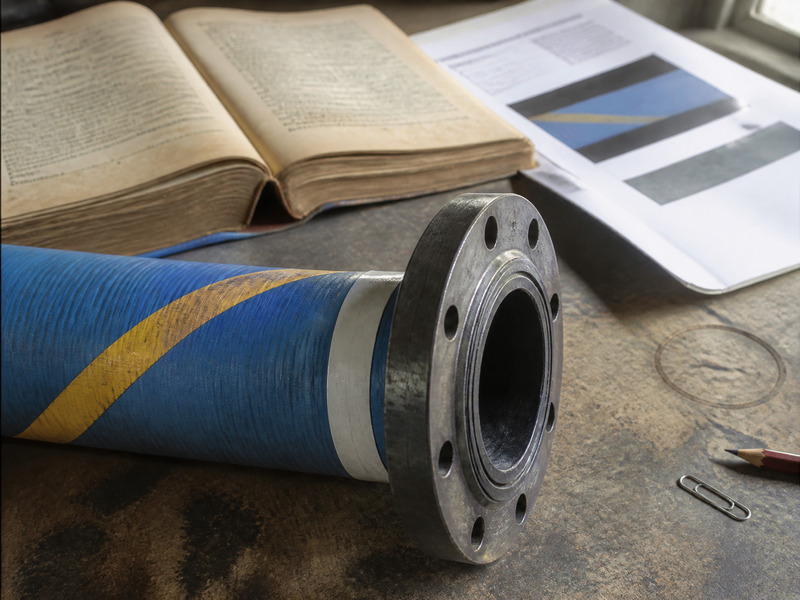
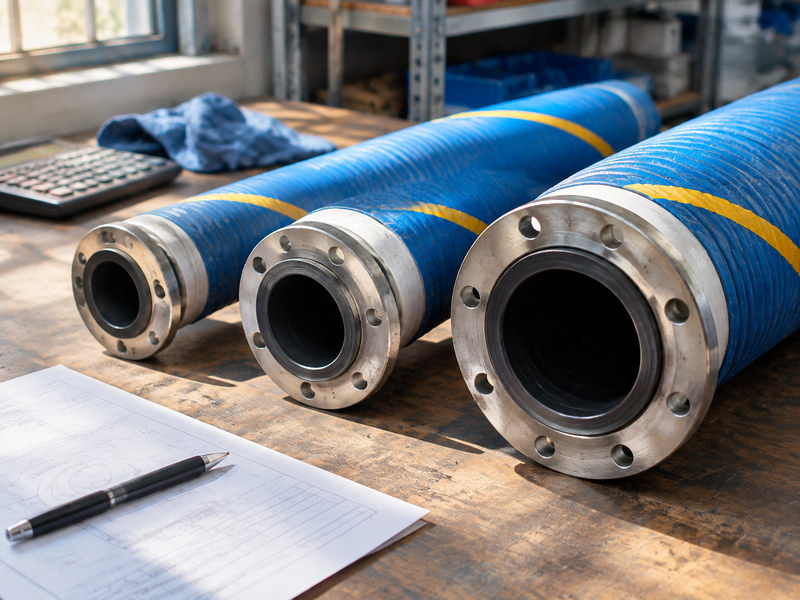
Figure 3. A document stack under a clip with two notes marking what is still missing, and the hose it refers to at the edge of the desk. The file is judged as a set, and the batch report is the sheet that ties it to that hose.
What Are the Red Flags?
- A certificate with no site address, no bore range and no test values.
- A test report that quotes a pressure inconsistent with the declared type.
- Marking on the sample that omits working pressure or date of manufacture.
- A refusal to show the process on a live call, with no safety or confidentiality reason.
- A quotation that changes the construction without telling you, such as a thinner film at the same price.
- A lead time far shorter than the stated production capacity allows.
List 1. Signals that justify a second look. None of them is proof of bad faith, and each is cheap to resolve with one question.
Two or three flags together justify moving to another supplier, not because the current one is necessarily dishonest, but because the cost of resolving each question exceeds the cost of switching.
How Should You Score the Answers?
Score four dimensions, not one: process ownership, documentation, sample quality and commercial stability. Give each a weight that reflects your risk. A terminal buying certified assemblies should weight documentation heavily; a plant buying cut lengths for water transfer can weight price and availability.
Keep the scoring simple enough to defend in a meeting. Score each dimension 0, 1 or 2. A zero means the answer was verbal only; a one means a document was produced; a two means the document ties to a serial number or a site address. A supplier below 6 of 8 is not necessarily dishonest, but every point it lost is a question you will still be asking after the first delivery.
Add a short note on the evidence behind each score, and a decision that names the evidence. That record is worth more than the score itself when a colleague asks why this supplier was chosen.
Preguntas frecuentes
How can I check a composite hose supplier quickly?
Ask for the manufacturing address and one batch record. If the address matches the certificate and the record carries serial numbers and test values, the supplier is at least operating a real quality system, and the remaining questions can follow.
Does a factory visit guarantee quality?
No. It proves the equipment and the people exist. Quality comes from the records created on every order, which is why the visit should end with a process walk and a request for a batch record.
Is a trading company always a bad choice?
No. A trader can be the right route for small volumes, mixed orders or a market where the factory does not sell directly. The buyer simply needs to know that technical answers are one step removed.
Should I buy from a distributor instead of a factory?
For stock, cut lengths and local support, often yes. Check whether the distributor assembles and certifies in its own right, because that changes who carries responsibility for the joint.
What should a composite hose supplier provide with the first order?
The certificate and its scope, the batch record with serial numbers, the marking record and the proof test result. A composite hose factory normally has these ready; a reseller has to request them.
What documents should I keep on file?
The certificate and its scope, the batch record for delivered serials, the marking record and the test report. Four documents per order answer almost every audit question.
How do I compare quotes from different suppliers?
Compare the same specification: type, bore, lining, end fittings, test regime and marking. A lower price that removes a test or a marking is a different product, not a better offer.
Can a supplier refuse a factory visit?
Some factories decline visits for confidentiality or scheduling reasons, which is not automatically a warning. Ask instead for a live video walkthrough and a batch record, and treat a refusal of both as a signal.
About HENGHUA
On its own site, HENGHUA makes composite hose and hose assemblies with PTFE, UHMWPE, XLPE and polypropylene linings, woven fabric carcasses, stainless or coated carbon steel helixes and crimped or flanged ends. Buyers who want to run the checks in this guide can ask for the manufacturing address, a batch record and a live process call before placing an order.
We answer those requests before the first quotation, because a supplier file that appears only after a complaint is not a quality system. The range is listed in our the composite hose we build, and the technical baseline is set out in the EN 13765 type guide and the multi-layer construction article. Buyers comparing offers will find the price driver breakdown and the OEM programme guide useful next. Send the duty and the bore through our contact page and we will answer with the process and the records behind it.
 English
 Spanish
 Portuguese
 French
 German
 Arabic
 Russian
 Indonesian
 Japanese
 Korean