
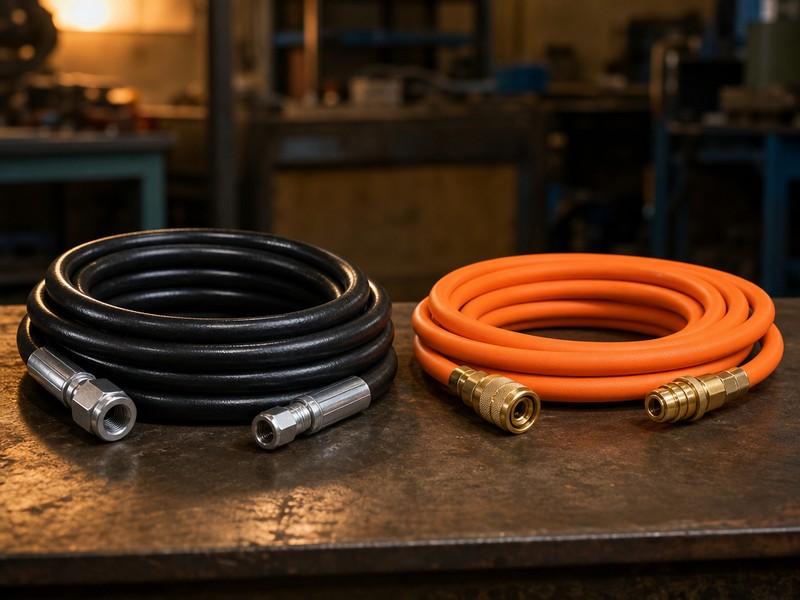
The hydraulic hose vs air hose question has one answer that settles everything: pressure. A hydraulic hose carries pressurized liquid — usually hydraulic oil — at 3,000–6,000 PSI through steel-wire reinforcement, 10–20 times the 150–300 PSI an air hose handles with a light fiber-braided body. That is why the two are never interchangeable: put an air hose on a hydraulic circuit and it bursts; put a hydraulic hose on an air line and you pay 3–10× for stiffness you do not need. This guide compares both hoses across eight measurable criteria, shows which machine needs which, and answers the safety-critical swap questions — so you can specify the correct hose the first time.
Hydraulic Hose vs Air Hose: The Short Answer
A hydraulic hose is built to contain incompressible liquid under extreme pressure; an air hose carries compressible gas at moderate pressure. That single design difference drives everything else — reinforcement, pressure rating, temperature window, weight, and price. One naming note before we continue: air hose — also called pneumatic hose or compressed air hose — is the same product under different names, so this guide uses the two terms interchangeably.
Which hose should I use for inflating truck tires — air hose or hydraulic hose? Air hose, every time: tire inflation and blow-off are air duties, not liquid duties. The table below settles the common cases at a glance.
Quick pick: which hose for which machine?
| If you need to… | Choose | Why |
|---|---|---|
| Power an excavator, forklift, press, or tractor attachment | Hydraulic hose | Only steel-wire-reinforced hose survives 3,000–6,000 PSI oil pressure |
| Run nail guns, spray guns, or impact wrenches from a compressor | Air hose | Light, flexible, and rated for the 90–150 PSI compressors actually deliver |
| Connect a system carrying oil or water-based hydraulic fluid | Hydraulic hose | Air hose inner tubes are formulated for air service only and will swell or delaminate in oil |
| Inflate tires or blow down equipment with compressed air | Air hose | Hydraulic hose is 3–10× the price and needlessly stiff for air duty |
| Work at system pressures above 500 PSI | Hydraulic hose | Consumer air hose stops at 300 PSI working pressure; burst is a real risk above it |
What Is a Hydraulic Hose?
A hydraulic hose is a flexible conduit engineered to transmit pressurized fluid in a hydraulic system — most commonly mineral hydraulic oil, but also water-glycol fluids, biodegradable oils, water, and lubricants. It must contain that fluid at pressures that would burst a garden hose hundreds of times over, which is why its construction differs fundamentally from any air line.
A typical hydraulic hose has four elements: an oil-resistant synthetic rubber inner tube — almost always nitrile (NBR) — that carries the fluid without swelling or shedding particles; a pressure-bearing reinforcement of one to six layers of braided or spiral-wound high-tensile steel wire, wrapped at engineered angles so the hose flexes without losing strength; an abrasion-, oil-, and weather-resistant rubber cover; and crimped or reusable end fittings matched to the machine.
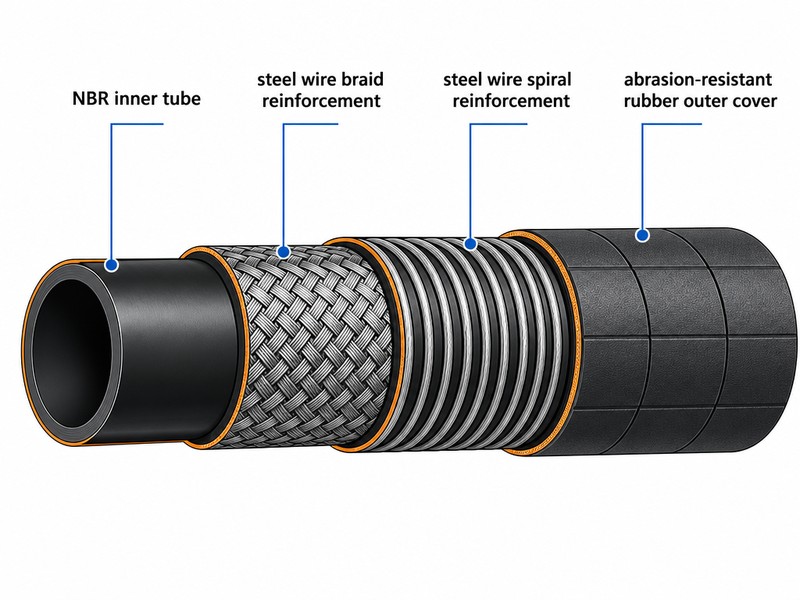
Figure 1. Hydraulic hose construction: oil-resistant inner tube, steel wire braid or spiral reinforcement, and a tough outer cover.
The performance envelope of hydraulic hose is defined by recognized standards. SAE J517 — the Society of Automotive Engineers (SAE) standard for 100R-series hydraulic hose used across North American equipment — covers 100R1 through 100R15; DIN EN 853 (Deutsches Institut für Normung, the German standards body; the EN 853 part covers 1SN and 2SN one- and two-wire-braid hose) and EN 856 (4SP, 4SH spiral-wound) are the European equivalents; ISO 18752 (International Organization for Standardization) harmonizes global ratings by pressure class. A common SAE 100R2 two-wire-braid hose in 3/8-inch size is rated at 4,000 PSI working pressure and about 16,000 PSI burst — per SAE J517, minimum burst is 4× working pressure; these are typical published values for a -6 (3/8-inch) 100R2 hose, so confirm the rating on the cover of the actual hose.
Standard hydraulic hose operates from -40°C to +100°C (-40°F to +212°F), typical for SAE 100R-series standard constructions, with arctic and high-temperature variants extending either end. Because liquids are incompressible, failure is not a gentle leak — it is an instantaneous, high-energy rupture, which is why hydraulic hose is built and certified to a 4:1 safety factor against burst per SAE J517.
What Is an Air Hose?
An air hose is a flexible conduit that carries compressed air — or another inert gas — from a compressor to pneumatic tools, inflators, and process equipment. Where the hydraulic hose fights extreme liquid pressure, the air hose prioritizes flexibility, light weight, and low cost, because the pressures it contains are an order of magnitude lower.
Air hose construction follows the same three-layer logic with different materials. The inner tube is rubber or a thermoplastic such as PVC (polyvinyl chloride) or polyurethane; the reinforcement is one or two layers of braided textile fiber (polyester or nylon) instead of steel; the outer cover is PVC, rubber, polyurethane, or a hybrid blend. That fiber-reinforced body makes air hose light, supple, and cheap — and exactly why it cannot hold hydraulic pressure.
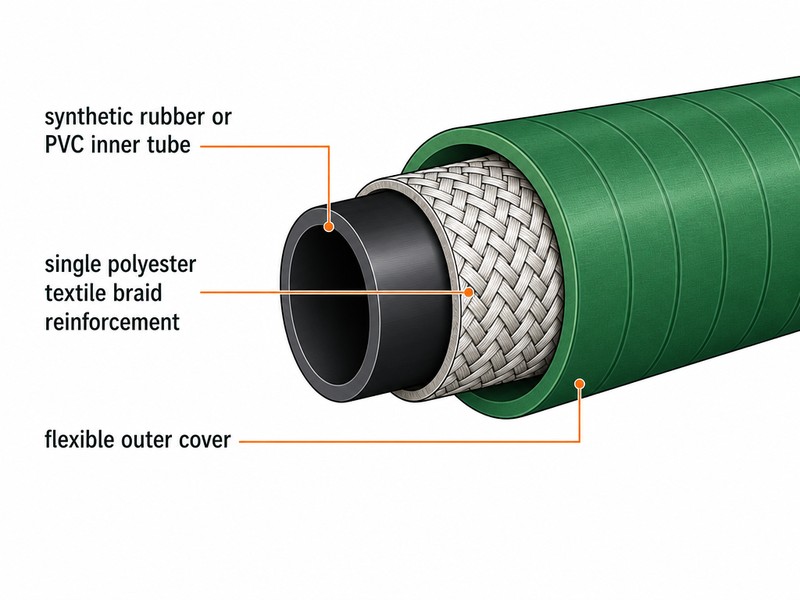
Figure 2. Air hose construction: flexible inner tube, textile braid reinforcement, and a lightweight cover.
Working pressures tell the story. Consumer and prosumer air hoses are rated 150–300 PSI (economy reels at the low end, quality hose at 300); industrial air hose tops out around 500 PSI; and the vast majority of compressors deliver 90–150 PSI, leaving a comfortable margin. Governing standards are ISO 2398 for rubber air hose and ISO 5774 for plastic air hose. Typical operating temperatures run -20°C to +70°C (-4°F to +158°F), with quality rubber air hoses extending to -40°C. Inner diameter choices — commonly 1/4, 3/8, and 1/2 inch — control airflow; end connections are usually NPT (National Pipe Thread) threads plus quick-connect couplers.
The rubber versus PVC versus polyurethane debate among air hoses is covered in our separate guide; none of them is a stand-in for a hydraulic hose.
Hydraulic Hose vs Air Hose: 8 Key Differences
Eight measurable criteria settle every practical decision in the hydraulic hose vs air hose comparison, and each criterion stands alone. In the air hose vs hydraulic hose comparison — the same question written in reverse — the deciding factor is still the medium. For air-hose material context, see our air hose material comparison.
Quick number reference for the eight key differences (typical industrial constructions; size noted per row).
| Quick Number | Manguera hidráulica | Manguera de aire |
|---|---|---|
| Presión de trabajo | 3,000–6,000 PSI | 150–300 PSI (up to ~500 industrial) |
| Burst (3/8 in) | ~16,000 PSI | ~1,200 PSI |
| Temperatura | De -40 °C a +100 °C | -20°C to +70°C (rubber -40°C) |
| Bend radius (1/2 in) | ~5 in (127 mm) | ~2.5 in (64 mm) |
| Weight (50 ft, 3/8 in) | 15–25 lb | 4–12 lb |
| Price per foot | $1.50–$8.00 | $0.30–$1.00 |
1. How Much Pressure Can Each Hose Handle?
How much pressure can a hydraulic hose actually handle? Standard constructions are rated 3,000–6,000 PSI working pressure per SAE J517, with spiral-wound hoses (100R13, R15) exceeding 6,000 PSI in large sizes. A consumer air hose handles 150–300 PSI, and industrial air hose reaches about 500 PSI. That 10–20× gap is the defining difference between the two hoses, and it is larger than most people expect.
Hydraulic and pneumatic systems store energy differently, which explains the 10–20× pressure gap. Hydraulic systems use incompressible oil to move heavy loads — an excavator boom, a press platen, a forklift mast — and the hose must contain whatever pressure the pump generates, routinely 3,000–5,000 PSI in mobile equipment, with system peaks to 6,000 PSI on heavy machinery. Pneumatic systems use compressible air at low pressure for light, fast work; there is no reason to pressurize an air line to thousands of PSI. That is the hydraulic hose vs pneumatic hose difference in one sentence: pressure.
Scope: The pressure figures in this guide are typical published values for standard industrial constructions. Confirm the working pressure printed on the hose cover against your system’s maximum pressure (pump relief valve setting) before installation — the printed rating is the legal value.
Selection rule: match the hose working pressure to the maximum system pressure — hydraulic circuits need a 3,000 PSI+ rated hose; compressor air never needs more than 500 PSI.
2. Burst Pressure and Safety Factor
Both hose types are designed with a 4:1 ratio between burst pressure and working pressure — hydraulic hose is certified to a 4:1 safety factor against burst per SAE J517 — but the absolute numbers matter. A 3/8-inch SAE 100R2 hydraulic hose rated at 4,000 PSI must survive roughly 16,000 PSI; a 3/8-inch 300 PSI air hose roughly 1,200 PSI. The hydraulic hose’s burst margin alone exceeds the air hose’s working pressure by a factor of ten.
Manufacturers proof-test hoses at burst conditions during production, and every certified hose carries its working pressure, test pressure, and standard marking on the cover. When in doubt, read the printing — the rating is the law.
Selection rule: check the burst margin, not just the working pressure — a certified 4:1 ratio separates a rated hose from a gamble.
3. Media Compatibility
Can an air hose burst if you connect it to a pressure washer or another high-pressure liquid pump? Yes — any liquid at pump pressure above the hose rating does exactly what hydraulic oil does: the textile reinforcement ruptures and the fitting lets go. Hydraulic fluid and compressed air place completely different chemical demands on a hose inner tube.
Hydraulic oil is a solvent-like fluid at high temperature; the NBR compounds used in hydraulic hose resist swelling, softening, and extraction. Air hose inner tubes are formulated for air service only: PVC, polyurethane, EPDM (ethylene propylene diene monomer), and SBR (styrene-butadiene rubber) compounds are rated for compressed air, not for contact with hydraulic oil. Contact with hydraulic oil makes an air hose tube swell, soften, and shed particles into the fluid, contaminating pumps and valves system-wide.
The opposite swap has its own problem: a hydraulic hose inner tube is oil-compatible but not clean-room clean. Residual oil film can enter an air stream, fog a paint finish, and gum up pneumatic tools.
Scope: A new hydraulic hose is clean enough for dry air; a hose that has carried oil is not suitable for breathing air or spray-painting duty. Media compatibility is a two-way street — use the hose designed for the fluid.
Selection rule: match the inner tube to the fluid — oil or water-glycol → hydraulic hose; air or inert gas → air hose.
4. Construction and Reinforcement
Reinforcement is where the two hoses differ most visibly. Hydraulic hose uses high-tensile steel wire — braided for moderate pressures, spiral-wound for the highest ratings — in one to six layers. Air hose uses braided textile fiber, typically polyester or nylon, in one or two layers.
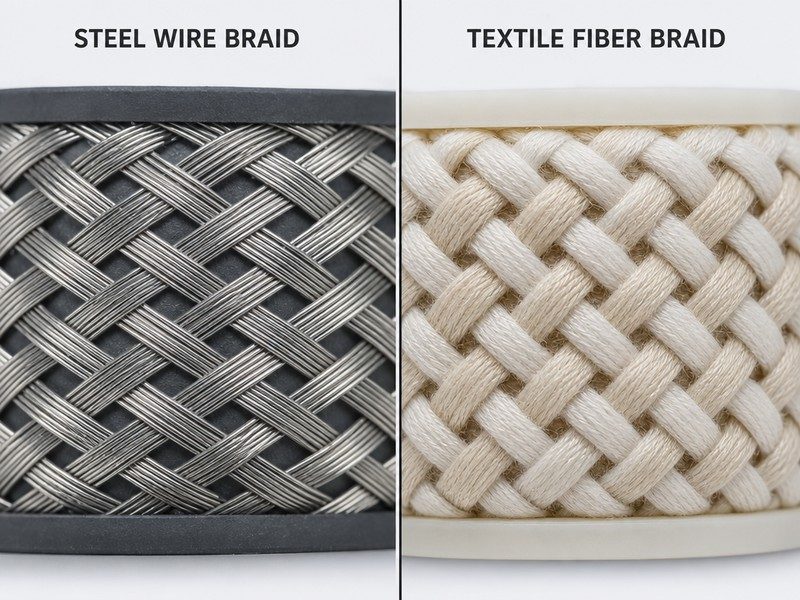
Figure 3. Steel wire versus textile fiber: the reinforcement decides how much pressure a hose can contain.
The reinforcement choice is a design decision matched to pressure, not a quality ranking. Steel wire costs more, weighs more, and resists the hoop stress of 5,000 PSI oil; textile fiber is cheap, light, and adequate for 300 PSI air. The construction difference is the physical reason the two hoses can never be interchanged safely.
Selection rule: let the pressure decide the reinforcement — steel wire for liquid at thousands of PSI, textile fiber for compressor air.
5. What Temperature Range Can Each Hose Handle?
I work in a cold warehouse — will my PVC air hose crack in freezing temperatures? It can: PVC stiffens and cracks below about -7°C (19°F). What temperature range can each hose handle? Hydraulic hose runs -40°C to +100°C (-40°F to +212°F) in standard SAE 100R-series constructions; air hose runs -20°C to +70°C (-4°F to +158°F) per ISO 2398 and ISO 5774, with quality rubber air hoses extending to -40°C.
The practical temperature difference between hydraulic hose and air hose shows up in extreme environments: a hydraulic hose on winter construction equipment, or an air hose in a hot compressor room. Check the temperature rating printed on the cover against your worst-case ambient — especially the cold side.
Selection rule: check the cold side first — below about -7°C (19°F), PVC air hose stiffens and can crack; use rubber or hybrid below freezing.
6. Flexibility and Bend Radius
Air hose is the more flexible of the two by design. Textile reinforcement and thin walls give it a small bend radius, which is why it follows tight routes in tool boxes, reels, and work cells. Hydraulic hose trades some flexibility for pressure containment: steel reinforcement and thicker walls mean a larger minimum bend radius, and bending tighter than the published radius damages the wire.
Bend radius depends on size and pressure rating: a 1/2-inch two-wire hydraulic hose needs about 5 inches (127 mm), a comparable air hose about 2.5 inches (64 mm). If your installation demands tight routing, that argues for air hose — provided the pressure allows it.
Selection rule: if your installation demands tight routing, air hose wins on bend radius — provided the pressure allows it.
7. Weight and Handling
Which hose is heavier? Hydraulic hose — by 3–4×. A 50-foot 3/8-inch hydraulic hose assembly weighs 15–25 lb (7–11 kg) once steel wire and crimped fittings are counted, versus 4–12 lb (2–5.5 kg) for a comparable air hose. Weight is irrelevant on a fixed machine and decisive for anything handheld — which is why pneumatic tools, not hydraulic tools, are the ones you carry.
Selection rule: weight decides only when the hose is handheld — a fixed machine can use any construction.
8. Cost
How much does hydraulic hose cost per foot? Bulk hydraulic hose runs roughly 1.50–1.50–8.00 per foot (2026 typical wholesale range for SAE 100R-series constructions), depending on size and reinforcement — a 1-inch 4SH hose costs more than many complete air hose kits — while air hose runs 0.30–0.30–1.00 per foot. Add hydraulic fittings at 5–5–40 per end versus 2–2–8 for air fittings, and the total can be an order of magnitude higher.
The 3–10× price gap between hydraulic hose and air hose is not markup; it is steel wire, testing, and certification. Budget should never drive a substitution — the pressure difference makes the cheap option unsafe in the wrong system.
Selection rule: never let price decide — the pressure difference makes the cheap option unsafe in a hydraulic circuit.
What We Test Before a Hydraulic Hose Leaves Our Factory
After the price comparison, the manufacturing view is worth stating: we see the hydraulic hose vs air hose difference in test data, not just spec sheets. Every HENGHUA hydraulic hose is impulse-tested before shipment — pressurized and relaxed through repeated cycles at elevated temperature per SAE J343 / ISO 6803 impulse-test procedures — and every air hose is pressure-proofed at 2× its rated working pressure before it is boxed. What those tests catch is the difference between a rating printed on a cover and a hose that actually survives in service.
The numbers behind the ratings: a 3/8-inch two-wire (SAE 100R2) hose rated at 4,000 PSI working pressure must survive roughly 16,000 PSI burst, and typically 500,000+ impulse cycles at 133% of working pressure in a test bay — the margin is where cheap construction fails. These are typical industry reference values for 100R-series testing per SAE J517 and SAE J343; the exact cycle counts and proof multipliers on our production line are verified per batch and printed on the test certificate that ships with every assembly.
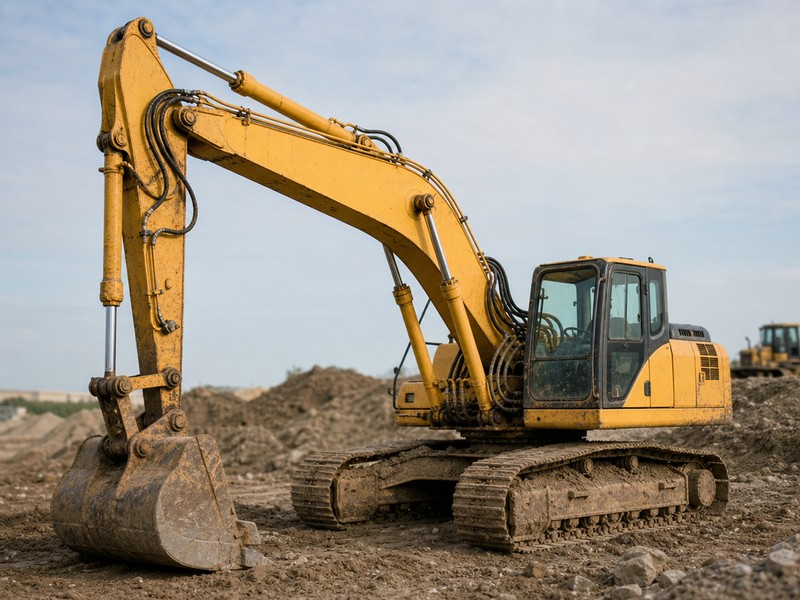
Figure 4. Steel-wire-reinforced hydraulic hoses on an excavator boom — the application where 3,000 PSI+ oil pressure decides the hose.
Hydraulic Hose vs Air Hose: Full Specification Comparison
The table below consolidates the hydraulic hose vs air hose differences into a single reference sheet. Figures are typical published values for common industrial constructions; always verify against the rating printed on the hose cover.
Scope: The figures in this guide are typical published values for standard industrial constructions, checked against the SAE J517, DIN EN 853, EN 856, ISO 2398, and ISO 5774 rating families. Confirm the working pressure printed on the hose cover against your system’s maximum pressure (pump relief valve setting) before installation — the printed rating is the legal value.
Hydraulic hose vs air hose: full specification comparison for typical 3/8-inch industrial constructions.
| Property | Manguera hidráulica | Manguera de aire |
|---|---|---|
| Medium carried | Hydraulic oil, water-glycol, lubricants, water | Compressed air and inert gases |
| Typical working pressure | 3,000–6,000 PSI (higher in large spiral-wound sizes) | 150–300 PSI consumer; up to ~500 PSI industrial |
| Burst pressure (typical 3/8 in) | ~16,000 PSI (4:1 safety factor) | ~1,200 PSI (4:1 safety factor) |
| Inner tube material | Oil-resistant NBR or other synthetic rubber | Rubber, PVC, polyurethane, or hybrid blend |
| Refuerzo | 1–6 layers of steel wire braid or spiral | 1–2 layers of polyester or nylon textile braid |
| Operating temperature | De -40 °C a +100 °C (de -40 °F a +212 °F) | -20°C to +70°C (-4°F to +158°F); rubber to -40°C |
| Minimum bend radius (1/2 in) | ~5 in (127 mm) | ~2.5 in (64 mm) |
| Weight (50 ft, 3/8 in) | 15–25 lb (7–11 kg) | 4–12 lb (2–5.5 kg) |
| End fittings | JIC, ORFS, NPT, BSP, flange, metric — crimped | NPT threads, quick-connect couplers |
| Governing standards | SAE J517 (100R), DIN EN 853, EN 856, ISO 18752 | ISO 2398 (rubber), ISO 5774 (plastic) |
| Typical price per foot | $1.50–$8.00 | $0.30–$1.00 |
| Typical applications | Excavators, presses, forklifts, tractors, log splitters, injection molding | Pneumatic tools, tire inflation, spray painting, blow-off |
2026 Update: The current ISO 18752 edition harmonizes hydraulic hose ratings across the SAE and EN families, so a 2026-marked hose may carry an ISO 18752 pressure-class designation alongside its SAE 100R number — the two labels rate the same hose, not necessarily the identical construction. Check the cover for the governing standard that applies to your region.
End fittings use standard connection families: JIC (Joint Industry Council 37° flare), ORFS (O-Ring Face Seal), NPT (National Pipe Thread), and BSP (British Standard Pipe). For matching hydraulic end connections, see our guides on hydraulic fittings types and JIC fittings. For air-side connections, the air hose fittings guide covers NPT and quick-connect options. Need a hose matched to your circuit? Our engineering team will confirm the correct spec against your system pressure — get a free quote and samples from our engineering team.
How to Read the Printing on a Hose Cover
Every certified hose carries its ratings printed along the cover in a repeating stripe — and in the hydraulic hose vs air hose comparison, that stripe is the fastest way to tell which one you are holding. A typical hydraulic hose marking reads: “SAE 100R2 AT 3/8″ 4000 PSI W.P. 16000 PSI BURST 2026” — here is what each part means and what to check before you install:
- Standard (SAE 100R2 / DIN EN 853 2SN / ISO 18752): tells you the construction family — 100R2 means two wire braids.
- Size (3/8″ or -6): the dash number or inch size must match the fittings you crimp.
- Working pressure (4000 PSI W.P.): the safe continuous pressure — match this to your system’s relief valve setting, not the pump idle gauge.
- Burst or test pressure (16000 PSI): 4× working pressure on certified hydraulic hose; air hose marks test pressure instead.
- Date code / standard year: a 2026-marked hose meets the current standard revision.
If the printing is worn off, treat the hose as unrated — cut it out and replace it rather than guessing. Send a photo of the remaining marking to the HENGHUA engineering team and we will identify the specification before you order, usually within one business day — contact us.
How to Tell a Hydraulic Hose from an Air Hose in 30 Seconds (No Printing Needed)
When the printing is worn off, four physical checks identify the hose in under a minute:
- Fittings: crimped steel fittings (JIC/ORFS/BSP) → hydraulic; brass quick-connect or threaded NPT → air.
- Weight: a 3-foot length that is heavy and stiff → hydraulic; light and supple → air.
- Cross-section: steel wire visible at the cut end, or a magnet sticks to the wall → hydraulic; textile fiber only → air.
- Flex: hydraulic hose barely bends by hand; air hose folds into a tight radius.
When in doubt after these four checks, treat the hose as unrated and replace it.
Can You Use an Air Hose for Hydraulic Fluid?
No — never. The hydraulic hose vs air hose rule has no exceptions here: using an air hose for hydraulic fluid is one of the most dangerous substitutions in fluid power, and it fails three ways at once — pressure, chemical compatibility, and safety.
Pressure failure is the immediate killer. What happens if I accidentally connect an air hose to a 3,000 PSI hydraulic system? It bursts — immediately. A typical hydraulic circuit runs at 3,000–5,000 PSI in mobile equipment, peaking to 6,000 PSI on heavy machinery; a standard air hose is rated for 300 PSI and bursts near 1,200 PSI. Put hydraulic pressure behind an air hose and the textile reinforcement ruptures instantly — usually at a fitting or damaged spot — releasing high-pressure oil in a fraction of a second. The failure is not a drip; it is a burst with the energy of the full system behind it.
Chemical failure destroys the system even at low pressure. Hydraulic oil attacks the PVC, polyurethane, and EPDM compounds used in air hose inner tubes. The tube swells, softens, and sheds particles into the oil; those particles circulate through pumps and valves. A contaminated system often needs a full oil change and component inspection.
Injection injury is the worst outcome. Industry safety data — documented in OSHA and NIOSH safety guidance on fluid injection injuries and used in NAHAD (National Association of Hose and Accessories Distribution) training materials — shows that a fluid jet at as little as 100 PSI can penetrate human skin. Hydraulic systems operate at 3,000 PSI and above: a pinhole leak injects oil deep into tissue, and if not surgically treated within hours, the result is often amputation. Every time someone reaches for an air hose as a “quick fix” hydraulic line, they are betting a hand on a 300 PSI hose in a 3,000 PSI circuit.
There is no safe workaround. If you need a temporary hydraulic line, use a properly rated hydraulic hose with crimped fittings — never an air hose, garden hose, or unrated push-on hose.
Never patch, tape, or clamp a hydraulic hose. A burst or abraded hydraulic hose cannot be safely repaired in the field — tape and hose clamps hold at idle pressure and let go at working pressure, turning a small leak into a high-energy rupture. Cut out the damaged section and install a new certified assembly with proper crimped fittings, or replace the hose. The cost of a hose is always less than the cost of a failure.
Can You Use a Hydraulic Hose for Air?
Is it safe to use a hydraulic hose on an air compressor line? In most cases, no — and the exceptions are narrow. Scope: A hydraulic hose can be used for air service only in one narrow case — high-pressure air (500 PSI and above), such as scuba or industrial gas cylinder filling, where no standard air hose has the rating. In that case, use a clean, dedicated, high-pressure hydraulic-style hose, marked for air use and kept exclusively for it; for breathing air applications, never reuse a hose that has carried oil. For normal compressor work (90–150 PSI), the answer is no:
- Cost. At 1.50–1.50–8.00 per foot plus 5–5–40 fittings, a hydraulic assembly costs 5–10 times an air hose for the same job, with no performance benefit at compressor pressures.
- Contamination. A hydraulic hose that has carried oil retains an oil film inside; in air service that film becomes oil mist, which ruins paint jobs, damages pneumatic tools, and is an inhalation hazard in breathing-air applications. A new, clean hose is acceptable; a used one is a gamble.
- Handling. Steel reinforcement means weight and a large bend radius. Mounting a hydraulic hose on a tool reel or dragging it around a shop is clumsy.
For normal compressor work, use a rated air hose; our air hose selection guide covers size, pressure, and material choices.
How to Choose Between Hydraulic Hose and Air Hose
Selection is a decision tree with four questions — pressure, medium, temperature, and connection. Work through them in order and the answer is rarely ambiguous. This guide serves machine builders, maintenance crews, workshop owners, and OEM buyers — each will find their decision path below.
For machine builders and maintenance teams (hydraulic systems):
- Excavators, loaders, and construction equipment — hydraulic hose, SAE 100R2 or higher, sized to the circuit pressure; see the HENGHUA hydraulic hose range for braided and spiral-wound constructions.
- Hydraulic presses, injection molding machines, and machine tools — hydraulic hose with spiral reinforcement for impulse loads; 4SP/4SH constructions at high pressure and large bore.
- Forklifts and material handling — hydraulic hose with compact bend radius where mast routing demands it, and ORFS or JIC fittings to match the machine.
- Agricultural tractors and implements — hydraulic hose rated for the tractor’s remotes (typically 2,500–4,000 PSI) with an oil-resistant cover for field exposure.
- Log splitters and snow plows — hydraulic hose, SAE 100R2 rated 2,500–4,000 PSI, with compact bend radius for tight mounting; never substitute air hose on these attachments.
For workshops, contractors, and DIY users (pneumatic systems):
- Pneumatic tools — nail guns, impact wrenches, ratchets — a 3/8-inch, 300 PSI rated air hose for air compressor duty; 1/4 inch for light tools; rubber or hybrid for cold shops.
- Spray painting — air hose with a clean, particle-free inner tube; rubber or polyurethane, never one previously used for oil service.
- Tire inflation and blow-off — air hose, 1/4 or 3/8 inch, with quick-connect couplers; PVC is fine in a heated garage.
- Cold, oily, or outdoor job sites — rubber air hose; it stays flexible below freezing and shrugs off oil and UV. Material guidance is in our rubber vs PVC air hose comparison.

Figure 5. Air hose in a home garage: a portable compressor feeding a nail gun and tire inflator — 90–150 PSI duty for a 300 PSI rated air hose.
Before you buy, run this 7-point checklist:
- Identify the medium: liquid → hydraulic hose; air or inert gas → air hose.
- Confirm the maximum system pressure (pump relief setting, not idle gauge) and select a hose rated above it.
- Check the temperature window against your worst-case environment, not the annual average.
- Match inner diameter to flow: 3/8 inch standard, 1/2 inch for high flow or long runs.
- Verify reinforcement type — steel wire for liquid, textile for air — printed on the cover.
- Match end fittings to the machine: JIC, ORFS, NPT, or BSP on the hydraulic side; NPT and quick-connect on the air side.
- Buy from a manufacturer that prints real ratings and backs them with a warranty — for both hose types.
Not sure between two options? Run the checklist once more — or send your machine details and working pressure to our engineers for a same-day recommendation via our contact page.
Most hose decisions are settled by the first checklist question: if the line carries liquid, choose hydraulic hose; if it carries compressor air, choose air hose. When a machine carries liquid at thousands of PSI, the hydraulic hose vs air hose question answers itself — only which hydraulic hose remains. When it carries compressor air, the air hose is the answer.
Common Myths About Hydraulic and Air Hose
Myths about the hydraulic hose vs pneumatic hose comparison — the same two products under different names — cost workshops real money every year. Here are the six we see most often:
- Myth: A stronger hose is always a better hose. Fact: a hydraulic hose on an air line costs 3–10× more, weighs 3× as much, and is no safer than a rated air hose at compressor pressures.
- Myth: Air hose only fails at burst pressure. Fact: textile reinforcement is also rated for temperature and oil resistance — an air hose can fail from oil swelling at well below its pressure rating.
- Myth: Hydraulic hose and air hose use the same fittings. Fact: hydraulic systems use crimped JIC, ORFS, NPT, or BSP connections rated for thousands of PSI; air hose uses lighter NPT threads and quick-connect couplers.
- Myth: A quick-connect coupler can handle hydraulic pressure. Fact: standard pneumatic quick-connects are rated for 150–300 PSI — installing one on a hydraulic line creates a burst and injection hazard.
- Myth: If it does not leak, it is safe. Fact: a pinhole leak too small to drip can still inject oil through skin at 100 PSI (see the “Can You Use an Air Hose for Hydraulic Fluid?” section of this guide).
- Myth: Air tools and airless sprayers both run on air, so one hose works for both. Fact: airless sprayers pump paint at 2,000–3,000 PSI fluid pressure — a 300 PSI air hose bursts and can inject paint through skin. Use the sprayer’s rated high-pressure hose.
Hydraulic Hose vs Air Hose: Common Questions Answered
Can you use an air hose for hydraulic fluid?
No. An air hose is rated for 150–300 PSI and bursts near 1,200 PSI, while hydraulic circuits operate at 3,000–6,000 PSI. The textile reinforcement ruptures instantly, hydraulic oil swells the inner tube, and a pinhole leak can inject oil through skin at as little as 100 PSI. Use only a rated hydraulic hose in hydraulic service.
Can hydraulic hose be used for air?
Only in one narrow case — high-pressure air (500 PSI and above), where no standard air hose has the rating. A hydraulic hose has ample pressure capacity for compressed air and a new one is clean, but it costs 5–10 times an air hose, is heavy and stiff, and a used hydraulic hose releases oil mist into the air stream, ruining paint and damaging tools. For normal compressor work (90–150 PSI), use a rated air hose.
What is the difference between hydraulic hose and pneumatic hose — are they the same thing or different?
Pneumatic hose and air hose are the same thing — a hose for compressed air at 150–300 PSI with textile reinforcement. In the hydraulic hose vs pneumatic hose question, the deciding factors are medium and pressure: hydraulic hose carries pressurized liquid at 3,000–6,000 PSI with steel wire reinforcement. The two are not interchangeable.
What PSI is a hydraulic hose rated for?
Standard hydraulic hoses are rated 3,000–6,000 PSI working pressure depending on size and reinforcement: SAE 100R1 (one wire braid) around 2,250–3,000 PSI, SAE 100R2 (two wire braids) around 3,000–5,000 PSI, and spiral-wound 100R13/R15 above 6,000 PSI. Burst is 4 times working pressure by design. The 3,000–6,000 PSI headline range covers 100R2 and spiral-wound constructions; single-braid 100R1 sits lower, which is why the construction family matters as much as the pressure number. Figures follow SAE J517 100R-series ratings; the printed rating on the cover is the legal value.
What PSI is an air hose rated for?
Consumer air hoses are rated 150–300 PSI working pressure (economy reels at the low end); industrial air hoses reach about 500 PSI in special constructions. Most compressors deliver 90–150 PSI, so a 300 PSI hose provides a 2:1 margin — for a home garage compressor this is the standard choice. For industrial rigs, confirm the rating against the compressor’s maximum tank pressure.
Why do hydraulic hoses have steel wire reinforcement?
Because liquids are incompressible and circuits run at 3,000–6,000 PSI, the hose wall must resist enormous hoop stress. Steel wire absorbs that stress so the hose does not balloon or burst; textile fiber, adequate for 300 PSI air, fails at a fraction of hydraulic pressure.
Are hydraulic hoses more expensive than air hoses?
Yes — 3 to 10 times more. Bulk hydraulic hose runs about 1.50–1.50–8.00 per foot with 5–5–40 fittings per end, versus 0.30–0.30–1.00 per foot and 2–2–8 fittings for air hose. The premium pays for steel wire, certified construction, and 4:1 burst testing.
What happens if an air hose is used in a hydraulic system?
It bursts immediately, since an air hose’s burst pressure (~1,200 PSI) is far below a hydraulic circuit’s working pressure (3,000–6,000 PSI). The operator risks injection injury, and the system is contaminated with hose particles, often requiring a full oil change.
I just bought a 150 psi air compressor for my garage — do I need a hydraulic hose or an air hose for the tools?
An air hose. Tools like nail guns, impact wrenches, and tire inflators run on 90–150 PSI compressor air, so a 3/8-inch, 300 PSI rated rubber or hybrid air hose with quick-connect couplers covers both jobs. Choose rubber over PVC if your garage is unheated — PVC stiffens below about -7°C (19°F). A hydraulic hose would cost 3–10× more and be needlessly stiff and heavy for this duty.
I am replacing a blown line on my excavator boom — how can I tell whether the old hose is a hydraulic hose or an air hose?
Check the medium and the fittings. If the line carries oil and uses crimped JIC or ORFS connections, it is a hydraulic hose — replace it with a SAE 100R2 or higher rated hose matched to the circuit pressure (typically 3,000–6,000 PSI). Never substitute an air hose; a 300 PSI air hose bursts far below excavator working pressure.
Can I use an air hose for hydraulic fluid if I only run the machine at low pressure?
No. Low pressure does not fix the problem: even a 500 PSI hydraulic circuit exceeds an air hose’s 300 PSI working rating, hydraulic oil swells the textile inner tube, and a pinhole leak can inject oil through skin at as little as 100 PSI. Use only a rated hydraulic hose in hydraulic service.
Can I use an air hose on a hydraulic jack?
No. A hydraulic jack needs liquid pressure at 2,000+ PSI inside the cylinder; a 300 PSI air hose bursts far below that. Use the jack’s own rated hydraulic hose or a certified replacement matched to the jack’s working pressure.
I am an OEM sourcing hoses for a new hydraulic machine — what specifications should I send to the supplier?
Send the medium, maximum system pressure (pump relief valve setting), operating temperature range, bore size, end fitting types (JIC, ORFS, NPT, or BSP), and bend radius constraints. The 7-point checklist in the How to Choose section lists the full set; a manufacturer will confirm the standard family (SAE J517 / DIN EN 853 / EN 856 / ISO 18752) that fits your circuit.
Can I use an air hose on an airless paint sprayer?
No. An airless sprayer pumps paint at 2,000–3,000 PSI fluid pressure — far above any air hose rating — and the fluid jet can inject paint through skin just like hydraulic oil. Use only the high-pressure hose supplied with the sprayer (rated for the machine’s fluid pressure, usually 1/4 inch) or a certified replacement. Never substitute an air hose, even for a “quick test.”
How long does a hydraulic hose last, and how should I store it?
Service life depends on duty cycle and environment; a common industry reference is 5–10 years from the date code, with hoses in hot, oily, or UV-exposed service replaced sooner. Store hoses coiled loosely, away from direct sunlight, ozone sources (motors, welders), and temperatures above 50°C (122°F). When the cover cracks or the printing fades, replace the hose.
Final Verdict: Which Hose Do You Actually Need?
The hydraulic hose vs air hose decision is decided by the system, not by preference. If the line carries oil, water-glycol, or any liquid at thousands of PSI, you need a steel-wire-reinforced hydraulic hose rated to the circuit pressure with crimped hydraulic connections. If the line carries compressed air from a compressor to a tool or inflator, you need a textile-reinforced air hose rated above your compressor output — and the cheapest rated option is usually right. The only wrong answer is swapping the two: an air hose in a hydraulic circuit is a burst and injection hazard, and a hydraulic hose on an air line is wasted money and clumsy handling.
Buy from a manufacturer that prints the full story on the cover — working pressure, burst or test pressure, temperature range, reinforcement type, and the governing standard — and backs it with a clear warranty. Those printed details separate a safe decade of service from a failure you cannot predict. If you are sourcing either hose type for equipment builders, distributors, or OEM programs, our engineering team will match the right specification to your system — request a quote and samples, with a reply within one business day and samples shipped from stock for qualified projects.
About HENGHUA
HENGHUA is a professional manufacturer of hydraulic hoses, air hoses, and industrial hose assemblies, supplying equipment builders, distributors, and OEM brands worldwide. Our hydraulic range covers SAE 100R1, 100R2, and spiral-wound constructions from 1/4 to 2 inch bore to SAE J517, DIN EN 853, and EN 856, with crimped JIC, ORFS, NPT, and BSP fittings. Our air hose range spans rubber, PVC, polyurethane, and hybrid materials in 1/4 to 1/2 inch sizes, rated 150–500 PSI to ISO 2398 and ISO 5774.
Because we control the entire process — compound mixing, braiding, extrusion, crimping, and pressure testing — we deliver consistent quality at factory-direct pricing, with short lead times for bulk orders and a clear warranty on every hose. Every HENGHUA hydraulic hose is impulse-tested before shipment; every air hose is pressure-proofed. If you are sourcing hoses for hydraulic or pneumatic applications, contact our team for a quote and samples matched to your market.

 English
  Spanish
  Portuguese
  French
  German