

If you are choosing an oil resistant hose for hydraulic, fuel, suction, or transfer service, the answer starts with one material decision: nitrile (NBR) rubber is the industry-standard tube for oil contact, with the right cover compound and reinforcement. Oil resistance is a measured property, not a marketing claim — ASTM D471 immersion testing rates it as a volume-change number — and this guide ranks the elastomers, explains how the test works, and gives you the selection checklist, common sizes (1/4″ to 1″, plus 10/16/19 mm), and the temperature and pressure ranges you need to specify the right hose.
The guidance draws on our factory compound records and on SAE J517 (hydraulic hose), EN 853 (wire-braid reinforced hydraulic hose), EN 1765 and DIN 20023 (oil suction and discharge hose).
What Is an Oil Resistant Hose?
An oil resistant hose is a flexible hose designed to carry or contain oil, fuel, grease, and other petroleum products for its full service life without the tube degrading. Oil resistance lives in three layers: the inner tube compound that touches the oil, the cover compound that faces the environment, and the reinforcement that carries the pressure.
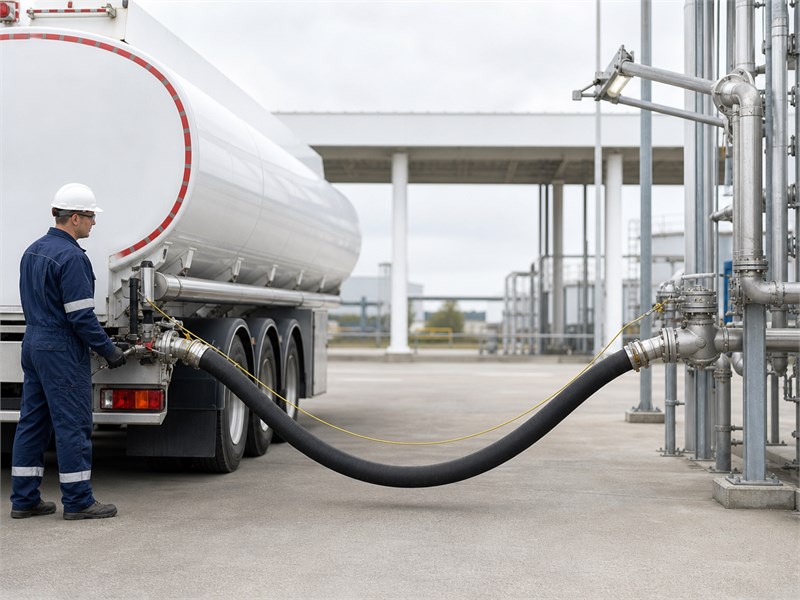
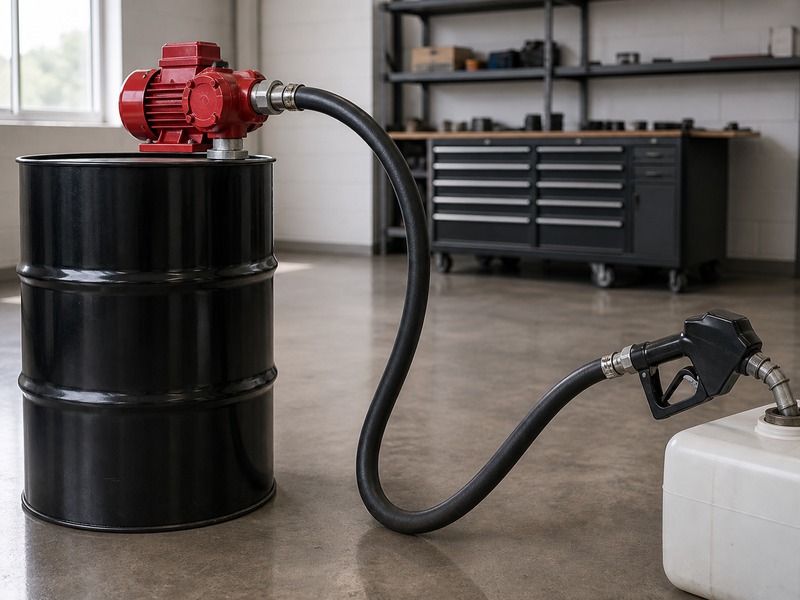
Oil hoses span very different duties: hydraulic hoses carry hydraulic oil at up to 4,000 PSI, diesel and gasoline lines run at low pressure, and oil suction and discharge hoses move petroleum products under 10 or 20 bar, often under vacuum. At retail level, what buyers call an oil resistant rubber hose is almost always a nitrile rubber hose for oil, fuel, and grease lines.
What Makes a Hose Oil-Resistant?
Three factors decide whether a hose survives contact with oil: polymer chemistry, compound formulation, and construction. Polymer chemistry does most of the work.
Why Does Ordinary Rubber Swell in Oil?
Oils are non-polar liquids, and most rubber molecules are non-polar too, so they absorb each other — which is why natural rubber and EPDM swell and fail in mineral oil. The fix is to make the rubber polar. Nitrile rubber (NBR) contains acrylonitrile, a polar group that repels oil; the higher the acrylonitrile content, the better the oil resistance and the worse the low-temperature flexibility. Hose grades typically use 28–33% acrylonitrile.
The Tube, the Cover, and the Reinforcement
A true oil hose protects against oil from both sides. The inner tube resists the fluid itself — typically NBR, chloroprene (neoprene), or a fluoropolymer for aggressive service. The cover resists oil splash, abrasion, and ozone. Between them, the reinforcement — textile braid, steel wire braid, or steel spiral — carries the pressure but must stay insulated from oil, because oil reaching the reinforcement is the fastest route to a burst hose.

Figure 1. A hose is only as oil resistant as all three layers: the tube that touches the fluid, the reinforcement, and the cover.
Oil Resistant Hose Materials Ranked
Not every rubber is oil resistant, and the difference is measurable. The table below ranks the materials used in oil hoses by their behavior in mineral oil.
Oil resistance of oil resistant hose materials in mineral oil.
| Material | Oil resistance | Typical swell in mineral oil | Best suited for | Not suited for |
|---|---|---|---|---|
| NBR (nitrile) | Excellent | +5% to +20% | Fuel, oil, hydraulic oil hose | Hot water, ozone-rich covers |
| HNBR (hydrogenated nitrile) | Excellent | +5% to +10% | Hot oil and hydraulic duty | Cost-sensitive projects |
| Neoprene (CR) | Good to very good | +10% to +30% | Oil splash, weathering | Continuous hot-oil immersion |
| FKM (fluoroelastomer) | Excellent | +1% to +5% | Hot oil, chemicals | Budget applications |
| PVC | Moderate | +10% to +40% (grade dependent) | Low-pressure oil/air lines | Gasoline, hot oil, pressure |
| EPDM | Poor (petroleum oils) | +50% to +150% | Hot water, brake fluid | Mineral oil, fuels |
| Natural rubber | Poor | Swells heavily | Water and air hose | Any petroleum product |
| Silicone | Poor (mineral oil) | Swells and softens | Hot air and coolant | Oil and fuel |
For petroleum oil, choose NBR first, HNBR or FKM when the oil is hot, and neoprene for splash duty — the material table above ranks all eight compounds by volume change in mineral oil. Not sure which compound fits your fluid? Send us the fluid name and temperature — our engineers confirm the tube within one working day. Download the oil resistant hose datasheet pack — compound table, ASTM D471 test method, and size chart in one PDF — request the datasheet pack and we will email it with the sample.
Is EPDM Hose Oil Resistant?
No, not for petroleum oils. EPDM is non-polar, so mineral oil, diesel, and gasoline make it swell and soften until it fails. It is excellent for hot water, brake fluid (DOT 3/4), and ozone-rich outdoor service — but for petroleum products, choose a nitrile-based hose.
Is PVC Hose Oil Resistant?
Partly. PVC resin resists mineral oil fairly well, but the plasticizers that make it flexible can be extracted by oil, hardening and cracking the hose over time. Special compounds improve this, but PVC remains a low-pressure, low-temperature choice; use an NBR-based hose for gasoline, hot oil, and hydraulic duty.
What Rubber Is Oil Resistant?
Nitrile rubber hose is the first answer for most oil applications, neoprene (CR) is second, and FKM is the choice for hot or aggressive fluids. The practical rule: if the fluid is mineral oil, diesel, gasoline, or hydraulic oil, an NBR-based oil resistant hose is the standard, cost-effective solution. Above 150°C or with aggressive aromatics, step up to HNBR or FKM.
EPDM vs Nitrile vs Neoprene at a Glance
The three most confusing materials are easy to separate. An EPDM hose is for water and brake fluid, not oil. Nitrile rubber hose handles oil, fuel, and hydraulic fluid. Neoprene sits between them: it resists oil well enough for splash duty and survives weathering, making it a good cover material. If a datasheet does not state the tube material, “EPDM” printed on an oil line is a red flag — ask for the compound first.
How Oil Resistance Is Tested: ASTM D471 and Volume Swell
Oil resistance is a measured number, not a marketing claim. The standard test is ASTM D471 (Standard Test Method for Rubber Property—Effect of Liquids), which immerses rubber samples in reference oils — IRM 901, IRM 902, and IRM 903 (ASTM Industry Reference Materials), graded by increasing aggressiveness — at a set temperature (commonly 100°C) for a set duration (typically 70 hours), recording the change in volume, hardness, and tensile strength.
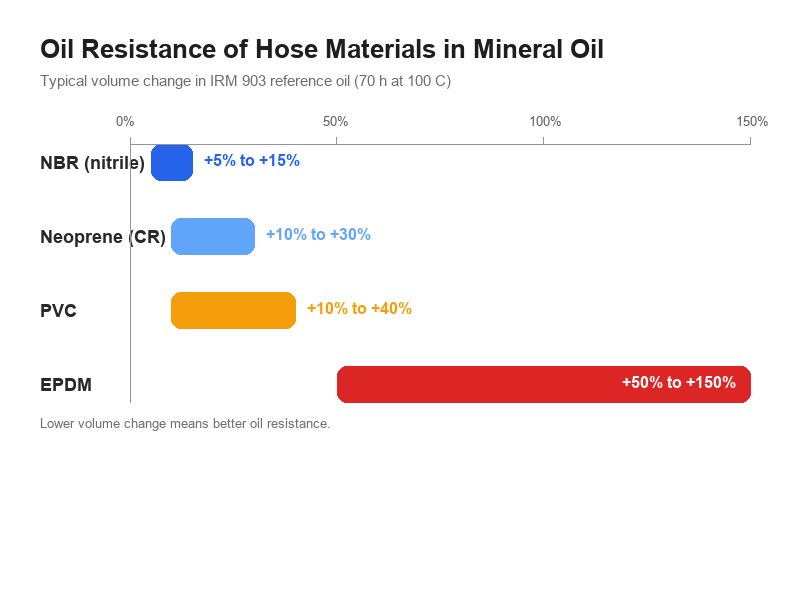
Volume change is the headline number: a compound that swells less resists oil better. In our test records, NBR compounds used in oil resistant hose show +5% to +20% volume change in IRM 903 after 70 hours at 100°C, while EPDM shows +50% to +150% — which is why a serious specification always quotes a maximum volume change. In a Middle East distributor’s field review we supported last year, six of eight premature diesel-line failures traced to an EPDM tube; the wrong compound was confirmed by ASTM D471 immersion data before the fleet re-hosed with NBR.
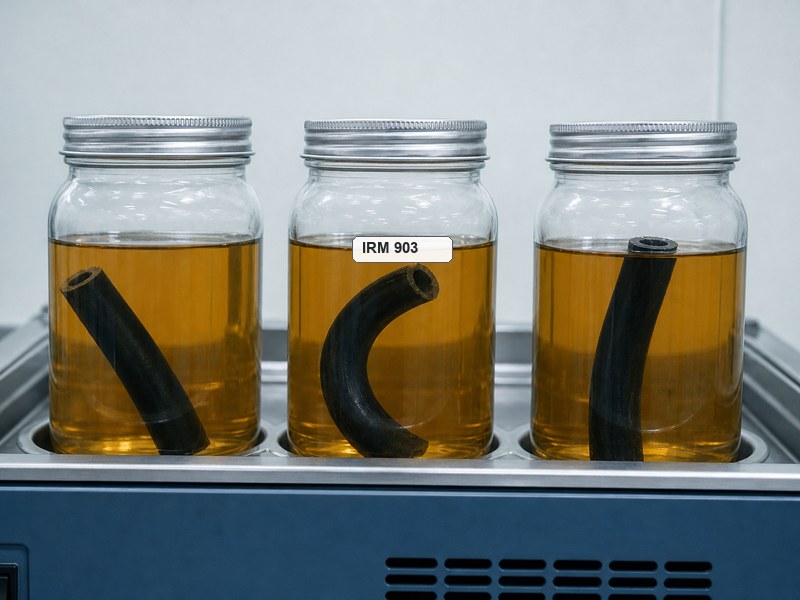
Figure 2. Immersion testing measures how much a rubber compound swells in reference oils — the single most useful number for comparing oil resistance.
Typical volume change in IRM 903 (70 h at 100°C) by oil resistant hose material.
| Material | Typical volume change | Suitability for oil hose |
|---|---|---|
| FKM | +1% to +5% | Excellent |
| NBR | +5% to +20% | Excellent; standard choice |
| HNBR | +5% to +10% | Excellent; hot-oil duty |
| Neoprene (CR) | +10% to +30% | Good for splash duty |
| PVC | +10% to +40% | Marginal, low pressure |
| EPDM | +50% to +150% | Not for petroleum oil |
ISO 1817 (Rubber, vulcanized or thermoplastic — Determination of the effect of liquids) is the international equivalent of ASTM D471; either standard gives a volume-change number you can compare across suppliers. When comparing supplier quotes, ask for the volume-change figure rather than the phrase “oil resistant” — a number can be checked, a phrase cannot. Want the immersion-test report for your application? We send the ASTM D471 data with every sample.
Types of Oil Resistant Hoses
Oil hoses are built for five main duties, each with its own standard, pressure class, and construction.
Main oil resistant hose types and typical specifications.
| Hose type | Typical standard | Common sizes | Presión de trabajo | Oil-resistant core |
|---|---|---|---|---|
| Hydraulic oil hose | SAE J517, EN 853, EN 856 (spiral hydraulic hose) | 1/4″ to 2″ | 1,000–4,000+ PSI | NBR tube, wire braid |
| Fuel hose | SAE J30 (Fuel and Oil Hoses) R6–R9 | 3/16″ to 1″ | Hasta 300 PSI | NBR tube, textile braid |
| Oil suction and discharge hose | EN 1765, DIN 20023 | 1″ to 6″ | 10 or 20 bar (145/290 PSI) | NBR tube, helix, vacuum |
| Oil transfer hose | EN 1765 / petroleum transfer | 1″ to 4″ | 4–10 bar | NBR or CR tube |
| Oil resistant air hose | EN 854 (textile reinforced hydraulic hose) | 3/8″ to 3/4″ | 10–20 bar | NBR or CR tube |
In hydraulic systems the tube is almost always NBR and the reinforcement decides the pressure class; our hydraulic oil hose selection guide walks through matching SAE 100R1, 100R2, and EN 856 spiral hoses to system pressure, and the excavator boom hose guide covers the boom circuits that flex with every working cycle.
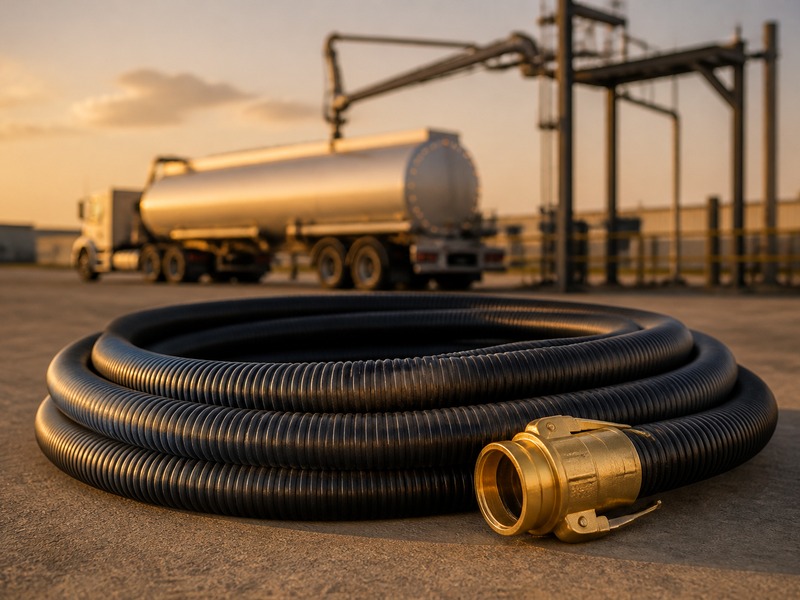
For the reinforcement trade-off behind those pressure classes, the 2-wire braid vs 4-wire spiral hose guide explains when braid construction outperforms spiral. For tanker and plant transfer, oil suction hose adds a helix wire to hold its shape under vacuum.
Oil Hose vs Fuel Hose: What Is the Difference?
Oil hose and fuel hose overlap but are not identical. Fuel hose is engineered for gasoline and diesel, whose aromatics attack rubber aggressively, so it uses NBR or FKM tubes with thicker walls and stricter permeation limits. Oil hose is engineered for lubricating oil, grease, and hydraulic fluid — gentler to rubber.
A fuel-rated hose covers both gasoline and oil service, because it passes the stricter fuel test. An oil-only hose is limited to lubricating oil, grease, and hydraulic fluid; gasoline service requires a hose marked fuel-rated — ethanol-blended fuel (E10/E15) swells and softens oil-only compounds. When in doubt, match the marking to the fluid.
How to Choose an Oil Hose
Selection is a checklist, not a guessing game. A reliable oil resistant rubber hose comes with a printed standard and test data you can check; work through these points and you will land on the right hose.
Common Oil Resistant Hose Sizes and Typical Uses
Size selection is part of oil resistant rubber hose specification: the bore determines how much oil can flow at an acceptable velocity, and the outer diameter must clear the routing and the fittings. Inch and metric sizes both sell in volume, so the table below pairs each common bore with its metric equivalent and typical duties.
Common oil resistant hose sizes and typical uses.
| Hose size | Metric equivalent | Typical uses |
|---|---|---|
| 1/4″ | 6.4 mm | Gauge lines and light return lines |
| 3/8″ | 10 mm | Workshop oil and fuel lines |
| 1/2″ | 13 mm | Workshop oil and fuel lines, hydraulic return on light equipment |
| 5/8″ | 16 mm | Oil and fuel feed lines on medium equipment, tank return |
| 3/4″ | 19 mm | Short-run return lines and light pump suction |
| 1″ | 25 mm | Oil transfer and pump suction duty |
Match the bore to flow rate, not to the port size: an oversized hose adds weight and cost, while an undersized bore raises velocity and heat. Complete bore-to-flow and pressure pairings appear in the dedicated oil hose size chart guide.
Match the duty — five decisions:
- Identify the fluid — oil, diesel, gasoline, hydraulic oil, or grease — and its temperature at the hose.
- Check the standard — SAE J517, EN 853, EN 856, EN 1765, DIN 20023, EN 854, or SAE J30, depending on the duty.
- Match the pressure — working pressure must exceed maximum system pressure, with the standard 4:1 safety factor; see the SAE 100R hydraulic hose guide for details, and the oil hose working pressure vs burst pressure guide for the rating difference.
- Choose the size — match the inner diameter to the flow rate using the common sizes table above.
- Confirm suction duty — if the line pulls a vacuum, choose an oil suction hose with a full vacuum rating.
Verify the supplier — four checks:
- Verify the temperature range — NBR hoses typically run from -40°C to +100°C, peaking at 125°C on some constructions.
- Ask for test data — a volume-change number below about +20% in IRM 903 confirms a genuine nitrile-based oil hose; treat +25% as the upper check for splash-duty compounds.
- Compare commercial terms — price, minimum order quantity, lead time, and warranty matter as much as the compound.
- Confirm the fittings — JIC, NPT, and BSP thread families are not interchangeable; see the JIC, NPT vs BSP thread guide.
Send us your flow rate and line length for a same-day size confirmation and free samples.
Oil Hose Leak: Causes and When to Replace
Even a correctly specified oil hose eventually leaks, usually from the wrong compound, plasticizer extraction hardening the tube, abrasion cutting the cover, UV cracking outdoors, or damage at the fitting from over-tight clamps.
Replacement cost (USD, 2026 planning benchmark — verify against current quotes) varies widely: a short 3/8″ hydraulic assembly runs roughly 5−5−15, while a 4″ oil suction and discharge hose runs 200−200−600, so decide by condition, not price. Replace, do not patch: a patched pressure hose is a fluid injection-injury risk. Retire any hose with cracking, hardening, swelling, or oil weeping through the cover.

Oil Hose FAQ
What happens if I use an EPDM hose on an oil or diesel line?
EPDM swells and fails in mineral oil, diesel, and gasoline — the tube softens, oil wets the reinforcement, and the hose bursts early. For petroleum oil, use a nitrile-based hose; keep EPDM for water and brake fluid service.
I need a hose for mineral oil at 80°C — what rubber should I use?
Nitrile (NBR) is the standard answer for mineral oil, diesel, gasoline, and hydraulic oil; 80°C sits inside its -40°C to +100°C rating with margin. Step up to HNBR or FKM above 150°C or with aggressive aromatics.
Does a clear PVC tube harden when it carries oil?
Partly — PVC resin resists mineral oil, but the plasticizers that keep it flexible are extracted by oil, hardening and cracking the tube over time; clear PVC grades are no exception. It suits low-pressure oil and air lines; for gasoline, hot oil, or hydraulic duty, use an NBR-based hose.
Can I use fuel hose for oil?
Usually yes — fuel-rated hose passes stricter tests than oil hose and handles both fluids. An oil-only hose is limited to oil, grease, and hydraulic fluid; gasoline service requires a hose marked fuel-rated.
Can I use an oil hose for fuel?
Only if the hose is explicitly marked fuel-rated. Fuel-rated hose passes stricter tests (SAE J30 R6-R9) and handles both gasoline and oil; an oil-only hose swells and softens on ethanol-blended gasoline (E10/E15). Match the marking to the fluid.
How do I know if a hose is oil resistant?
Check three things: the tube material (NBR, CR, or FKM is a good sign), the standard marking on the cover (SAE J517, EN 853, EN 1765, or DIN 20023), and the volume-change data in the datasheet.
What temperature can an oil resistant hose handle?
Most NBR oil hoses are rated from -40°C to +100°C, with short peaks to about 125°C. FKM hoses extend to 200°C; always check the printed temperature range.
What size oil resistant hose do I need?
Common oil resistant hose sizes are 1/4″, 3/8″, 1/2″, 5/8″, 3/4″, and 1″, plus metric 10 mm, 16 mm, and 19 mm. Match the inner diameter to flow: 1/4″ suits gauge and light return lines, 3/8″-1/2″ covers most workshop oil and fuel lines, and 3/4″-1″ suits transfer and pump suction duty.
How much does it cost to replace an oil hose?
As a 2026 USD planning benchmark, a short 3/8″ hydraulic oil hose assembly runs roughly 5−5−15 and a 4″ oil suction and discharge hose 200−200−600; compound, fittings, and pressure class drive most of the spread. Replace by condition, not price — retire any hose with cracking, hardening, swelling, or oil weeping through the cover. Send your size list for same-day pricing.
How long does an oil hose last before it needs replacing?
Typically 3-5 years for an NBR oil hose in moderate service, and 1-2 years in hot, oily, or UV-exposed duty; retire on condition — cracking, hardening, swelling, or oil weeping through the cover — rather than on age alone, and inspect monthly in continuous service. These are planning benchmarks; confirm against the manufacturer’s warranty and your service conditions.
Need the 2026 price list for your size? Send your size list for same-day pricing.
Final Verdict: Choose the Right Oil Hose
For most buyers, the oil resistant hose question reduces to one material decision: match a nitrile-based hose to the fluid, pressure, and temperature, then verify with test data rather than product descriptions. Confirm the tube and cover compound, check the standard marking, ask for the immersion-test report, and inspect before every use. That combination — the right polymer, a printed standard, and measured values — is the entire oil resistance story at any price point. When sourcing, ask for the datasheet before the price: a supplier who can show you volume-change numbers has actually tested the hose. For a workshop servicing both diesel trucks and hydraulic equipment, one NBR hose family covers most oil, fuel, and return lines — standardize on NBR, verify each reel with test data, and keep one fuel-rated SKU for gasoline lines. Request a quote and samples — our engineering team will match the compound, size, and fittings to your fluid, with a reply within one business day.
About HENGHUA
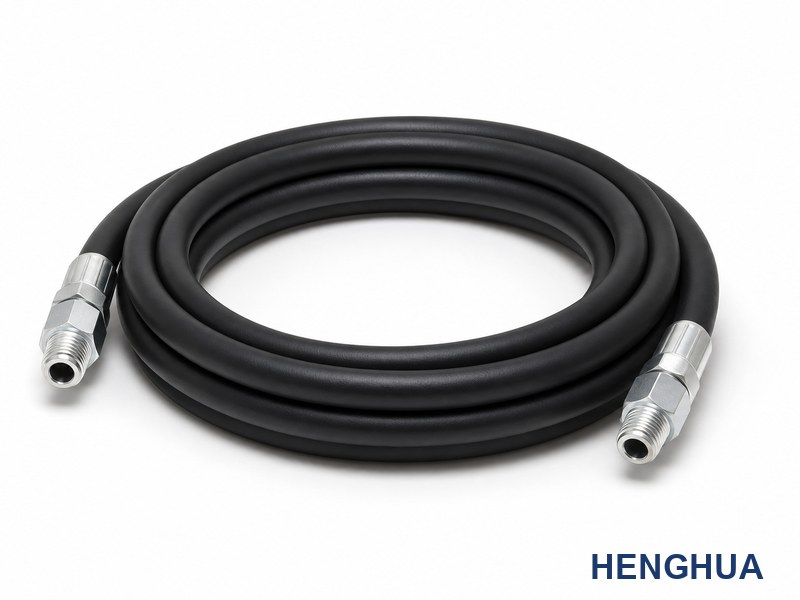
HENGHUA is a professional manufacturer of rubber hoses for hydraulic oil, oil transfer, fuel, and air service, supplying distributors, workshops, and OEM brands worldwide. Every HENGHUA oil hose is built with an NBR or CR compound verified by immersion testing, proof-tested at 1.5 times working pressure before shipment, and burst-tested per production batch — the compound and ratings printed on every cover are measured values, not marketing numbers. We manufacture hydraulic hoses across the SAE 100R1, 100R2, and EN 856 spiral range, and oil suction hose to EN 1765 and DIN 20023 in the 10 and 20 bar classes, with custom lengths, fittings, colors, and OEM/ODM branding.
Because we control everything from compound mixing to final pressure testing, we deliver documented quality at factory-direct pricing, with short lead times and a clear warranty on every reel. Contact our team for a quote and samples — we will send the test report with the sample.

 English
  Spanish
  Portuguese
  French
  German