
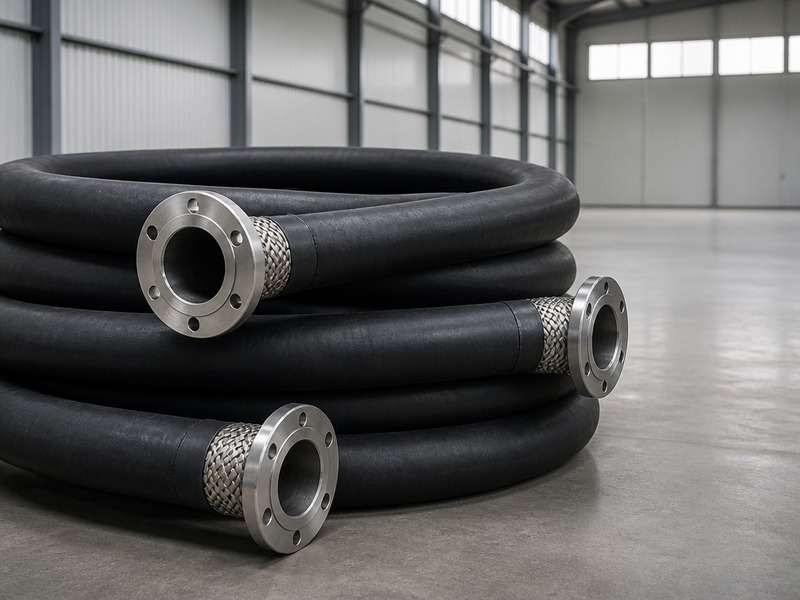
There is no single acid resistant hose that is correct for hydrochloric acid, sulfuric acid and nitric acid at the same time, because the three acids attack hose materials by different mechanisms.
Scope of this page. This page covers tube, cover, fitting and gasket selection for three mineral acids: hydrochloric, sulfuric and nitric. Three values decide the material, and you supply them: the concentration, the temperature and the contact time. You also state whether the concentration is by weight or by volume. The call-outs published here name material families; the specific limit for your line is confirmed by immersion test on the exact compound.
Hydrochloric acid is a reducing acid whose aggressiveness rises sharply with concentration. Sulfuric acid behaves so differently when dilute and when concentrated that one compound rarely covers both duties. Nitric acid is a strong oxidizer, so it attacks polymers that hold up against the other two. This article treats each acid as its own selection problem. It covers the cover, the fittings and the gasket as separate decisions, and closes with operating rules and the outer limits of HENGHUA’s published chemical hose range.
1. Why are the three acids three different hose problems?
The label “acid” describes a whole family of chemicals, not one material problem. For a hose tube, two things decide the outcome: the acid’s chemistry and its concentration. A reducing acid and an oxidizing acid can both be aggressive, yet they break down different polymers. That is why an acid resistant hose that performs well in dilute hydrochloric acid can fail quickly in concentrated sulfuric acid.
A printed chemical-resistance chart is a screening aid, not a decision. A rating only means something together with the concentration, the temperature and the exposure time it was measured at. When you compare candidate compounds, start from a chart built around the tube families in play, such as our NBR vs EPDM vs FKM inner-tube selection guide. Confirm the exact grade with an immersion test.
Table 1. What each acid does to a hose material, and the tube families usually considered
| Acid | How it behaves | What that means for the tube | Families usually considered |
|---|---|---|---|
| Hydrochloric acid | Reducing acid; aggressiveness rises sharply as concentration increases | Damage depends heavily on concentration, not on the word “acid” | EPDM for confirmed dilute duty; polyolefins (UHMWPE, XLPE, polypropylene); fluoropolymers (PTFE, FEP, PFA) where temperature or the full range matters |
| Sulfuric acid | Dilute behaves unlike concentrated; concentrated acid is strongly hygroscopic and generates heat when diluted | One compound rarely covers both dilute and concentrated duties | Fluoropolymers (PTFE, FEP) for the broad range; polyolefins at lower temperature; EPDM only where the duty is confirmed dilute |
| Nitric acid | Strong oxidizer | Attacks polymers that are stable against the reducing acids | Fluoropolymers (PTFE, FEP, PFA); the specific grade must be confirmed for your concentration and temperature |
Read Table 1 as a routing guide, not a specification. Each acid in it sends you to a different group of tube compounds, and the final choice inside that group depends on the figures you supply for your own line.
Material names used in this article, with their full names:
- EPDM: ethylene propylene diene monomer rubber
- PTFE: polytetrafluoroethylene
- FEP: fluorinated ethylene propylene
- PFA: perfluoroalkoxy alkane
- FKM: fluoroelastomer, also called fluorocarbon rubber
- UHMWPE: ultra-high-molecular-weight polyethylene
- XLPE: cross-linked polyethylene
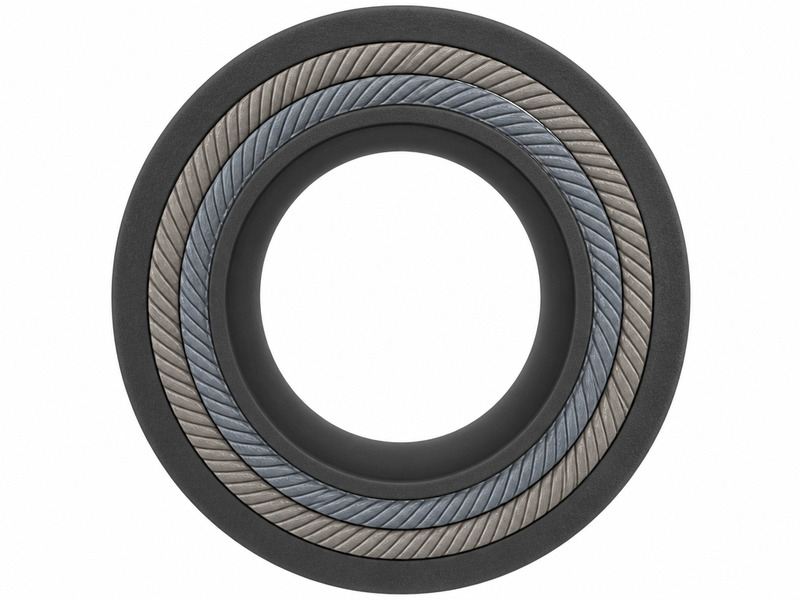
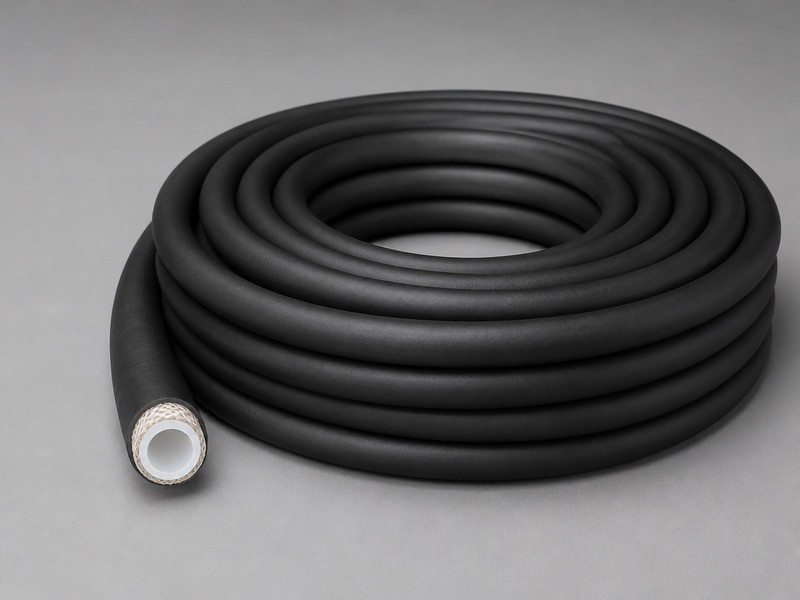
Figure 1. An acid resistant hose is a layered assembly: the tube contacts the acid, the reinforcement carries pressure, and the cover protects the whole from the outside environment.
2. Which acid resistant hose suits hydrochloric acid?
The word on the line tells you the acid, not the duty. A dilute stream and a concentrated one can point to different tube compounds and different wall thicknesses, and temperature moves the answer again. For a hydrochloric acid hose, the figures to fix first are the concentration and the temperature on your line.
Where the duty is confirmed dilute, a common published call-out is EPDM, which this site lists for dilute acids. Above that, the choices move toward polyolefins such as UHMWPE, XLPE and polypropylene, or toward a fluoropolymer when temperature or the full concentration range matters. None of these is a blanket answer, because the resisting limit depends on the concentration and the temperature you actually run.
The hydrochloric acid hose tube also has a purity dimension. If the acid feeds a process where contamination matters, a fluoropolymer liner in PTFE, FEP or PFA is often chosen for the wetted surface. Material selection at that level is a conversation about grade, not just family, and the family pages on this site are a reasonable start: see our guide to flexible hose materials for how the common tube compounds compare.
Treat the acid name as an input, not a specification. Two hydrochloric acid lines at different dilutions may need two different tubes, and the same is true once temperature is added.
When you ask a supplier about a hydrochloric acid hose, request three values in writing: the concentration of the acid, the temperature on the line, and the exposure time behind the rating. A rating that cites all three is a specification you can select from. Where a value is missing, ask for the test and set your acceptance criteria on the result.
3. Which acid resistant hose suits sulfuric acid?
Sulfuric acid is the clearest example of why concentration matters. Dilute sulfuric acid behaves unlike the concentrated grade, and the two are rarely solved by the same compound. A sulfuric acid hose specified for one concentration can be wrong for the other, so the specification must name the strength, not the acid.
Concentrated sulfuric acid is strongly hygroscopic, and it generates heat when it is diluted. That is a process fact, not a hose fact, but it shapes selection in two ways. First, the heat of dilution can raise the temperature at the tube surface well above the bulk liquid temperature. Second, the acid will pull moisture from the air or from a wet line, so the concentration at the wall can drift from the concentration in the tank. Both effects push the duty harder than the nameplate suggests.
For a sulfuric acid hose that must cover the broad concentration range, a fluoropolymer such as PTFE is usually the starting point. This site publishes PTFE as suitable for nearly all chemicals across a range from −70 °C to +260 °C. Polyolefins suit lower-temperature duties, and EPDM is considered only where the duty is confirmed dilute. As with hydrochloric acid, confirm the grade against your concentration and temperature before you commit.
Because concentrated sulfuric acid wets and lingers, the sulfuric acid hose cover and the wash-down routine deserve attention. Cover abrasion is measured to ISO 6945, so ask for an abrasion figure measured on the cover compound you intend to buy rather than a general abrasion-resistant claim. Splash resistance is a separate property, and a pooled spill at a flange can sit on the cover for hours.
Bore size does not change the tube compound. A half-inch hose for sulfuric acid and a four-inch one follow the same three inputs, because the chemistry is the same at every diameter. What changes with bore is the flow rate and the pressure drop, not the resistance of the material.
4. What makes a nitric acid hose different?
Nitric acid is a strong oxidizer, and that single property changes the material list. An oxidizer tends to attack polymers that are otherwise stable against reducing acids, so a compound that works for hydrochloric acid may be the wrong choice here. For a nitric acid hose, the tube is therefore usually a fluoropolymer: PTFE, FEP or PFA. The exact grade, and the wall construction behind it, still depend on concentration and temperature.
Two published limits are worth keeping in view. PTFE is listed for nearly all chemicals from −70 °C to +260 °C, and FKM for aggressive chemicals up to +200 °C. Read both as limits that belong to the material. The limit that governs your tube comes from resistance data measured at your concentration and temperature, so where the acid is hot, concentrated or both, ask the supplier for that data.
The nitric acid hose is also where fittings and gaskets most often get overlooked. The oxidizer contacts every wetted surface, not only the tube, so a selection that stops at the tube leaves the joint exposed. The chemical hose range groups the suction and discharge lines built for duties like this one.
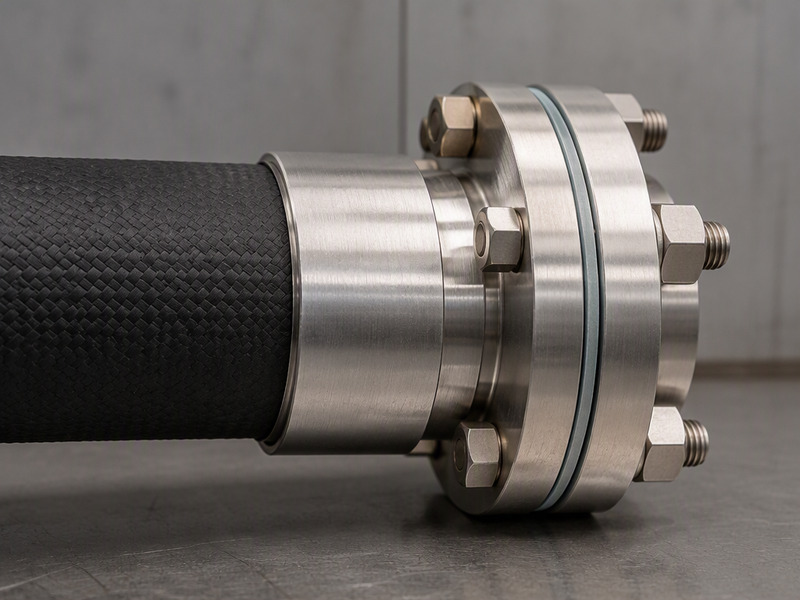
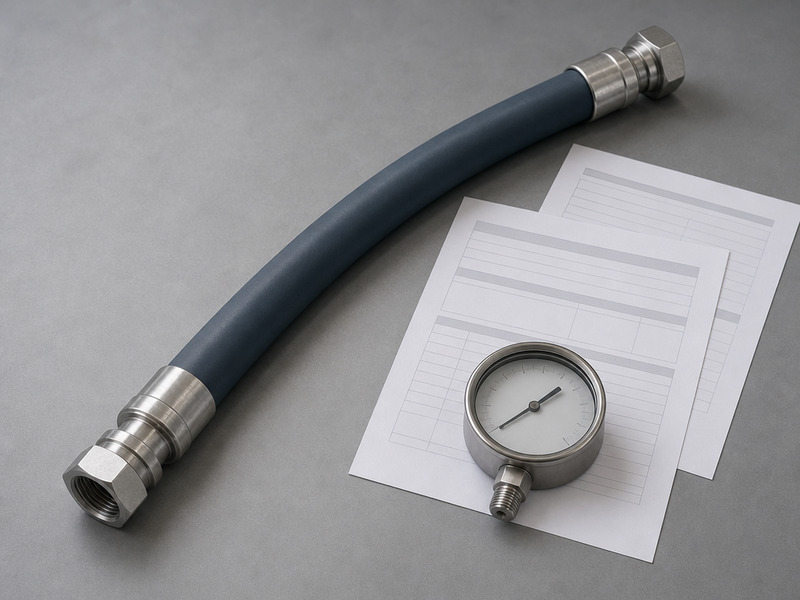
Figure 2. The fitting, the gasket and the cover each contact the duty differently, so each is a separate material decision from the tube.
5. Why are the cover, fittings and gaskets separate decisions?
The tube decides chemical resistance, but an acid resistant hose is an assembly, not a tube. Whether the line is a fixed assembly or an acid resistant flexible hose, four parts carry the duty, and each is a separate material decision. Table 2 keeps them apart so that one is not mistaken for another.
Table 2. Cover, fitting and gasket after the tube: what each element does
| Element | What it does | Why it is a separate decision | Where it goes wrong |
|---|---|---|---|
| Tube | Contains the acid | Sets the chemical resistance of the bore | Wrong compound for the concentration in the line |
| Cover | Protects the reinforcement and the assembly | Resists abrasion, ozone, sunlight and spillage rather than the carried medium | Treating the cover as if it decided chemical resistance |
| Fittings and couplings | Join the hose to the system | Their wetted metal is a second material the acid also contacts | Choosing them from the pressure rating alone |
| Gasket or flange seal | Seals the joint | A different compound from the tube, with its own limits | Assuming the tube’s resistance covers the seal |
Include the cover in the material specification because the outside of a hose rarely stays clean. Splash, drips and wash-down expose the cover to the same acid, at whatever concentration has evaporated or pooled there. Choose the cover for the environment it lives in. The tube, not the cover, is the barrier against the carried medium.
Fittings and gaskets are a materials problem in their own right. The wetted surfaces include the coupling bore and the gasket face, and the acid reaches them at the same concentration and temperature as the tube. Confirm the fitting material and the gasket compound on the same basis you used for the tube, then confirm that the end connection matches the system it joins. Gasket and fitting data come from the gasket and fitting suppliers, so ask each supplier for the figure measured at your concentration and temperature.
Work through the acid hose material shortlist in this order:
- Name the acid and its concentration.
- Add the temperature.
- Add the contact time.
- Narrow to the families that answer those three inputs, then choose the grade inside the family.
The acid hose material you finally specify should be the one whose data was measured at a condition close to yours, not the one with the widest general claim.
For the chemical range as a whole, the starting point on this site is the chemical hose category, where the suction and discharge lines are grouped.
The same acid duty reads differently to each party in the chain
A distributor quoting a line needs the concentration basis and the end connection in writing before the price is fixed. A plant operator reusing an acid resistant hose after a change of service needs the previous duty, the wash-down history and the age of the assembly. An EPC contractor specifying a new build needs the fitting and gasket materials fixed before the piping is released.
6. What operating rules apply to every acid resistant hose?
Never assume that one acid resistant hose serves all three acids. Concentration, temperature and contact time differ from line to line and from plant to plant. A hose that is correct on one duty can be wrong on the next, so treat each duty as a new selection rather than reusing a previous answer.
Temperature deserves its own check. A published range is a material range, not a service temperature for your acid. This site publishes a steam limit for EPDM and a chemical range for PTFE, and an acid limit is a separate value that neither one supplies. Have that value confirmed at your own concentration and temperature before the line is committed.
Vent and containment are operating decisions that protect people and plant, not material decisions that change the tube. Venting releases trapped pressure and vapor instead of letting it find its own way out, and containment catches what a flanged joint or a transfer point gives up. Both measures limit the consequences of a release; neither raises the limit of the hose itself.
Four rules apply to every acid duty:
- Match the tube, then match the cover, the fitting and the gasket separately.
- Start from the concentration and the temperature the line actually runs at.
- Vent the line and contain the joint so a leak cannot pool against the cover.
- Run an immersion test before committing a production line.
The immersion test is the step that a chart cannot replace. ASTM D471 for rubber and ASTM D543 for plastics report how a specimen changes after soaking, including volume swell, hardness change and tensile or elongation change. Test the exact compound you intend to buy, at your concentration and temperature, for a realistic exposure time, and read the result against your own acceptance criteria.
Finally, know where the published product range stops. In HENGHUA’s chemical range the heavy line is the suction and discharge hose, published at 250 psi working pressure; the discharge-only hose is published at 150 psi. Both are published site-wide with a 4:1 design safety factor. The bore range runs from 3 mm to 102 mm, which is 1/8 in to 4 in. For comparison, 10 bar equals about 145 psi (calculated from 1 bar = 14.50 psi).
Compare the published figures against the working pressure your line actually needs. If your line needs more, that is a different conversation, and the place to start it is the chemical suction and discharge hose page.
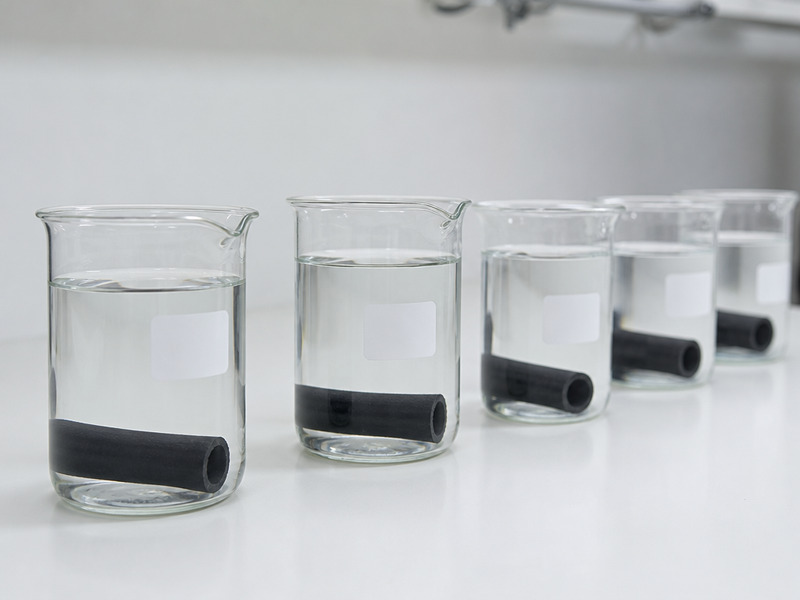
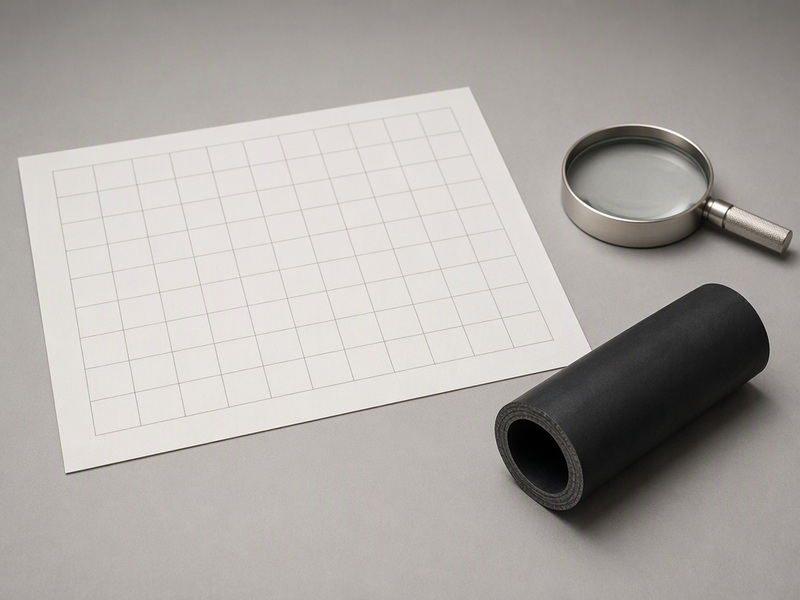
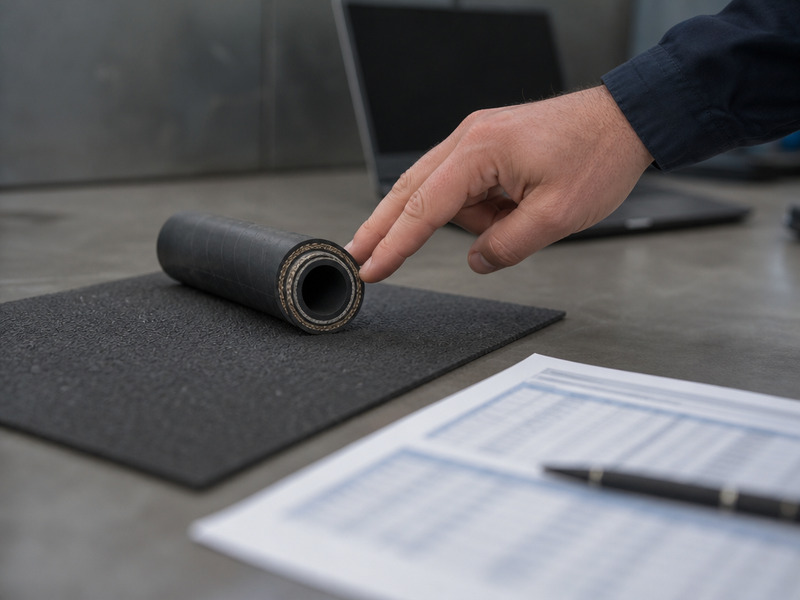
Figure 3. Candidate tube compounds soaking at the duty concentration and temperature, the check that comes before a production line is committed.
Table 3. HENGHUA published chemical hose range and the design figures behind it
| Item | Published value | Notes |
|---|---|---|
| Chemical discharge hose | 150 psi working | Discharge service |
| Chemical suction and discharge hose | 150 psi and 250 psi working | Suction and discharge; 250 psi is the heavier duty |
| Program bore range | 3 mm to 102 mm (1/8 in to 4 in) | Cut-to-length and custom branding supported |
| Design safety factor | 4:1 | Published site-wide |
Table 4. Tube compound families and what this site publishes about each
| Family | Typical role in acid service | Published data on this site | What the data does not tell you |
|---|---|---|---|
| EPDM | Dilute mineral acids, hot water and steam | Steam up to +165 °C; brake fluid and dilute acids; oils are outside its range | The maximum acid concentration it accepts |
| Polyolefin (UHMWPE, XLPE, polypropylene) | Low-temperature acid and chemical transfer | Offered as a tube or liner family for chemical transfer | Service temperature and pressure, which vary by grade |
| Fluoropolymer (PTFE, FEP, PFA) | Purity-critical, high-temperature or full-range duty | PTFE −70 °C to +260 °C and nearly all chemicals | The exact grade for your medium, and the cost |
| FKM (fluorocarbon) | High-temperature oils and aggressive chemicals | Up to +200 °C | For an acid duty, start from a fluoropolymer instead |
FAQ
Can one acid resistant hose handle hydrochloric, sulfuric and nitric acid?
No. Each of the three acids attacks polymers by a different route, so a compound that survives one is not evidence for the next. Read them as a reducing acid, a hygroscopic acid that releases heat as it dilutes, and an oxidizing acid. Select a tube, cover, fitting and gasket for each acid and each duty separately, and confirm the grade with an immersion test before committing a line.
What tube material is used for a hydrochloric acid hose?
For a dilute, low-temperature hydrochloric duty, the published starting point is EPDM. Raise the concentration or the temperature and the shortlist moves up to a polyolefin tube such as UHMWPE or XLPE, then to a fluoropolymer. A purity-critical process skips to the fluoropolymer first, because the wetted surface is the part that matters there. Inside that family, the grade is confirmed against your own figures rather than a general claim.
Why does a sulfuric acid hose behave differently when the acid is diluted?
Two effects separate them. Dilution releases heat, so the temperature at the tube wall can run hotter than the tank you measured. And because the concentrated acid pulls moisture out of the air and out of a wet line, the strength at the wall can drift away from the strength you specified. The practical consequence is to write the strength into the specification and to treat a dilute line and a concentrated line as two separate selections.
What makes nitric acid different from the other two acids?
It is an oxidizer, and that single property flips the material logic. The polymers that stand up to the reducing acids are the ones an oxidizer attacks, so evidence from a hydrochloric line does not transfer here. A nitric acid hose therefore starts from a fluoropolymer such as PTFE, FEP or PFA, and the grade and the wall behind it are then set by your concentration and temperature together.
What is the best acid hose material for a full concentration range?
There is no single best material, so the question becomes which family loses the least. Where purity, temperature or the breadth of the concentration range is the binding constraint, the fluoropolymer family carries the widest of the limits this site publishes. PTFE is the usual first name inside it. Beyond that, the grade and the wall follow your own concentration and temperature, and the immersion test is what commits the line.
Does the cover of an acid hose need to be acid resistant too?
Not for the same reason. The cover works against abrasion, ozone, sunlight and spillage, while the carried medium is the tube’s job. Splash, drips and wash-down still reach it, so the cover meets whatever strength has pooled or evaporated on the outside of the line. Size it against the environment around the line. The barrier question belongs to the tube.
Are the fittings and gasket the same material as the tube?
No. Both the bore of the coupling and the face of the gasket are wetted, so the acid reaches them under the conditions the tube itself sees. Each is a separate compound with its own limits. The joint therefore needs figures of its own, because a pressure rating measures a different property entirely. Where a supplier cannot give you a figure at your duty, that gap is exactly what the immersion test is there to close.
How should I test a hose before using it on an acid line?
Buy a sample of the exact compound first, and soak it under your own duty. The two methods to name in the request are ASTM D471 for rubber and ASTM D543 for plastics. Ask the laboratory how the specimen changes after soaking: its swell, its hardness and its strength. Then decide in advance what change you will accept, and compare the report against that limit before a production line is committed.
What pressure can HENGHUA’s chemical hose carry?
HENGHUA publishes the chemical discharge hose at a 150 psi working pressure, and the chemical suction and discharge hose at 150 psi and 250 psi working pressures. Both carry the 4:1 design safety factor. Choose the discharge line where the hose only ever pushes, and the suction and discharge line where the pump can pull as well as push. Where your duty needs more than 250 psi, that becomes a separate specification.
Does temperature change the acid hose material answer?
Yes. Concentration and temperature act together, so a rating measured in water or in steam does not carry across to an acid duty. A material can be published for a wide temperature range and still reach a much narrower limit in a hot, concentrated acid. Only a test at your own concentration and temperature settles where that limit sits for your line.
Is a hose for 93% sulfuric acid a different selection from a dilute one?
A concentrated duty and a dilute duty are two different selections, so the same sulfuric acid can point to two different tube compounds. This site publishes EPDM for dilute acids and PTFE across a wide chemical and temperature range, and it publishes no concentration limit for either. Treat a strong concentration as a fluoropolymer starting point, and treat the exact limit as something your own immersion test has to establish before the line is committed.
How do I know when an acid hose has reached its service limit?
The signs are the properties an immersion test measures, seen on a used part. Look for a bore that has swollen or gone soft, a hardness that has shifted from the new value, and a cover that has lifted away from the reinforcement. When a line is retired, keep a specimen. Soaking that used specimen beside a new one, in your own acid at your own temperature, shows how much of the margin the line has already used.
About HENGHUA
HENGHUA is a hose manufacturer serving distributors, chemical plant operators, EPC contractors, tank-terminal operators and OEM or private-label programs. The company operates a 35,000 m² plant with 95 production lines and more than 320 employees, including 45 QC inspectors and 25 R&D engineers holding 30+ patents. Annual capacity is 20 million meters, and the plant sits 90 km from Shanghai port, exporting to 70+ countries.
Quality management is certified to ISO 9001, IATF 16949 and ISO 14001, and the in-house test laboratory runs burst testing to ISO 1402 and impulse testing to ISO 6803. The chemical range includes a chemical discharge hose at a 150 psi working pressure. The chemical suction and discharge hose follows at 150 psi and 250 psi working pressures, alongside steam, water, oil, material-handling and multipurpose lines. The program covers bores from 3 mm to 102 mm, with cut-to-length and custom branding supported.
If your duty involves hydrochloric, sulfuric or nitric acid, tell us the concentration, the temperature and the contact time. We will help you match a tube, cover, fitting and gasket to it. You can reach the team through our about page or send the details directly via the contact page.
 English
  Spanish
  Portuguese
  French
  German
  Arabic
  Russian
  Indonesian
  Japanese
  Korean