
Cleaning in place (CIP) and sterilisation in place (SIP) ask two different things of a lining. Cleaning in place asks it to survive hot caustic, acid and detergent in sequence, repeatedly, without swelling or crazing. Sterilisation in place asks it to survive saturated steam above 120 °C without softening, delaminating or releasing anything into the next batch.
A hose that handles both is unusual. This guide sets out which linings tolerate which regime, where the bond rather than the film becomes the limit, and what a supplier should be able to put in writing before a hygienic line is signed off.
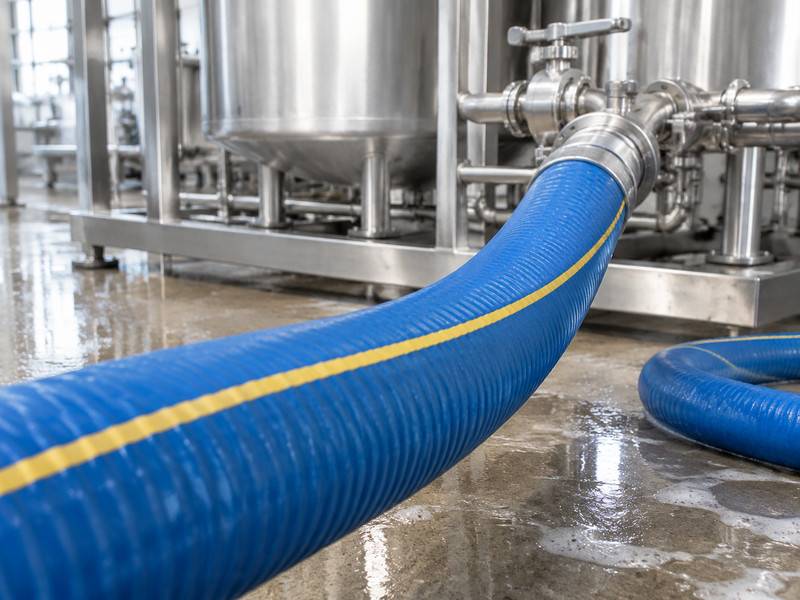
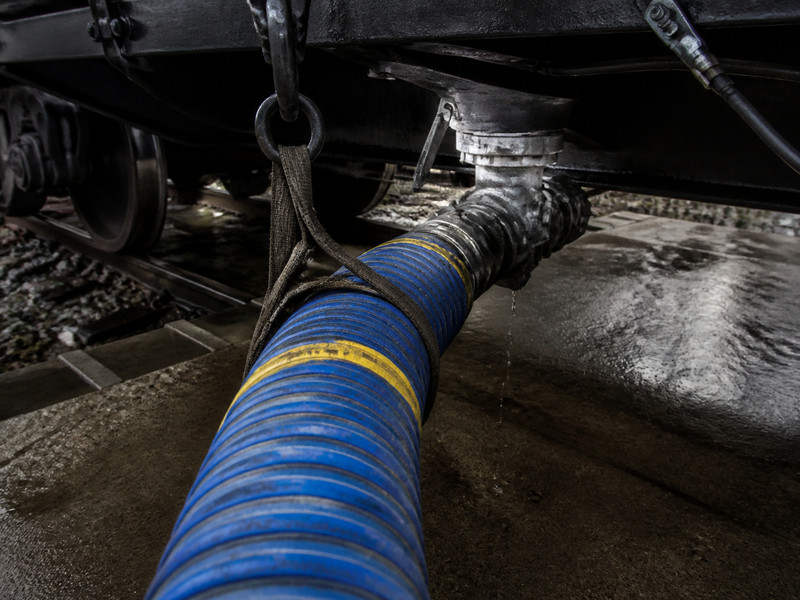
Figure 1. Foam drying on the floor plates below the valve cluster, with the hose still clamped in place.
What Does a CIP Hose Have to Survive?
Four things, and they arrive in sequence rather than one at a time.
Hot caustic at typical plant concentrations removes organic soil and attacks polyolefins slowly. Acid removes mineral scale and attacks a different set of polymers. Detergent wets surfaces and can carry surfactants into a liner that is already swollen. Rinse water removes all three and, if it is chlorinated, adds an oxidiser.
A CIP hose is therefore judged on a cycle rather than a chemical, and the chemical resistance chart is only a starting point. A liner that is excellent in caustic and poor in acid will fail the second stage of every clean, and the failure will look like a caustic problem because that is when the swelling started.
The temperature compounds it, which is why derating applies to cleaning as much as to product. Most CIP runs between 60 °C and 80 °C, which is inside a polyolefin’s range but close enough to its ceiling that a long cycle at the top of the range costs more life than a short one in the middle.
Which Linings Survive Which Regime?
| Lining | Caustic CIP | Acid CIP | SIP steam above 120 °C | Kommentar |
|---|---|---|---|---|
| PP | Good | Moderate | No | Workhorse for dairy and beverage |
| UHMWPE | Good | Good | No | Better abrasion, similar ceiling |
| XLPE | Good | Moderate | No | Cross-linking helps at the top of range |
| PTFE | Excellent | Excellent | Yes, within limits | Clears the temperature question |
| CPE rubber | Good | Moderate | Limited | Different construction family |
Table 1. Lining behaviour under cleaning regimes. Ratings are directional; confirm the envelope with the supplier for the specific grade.
Scope of the table: PP, UHMWPE and XLPE cover liquid CIP only. PTFE covers steam SIP, and only within the cycle count the supplier quotes. The buying pattern that follows is the CIP hose rule in most food plants: PP for cost, PTFE where steam sterilisation is required or where a product attacks polyolefins.
The PP-first split is rational, and it fails in one place: a plant that adds SIP later, without revisiting the hoses. A PP lining that has cleaned happily for three years will not survive the first steam cycle at 130 °C.
Where Does Steam Change the Answer?
Steam is a different duty from hot liquid. Saturated steam at 121 °C carries latent heat and condenses on the liner, so the surface sees a temperature close to the steam temperature rather than the bulk liquid temperature.
For polyolefins that is above the continuous ceiling. The liner softens, the bond softens more, and the first symptom is usually a bulge rather than a leak.
PTFE handles the temperature, and the limit moves to the bond and the end fitting rather than the film. That is why a SIP-compatible hose should be quoted as an assembly with a stated steam cycle rather than as a liner with a temperature rating.
Ask two questions of any SIP compatible hose offer: at what steam temperature, and for how many cycles. A quote at 121 °C for a stated cycle count and one at 134 °C describe different duties, and neither transfers to the other. The lining limits behind those answers decide whether PTFE is needed. An answer of “SIP compatible” without either is a phrase, not a specification.
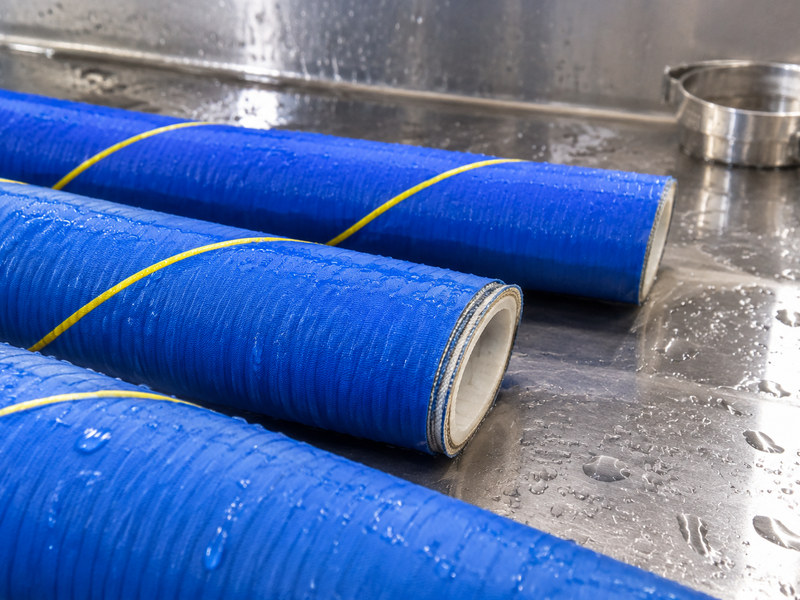
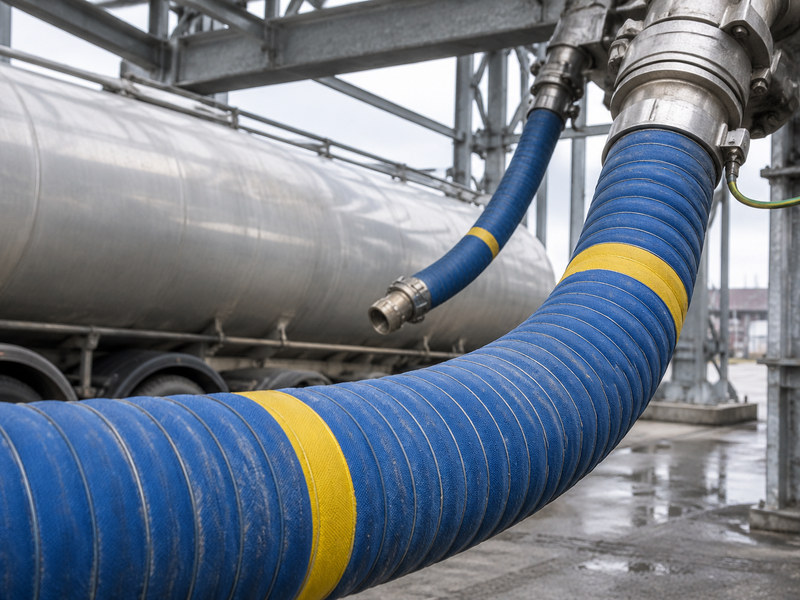
Figure 2. Water stands in the bench channel behind the three ends, and the lining faces catch the overhead light.
Why Does a Coiled Hose Clean Differently?
A flexible line is not a pipe. It sags, it coils, and it holds liquid in the low points.
Three practical consequences follow, and none is visible on a datasheet. Flow that cleans a straight run may bypass the outside of a bend, because the velocity profile changes at the curve. A hose left coiled on a hook drains poorly, so the last litre of caustic sits against the liner until the next clean. And a hose with a sag between supports creates a pool that no rinse cycle reaches at design flow.
The fix is procedural rather than chemical, and it is the same discipline a clean in place hose programme needs for validation. Support the hose so it drains, break the coil when cleaning, and verify with a conductivity or pH check at the outlet rather than by eye.
None of this appears on a datasheet, and all of it shortens liner life in ways that get blamed on the hose.
How Many Cycles Should a Hose Survive?
No standard gives a number, because the answer depends on concentration, temperature and cycle length. What a supplier can give is a test basis: the concentration, the temperature and the duration used, and the change in mass and hardness afterwards.
Ask for that basis and compare it with the plant’s actual cycle. A hose tested at 1 percent caustic at 60 °C for an hour is not evidence for a plant running 2 percent at 80 °C for ninety minutes.
Where no data exists, a trial with inspection intervals is legitimate. Agree the intervals, record the observations, and set a retirement criterion before the first cycle rather than after the first failure.
What Should a Supplier Put in Writing?
Four items make a caustic cip hose offer usable.
- The liner grade and the cleaning envelope in concentration, temperature and time
- The steam capability, if any, with cycle count
- The bond system, for composite builds above 80 °C
- The retirement criteria the plant should apply
A fifth item helps the quality team: the cleaning validation support the supplier can provide, which is usually a statement of what the liner releases under the test conditions rather than a full validation.
| Feld | What to ask for | Why it matters |
|---|---|---|
| Caustic limit | Concentration, temperature, time | Sets the cleaning window |
| Acid limit | Type and concentration | Second stage of every cycle |
| Steam limit | Temperature and cycle count | Decides PP or PTFE |
| Bond system | Adhesive family and temperature limit | Fails before the film above 80 °C |
| Change on ageing | Mass and hardness after test | Predicts swelling in service |
| Retirement criteria | Observable triggers | Removes judgement from replacement |
Table 2. Cleaning envelope fields for a CIP and SIP specification.
What Fails First?
In our experience the order is consistent: the bond, then the cover, then the film. A CIP hose retired for a film failure has usually had two earlier warnings.
The bond fails at the film-to-fabric interface where heat and chemical attack meet. It shows as a bulge or a soft band near the end fitting, where the wall is compressed and the bond is under load.
The cover fails through steam and hot water exposure at the supports and where the hose rests on a hook. A cracked cover lets moisture reach the helix, and the helix then corrodes from the outside.
The film fails last, usually at a flex point, and usually after the other two have already given warning.
That order is useful because it tells an inspector where to look. A clean in place hose is inspected near the fittings and at the supports, not along the middle of the run.
How Do You Specify Cleaning in a Purchase Order?
Name the regime, not the word. “CIP compatible” has no boundary; “caustic 2 percent at 80 °C for 90 minutes, weekly, plus acid 1 percent at 60 °C” does.
Then name the sterilisation, if any, with temperature and frequency. Then the liner and the bond. Then the documents, including the test basis behind the envelope.
A hose specification written this way can be quoted against, checked at goods-in and defended in an audit. One written around a single word cannot.
Where Does the Caustic CIP Hose Decision Sit in a Project?
The cleaning regime is usually fixed before the hoses are bought, often in the same design phase as the tanks and the skid. That is the right moment to write the CIP hose line, because it is the last point where the liner can be chosen for free.
Once the skid is commissioned, a change of liner means a change of hose, spare stock and sometimes fittings. Plants that discover a cleaning incompatibility at that stage usually live with a shorter hose life rather than reopen the design.
Bring two documents to that decision: the cleaning sequence and the product list. The first sets the chemical and thermal envelope, the second sets the approval requirement. A sip compatible hose chosen without the sequence is a guess with a datasheet.
What Does a Change of Cleaning Chemical Do?
Sites change chemicals more often than they change hoses. A switch from caustic to an oxidising cleaner, or from a neutral detergent to a chlorinated one, changes the attack on a CIP hose without changing the temperature or the flow.
The first symptom is usually a change in surface feel rather than a leak. A liner that was smooth becomes slightly tacky or chalky, and the change is easy to miss because the hose still passes a rinse check.
Two habits catch it early. Keep the chemical list in the hose file, with the date it changed. And inspect the liner at the ends after any chemistry change, because that is where a new cleaner attacks first.
A clean in place hose is a chemical-resistant component before it is a flexible one. Treating a chemistry change as a maintenance event rather than a purchasing one is what keeps it serviceable.
What Should a Cleaning Record Show?
A record is useful when it can be read by someone who was not there. Four fields do most of the work: the loop, the time, the temperature at the return, and the conductivity or pH at the end of the rinse.
Those four tell a reviewer whether the clean ran as designed and whether it reached the far end of the line. Without the return temperature, a cold loop looks the same as a hot one on paper.
Keep the record with the hose asset number rather than the loop alone. When a hose is moved between loops, the history follows it, and a pattern of failures on one hose becomes visible before it becomes a product issue.
None of that is expensive. It is the difference between a plant that can answer a question about last Tuesday and one that can only describe its procedure.
Where Should the Envelope Live?
Put it on the line, not in a folder. A laminated card at the skid with the concentration, temperature and time for each stage does more for compliance than a document in the quality office.
Operators follow what they can see. When the card and the hose are in the same place, a new shift can run a correct cycle without asking. When the envelope lives only in a manual, the cycle drifts towards convenience.
Review the card when the chemical changes, when the hose changes and when an audit finding touches cleaning. Three triggers, each cheap to act on.
A plant that keeps the envelope visible, the record complete and the retirement criteria agreed will get more life from a mid-range hose than a plant that buys the expensive one and cleans it by habit.
Häufig gestellte Fragen
Is a CIP hose the same as a food grade hose?
No. Food grade refers to the wetted material’s approval; CIP refers to what the hose survives during cleaning. A food grade hose can fail CIP, and a CIP-capable hose can still fail a migration test.
Can a PP-lined hose be steam sterilised?
Not at typical SIP temperatures above 120 °C. Polyolefins soften below that, and the bond softens sooner.
What concentration of caustic is typical?
Food plants commonly run around 1 to 2 percent at 60 to 80 °C, but the figure varies by site and by soil type. Specify your own numbers rather than a generic range.
Does a caustic cip hose need a different end fitting?
The fitting material has to suit the cleaning chemicals as well as the product. Stainless is usual; a plated fitting can lose its coating in hot caustic.
How often should a CIP hose be replaced?
On condition, with the criteria agreed in advance. Swelling at the fitting, a soft band, cover cracking at a support or a failed rinse check are the triggers.
Can a sip compatible hose be used for product transfer too?
Usually yes, provided the liner is food-contact approved. Most SIP lines are product lines that are sterilised between batches.
Why does my hose still smell after CIP?
Because the cleaning did not reach the whole surface. A coiled or sagging hose holds liquid in low points, and the residue there is what smells.
Über HENGHUA
HENGHUA supplies composite hose with PP, UHMWPE, XLPE and PTFE linings, and quotes the cleaning envelope rather than a single word. Where a plant runs steam sterilisation, we will say whether the build covers it and what the bond limit is.
Send the cleaning sequence with concentrations, temperatures and times, and we will confirm which lining fits and which documents come with it.


 English
 Spanish
 Portuguese
 French
 German
 Arabic
 Russian
 Indonesian
 Japanese
 Korean