
The composite hose HS code sits in heading 3917, the tariff line for plastic tubes, pipes and hoses. That is because the wall of a composite hose is a thermoplastic film rather than a vulcanised rubber tube. Importers choose between 3917.33 with fittings, 3917.39 without fittings, and a small number of alternative headings if the product is rubber or metal. The declaration follows the material and the fittings, not the trade name.
The numbering is a document you can defend, not a number copied from an old file. A code carried forward from a previous shipment is the most common starting point, and the most common source of a wrong declaration. It also covers the wording a customs invoice needs, the errors that trigger queries, and how to obtain a binding ruling when the classification is genuinely unclear.
One distinction runs through the article: the HS code 3917 family describes plastic hose, while Chapter 40 describes rubber hose, and a composite product belongs on the plastic side. It is written for buyers and freight forwarders, not for tariff specialists, and it flags the points where a broker should be asked. Readers comparing materials will find the composite hose versus rubber hose comparison useful before they settle the description.
This guide explains why a composite hose lands in Chapter 39 rather than Chapter 40, how the subheadings work, and what the steel helix does to the decision.
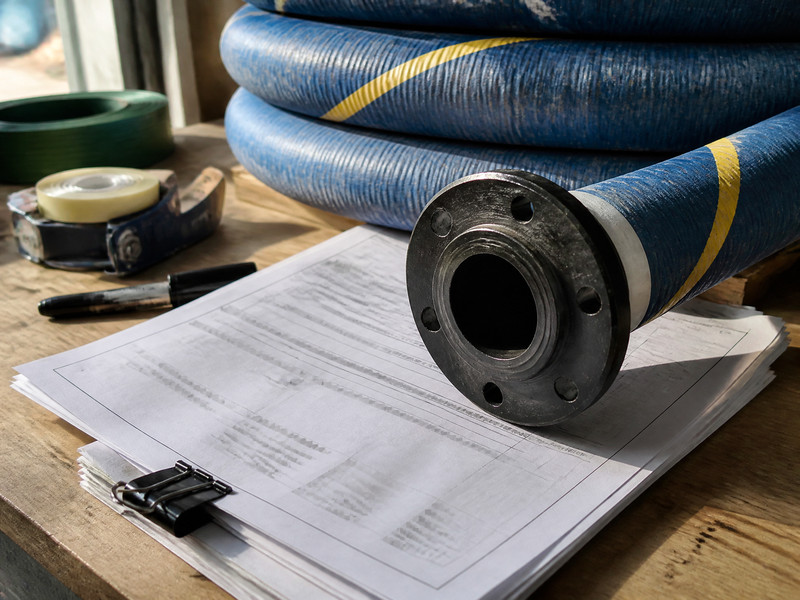
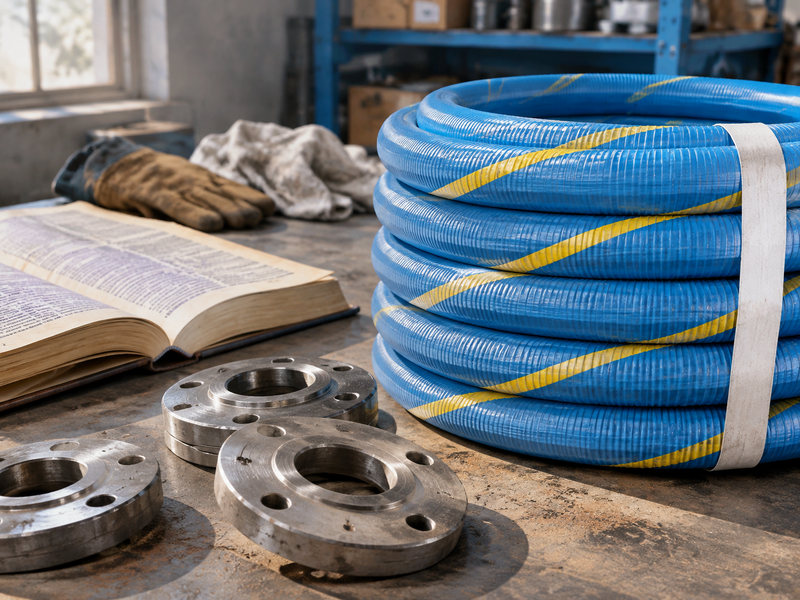
Figure 1. Export documents on a bench with coils of composite hose behind them, waiting to be described for customs.
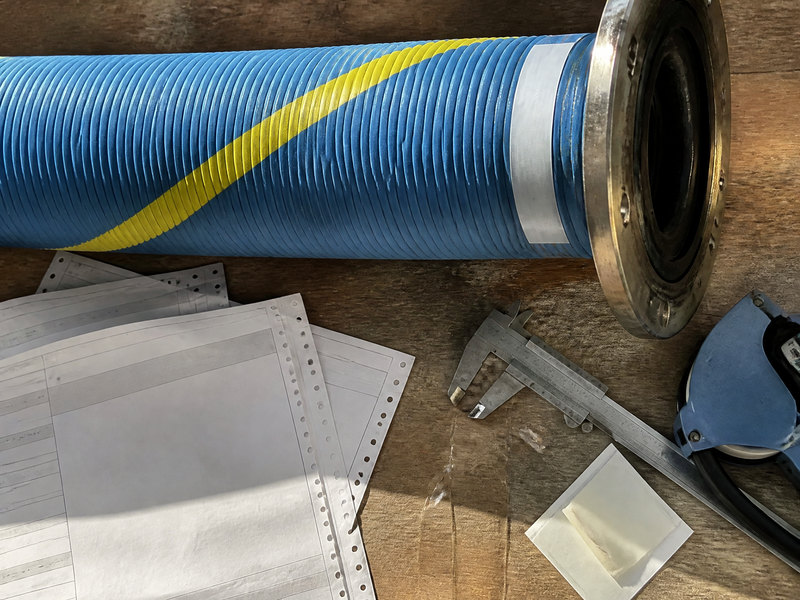
Figure 2. Paperwork and a hose end on the same bench, with calipers for the wall thickness: a customs line is built from material, fittings and bore, all three visible here. The heading table in this section sets out which combination falls where.
Why Does the Composite Hose HS Code Start in Chapter 39?
Because the product is defined by its wall material. A composite hose is built from thermoplastic films and fabrics that are bonded into a wall without vulcanisation, and thermoplastic materials sit in Chapter 39. A rubber hose, by contrast, is made from vulcanised rubber and sits in Chapter 40 under heading 4009.
The Harmonized System classifies goods by objective characteristics, and for hose the decisive characteristic is the material of the tube. A composite hose has no cured rubber tube, so the Chapter 40 heading does not apply even when the cover feels like rubber and the product is sold alongside rubber hose.
That is the first thing a customs officer will test, and it is the reason a customs classification of hose begins with the datasheet rather than the product name. If the technical datasheet says “thermoplastic multi-layer, non-vulcanised”, the classification starts at 3917. If the datasheet says “rubber”, it starts at 4009. A datasheet that says both, or neither, is the usual cause of a query.
Which Subheadings Apply?
| Heading or subheading | Scope | When it fits a composite hose |
|---|---|---|
| 3917.31 | Flexible plastic hose with a minimum burst pressure of 27.6 MPa (276 bar) | Rarely; composite hose ratings sit far below this threshold |
| 3917.32 | Plastic hose, not reinforced, without fittings | Not applicable to a multilayer reinforced wall |
| 3917.33 | Plastic hose, reinforced, with fittings | Assemblies supplied with flanges, camlocks or crimped ends |
| 3917.39 | Plastic hose, reinforced, without fittings | Bulk hose cut to length and shipped loose |
| 4009 | Vulcanised rubber hose, with or without fittings | Only where the tube is rubber, not thermoplastic film |
| 8307 | Flexible tubing of base metal | Metal hose, not composite hose |
| 5909 | Textile hosepiping and similar textile tubing | Textile ducting, not a lined pressure hose |
Table 1. Headings that appear in composite hose enquiries, and the condition under which each applies. The composite hose HS code normally resolves to 3917.33 or 3917.39; national tariff lines add digits after the six-digit level.
The practical split inside the composite hose HS code is fittings. A hose supplied as an assembly, with flanges bolted on or ends crimped and tested, is described as reinforced with fittings and moves to 3917.33. The same hose shipped as a coil without ends falls to 3917.39. That difference is not cosmetic: the two lines can carry different duty rates in some markets.
The HS code 3917 grouping is where most questions land. Within it, the HS code 3917.31 line is closed to this product family, and the 27.6 MPa threshold is worth stating plainly. It equals 276 bar, far above any composite hose rating, so the subheading is effectively closed to this product family. An importer who declares 3917.31 because the hose “looks flexible” has chosen a line that does not describe the goods.
Does the Steel Helix Change the Chapter?
No, and this is the question that produces the most debate when a buyer asks for the HS code for hose and is offered a metal hose line instead. A composite hose contains a stainless or coated carbon steel helix, and a metal helix is a metal article. The helix is a component inside a plastic wall, not the body of the hose, so it does not move the product into a base metal heading.
Heading 8307 covers flexible tubing of base metal, which describes corrugated stainless hose, not a thermoplastic hose with a wire spiral inside it. The distinction is structural: in a metal hose the metal is the pressure-containing wall, while in a composite hose the plastic film contains the product and the wire supports the bore.
Where a product genuinely combines metal and plastic with no clear essential character, the classification becomes a judgment call and a binding ruling is the right route. For standard composite hose the character is clear, and the plastic heading applies.
What Else Can Change the Composite Hose HS Code?
Four things move a declaration off the straightforward line. The first is the material of the tube. A rubber-lined product, or a hose with a rubber tube under a thermoplastic cover, has to be tested against heading 4009 rather than assumed into 3917.
The second is the fitting arrangement. A hose supplied with flanges is an assembly with fittings, while a hose supplied with loose couplings in a separate bag may be declared differently. Describe what is actually packed, not what is planned for later.
The third is the length and presentation. Bulk coils cut to length, assemblies tested and tagged, and hose supplied with a reel all describe different goods, and a declaration that says “hose” covers none of them precisely.
The fourth is a mixed consignment. Hose, gaskets, clamps and a coupling set cannot share one line, and splitting the invoice by product is the clean solution. A customs classification that ignores the mix creates a query at the border.
None of these points requires tariff expertise. Each one moves the composite hose HS code only when the description supports it. That is why the invoice wording deserves a second look before the first shipment rather than after a query. What they require is a description that matches the physical shipment, which is a documentation habit rather than a legal one.
How Do You Confirm a Composite Hose HS Code?
Three routes exist, in increasing order of certainty. The first is the technical datasheet, read against the heading text. The second is a written opinion from your customs broker, which is fast and usually free but is not binding. The third is an advance ruling from the customs authority in the country of import, which is binding for the goods and facts described.
An advance ruling takes time and needs a precise description: material, construction, reinforcement, fittings, bore, pressure rating and intended use. It is worth the effort for a repeat shipment programme, because it removes the argument at the border for every later consignment.
For one-off shipments the broker route is usually enough. Give the broker the datasheet, not a marketing page, and ask for the reasoning in writing so the file can answer a later query.

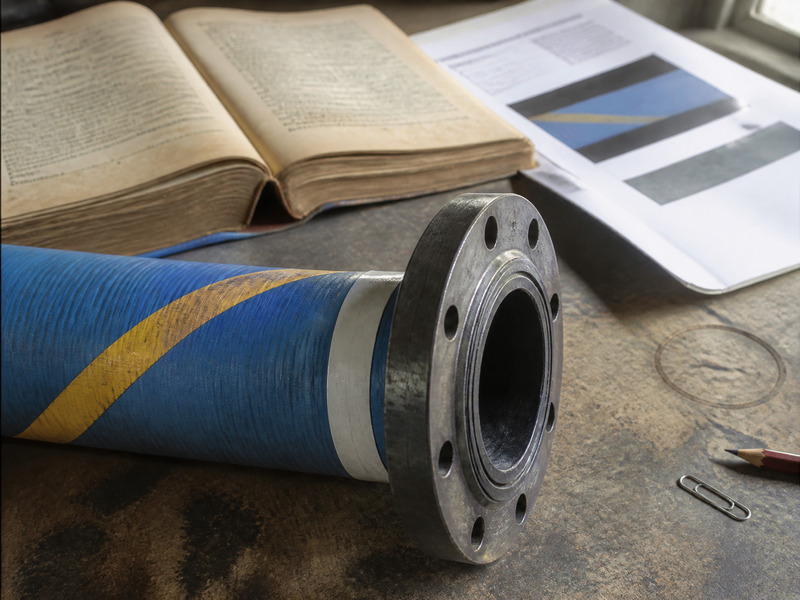
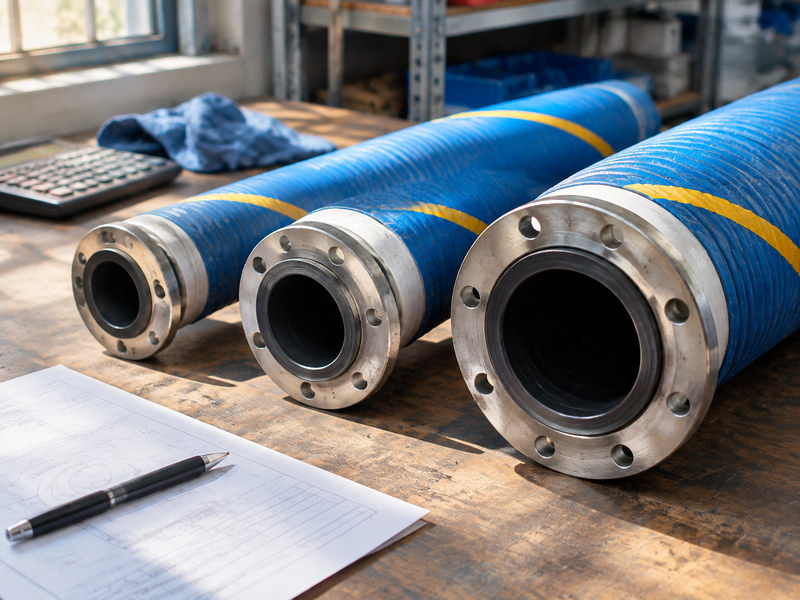
Figure 3. A flanged end resting on the invoice that describes it: the wording above the code is what a customs officer reads first. The field order that survives a query is in Table 2, and the code follows from the description rather than the reverse.
What Should the Invoice Say?
| Invoice element | What to write | Why it matters |
|---|---|---|
| Descrição | Thermoplastic multi-layer hose, non-vulcanised, reinforced, with flanges, bore 50 mm, working pressure 14 bar | Matches the heading text and the subheading condition |
| Material | Polypropylene liner, polyester fabric, stainless steel helix | Separates the product from rubber hose |
| Fittings | Fixed and floating flanges, EN 1092-1 PN16 | Supports the “with fittings” element |
| Use | Chemical transfer at a terminal | Consistent with the technical description |
| Origem | Country of manufacture with the basis stated | Needed for duty and trade measures |
| Quantity | Metres and number of assemblies, stated separately | Avoids unit confusion on hose lines |
Table 2. Invoice wording that supports the declared code. Consistency between invoice, packing list and datasheet is what a query tests.
The invoice is not a technical document, but it is the one customs reads first. A forwarder will often ask for the HS code for hose on the packing list before the goods leave, so agree the wording early. Keep the same sentence in every document, because a differently worded packing list is read as a different product. A description that says “hose” and nothing else invites a request for information, and the request costs days even when the answer is straightforward.
Two habits help. Describe the product the way the heading describes it, using the words “plastic” or “thermoplastic” and stating whether fittings are included. Keep the description identical across the invoice, the packing list and the certificate of origin, because differences between documents are treated as inconsistencies, not as detail.
What Goes Wrong at Customs?
The most common error is a code copied from a competitor or an old shipment. It usually starts with somebody asking a supplier for the HS code for hose and receiving a line that describes a different product. A rubber hose supplier’s code may sit in Chapter 40, and copying it produces a declaration that contradicts the datasheet. The second error is declaring an assembly as bulk hose, or the reverse, which changes the subheading and sometimes the duty.
The third error is a description that mixes products, which is where a customs classification file earns its keep: one product, one description, one code. A shipment containing hose with flanges, spare gaskets and a pump accessory cannot be described by one line, and splitting the invoice by product is the clean fix.
The fourth is assuming the code decides compliance. It does not. Pressure equipment rules, chemical import controls and electrical requirements are separate questions, and a correct tariff line says nothing about them.
Does the Code Affect Duty and Market Access?
Yes, in ways that go beyond the rate. The tariff line drives the duty rate, any anti-dumping or safeguard measure that applies to that line, and the licence or certification requirements a country attaches to it. Two importers of the same hose can face different treatment because they declared different lines.
Rates change, and trade measures change faster. That is why this article does not quote duty percentages: they date quickly and depend on origin, destination and the agreement in force. Confirm the rate with a broker at the time of shipment, and confirm that no measure applies to the line you have chosen.
A customs classification review once a year is enough for most importers, and it should be diarised rather than triggered by a query. For a repeat programme, keep a one-page classification file per product: datasheet, invoice description, code, ruling reference if any, and the broker’s note. It takes an hour to build and saves a week when a new forwarder asks the same question.
Frequently Asked Questions
What HS code is used for composite hose?
Heading 3917, with 3917.33 for reinforced hose supplied with fittings and 3917.39 for reinforced hose without fittings. The trade name does not appear in the tariff; the material and fittings decide the line.
Is composite hose classified as rubber hose?
No. Composite hose is a thermoplastic multi-layer product, and rubber hose sits in heading 4009. Declaring a composite hose under 4009 contradicts its own datasheet.
Does 3917.31 ever apply?
Only where the hose has a minimum burst pressure of 27.6 MPa, which equals 276 bar. Composite hose ratings are far below that, so this subheading effectively does not apply.
Which composite hose HS code applies to assemblies with flanges?
3917.33, because the hose is reinforced and supplied with fittings. A coil of the same hose without ends falls to 3917.39.
Does the steel helix change the classification?
No. The helix is a component inside a plastic wall, not the pressure-containing body. Heading 8307 describes metal hose, where the metal itself carries the product.
Can I use my supplier’s HS code?
You can use it as a starting point, then verify it against the datasheet. A supplier code may describe a different construction, a different fitting arrangement or a rubber product. Ask for the description that sits behind the number, not only the number itself, and compare it with the goods on the packing list.
How do I get certainty before shipping?
Ask for an advance ruling from the customs authority in the importing country, with a full technical description. It is binding for the goods and facts described and removes the argument for repeat shipments.
Does the code cover pressure certification?
No. The tariff line is about classification and duty. Pressure equipment rules, marking requirements and any chemical import controls are separate and have to be checked independently.
About HENGHUA
HENGHUA supplies composite hose and hose assemblies in UHMWPE, XLPE, polypropylene and PTFE linings. Every order can therefore be described precisely on a customs invoice: material, reinforcement, fittings, bore and pressure. We supply the technical datasheet and the invoice description that a forwarder needs. We also tell buyers which elements to confirm with their own broker rather than presenting a code as settled law. The range is listed in our composite hose product range. The construction detail behind the description sits in the multi-layer build guide, and the standards that shape the datasheet are covered in the EN 13765 type guide and the glossary.
If a shipment needs a datasheet worded for customs, ask through our contact page and we will issue one that matches the goods.

 English
 Spanish
 Portuguese
 French
 German
 Arabic
 Russian
 Indonesian
 Japanese
 Korean