goodheart786@gmail.com

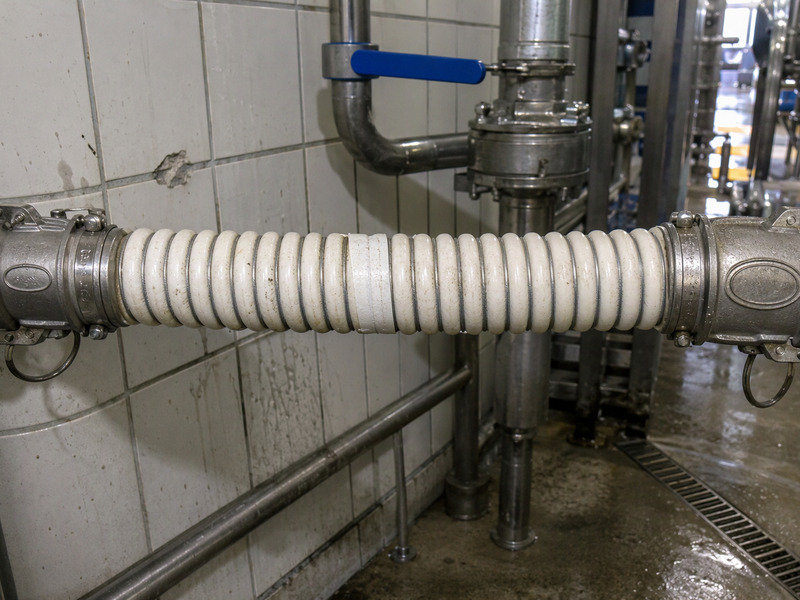
White food grade composite hose with stainless steel camlock coupling on a dairy transfer line

Food Grade Composite Hose: FDA, EU 10/2011 and 3-A Requirements

A food grade composite hose is a hose whose wetted lining is made from food-contact-approved material and can be documented as such. In practice that means a polypropylene, UHMWPE or PTFE liner supported by a written declaration of compliance, not a white cover. FDA rules, EU 10/2011 and 3-A sanitary standards each ask a different

Food Grade Composite Hose: FDA, EU 10/2011 and 3-A Requirements Leia mais »
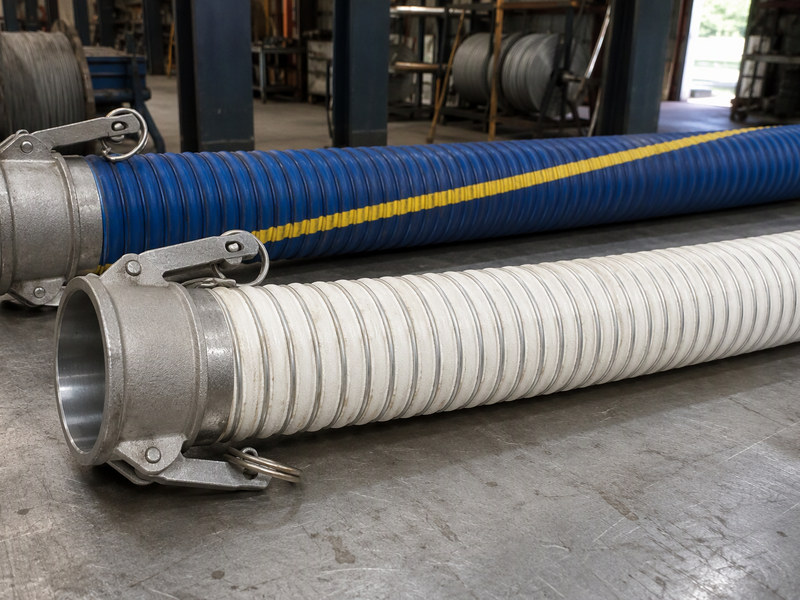
White food grade composite hose beside a blue chemical composite hose on a stainless steel bench

Food Grade Hose vs Standard Chemical Hose: What Actually Differs

A food grade vs chemical hose comparison comes down to one layer. The food version carries a liner approved for food contact with migration data behind it. The standard chemical version carries a liner chosen for resistance and cost. Both may look identical from outside, and both may handle the same product for a week.

Food Grade Hose vs Standard Chemical Hose: What Actually Differs Leia mais »

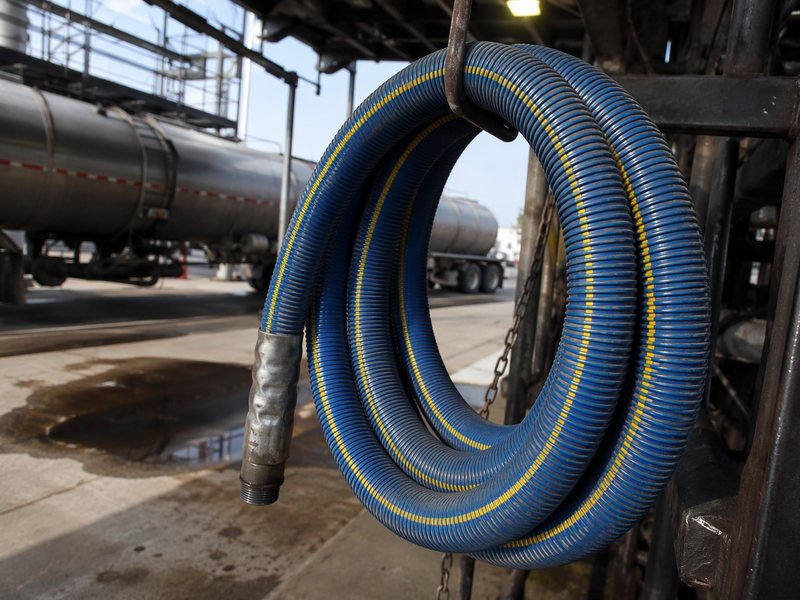
Coiled composite hose on a fuel terminal rack with a tanker in the background

Hydrocarbon Composite Hose: Aromatic Content and Lining Choice

A hydrocarbon hose fails on the lining long before it fails on the reinforcement. Aromatic content is the variable that decides which lining survives, because benzene, toluene and xylene swell polyolefins and pass through them faster than aliphatic streams do. The same hose that handles diesel for years can soften in weeks on a high-aromatic

Hydrocarbon Composite Hose: Aromatic Content and Lining Choice Leia mais »

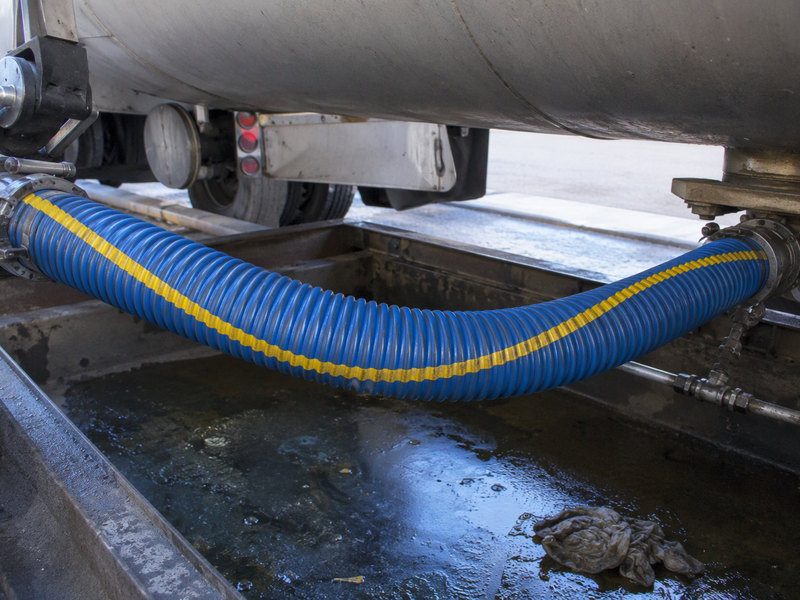
Bottom loading arm with a composite hose connected to a tanker manifold at a terminal

Tank Truck Composite Hose: Bottom Loading vs Top Loading

A tank truck hose is specified by the loading method before anything else. Bottom loading runs product into the tank through a manifold, keeps the arm low, returns vapour through a second line and treats the hose as a short, supported pressure connection. Top loading drops product through an open hatch, which needs a longer

Tank Truck Composite Hose: Bottom Loading vs Top Loading Leia mais »

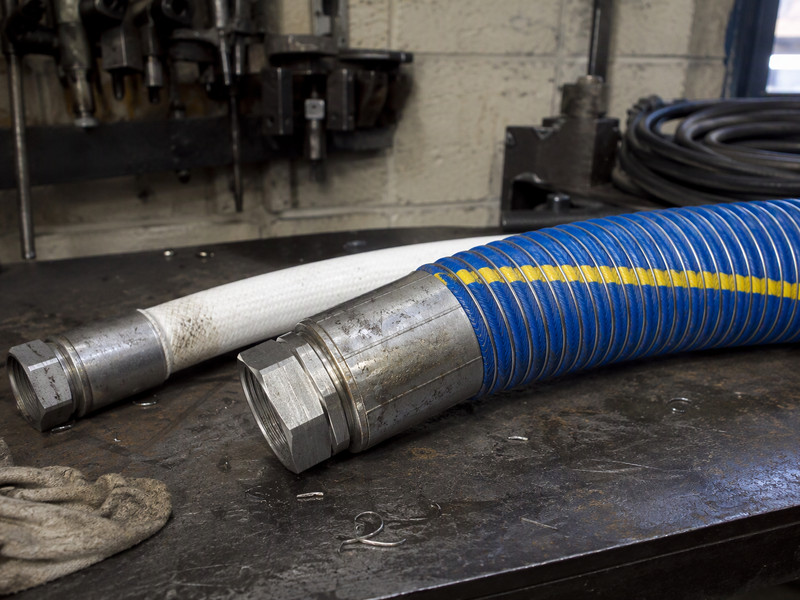
White PTFE lined hose and multilayer composite hose side by side on a workshop bench

Composite Hose vs PTFE Hose: Construction, Permeation and Cost

A composite hose vs ptfe hose choice is not a choice between good and better. Both use fluoropolymer where chemistry demands it, and both can carry the same solvent. The difference is where the PTFE sits: a composite build uses a thin PTFE film inside a multilayer wall with a wire helix, while a smooth-bore

Composite Hose vs PTFE Hose: Construction, Permeation and Cost Leia mais »

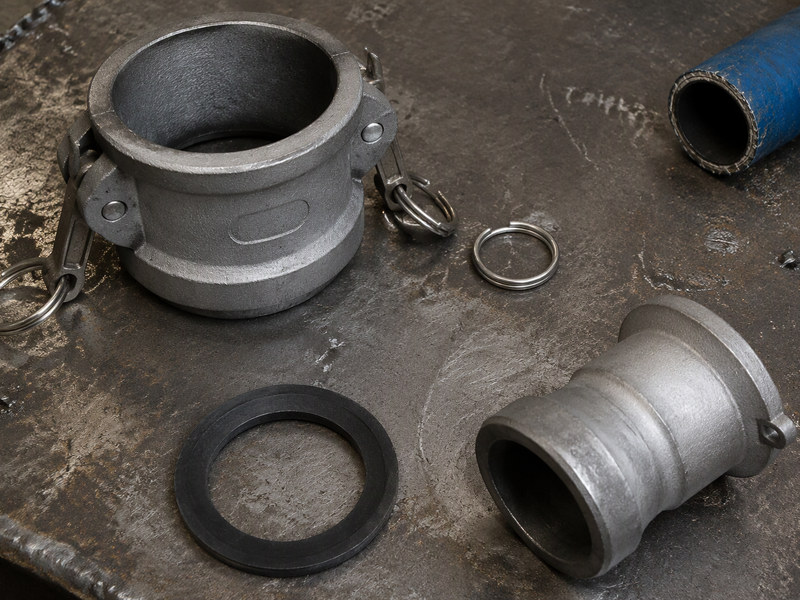
Stainless steel camlock type C coupler, type E adapter and gasket laid out on a workshop bench

Camlock Fittings for Composite Hose: Type A to F Explained

Camlock fittings are the quick-disconnect couplings that let an operator connect or release a hose in seconds without tools. The family of camlock fittings has six working types, and each one exists to solve a specific connection problem: thread to hose, hose to hose, or hose to a mating half on a tank. Choosing the

Camlock Fittings for Composite Hose: Type A to F Explained Leia mais »

Two tagged composite hoses on a bench with a clipboard beside them

Composite Hose Cross-Reference: Novaflex, Titeflex and Peraflex Part Numbers

A composite hose cross-reference is a mapping between two suppliers’ part numbers built on six attributes: bore, type, working pressure, temperature range, liner and end connections. Without all six, a cross-reference is a guess with a part number attached. With them, it is a purchasing document that can be checked before an order is placed.

Composite Hose Cross-Reference: Novaflex, Titeflex and Peraflex Part Numbers Leia mais »

A closed datasheet folder beside a hose offcut and digital calipers on a steel desk

Composite Hose Datasheet: What a Real One Contains

A composite hose datasheet is a one or two page document that lets a buyer decide, without calling anyone, whether a hose suits a duty. A real one carries twelve fields: type, bore, pressure at temperature, vacuum rating, temperature range, liner grade, helix material, end fitting, assembly rating, marking, test record and the standard it

Composite Hose Datasheet: What a Real One Contains Leia mais »

Coiled composite hoses on wall brackets in a workshop store

Composite Hose Specification Database: Every Type, Bore and Pressure

A composite hose table reduces to four columns, and the specifications reduce to the values in them: type, bore, pressure and temperature. Everything else in a catalogue is a variant of those four. A database built on them can answer a tender question in a minute and can be quoted without the risk of mixing

Composite Hose Specification Database: Every Type, Bore and Pressure Leia mais »

Stack of standards documents beside a coiled composite hose on a bench

Composite Hose Standards Map: EN 13765, BS 5842, USCG and EN 1474-2

Composite hose standards divide by duty, not by product. EN 13765 governs thermoplastic multilayer hose for hydrocarbons, solvents and chemicals. BS 5842 is the withdrawn British specification that still appears in legacy tenders. USCG 33 CFR 154.500 sets marking and design rules for transfer hose at US terminals. EN 1474-2 covers LNG transfer, which EN

Composite Hose Standards Map: EN 13765, BS 5842, USCG and EN 1474-2 Leia mais »