
Four field conditions settle a steam hose by application: saturated or superheated steam, the working pressure and temperature pair, the bore, and the cover. The pair decides the class: ISO 6134 Type 1 at 6 bar and 164 °C, Type 2 at 18 bar and 210 °C. All nine duties share a pierced outer cover, sold as pin-pricked or perforated, so steam crossing the wall escapes instead of lifting it. This reference groups steam hose types by job rather than material; each section fixes the bore, the cover compound, and the failure that appears first.
About a 15-minute read at 250 words per minute; the tables are the fastest route if you only need a comparison.
How This Steam Hose by Application Reference Is Organized
Nine steam hose applications cover almost every steam duty in industry, from shipyards and chemical plants to food, cleaning, tank farms, vulcanization, concrete, boiler blowdown, and de-icing. Table 1 sets out all nine against the same steam type, pressure and temperature, bore, and cover, so unlike jobs can be compared on one page. Because the grouping is by job, two duties that share the same tube compound can still sit in different rows.
The matrix below is a starting point, not a specification. Use it to narrow steam hose types to two or three candidates, then confirm the pressure and temperature pair against the standard that governs your site. The class and the cover rarely move: the pair decides the class, and the pierced cover applies to every row. Where one duty spans two rows, this application guide takes the harsher cover and the larger bore.
Table 1. Application overview for steam hose duty
| Candidatura | Steam type | Typical pressure and temperature | Diâmetro interior típico | Cover requirement |
|---|---|---|---|---|
| Shipyards and marine work | Saturated | 6 bar at 164 °C up to 18 bar at 210 °C | 1/2 in to 1 in | Pin-pricked, abrasion-resistant cover |
| Chemical and petrochemical plants | Saturated, some superheated | 6 bar at 164 °C to 18 bar at 210 °C | 3/4 in to 2 in | Pin-pricked, chemical-resistant cover |
| Food and beverage plants | Saturated | 6 bar at 164 °C | 1/2 in to 1 in | Pin-pricked, smooth washdown cover |
| Cleaning contractors and washdown | Saturated, short superheated pulses | 6 bar at 164 °C to 18 bar at 210 °C | 1/2 in to 3/4 in | Pin-pricked, oil and detergent resistant |
| Tank farms and terminals | Saturated | 6 bar at 164 °C | 3/4 in to 1.5 in | Pin-pricked, weather and ozone resistant |
| Rubber vulcanization and tire plants | Saturated | Up to 18 bar at 210 °C | 1/2 in to 1 in | Pin-pricked, heat resistant cover |
| Concrete curing and asphalt work | Saturated | 6 bar at 164 °C | 3/4 in to 1.5 in | Pin-pricked, abrasion and crushing resistant |
| Power plants and boiler blowdown | Saturated | 18 bar at 210 °C | 1 in to 2 in | Pin-pricked, continuous heat cover |
| Cold-weather de-icing | Saturated | 6 bar at 164 °C to 18 bar at 210 °C | 1/2 in to 1 in | Pin-pricked cover that flexes at −30 °C |
In practice, most steam hose by application decisions land on one of the two ISO 6134 classes in Table 2. A hose marked to Type 2 carries roughly three times the pressure of a Type 1 hose. The cover marking usually shows the type, the pressure and temperature pair, an electrical grade, and the quarter and year of manufacture.
Table 2. Reference classes and published temperature pairs
| Class or range | Steam type | Pressure | Temperatura |
|---|---|---|---|
| ISO 6134 Type 1 | Saturated | 0.6 MPa (6 bar) | 164 °C |
| ISO 6134 Type 2 | Saturated | 18 bar | 210 °C |
| Published compact range | Saturated | 18 bar (261 psi) | 406 °F (208 °C) |
| Published compact range | Superheated | 17 bar (250 psi) | 450 °F (232 °C) |
| Common published span | Both | Family rating | −30 °C to +164 °C, and −30 °C to +210 °C |
Superheated steam raises the thermal load on every component, so a superheated duty needs a higher temperature class than the same pressure in saturated service. Published steam design factors are commonly 10:1 or 20:1, which puts burst pressure many times above working pressure. That margin is a planning figure for the assembly, not a license to run above the rated class.
Steam Hose by Application in Shipyards and Marine Work
Shipyards use saturated steam for deck and hold cleaning, for tank and line blowdown, and for thawing frozen equipment in winter. Working pressure usually sits between 6 bar at 164 °C and 18 bar at 210 °C, and the bore most often ordered runs from 1/2 in to 1 in. A 1/2 in bore is about 13 mm, and 1 in is 25.4 mm.
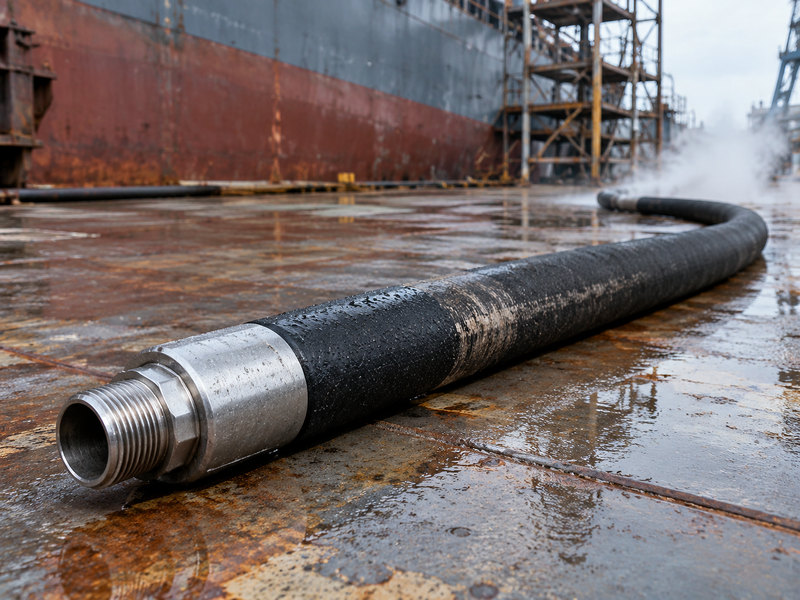
Figure 1. Saturated steam hose rigged for deck cleaning in a shipyard, with the cover exposed to salt spray and abrasion.
The cover decides service life here. Salt spray, ozone, and abrasion against deck edges attack the outer layer before the reinforcement is reached. A pin-pricked cover with good abrasion resistance is the practical minimum, because a worn cover lets salt water reach the braid.
On shipyard duty the failure order for a steam hose by application is predictable. The colored cover scuffs through at the wear line first, then moisture reaches the steel braid, then the assembly weeps at the coupling. Marine buyers who also order water, fuel, and deck hose can compare the full range in this marine hoses and fittings buying guide.
Chemical and Petrochemical Plants
Chemical plants and refineries use steam for tracing, for vessel and reactor cleaning, and for heating tanks and lines. Saturated steam at 6 bar and 164 °C covers most tracing, while cleaning and heating duties run to 18 bar at 210 °C. Some process steps use superheated steam and reach 232 °C, which shortens hose life and demands a higher temperature class. Chemical duty bores usually run from 3/4 in to 2 in so that large volumes of condensate can clear quickly.
A chemical-resistant compound and a pin-pricked cover are both required. Splash from acids, caustics, and solvents degrades a cover chosen only for heat. The cover is the first part to suffer when the site exposure is ignored.

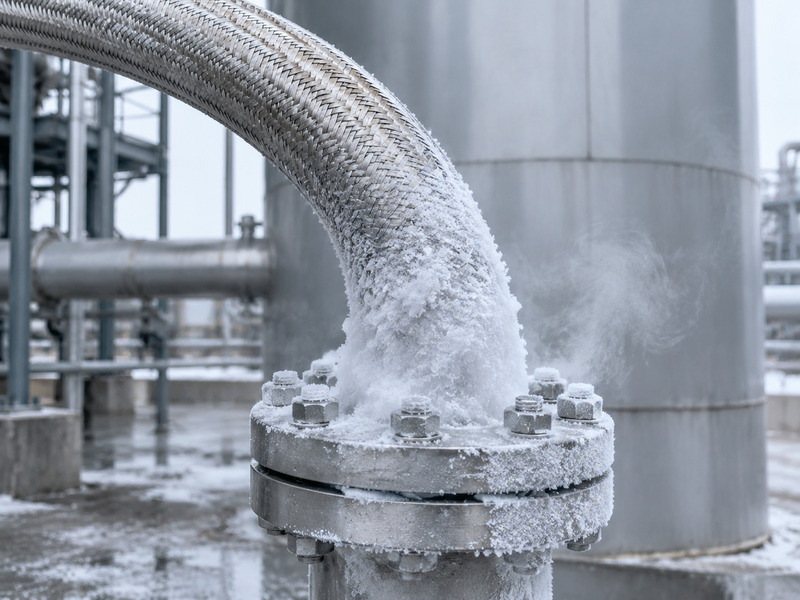
Figure 2. Steam tracing lines and a heated tank manifold in a chemical plant, where splash and condensate decide cover life.
In chemical service, a steam hose by application choice fails first at the ends, where condensate hammer and repeated thermal cycling loosen the attachment. A steam hose selection note for shipyards and chemical plants covers site conditions in more depth (planned URL — publish before linking). Chemical service also has its own families, and the chemical hose range shows how their compounds and covers differ from a steam build.
Food and Beverage Plants
Food and beverage plants use saturated steam at 6 bar and 164 °C for cooking, pasteurizing, and indirect heating. Food plant bores run from 1/2 in to 1 in, and the hose is usually short, so flexibility matters more than flow. The cover must be pin-pricked, and the outer surface is kept smooth so that washdown removes soil rather than spreading it.
Of all the steam hose applications, this one is most often confused with a hot water duty. A hot water hose ships with a plain, unperforated cover and a published planning figure near 20 bar at +95 °C, far below steam temperature. The steam hose versus hot water hose comparison sets out the construction differences (planned URL — publish before linking).
Failure here is usually mechanical rather than thermal: a kink at a tight bend, cover scuffing where the hose drags, and cracking at the coupling after repeated coiling. The food and beverage hose category lists the sanitary families that sit alongside the steam line.
Cleaning Contractors and Washdown Duty
Contract cleaning crews and in-plant washdown teams use saturated steam for degreasing and for sanitizing surfaces, and some steam cleaners run a short superheated pulse. Steam pressure on cleaning duty usually sits between 6 bar and 18 bar, with temperature following from 164 °C to 210 °C. The common bores are 1/2 in and 3/4 in, because a smaller bore keeps the hose light enough for one operator to handle all day.
Cover choice is the whole story in this duty. Oils, detergents, and hot water run over the outside of the hose while steam runs inside it, so the cover needs resistance to both. A wet cover hides solvent attack until the compound has softened, so inspect it dry.
Failure shows up as a swollen or shiny cover where solvent has penetrated, followed by cracking when the hose is flexed cold. Steam duty takes crimped or factory-fitted ends, because the assembly rating is only as high as the connection. A universal quick-acting coupling sits outside the ratings that apply to steam. Working pressure versus burst pressure explains why the gap matters.
Tank Farms, Terminals, and Bulk Liquid Heating
Tank farms and terminals use steam for line tracing, for heating viscous product in tanks through coils, and for thawing frozen lines in winter. Saturated steam at 6 bar and 164 °C is the usual condition. The large volumes involved push bores to 3/4 in, 1 in, and 1.5 in.
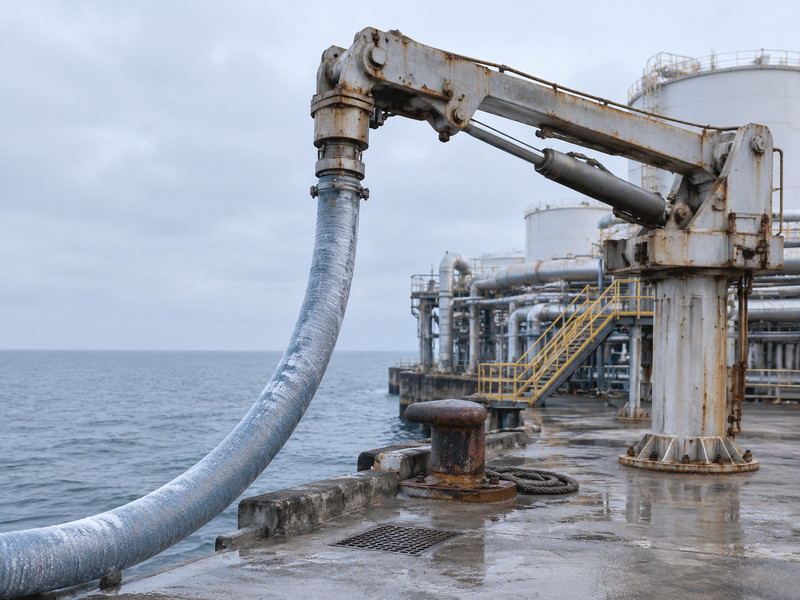
These steam hose types face weather rather than heat on the outside. Ozone, sunlight, and freeze-thaw cycles age a cover faster than the duty inside would, so a weather-resistant, pin-pricked cover is standard. Inspect that cover at every shutdown rather than waiting for a leak at the coupling.
Tank farm hose fails from condensate, and this application guide gives the duty its own row. Left charged and then cooled, a long hose collects liquid at its low point, and the next start drives the slug into the tube at speed. The result is popcorning at the bore and, on a bad day, a coupling blown clear. Drain after every use and the failure largely disappears.
Rubber Vulcanization, Tire Plants, Concrete, and Asphalt
Rubber Vulcanization and Tire Plants
Vulcanization presses and tire curing equipment run saturated steam up to 18 bar at 210 °C, and the hose has to hold that condition through long shifts. Press hose bores sit between 1/2 in and 1 in. Short runs are common because the hose is a flexible link between a fixed header and a moving press.
Heat resistance is the cover requirement. A compound that survives 164 °C may stiffen at 210 °C, so the temperature class must match the press rather than the plant average. Failure appears as a hard, cracked cover and as loose reinforcement, and it usually arrives first on the press that cycles most often.
Concrete Curing and Asphalt Work
Concrete curing and asphalt work use saturated steam at 6 bar and 164 °C to accelerate cure and to keep mix warm. Curing hose bores run from 3/4 in to 1.5 in. The cover needs abrasion and crushing resistance, because the hose is dragged over aggregate and run over by plant.
Failure is physical: cover cuts from sharp stone, flattening at a kink, and steam leaks at the point where the cover has worn through to the braid. A pin-pricked cover is still required, and the pinholes must be kept clear of mud and grit.
Power Plants, Boiler Blowdown, and Cold-Weather De-Icing
Power Plant Boiler Blowdown
Boiler blowdown and soot blowing use saturated steam at 18 bar and 210 °C. Blowdown bores are larger, from 1 in to 2 in, to move a high flow of steam and condensate in a short time. The cover must be pin-pricked and rated for continuous heat.
Failure in this duty is driven by water hammer. Condensate slugs accelerate through the bore and strike elbows and couplings, so the damage appears at the ends of the hose rather than in the middle. Support the hose on the straight run and keep the ends free of sharp bends.
Cold-Weather De-Icing
De-icing and thawing work uses saturated steam between 6 bar and 18 bar, and the bore usually runs from 1/2 in to 1 in. The cover requirement is unusual: it must stay flexible at low temperature. A common published span is −30 °C to +164 °C for one class and −30 °C to +210 °C for a higher class.
Failure shows up in two ways. A cold cover can crack when it is bent before the steam has warmed it. A hose that is shut down wet can freeze at the low point, so that the ice plug drives condensate into the tube on the next start. Drain after use, and coil the hose loosely in freezing weather.

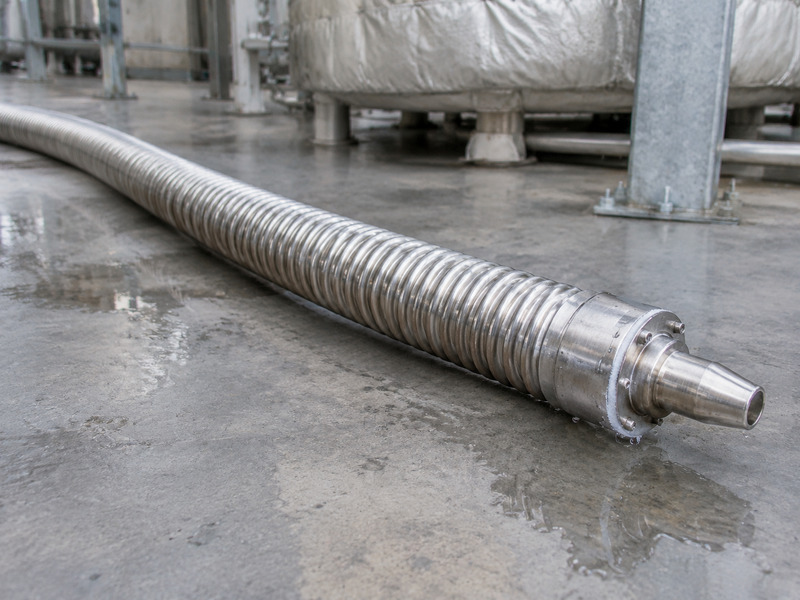
Figure 3. A steam hose drained and coiled open on a rack after a shift, the practice that prevents tube popcorning.
Steam Hose by Application: Decision Table and Supplier Brief
Table 3 reduces the nine steam hose applications to a single decision row each, and Table 4 records the failure each duty shows first. Use this application guide to fix the steam type, the bore, and the cover, then confirm the pressure and temperature against the standard you are working to. A steam hose by application choice is only as good as the brief behind it.
Table 3. Decision table for common steam duties
| Condition on site | Recommended choice | Reason |
|---|---|---|
| Saturated steam up to 164 °C | ISO 6134 Type 1 class hose | Matches the standard low-pressure class |
| Saturated steam near 210 °C | ISO 6134 Type 2 class hose | Matches the standard high-pressure class |
| Superheated steam | Higher temperature class than the saturated pressure would need | Superheated steam imposes a greater thermal load |
| High condensate flow | 1 in to 2 in bore | A larger bore clears slugs faster |
| Icy or wet outer surface | Pin-pricked cover rated to low temperature | The cover must vent and still flex |
| Salt, oil, or chemical splash | Cover with the matching resistance | The cover fails before the reinforcement |
Table 4. Failure that shows up first, by application
| Candidatura | First failure in service | Causa |
|---|---|---|
| Shipyards | Cover scuffed through at the wear line | Deck abrasion and salt spray |
| Chemical and petrochemical | Coupling loosened by hammer | Condensate hammer and thermal cycling |
| Food and beverage | Kink at a tight bend | Coiling and repeated short runs |
| Cleaning and washdown | Swollen or shiny cover | Oil and detergent attack |
| Tank farms | Popcorning at the bore | Condensate left in a cooled hose |
| Vulcanization and tire | Hard, cracked cover | Continuous heat at 210 °C |
| Concrete and asphalt | Cover cut by aggregate | Dragging and run-over damage |
| Power and boiler blowdown | Failure at the coupling end | Water hammer |
| Cold-weather de-icing | Cracked cover when flexed cold | Low temperature and ice plugs |
How to Brief a Supplier
A short brief saves a long argument. The seven fields in Table 5 are the whole list. A supplier who has all seven can quote a hose that matches the class instead of a hose that merely looks similar.
Table 5. Supplier brief checklist
| Field to state | What to write | Why it matters |
|---|---|---|
| Steam type | Saturated or superheated | Superheated needs a higher temperature class |
| Pressure and temperature | The working pair, such as 18 bar at 210 °C | The pair, not the pressure alone, sets the class |
| Bore and length | For example, 3/4 in bore in a single length | Bore sets flow and weight; length sets pressure drop |
| Ligação | Coupling type and size | A clamped end can reduce assembly working pressure |
| Capa | Pin-pricked, with the site exposure | Cover venting and resistance decide service life |
| Duty cycle | Continuous or intermittent | Intermittent steam still raises the thermal load |
| Padrão | The ISO 6134 class if it applies | Gives both sides one shared reference |
Most steam hose problems are settled before the order, not after it: the steam type, the pressure and temperature pair, the bore, and the cover belong in the purchase order. Then confirm the assembly rating after the couplings are fitted, not the hose rating alone. For help matching a hose to a duty, request a quote and free samples.
Steam Hose by Application FAQs
Which steam hose class do I need for saturated steam at 18 bar?
Saturated steam at 18 bar sits at 210 °C, which is the ISO 6134 Type 2 condition. A Type 2 hose is rated 18 bar at 210 °C, so the class matches the duty directly. Check the cover marking for the type, the pressure and temperature pair, and the electrical grade before you accept the delivery.
How do I choose the bore for a steam hose by application?
Bore follows flow, not pressure. Short cleaning runs with one operator usually take 1/2 in or 3/4 in, because a light hose is handled more safely. Boiler blowdown and tank heating, where a large volume of condensate must clear quickly, move up to 1 in or 2 in. A larger bore also adds weight and reduces flexibility.
Why must a steam hose be drained after every use?
Residual condensate is the most common cause of early failure. When a charged hose cools, liquid collects at the low point, and the next startup drives it along the bore at speed. That impact causes popcorning, the internal blistering that separates the tube from the reinforcement. Drain the hose after every shift, and store it coiled and open.
What cover do steam hose applications require?
Every steam duty needs a perforated or pin-pricked cover. The pinholes let steam that has migrated through the tube and reinforcement escape, which prevents the cover from blistering and delaminating. A plain cover that suits hot water will trap that steam. Beyond venting, the cover compound has to match the site exposure, such as salt, oil, chemical splash, or abrasion.
Can a single steam hose cover both shipyards and food plants?
No single hose suits both without compromise. A shipyard duty rewards abrasion and salt resistance, while a food plant rewards a smooth, easily cleaned surface and a separate food-grade line. The steam type and the ISO 6134 class may be identical, but the cover and the hygiene demands differ. This application guide lists each duty on its own row for that reason. Order two hoses rather than stretching one.
How does superheated steam change the selection?
Superheated steam imposes a greater thermal load on hose materials than saturated steam at the same pressure. A hose that is comfortable at 210 °C in saturated service may not hold at 232 °C in superheated service. Move up to a higher temperature class, and expect a shorter service life. Confirm the published superheated rating rather than assuming the saturated figure covers it.
What pressure and temperature should I quote to a supplier?
Quote the pair, not the pressure alone. A rating such as 18 bar at 210 °C tells the supplier both the class and the thermal duty, while a bare pressure figure does not. Add the steam type, saturated or superheated, the bore, the length, and the intended connections. If your site runs intermittent steam, say so.
Where do steam hose types fail first?
Where a steam hose fails first depends on the duty, and Table 4 sets out the pattern per application. Condensate hammer attacks the ends on blowdown and chemical duty. Abrasion, heat, and repeated flexing attack the cover or the bend on the other six. Leftover condensate attacks the bore in tank farms. Inspect the ends, the cover, and the bore in that order, and expect the failure Table 4 predicts for your duty.
Are hose clamps acceptable on steam service?
A clamped or banded coupling can reduce an assembly’s working pressure below the hose rating. That caution is published in the NAHAD Industrial Hose Assembly Guidelines. A properly crimped or factory-fitted end keeps the assembly rating closer to the hose rating, and the end is part of the pressure boundary on steam duty.
How long should a steam hose last before it needs replacing?
Life depends on duty, not on a calendar. Continuous superheated service shortens life, and a hose that is never drained fails early from popcorning. A hose that is drained, stored dry, and run within its published class can serve well. Track failures by position, because repeated failures at the same coupling point to the assembly rather than the hose.
About HENGHUA
HENGHUA is a hose and fittings manufacturer supplying global distributors, retailers, and OEM brands. The steam line is built as an EPDM or CR inner tube with one or two layers of steel braid, or four to six layers of steel spiral, under a pin-pricked cover. Bore sizes run from 3/8 in to 4 in, which is 10 mm to 102 mm. Saturated steam duty reaches 210 °C and superheated duty reaches 230 °C. A separate food-grade hose line serves beverage and sanitary work.
The plant covers 35,000 m² with 95 production lines and exports to more than 70 countries. Quality systems are ISO 9001, IATF 16949, and ISO 14001, and the in-house laboratory runs ISO 1402 hydrostatic tests and ISO 6803 impulse tests. OEM and ODM programs cover custom lengths to a ±1% length tolerance, branded printing, and private label. Learn more about the company on the about page.
 English
 Spanish
 Portuguese
 French
 German
 Arabic
 Russian
 Indonesian
 Japanese
 Korean