
Fuel Oil Gasoline Dispenser Pump Hose
What is a Fuel Dispenser Hose?
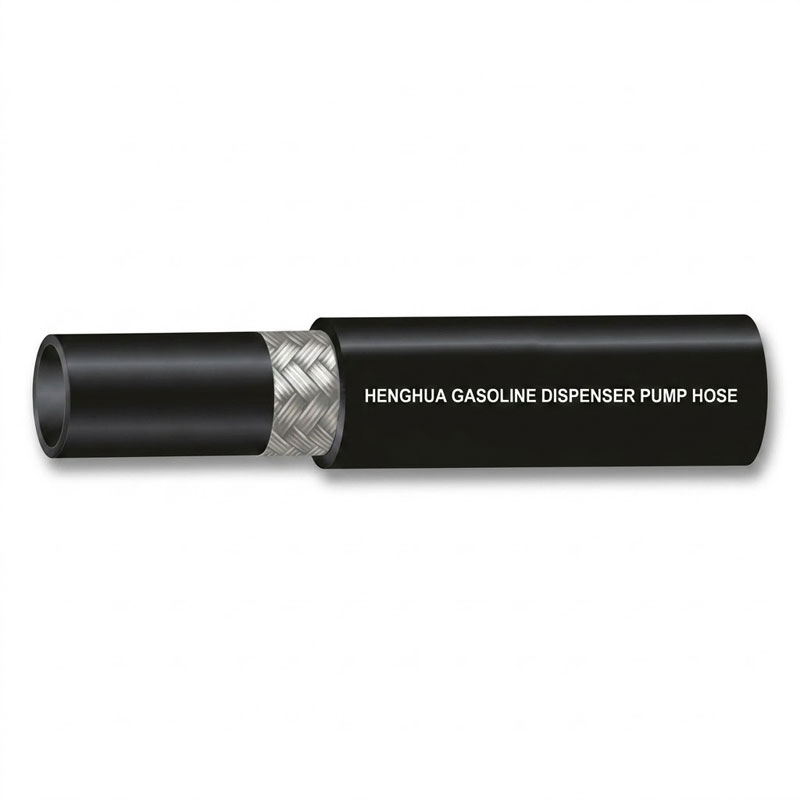
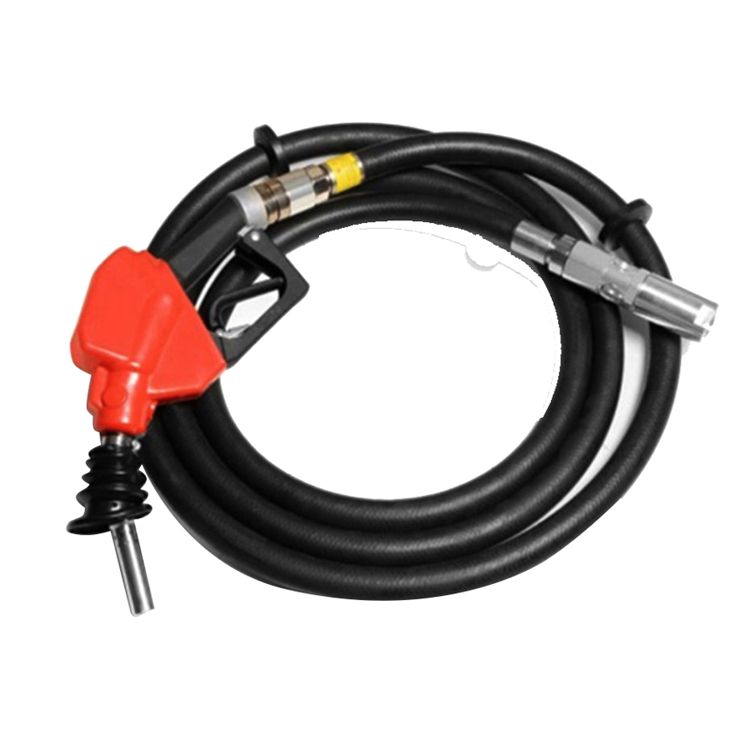
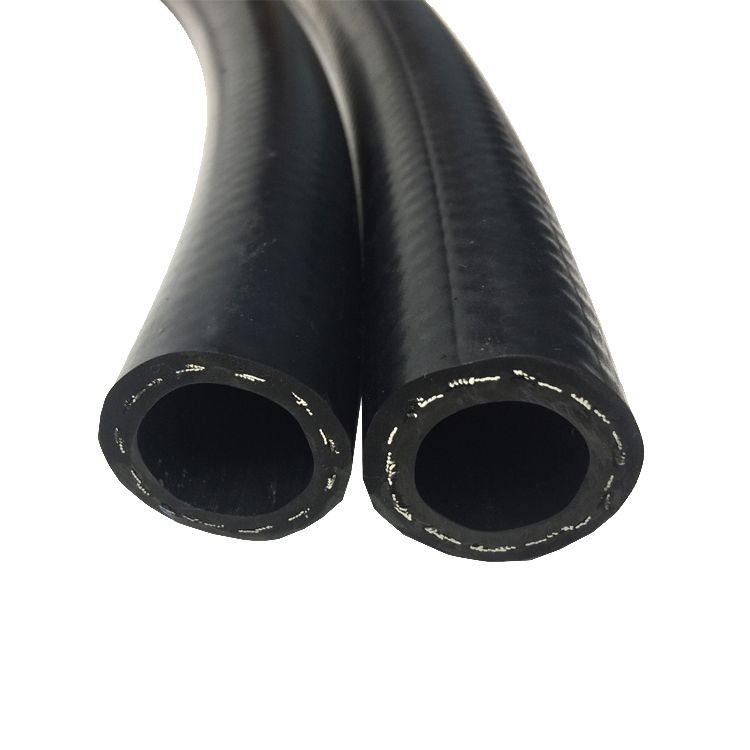
A fuel dispenser hose is an anti-static rubber hose used at gas stations to transfer gasoline, diesel, or aviation fuel from pumps to vehicles. It is typically made with a nitrile inner tube, reinforced layers, and a weather-resistant cover, and must meet standards such as EN 1360 and API 1529 for safety and durability.
Product Overview
A Fuel Oil / Gasoline Dispenser Pump Hose (commonly searched as gas pump hose, diesel fuel hose, or flexible fuel hose) combines three critical layers: a black oil-resistant Nitrile synthetic rubber tube, a middle reinforcement of steel wire or high-strength synthetic fiber braid, and a weather/ozone-resistant Nitrile cover available in multiple colors (black, green, red, blue, yellow). This fuel delivery hose design prevents fuel permeation, dissipates static charge, and withstands constant flexing at dispenser swing arms. For airport applications, a dedicated aviation fuel hose (Jet A, Jet A-1) version is also available.
Key performance parameters include a working pressure of 1.6MPa (16 bar / 232 psi) and a burst pressure of 4.8MPa (48 bar / 696 psi) — a 3:1 safety factor required by EN 1360. Temperature range spans -40°C (-40°F) to 121°C (250°F), suitable for arctic to desert climates. Standard inner diameters (I.D.) are 5/8″, 3/4″, and 1″, with corresponding outer diameters (O.D.) of 25.4mm, 28.7mm, and 35.1mm.
Core advantages: superior oil resistance, static dissipation, color-coded identification, and all-weather flexibility. These features directly solve common field problems like hose swelling, cracking, static shocks, and leaky fittings.
How to Choose the Right Fuel Dispenser Hose
Selecting the correct gas pump hose or diesel fuel hose requires evaluating four key factors:
- Diameter (ID): 5/8″ for standard unleaded/gasoline pumps; 3/4″ for high-flow diesel; 1″ for truck stops or aviation fueling.
- Pressure Rating: Ensure working pressure meets or exceeds dispenser output (16 bar covers 99% of pumps).
- Fuel Type: Standard NBR tube works with gasoline, diesel, kerosene, and E10 (max 10% ethanol). For biodiesel B20+ or high-ethanol blends (E85), request a fluorocarbon-lined flexible fuel hose.
- Climate: Standard -40°C to +121°C covers most regions; arctic or desert extremes may require specialized compounds.
- Fitting Compatibility: Confirm dispenser thread type — NPT (US/Canada), BSP (UK/Asia), BSPT (China/Taiwan), or M34 metric (vapor recovery systems).
Fuel Dispenser Hose vs. Petroleum Hose: What’s the Difference?
| Feature | Fuel Dispenser Hose | General Petroleum Hose |
|---|---|---|
| Primary use | Retail/commercial fuel pumps | Bulk transfer, tank trucks |
| Static dissipation | Mandatory (API 1529) | Optional |
| Flexibility | High (constant flexing) | Moderate |
| Color options | Multiple (black/green/red/blue/yellow) | Usually black |
| Approval standards | EN 1360, API 1529 | ISO 2398, BS 1435 |
| Typical ID | 5/8″ – 1″ | 1″ – 6″ |
Choose a dedicated fuel dispenser hose for gas station fuel hose applications; choose petroleum hose for tank-to-tank or terminal transfer.
Technical Specifications Table
Below is the technical specification of our fuel dispenser hose, including diameter, pressure rating, and weight for different gas pump hose sizes.
| I.D. (inch) | I.D. (mm) | O.D. (mm) | W.P. (bar) | W.P. (psi) | B.P. (bar) | B.P. (psi) | Length (m) | Weight (kg/m) |
|---|---|---|---|---|---|---|---|---|
| 5/8″ | 15.9 | 25.4 | 16 | 232 | 48 | 696 | 160 | 0.59 |
| 3/4″ | 19.1 | 28.7 | 16 | 232 | 48 | 696 | 190 | 0.67 |
| 1″ | 25.4 | 35.1 | 16 | 232 | 48 | 696 | 240 | 0.89 |
Custom lengths and pre-assembled hose assembly available. Request pdf specification for full data.
Structure and Materials
- Tube (Inner Layer): Black, smooth, oil-resistant Nitrile synthetic rubber. Compatible with gasoline, diesel, kerosene, and mineral oils.
- Reinforcement Layer: High-tensile Wire Braided Hose construction (standard) or optional Wire Spiral Hose for heavy-duty impulse applications.
- Cover (Outer Layer): Nitrile synthetic rubber, available in black, green, red, blue, or yellow. Resists ozone, UV, abrasion, and fuel splashes.
- Static Dissipation: Embedded copper wire or conductive rubber compound meeting API 1529.
Wire Braided vs. Wire Spiral for Fuel Dispenser Hoses
- Wire Braided Hose (standard): More flexible, ideal for swing-arm dispensers. Better fatigue resistance.
- Wire Spiral Hose (heavy-duty): Higher burst margin and crush resistance for high-traffic stations or long vertical drops.
Applications (Industries & Equipment)
- Retail gas stations – Primary gas station fuel hose for self-serve and full-serve pumps
- Airport refuelers – Aviation fuel hose for Jet A, Jet A-1 transfer
- Fleet depots – Diesel fuel hose and gasoline for trucks and buses
- Marine fuel docks – Diesel and gasoline bunkering
- Industrial plants – Fuel delivery hose for mineral oil transfer
- Mining & construction – Fueling heavy equipment on remote sites
- Agriculture – Tractor and harvester refueling
Hose Assembly & Fittings Guide
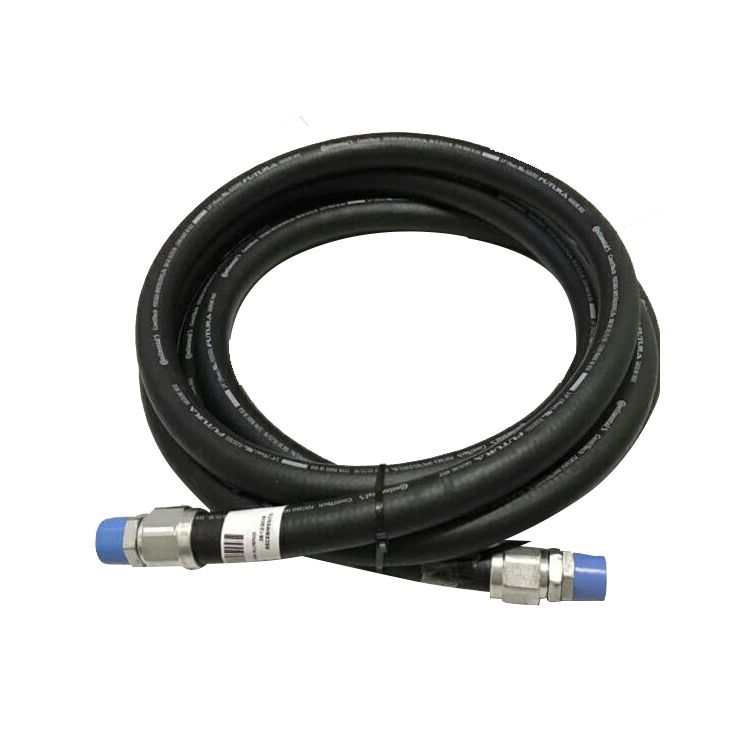
A complete fuel dispenser hose assembly includes the hose plus compatible crimped fittings, reusable fittings, adapters, flanges, and optional protective sleeves or guards.
Fitting Types:
- Crimped fittings – Permanent, leak-free, ideal for high-vibration dispensers
- Reusable fittings – Field-replaceable, lower long-term cost
- Adapters & flanges – Convert between NPT, BSP, BSPT, and M34 metric
- Protective sleeves & guards – Abrasion resistance at hose rub points
Thread Compatibility:
| Market | Common Thread |
|---|---|
| USA/Canada | NPT |
| UK, Australia, Asia | BSP |
| China, Taiwan | BSPT |
| Vapor recovery systems | M34 metric |
Looking for hydraulic hose or industrial rubber hose? Visit our category pages for complete hose fittings and assembly options.
Common Problems & Solutions (Real Field Issues)
Why does fuel hose crack?
Cause: Ozone, UV exposure, or fuel vapor attack on the outer cover. Solution: Our Nitrile cover is ozone-resistant and UV-stabilized. For severe conditions, add protective sleeves.
Why does gasoline hose swell?
Cause: Incompatible rubber compound (e.g., SBR or EPDM) exposed to aromatic hydrocarbons. Solution: NBR (nitrile) tube has low volume swell (<15% in IRM 903 oil).
How to prevent static electricity in fuel hoses?
Cause: Fuel flow generates static charge; non-conductive hoses allow spark buildup. Solution: Our hoses include embedded static wire or conductive rubber compound per API 1529.
Why do fittings leak after installation?
Cause: Thread mismatch or incorrect assembly. Solution: We supply crimped fittings, reusable fittings, adapters, and flanges in NPT, BSP, BSPT, and M34 metric. Always verify thread type before ordering.
What is the difference between fuel hose and hydraulic hose?
A fuel dispenser hose is designed for low-pressure (16 bar), high-flexibility fuel transfer with static dissipation. A hydraulic hose is built for high-pressure (up to 420 bar) oil power transmission and is generally less flexible. Do not interchange them.
Can a fuel dispenser hose be used for diesel and gasoline?
Yes, a standard diesel fuel hose or gasoline hose uses the same NBR tube construction and is fully compatible with both, as well as with kerosene and mineral oils.
How do you test fuel hose safety?
All hoses are 100% factory hydrostatically tested at 1.5x working pressure. Batch samples also undergo burst testing (to 48 bar minimum), impulse cycling (200,000+ cycles), and static conductivity verification per API 1529.
Fuel Hose Standards Explained (EN 1360, API 1529, SAE J30)
- EN 1360: European standard for rubber hoses and hose assemblies for fuel dispensing. Specifies 3:1 safety factor, static conductivity, and -40°C to +121°C range.
- API 1529: American Petroleum Institute standard for hose assemblies used in gasoline and fuel oil dispensing systems. Requires static wire continuity and burst testing.
- SAE J30 R7/R9: Covers fuel hose for vehicles (not dispensers). R7 is thermoplastic; R9 is rubber with higher pressure rating. Not directly applicable to dispenser hoses but often referenced.
Understanding these standards helps you verify compliance when you buy from any supplier or distributor.
Trust & Quality Assurance Block
All fuel dispenser hoses from our facility are 100% pressure tested before shipment and comply with EN 1360 and API 1529 standards. Each batch is traceable and supported with material certification and test reports. As a vertically integrated manufacturing partner, we control every step from raw rubber mixing to final hose assembly. Our China-based factory operates under ISO 9001:2015. Full specification sheets and test reports are available as pdf download.
Installation, Operation & Maintenance Guide
- Inspection: Check for shipping damage. Verify ID and fitting thread type.
- Handling: Do not kink or drag on sharp edges. Use guards at rub points.
- Installation: Apply thread sealant to male threads (not on NPT taper). Tighten crimped fittings per torque spec.
- Static Wire: If equipped, ensure connection to dispenser ground.
- Operation Check: Run fuel at low pressure first; inspect for leaks.
- Maintenance:
- Weekly: Visual check for cuts or swelling
- Monthly: Test ground continuity
- Annually: Replace if cover cracks or liner collapses
- Retirement Criteria: Replace if bulges, exposed reinforcement, or hard/brittle cover appears.
People Also Ask (PAA)
What is the difference between fuel hose and hydraulic hose?
A fuel dispenser hose is designed for low-pressure (16 bar), high-flexibility fuel transfer with static dissipation. A hydraulic hose is built for high-pressure (up to 420 bar) oil power transmission and is generally less flexible. Do not interchange them.
Can a fuel dispenser hose be used for diesel and gasoline?
Yes, a standard diesel fuel hose or gasoline hose uses the same NBR tube construction and is fully compatible with both, as well as with kerosene and mineral oils.
How do you test fuel hose safety?
All hoses are 100% factory hydrostatically tested at 1.5x working pressure. Batch samples also undergo burst testing (to 48 bar minimum), impulse cycling (200,000+ cycles), and static conductivity verification per API 1529.
How long does a fuel hose last?
Typical service life is 3-5 years for high-volume stations, 5-7 years for low-volume or covered installations. Replace immediately if cover cracks or swelling appears.
What size is a standard gas pump hose?
A: 5/8″ ID (15.9mm) is most common for retail unleaded/gasoline pumps. 3/4″ and 1″ are used for diesel, truck stops, and aviation fueling.
Get a quote for fuel dispenser hose, gas pump hose, diesel fuel hose, or complete fuel hose assembly solutions. Send your required diameter, length, and fitting type for fast pricing and technical support.
- Email our Service team
- Download pdf specification
- Ask about OEM ODM, wholesale, and discount programs
- Request bulk pricing for container orders
From definition to delivery — your complete Solution for fuel hose and assembly needs. We are your direct source and manufacturing partner.
Inquiry for Our Product
We are a global supplier of hydraulic fittings and equipment, serving a wide range of sectors with a one-stop sourcing solution. Our products include hydraulic hoses, fittings, adapters, quick couplers, connectors, hose guard, hydraulic equipment and more-everything you need to keep your operations running smoothly and efficiently.
Tell us your requirements using the form below. Our team will respond with expert guidance and a customized quote to keep your operations running smoothly.
- Hydraulic Hose2727 products
- Steel Wire Spiraled Hydraulic Hose66 products
- Steel Wire braided Hydraulic Hose1010 products
- Textile Reinforced Hydraulic Hose33 products
- Thermoplastic Hydraulic Hose33 products
- Industrial Hose5959 products
- Air Hose99 products
- Water Hose1111 products
- Oil Hose1616 products
- Chemical Hose66 products
- Steam Hose33 products
- Multipurpose Hose22 products
- Food & Beverage Hoses44 products
- Concrete Hose44 products
- Cement Hose22 products
- Material Handling Hose1111 products
- Dredge Hose44 products
- Hydraulic Fittings162162 products
- Reusable Hose Fittings66 products
- Socketless Hose Fittings88 products
- JIC Hydraulic Fittings1515 products
- Metric Hydraulic Fittings3838 products
- NPT Hydraulic Fittings66 products
- BSP Hydraulic Fittings2626 products
- SAE Hydraulic Fittings3030 products
- Banjo Hydraulic Fittings44 products
- ORFS Hydraulic Fittings1111 products
- Ferrule1111 products
- Flange Fittings2626 products
- One Piece Fittings2323 products
- Hydraulic Adapters2929 products
 English
  Spanish
  Portuguese
  French
  German