
Industrial PTFE hose fittings come in five practical families: JIC flare, thread, camlock, flange, and sanitary clamp. If you are specifying a PTFE hose assembly, the family you choose sets the pressure it can hold. This overview maps the range, from tube construction to the end connections that fit it. It also covers crimped and reusable designs, how a burst pressure figure becomes a rating, and the six fields a supplier needs.
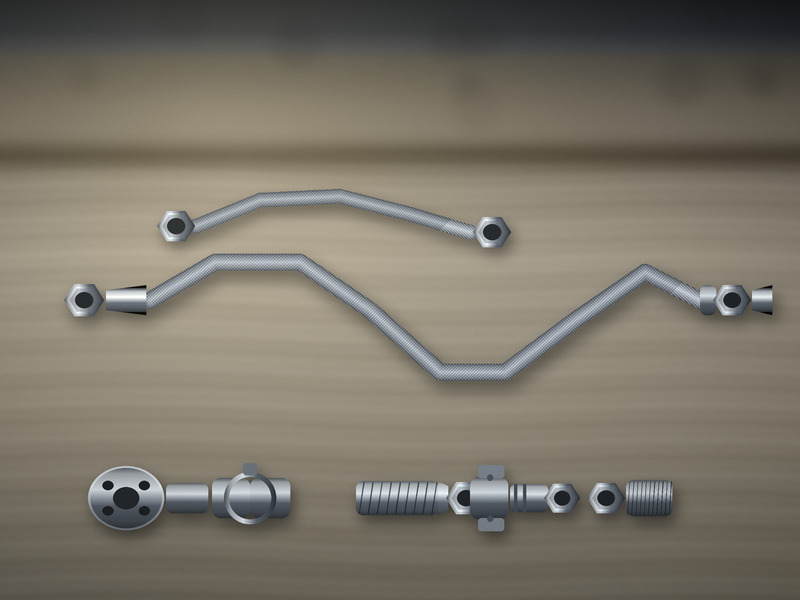
Figure 1. Finished assemblies with assorted end connections, ready for pressure testing.
What Does the PTFE Range Contain?
The range divides into three axes. The first axis is the tube: a smooth bore PTFE liner or a convoluted liner for tighter bends. The second is the reinforcement, almost always a stainless steel braided hose layer that carries the pressure. The third is the connection, where the two sides of a joint rarely share a standard. That is also where the widest choice of PTFE hose fittings sits, and where a wrong pick is most expensive to correct.
Buy in that order: pick the bore profile from the routing, the braid from the pressure, and the connection last. Reversing the order leaves you with an assembly that fits the flange but kinks on the way to it. That order also settles which PTFE hose fittings stay on the shortlist, because a family that cannot carry the pressure never reaches the comparison.
The PTFE Hose Family at a Glance
Four construction families cover nearly every industrial requirement. Table 1 sets out where each belongs.
Table 1. PTFE hose constructions and where each is used
| Construcción | Bore Profile | Pressure Capability | Typical Use |
|---|---|---|---|
| Braided, smooth bore | Straight | Highest of the four | High pressure chemical and steam lines |
| Braided, convoluted | Annular | High, slightly below smooth bore | Tight routing and vibrating equipment |
| Unbraided, smooth bore | Straight | Low, liner limited | Low pressure transfer and sampling |
| PTFE-lined rubber hose | Straight | Moderate | General chemical duty where flexibility matters |
The stainless steel braided hose is what most buyers picture when they ask for a PTFE hose. It gives the best combination of pressure capability, drainage and cleanability, and it accepts the widest choice of end connections. Braided smooth bore PTFE hose is commonly specified to SAE 100R14.
A convoluted tube trades a little pressure capability for a much smaller bend radius. That matters where the hose must follow a tight arc inside a skid or connect two items that move apart under load. The annular profile also absorbs vibration better than a straight wall.
Unbraided hose has its place. Where the duty is low pressure and the fluid must remain visible or the line must stay light, a plain unreinforced tube works well. Understand its limit before you buy: without reinforcement the liner carries the whole load, and the pressure ceiling is low.
Two further variables sit behind these four families. The first is the cover: a bare stainless steel braided hose runs cooler and flexes further, while a jacketed version resists splash and abrasion. The second is braid count, which trades flexibility against pressure capability and must be matched to the rating the project actually needs.
PTFE Hose Fittings, Family by Family
Most selection errors happen here, because PTFE hose fittings are not interchangeable and their pressure limits differ. Table 2 compares them.
Table 2. PTFE hose fittings families compared for wetted material, pressure and use
| Family | Wetted Material | Relative Pressure | Best Used For |
|---|---|---|---|
| JIC fittings (37° flare) | Stainless steel | Alto | Rigid, leak-tight lines on machinery |
| NPT and BSP thread | Stainless steel | Moderate | Threaded ports and small bore lines |
| Camlock coupling | Polypropylene or lined metal | Moderate | Frequent connect and disconnect |
| Flange fitting | Lined steel or PVDF | Alto | Fixed piping and large bore |
| Sanitary clamp | PTFE or PVDF | De bajo a moderado | Hygienic and clean service |
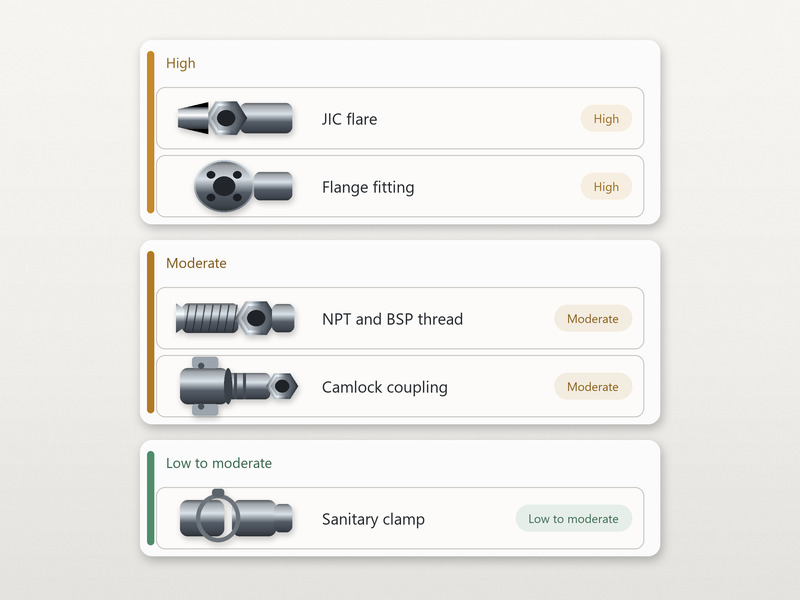
Figure 2. The five connection families, grouped by the pressure each normally carries.
Flare and Thread
JIC fittings (Joint Industry Council) seal metal to metal on a 37° cone seat, so no gasket is needed and the joint survives vibration well. Keep the seat clean and undamaged: a scratch on the cone weeps under pressure, and further tightening only deforms it. That is why JIC fittings dominate machinery lines, where a weeping gasket would become a recurring maintenance item. Threaded connections are simpler to install but rely on a thread sealant such as PTFE tape.
NPT (National Pipe Thread) and BSP (British Standard Pipe) are two separate thread systems. Both are tapered, but their thread angles differ, and forced assembly damages both. If you are comparing a metric port with an imperial fitting, read the NPSM vs NPT thread guide before you order, because the two look similar and are not.
Camlock and Clamp
A camlock coupling is the fastest way to connect and disconnect a line repeatedly. Choose a camlock coupling where the line is broken daily and the pressure stays moderate. The trade-off is that the seal depends on a gasket, so the gasket material must match the medium and must be replaced when it hardens. Camlocks come in the A to F types, and the mating connection decides which type you need.
Sanitary clamps, also called tri-clamp ends, serve hygienic duty. The joint strips for cleaning in seconds and leaves no crevice where product can collect. The limiting factor is the clamp itself: over-tightening crushes the liner face and creates a slow weep that looks like a liner fault.
Flange and Sanitary
A flange fitting suits fixed piping and large bores, where weight and rigidity rule out a hose end. Where the medium is aggressive, a flange fitting with a lined face keeps the wetted path inert all the way to the gasket. The liner must extend across the flange face, and the bolts must be torqued in a crossing pattern so the faces stay parallel. Confirm whether the mating flange is rated 150# or PN16 before you order.
Crimped vs Reusable Fittings: Which Belongs on a PTFE Hose Assembly?
Two designs of PTFE hose fittings end every assembly, and the choice affects strength, serviceability and cost. A crimped fitting is pressed onto the hose on a machine that sets the diameter precisely, so the result is consistent from unit to unit and generally stronger.
A reusable fitting is assembled by hand with a mandrel or a threaded collar, so it can be rebuilt in the field. That is valuable on long runs and remote sites where returning an assembly to a workshop is impractical. The trade-off is that the achievable pressure is often lower and the quality depends on the skill of the fitter.
Choose on logistics rather than on preference. Where assemblies are made in volume and shipped, a crimped fitting gives repeatability and the lowest unit cost. Where the hose is part of a large machine that must be repaired on site, keep one spare reusable end and the tooling to fit it.
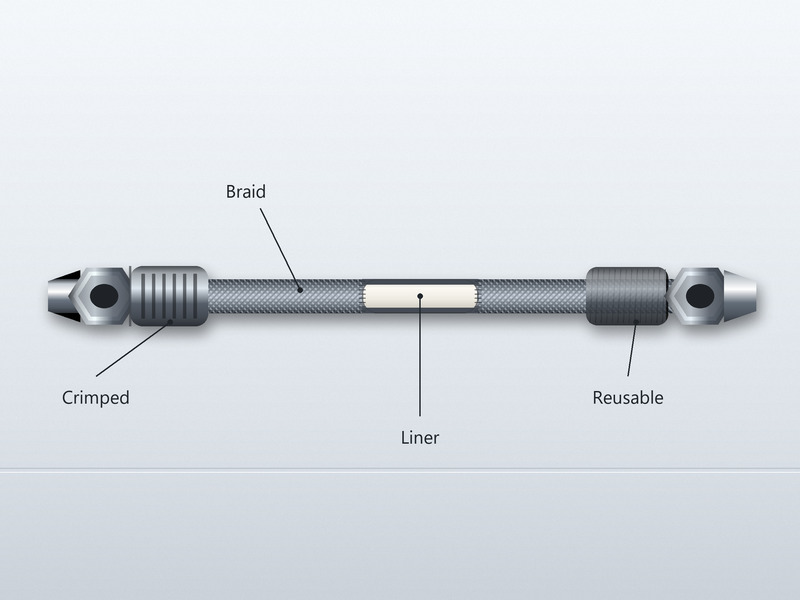
Figure 3. A crimped end and a reusable end on the same hose construction.
Mixing the two ends on one assembly is workable, provided the decision is deliberate. A reusable end at one side and a crimped end at the other is common, but the published rating should then describe the weaker end. Ask the supplier to state it.
Tooling is the hidden cost of reusable ends. Each fitting size needs its own mandrel and collar, and the tooling only pays back if you build enough assemblies to justify it. Where a site runs a small number of sizes in high volume, crimped ends from the supplier are usually cheaper overall once the workshop time is counted. Where the volume is low, a crimped fitting ordered with the assembly is almost always the better answer.
How Is the Assembly Rating Set? Working and Burst Pressure
Three numbers describe every assembly, and confusing them causes most over-pressure failures. The burst pressure is the pressure at which the assembly fails in test. The working pressure is the pressure it may see continuously. The safety factor is the ratio between them.
The rating belongs to the whole assembly, not to the tube alone. The weakest link fixes the figure, and on fluoropolymer hose it is usually the fitting or the crimp rather than the tube. That is why PTFE hose fittings, not the tube, decide the number printed on the label. Table 3 shows how to read the three numbers together.
Table 3. Reading the rating figures on a PTFE hose assembly datasheet
| Figure | What It Describes | How to Use It |
|---|---|---|
| Burst pressure | Failure point in a destructive test | Never a service figure; it defines the safety factor |
| Presión de trabajo | Continuous limit at a stated temperature | Compare with the highest sustained pressure in the system |
| Safety factor | Ratio of burst to working pressure | Typically four to one on industrial hose |
| Proof test | Non-destructive test applied to the finished assembly | Proof figure should exceed working pressure, never approach burst |
Temperature changes all three in practice. Heat weakens the polymer and the braid, so the working pressure falls as temperature rises, even though the burst figure printed on the liner specification does not change. Ask for the working pressure at your operating temperature, not at ambient.
Materials: Liners, Braids and Wetted Metals
The liner is polytetrafluoroethylene (PTFE) in every product in this range, and it is chosen for chemical inertness rather than for strength. Wetted metals are limited to stainless steel, or a polymer such as PVDF where even stainless steel is unsuitable.
Braid material is usually type 304 or type 316 stainless. Either way the finished part is a stainless steel braided hose, and the alloy choice is about corrosion rather than strength. Type 316 resists chloride attack better and is the safer choice near seawater, brine or hydrochloric acid duty. Materials also decide how long PTFE hose fittings last. The braid is not wetted, but a corroded braid still ends the service life of the assembly, because it no longer carries the load.
Covers matter more than they look. An extruded jacket protects the braid from splash, abrasion and ultraviolet light. An open braid runs cooler and flexes further but leaves the wire exposed, so it belongs indoors and away from chemical spill.
Liner thickness is the last material choice. A thicker wall resists vapour migration and lasts longer, at some cost in flexibility and weight. Where a line runs hot or carries a fluid that migrates readily, the extra wall is usually worth the trade.
Where the medium is a strong acid, confirm the wetted materials of the end connection as carefully as the liner. Lined steel and PVDF bodies are common for acid service, and the guide to PTFE hose for acid service works through the choice for one specific medium.
Ordering a PTFE Hose Assembly: Six Fields a Supplier Needs
A supplier can quote an assembly correctly only from a complete description of the tube and the PTFE hose fittings that go on it. Six fields cover almost every case.
- Bore and profile — inside diameter, and whether the tube is smooth or convoluted.
- Longitud — overall length between the sealing faces, not the length of the tube.
- End connections at each end — family (JIC fittings, thread, camlock, flange or clamp), size, thread or flange standard, and wetted material; state explicitly if a camlock coupling is needed at either end.
- Pressure and temperature — continuous and peak for both, since the two interact.
- Medio — the fluid, its concentration and whether it is a mixture.
- Documentation — the marking you need, the test certificate you must retain, and any declaration the project requires.
Send those six and you get a real price rather than a placeholder. For a repeat item, say so, because a bulk order changes both the unit price and the lead time. Leave the thread standard out and the quotation will be revised, which delays the order and usually raises the price. If the assembly is one of a family of sizes, send the whole list at once and ask for a bulk order break, because setups dominate the cost of small runs.
Where you are also specifying the hose body, the comparison of FEP and PTFE hose specifications covers the liner decision that sits behind this one. Where you need the joint standards explained in more depth, the wider catalogue of hose couplings and end connections goes further than this overview.
Inspection, Testing and Record Keeping
Every PTFE hose assembly should be pressure tested to EN ISO 1402 before it leaves the works, and the test should be non-destructive. A proof test at a defined multiple of the working pressure confirms the joint and the crimp without damaging either. Keep the certificate with the assembly identity so the test can be traced later.
On receipt, check four things before the assembly goes into service. Confirm the identity marking matches the order, confirm the bore and length, inspect the braid for broken wires, and check the sealing faces, confirming on a flange fitting that the liner is present across the whole face. A minute at goods-in prevents a failure at the pump.
Storage matters as much as inspection. Keep assemblies coiled to a diameter larger than the minimum bend radius, out of sunlight, with the ends capped, and off a concrete floor that can hold moisture against the braid. A well-stored spare is still good years later; one left in a damp corner may not be.
In service, record the date the assembly entered use and the duty it serves. A record turns replacement from guesswork into a schedule. It also reveals when one line consumes assemblies faster than its neighbours, which usually points at routing or pressure rather than at the hose.
Safety: Retire, Do Not Repair
Replace, never repair. An assembly with a damaged sealing face, a corroded or broken braid, a liner that has been permeated or creased, or a fitting that has been re-crimped outside its specification is finished. None of these conditions can be corrected with a patch, a clamp or a sealant, and each one predicts a leak.
Tag the assembly out of service immediately when any of those conditions appears. Depressurise and drain the line before you loosen anything, and never break a joint with pressure behind it. Where the medium is hazardous, flush and neutralise the assembly before it is handled or disposed of.
Retirement also applies to hose that has simply reached its interval. A PTFE liner that has carried hot fluid for a full service period can be brittle without any external sign. Pressure test on the schedule your procedure sets, and replace on the interval rather than on appearance alone.
PTFE Hose Fittings FAQs
How do I know which fitting family to choose?
Start with the mating connection at the equipment, not at the hose. Whatever the pump, vessel or manifold presents decides the family. Then check that the chosen family can carry your pressure at your temperature. Where two families would both fit, prefer the one with fewer sealing elements, because each seal is a potential leak path.
Can I mix a crimped fitting and a reusable fitting on one assembly?
Yes, and it is common on long runs where one end must be made up on site. The rule is that the published rating then describes the weaker end, which is usually the reusable one. Ask the supplier to state the assembly rating with the mixed arrangement so the number you work to reflects what was actually built.
Why does the published pressure figure differ between suppliers for the same hose?
Because the figure usually describes a different thing. One supplier may quote the tube only, another the assembly with a crimped fitting, and a third the assembly at an elevated temperature. Ask whether the figure covers the tube alone or the finished PTFE hose fittings as well. Once the basis is the same, comparable products usually land within a similar band.
What causes a weep at a flare fitting when the torque is correct?
Almost always damage on the cone seat. A scratch, a burr or a particle trapped on the seat prevents metal-to-metal contact, and tightening further only deforms the cone. Inspect the seat under good light, replace the fitting if it is marked, and re-make the joint once. Repeated re-torquing of a damaged flare makes the leak worse.
Does a convoluted liner reduce the pressure rating?
It reduces it slightly, because the corrugations concentrate stress at the crests. The practical difference is small compared with the effect of a weaker end connection or a higher temperature. If your convoluted assembly is limited, the connection or the temperature is usually the reason, not the bore profile.
How often should a PTFE assembly be pressure tested?
Follow the interval in your site procedure, and shorten it where the duty is at the top of the temperature range or the line is connected and disconnected frequently. Any assembly that has been drained, cleaned, re-made or moved should be tested before it returns to service. Record each test against the assembly identity so the history is visible.
What should I include in an enquiry to get an accurate price?
Send the bore and profile, the length between sealing faces, both end connections with their standards, the continuous and peak pressure and temperature, the medium, and the documentation you need. Add the quantity, whether it repeats, and whether a bulk order across several sizes is planned. A supplier can quote that accurately the first time, which avoids the revision cycle that pushes a delivery date out.
Can I use a standard PTFE assembly for steam service?
Yes, provided the assembly is rated for steam and the temperature sits inside the liner limit. Steam raises two complications. The temperature is usually at the top of the range, which derates the pressure figure, and condensate can carry contaminants that attack the braid. Ask for a steam-rated assembly and confirm the working pressure at the saturated-steam temperature rather than at ambient.
Source the Full PTFE Range From One Plant
Buying the tube, the braid and the fittings from one supplier removes the argument about which part caused a failure. It also means one tolerance stack, one test certificate and one identity marking across the whole assembly.
HENGHUA manufactures chemical transfer hoses and complete hose assemblies for chemical plants, tank farms, distributors, and OEM brands. Every chemical hose we build is specified by its lining, its reinforcement, and its cover, and the assembly leaves the factory with crimped or reusable stainless steel fittings, a hydrostatic proof test, and a documented pressure rating. Our chemical hose range covers PTFE, FEP, polypropylene, UHMWPE and EPDM linings from 1/2 inch to 8 inch bore, rated to 16 bar.
Because we control compounding, extrusion, lining, winding, and crimping in one plant, a bulk order moves quickly and the specification on the label is the specification you get. A clear specification also makes the price comparable between suppliers. If you are sourcing chemical hoses for a project, a distribution line, or OEM supply, send us your specification and we will quote against it. Get a quote and free samples
Send both end connections and the duty, and we will confirm the assembly rating before we quote.
Written by the HENGHUA engineering team, with input from chemical plant, tank farm, and maintenance teams across North America and Europe. HENGHUA manufactures chemical transfer hoses and hose assemblies with PTFE, FEP, polypropylene, UHMWPE, and EPDM linings, from 1/2 inch to 8 inch bore, rated to 16 bar, with crimped or reusable stainless steel fittings and OEM branding.






 English
  Spanish
  Portuguese
  French
  German
  Arabic
  Russian
  Indonesian
  Japanese
  Korean