
A heavy duty polypropylene chemical hose of this class is rated 250 psi at ambient temperature and is suitable across a service range of −40 °C to +100 °C. The two figures do not apply at the same time. Pressure capability falls as temperature rises, so the usable figure at 100 °C is materially lower than 250 psi and must be read from the product datasheet. The build serves in-plant transfer, tank truck loading and rail car unloading. This guide explains the rating relationship, the construction, the media the hose handles, and where it stops.

Figure 1. A heavy duty polypropylene chemical hose made up for tank farm service.
What 250 psi at 100 °C Really Means
The two numbers on the label — 100 °C and 250 psi — describe different things, and reading them together is the most common mistake in buying this hose class. The 250 psi figure is a pressure rating measured at ordinary ambient conditions, roughly 21 °C. The 100 °C is the top of the temperature range, not the temperature at which 250 psi may be used.
Every polymer loses strength as it warms, and the reinforcing fabric and helix in a polypropylene chemical hose are no different from the film. That is why a single temperature rating cannot describe the whole envelope. The permissible pressure therefore falls progressively across the temperature range. At the cold end the hose is limited by the burst strength of the assembly; at the hot end it is limited by how much stress the softened materials can take.
For a polypropylene chemical hose the practical rule is simple. Use 250 psi only where the product is being transferred at ambient temperature, and ask the supplier for the derated pressure at your real working temperature for every other case. A written figure from the manufacturer is the only value worth designing to.
What “Heavy Duty” Changes in a Polypropylene Chemical Hose
“Heavy duty” is not a marketing word in this class; it describes specific construction choices that raise the pressure rating and the abrasion resistance. Four changes separate a heavy duty chemical hose from a general purpose one, and each of them is visible on the datasheet.
The first is wall thickness. More film and more fabric plies mean a stronger wall, which raises the burst figure and slows permeation through the film. The second is helix gauge: a heavier inner spiral resists higher vacuum and better resists crushing under a vehicle wheel.
The third is the cover. A heavy duty build uses a denser PVC-coated polyester or a polypropylene cover, which protects the fabric from abrasion on a dock or a truck bed. The fourth is the end fitting: a heavy duty assembly is normally terminated with a bolted or flanged end rather than a light clamp, because the load path has to carry the full pressure.
The wall, helix, cover and fitting are what allow a heavy duty polypropylene chemical hose to be rated at 250 psi rather than the 100 psi to 150 psi typical of light transfer hose. They are also what a buyer pays for when a heavy duty chemical hose costs more than a light one of the same bore. They also make the assembly heavier and stiffer, which matters when the hose has to be carried to a rail car by hand.
Construction: Film, Fabric, Helix and Cover
The layer order is fixed, and each layer can be inspected on the outside of the hose in a way that tells you something about the inside. Table 1 sets out the stack.
Table 1. Construction of a heavy duty polypropylene chemical hose, inside out
| Layer | Material | Deber |
|---|---|---|
| Inner helix | Galvanised or stainless steel wire | Holds the bore open and resists vacuum |
| Lining film | White polypropylene film | Contains the product and provides chemical resistance |
| Fabric plies | Polyester or polyamide fabric | Carries the pressure load |
| Cover | Green PVC-coated polyester or polypropylene | Protects the plies from abrasion and splash |
| Outer helix | Galvanised or stainless steel wire | Takes ground contact and keeps the coil shape |
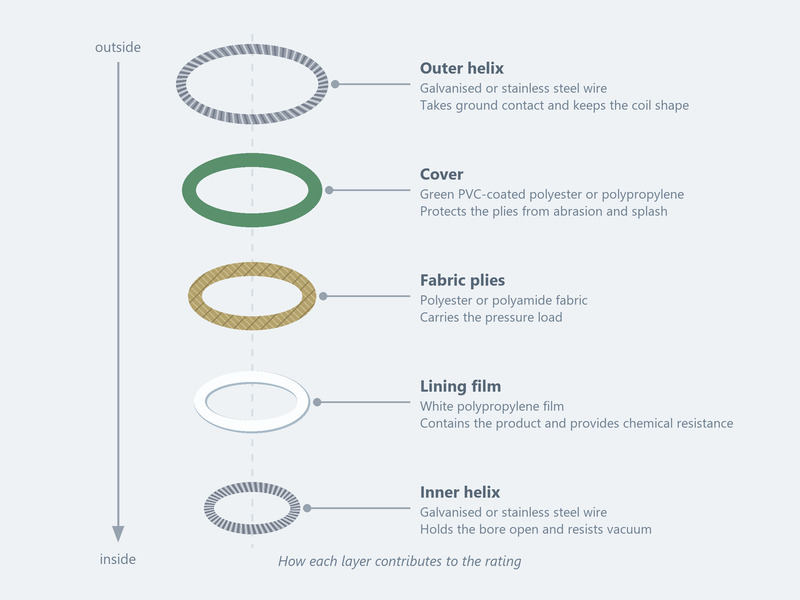
Figure 2. The layer stack and how each layer contributes to the rating.
The Lining Film
A polypropylene film is extruded as a thin, uniform tube and is the only layer that touches the product. It is chosen for resistance to acids, alkalis and aqueous chemicals, and for its low cost relative to fluoropolymers. Where a polypropylene film would be attacked by the product, no amount of heavy duty construction helps.
The Fabric Plies
The fabric plies carry the hoop stress. They are never wetted in a correctly built hose, so their selection is about tensile strength and fatigue life rather than chemistry. Multiple plies are what make the heavy duty name meaningful, and they are the reason a 250 psi rating is achievable at all.
The Helixes and Cover
The inner helix resists collapse under vacuum; the outer helix takes abrasion, impact and ground contact. The cover sits between them. Because the cover protects the plies, a cut cover is a structural warning rather than a cosmetic one, and it should be assessed as such at every inspection.
Rating Envelope: Pressure, Temperature, Vacuum and Bend Radius
Four figures describe the working envelope. Table 2 shows how they are read together.
Table 2. Reading the rating envelope of a heavy duty polypropylene chemical hose
| Figure | Stated As | How to Apply It |
|---|---|---|
| Pressure | 250 psi at ambient reference temperature | Derate for the actual product temperature |
| Temperatura | −40 °C to +100 °C service range | A range of serviceability, not a flat pressure rating |
| Vacuum | Published figure for suction duty | Applies to a hose laid straight, not to one bent to its limit |
| Bend radius | Minimum figure by bore | Lay the route inside it before any load is applied |
The pressure figure also carries a safety factor. Working pressure is normally set at a quarter of the burst figure — a 4:1 ratio — on multilayer hose, so a 250 psi rating implies a burst figure of the order of 1,000 psi. Ask for the working pressure and the burst pressure to be stated separately rather than as a ratio. The safety factor is the margin that absorbs surge, age and damage; it is not spare capacity to be used.
Vacuum duty needs the same care as pressure. A hose under suction that is bent tightly can collapse at a fraction of the pressure it would carry, because the helix cannot hold an oval bore. Where a transfer involves both suction and discharge, plan the route around the suction case.
For a multilayer thermoplastic hose assembly, the applicable standard is EN 13765. The standard’s typical range is DN 25 to DN 300, 4 bar to 14 bar and −30 °C to +150 °C on the manufacturer’s datasheet. EN 12115:2021 covers rubber and thermoplastic chemical hose and excludes multilayer assemblies, and it assigns the electrical grades M, Ω, M/T and Ω/T where static control is specified. Under United States Coast Guard rules, ask which standard the assembly is built and marked to.
Temperature Derating: Why the Cold Number Is Not the Hot Number
Derating is the link between the pressure figure and the temperature figure, and it is the part of the specification that most buyers skip. The reason it matters is that both halves of the wall weaken as the hose warms.
The lining film softens, which reduces its resistance to permeation and to creep under sustained pressure and changes the effective temperature rating of the assembly. The fabric plies lose tensile strength, which directly reduces the pressure the wall can carry. At the same time, the product is usually more aggressive when hot, so chemical attack accelerates exactly when the margin is smallest.
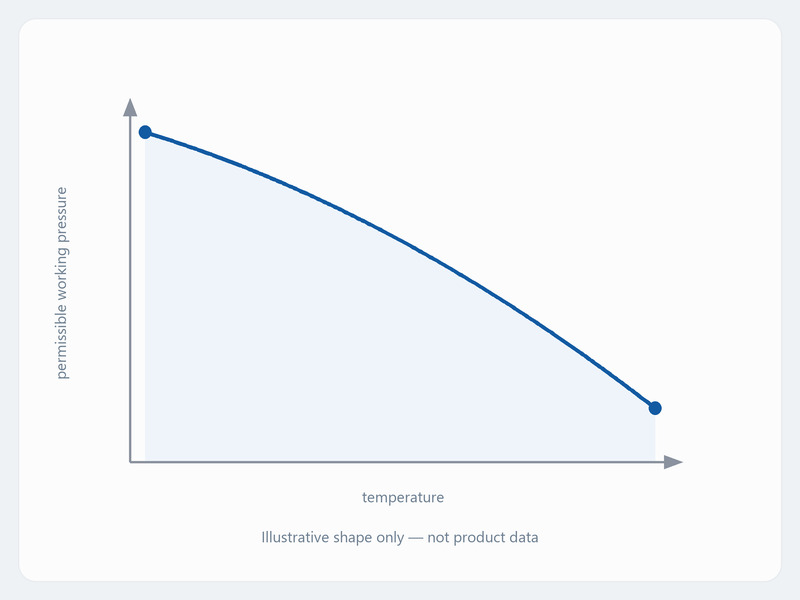
Figure 3. Illustrative shape only, not product data: permissible pressure falls as temperature rises.
Base the derated figure on the supplier’s written data. Ask the supplier for the working pressure allowed at your operating temperature and keep the reply with the order. If the temperature varies through the transfer, use the highest figure that will be sustained, not an average. The pressure derating with temperature method is the same one used for hydraulic hose.
Read the temperature rating as a range of serviceability first. Continuous and peak temperature also need separating. A hose that sees 100 °C for a few minutes at the end of a cleaning cycle is in a different position from one that runs at 95 °C all day. The peak damages the film; the continuous figure sets the rating. State both when you specify, and write the temperature rating you are buying against on the order so the supplier can confirm it.
Media It Handles Well, and Media It Does Not
Polypropylene is a broadly useful lining with two clear limits. Table 3 maps the common cases.
Table 3. Media suitability for a polypropylene lined chemical hose
| Medio | Suitability | Note |
|---|---|---|
| Dilute mineral acids | Bien | Concentration decides the answer; confirm before specifying |
| Alkalis and caustics | Bien | One of the strongest applications for this film |
| Aqueous salts and brines | Bien | Watch the helix material where chlorides are present |
| Aromatic solvents | Pobre | Swelling and loss of strength; use a fluoropolymer film |
| Chlorinated solvents | Pobre | Not suitable at any useful temperature |
| Strong oxidising acids | Pobre | Attack accelerates sharply with temperature |
Two rules follow from the table, and both apply to hydrocarbon transfer as much as to aqueous duty. First, acid and alkali service is where a polypropylene chemical hose earns its place, and in acid and alkali duty it is usually the most economical answer available. Second, any duty involving a solvent should be reviewed against a fluoropolymer film before the hose is ordered, because polypropylene will fail in service rather than at the first transfer.
Aliphatic hydrocarbon transfer is a different case. A polypropylene film handles paraffinic and naphthenic products such as diesel, kerosene and light lubricating oil, and hydrocarbon transfer of that kind is a routine duty for this build.
Aromatic hydrocarbons are the exception, and they should be routed to a fluoropolymer film. Where a hydrocarbon transfer stream is a blend, check the aromatic content before you specify.
A process stream that is part acid and part solvent can attack a lining that resists each component separately, and the water content changes the aggressiveness of both. Send the complete composition to the supplier rather than the main component alone. Suitability is confirmed rather than assumed: EN 12115 carries an informative annex that lists lining materials against the conveyed chemical by CAS number, and manufacturers publish the same information as a chemical resistance table. The table for the film you are buying is the version that governs the order.
End Fittings and Assembly for Heavy Duty Service
A heavy duty chemical hose is only as strong as its termination. The fitting has to transfer the load from the fabric plies into the metal without cutting the film, and at 250 psi that load is significant.
- Camlock coupling — the fastest option for repeated connection at moderate pressure; the gasket is the sealing element, so the material must suit the product.
- Camlock coupling with a safety pin — the same fitting with a secondary lock, used where a transfer is unattended overnight.
- Flanged end — the usual choice for fixed piping and larger bore, where rigidity matters more than speed.
- Threaded end — compact for small bore, but it relies on a sealant and is easily cross-threaded.
- Bolted clamp end — common on heavy duty hose, because it captures the plies without crushing the film.
Whichever is used, the assembly rating must be based on the weakest element, and the fitting must be rated for the full pressure in the same temperature conditions as the hose. A camlock coupling that is rated at ambient will not carry 250 psi when the product is hot, and the same applies to every other family in the list.
Confirm how the end is attached before you commit to a bulk order. A crimped or bolted termination that suits one supplier’s hose may not fit another’s, and a mixed assembly that relies on a mismatched tail is a leak waiting to happen. The hose couplings and end connections catalogue covers the families and their limits.
Handling, Storage and Service Life
Service life depends more on handling than on the calendar. Five habits extend it dramatically.
- Coil to a generous diameter — never tighter than the published bend radius, even when storing.
- Keep it off the ground — a rack or a pallet, because moisture against the cover shortens the helix life.
- Out of sunlight — ultraviolet light hardens the cover, and a hardened cover cracks.
- Drain and cap — empty the line before storage so residual product cannot attack the film from inside.
- Never drag it — lift rather than pull, because abrasion on the cover is the most common avoidable damage.
Store a spare the same way you store a working hose, otherwise the spare is already degraded when it is needed. Label the spare with its entry date so the oldest one is used first, and inspect it before it goes into service rather than after. Where a plant holds several sizes, a single bulk order placed once a year keeps the stock consistent and the price predictable.
Safety: Stop-Use Conditions
Stop use when any of the following appears, and tag the assembly so it cannot return to service unnoticed. The conditions to look for are:
- Cover damage — a cut that reaches the fabric.
- Wall damage — a bulge or blister where the film has separated.
- Kinks — a crease that remains after the hose is straightened.
- Helix damage — broken or heavily corroded outer wire.
- Fitting movement — any shift of the fitting on its tail.
- Weeping — product appearing through the wall.
All of those conditions are retirement conditions: the hose leaves service and does not return. Depressurise and drain first, flush and neutralise if the product requires it, then destroy the hose or return it under a documented scrap route.
The temperature limit is also a stop-use condition in its own right. A hose that has been used above 100 °C, or run at 100 °C for a sustained period beyond its rated service, has lost an unknown amount of strength even if it looks sound. Retire it rather than returning it to duty, and record the excursion so the cause can be addressed.
Polypropylene Chemical Hose FAQs
Can I use this hose at 250 psi and 100 °C at the same time?
No. The 250 psi figure is an ambient rating and the 100 °C figure is the top of the service range. Permissible pressure falls as temperature rises, so the two cannot be combined. Ask the supplier for the derated working pressure at your actual product temperature in writing, and use that figure for the design.
What is the hose made of?
A heavy duty build normally uses a white polypropylene film inside a green PVC-coated polyester cover, with polyester or polyamide fabric plies between them and galvanised or stainless steel helixes inside and out. The film is the only wetted layer, so it carries the whole chemical decision.
Is this hose suitable for solvents?
Generally no. Polypropylene is attacked by aromatic and chlorinated solvents, which cause swelling and a loss of strength. Where a solvent is involved, a fluoropolymer lined hose is normally the correct choice. Review the exact product rather than the family, because mixtures behave differently from their components.
How is the pressure rating different from the burst pressure?
The pressure rating is the figure the hose may see continuously, quoted at a stated reference temperature. Burst pressure is the figure at which it fails in a destructive test, and it is typically about four times the rating on this type of hose. Burst pressure is never a service figure; it defines the safety margin.
Does the hose need to be conductive?
For flammable products it usually does, and the requirement follows from the area classification rather than from preference. A conductive or antistatic build gives charge a path from the film to the fittings, but the assembly must also be bonded and earthed during transfer. Confirm the electrical grade when you order.
How long will the hose last?
Service life is set by handling, temperature and product far more than by age. A hose coiled generously, stored out of sunlight and never dragged lasts many times longer than one treated as a rope. Set an inspection interval, shorten it where the duty runs hot, and retire on damage rather than on appearance.
What should I send for an accurate price?
Send the product and its concentration, the continuous and peak temperature, the pressure and whether the duty includes suction, the bore and length, the end connections you need, and the batch quantity. With those fields a supplier can quote the correct film, plies and fittings instead of a generic hose, and the price will not need revising later. On a repeat item, ask for the bulk order price at the same time so the two figures can be compared.
Source Heavy Duty Polypropylene Chemical Hose
Buy the rating you can defend. Ask for the derated pressure at your working temperature, confirm the film against the product, and match the end fittings to the duty rather than to the catalogue photograph.
HENGHUA manufactures chemical transfer hoses and complete hose assemblies for chemical plants, tank farms, distributors, and OEM brands. Every hose we build is specified by its lining, its reinforcement, and its cover, and the assembly leaves the factory with bolted or crimped stainless steel fittings, a hydrostatic proof test, and a documented pressure rating. Our chemical hose range covers PTFE, FEP, polypropylene, UHMWPE, and EPDM linings from 1/2 inch to 8 inch bore, rated to 16 bar, with conductive and antistatic builds on request.
Because we control film extrusion, lining, winding, and fitting assembly in one plant, a bulk order moves quickly and the specification on the label is the specification you get. A clear specification also makes the price comparable between suppliers. If you are moving acid and alkali for a tank farm, a distribution line, or OEM supply, send us your specification and we will quote against it. Get a quote and free samples
Where the duty involves a solvent rather than an aqueous product, compare the UHMWPE hose option and the multilayer composite build before settling on a film. Check the EN 13765 requirements as well if the project falls under European rules. A classified hazardous transfer hose selection starts from the product, not from the hose.
Written by the HENGHUA engineering team, with input from chemical plant, tank farm, and maintenance teams across North America and Europe. HENGHUA manufactures chemical transfer hoses and hose assemblies with PTFE, FEP, polypropylene, UHMWPE, and EPDM linings, from 1/2 inch to 8 inch bore, rated to 16 bar, with crimped or reusable stainless steel fittings and OEM branding.






 English
  Spanish
  Portuguese
  French
  German
  Arabic
  Russian
  Indonesian
  Japanese
  Korean