

Choosing the right unit comes down to three decisions: match the reel to the hose you actually run, mount it where the hose reaches every job, and keep the swivel and seals leak-free. A reel does not change airflow, but it does add a swivel and a few extra fittings that can cost a little pressure. Get those three decisions right and a tangled hose becomes a tidy, faster tool. This guide compares reel types, sizes, mounting positions, materials, and cost bands. It then covers installation, maintenance, and the safety checks that matter most in a busy shop.
Match the Reel to the Hose, Then to the Wall
Start with the hose, not the housing. Most workshops do best with a wall mount air hose reel sized to the hose they already own. If you run a 3/8 inch bore hose, choose a reel rated for 3/8 inch bore and 50 feet. If you run a 1/4 inch bore hose, a lighter 25 foot unit is plenty. The reel must be rated for the same working pressure as the hose, never less. Mounting comes second, because a reel on the wrong wall still leaves a hose that cannot reach the work. Seals come third, because the swivel is where most leaks begin.
Air Hose Reel Types Compared: Retractable, Manual, Enclosed, Open
Four housing styles cover almost every workshop. The most common is a retractable air hose reel, which pulls the hose back on a spring and keeps a bench clear. A manual reel winds by hand, costs less, and suits occasional use. An enclosed unit hides the hose inside a case, which helps in wash bays and dusty sites. An open unit exposes the drum, so the hose and fittings stay easy to inspect.
Table 1 compares the four styles on the points that decide most purchases.
Table 1. Air hose reel types compared by use, recovery, fitting access and cost band
| Reel Type | Ideal para | Hose Recovery | Fitting Access | Typical Cost Band |
|---|---|---|---|---|
| Retractable | Busy benches with repeated use | Spring return, one hand | Good at the guide arm | Mid to high |
| Manual | Occasional use on a low budget | Hand wind | Open drum, easy | Bajo |
| Enclosed | Wash bays and dusty sites | Spring or hand, model dependent | Restricted by the case | Mid to high |
| Open | Heavy hose that needs inspection | Spring or hand, model dependent | Full drum access | Mid |
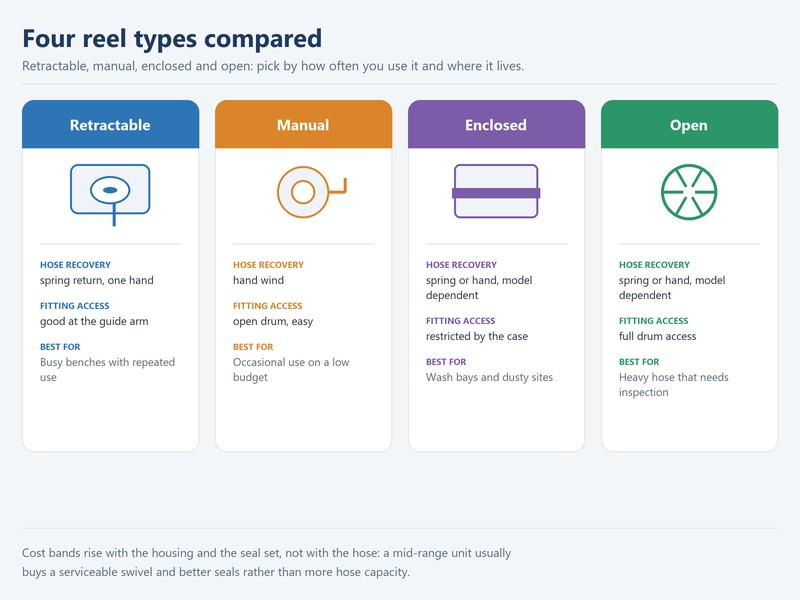
Figure 2. Retractable, manual, enclosed, and open reel types compared.
Whichever type you pick, buy it for the hose you already own. Match the bore, the run, and the pressure before anything else, because that is where most buying mistakes start. If you are still choosing the hose itself, this guide to choosing an air hose sets out the material options first.
Which Air Hose Reel Matches Your Hose: Inside Diameter, Length, and Pressure?
The hose decides the reel, not the other way around. Three hose numbers matter most: inside diameter, air hose length, and working pressure. A reel that is too small for the bore will pinch the hose at the guide arm. A unit with too little capacity will not hold the full run you need. A reel rated below the hose pressure rating is a safety problem, not just a performance one.
Inside Diameter Sets the Reel Capacity
Inside diameter is the single most important match. Housings are sold for 1/4 inch, 3/8 inch, and 1/2 inch bore, and the guide arm and drum width are built around that number. A 3/8 inch hose on a 1/4 inch unit will rub and kink at the arm. Flow follows the bore as well. At 90 PSI, a 1/4 inch hose moves about 5 to 10 SCFM, a 3/8 inch hose about 10 to 20 SCFM, and a 1/2 inch hose about 20 to 35 SCFM.
Air Hose Length and Recommended Runs
Air hose length decides how much drum you need: plan on 25 ft for 1/4 in. bore, 50 ft for 3/8 in., and up to 100 ft for 1/2 in. An air hose size chart maps bore against run for quick reference. Going longer than those limits reduces pressure at the tool, because friction grows with length. A reel does not add flow, and its swivel and fittings add a small loss of their own. One common fix is to step up one bore size, which recovers most of what the swivel and fittings cost.
Working Pressure Must Match the Hose
Working pressure must match the hose, not the housing label alone: consumer hose is rated 200–300 PSI and industrial rubber hose 300–500 PSI, and the reel, swivel, and fittings must carry the same figure. Rubber hose follows ISO 2398:2024, while PVC and polyurethane hose follows ISO 5774:2023. Never exceed the manufacturer’s safe operating pressure, as OSHA 29 CFR 1926.302(b)(5) requires.
Steel vs Aluminum vs Composite: Material and Weight Trade-Offs
Housing material decides weight, cost, and where you can mount the reel. A steel air hose reel is the toughest option for its cost, which is why it dominates fixed industrial bays. It is also the heaviest, so a large steel unit needs solid blocking behind the wall.
An aluminum housing saves weight and resists rust, which helps in damp wash bays and on service trucks. A composite housing is lightest and cheapest to ship, but it flexes more under heavy hose. The gap between composite and steel housing is small at the entry level and wide at the top. In a fixed bay, a steel unit usually wins on cost per year of service.
Choose by load, not by looks. A short 1/4 inch run is fine on composite. A 100 foot 1/2 inch run needs a steel air hose reel and a mount that can carry both the weight and the pull.
Where to Mount It: Wall, Ceiling, Floor, or Portable Cart
Location decides how often you actually use the unit. A wall mount air hose reel suits a fixed bay, where one wall serves the whole working area. A ceiling mount keeps the floor clear and drops the hose to the middle of the shop. A floor or pedestal reel works where the wall is too far away. A portable cart reel follows the job when work moves between bays.
Choose the mount by drawing the hose path. The reel should sit above or beside the work, and the hose should hang without crossing walkways. If two bays share one compressor, a ceiling drop often covers both with a single reel.
How Many Reels Does One Shop Need?
One good air hose reel usually beats two cheap ones. A single reel on a central column typically reaches a 30 to 40 ft radius, more of a shop than two units tucked into corners, and every extra unit adds another swivel and another joint to leak. The rule is simple: draw the working envelope, then ask whether one air hose reel can cover it from a single drop.
Size the first air hose reel for the longest run you make every day, not for the job you do twice a year. If one air hose reel cannot reach both work zones, add a second only when the zones are far apart and share no tools.
When a shop does need a second unit, put the two on separate drops so one leak cannot take down both lines. Buy the second to the same bore and fittings as the first, so the hose and the air hose reel parts stay interchangeable. Most busy workshops settle on one reel per work zone, with a spare length of hose on the shelf.
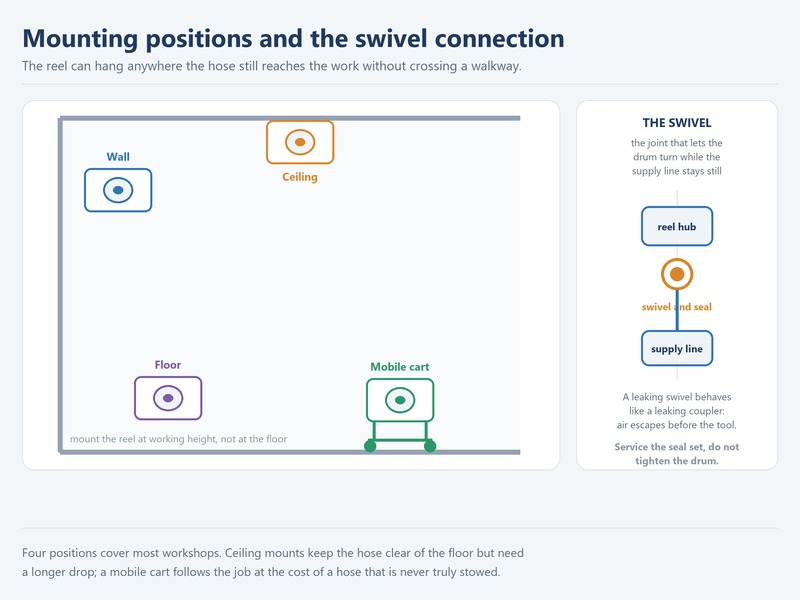
Figure 3. Mounting positions and the swivel connection to the supply line.
Swivels and Seals: Where Reels Actually Leak
The air hose reel swivel is the part that lets the drum turn while the supply line stays fixed. It carries a seal, usually an O-ring or a lip seal, and that seal is the most common failure point on any reel. A worn swivel leaks under pressure, drops the pressure at the tool, and wastes compressor run time. It is also the part most often blamed on the hose.
A reel does not change the flow a hose can carry, but it adds a swivel and a pair of fittings, and field figures for hose alone put the loss at about 2–5 PSI per 25 ft on 3/8 in. hose. The swivel and fittings sit on top of that, so a tight reel run can add several PSI at the tool. On the supply side, the air hose fittings guide shows which couplers suit a fixed line.
How to Test a Swivel for Leaks
Check the air hose reel swivel the way you check any joint. Listen for a hiss with the line pressurized, brush soapy water around the joint, and watch for bubbles. If the swivel drips while the drum turns, the seal is worn. Replace the seal or the swivel rather than tightening a leaking joint and hoping. The swivel seal and the hose tail are the air hose reel parts that wear first, and the air hose leak repair guide covers the wider set of leak points on a shop air line.
What You Get at Each Price Band
Price bands map closely to housing material and seal quality. Table 2 lists typical 2026 US retail ranges, not quotes, and they move with material costs and order size. Entry units use thin housings and basic seals, which is fine for light home use. Mid-range units add better swivels, stronger springs, and serviceable parts. Industrial units pair a heavy steel air hose reel with replaceable seals and parts, and they carry the highest air hose length and pressure ratings. Distributors often place a bulk order to test a new line before committing.
Table 2 groups the three bands by what they include, so you can compare a retractable air hose reel against a manual unit on features rather than price alone.
Table 2. What each 2026 US retail band includes by housing, seals and hose capacity
| Price Band | Housing | Swivel and Seals | Hose Capacity | Typical 2026 US Retail Range |
|---|---|---|---|---|
| Entry | Thin steel or composite | Basic O-ring, fixed swivel | 1/4 to 3/8 inch, 25 to 50 ft | About $30 to $70 |
| Mid-range | Coated steel or aluminum | Serviceable swivel, better seals | 3/8 inch, 50 ft, sometimes 1/2 inch | About $70 to $180 |
| Industrial | Heavy-gauge steel drum | Replaceable heavy-duty seal set | 1/2 inch, up to 100 ft | About $180 to $450 |
Installation in Seven Steps
Mounting the unit is a short job if you plan the path first. Work with the compressor off and the line depressurized. Use fasteners rated for the load, and add blocking or a backing plate when the wall is hollow.
- Shut off and depressurize — Close the supply valve, bleed the line, and confirm zero pressure before you touch any fitting.
- Mark the mount height — Place the unit above or beside the work so the hose hangs clear of walkways and doors.
- Find the studs or add blocking — Fasten into structure, or fit a backing plate wide enough to spread the load.
- Fit the bracket — Bolt the bracket level, so the drum does not fight gravity as it turns.
- Connect the inlet — Seal the threads with PTFE tape, then tighten the supply fitting to the swivel without over-torquing.
- Load the hose — Feed the hose through the guide arm, leave a short tail at the swivel, and check that the drum turns freely.
- Pressure test and adjust — Pressurize slowly, check the swivel and fittings with soapy water, then set the stop ball so the hose cannot retract past the arm.
Reel Maintenance and Safety Checks
The unit needs little care, but it needs the right care. Check the hose for cracks, blisters, and worn spots every month, wipe the drum and guide arm every seven days in daily use, and plan a full 30-day service of the seals, springs, and fasteners. Listen to the swivel for a hiss, and look for oil or water weeping past the seals.
Turn the drum by hand and feel for a stiff spot or a dragging brake. Keep the guide arm and its rollers clean, because grit wears both the hose cover and the arm. If you are unsure whether a hose is still good, a pressure test tells you more than a visual look.
Keep a small stock of air hose reel parts, such as seals, springs, and stop balls, so a repair stays a ten-minute job.
Replace, never repair. A cracked hose, a stiff or grinding drum, or a leaking air hose reel swivel is a stop-use condition, not a job for tape and hope. Depressurize the line before you retract or service the hose. If the hose is rated over 1/2 inch, fit a safety device at the supply end, as OSHA 29 CFR 1926.302(b)(7) describes. A hose that has lost its cover or its flexibility has lost its rating as well.
Air Hose Reel FAQs
What size reel do I need?
Match the unit to your hose bore and run. For 1/4 inch hose, a 25 foot unit is enough. For 3/8 inch hose, plan on 50 feet. For 1/2 inch hose, up to 100 feet. The reel must also carry the same working pressure as the hose. Buying one bore size up is a common way to offset the small extra loss from the swivel and fittings. Always check the printed label before you buy.
Does a reel reduce airflow?
A reel does not change the flow a hose can carry, but it does add a swivel and a pair of fittings. Each of those adds a small amount of pressure loss. In practice the loss stays modest when the reel matches the hose bore. If you notice a real drop at the tool, test the swivel for leaks first. Then check inside diameter and air hose length before you blame the compressor.
Where should I mount a reel?
Mount it where the hose can reach the farthest job without stretching, and where the hose hangs clear of walkways. A wall position suits a single fixed bay. A ceiling position keeps the floor clear and can serve two bays from one drop. A cart suits mobile work. In every case, fasten into structure or add blocking, because the pull on a loaded reel is larger than most people expect.
How much does a reel cost?
As a guide, entry reels sit around $30 to $70, mid-range units around $70 to $180, and industrial reels around $180 to $450 in typical 2026 US retail ranges. The price follows housing material, seal quality, and hose capacity far more than any brand name. A steel unit costs more than composite but lasts longer under heavy hose. If you buy in volume, a bulk order usually lowers the unit cost.
Can I use a PVC hose on a reel?
Yes, if the housing suits the hose and the climate. PVC hose follows ISO 5774:2023 and is rated to −10 °C, though it stiffens near 0 °C (32 °F) and can fight a light spring. In cold shops, rubber hose to ISO 2398:2024 stays flexible to −40 °C and retracts better. Whatever the material, keep the hose out of direct sun and away from sharp edges.
How do I stop a reel from leaking?
Fix the seal, not the symptom. A hiss at the swivel usually means a worn O-ring or lip seal, so replace the seal or the swivel rather than tightening a joint. Seal threaded connections with PTFE tape. Check the inlet fitting and the hose tail too, because those joints move with the drum. Depressurize the line before any repair, and replace a cracked hose rather than patching it.
My reel lives in an unheated service truck and gets used in damp conditions — steel or aluminum?
Aluminum saves weight and resists rust, which suits a cold, damp service truck, while composite is the lightest and cheapest to ship. Match the hose to the climate as well: PVC follows ISO 5774:2023 and stiffens near 0 °C, while rubber to ISO 2398:2024 stays flexible to −40 °C. Steel is the toughest of the three, but also the heaviest, so check that the mount carries it.
When is an industrial-grade reel worth $180–450 instead of a mid-range unit?
When the hose is 1/2 in. bore and up to 100 ft long, and the reel sees daily use. The industrial band buys a heavy-gauge steel drum, a replaceable heavy-duty seal set, and a swivel rated for the same pressure as the hose, so it can carry the full run without pinching the hose at the guide arm. A mid-range unit suits a 3/8 in. hose of 50 ft.
Source Reels and Hose Together
A unit is only as good as the hose inside it, so buy the two as one specification. A wall mount air hose reel from a hose maker comes matched to the bore, the pressure rating, and the fittings. That removes the guesswork that causes most early failures. One supplier for both also means one warranty, one lead time, and one label to trust.
HENGHUA manufactures reinforced air hoses and complete hose assemblies for workshops, distributors, and OEM brands. Every air hose we build uses a high-tensile textile reinforcement layer with an abrasion- and oil-resistant cover, is rated 200-500 PSI, and leaves the factory with crimped brass fittings and a pressure test on every batch.
We supply 1/4, 3/8, and 1/2 inch bore in rubber, PVC, polyurethane, and hybrid constructions, with custom lengths, fittings, colours, reels, and OEM/ODM branding. Because we control compounding, extrusion, braiding, and crimping in one plant, lead times stay short for bulk orders and the specification on the label is the specification you get. If you are sourcing air hoses for retail, distribution, or industrial use, send us your specification and we will quote against it. Get a quote and free samples
Send us a bulk order request and we will confirm the bore, the run, and the fittings before we quote. If you are still narrowing the hose itself, this guide to which bore suits your work answers that first.
Final Verdict: Choose a Retractable Air Hose Reel for the Hose You Run
Buy for the hose you actually run, then match everything else to it. Pick the reel type for how often you work, the bore and the run for the hose you own, and the mount for where the tool sits. Check the swivel and seals at every service, and replace instead of repairing. A single reel that matches one hose beats a cheap reel that fits none. Start with one air hose reel, prove it in your own shop, then scale to a bulk order.
Written by the HENGHUA engineering team, with input from workshop and maintenance teams across North America and Europe. HENGHUA manufactures reinforced air hoses and hose assemblies in rubber, PVC, polyurethane, and hybrid constructions, from 1/4 inch to 1/2 inch, rated 200–500 PSI, with custom lengths, fittings, colours, and OEM branding.






 English
  Spanish
  Portuguese
  French
  German
  Arabic
  Russian
  Indonesian
  Japanese
  Korean