goodheart786@gmail.com

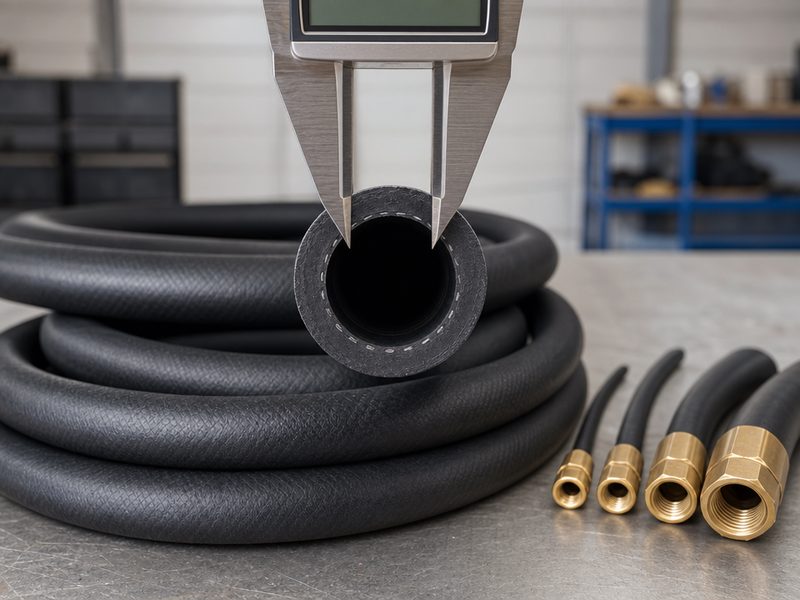
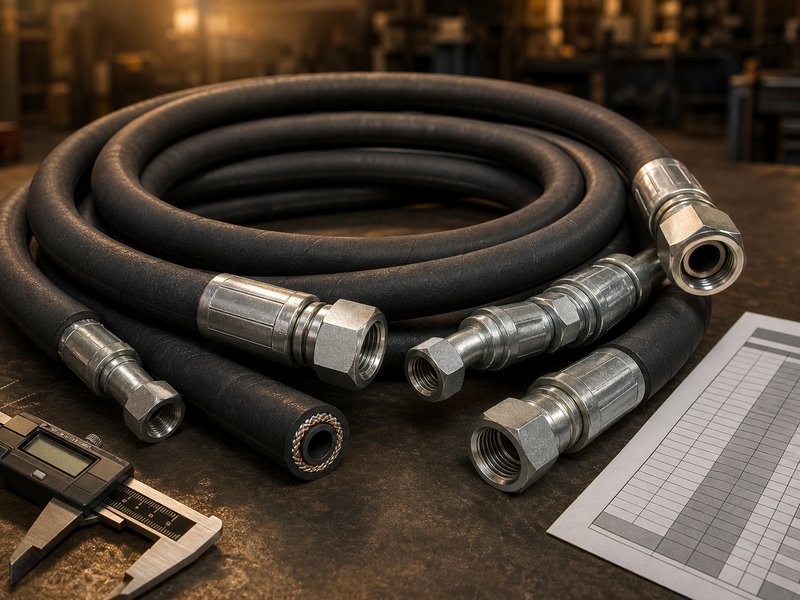
Coiled steel-wire-reinforced hydraulic hoses with crimped fittings on a workshop bench, with calipers and a size chart, representing a complete guide to hydraulic hose selection and maintenance

Hydraulic Hose: Everything You Need to Know

A hydraulic hose is a flexible, reinforced tube that carries pressurized hydraulic fluid between pumps, valves, and actuators to transmit power in machines of every size. If you are replacing a blown line on an excavator, specifying hoses for a new machine, or sourcing for a fleet, this guide covers construction, types, sizes, pressure ratings, […]

Hydraulic Hose: Everything You Need to Know Read More »
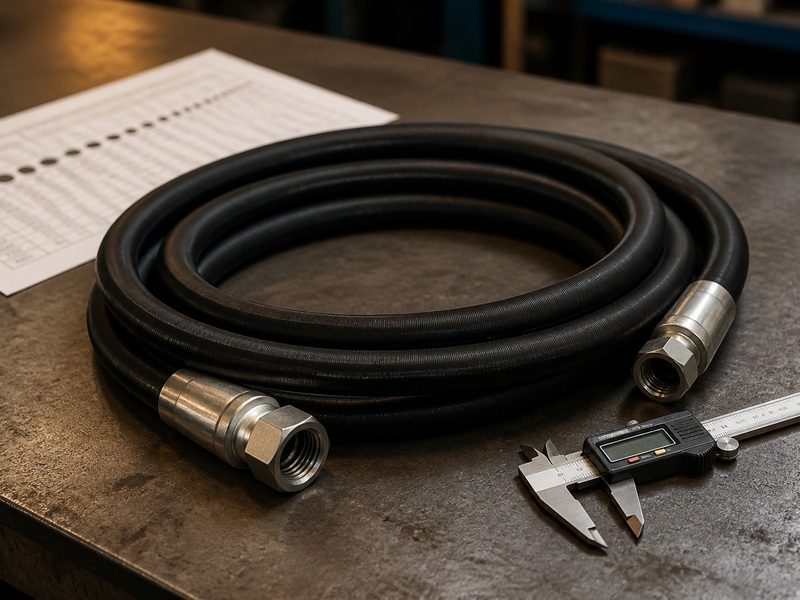
Hydraulic hoses with crimped steel fittings and a caliper and size chart on a workbench, showing the five selection factors for choosing the right hydraulic hose

How to Select the Right Hydraulic Oil Hose for Your System

The right hydraulic oil hose for your system is selected by matching five numbers — bore size, working pressure, temperature range, minimum bend radius, and end fitting type — then confirming the construction family (SAE 100R1, 100R2, or spiral-wound) against your fluid and duty cycle. This guide walks through every step of hydraulic hose selection

How to Select the Right Hydraulic Oil Hose for Your System Read More »

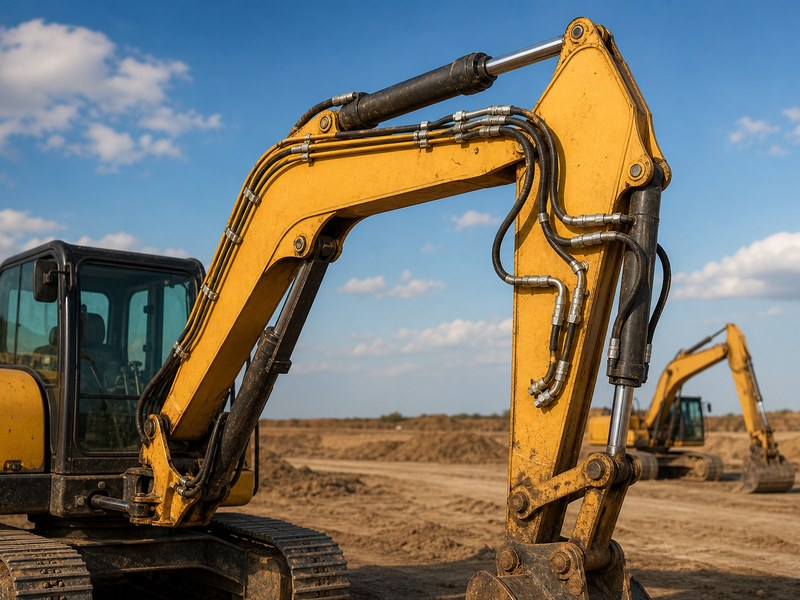
Excavator boom hydraulic hose assembly with crimped steel fittings running along the boom to the bucket cylinder on a construction site

Excavator Hydraulic Hose for Boom Lines: Selection & Replacement Guide

Looking for the right excavator hydraulic hose for your boom lines? The short answer: match the working pressure to your machine’s relief valve setting (4,000–5,800 PSI on standard excavators), choose two-wire braid (SAE 100R2) for mini and mid-size machines or four-spiral (100R12) above 30 tons, and match the fitting thread to your machine brand —

Excavator Hydraulic Hose for Boom Lines: Selection & Replacement Guide Read More »

Two hydraulic hoses side by side on a workshop bench: a lighter 2-wire braid hose with a tight natural coil and a heavier 4-wire spiral hose with a larger bend radius, both with crimped steel fittings

2-Wire Braid vs 4-Wire Spiral Hydraulic Hose: Which to Choose?

The 2 wire vs 4 wire hydraulic hose question has one practical answer: choose a 2-wire braid hose when your system runs at or below 4,000 PSI with moderate impulse cycles, and choose a 4-wire spiral hose when pressure spikes exceed 4,000 PSI or the circuit sees constant, violent pressure pulses. The number of steel wire

2-Wire Braid vs 4-Wire Spiral Hydraulic Hose: Which to Choose? Read More »

Hybrid polymer, rubber, and polyurethane air hoses coiled on a frozen workshop bench with frost on the fittings, demonstrating low-temperature flexibility

Best Air Hose for Cold Weather: What to Look For

Looking for the best air hose for cold weather? The short answer: for most buyers, that is a hybrid polymer air hose rated to -40°F — pliable below zero, kink-resistant, and priced between PVC and rubber. Choose EPDM rubber for industrial or oily environments, and polyurethane when weight matters most. This 2026 edition of the guide compares the four

Best Air Hose for Cold Weather: What to Look For Read More »

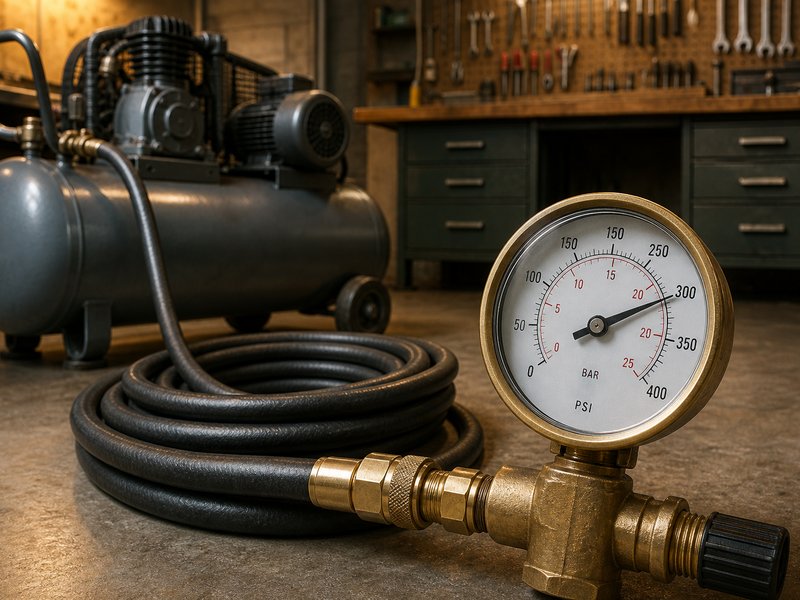
air compressor connected to a coiled air hose with a pressure gauge showing the working pressure in a workshop

Air Hose Working Pressure vs Burst Pressure: Safety Factor Explained

Air hose working pressure vs burst pressure — the short answer: working pressure is the maximum internal pressure an air hose can carry continuously and safely, while burst pressure is the destructive-test pressure at which the hose ruptures. The gap between the two numbers is the safety factor, and for compressed air hoses it is

Air Hose Working Pressure vs Burst Pressure: Safety Factor Explained Read More »

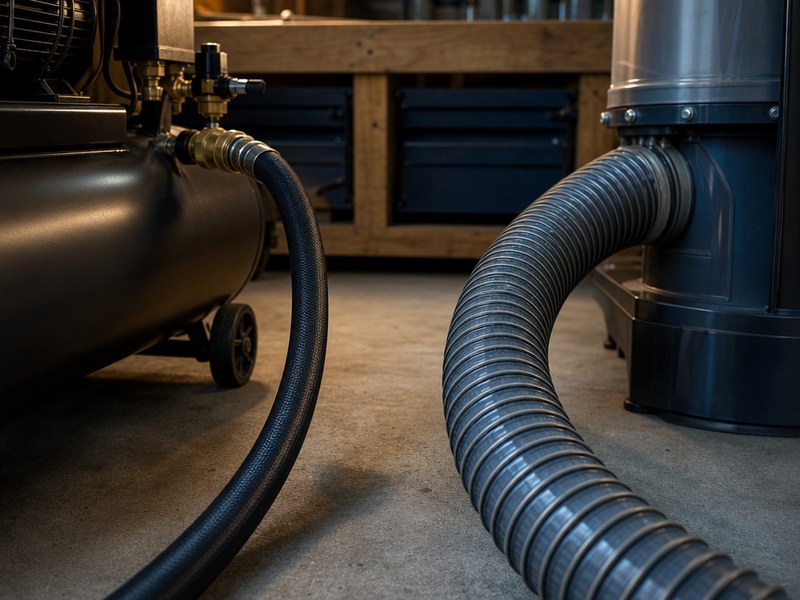
textile-braided air delivery hose and wire-reinforced air suction hose side by side in an industrial workshop

Air Delivery Hose vs Air Suction Hose: Key Differences

The suction hose vs delivery hose question comes down to one engineering fact: pressure direction. If air is pushed through the hose — delivery hose. If air is pulled through it — suction hose. An air delivery hose is reinforced to withstand positive internal pressure, while an air suction hose resists negative pressure (vacuum). Throughout

Air Delivery Hose vs Air Suction Hose: Key Differences Read More »