goodheart786@gmail.com

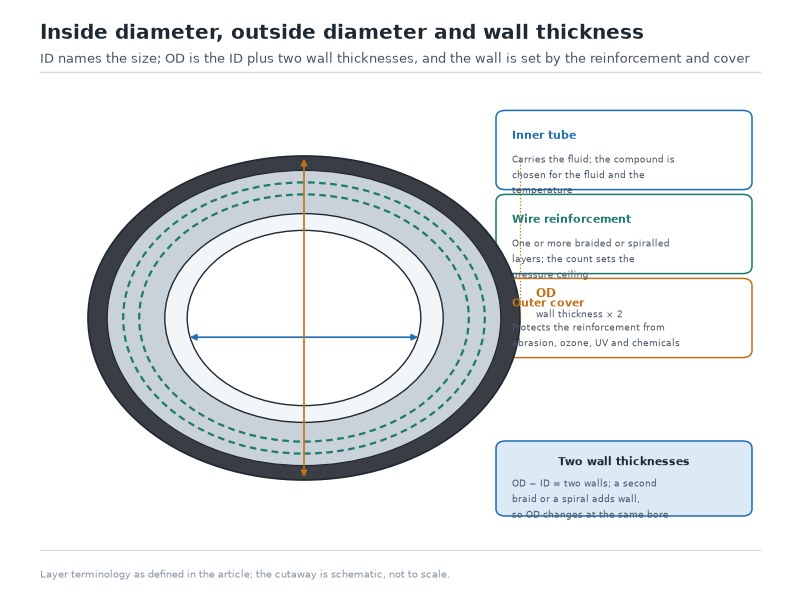
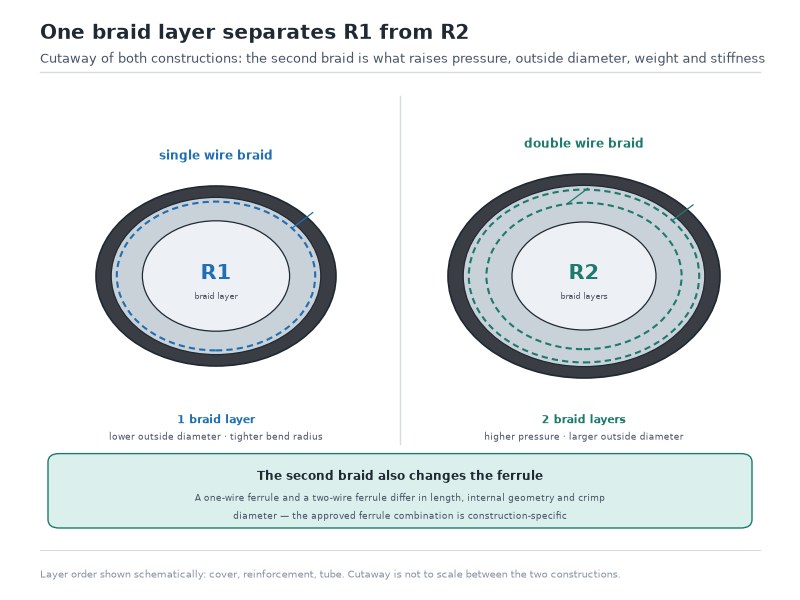
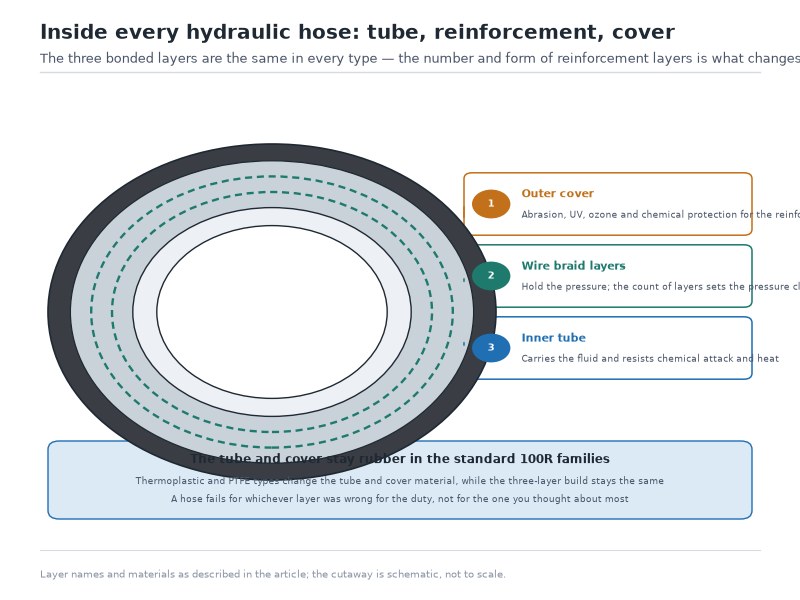
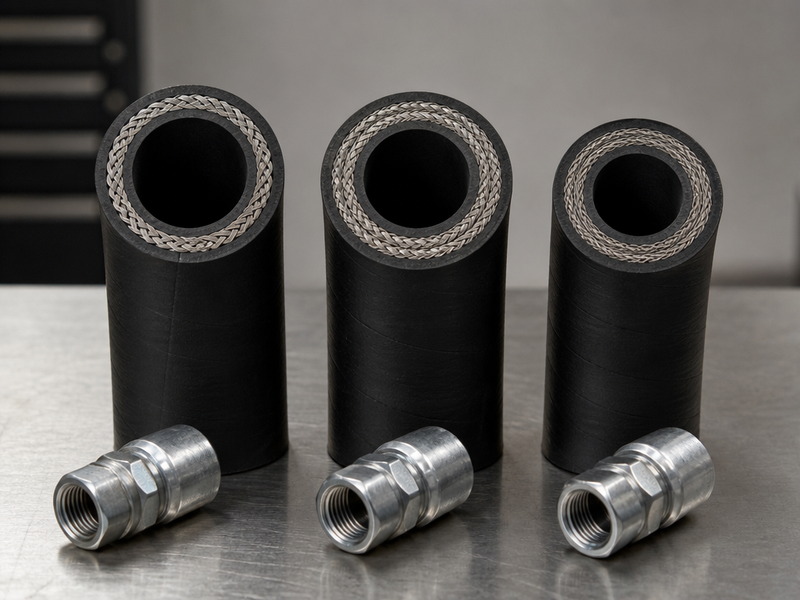
Cross-section of a hydraulic hose showing the inner tube, wire braid reinforcement layers, and outer cover

Types of Hydraulic Hose Explained: Uses, Construction & Selection

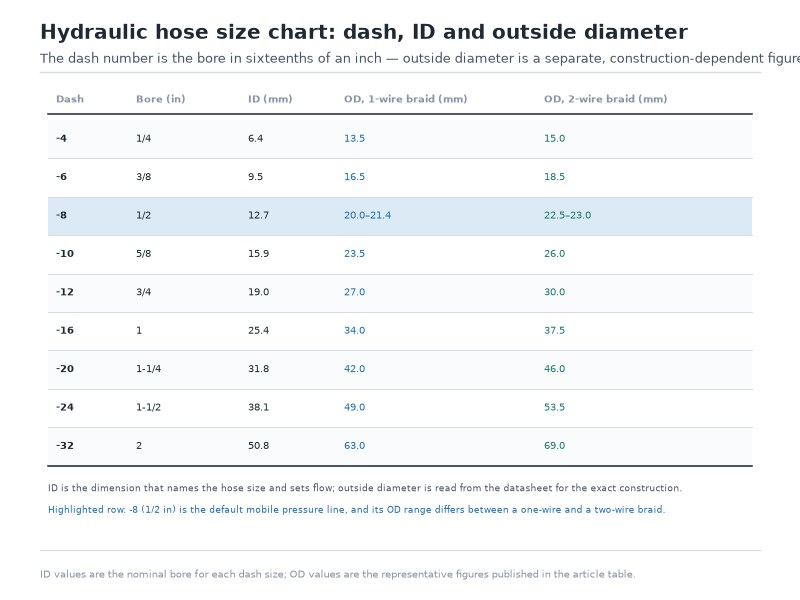
The main types of hydraulic hose fall into six construction families — single-wire braid, double-wire braid, spiral-wound, textile braid, thermoplastic, and PTFE — and which one belongs on a given line is decided by four numbers: working pressure, bore size, fluid temperature, and bend radius. This guide gives you the chart and the checklist together: […]

Types of Hydraulic Hose Explained: Uses, Construction & Selection Read More »
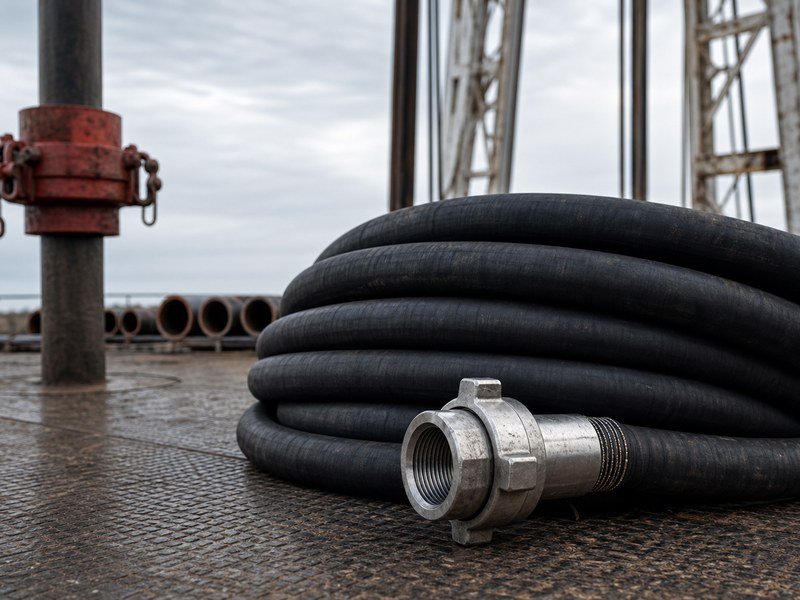
High-pressure oilfield hose coil with a steel union end on a drilling rig floor beneath the derrick

Petroleum & Oilfield Hose: High-Pressure Solutions Guide

An oilfield hose is a flexible, wire-reinforced line built to carry drilling fluid, cement, fracturing fluid, or well-control fluid under pressure. The working pressure depends on the duty: a rotary drilling or vibrator hose is specified from about 4,000 psi to 7,500 psi (Grade C to Grade E), a fracturing hose commonly works at 10,000–15,000

Petroleum & Oilfield Hose: High-Pressure Solutions Guide Read More »

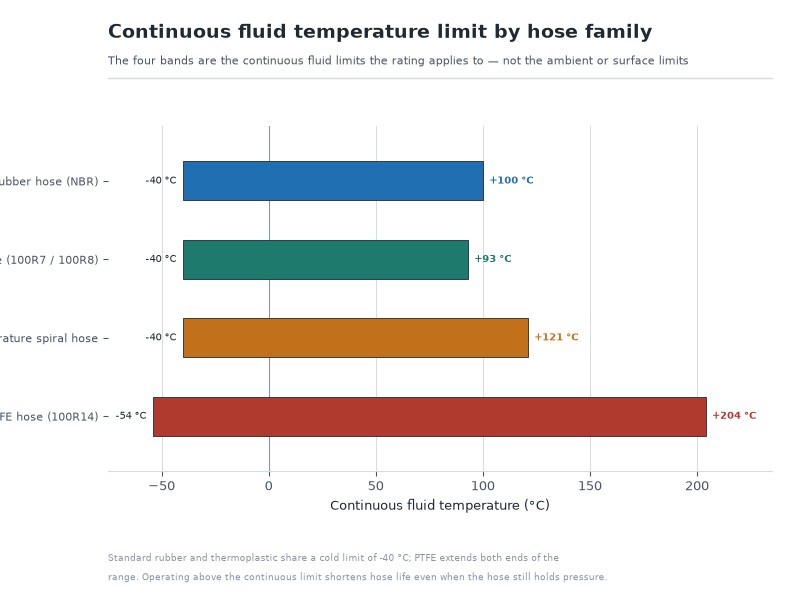
Chart comparing continuous hydraulic hose temperature rating ranges for standard rubber hose, thermoplastic hose, high-temperature rubber hose and PTFE hose

Hydraulic Hose Temperature Rating: Limits, Charts & Selection

A hydraulic hose temperature rating is the range of fluid temperatures a hose is designed to carry continuously — for standard rubber hydraulic hose, -40°C to +100°C (-40°F to +212°F), with an intermittent allowance that usually stops around +120°C (+248°F). The three limits people search for most often are these: standard rubber hose -40°C to

Hydraulic Hose Temperature Rating: Limits, Charts & Selection Read More »

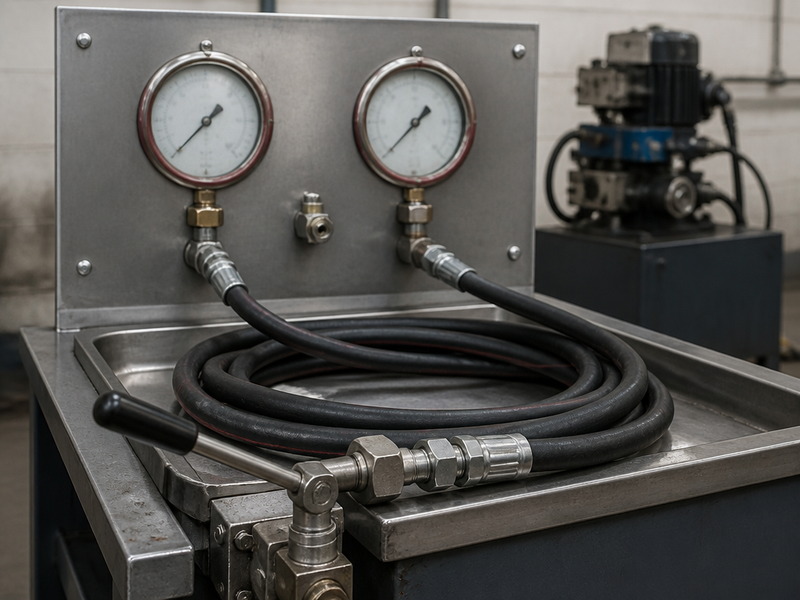
Hydraulic hose assembly with a pressure gauge showing 4,000 PSI working pressure on an industrial workshop bench

Hydraulic Hose Pressure Rating: Working vs Burst Pressure

The hydraulic hose pressure rating that governs whether a line is safe to run is its working pressure — the highest pressure the hose is designed to see continuously in normal service. Burst pressure is a different number: it is the destructive test result at which the hose actually ruptures, and SAE J517 requires a

Hydraulic Hose Pressure Rating: Working vs Burst Pressure Read More »

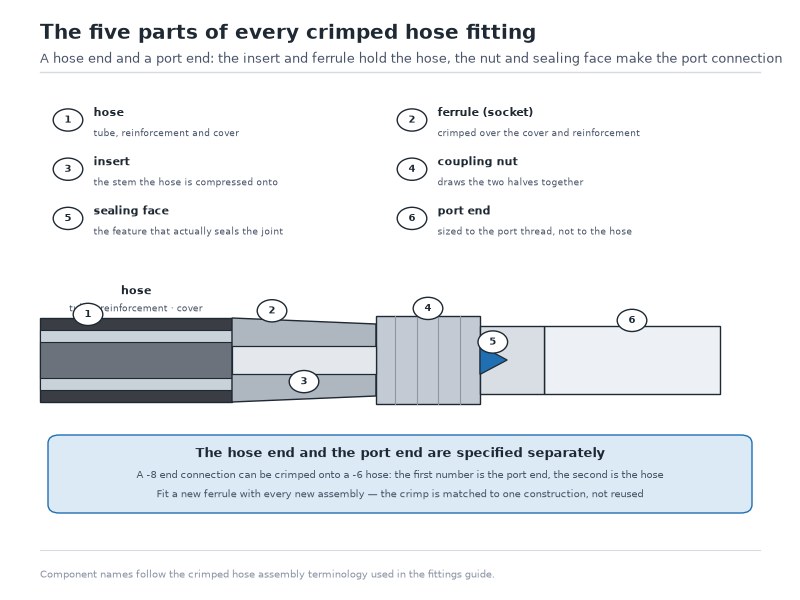
Cutaway view of a hydraulic hose fitting showing the insert, ferrule, coupling nut and sealing face, with the hose end and the port end labelled

Hydraulic Hose Fittings: The Ultimate Guide to Identification & Selection

Identifying a hydraulic hose fitting comes down to three measurements and one visual check: thread outside diameter, threads per inch (or metric pitch), whether the thread is straight or tapered, and the shape of the sealing face. Take those four readings and almost all hydraulic hose fittings resolve into one of eight end-connection families —

Hydraulic Hose Fittings: The Ultimate Guide to Identification & Selection Read More »

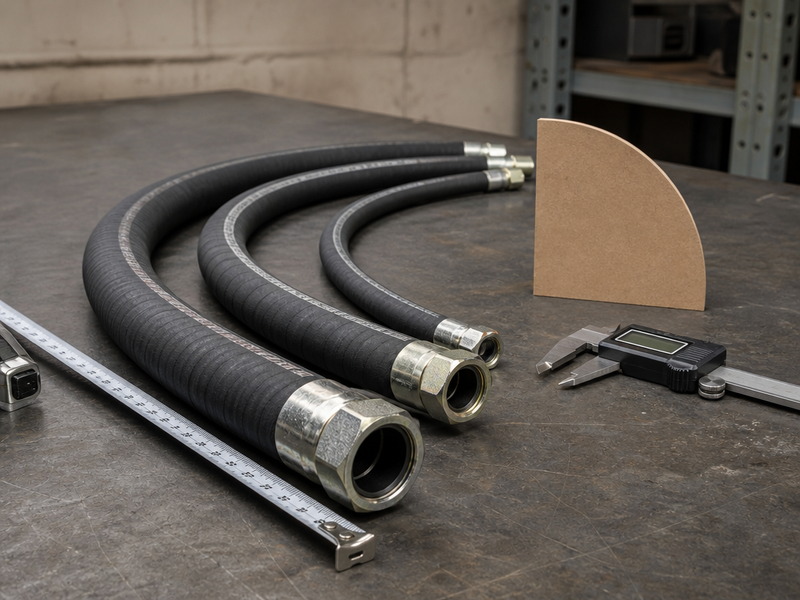
Hydraulic hoses of several dash sizes curved on a workshop bench with a tape measure, caliper, and cardboard radius template, illustrating how bend radius is checked before installation

Hydraulic Hose Bend Radius: How to Calculate & Why It Matters

Hydraulic hose bend radius is the smallest radius a hose can be bent to without kinking, collapsing its bore, or fatiguing the steel reinforcement that carries the pressure. Calculate it in three steps: read the minimum bend radius for your hose type and dash size from the data sheet, convert that radius into the hose

Hydraulic Hose Bend Radius: How to Calculate & Why It Matters Read More »