goodheart786@gmail.com

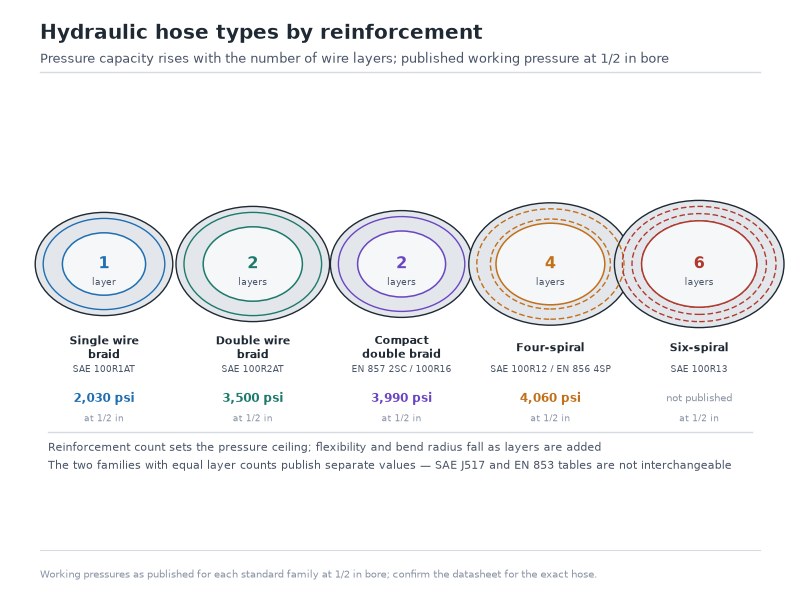
Comparison of hydraulic hose types by reinforcement: single wire braid, double wire braid, compact double braid, four-spiral and six-spiral construction

Hydraulic Hose Basics: Types, Laylines and Pressure Ratings

A hydraulic hose layline is the printed line of text and numbers running along the hose cover that identifies its manufacturer, standard, size, working pressure, temperature range, and date of manufacture — and in most cases it is the only reliable way to identify a hose before you replace it. A complete layline carries up […]

Hydraulic Hose Basics: Types, Laylines and Pressure Ratings Read More »
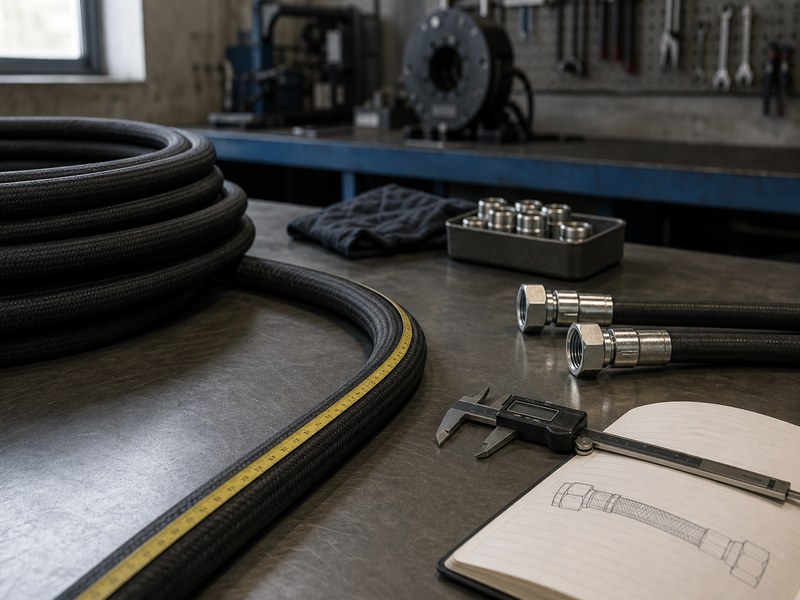
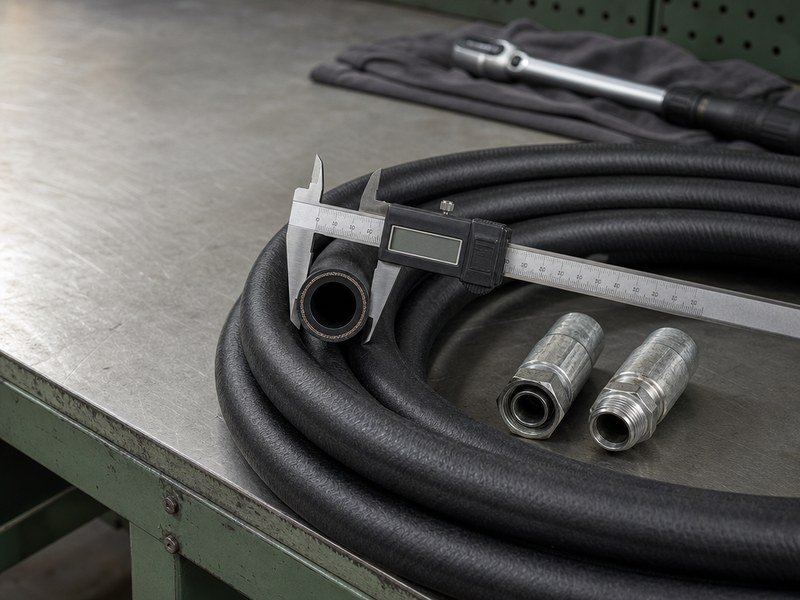
Hydraulic hose measuring station on a workshop bench with a coiled hose, tape measure, digital calipers and crimped assemblies

How to Measure a Hydraulic Hose: Length, ID and Fittings

Here is the short answer: how to measure hydraulic hose comes down to three separate numbers — overall length, inside diameter (ID), and the end connection. Length is measured end-to-end between the extreme ends of the two couplings, or from sealing face to sealing face when the ends are O-ring face seal, and always through

How to Measure a Hydraulic Hose: Length, ID and Fittings Read More »

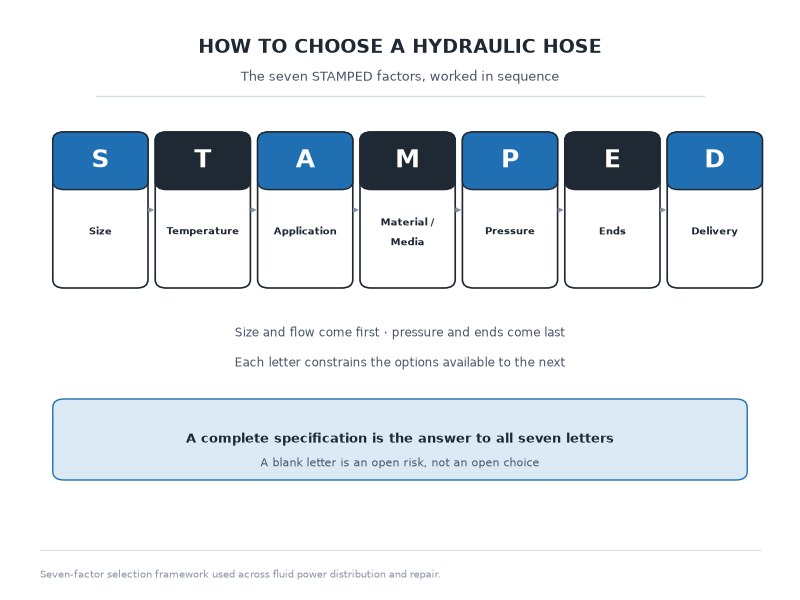
How to choose the right hydraulic hose using the STAMPED method: size, temperature, application, media, pressure, ends and delivery

How to Choose the Right Hydraulic Hose: The STAMPED Method

Knowing how to choose a hydraulic hose comes down to working through seven questions in a fixed order — Size, Temperature, Application, Material/Media, Pressure, Ends, and Delivery — the industry framework known as STAMPED. Answering all seven before you order prevents the most expensive mistake in hydraulics: a hose that satisfies one requirement while quietly

How to Choose the Right Hydraulic Hose: The STAMPED Method Read More »

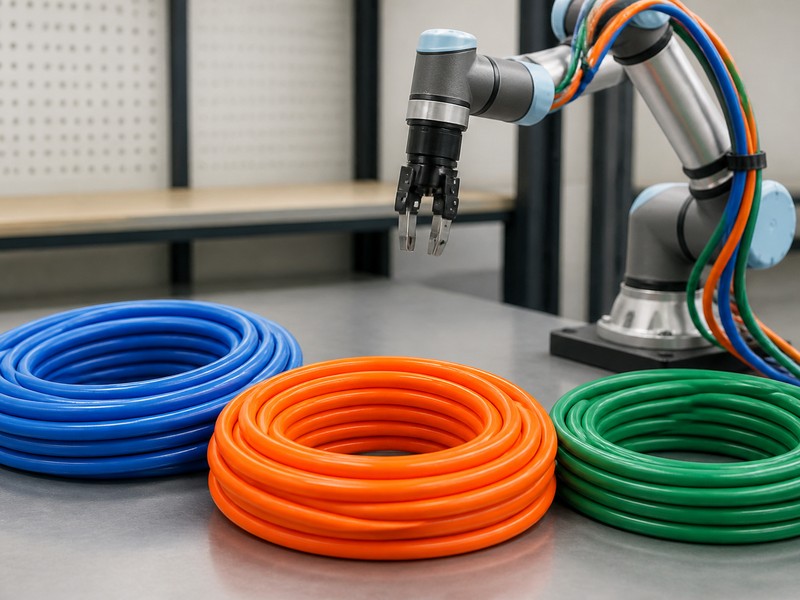
Thermoplastic fuel hose and oil hose coils in blue, orange, and green beside a lightweight robotic arm assembly in a workshop

Thermoplastic Fuel Hose & Oil Hose: A Lightweight Alternative to Rubber

A thermoplastic fuel hose is a lightweight alternative to rubber for oil and fuel lines: instead of a rubber tube wrapped in steel wire, it uses a polymer tube, synthetic-fibre reinforcement, and a polyurethane cover, which cuts weight by roughly 30-50% at an equivalent pressure rating. The savings show up where rubber is weakest: tight

Thermoplastic Fuel Hose & Oil Hose: A Lightweight Alternative to Rubber Read More »

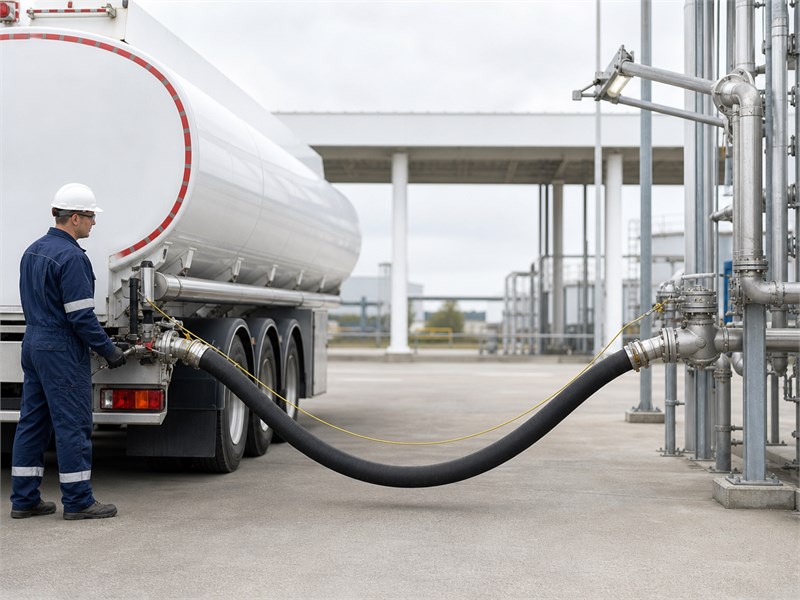
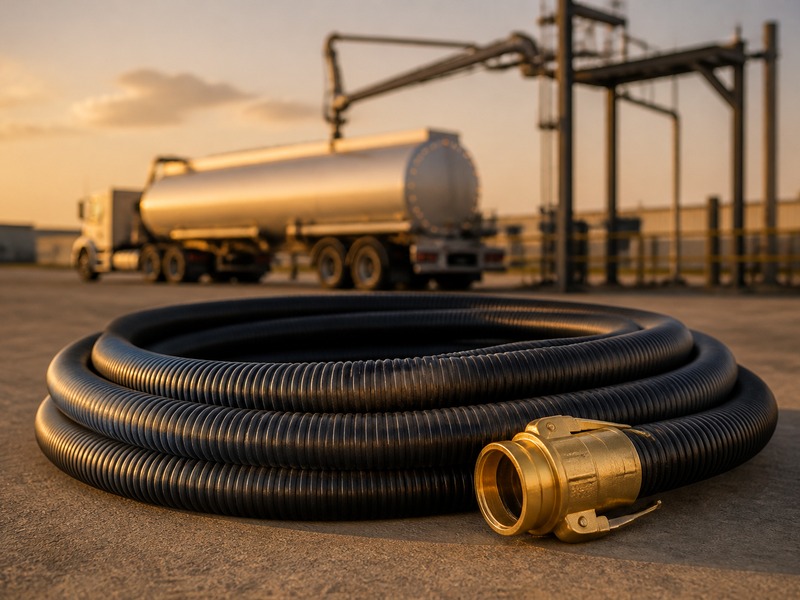
Petroleum transfer hose with camlock fittings coiled beside a tank truck loading rack at a fuel terminal

Petroleum Transfer Hose: Bulk Loading & Drop Hose Guide

A petroleum transfer hose is the flexible connection that moves gasoline, diesel, fuel oil, and other refined products between storage, loading racks, tank trucks, railcars, and ships — and choosing the right one comes down to five decisions: hose type (bulk transfer or drop hose), bore size, working pressure, end fittings, and the standards the

Petroleum Transfer Hose: Bulk Loading & Drop Hose Guide Read More »

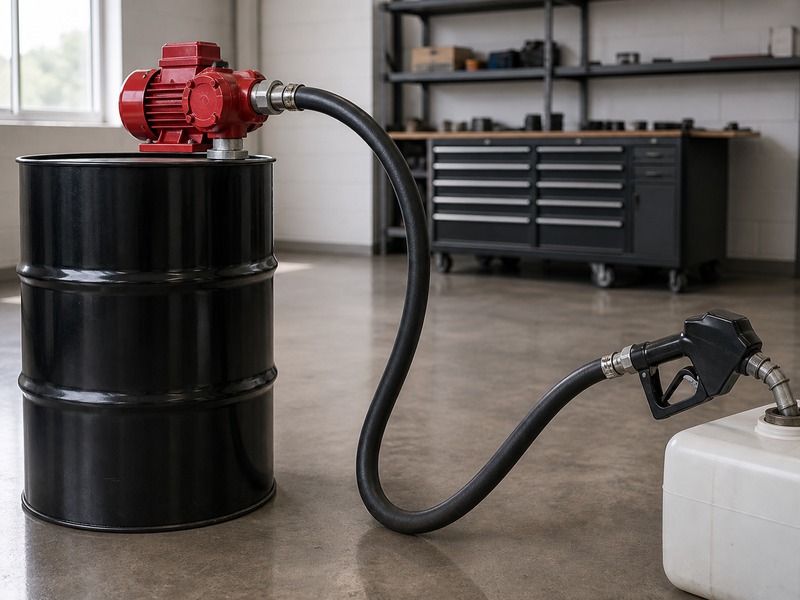
Oil hose types arranged side by side on an industrial workbench: hydraulic, suction and discharge, transfer, and fuel hose with fittings visible

Oil Hose: Types, Applications & Selection Guide

An oil hose is a flexible rubber or thermoplastic line engineered to carry petroleum-based fluids — hydraulic oil, engine oil, lubricating oil, and diesel fuel — without swelling, softening, or contaminating the fluid. This guide compares the six main hose families, explains where each one works best by industry and machine, and walks through a

Oil Hose: Types, Applications & Selection Guide Read More »