
A chemical hose testing certificate proves exactly what its scope states, no more and no less. A design approval proves that a design or a product range met a named standard under stated conditions. A pressure test certificate proves that one assembly held a stated pressure at one point in time. A material certificate proves only that a mill declared the material properties of what it supplied.
None of those documents, by itself, proves that the hose on your rack is still fit for your medium today. The variables that decide whether a certificate is useful are its scope, the issuing body and its accreditation, the standard edition and year, and the pressure, temperature, medium and duration of the test. This article separates those document types and shows what a buyer should verify before relying on any of them.
1. Why One Word, “Certificate,” Covers Five Different Documents
In commercial practice the single word certificate stands for at least five unrelated documents. One approves a design. One records a pressure test on a single assembly. One records an in-service test done at your own facility. One reports material values. One is a manufacturer’s declaration that a product conforms or is fit for a stated use. Treating them as interchangeable is a frequent source of disputes in chemical service.
The chemical hose category on a supplier site will list several of these documents. A chemical hose testing programme produces them in sequence, not as one file.
Read the table below by pairing the third column with the fourth. The gap between what a document proves and what a buyer assumes it proves is where disputes start.
Table 1. Five document types, the issuer, and the limit of what each proves
| Document | Typically issued by | What it proves | What it does not prove |
|---|---|---|---|
| Type examination certificate | A third-party inspection body | That a design or product range met a named standard under the stated conditions | That any individual hose shipped was tested or performs as the design does |
| Hydrostatic test certificate | The manufacturer or a test house | That one assembly held a stated pressure for a stated time on a stated date | That the same result will repeat after field use, flexing or chemical exposure |
| In-service pressure test record | The facility or its contractor | That the hose passed a defined static pressure test at that moment | That the hose is chemically suited to the medium or safe beyond the test conditions |
| Inspection certificate 3.1 | The material mill | That the mill declared the material properties of the batch it supplied | That the finished hose performs to a pressure or chemical-resistance standard |
| Declaration of conformity or food-contact declaration | The manufacturer | That the manufacturer declares conformity or suitability under a named directive | That an independent body verified the claim or tested the specific unit |
A design approval and a material certificate both look authoritative, and both are genuine documents. Neither measures the burst strength of the hose in your rack. Keep the claim and the document separate in your own mind.
2. Type Examination Certificate: Approval of a Design, Not of the Unit Shipped
A type examination certificate is issued against a design or a product range, and it states that scope on its face. It names the standard, the type designation and the limits of the approval. When a third-party inspection body certifies a thermoplastic composite hose to a design standard, the certificate attaches to the design, not to the pallets in your warehouse.
What the design approval covers
It covers the construction lay-up, the bore range and the pressure and temperature limits named in the approval. For a thermoplastic multi-layer composite hose, the design standard EN 13765:2018 defines four types, bores of 25 mm to 300 mm, working pressures of 4 bar to 14 bar and working temperatures of −30 °C to +150 °C. A certificate to that standard therefore describes the envelope of the approved design, not a measurement of your hose.
Where the certificate stops
It does not prove that any individual hose was built exactly to the approved design. It does not prove that a specific unit passed a pressure or burst test. A design certificate can stay valid while a production lot drifts, so pair it with batch or unit records whenever the service is critical.

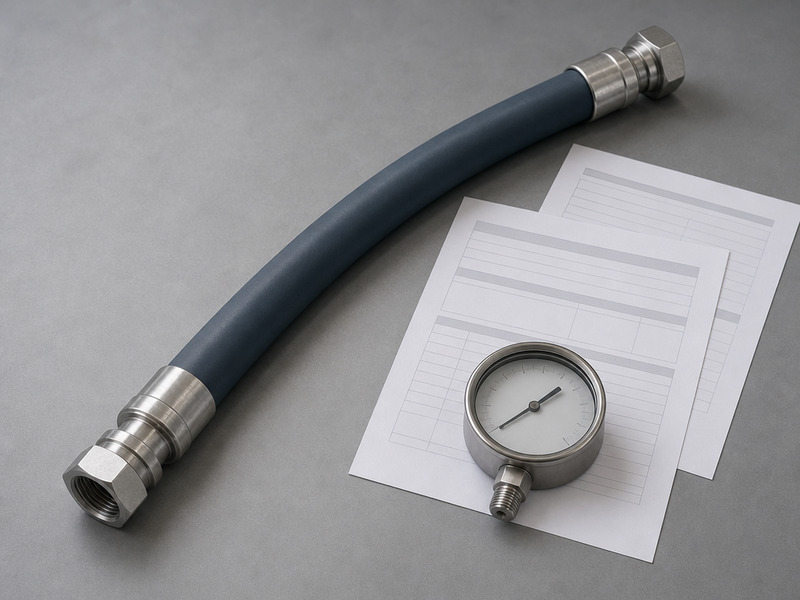
Figure 1. A design approval names its scope and its limits, not the individual hose shipped.
3. Hydrostatic Test Certificate: One Assembly, One Test, One Time
A hydrostatic test certificate records a measurement made on a physical assembly. The method standard is ISO 1402, which covers hydrostatic and burst testing of hose and hose assemblies. A complete certificate states the test pressure, the hold time, the test fluid, the temperature, the date and the assembly identifier. What it proves is narrow: this assembly held this pressure, with this fluid, at this temperature, for this time, on this date.
Our hydrostatic and impulse testing guide explains how those methods differ and what each one reports.
What to check before you accept one
The document is only as good as the conditions printed on it, so confirm each field below on a hydrostatic test certificate:
- The test pressure as a number with its unit, not a bare percentage
- The hold duration and the test fluid used
- The temperature at the time of the test
- The assembly tag or serial number and the test date
- The method standard named, such as ISO 1402
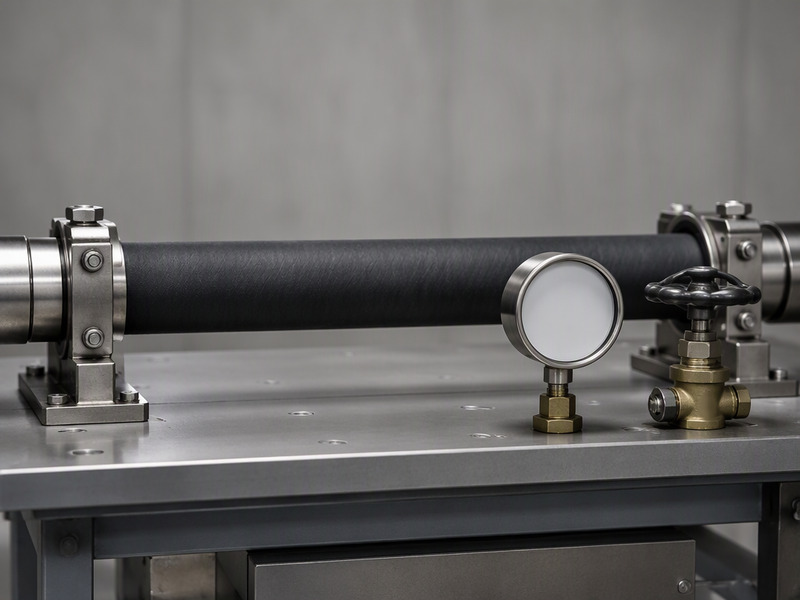
Figure 2. A pressure test records one assembly, one pressure and one date.
4. Hose Burst Test vs Working Pressure: What the Numbers Mean
A hose burst test measures the pressure at which a hose fails, and it is destructive, so it is run on a sample or a scrap assembly rather than on the hose you will ship. A working pressure rating is a fraction of that burst value chosen by the manufacturer. Because the two numbers answer different questions, a burst figure alone never tells you the pressure you may use in service.
HENGHUA publishes a 4:1 design safety factor across its chemical range, so a hose rated at 150 psi has a design burst of 600 psi (calculated as 150 × 4). Chemical hose testing is a set of separate measurements, not one headline number. Treat every burst-test figure as a property of a sample, not of the whole population of hoses.
For transfer hose under US rules the baseline can be higher. 33 CFR 154.500(a) sets the minimum design burst pressure at no less than four times the sum of two values. The first is the relief-valve setting pressure, or the maximum pump pressure where no relief valve is fitted. The second is the static head pressure of the transfer system at the point where the hose is installed. 33 CFR 154.500(b) then requires the maximum allowable working pressure (MAWP) to be greater than that same sum.
Use our hose standards selection guide to match a published rating to the medium and the duty you actually run.
A certificate is only as strong as the method behind it. The table below lists the common methods and the output each one reports.
Table 2. Common hose test methods and the output each one reports
| Method | What it measures | Typical reported output |
|---|---|---|
| ISO 1402 | Hydrostatic and burst behavior of hose and hose assemblies | Test pressure held, and burst pressure reached |
| ISO 6803 | Impulse endurance under cyclic pressure | Cycles survived at a stated pressure and temperature |
| ISO 6945 | Cover resistance to abrasion | Material loss, or cycles to failure |
| ASTM D471 | Rubber behavior after immersion in a liquid | Volume swell, hardness change, tensile and elongation change |
| ASTM D543 | Plastics resistance to chemical reagents | Mass and property change after a defined exposure |
| EN ISO 8031 | Electrical resistance of hoses | Resistance in ohms for the grade tested |
| EN 10204 3.1 | Material inspection documentation | Declared material properties for the batch |
A pressure certificate usually names its method, and HENGHUA runs both ISO 1402 and ISO 6803 testing in house. A hydrostatic test proves the assembly held pressure once; an impulse test says more about fatigue life, but it still describes a sample, not every unit.
5. In-Service Pressure Testing Under 33 CFR 156.170
A third kind of document records a test done while the hose is in service at a facility. Under 33 CFR 156.170(c)(1), a nonmetallic transfer hose must be free of unrepaired loose covers, kinks, bulges and soft spots. It must also be free of gouges or cuts that penetrate the first reinforcement layer, and free of external deterioration. It must hold a static liquid pressure of at least 1.5 × MAWP without bursting, bulging, leaking or distorting abnormally.
The same clause combines the visual check and the pressure check into one test, so a pass is evidence of fitness at that moment and nothing more. The test fluid is limited to liquids compatible with the hose tube as recommended by the hose manufacturer, per 33 CFR 156.170(e). Pressure gauges used for the test must read within 10 % of actual pressure, per 33 CFR 156.170(c)(3). Facility test and inspection frequency is set at 33 CFR 156.170(f)(1): annually, or not less than 30 days before the first transfer made more than one year after the previous tests and inspections.
That frequency rule is a maintenance obligation, not a part of the hose’s design. It tells you when the facility must re-test, and it does not extend the meaning of any single test record beyond the day it was made.
6. Inspection Certificate 3.1: Material, Not Performance
An inspection certificate 3.1 follows the EN 10204 inspection-documentation scheme, and its claim is narrow: the manufacturer declares that the material it supplied meets the stated analysis and mechanical properties. It is issued by the mill, not by an independent body, so it carries the mill’s own declaration of its product.
What it does not do is prove that the finished hose meets a pressure standard or a chemical-resistance standard. A 3.1 certificate on the steel wire reinforcement says nothing about how the polymer tube behaves against your medium. Use it to confirm that the reinforcement or the coupling material is what the order specified, and read our pressure and impulse testing standards for the tests that cover performance instead.
7. Declarations of Conformity and Food-Contact Declarations
A declaration of conformity is a manufacturer’s statement that a product meets a named directive or standard, and it is normally self-declared unless a notified body is involved. A food-contact declaration covers different ground: it states that the materials intended to touch food meet the applicable food-contact requirements for the stated conditions of use. Neither document reports a pressure result, and neither should be read as a test certificate.
Both types of declaration also carry limits. A declaration of conformity is only as broad as the directive it names. A food-contact declaration is tied to defined contact conditions such as temperature and contact time, so a declaration written for one duty may not cover another.
8. What to Verify in a Chemical Hose Testing Certificate
A certificate tells you more through its scope and its conditions than through its logo. A distributor checking an incoming lot, a plant QA engineer releasing a chemical transfer package, and a tank-terminal operator auditing an in-service hose each verify different fields. Work through the fields below before you accept one, and match each field against the service you intend to run. If a certificate cannot be tied to a specific design, batch or unit, its practical value is low no matter how formal it looks.
One field worth its own check is the pressure grade. Our chemical suction and discharge hose carries a published working pressure, and a test certificate should reference that same rating and its test basis, not a different figure.
Table 3. What a buyer should verify on a chemical hose test or inspection certificate
| Item to verify | What good looks like | Common gap |
|---|---|---|
| Scope | States whether it covers a design, a batch or a single unit | A design approval presented as if it covered the shipped hose |
| Issuing body and accreditation | Third-party body named, with accreditation covering the test method | No body named, or an accreditation that does not cover the method |
| Standard edition and year | Edition and year stated, and current for the order | An older edition quoted without noting it has been superseded |
| Test conditions | Pressure, temperature, medium and duration all given | A pressure figure with no temperature or hold time attached |
| Traceability | Certificate identifier matches the marking on the hose | A certificate that cannot be tied to a specific assembly or batch |
Two rows in that table deserve the closest attention in practice. A certificate with no named issuing body cannot be checked, and a pressure figure with no temperature or hold time cannot be reproduced. Ask for the missing fields in writing before the hose enters service.
9. Traceability: Matching the Certificate to the Hose Marking
Traceability is what turns a certificate from a general claim into evidence about your hose. The marking rules for transfer hose in US service show how specific that link must be. Under 33 CFR 154.500(e), the hose must be marked with the name of each product it may carry, or with OIL SERVICE. A third option is HAZMAT SERVICE—SEE LIST followed immediately by a symbol keyed to the facility operations manual.
Under 33 CFR 154.500(f), the hose must also be marked with the MAWP, the date of manufacture and the date of the latest test required by 33 CFR 156.170. The last two markings need not be on the hose itself if they are held in the vessel or facility hose records and the hose is marked so it can be identified with them. Under 33 CFR 154.500(g), burst pressure and test pressure are recorded in the facility or vessel hose records instead of on the hose.
Chemical hose testing records are only useful when they trace to the marking on the unit. When you buy a hose, ask for a certificate that carries the same identifier that is stamped or printed on the hose. If the certificate uses an internal lot code, the supplier should be able to explain how that code resolves to the marking on the unit.

Figure 3. The certificate identifier must match the marking on the hose.
10. How HENGHUA Runs Chemical Hose Testing In House
HENGHUA treats chemical hose testing as both a design activity and a production activity, and it publishes the facts below about its plant and its laboratory. A buyer can use these as a starting point and still ask for the assembly-level proof that a design approval cannot supply.
The following is what HENGHUA publishes about its chemical hose and its in-house testing:
- An in-house test laboratory running burst testing to ISO 1402 and impulse testing to ISO 6803
- A 4:1 design safety factor across the range
- A program range of inner diameters from 3 mm to 102 mm, that is 1/8 in to 4 in
- Chemical discharge hose at 150 psi, and chemical suction and discharge hose at 150 psi and 250 psi
- A quality system certified to ISO 9001, IATF 16949 and ISO 14001
- 45 QC inspectors and 25 R&D engineers among more than 320 employees
- A capacity of 20 million meters per year across 95 production lines on a 35,000 m² site
A 4:1 safety factor is a design relationship, not a test result. It means the design burst is intended to be four times the published working pressure, and it does not replace a pressure test record on one specific assembly. When a project needs unit-level proof, request a test record for the tagged assembly and confirm the method behind it. The chemical hose range follows this program.
よくある質問
What does a chemical hose testing certificate actually prove?
A chemical hose testing certificate proves only the specific claim printed on it. A design approval proves a design met a standard. A hydrostatic certificate proves one assembly held a stated pressure for a stated time on a stated date. A 3.1 document proves a mill declared material properties. None of them proves that the hose in front of you is safe for your medium today.
Is a type approval valid for every hose in a shipment?
No. A type examination certificate attaches to a design or a product range, not to individual units. It shows that the approved design met the named standard under stated conditions. It does not show that each hose in a shipment was built exactly to that design, nor that any one of them passed a pressure test. Ask for batch or unit records when the service is critical.
What is the difference between a hose burst test and a proof pressure test?
A hose burst test is destructive: it raises pressure until the hose fails, so it is run on a sample rather than on the hose you will use. A proof or hydrostatic test holds a defined pressure, usually a multiple of the working pressure, for a set time and records a pass or a fail. One measures a limit; the other confirms fitness at a chosen pressure.
What is an inspection certificate 3.1 used for?
A 3.1 document covers material, not performance. Under the EN 10204 scheme it is the manufacturer’s declaration that the supplied material meets stated analysis and mechanical properties for the batch. It is useful for confirming that reinforcement or coupling material matches the order. It does not prove that the finished hose meets a pressure standard or a chemical-resistance standard.
How long is a pressure test record valid?
A pressure test record is evidence of one test at one time, so it has no fixed shelf life. For facility transfer hose under 33 CFR 156.170(f)(1), tests and inspections are required annually, or not less than 30 days before the first transfer made more than one year after the previous tests and inspections. Between tests, store, inspect and handle the hose so the tested condition is preserved.
What pressure is used in the 33 CFR 156.170 in-service test?
33 CFR 156.170(c)(1) requires a nonmetallic transfer hose to be tested with static liquid pressure of at least 1.5 × MAWP. The hose must hold that pressure without bursting, bulging, leaking or distorting abnormally, and it must pass a visual condition check at the same time. The test fluid must be a liquid compatible with the hose tube as recommended by the hose manufacturer.
Does a declaration of conformity replace a test certificate?
No. A declaration of conformity is self-declared rather than verified by an independent body, and it is written against one named directive. A test certificate records a measurement made on a sample or a unit. A food-contact declaration covers food-safety suitability, not pressure performance. Treat each document as covering only its own claim, and its own conditions.
What should I check first on a pressure test certificate?
Check the scope first, then the conditions. Confirm whether the certificate covers a design, a batch or a single unit. Then confirm the test pressure with its unit, the hold time, the test fluid, the temperature and the date, and the assembly identifier. Finally, check that the issuing body is named and that its accreditation covers the method, such as ISO 1402.
Can a certificate prove a hose is safe for a specific chemical?
No certificate can prove chemical suitability on its own. Chemical resistance depends on the concentration, the temperature and the exposure time, and a resistance chart is a screening aid rather than a guarantee. Immersion tests such as ASTM D471 and ASTM D543 report volume swell, hardness change and tensile or elongation change for defined conditions. Match those conditions to your service before you rely on them.
How do I trace a certificate to the hose I received?
Traceability depends on a shared identifier. The certificate should carry the same tag, lot or serial number that is marked on or attached to the hose, and the supplier should explain how any internal code resolves to that marking. Under 33 CFR 154.500(f), the MAWP must be marked on the hose, while the date of manufacture and the latest test date may be marked on it or held in records that identify it.
HENGHUAについて
HENGHUA is a hose manufacturer supplying distributors, chemical plant operators, EPC contractors, tank-terminal operators and OEM programs. The chemical range covers chemical discharge hose rated at 150 psi and chemical suction and discharge hose rated at 150 psi and 250 psi, alongside steam, water, oil, material-handling and multipurpose lines. Inner diameters run from 3 mm to 102 mm, equal to 1/8 in to 4 in.
The plant covers 35,000 m² with 95 production lines and a capacity of 20 million meters per year. Quality management is certified to ISO 9001, IATF 16949 and ISO 14001. An in-house laboratory runs burst testing to ISO 1402 and impulse testing to ISO 6803, supported by 45 QC inspectors and 25 R&D engineers holding 30+ patents.
The company employs more than 320 people, exports to more than 70 countries, and sits about 90 km from Shanghai port. OEM, private-label and cut-to-length programs are supported. Ask us how a chemical hose testing record traces to your order.
To discuss a specification, or to request documentation for a specific order, contact our technical team. You can read more about HENGHUA for production and quality detail.






 English
  Spanish
  Portuguese
  French
  German
  Arabic
  Russian
  Indonesian
  Japanese
  Korean