
Effective hose maintenance in chemical plants is a money discipline, not just a repair activity. It means storing and rotating assemblies correctly, scheduling re-tests, deciding repair or retirement on evidence, and comparing options by cost per year of safe service. This article shows how to track a chemical hose through its whole life and price that life honestly.
The method has three parts: record what you own, run a calendar that reflects chemical service, and compare every option over the same horizon. You will find the storage rules, the fields a tracking record needs, a repair-versus-retire test, and a way to build a cost figure without inventing a single price.
Rated working pressures and temperatures are quoted at the stated ambient condition; standard designations are named only, never as clause text, except where an envelope is quoted. About 20 min read.
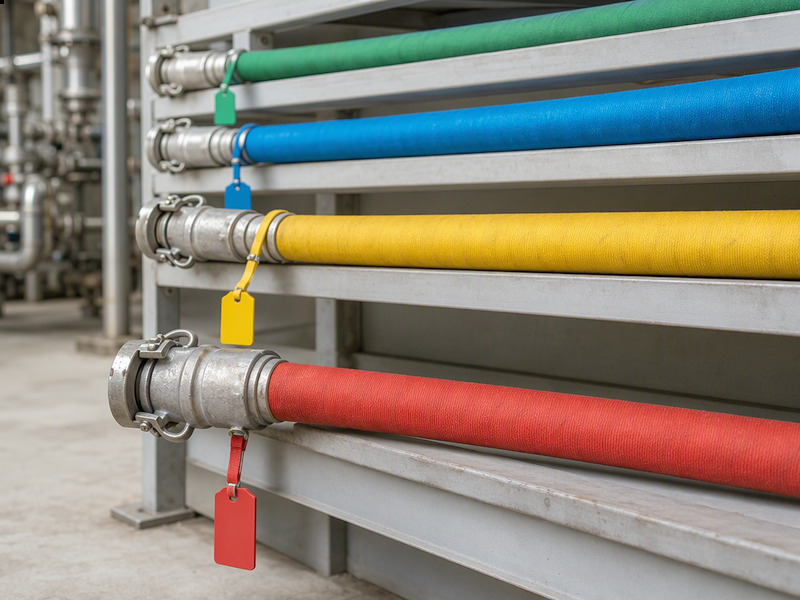
Figure 1. Chemical hose assemblies on a plant storage rack. Cover color differs by construction, so rubber, UHMWPE, PTFE-lined and composite builds are told apart on sight.
What Hose Maintenance Really Costs When It Is Reactive
Reactive care hides its cost in three places. The first is the emergency purchase, where a standard assembly is bought at short notice. The second is the labor pulled off planned work to fit it. The third is the production loss while a line waits for a replacement that should already have been on the shelf.
A chemical plant rarely sees the whole bill because those three costs land on different budget lines. Purchasing records the part. Operations absorbs the downtime. Maintenance absorbs the hours.
No single report shows the total, so the reactive option keeps looking cheap.
The correction is a lifecycle view. Treat each assembly as an asset with a purchase record, a service history and an end date. Then compare that record against a planned alternative on the same basis. The buckets below are the ones worth capturing.
Table 1. Cost buckets to capture for each chemical hose assembly
| Cost bucket | What it includes | Where it hides today | How to record it |
|---|---|---|---|
| Purchase | Hose length, compound, end fittings, gaskets | General stores account | Per-asset line on the register |
| Commissioning | Pre-service test, marking, first fit and torque | Project labor | Tag the assembly at fit |
| Routine care | Re-test, cleaning, storage and rotation | Maintenance overhead | Calendar entry per asset |
| Unplanned failure | Emergency supply, overtime, lost throughput | Split across three budgets | Link the failure to the asset |
| Retirement | Decontamination, disposal, documentation | Waste and compliance budgets | Close the asset record |
The point of the table is not to add paperwork. It is to make the reactive pattern visible. Once the emergency supply, the overtime and the lost throughput appear on one line, the cheap-looking option stops looking cheap.
A plant that tracks this way can also see where its hours go. Cleaning, handling and storage consume time even when nothing fails. That time belongs in the model, because a careless shelf position quietly raises the annual cost of every assembly on it.
Lifecycle Tracking: Giving Every Chemical Hose an Identity
An assembly cannot be maintained if it cannot be identified. Our factory marks every chemical hose assembly with its maximum allowable working pressure, its size and an identification code before shipment. The factory identification code is the seed of the plant-side record, and it should survive through fitting, service and retirement. EN 12115 covers rubber and thermoplastic chemical hose with working pressures up to 10 bar.
The record does not need expensive software at first. A register with consistent fields beats a spreadsheet with missing rows. The fields below are the ones that earn their place, because each one answers a scheduling or cost question later.
Table 2. Record fields that make a chemical hose assembly traceable
| Field | Why it matters | Typical entry |
|---|---|---|
| Identification code | Links the physical hose to its history | Factory code on the marking |
| 建設 | Sets the chemical and thermal limits | Rubber, UHMWPE, PTFE-lined, composite |
| Rated pressure | Anchors the re-test pressure | MAWP marked at build |
| End connections | Drives gasket stock and fit time | Crimped, flanged, cam and groove |
| Duty point | Ties the asset to a line and a medium | Line number and medium class |
| Service dates | Drives the re-test calendar | Fit date and last test date |
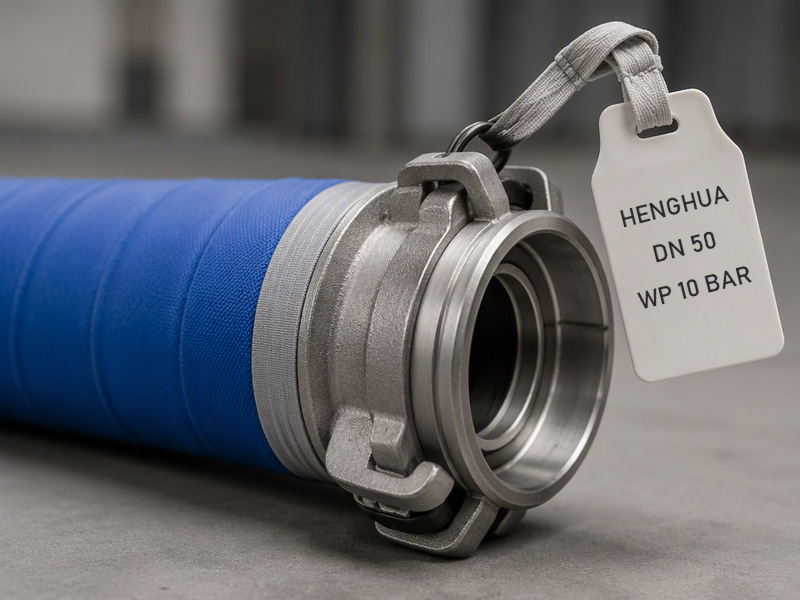
Figure 2. A durable tag ties the marking on the hose to the plant register, so every service event lands on the right asset.
Two habits make tracking work. First, tag at fit, because memory fades and hoses look alike. Second, close the record at retirement, so old assets stop distorting the average age of the fleet.
Hose Storage and Rotation Practice That Protects Service Life
Correct hose storage is not a shelving question, it is a chemistry and mechanics question. Rubber and thermoplastic assemblies age even when idle. Ozone, sunlight, heat, sharp bends and contaminated air all take their toll before the hose ever sees product.
The practical rules are simple and cheap to follow. The list below covers the ones that matter most in a chemical plant store:
- Support the hose along its length on a rack, never on a hook that concentrates stress at one point.
- Coil to a diameter that respects the construction; a tight coil sets a permanent bend.
- Keep assemblies out of direct sunlight and away from ozone sources such as electric motors.
- Blank the ends so dust, moisture and process residue cannot enter the bore.
- Store away from hot pipework, and keep the store ventilated and dry.
- Rotate stock so the oldest matched assembly is issued first.
Poor hose storage shortens life in a way that no test can reverse. A hose that has aged on a sunny ledge may pass a pressure test and still fail early in service, because the cover and reinforcement have already lost condition. Treat storage as the first stage of maintenance, not as warehousing.
Rotation follows the same logic. Issue the oldest serviceable assembly first, so nothing sits for years and then enters a demanding duty at the end of its shelf life. If your plant runs parallel lines on the same medium, a shared pool with a clear issue order usually beats separate stashes per area.
Review hose storage whenever an assembly comes back for re-test. If the rack is full of tangled, uncapped hoses, the store is the problem, not the hose. Keep one assembly, one tag and one location, and the register stays trustworthy.
Re-Test Intervals as a Scheduling Decision
A re-test interval is a planning decision, not a surprise. The interval sets how much work the calendar carries and how much risk the plant accepts between tests. Two rules of thumb frame the choice, and both are worth naming plainly.
For facilities transferring oil or hazardous material in bulk, the U.S. Coast Guard rules at 33 CFR 156.170 call for testing at least annually, or not less than 30 days before the first transfer conducted more than a year after the last test. The same section requires a static liquid test at not less than 1.5 times the maximum allowable working pressure, and the test fluid must be compatible with the hose tube. The annual test is a floor, not a target.
The design limits come from the assembly itself. Under 33 CFR 154.500 the minimum design burst pressure must be at least four times the relief-valve setting or maximum pump pressure, whichever applies, plus static head. The marking rules in the same section also matter for scheduling, because they govern what is written on the hose and what lives in the facility’s hose records instead. The inspection content itself is a separate discipline, covered in our guide to a chemical transfer hose inspection program.
Table 3. Scheduling drivers that move a re-test date
| Driver | Effect on the interval | Who decides |
|---|---|---|
| Regulated bulk transfer | Annual floor under the cited section | Compliance and operations |
| Severe medium or temperature | Shorter interval, closer watch | Process engineering |
| High cycle count | Shorter interval by usage, not by date | Maintenance planning |
| Standby or shared pool | Interval from last test, not last use | Store and planner |
| Critical line with no spare | Shorter interval plus a spare on site | Reliability engineer |
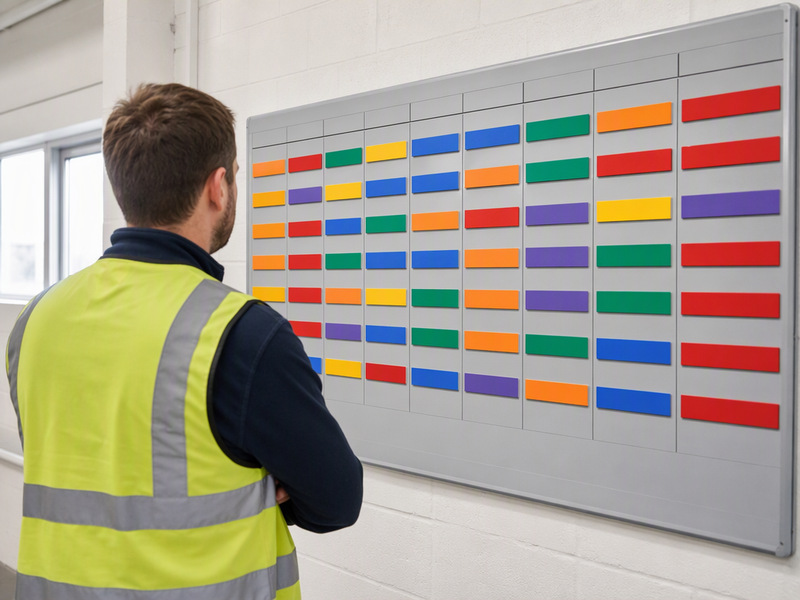
Figure 3. A re-test schedule turns a legal minimum into a workable plan, spreading test load across the year instead of crowding it.
Scheduling has a cost side that is easy to miss. Every test consumes hours, compatible fluid and a slot on the bench, so grouping tests by line keeps the bench efficient. For the method behind the test itself, see our guide to hydrostatic and impulse testing.
Set the interval where the cost of testing is clearly smaller than the cost of one failure on that line. The calendar should show that reasoning, not just a date.
Repair or Retire: A Decision Rule for Chemical Hose Assemblies
Repair looks attractive because the part is already on site. The decision turns on where the damage sits and whether the assembly can be made safe again to its rated condition. Chemical attack inside the tube, swelling, or a cover that has hardened cannot be reversed by swapping a fitting.
A workable rule has two gates.
First, is the damage confined to a renewable end, such as a fitting on a reusable-end design? Second, can the assembly be re-tested to its rated working pressure and marked again with confidence? If both answers are yes, repair can be justified. If either is no, retire it.
Table 4. Repair-versus-retire decision matrix
| Condition found | Repair viable? | Reason |
|---|---|---|
| Fitting damaged, tube sound | Often yes on reusable ends | Renewable end, tube still rated |
| Tube softened or swollen | No | Chemical attack is not reversible |
| Cover cracked or hardened | Usually no | Reinforcement protection is lost |
| Gouge into first reinforcement | No | Rated strength cannot be restored |
| Leak at a crimped or banded end | Usually no | Factory termination, not field-repairable |
Retirement is a decision to record, not to hide. Write the reason on the asset, close the register entry, and decontaminate and dispose of the assembly under your plant rules. A hose that quietly returns to the rack after a failed judgment call will cost far more than its replacement.
Repair economics also work better when you know your end types. Crimped, swaged and banded ends are set at the factory during assembly. Flanged ends to ASME or EN patterns and cam and groove couplings can often be re-terminated or re-gasketed, provided the tube is still fit for the medium.
Keep a small stock of the gaskets and couplings that match your common ends, because one missing part can cause a long outage.
How to Build a Hose Cost per Year Comparison
A hose cost per year figure compares options on equal terms. The idea is to spread every cost of ownership over the safe service the plant actually gets. Sticker price is only one input, and often not the largest one.
Write the model with symbols before you write it with money. Let P be the purchase and end cost, F the fittings and gaskets consumed, T the testing and labor, D the expected downtime per event, and Y the years of safe service. Then the annual figure is the sum of those costs divided by Y. Nothing in that structure needs a fixed price to be useful.
Table 5. Comparing two chemical hose options with symbolic values
| Input | Option A | Option B | Why it matters |
|---|---|---|---|
| Purchase P | Lower | Higher | Only one term in the sum |
| Fittings and gaskets F | Higher re-gasket rate | Lower re-gasket rate | Tracks the end design |
| Testing and labor T | More frequent | Less frequent | Follows the interval |
| Downtime D | Larger events | Smaller events | Usually the biggest term |
| Safe service Y | Shorter | Longer | The denominator of the model |
The comparison only holds if you fix the horizon. Choose a common period, then express each option over that same period. A hose cost per year of one option next to a purchase price of another proves nothing, because the two are not on the same basis.
The cheapest hose replacement cost can still be the wrong choice. The purchase term is fixed by the invoice, while fittings, testing and downtime move with how the assembly behaves in service, so the annual figure can overturn the price order.
The cross-industry method is much the same as the approach in our lifecycle cost reduction guide, which spreads purchase, maintenance and downtime over a service horizon. Chemical service simply adds a harsher medium and a stricter test regime. For a worked treatment of service life itself, see the service-life guide.
Keep the model honest by labeling every input. A hose replacement cost looks small when it is recorded alone, so keep it beside the other terms. Purchase and fitting costs are known. Downtime is an estimate, so mark it as a planning range rather than a measured figure.
Hose Management System: From Spreadsheet to a Plant Standard
Every plant starts with a spreadsheet, and many should stay there longer than they do. A hose management system earns its cost when it changes a decision, not when it stores data nobody reads. The first version only needs to answer a few questions well.
The questions a good system answers on demand are short. Which assemblies are overdue for test? Which lines have no spare? Which part numbers do we hold but never fit?
The list below is a realistic first scope:
- Overdue and upcoming tests by line and by medium.
- Assets with no spare on site.
- Part numbers held but unused in the last year.
- Cost per year by construction and by duty point.
- Every retirement, with its reason recorded.
Set the system up so a technician can update it in under a minute. Long forms and hidden fields kill adoption, and a register nobody trusts is worse than no register. Tag the assembly, scan or type the code, and the update should be quick.
The best place for a hose management system is where the work happens. If a re-test cannot be logged at the bench, it will be logged late or not at all. Keep the store, the bench and the record within reach of the same person.

Figure 4. A hose management system should surface overdue tests, missing spares and unused part numbers at a glance.
Hose Maintenance and Reliability Metrics That Matter
You cannot manage what you do not measure, so pick a few numbers and keep them stable. Track them per line and per construction, and review them when the interval changes. The list below covers the measures that usually change behavior:
- Cost per year for each duty point.
- Share of replacements that were unplanned.
- First-time pass rate at re-test.
- Average age at retirement.
- Hours lost to hose-related outages.
Watch the trend, not the single reading. A rising share of unplanned replacements points to storage, interval or handling problems long before a failure shows up. A falling average age at retirement can mean the medium or the duty has changed.
Inventory Rationalization Across a Plant
Inventory rationalization is the fastest lever in most plants, because the saving needs no new hardware. Fewer part numbers mean less cash tied up, simpler stores and faster picking. Rationalization also makes the register easier to keep accurate.
Begin by listing every hose part number and how often it is actually fitted. Group assemblies that do the same job but carry different numbers. Set one standard for each duty, and retire the near-duplicates as their stock runs down. Our SKU rationalization guide covers the same method from the distributor side, where slow-moving stock is the main cost.
Do not rationalize on size alone. Two hoses may match on bore and pressure yet differ in compound, temperature range or electrical properties. Standardize where the medium and the duty match, and record every exception in the register.
Industrial Hose Maintenance Budgets: Turning Records into a Forecast
A budget built from records is easier to defend than one built from opinion. The register gives you a count of assemblies, their ages and their test load. From there, an industrial hose maintenance budget becomes arithmetic rather than speculation.
Build the forecast in three steps.
First, list the assemblies due for test in the period. Second, list the ones likely to retire, based on their duty and history. Third, add a contingency for the failures you cannot predict. That structure keeps the number tied to the fleet.
Industrial hose maintenance also covers the small parts around the assembly. Gaskets, clamps and couplings move through the store faster than the hoses themselves, and they deserve their own line in the forecast. Neglecting them is a common reason a plan is underfunded in practice.
Finally, review the forecast against actuals each period. Where the two diverge, ask whether the interval, the storage or the duty changed, because the gap usually points at a fixable cause rather than an unlucky year.
Chemical Plant Hose Lifecycle FAQs
How often should chemical hose assemblies be re-tested?
The regulated floor for bulk transfer of oil or hazardous material is annual testing, or at least 30 days before the first transfer more than a year after the last test, under 33 CFR 156.170. Shorten the re-test interval where the medium is severe, cycles are high or the line has no spare.
What does correct racking protect in a chemical plant?
It protects the construction before the hose enters service. Rubber and thermoplastic assemblies age while idle, so sunlight, ozone, heat and tight bends all reduce condition without any service exposure. Racking along the length, wider coils, capped ends and a cool, dry store keep the reinforcement and cover intact. Storage is the first stage of care, not warehousing.
Is a low purchase price ever the wrong choice?
Yes, whenever the cheaper assembly costs more across the year. A low hose replacement cost can hide more frequent replacement, a higher rate of gasket and fitting consumption, or larger downtime events. Spreading every cost over the safe service actually delivered usually reorders the options. Price is one input in the comparison, not the decision itself.
How do I build a cost figure without price data?
Write the cost model with symbols first. Let purchase, fittings, testing, downtime and disposal be variables, and divide their sum by the years of safe service. Fill in the known terms, then mark the estimated ones as planning ranges. The structure alone tells you which option wins under reasonable assumptions, even before a single price is agreed.
What should a plant register record for each assembly?
At minimum, record the identification code, the construction, the rated pressure, the end connections, the duty point, and the fit and last test dates. Every one of those fields answers a later question about scheduling or cost. A short, consistent record beats a long, half-filled one, because the register is only useful when planners can trust every row.
When is repair better than retirement?
Repair is viable when the damage is confined to a renewable end and the assembly can be re-tested to its rated working pressure and marked again with confidence. If the tube has softened or swollen, or the cover and reinforcement are compromised, retirement is the safer route. Chemical attack inside the tube cannot be reversed by changing a fitting.
How does chemical-service care differ from hydraulic hose care?
Chemical service adds a harsher medium and a stricter test regime. The fluid can attack the tube, and bulk transfer of oil or hazardous material brings regulated testing and marking. Hydraulic care is dominated by pressure cycles and contamination control. The lifecycle thinking is shared, but the interval, the compatibility check and the records differ in chemical duty.
Why does inventory rationalization reduce cost?
Fewer part numbers free up cash, simplify the store and speed up picking. Near-duplicate hoses that do the same job each carry their own stocking, testing and record burden. Standardizing on one assembly per duty lets you hold fewer spares while covering the same lines. The saving comes from structure, not from buying a cheaper product.
Who should own the re-test calendar?
Ownership should sit with maintenance planning, supported by the store and by process engineering. The planner holds the dates and the bench load, the store manages rotation and spares, and engineering decides when a duty change requires a shorter interval. A named owner prevents an assembly from drifting past its test date because two teams each assumed the other was tracking it.
Can I compare assemblies from different suppliers fairly?
You can, if both records carry the same fields. Compare construction, rated pressure, end connections and safe service on a common horizon, then spread the combined cost over the service delivered. Treat a low hose replacement cost as one term, not the answer. Verify the marking and the test record rather than a supplier’s claim, because fair comparison depends on identical data.
Hose Maintenance Priorities: Next Steps and a Closing Checklist
Start with the register, because every other improvement depends on it. Then set the calendar, standardize the store, and compare options on a cost-per-year basis. The checklist below gives a sequence that works for most plants:
- Tag every assembly at fit and assign its identification code.
- Record construction, rated pressure, ends and duty point.
- Set re-test dates from the regulated floor and the duty severity.
- Write a one-page repair-versus-retire rule and post it at the store.
- Standardize storage and rotation, and cap every stored end.
- Build the symbolic cost model and fill in known costs first.
- Rationalize part numbers once the register is trustworthy.
- Review cost per year, unplanned share and test pass rate each period.
Good hose maintenance is mostly discipline. The chemistry sets the limits, but the calendar, the store and the records decide whether a plant pays once for a well-chosen assembly or repeatedly for a cheap one. Measure the annual cost, keep the data clean, and let the numbers choose the option.
HENGHUA is a professional manufacturer of chemical hoses, chemical hose assemblies, industrial hoses and hose fittings, supplying distributors, EPC contractors and OEM brands worldwide. Chemical hose construction covers rubber (EPDM and other compounds), UHMWPE, PTFE-lined and thermoplastic composite builds. Assemblies are terminated with crimped, swaged or banded hose ends, flanged ends to ASME or EN patterns, and cam and groove (camlock) couplings, in carbon steel, 304/316 stainless steel, aluminium, brass and PP/PVDF where the medium demands it. Every assembly is hydrostatically tested to its rated working pressure before shipment and marked with its MAWP, size and identification code.
For our chemical hose collection, samples, factory-direct pricing and short lead times on bulk orders, send your duty, medium, size and end-connection details through our request a quote form. Private labeling, custom packaging, OEM/ODM branding and warranty support are available.
About the author. This article was prepared by the HENGHUA engineering and test team, which designs chemical hose assemblies and runs factory hydrostatic testing before shipment. The team supports distributors, EPC contractors and OEM brands with assembly selection, end-connection choice and documentation for chemical transfer duty. Advice here is general; confirm the chemical resistance and pressure rating for your specific medium, concentration and temperature before service.






 English
  Spanish
  Portuguese
  French
  German
  Arabic
  Russian
  Indonesian
  Japanese
  Korean