
A hose safety cable is a retention device that limits how far a failed coupling can travel on a pressurized steam hose. It sits on top of correct selection and inspection, never instead of them.
OSHA sets employer duties and certifies no hose, cable or restraint product, so no OSHA-approved safety cable exists; the phrase in this title is marketplace shorthand.
This guide stays on movement and restraint: routing, lifting and dragging, supporting, draining, transport and storage. It also covers what a cable and a whip check do, how to fit them without chafing the cover, and which duties the employer must justify.
All pressures are gauge pressures at the hose outlet, and saturated-steam temperatures are the saturation temperature at that pressure. About 16 min read.

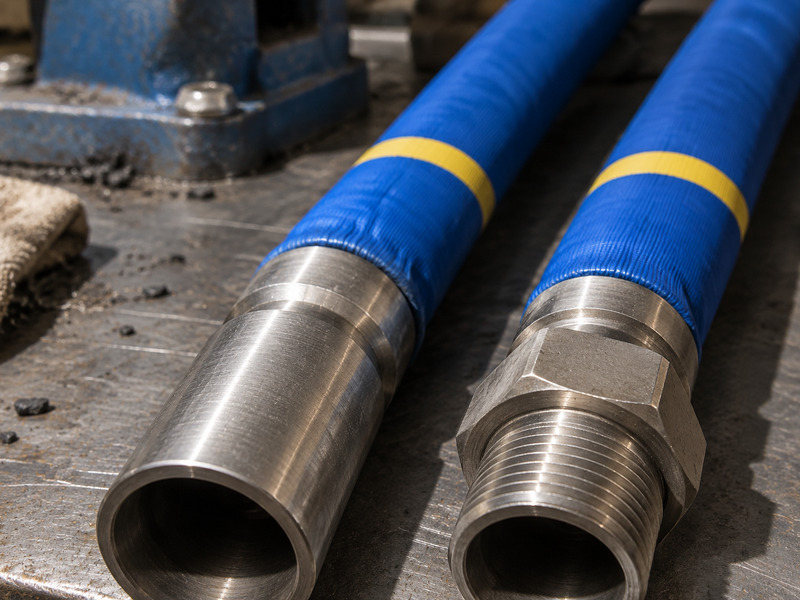
Figure 1. Hose, whip check and clamps staged before a run is made up; the cable is matched to the joint it will bridge.
What a Hose Safety Cable Does and What It Does Not
A hose safety cable is a short length of wire rope or woven webbing that bridges the joint between a hose end and its mating connection. If the coupling separates under pressure, the cable holds the two halves together instead of letting the free end travel. It is a secondary restraint, and it never contains pressure itself.
The device does not stop a leak, absorb water hammer, or repair a worn coupling. It controls only the distance a released end can move, which is usually the part of the event that injures people. A cable fitted to a badly assembled hose leaves a live, leaking joint in the work area.
Steam duty raises the consequences because the released medium is hot, invisible and under pressure. Saturated steam at 6 bar, the ISO 6134 Type 1 ceiling, sits near 165 °C, and ISO 6134 Type 2 hose carries a maximum working pressure of 18 bar at a saturated-steam temperature of 210 °C. A restraint on those duties protects people, not the hose.
Table 1. Duties a hose safety cable performs and duties it cannot cover
| Duty | What the cable provides | What the cable cannot provide |
|---|---|---|
| Whip containment | Limits how far a released end travels | Prevents the separation from starting |
| Coupling retention | Keeps the two halves close to each other | Carries the full working pressure |
| Leak control | Reduces the swept area around a failed joint | Seals a leaking gasket or thread |
| Operator protection | Buys distance and time to shut off steam | Replaces personal protective equipment |
Choosing the right assembly starts with the hose itself, and our steam hose range is specified across the ISO 6134 Type 1 and Type 2 envelopes. Restraint hardware is added on top of that selection, never instead of it.
Why a Steam Hose Whips When a Connection Fails
A steam hose whip is the uncontrolled arc of a released hose end, driven by stored energy rather than by chance. The hose wall stores elastic energy whenever the line is pressurized, and the steam itself stores thermal energy. When a coupling releases, that stored energy drives the free end in a fast and unpredictable arc.
Condensate is the usual trigger. Water hammer in a steam line is a condensate event rather than a pressure spike, and it is the most common cause of coupling and fitting loss. A slug of water pushed into a fitting loads the joint far beyond its steady working pressure.
The failure rarely begins at the moment of release. A loose coupling, a fatigued crimp or a missing gasket leaks first, and the escaping steam erodes the joint until it lets go. That warning period is the window in which a walk-around check pays for itself.
The purpose of steam hose restraint is to break that sequence before the free end reaches a person or a walkway. A cable or a whip check does not stop the release, but it shortens the arc and holds the joint in one place.
Table 2. Causes of a steam line whip, with mechanisms, warning signs and controls
| Cause | Mechanism | Warning sign | Control |
|---|---|---|---|
| Condensate water hammer | Water slug loads the coupling beyond its steady pressure | Banging in the line, wet steam at the outlet | Drain the line and keep steam traps working |
| Loose or worn coupling | Thread or clamp loses its preload | Seepage or staining at the joint | Torque to the manufacturer’s instructions, inspect |
| Fatigued crimp or ferrule | Repeated flexing cracks the metal | Cover bulge or exposed reinforcement | Correct assembly and bend radius control |
| Wrong pressure class | Hose stressed beyond its rated working pressure | Swelling, soft spots, short life | Select class to the duty inside ISO 6134 |
| Chafed cover or reinforcement | External damage weakens the hose wall | Deep scuffs and exposed wire | Supports, sleeves and correct routing |
Hose Whip Check or Cable: Choosing the Restraint
A hose whip check is the common name for a wire rope loop, usually with two clamps, fitted across a coupling to keep the two halves together. A safety cable does the same job with a different geometry, often tying the hose end to a fixed structure as well. Many plants use both terms for the same family of retention hardware.
In practice, keep them apart: the whip is the event, the whip check is the device fitted to limit it.
The choice matters less than the anchor points. A whip check across a coupling protects the joint between two hose sections, or between a hose and a tool. A cable that also ties the hose to a structure protects the run as a whole, which is what a long drop hose usually needs.
A restraint changes the consequence of a steam hose whip, not the probability of one. Correct selection, assembly and inspection decide whether the joint separates, and the restraint decides only what happens next. Treating a cable as the primary defense gets the hierarchy of controls backward.
The difference between a burst hose and a released coupling matters when you size the duty, and our note on working pressure versus burst pressure draws that line clearly.
Table 3. Restraint options for steam hose assemblies
| Option | How it is fitted | Best used for | Limits |
|---|---|---|---|
| Coupling whip check | Wire rope loop clamped across the two coupling halves | Joints between hose sections or a hose and a tool | Does not restrain a long free run |
| Cable anchored to structure | Cable from the hose end to a frame or post | Long runs and overhead drop hoses | Needs a sound anchor point |
| Bolted safety clamp | Clamp gripping the hose end hardware | Heavy assemblies and flanged ends | Requires compatible end fittings |
| No restraint | Nothing fitted | Never appropriate for pressurized steam | Full arc and full operator exposure |

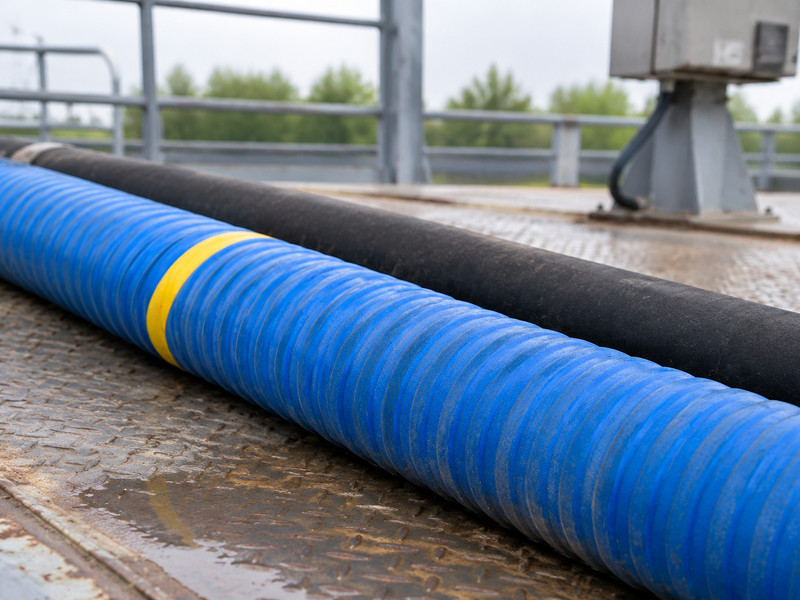
Figure 2. A hose whip check on a steam line joint, with the rope standing clear of the cover along its whole length.
Steam Hose Handling: Lifting, Dragging and Coiling
Handling a steam hose begins with a rule that operators forget under time pressure: a charged hose behaves as a pressure vessel, and it should not be used as a rope. Lifting, dragging and coiling all load the hose wall and the couplings in ways they were never designed to take. Many cover injuries and a share of coupling failures begin in these routine moves.
Keep these movement rules in force on the floor:
- Lift a hose along its body, using a sling or cradle wide enough that it does not crush the wall.
- Never pull or lift a hose by its coupling, its cable or its whip check.
- Do not drag a hose over a sharp edge, a weld seam or a metal corner, and use a roller or a mat instead.
- Coil at or above the manufacturer’s minimum bend radius, and never fold a hose back on itself.
- Keep coils loose so that condensate and heat are not trapped against the wall.
Dragging is the quiet offender. A hose pulled across a concrete floor gathers grit into the cover and works the reinforcement under the jacket. Two people or a simple hose cart cost far less than an unplanned replacement.
Coiling also matters for steam hose handling, because a tight coil holds condensate in the low loops. Water sits against the tube, cools the wall and feeds the next water hammer event when the line is opened.
Steam Hose Support and Routing: Bend Radius and Drainage
Routing decides most of what support later has to correct. A run routed short, straight and clear of traffic needs fewer hangers and loads its couplings less.
Set the path with these decisions:
- Keep the run as short and as straight as the layout allows, with no unnecessary bends.
- Run the hose clear of walkways, lift traffic and hot surfaces, and never across a working floor.
- Leave the line free to move with thermal expansion instead of clamping it at both ends.
Routing mistakes that shorten hose life are well documented in mobile hydraulic service, and the hose routing failure guide describes the same pattern that damages steam hose.
Steam hose support is what keeps a run from loading its own couplings. A hose that hangs unsupported sags in the middle, and every change in load works the end fittings. Saddles, hangers and wide cradles hold the run in the shape it was designed to take.
Support practice follows this order:
- Support at intervals that stop the hose sagging between points, using the manufacturer’s published spacing.
- Use wide, smooth cradles rather than thin wire or chain, which can cut into the cover.
- Keep the bend radius above the published minimum, measured on the inside of the curve.
- Use a support only to carry weight, never to pull the hose into alignment.
- Protect the contact points where the hose crosses a frame, a wall or another hose.
Drainage belongs in the same plan. Condensate collects at every low point, so route the run to a drain or a steam trap and open drains before the line is pressurized. A drained line is far less likely to deliver the water slug that damages a coupling.
A well-supported run also protects the perforated cover, which is engineered to vent steam that permeates the tube. If a support crushes or seals that cover, the venting path is lost and the cover can blister. For the material side, the EPDM steam hose guide explains the tube compound and that perforated cover.
Table 4. Support and routing elements that protect a moving steam hose
| Element | Practice | Consequence if ignored |
|---|---|---|
| Support spacing | Follow the published spacing for the bore and construction | Sag, coupling fatigue and kinking |
| Cradle type | Use a wide, smooth saddle or hanger | Cover chafing and reinforcement damage |
| Bend radius | Stay at or above the published minimum | Tube collapse and a hot spot in the wall |
| Drainage slope | Route low points to a drain or a trap | Condensate slug and water hammer |
| Edge protection | Fit sleeves and mats at contact points | Abrasion and a cut cover |

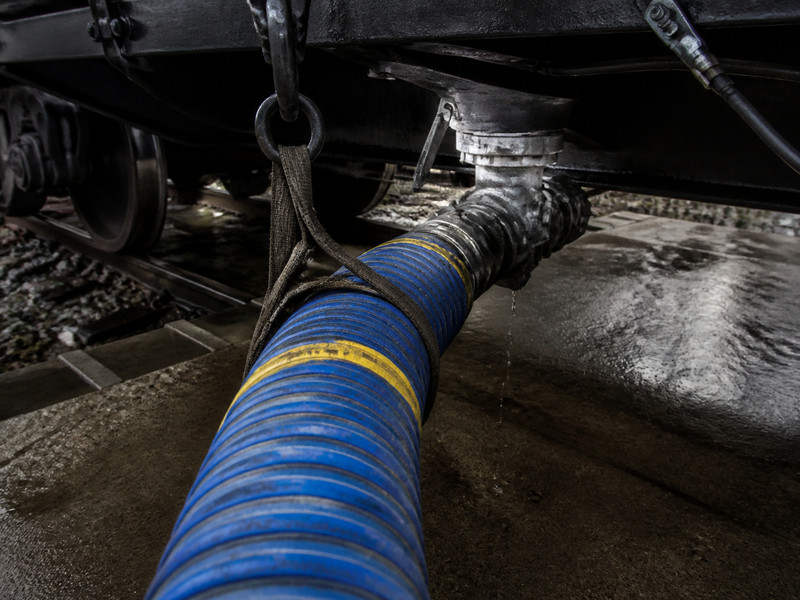
Figure 3. The cradle takes the weight while the bend stays inside the published minimum for this bore.
Fitting a Hose Safety Cable So It Does Not Chafe
The fitting of the restraint decides two things at once: whether it survives the event, and whether it silently damages the hose while nothing is happening. Poor fitting causes chafed covers on many plants, and a chafed cover is a repair job long before it is a safety incident.
Fit the restraint in this sequence:
- Anchor both ends to sound points, one on each side of the joint the cable is meant to hold.
- Keep the cable short enough that it takes up slack in a fraction of the released travel.
- Route the cable so it runs clear of the hose cover and of any sharp frame edge.
- Fit protective sleeving wherever the cable crosses the hose or touches bare metal.
- Check tension by hand after the first heat-up, and again on every inspection round.
A hose safety cable that is too long is almost as bad as no restraint at all. The free end travels before the cable tightens, so the arc it was fitted to stop still happens. Slack is the most common fault in our own installation reviews, and a clamp bearing on the cover instead of the fitting is the second.
Chafing is the slow failure that operators notice last. A cable that rubs the cover on every shift wears through the jacket and can reach the reinforcement. That damage is invisible on the outside until the cover is thin enough to fail.
The hardware fails in four recognizable ways:
- Wire strands broken at a clamp or where the rope bends.
- A rope clamp that has slid out of place, leaving a longer loop than was set.
- Sleeving worn through or slipped aside at a crossing.
- An anchor that has loosened, cracked its fixing or moved under load.
Any one of the four retires the part; re-tensioning does not fix any of them.
A cable is never a steam hose support, and it should carry no steady weight. Where the cable clamps to the hose end or the coupling, follow sound clamp practice, and the hose clamp selection guide covers geometry and torque. A restraint works alongside selection and inspection, never in place of either.

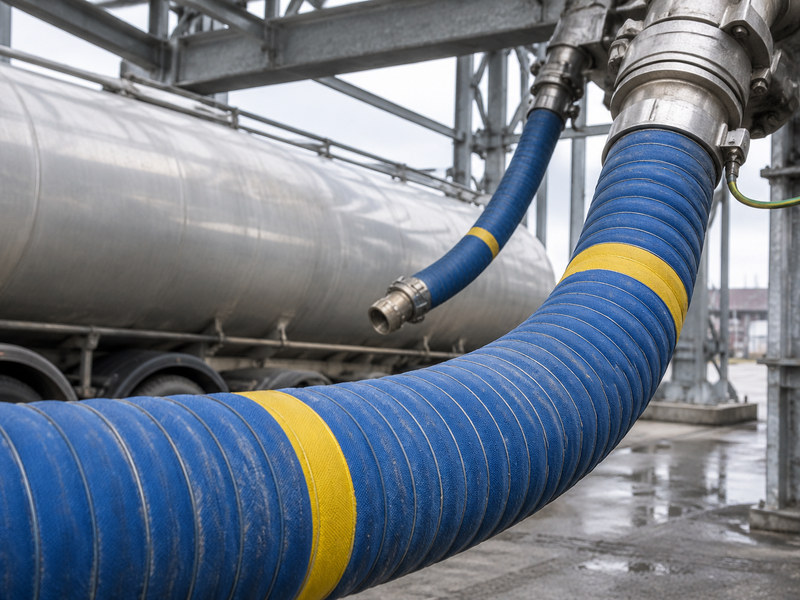
Figure 4. Sleeving at both contact points: one where the cable crosses the cover, one at the frame edge.
What OSHA Does and Does Not Approve
OSHA does not approve, list or certify hoses, safety cables or whip restraints. There is no OSHA-approved safety cable, and a supplier who claims one is using marketplace shorthand rather than describing a certification. That distinction protects the buyer, because no product mark can transfer the employer’s duty.
The employer’s obligation is set elsewhere. The OSH Act’s general duty clause, section 5(a)(1), requires a workplace free of recognized hazards. Where a hazard is present, 29 CFR 1910.132 requires suitable personal protective equipment for the exposed worker.
Specific restraint practice comes from the hose manufacturer’s instructions, from plant procedures and, in some jurisdictions, from regulation. British Columbia’s occupational health and safety regulation, for example, requires an effective means of restraint where inadvertent disconnection of a hose could injure a worker.
The device therefore needs no approval mark, and steam hose restraint rests on the hazard, the manufacturer’s instructions and your documented procedure. What happens to a worker after a release, from burns to leak exposure, is covered in steam hose safety tips.
Table 5. What OSHA does and does not do in relation to hose restraint
| Question | Short answer |
|---|---|
| Does OSHA approve a specific safety cable? | No. There is no OSHA-approved safety cable or listing. |
| Does OSHA publish restraint hardware standards? | No product approval; the duty comes from the general duty clause. |
| What requires restraint in practice? | Manufacturer instructions, plant procedures and some jurisdictions’ rules. |
| What does 29 CFR 1910.132 cover? | Personal protective equipment where hazards are present. |
| What is the employer’s base duty? | A workplace free of recognized hazards under section 5(a)(1). |
Steam Hose Handling Best Practices: A Daily Checklist
A checklist turns the rules above into a habit, and it takes only a few minutes at the start of a shift. It also catches the failures that no cable can fix, such as a kink, a loose clamp or a blocked trap. A written round also feeds a larger steam hose inspection program when the plant is ready to formalize it.
Work through these points on every steam run before the line is charged:
- Walk the full run and look for kinks, flat spots, blisters and deep scuffs.
- Check coupling torque, gaskets and clamps against the manufacturer’s instructions.
- Confirm the cable or whip check is fitted, short and clear of the cover.
- Look at the rope itself for broken strands, a slipped clamp, worn sleeving or a loose anchor.
- Verify that supports are in place and that low points drain freely.
- Open drains and warm the line slowly before full pressure is applied.
- Record what you found so the next shift starts from a known state.
Steam hose restraint is only one line on that list, and it is not the first one. Selection, routing and inspection come before hardware, because they decide whether the joint is sound in the first place.
Transport and Storage Between Shifts
Transport and storage follow the same logic as the working day, because much of the handling damage happens off the line:
- Carry a hose in a coil or on a reel, and support it along its length rather than lifting it by a coupling.
- Keep hoses out of sunlight and away from ozone sources such as electric motors and welding gear.
- Store on a rack or a shelf, never on a concrete floor and never under a heavy item.
- Drain and clean the hose before storage, then cap the ends so grit stays out.
A hose that goes into storage drained, clean and loosely coiled comes back out ready to inspect.
Hose Safety Cable FAQs
What does a whip check or a safety cable actually do?
Both are retention devices that bridge a joint so a released coupling cannot travel far. The wire rope or webbing holds the two ends close together while the pressure escapes and the line is shut off. Neither device seals the joint, carries pressure or repairs a damaged coupling. Think of the restraint as a limit on travel, not as a repair.
Is any safety cable OSHA-approved?
No. OSHA does not approve, list or certify hose, cable or restraint products, so no device carries an OSHA listing or mark. The phrase is marketplace shorthand rather than a certification. Employer duties instead come from the OSH Act’s general duty clause, section 5(a)(1), from 29 CFR 1910.132 where personal protective equipment is needed, and from manufacturer instructions and plant procedures.
Why does a steam hose whip when a coupling fails?
A charged hose stores elastic energy in its wall, and the steam stores thermal energy. When a coupling releases, that stored energy drives the free end in a fast, unpredictable arc. Condensate makes it worse, because water hammer from a collected slug loads the joint far beyond its steady working pressure. The release is usually the end of a slow leak that already warned of the problem.
How short should a restraint cable be?
Short enough that it takes up its slack in a fraction of the travel the free end would otherwise make. A cable with a long loop lets the end move before the restraint loads, so the arc still happens. Fit it snug but not pre-tensioned, then re-check it by hand after the first heat-up. A cable that has never taken a load still needs the check, because rope clamps can slip as the joint heat-cycles.
Where should the cable anchor points be?
Anchor each end to a sound point on either side of the joint the cable is meant to hold. A coupling check anchors across the two coupling halves; a run restraint anchors from the hose end to a frame or post. The anchor must be rigid and rated for the load, not a handrail, a cable tray or a pipe that can move under a shock load.
How do I stop a cable chafing the hose cover?
Route the cable so it runs clear of the cover, and add sleeving wherever it crosses the hose or touches bare metal. Never let the cable cross a sharp frame edge or a weld seam. Check the cover at each inspection for deep scuffs, because chafing wears the jacket slowly and can reach the reinforcement. A perforated cover must stay open so it can vent permeating steam.
Does a whip check replace routine hose inspection?
No. A restraint changes what happens after a failure, while inspection and selection decide whether the failure occurs. A cable fitted to a cracked coupling or a chafed hose still leaves a live hazard in the work area. Keep both: the restraint for the consequence, and the inspection for the cause. Neither one substitutes for the correct pressure class.
How should I lift and drag a steam hose?
Lift along the body of the hose with a wide sling or cradle, never by a coupling, a cable or a clamp. Drag it on a roller, a mat or a cart rather than over a sharp edge, a weld seam or a metal corner. Coil at or above the published minimum bend radius, and keep coils loose. Two people or a hose cart cost far less than a replacement.
How much support spacing does a steam hose need?
Use the manufacturer’s published spacing for the bore and construction, and treat any visible sag between points as a sign to add a support. Wide, smooth cradles are better than thin wire or chain, which can cut into the cover. Supports carry weight only; they should never be used to pull a hose into alignment, because that loads the end fittings.
How should steam hoses be stored and transported?
Store and carry a steam hose supported, off the floor and out of the sun. Sunlight and ozone attack the cover, a concrete floor draws moisture and grit, and a hook or a shoulder bends the hose tighter than its published minimum, which is where kinks start. Drain it before storage, because trapped condensate feeds the next water hammer.
Final Verdict: Hose Safety Cable Practice in Five Rules
The whole subject reduces to five rules that a plant can write into its procedure today:
- Select the hose for the duty first, inside the ISO 6134 envelope, and never use restraint to cover a wrong rating.
- Route and support the run so the hose never carries tension, an unsupported span or a sharp edge.
- Lift, drag and coil the hose by its body, never by a coupling, a whip check or a cable.
- Fit the restraint short, anchored and clear of the cover, then re-check tension after every heat-up.
- Inspect the full run, because inspection finds the failure that no restraint prevents.
A hose safety cable is only as good as the fitting and the inspection behind it. Hardware chosen well and checked often supports a safe steam system; hardware used as a substitute for selection or maintenance does not.
HENGHUA is a professional manufacturer of steam hoses, steam hose assemblies, industrial hoses and hose fittings, supplying distributors, EPC contractors and OEM brands worldwide. The steam hose range combines an EPDM tube with textile or steel-wire reinforcement and a perforated, oil-resistant cover. It spans bore sizes and pressure classes inside the ISO 6134 Type 1 and Type 2 envelopes, plus a high-temperature grade rated to 230 °C.
Assemblies are terminated with bolted safety clamps, crimped or swaged ferrules, flanged ends and cam and groove couplings in carbon steel, 304/316 stainless steel and brass. Every assembly is hydrostatically tested to its rated working pressure before shipment and marked with its size, working pressure and identification code.
Kontakt our engineering team for a quote, samples or help matching restraint hardware and steam hoses to your duty.
About the author. HENGHUA’s engineering and test team designs, assembles and hydrostatically tests steam hose assemblies for distributors, EPC contractors and OEM brands. The team writes from its own test bench, steam test loop and installation reviews, where most faults are traced to selection, routing, fitting and inspection rather than to the hose itself.


 English
 Spanish
 Portuguese
 French
 German
 Arabic
 Russian
 Indonesian
 Japanese
 Korean