
How Do You Inspect a Hydraulic Hose?
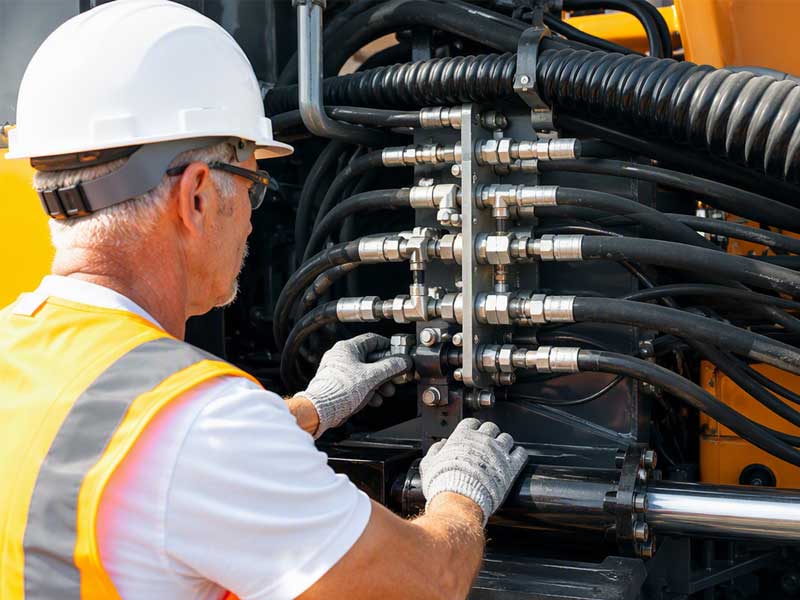
A hydraulic hose inspection involves checking the hose cover, fittings, routing, leakage, abrasion, bend radius, and service condition before equipment operation.
The basic inspection steps are:
- Shut down and depressurize the hydraulic system.
- Check hose covers for cracks, abrasion, bulges, and exposed reinforcement.
- Inspect fittings for leaks, corrosion, and movement.
- Verify correct routing, clamps, and minimum bend radius.
- Document damage and replace unsafe hose assemblies.
Author Note: This guide is written by the Henghua Hydraulic engineering team. With over 20 years of experience manufacturing hydraulic hose assemblies for construction equipment, mining machinery, agriculture equipment, and industrial hydraulic systems, our team analyzes hose failures daily—including abrasion damage, fitting failures, pressure fatigue, and installation-related issues. The recommendations in this guide reflect real-world failure patterns observed across returned assemblies and on-site equipment assessments.
What Is Hydraulic Hose Inspection?
Hydraulic hose inspection is a systematic visual and physical examination of hydraulic hose assemblies—the flexible, pressure-rated hoses with fittings that transfer hydraulic fluid throughout a hydraulic system. Inspections identify early warning signs of wear, damage, and degradation before they lead to system failure.
Hydraulic hose assemblies operate under extreme conditions. They must withstand high pressure, temperature fluctuations, continuous flexing, and exposure to environmental contaminants. Regular inspection ensures these critical components remain safe and functional.
A comprehensive hydraulic hose inspection program includes:
- Daily pre-shift operator checks (2–3 minutes per equipment)
- Monthly detailed inspections by qualified technicians
- Annual comprehensive evaluations with documentation
- Compliance verification against standards including SAE J1273 (Hydraulic Hose Assembly Maintenance), ISO 4413, and DOT 49 CFR 393.45
Why Hydraulic Hose Inspection Matters
Hydraulic systems power critical equipment across construction, mining, agriculture, manufacturing, and material handling. A single hose failure can idle an entire operation, create safety hazards, and generate significant repair costs.
The Business Case for Preventive Inspection
| Benefit | Impact |
|---|---|
| Early failure detection | Prevents catastrophic breakdowns |
| Reduced unplanned downtime | Maintains production schedules |
| Lower repair costs | Planned vs. emergency pricing |
| Extended equipment life | Reduced strain on pumps and cylinders |
| Improved safety | Fewer high-pressure injection injuries |
| Regulatory compliance | Satisfies DOT, OSHA, EPA requirements |
Hydraulic Hose Inspection Frequency Schedule
How often should hydraulic hoses be inspected? The answer depends on equipment type, operating conditions, and regulatory requirements. Use this schedule as a baseline and adjust based on your specific applications.
| Inspection Type | Recommended Frequency | Performed By |
|---|---|---|
| Visual inspection | Daily before operation | Equipment operator |
| Detailed inspection | Monthly | Maintenance technician |
| Hose condition audit | Annually | Maintenance engineer |
| Safety-critical equipment | OEM-specified intervals | Qualified personnel |
| High-pressure / severe duty | More frequent as needed | Maintenance team |
When to Increase Inspection Frequency
- Equipment operates in extreme temperatures (above 100°F or below 0°F)
- Hoses are subject to continuous flexing or vibration
- Equipment operates in abrasive environments (mining, demolition)
- Previous failures have occurred on similar equipment
- Hoses are approaching or beyond recommended service life
How Much Does Hydraulic Hose Failure Really Cost?
The true cost of hydraulic hose failure extends far beyond the replacement part. When a hydraulic hose fails unexpectedly, the financial impact cascades through operations.
Hydraulic Hose Failure Cost Breakdown
| Cost Component | Typical Impact |
|---|---|
| Emergency repair (premium rates + parts) | Significant additional cost over planned replacement |
| Equipment towing/transport | Idle crews and delayed schedules |
| Lost production | Direct revenue loss during downtime |
| Fluid loss and cleanup | Environmental compliance costs |
| Safety incident/injection injury | Medical, compensation, and legal costs |
| Regulatory fines | DOT, OSHA, or EPA enforcement actions |
Hydraulic Hose Failure Cost Calculator
To calculate the true cost of a single hydraulic hose failure for your operation:
Total Failure Cost =
- Downtime hours × hourly lost revenue per equipment +
- Emergency repair labor (premium rate × hours) +
- Replacement parts (at inflated emergency pricing) +
- Hydraulic fluid loss (gallons × fluid cost) +
- Disposal and cleanup costs +
- Collateral equipment repair costs +
- Potential penalty or fine exposure
Example: A high-production excavator operating in a commercial project environment may lose thousands of dollars per hour during unexpected downtime. When emergency repair costs, fluid loss, and collateral damage are factored in, a single failure can cost tens of thousands of dollars.
The Failure Cost Curve
| Detection Point | Relative Cost | Operational Impact |
|---|---|---|
| Caught at daily inspection | Lowest | Planned repair, no downtime |
| Ignored for days | Moderate | Partial downtime, fluid contamination |
| Mid-route catastrophic failure | Highest | Full downtime, towing, idled crews |
The daily hydraulic hose inspection doesn’t prevent wear—it catches problems at the cheapest intervention point, where equipment never leaves the yard broken.
Hydraulic Hose Inspection Checklist
This checklist is designed for daily operator use. Print it, laminate it, and keep it in each equipment cab for consistent inspections.
Hydraulic Hose Inspection Checklist Summary
| Inspection Area | What to Check | Replace If |
|---|---|---|
| Hose cover | Cracks, cuts, abrasion | Reinforcement exposed |
| Leakage | Oil seepage or spray | Any active leak |
| Fittings | Corrosion, movement | Loose or damaged fitting |
| Routing | Contact with sharp edges | Continuous rubbing |
| Bend radius | Excessive bending | Hose deformed or kinked |
| Temperature | Heat damage, discoloration | Burn marks or softening |
| Age | Service life | Unknown or exceeded history |
Daily Hydraulic Hose Inspection Checklist
| Inspection Item | Pass | Action Required |
|---|---|---|
| Hose cover cracks, cuts, or damage | □ | Replace hose immediately |
| Oil leakage (puddles or wet spots) | □ | Stop operation – investigate source |
| Abrasion or chafing marks on hose | □ | Install protection sleeve |
| Fitting corrosion or damage | □ | Replace fitting |
| Fitting leakage or weeping | □ | Tighten or replace connection |
| Proper hose routing (no sharp edges) | □ | Reroute or add protection |
| Hose clamp and guard condition | □ | Secure or replace |
| Bulging or blistering on hose | □ | STOP – imminent failure |
| Exposed wire braid reinforcement | □ | STOP – replace immediately |
| Kinked or flattened hose sections | □ | Replace hose – correct routing |
| Bending within minimum radius | □ | Correct installation |
| Hose movement during operation | □ | Add support or clamp |
Critical Warning Signs—STOP Operation Immediately
- □ Bulging or blistering on hose surface
- □ Active leaks (even pinhole leaks)
- □ Exposed wire braid reinforcement
- □ Crushed or severely kinked sections
- □ Fitting separation or movement
When to Tag Out: Any critical warning sign requires immediately tagging the equipment “Out of Service” and notifying maintenance. Do not attempt to operate or “limp” the equipment to the shop.
How to Inspect a Hydraulic Hose: Step-by-Step Procedure
This section provides a complete hydraulic hose inspection procedure that any maintenance team can follow.
Step 1: Shut Down and Depressurize the System
Before inspection:
- Turn off equipment completely
- Release hydraulic system pressure according to manufacturer procedures
- Allow components to cool to a safe temperature
- Apply lockout/tagout if required by facility safety policy
Step 2: Perform Visual Inspection
Check the hose cover:
- Look for cracks, cuts, blisters, or bulges
- Check for exposed reinforcement (wire braid)
- Inspect for stiffness, brittleness, or softening
- Look for discoloration from heat or chemical exposure
Check fittings and connections:
- Look for visible fluid seepage at connection points
- Check for rust or corrosion on fitting surfaces
- Verify that fittings are not rotating independently of the hose
- Confirm that fittings are properly seated
Check routing and installation:
- Verify no contact with sharp edges or hot surfaces
- Ensure sufficient slack for movement
- Check minimum bend radius is not exceeded
- Confirm hose clamps and guards are in place
Step 3: Check Hose Movement
With system running (safely):
- Observe hose during operation
- Verify no twisting during pressure cycling
- Check for contact with other components
- Confirm sufficient length for flexing
Step 4: Document the Inspection
Record:
- Equipment ID and hose location
- Inspection date and inspector name
- Pass/fail status for each inspection point
- Any damage noted
- Replacement date if replaced
- Photos of damage for failure analysis
Step 5: Determine Action
| Condition | Action |
|---|---|
| No damage observed | Continue regular inspection schedule |
| Minor surface damage | Monitor more frequently, schedule replacement |
| Significant damage | Replace within 30 days |
| Critical damage (exposed wire, bulging) | Replace immediately—tag out equipment |
Hydraulic Hose Inspection Tools
Using the right tools makes inspections more thorough and efficient. Here are the essential tools for hydraulic hose inspection:
| Tool | Purpose |
|---|---|
| Flashlight | Detect cracks, abrasion, and damage in dark areas |
| Inspection mirror | Check hidden hose areas behind components |
| Digital camera | Record damage history for failure analysis |
| Cleaning cloth | Wipe away oil contamination to inspect cover condition |
| Inspection checklist | Standardize maintenance records |
| Measuring tape | Verify hose length and correct routing |
| Gloves (cut-resistant) | Protect hands during inspection |
Advanced Inspection Tools
For more comprehensive programs, consider:
- Borescope: Inspect internal hose condition
- Infrared thermometer: Detect hot spots indicating flow restrictions
- Ultrasonic leak detector: Identify pinhole leaks in pressurized systems
15 Warning Signs of Hydraulic Hose Failure
Based on field experience from hydraulic hose assembly manufacturing and failure analysis, common warning signs include:
| Warning Sign | What It Means | Action Required |
|---|---|---|
| Blistering or bulging | Internal layer separation or reinforcement failure | Immediate replacement—imminent failure |
| Exposed wire braid | Outer cover worn through | Replace—structural integrity compromised |
| Cracked, stiff, or brittle cover | Heat/chemical aging or ozone exposure | Replace—loss of flexibility increases fracture risk |
| Fitting leaks or weeping | Connection seal failure or improper crimp | Tighten or replace—leak will worsen |
| Abrasion or chafing marks | Routing contact with other components | Replace hose, install abrasion sleeve, reroute |
| Kinked or flattened sections | Bending beyond minimum radius | Replace—flow restriction causes heat build-up |
| Discolored or heat-damaged cover | Operating temperature exceeded rating | Replace and investigate heat source |
| Fitting movement/twisting | Improper installation or torque loss | Replace fitting or entire assembly |
| Fluid weeping through cover | Permeation or inner tube damage | Replace—internal failure in progress |
| Soft, spongy sections | Reinforcement fatigue or delamination | Replace—may fail under pressure surge |
| Hose cover separation | Outer rubber layer separates from reinforcement | Replace immediately |
| Excessive hose vibration | Pressure pulsation or incorrect routing | Check clamps, routing, hose length |
| Fluid discoloration in system | Internal hose degradation or contamination | Replace hose, flush system |
| Swollen or expanded hose diameter | Chemical incompatibility or heat damage | Replace—pressure rating compromised |
| Audible hissing or whistling | Pinhole leak or pressure loss | Stop operation—tag out and replace |
Safe Hydraulic Leak Detection
Never use hands to check for hydraulic leaks. High-pressure fluid can penetrate skin and cause serious injection injuries. Hydraulic injection injuries can result in significant medical, compensation, and legal costs, depending on severity and jurisdiction.
Safe leak detection method:
Use cardboard, wood, or a piece of paper to locate suspected pinhole leaks in hydraulic systems. Hold the material near suspected leak points and observe for fluid spray marking.
When Should a Hydraulic Hose Be Replaced?
Replace hydraulic hoses when any of the following conditions occur:
| Condition | Priority |
|---|---|
| Visible leakage or weeping | Immediate |
| Exposed wire braid reinforcement | Immediate |
| Bulging or blistering on hose surface | Immediate |
| Severe abrasion exposing reinforcement | Immediate |
| Cracked, stiff, or brittle outer cover | As soon as possible |
| Damaged or corroded fittings | As soon as possible |
| Exceeded manufacturer’s service life recommendation | Plan replacement |
| Unknown installation history or age | Plan replacement |
| Hose has been subjected to extreme pressure spike | Inspect and likely replace |
| Hose shows signs of heat damage or discoloration | Replace and address heat source |
Industry-Recommended Replacement Intervals
| Application Type | Recommended Interval |
|---|---|
| Standard duty, moderate use | 4–6 years |
| High-pressure continuous duty | 2–3 years |
| Severe duty (extreme temps, flexing) | 1–2 years |
| Safety-critical systems | Follow OEM specifications |
Important: Replace hoses according to service life intervals even when they appear visually sound. Internal degradation is not visible and can cause sudden failure.
When Should You Inspect vs. Replace Hydraulic Hoses?
| Situation | Inspection | Replacement |
|---|---|---|
| Minor abrasion on cover surface | ✓ | Monitor |
| Oil leakage from fitting or hose | ✓ | ✓ Required |
| Exposed wire reinforcement | ✓ Immediate | |
| Unknown hose age or history | ✓ | Recommended |
| Fitting corrosion | ✓ | Often required |
| System pressure spike occurred | ✓ | Evaluate |
| Hose approaching service life | ✓ | Plan replacement |
Hydraulic Hose Inspection Record Template
Maintaining a consistent inspection record is essential for tracking hose condition over time and demonstrating compliance. This structured approach ensures data is captured consistently and can be analyzed for failure patterns.
Hydraulic Hose Inspection Record Template
| Field | Example | Purpose |
|---|---|---|
| Equipment ID | EX-125 | Unique identifier for tracking |
| Hose location | Boom cylinder, left side | Specific installation point |
| Hose assembly part number | H1/2-4SP-5000 | Manufacturer reference |
| Hose size (diameter) | 1/2 inch | Physical dimension |
| Length | 42 inches | Verifies correct routing |
| Pressure rating | 5,000 PSI | Confirms application suitability |
| Installation date | 2024-01-15 | Tracks age/interval compliance |
| Inspection date | 2026-08-07 | Current assessment |
| Inspection result | Pass / Replace | Action decision |
| Failure mode (if replaced) | Abrasion, fitting leak | Root cause for analysis |
| Inspector name | J. Martinez | Accountability |
| Photo reference | IMG-2026-08-07-EX125 | Visual documentation |
How to Use This Record
- Create a master log for each piece of equipment
- Document every inspection, including “Pass” results
- Photograph damage before replacement for training and analysis
- Review records quarterly to identify recurring failure patterns
- Use data to adjust replacement intervals for specific equipment or locations
Hydraulic Hose Inspection Standards and Guidelines
Hydraulic hose inspection practices are commonly based on industry standards that help maintenance teams establish inspection intervals, replacement criteria, and safe operating practices.
| Standard | Purpose |
|---|---|
| SAE J1273 | Recommended practices for hydraulic hose assembly maintenance, inspection, and replacement |
| ISO 4413 | Hydraulic fluid power safety requirements for systems and components |
| SAE J343 | Hydraulic hose performance testing methods and specifications |
| ISO 18752 | Hydraulic hose pressure classification and performance requirements |
| DOT 49 CFR 393.45 | U.S. Department of Transportation requirements for brake hoses and tubing on commercial vehicles |
How Standards Support Inspection Programs
- SAE J1273 provides the most directly applicable guidance for field inspection of hydraulic hose assemblies, including visual inspection procedures, replacement criteria, and documentation recommendations
- ISO 4413 establishes safety requirements that inform inspection frequency for safety-critical hydraulic systems
- DOT regulations mandate specific inspection intervals for commercial vehicle applications
Maintenance teams should reference applicable standards when establishing or reviewing their hydraulic hose inspection programs.
Hydraulic Hose Inspection vs. Hydraulic Hose Testing
Understanding the difference between inspection and testing helps ensure both are used appropriately.
| Aspect | Hydraulic Hose Inspection | Hydraulic Hose Testing |
|---|---|---|
| Purpose | Field maintenance activity | Laboratory verification |
| What it checks | Visible damage, wear, installation | Pressure performance, fatigue life |
| Frequency | Daily/monthly | Manufacturing quality control |
| Who performs | Operators, technicians | Manufacturers, engineers |
| Standards | SAE J1273, DOT 393.45 | SAE J343, ISO 6605 |
| Outcome | Identify hoses needing replacement | Validate hose design and manufacturing |
When you need each:
- Inspection is for ongoing field maintenance—catching problems before failure
- Testing is for verifying new hose assemblies meet performance specifications
How to Prevent Hydraulic Hose Abrasion Failure
Abrasion is one of the most common causes of hydraulic hose failure, occurring when a hose rubs against equipment structure, sharp edges, gravel, or debris during operation.
Identifying Abrasion Risk Points
During inspection, look for:
- Contact between hoses and equipment frame or edges
- Hoses rubbing against each other
- Hoses passing through unlined holes or channels
- Hoses exposed to gravel, debris, or moving parts
Abrasion Protection Solutions
| Protection Method | Best For |
|---|---|
| Nylon hose sleeves | General protection against chafing |
| Spiral wraps | Easy installation, moderate protection |
| Steel coil guards | Heavy abrasion, high-impact areas |
| Protective boots | Fitting connections |
| Rerouting hose path | Eliminating contact entirely |
Using nylon hose sleeves or spiral wraps can significantly reduce abrasion-related failures in construction and mining equipment.
Eliminating Hose Strain
During inspections, identify and correct these strain conditions immediately:
- Twisting a hose or bending it on more than one plane
- Bending beyond the manufacturer’s recommended minimum bend radius
- Bending too close to the fitting connection
- Insufficient hose length causing strain during system impulses
- Missing elbows or adapters to relieve strain on horizontal connections
Why Do Hydraulic Hose Fittings Leak?
Fitting leakage is a common cause of hydraulic hose failures. The most common causes include:
- Improper crimping during hose assembly manufacture
- Torque loss from vibration and pressure cycling
- Corrosion from moisture and chemical exposure
- Overtightening causing thread damage or seal deformation
- Incorrect fitting selection for the application
How to Identify Fitting Issues During Inspection
- Check for visible fluid seepage at connection points
- Look for rust or corrosion on fitting surfaces
- Verify that fittings are not rotating independently of the hose
- Confirm that fittings are properly seated (no gap between fitting and hose cover)
Equipment-Specific Hydraulic Hose Inspection Guidelines
Different equipment types have unique failure patterns. Inspections should prioritize the most vulnerable hose locations for each equipment category.
Excavators
- Focus areas: Boom cylinders, arm cylinders, bucket cylinder hoses
- Primary failure causes: Abrasion from boom movement, improper routing during articulation
- Inspection priority: Check hoses passing through pivot points and boom sections
Dump Trucks and Articulated Haulers
- Focus areas: Tipping cylinder hoses, steering system hoses
- Primary failure causes: Chafing against chassis, heat from exhaust systems
- Inspection priority: Inspect hoses near articulation joints and body pivot areas
Wheel Loaders
- Focus areas: Lift arms, steering cylinders, hydraulic fan drive hoses
- Primary failure causes: Abrasion where hoses contact lift arm structure
- Inspection priority: Check hose routing through loader linkage pivot points
Injection Molding Machines
- Focus areas: Platen movement hoses, heat exchanger connection hoses
- Primary failure causes: Heat exposure, continuous flexing cycles
- Inspection priority: Monitor hoses near heater bands and moving platens
Forklifts and Material Handling
- Focus areas: Mast lift cylinders, tilt cylinders, attachment hoses
- Primary failure causes: Abrasion through mast channels, high-cycle fatigue
- Inspection priority: Inspect hoses where they pass through mast sections
How Fleet Managers Reduce Hydraulic Downtime Costs
A structured hydraulic hose inspection program reduces maintenance costs by replacing emergency repairs with planned replacements, preventing fluid loss, reducing downtime, and extending equipment service life.
Planned vs. Emergency Hydraulic Hose Replacement
| Factor | Planned Replacement | Emergency Replacement |
|---|---|---|
| Cost | Standard parts + regular labor | Premium parts + overtime/emergency rates |
| Downtime | Scheduled during low production | Unplanned—stops operations immediately |
| Quality | Proper installation time | Rushed—higher error risk |
| Documentation | Complete records | Often incomplete |
| Safety | Controlled environment | Emergency conditions—higher incident risk |
Real-World Fleet Example: A 40-Truck Waste Fleet
A mid-sized waste fleet with 40 refuse trucks transformed its maintenance economics by implementing disciplined daily hydraulic inspections:
Before Program:
- Frequent mid-route hydraulic breakdowns
- Daily reactive repairs on hydraulic systems
- Emergency towing and stranded trucks
- Small leaks ignored until catastrophic failure
After Daily Inspections:
- Significantly fewer hydraulic breakdowns
- Fewer mid-route tows
- Maintenance team shifted from firefighting to planned work
Frequently Asked Questions About Hydraulic Hose Inspections
Q1: How often should hydraulic hoses on heavy equipment be inspected?
Hydraulic hoses should receive a visual inspection daily as part of pre-shift checks (2–3 minutes). Detailed inspections occur monthly, with comprehensive annual evaluations. Safety-critical applications may require more frequent inspection. SAE J1273 recommends following manufacturer guidelines for specific equipment.
Q2: How can fleet managers reduce hydraulic hose failures without increasing maintenance costs?
By implementing structured inspection programs that catch problems early, fleet managers shift costs from expensive emergency repairs to lower-cost planned maintenance. The cost savings from reduced downtime and avoided collateral damage typically offset or exceed the cost of the inspection program.
Q3: What is the most cost-effective way to prevent hydraulic hose downtime in construction equipment?
The most cost-effective approach combines: (1) daily operator visual inspections, (2) monthly technician inspections, (3) proper hose routing and abrasion protection, and (4) data-driven replacement intervals based on equipment-specific duty cycles. Fleets using this approach report significantly fewer hydraulic failures.
Q4: What warning signs indicate a hydraulic hose needs replacement before failure?
Key warning signs include: visible cracks or cuts, bulging or blistering, exposed wire reinforcement, fitting leaks or weeping, stiffness or brittleness, abrasion exposing reinforcement, and discoloration from heat damage. Any of these requires immediate replacement.
Q5: How much can a fleet save with preventive hydraulic hose maintenance?
Actual savings depend on fleet size, operating conditions, and the scope of the preventive program. Fleets implementing structured inspection programs typically recover program costs within months through reduced breakdowns and downtime, with ongoing savings accumulating over time.
Q6: How does heat damage hydraulic hoses?
Excessive temperature accelerates rubber compound aging, causing the hose to harden, crack, and lose flexibility. Continuous operation above the hose’s temperature rating can reduce service life significantly. Operating temperature should never exceed the hose manufacturer’s specified maximum.
Q7: What is the minimum bend radius for hydraulic hoses?
Minimum bend radius varies by hose construction and diameter. Exceeding the bend radius causes internal reinforcement fatigue and restricts fluid flow, creating heat and accelerating failure. Always consult the hose manufacturer’s specifications for exact bend radius requirements.
Q8: Can hydraulic hoses be repaired in the field?
Most high-pressure hydraulic hose assemblies should be replaced rather than repaired because field repairs with reusable fittings may not restore original pressure ratings and safety performance. Factory-crimped assemblies are recommended for critical applications. Some low-pressure, non-critical applications may permit field repair, but this should be evaluated on a case-by-case basis.
Q9: What documentation should be maintained for hydraulic hose inspections?
Maintain: hose assembly identification and installation dates, inspection logs with photos, replacement records, failure analysis notes, and compliance documentation for DOT, OSHA, and EPA audits. This documentation demonstrates due diligence and reduces liability exposure.
Q10: What environmental conditions most affect hydraulic hose lifespan?
Extreme temperatures (hot and cold), ozone exposure, direct sunlight (UV), chemical contamination, and high humidity accelerate degradation. Equipment stored outdoors in harsh environments requires more frequent inspection.
Q11: What tools are needed for hydraulic hose inspection?
Common tools include: flashlight, inspection mirror, measuring tape, cleaning cloth, inspection checklist, and digital camera for documentation. See the Hydraulic Hose Inspection Tools section for a complete list.
Q12: Can a hydraulic hose look good but still fail?
Yes. Internal reinforcement damage, fatigue, and chemical degradation may occur without visible external damage. This is why replacement at recommended intervals is important even when hoses appear visually sound.
Q13: How do you know if a hydraulic hose is unsafe?
A hydraulic hose is unsafe when it shows leakage, exposed reinforcement, severe abrasion, bulging, cracking, fitting movement, incorrect routing, or any condition that could lead to sudden failure under pressure.
Q14: What is the difference between hydraulic hose inspection and hydraulic hose testing?
Inspection is a field maintenance activity that checks for visible damage and wear. Testing is a laboratory verification that measures pressure performance and fatigue life. Both are important for hydraulic system reliability.
Q15: How long does a hydraulic hose inspection take?
A daily visual inspection takes approximately 2–3 minutes per equipment. Monthly detailed inspections typically take 15–30 minutes per equipment, depending on the number of hose assemblies and equipment complexity.
Q16: What is included in a hydraulic hose inspection checklist?
A hydraulic hose inspection checklist typically includes hose condition, leakage, abrasion, fitting condition, routing, bend radius, temperature exposure, hose age, and installation records. The checklist should document pass/fail status and required actions for each inspection point.
Q17: How do you perform a hydraulic hose inspection?
A hydraulic hose inspection involves shutting down equipment, depressurizing the system, visually checking hose assemblies for damage and wear, inspecting fittings and routing, checking hose movement during safe operation, documenting conditions, and replacing damaged hoses when required. Follow the step-by-step procedure in this guide for complete inspection instructions.
Q18: What is the average lifespan of a hydraulic hose?
Hydraulic hose lifespan typically ranges from 2–6 years depending on pressure, temperature, flexing cycles, environment, and maintenance practices. Regular inspection and timely replacement help maximize service life.
Q19: Can hydraulic hose failure be prevented?
Yes. Most hydraulic hose failures can be reduced through proper routing, abrasion protection, regular inspections, correct hose selection, and planned replacement. Inspection programs are the most effective single measure for failure prevention.
Hydraulic Hose Solutions from Henghua Hydraulic
For over 20 years, Henghua Hydraulic has specialized in manufacturing high-performance hydraulic hose assemblies engineered for durability in the most demanding industrial and mobile applications. Henghua Hydraulic is a professional hydraulic hose manufacturer and supplier serving construction, mining, agriculture, and industrial sectors worldwide.
Our Product Capabilities
Henghua Hydraulic manufactures a comprehensive range of hydraulic hose products:
| Product Category | Description |
|---|---|
| SAE hydraulic hose assemblies | Standard and custom assemblies meeting SAE specifications |
| High pressure steel wire braided hoses | 1–2 braid layers for medium to high pressure applications |
| Four-wire spiral hydraulic hoses | 4 spiral layers for ultra-high pressure and impulse applications |
| Custom hydraulic hose assemblies | Engineered to your specific length, fitting, and pressure requirements |
| OEM hydraulic hose assembly | Direct replacement for original equipment |
| High-pressure hydraulic systems | Complete solutions for demanding applications |
Engineering for Reliability
Extended Impulse Testing
Our hose assemblies are tested through extended impulse testing programs, including tests reaching 1,000,000 cycles for selected products, to evaluate pressure fatigue resistance and validate performance before products reach your equipment.
Premium Material Selection
- Inner tubes: Synthetic rubber compounds resistant to oil, heat, and chemical degradation
- Reinforcement: High-tensile steel wire (1–4 braid/spiral layers) engineered for specific pressure requirements
- Outer covers: Oil and weather-resistant compounds that withstand abrasion, ozone, and extreme temperatures
Comprehensive Certifications
Our manufacturing processes and products meet SAE, ISO, and DOT standards, ensuring compliance with the regulatory requirements discussed in this guide.
Why Choose Henghua Hydraulic
- ISO-certified manufacturing: Consistent quality through factory-controlled processes
- OEM replacement capability: Direct replacement for original equipment
- Custom hose assembly production: Engineered to your specific length, fitting, and pressure requirements
- Global export experience: Serving construction, mining, agriculture, and industrial sectors worldwide
- Application engineering support: Technical assistance for hose selection, routing, and failure analysis
- Professional hydraulic hose manufacturer: Over 20 years of industry expertise
Our Commitment
We do not claim our hoses are “unbreakable” or “lifetime” products—that would be dishonest. Hydraulic hoses are wearable components that degrade over time. What we guarantee is:
- Engineered reliability: Our hoses meet or exceed all applicable industry standards
- Transparent specifications: Clear pressure, temperature, and application ratings
- Consistent quality: Factory-controlled manufacturing with full traceability
- Responsive support: Technical assistance to help you select the right hose for your application and implement effective inspection programs
Ready to optimize your hydraulic hose maintenance program?
Request a Hydraulic Hose Application Review with Henghua Hydraulic engineers. We’ll analyze your equipment, operating conditions, and failure patterns to recommend hose assemblies and inspection protocols that reduce downtime and extend service life.
[Contact Henghua Hydraulic Today]

 English
  Spanish
  Portuguese
  French
  German