goodheart786@gmail.com

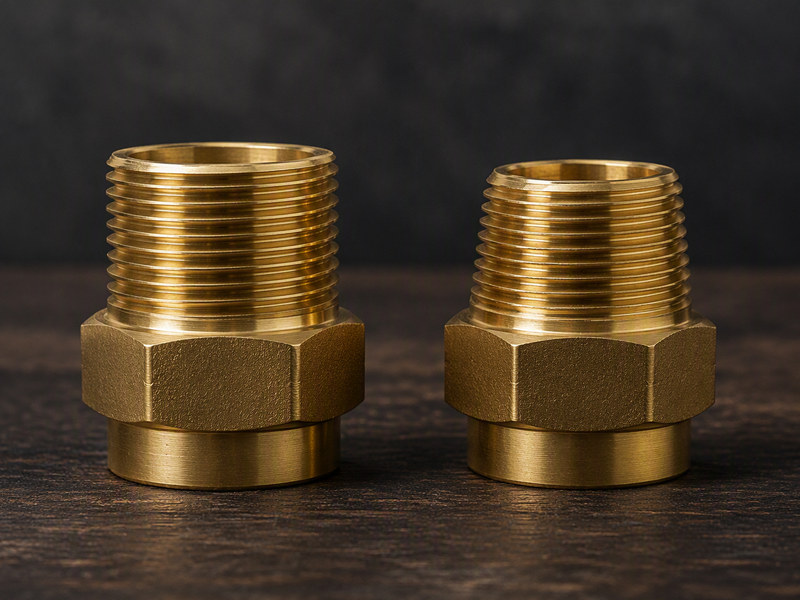
Brass NPSM straight thread fitting next to a brass NPT tapered thread fitting on a workbench

NPSM vs NPT Thread: Differences, Compatibility, and How to Choose

NPSM and NPT are both American pipe threads with the same pitch and major diameter, but they are not interchangeable: NPT is tapered and seals through thread interference, while NPSM is straight and relies on a separate mechanical seat. This NPSM vs NPT guide explains the six differences that decide which thread you actually need,

NPSM vs NPT Thread: Differences, Compatibility, and How to Choose Read More »

ten coils of flexible hose in different materials including rubber, EPDM, PVC, polyurethane, silicone and nylon

10 Types of Flexible Hose Materials: A Complete Selection Guide

The ten most common flexible hose materials, from natural rubber to PTFE, each engineered for a different set of service conditions. The ten most widely used flexible hose materials are natural rubber, EPDM, nitrile, neoprene, silicone, PVC, polyurethane, nylon, TPE, and PTFE. Quick answer for most buyers: choose EPDM for outdoor and hot-water service, nitrile for oil

10 Types of Flexible Hose Materials: A Complete Selection Guide Read More »

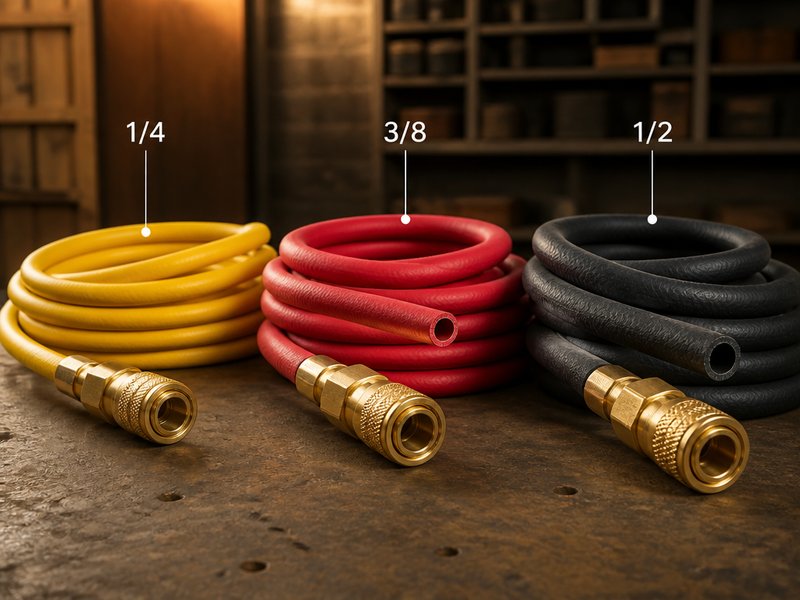
What Size Pressure Washer Quick Connect Do You Need? 1/4″, 3/8″ & M22 Explained

Buying a pressure washer quick connect? The short answer: choose 3/8 inch brass fittings for machines above 2,000 PSI, and check the M22 bore before anything else — 14 mm on gas units, 15 mm on electric. A quick connect fitting (also called a quick disconnect coupling) is the tool-free, click-lock coupling that replaces threaded connections at

What Size Pressure Washer Quick Connect Do You Need? 1/4″, 3/8″ & M22 Explained Read More »

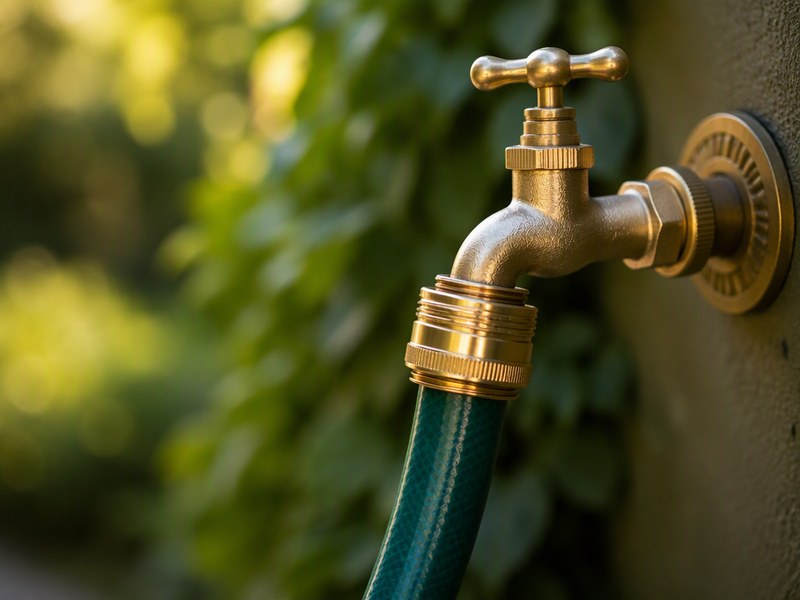
brass 3/4 inch GHT garden hose fitting connected to an outdoor faucet

What Size Is a Garden Hose Fitting? Complete Guide to GHT, Diameters & Adapters

The North American standard is a 3/4-inch GHT thread with 11.5 threads per inch. Wondering what size garden hose fitting you need for your faucet or hose? Here is the short answer: most North American outdoor faucets and garden hoses use a 3/4-inch GHT (Garden Hose Thread) fitting with 11.5 threads per inch — no matter whether

What Size Is a Garden Hose Fitting? Complete Guide to GHT, Diameters & Adapters Read More »

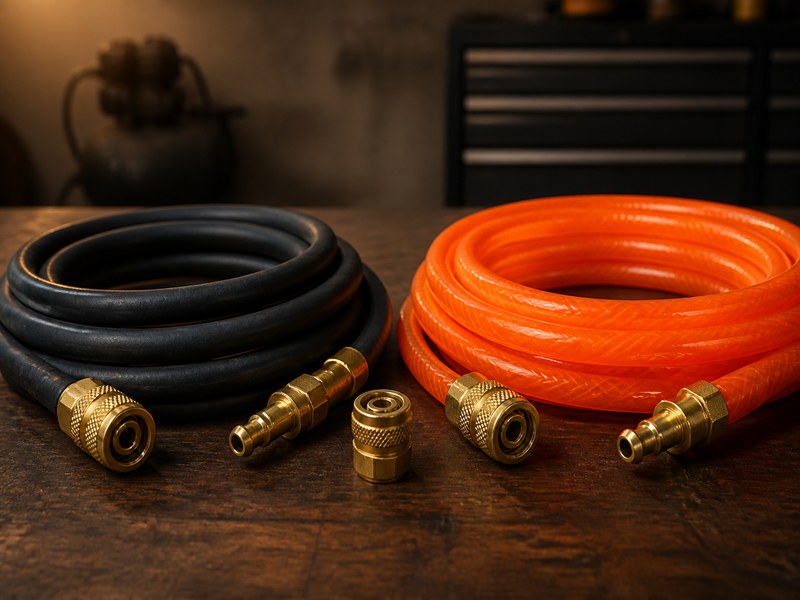
How to Choose an Air Compressor Hose: Sizes, PSI & Materials

Choosing the right air compressor hose (also called an air hose) comes down to four specifications: material, inner diameter, working pressure, and length. For most home and workshop tools, a 3/8-inch, 300 PSI rubber or hybrid hose is the safe default — it feeds nail guns, spray guns, and impact wrenches without starving them of

How to Choose an Air Compressor Hose: Sizes, PSI & Materials Read More »

hydraulic system inspection by technician heavy machinery

Hydraulic Hose Inspection Checklist: 15 Failure Signs, Inspection Procedure & Maintenance Guide

How Do You Inspect a Hydraulic Hose? A hydraulic hose inspection involves checking the hose cover, fittings, routing, leakage, abrasion, bend radius, and service condition before equipment operation. The basic inspection steps are: Author Note: This guide is written by the Henghua Hydraulic engineering team. With over 20 years of experience manufacturing hydraulic hose assemblies for

Hydraulic Hose Inspection Checklist: 15 Failure Signs, Inspection Procedure & Maintenance Guide Read More »

hydraulic-hose-protection-sleeve-abrasion-fire-resistant

Hydraulic Hose Protection Sleeve Selection Guide: How to Prevent Abrasion, Heat Damage & Hose Failure

What Is the Best Way to Protect Hydraulic Hoses? The best way to protect hydraulic hoses is to combine proper routing with the right protective sleeve based on your specific operating environment. Hydraulic hoses are best protected by preventing contact damage through correct routing, abrasion-resistant sleeves for mechanical wear, and silicone fiberglass fire sleeves for

Hydraulic Hose Protection Sleeve Selection Guide: How to Prevent Abrasion, Heat Damage & Hose Failure Read More »

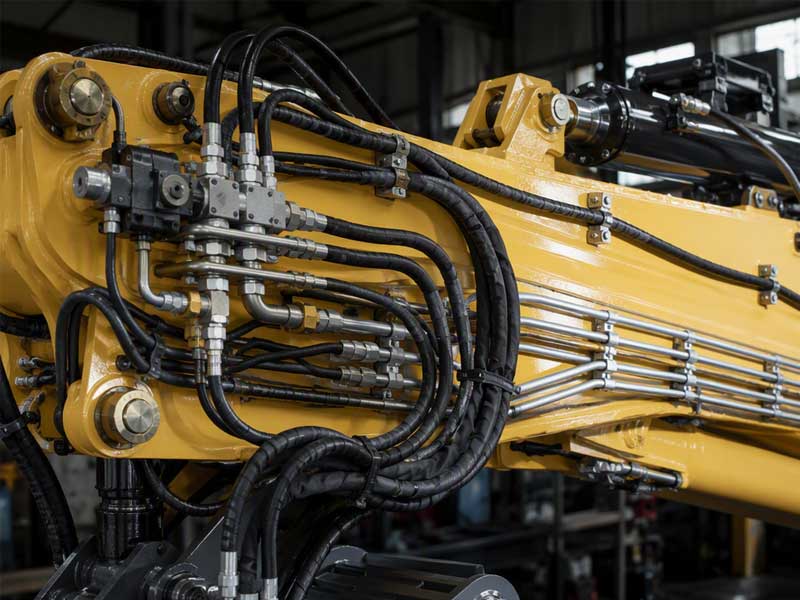
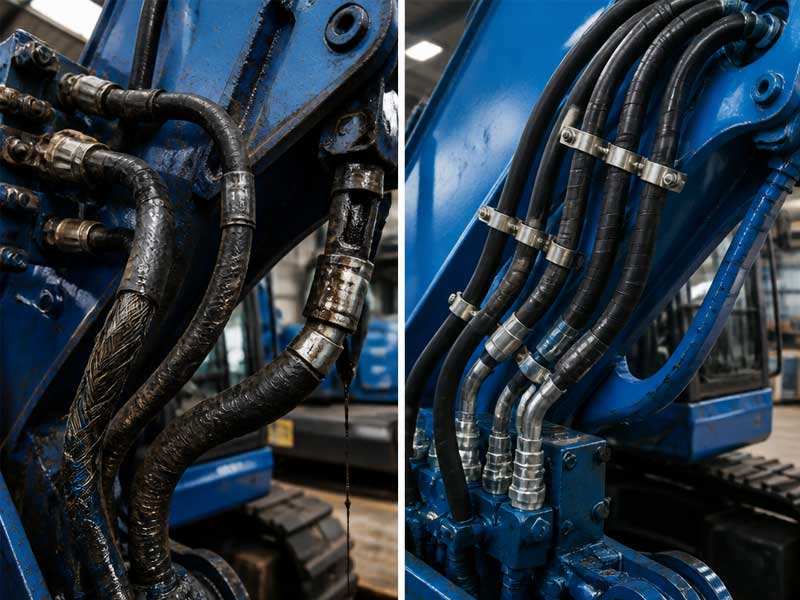
hydraulic hose routing comparison correct vs incorrect

Improper Hydraulic Hose Routing: Causes of Hose Failure, Installation Mistakes & Prevention Guide

Why Does Improper Hydraulic Hose Routing Cause Failure? Improper hydraulic hose routing causes failure by creating excessive mechanical stress, including bending fatigue, torsion, abrasion, heat damage, and fitting stress. The most common failures are hose cover wear, reinforcement damage, leakage, and hydraulic hose burst. Hydraulic Hose Routing Error Why It Fails Failure Result Prevention Sharp

Improper Hydraulic Hose Routing: Causes of Hose Failure, Installation Mistakes & Prevention Guide Read More »