
A cpe hose and a composite hose answer different questions. Chlorinated polyethylene is a rubber-family lining chosen for acids, oxidisers and abrasion, usually inside a vulcanised hose. A composite build uses a thermoplastic film inside a fabric and helix wall, chosen for solvent range, low weight and flexibility at large bore. Neither is better in general; the duty decides. An aromatic solvent swells a CPE tube and leaves a PTFE film intact; on a small bleach line at ambient either works, and the price decides.
The rest of this page is about reading the duty correctly, because that is where most purchases go wrong.
This comparison sets out where each construction earns its place, which chemicals separate them, and how to specify either one so the answer does not depend on what a supplier happens to stock.

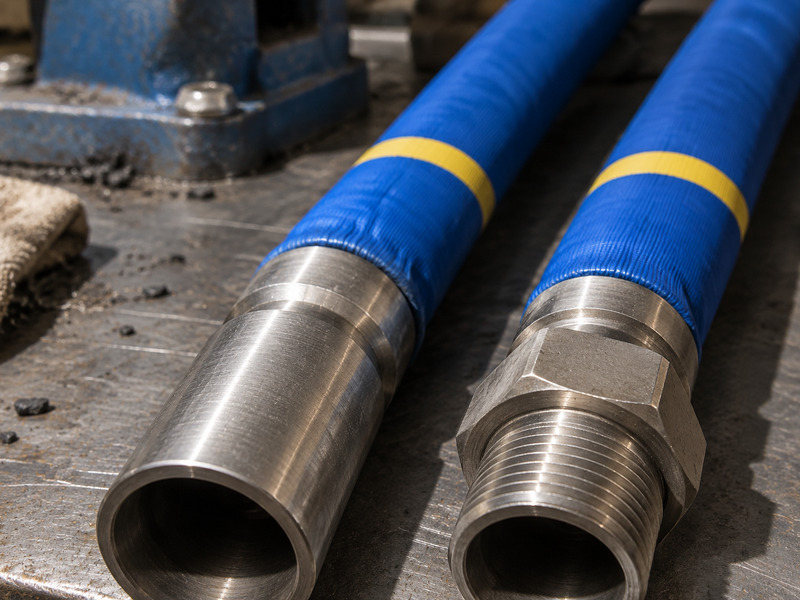
Figure 1. Both ends face the camera on the same bench, one dull black and one blue with a spiral line.
What Is a CPE Hose Made Of?
CPE stands for chlorinated polyethylene. It is a polyethylene backbone with chlorine grafted onto it, which turns a plastic into a rubber-like material with useful chemical resistance.
In hose construction it appears as the tube, bonded to a reinforcement and a cover, and cured. That cure is what makes it a thermoset product: it cannot be remelted, and the wall behaves as one bonded unit.
The chlorine content is what gives it resistance to oxidisers and to many acids, and the lining comparison shows how that compares with a fluoropolymer. It is also what limits it against some solvents and sets its temperature ceiling below the fluoropolymers.
A cpe lining hose is therefore a specialist acid and oxidiser product rather than a general chemical hose. That is a strength when the duty matches and a trap when it does not, and the trap is silent until the tube softens. A cpe lining hose sold for a solvent line is the wrong product with the right paperwork.
Where Does CPE Beat a Composite Build?
| Duty | CPE | Composite with PTFE | Verdict |
|---|---|---|---|
| Sulphuric acid, ambient | Good | Good | Either, on price |
| Sodium hypochlorite | Very good | Good | CPE often preferred |
| Hydrochloric acid | Good | Good | Either |
| Aromatic solvents | Poor | Excellent | Composite |
| Chlorinated solvents | Ограниченный | Excellent | Composite |
| Hot caustic above 80 °C | Moderate | Excellent | Composite |
| Abrasive slurry | Good | Moderate | CPE or UHMWPE |
| Large bore dock duty | Poor, heavy | Excellent | Composite |
Table 1. Where each construction wins. Ratings are directional; the specific grade and concentration decide the final answer.
Three patterns emerge. CPE holds its own on mineral acids and oxidisers at ambient temperature. It struggles with aromatic and chlorinated solvents, which are exactly where a fluoropolymer earns its cost. And at large bore it loses on weight before it loses on chemistry.
The abrasive row is worth noting because it is often overlooked. Rubber-family linings tolerate slurry better than a thin thermoplastic film, and a composite build for abrasive duty usually needs a UHMWPE liner rather than PTFE.
Where Does the Composite Build Win?
Four places, and each is a property of the construction rather than the polymer.
Solvent range: a PTFE film handles aromatics, chlorinated solvents, ketones and esters that attack CPE. Temperature: the film and the wall tolerate higher service temperatures than a rubber tube. Weight and flexibility: at 4 inch and above, a composite hose is easier to handle and bends tighter without kinking. And pressure: the helix and the fabric carry load in a way a rubber tube does not, which matters above the low-pressure band.
The trade is cost and, in some duties, permeation. A thicker rubber tube resists vapour passage better than a thin film, which is why an odour complaint can appear on a hose that is chemically correct and mechanically sound. The answer there is a different construction rather than a different supplier: on an odour-sensitive duty the permeation path through the wall and the bond decides the choice before the chemical resistance table does.
Where the medium is benign and the bore is small, the composite hose advantage shrinks. At that scale the decision is about the store, not the chemistry: whichever construction the plant already holds spares for is the cheaper one to run. A 1 inch hose on dilute acid at ambient is a price decision, not a chemistry decision.
What About Bleach and Hypochlorite?
Sodium hypochlorite is the duty where a cpe lining hose most often appears, and the reason is worth understanding.
Hypochlorite is an oxidiser, and oxidisers attack the polymer backbone. CPE resists that attack better than most polyolefins, which is why it is a common choice in water treatment and in plants that dose bleach.
A composite build with PTFE also handles hypochlorite, and costs more. On a small dosing line, the CPE hose is the economical answer. On a large transfer line, the weight difference usually decides in favour of the composite.
One caution applies to both: hypochlorite strength falls with time and temperature, and a hose that was correct for fresh solution may be over-specified for a decayed one. Specify the concentration at the point of use, not at the drum.

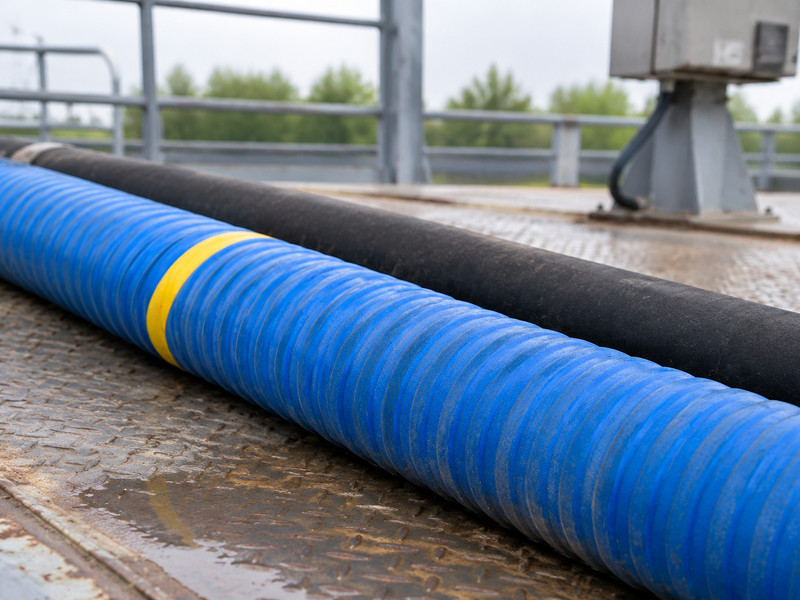
Figure 2. The cut faces are the same diameter, so the layer count is the only difference between them.
Which Solvents Break CPE?
Aromatic hydrocarbons, chlorinated solvents and some ketones. The mechanism is swelling followed by extraction of the compounding ingredients, and the result is a soft tube that no longer bonds to its reinforcement.
The failure is quick enough to surprise operators, because the same hose may have handled acid for years. A switch from an acid duty to a solvent duty is a specification change, and it is often made without one.
Where a plant runs both, a cpe vs ptfe hose decision is really a decision about which duty the hose is bought for. Buying PTFE for both is simpler and costs more; buying CPE for both is cheaper and fails on the solvent line.
How Do the Costs Compare?
Purchase price favours CPE at small bore, and the gap narrows as bore rises because the composite construction uses less material per metre than a heavy rubber wall.
Installation cost favours the composite build wherever the hose is handled, because weight and bend radius set how many people and what support the job needs.
Replacement cost follows the failure mode, and the failure mode follows the chemistry rather than the price. CPE tends to fail at the tube or the bond after chemical exposure; a composite hose tends to fail at the film or the fitting after flexing. Whichever arrives first in your duty decides the lifecycle figure.
The invoice is the least informative of the three numbers, and the easiest to compare. A composite hose on acid duty can therefore be the cheaper hose over five years even when it costs more on the invoice. A CPE hose on a small bleach line can be the cheaper option even when PTFE is available.
How Do You Specify Either One?
Write the medium, the concentration, the temperature and the handling. Then name the construction and the reason.
For a cpe composite hose enquiry, the useful information is the duty rather than the product name, because the same phrase covers different builds. Give the chemical, the strength, the temperature and the flow, and let the supplier propose.
Add the handling and the bore. A hose that is dragged across a floor needs a different cover from one that hangs on a rack, and a 6 inch hose needs a different construction from a 1 inch one regardless of chemistry.
Finally, ask what the offer does not cover. A supplier who states the limits of a CPE or PTFE recommendation is easier to trust than one who claims both.
Which Build Suits Which Duty?
| Duty | Sensible choice | Reason |
|---|---|---|
| Bleach dosing, small bore | CPE | Oxidiser resistance at low cost |
| Mixed acid transfer, ambient | CPE or PTFE | Either works; price decides |
| Solvent transfer, any bore | PTFE composite | CPE swells |
| Hot chemical above 80 °C | PTFE composite | Rubber ceiling |
| Abrasive slurry | CPE or UHMWPE | Wear resistance |
| Dock and tanker, 4 inch plus | PTFE composite | Weight and flexibility |
Table 2. A shortlist rather than a rule. Confirm with the supplier’s compatibility data for the grade on offer.
How Do You Handle a Mixed Chemical Plant?
Most plants do not run one chemistry. They run acids, caustics, solvents and bleach, often through the same transfer area, and the hose store becomes a compromise.
The usual resolution is three groups. A CPE or rubber group for oxidisers and abrasion. A PTFE composite group for solvents and temperature. And a general PP group for the benign streams such as water and dilute detergent.
That structure works because it maps to a decision an operator can make at the rack: what is the product family, and which colour or tag belongs to it. A store organised by supplier or by bore collapses into guesswork within a year.
Where a cpe vs ptfe hose argument recurs, the cause is usually a stream that moves between groups. A line that carries acid one week and solvent the next needs the wider lining, because a hose that fails on the harder duty fails without warning.
The same applies to a cpe composite hose bought for a single duty and then borrowed. The specification that was correct for the bleach line is not correct for the solvent drum, and the borrowing is where the chemistry error enters.
What Does Maintenance Look Like for Each?
The inspection triggers differ, and knowing them shortens the diagnosis. Knowing them also prevents the most common mistake in a mixed store, which is judging a rubber hose by the standards of a composite one.
A CPE tube shows failure as swelling, softening or a change in colour before it leaks, and an operator who knows the material can see it from a metre away. The bond to the reinforcement is the usual second casualty, and it shows as a bulge near the ferrule.
A composite hose shows failure as a cover blister, a soft band at the fitting or a crease at a bend. The film is often intact when the first two appear, which gives an inspector warning.
Both benefit from a written retirement criterion. In our experience the plants that replace on observation rather than on a calendar spend less and have fewer unplanned stops, because the hose is retired before the product finds the weak point.
Этот inspection programme covers the general checks, and the chemical resistance guide covers the compatibility question that precedes them.
What About Availability and Lead Time?
A hose that is right on paper and unavailable in six weeks is not right. Procurement teams learn this in the first breakdown and forget it by the second budget cycle. Availability is part of the specification, and it differs between the two constructions.
Rubber-family linings are made in many plants, in standard bores, and are often stocked. A composite build is more likely to be made to order, particularly at large bore or with a fluoropolymer film.
That difference matters most during a breakdown. A plant that keeps one spare of each group is covered; a plant that buys as needed will be waiting for whichever construction is slower, and that is usually the composite.
The practical answer is to hold spares at the group level rather than the hose level. Two spares per group cover most of a chemical plant, and they cost less than the downtime they prevent.
Часто задаваемые вопросы
Is a cpe hose better than a composite hose?
No, and no worse. CPE is better on oxidisers and abrasion at small bore; a composite build is better on solvents, temperature and large bore.
What is CPE used for in hose linings?
Mineral acids, sodium hypochlorite and abrasive duties, usually in a vulcanised rubber hose where the tube is bonded to the reinforcement.
Can CPE handle aromatic solvents?
Poorly. Aromatic and chlorinated solvents swell it and extract the compounding ingredients, which is the main reason buyers move to PTFE.
Is a cpe vs ptfe hose comparison about price?
Partly. PTFE covers a wider chemistry and costs more; CPE is cheaper and narrower. The duty decides whether the extra range is needed.
Does a cpe lining hose work at high temperature?
Only within its rubber ceiling, which sits below a fluoropolymer. Above it, the tube softens and the bond weakens.
Can a composite hose replace a CPE hose on a bleach line?
Yes, with a PTFE liner, at a higher price and lower weight. On small dosing lines the price usually decides in favour of CPE.
What should a cpe composite hose specification include?
The chemical, concentration, temperature, bore, handling and the standard to be met. Without concentration and temperature, the offer is a guess.
About HENGHUA
HENGHUA builds composite hose with PP, XLPE, UHMWPE and PTFE liners, and advises on the duties where a rubber-family lining such as CPE is the better answer even though it sits outside our range. If your duty suits CPE, we will say so rather than sell a more expensive hose.
Send the medium, concentration, temperature and bore, and we will set out what a composite build can do and where another construction wins.


 English
 Spanish
 Portuguese
 French
 German
 Arabic
 Russian
 Indonesian
 Japanese
 Korean