
A biodiesel hose has to do what a diesel hose does, plus survive a solvent. Fatty acid methyl esters and ethanol are not mineral hydrocarbons: they carry oxygen, they hold water, and they attack polymers that handle diesel without complaint. A hose approved for B7 is not automatically approved for B100, and the difference is a liner decision rather than a pressure decision.
This guide explains what oxygenated fuel does to a composite wall, which linings survive high blends, and how to write a specification that matches the blend the terminal actually loads.

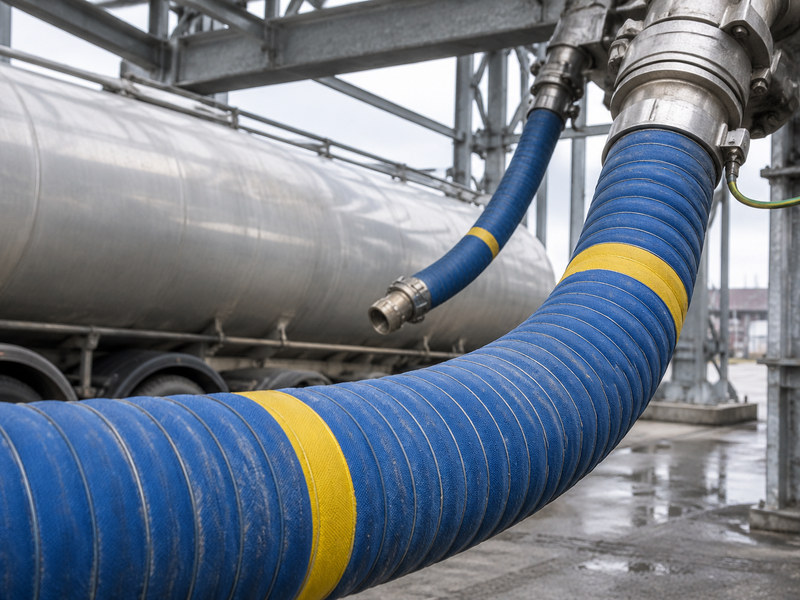
Figure 1. The tanker sits out of focus behind the gantry, and the hose loops down to the loading point.
Why Do B100 and E100 Attack a Diesel Hose?
Three mechanisms, and they compound.
The first is solvency, and the hydrocarbon lining guide covers the same mechanism in mineral streams. FAME and ethanol dissolve or swell polymers that resist aliphatic diesel, because their polarity is closer to the polymer’s. The swelling is not dramatic week to week, and it is cumulative.
The second is water. Ethanol absorbs water from the atmosphere and carries it through the system; biodiesel holds water in suspension and supports microbial growth at the interface. A liner that is fine with dry hydrocarbon can be affected by the water phase sitting against it.
The third is permeation. Smaller, more polar molecules pass through polyolefin films more readily, which shows up as odour, as loss and as vapour in the hose cover.
A diesel hose fails these three tests quietly. That is why the failure often appears as a soft liner or a blistered cover rather than as a leak.
Which Polymers Survive Oxygenated Fuel?
| Lining | B7 to B20 | B100 | E10 | E100 | Комментарий |
|---|---|---|---|---|---|
| PP | Good | Ограниченный | Moderate | Poor | Cost-effective for low blends |
| UHMWPE | Good | Moderate | Moderate | Ограниченный | Better water and abrasion behaviour |
| XLPE | Good | Moderate | Good | Ограниченный | Good for E10 to E85 |
| PTFE | Excellent | Excellent | Excellent | Excellent | Removes the question at a cost |
Table 1. Directional lining behaviour in oxygenated fuel. Blends above the stated range need supplier confirmation for the specific grade.
The table is deliberately directional, and an E100 hose needs the confirmation more than any other row. A manufacturer’s compatibility data decides the limit for a given grade, and the same polymer family can behave differently with a different additive package.
Two readings matter for procurement. First, the blend ratio is part of the specification, not an afterthought: “biodiesel” without a number cannot be quoted. Second, the same terminal may load two blends from one arm, and then the hose follows the higher one.
Where Does Water Change the Answer?
Water is the reason a hose that handles B20 can still fail on B100 in a wet climate.
An ethanol hose picks up water in storage and transport, and the water sits in the low points of a hose run. Biodiesel holds water in suspension until it does not, and the free water that separates supports microbial growth that produces acids.
Those acids attack the helix if the cover is breached, and they attack the bond at the ends. A galvanised wire that is fine under dry hydrocarbon will corrode under a water phase that sits for weeks.
Two practical measures follow. Specify a helix material that suits wet duty where the product is known to hold water, and drain the hose after transfer rather than leaving it full.

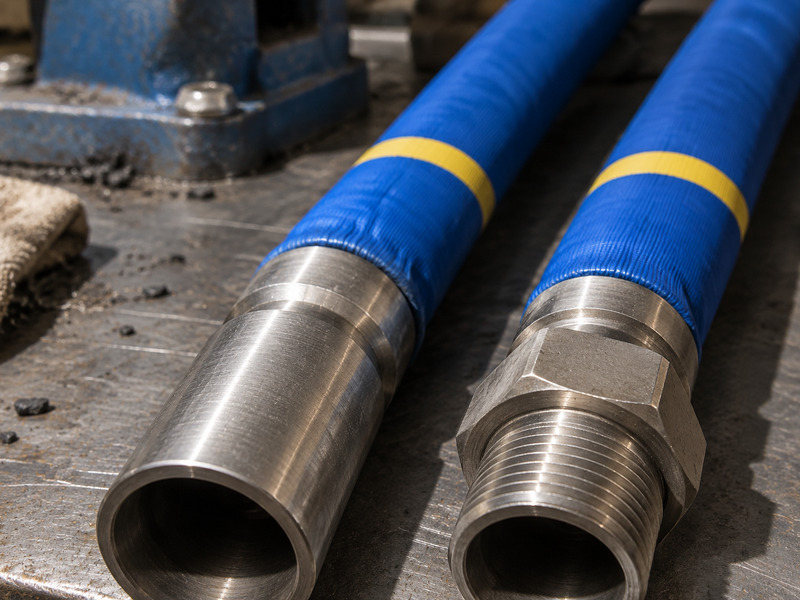
Figure 2. Both ends sit at the same height and the same distance apart, which is what makes the wall difference readable.
What Does the Blend Ladder Look Like in Practice?
For a biodiesel hose fleet, a terminal that loads several blends usually ends up with two builds rather than one per blend, and the tank truck hose guide sets out the loading arrangements around them.
| Duty | Practical build | Reason |
|---|---|---|
| B7 to B20, dry climate | PP or UHMWPE | Standard hydrocarbon behaviour |
| B30 to B100 | PTFE or UHMWPE with data | Solvency and water phase |
| E10 to E85 | XLPE or PTFE | Ethanol tolerance at moderate cost |
| E100 | PTFE | Removes the liner question |
| Multi-blend arm | PTFE | One build covers the slate |
| Vapour recovery line | PTFE or conductive polyolefin | Permeation and static |
Table 2. Build shortlist by blend. Confirm each against the supplier’s compatibility data for the grade offered.
The multi-blend row is where cost and simplicity meet. A terminal that loads B7 in one season and B30 in another will spend less on one PTFE build than on two polyolefin builds plus the stock and training that go with them.
How Do You Specify a Biofuel Transfer Hose?
Five lines, and each one closes a real gap.
Name the fuel and the maximum blend, with the standard that defines it. Give the maximum temperature, because solvency rises with it. State the water expectation: dry, occasional, or water bottoms. Name the liner or the performance requirement. And require the compatibility data behind the offer.
Add a sixth line for the end fittings. Aluminium is common on fuel duty and less suitable where a water phase sits against it; stainless costs more and removes the question.
Any supplier can quote against that list on the same basis, which is the point. Without it, the cheaper offer wins and the liner decision is made by default.
What Should You Ask a Supplier?
Four questions separate a real answer from a brochure.
What blend was the liner tested at, and at what temperature. What happens to the bond above 60 °C. What helix material is used, and is it suited to a wet product. And what retirement criteria apply to a biofuel hose.
A supplier who answers all four has data. One who answers the first with “suitable for biodiesel” has a phrase.
Ask also for the marking scheme, and for the type and pressure the build is rated to. A hose that carries a batch number can be traced to a test; one that does not cannot, and that matters more on blends than on mineral diesel because the failure modes are slower and harder to attribute.
What About Cold Flow and Seasonality?
A biodiesel hose sees the same product at two temperatures across the year. A terminal that loads in winter is running a different product from the same tank in summer, even though the label on the tank has not changed.
Cold flow affects the fuel more than the hose, but it affects the operation: a hose left full in a cold line can hold gelled product, and the next transfer pushes it through at pressure. That pressure is a hose event even though the cause is temperature.
The practical rule is to drain after transfer in cold weather and to keep the hose out of standing water. Neither is a specification change; both extend life more than an upgrade would.
How Do You Handle Seasonal Blend Changes?
Blend ratios move with policy and with season. A terminal that loads B7 in one quarter can be loading B30 in the next, and the hose is the component least able to follow.
Two approaches work. The first is to buy for the highest blend expected over the life of the hose, which usually means one fluoropolymer build and no further decisions. The second is to keep blend-specific hoses and store them separately, which works only if the store is disciplined.
The first approach costs more per metre and less in total. The second costs less per metre and depends on a labelling system that survives staff changes.
Whichever is chosen, record the blend on the hose register. An ethanol hose that has been used on E10 and is then put on an E100 line is a specification error that will be discovered by the liner rather than by the paperwork.
What Does a Wrong Liner Cost?
Less than a spill and more than the hose. The cost arrives in three instalments.
The first is the hose itself, replaced early. The second is the downtime while a replacement is found, which on a busy gantry is measured in hours of loading. The third is the investigation, because a liner failure on a blend that was not specified looks like a product problem until the records are read.
A biofuel transfer hose is cheap relative to those three. That arithmetic is why the specification conversation is worth having before the first load rather than after the first soft liner.
It is also why a supplier should state the blends it covers rather than the blends it has heard of. A hose sold as suitable for biodiesel, with no blend number, is a hose that will be blamed for a duty it never claimed.
A biodiesel hose bought on the lowest blend it will ever see is the most common mistake in this category, and the one a register prevents. Where the blend is genuinely unknown, specify PTFE and move on. It is the one answer that does not need revisiting when the policy changes, and on a biodiesel hose it removes the annual question of whether the blend moved again.
What Changes at E85 and E100?
The step from E10 to E85 is larger than the number suggests. Ethanol content above roughly half the blend changes swelling, permeation and water pickup at the same time.
An E100 hose is therefore a specification rather than an upgrade. The liner is usually fluoropolymer, the fittings are stainless, and the helix is chosen for a product that can hold water against it for weeks.
Where a terminal loads E85 and E100 on the same arm, one PTFE build covers both. Where it loads E10 and E100, two builds are cheaper than one over-specified hose on the low-blend line.
The blend a hose was bought for rarely appears on the hose itself, which is why the order and the register matter as much as the liner. The clue that an E100 hose is wrong for the duty is rarely a leak. A biodiesel hose shows the same three symptoms in slower motion: a soft liner at the coupling, a cover that blisters within a season, or a fuel smell in the store. Any of the three means the blend moved and the specification did not.
A biofuel transfer hose on E100 duty should also be checked for static continuity at every inspection, because ethanol’s conductivity is lower than mineral diesel’s. That is a fitting-and-bonding question more than a liner question, and it is the one most often left out of the order.
Where Should You Read Next?
- Hydrocarbon lining selection for aromatic content in mineral streams
- Tank truck loading arrangements for the bay the hose serves
- Composite hose specifications for the pressure and temperature bands
- Hose permeation for odour, loss and vapour complaints
Часто задаваемые вопросы
Can a standard diesel hose carry B100?
Only with a liner rated for B100. B100 is a solvent for many polymers that handle mineral diesel, so the blend number and the liner grade belong in the same order line.
Is a biodiesel hose different from an ethanol hose?
The duty differs in detail, and the practical answer is often the same: a fluoropolymer liner, or a polyolefin with documented data at the blend in question. Ethanol adds a water-absorption problem that biodiesel shares in a different form.
What is the maximum blend for a PP liner?
It depends on the grade and the temperature, and no single figure applies. Ask for the supplier’s compatibility data at your blend and temperature rather than a blanket limit.
Does E100 require a special hose?
In practice yes. E100 attacks liners that handle E10 comfortably, and PTFE is the usual specification where the blend is that high.
Why does my biofuel hose cover blister?
Because vapour is permeating the liner and collecting under the cover. It is evidence of permeation rather than a cover defect, and it usually appears before any pressure loss.
Can a biofuel transfer hose be used for mineral diesel afterwards?
Usually yes, if it is rated for the biofuel. The reverse is not true, which is why the specification follows the higher blend.
We load B7 all winter and B30 from June on the same arm. Does the hose have to change?
Only if the liner is not rated to the higher blend. The highest blend the arm will ever see is the one to specify, and a liner rated for B7 stays a B7 liner in July. Write the maximum blend on the order rather than the seasonal average, and the arm keeps one hose instead of two.
Do I need a different hose for vapour recovery on ethanol?
The vapour stream is different from the liquid, and the line should be specified on permeation and static control rather than copied from the liquid side.
About HENGHUA
HENGHUA supplies composite hose for biofuel transfer with PP, XLPE, UHMWPE and PTFE liners, and states which blends each build covers rather than claiming the whole range. Where a blend sits outside our data, we will say so before quoting.
Send the fuel, the blend, the temperature and the terminal arrangement, and we will return the lining that fits and the documents behind it.


 English
 Spanish
 Portuguese
 French
 German
 Arabic
 Russian
 Indonesian
 Japanese
 Korean