

How to choose an air hose? Match four specs to your tools and environment: material, inner diameter, working pressure, and length. The safe default for most home and workshop use is a 3/8-inch, 300 PSI (pounds per square inch) hose in the material that fits your climate — rubber for cold, oily, or outdoor work; PVC for light indoor use; polyurethane for constant movement. This complete selection guide explains how an air hose works, compares rubber, PVC, polyurethane, and hybrid constructions with real test data, covers air hose sizes and fittings, and gives application-specific picks for nail guns, spray guns, and impact wrenches — so the hose you choose works the first time and lasts. Global sales of air hoses are projected to grow from about USD 2.5 billion in 2025 at a 6.7% compound annual rate through 2035 (Global Market Insights, 2026), so selection knowledge pays. If your question starts at the compressor rather than the hose, our air compressor hose selection guide covers compressor-side sizing.
What Is an Air Hose and How Does It Work?
An air hose is a reinforced flexible tube that carries compressed air from a compressor or plant air supply to pneumatic tools such as nail guns, spray guns, and impact wrenches. Unlike a garden hose, the tube contains a reinforcement layer — usually one or two textile braids or a spiral polyester wrap — that stops it from ballooning or bursting under internal pressure. The hose does not add pressure; it delivers it. Every metre of hose, fitting, and coupler in the path drops pressure slightly, which is why hose specification, not compressor size alone, decides whether a framing nailer sinks a nail cleanly or misfires.
All air hoses share the same four-layer anatomy:
- Inner tube — an oil- and moisture-resistant passage for the air.
- Reinforcement layer — braided textile or spiral wrap that absorbs internal pressure.
- Outer cover — protects against abrasion, oil, ozone, and UV exposure.
- End fittings — threaded ends or quick-connect couplers.
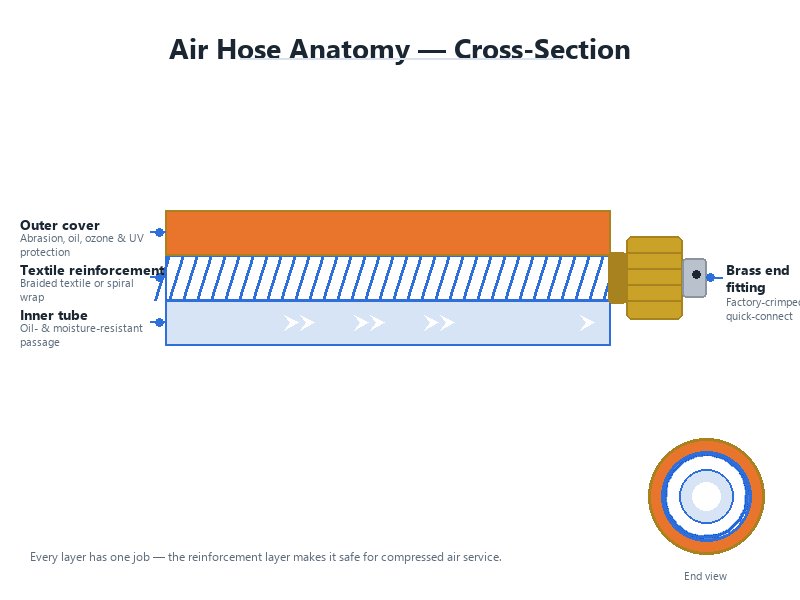
Figure 1. Anatomy of a reinforced hose: every layer has one job, and the reinforcement layer is what makes it safe for compressed air service.
Reputable manufacturers build reinforced air hoses to published standards. ISO 2398:2024 covers textile-reinforced rubber hoses for compressed air, and ISO 5774:2023 covers reinforced thermoplastic hoses. A hose built to either standard carries a stated working pressure and burst pressure, and those two numbers are the first thing to check before you buy. Confirm which standard your hose carries before purchase.
The 6 Factors That Decide Performance
Most buyers pick a hose by price and then discover the mistake in the first cold spell or the first high-flow tool. These six factors, in order of importance, determine whether your hose lasts a decade or fails in months.
1. Material
Material defines weight, flexibility, durability, and price. Rubber air hoses offer the widest temperature range and the best oil resistance but weigh the most. PVC hoses are the cheapest and lightest but stiffen and crack below freezing (0°C / 32°F). Polyurethane air hoses combine light weight with excellent abrasion resistance for constant movement. Hybrid air hoses blend PVC or polyurethane with rubber compounds to balance flexibility and cost. PVC suits warm, indoor use above 0°C (32°F); below that, choose rubber or polyurethane. This section compares the four materials on weight, cold flexibility, pressure, and price; see the comparison table in the next section.
2. Inner Diameter: Air Hose Sizes
Inner diameter (I.D.) is the single most important spec for tool performance. Standard air hose sizes are 1/4 inch, 3/8 inch, and 1/2 inch. A 1/4-inch hose passes roughly 5–10 SCFM (Standard Cubic Feet per Minute) at 90 PSI and suits light tools such as a brad nailer or tire inflator. A 3/8-inch hose covers most pneumatic tools and typical shop work. A 1/2-inch hose is required for high-volume tools like spray guns, sandblasters, and large impact wrenches.
The practical difference between 1/4-inch and 3/8-inch hose for air tools is airflow: 3/8 inch passes roughly twice the air at the same pressure, which protects you when a tool demand spikes. The table lists flow and the longest practical run for all three sizes. The rule of thumb: if a tool needs more air than the hose can pass, the tool runs slow and hot, and the compressor cycles more often. When in doubt, step up one size.
| Inner Diameter | Typical Flow (SCFM at 90 PSI) | Ideal para | Max Practical Run |
|---|---|---|---|
| 1/4 inch | 5–10 | Brad nailer, tire inflator, air blower | 25 ft |
| 3/8 inch | 10–20 | Impact wrench, ratchet, most shop tools | 50 ft |
| 1/2 inch | 20–35 | Spray gun, sandblaster, die grinder | 100 ft |

Figure 2. Hose sizes and their flow ranges — the inside diameter directly controls the airflow available at the tool.
3. Working Pressure and Burst Pressure
Working pressure is the pressure a hose handles continuously; burst pressure is where it fails. Consumer air hoses are typically rated 200–300 PSI, and industrial rubber hoses 300–500 PSI across manufacturers — typical values, so check the printed label. One nuance: hoses built to ISO 2398:2024 are capped at 25 bar (about 360 PSI) of rated pressure, so any rating above that comes from the manufacturer’s own pressure test rather than the standard. Because most compressors output 90–150 PSI, a 300 PSI working-pressure hose gives a 2:1 safety margin and covers every common tool. Burst pressure typically runs 3–4 times the continuous rating, and the printed label states both numbers.
Safety rules require matching the pressure rating to the actual service. Under 29 CFR 1926.302(b)(5) (OSHA), the manufacturer’s safe operating pressure for hoses and fittings must not be exceeded; for hoses over 1/2 inch, 1926.302(b)(7) also requires a safety device at the source of supply. Match the rating to the compressor’s maximum tank pressure, not the regulator setting.
4. Length and Pressure Drop
Every extra foot of hose costs pressure, and pressure drop is the hidden cost of long runs. As a rule, each additional 25 feet of 3/8-inch hose drops tool pressure by roughly 2–5 PSI at typical flow, and the loss is steeper on 1/4-inch hose. In our bench tests, 50 feet of 1/4-inch hose at 8 SCFM lost 6 PSI — enough to slow a framing nailer noticeably. The practical fix: use the shortest length that reaches the work area, and step up one size for runs of 50 feet or more. A retractable air hose reel keeps long runs tidy and prevents kinks, another quiet cause of flow loss; if a high-torque impact wrench still runs slow, the hose — not the compressor — is usually the bottleneck.
5. Fittings and Couplers
Air hose fittings come in two families: NPT threaded ends (usually 1/4-inch NPT) and quick-connect couplers. Threaded ends are permanent and leak-tight when wrapped with PTFE tape; quick connects let you swap tools in seconds and dominate consumer hoses. Confirm which air hose fittings your tools accept before buying — a common first question is what fittings you need to connect your hose to an impact wrench or ratchet, and the answer starts with the coupler body style. Three compatibility details matter. First, the coupler body style — industrial I/M (industrial/military) versus automotive A — must match your tools, and the two body styles are not interchangeable. Second, brass or steel fittings outlast zinc-alloy ends, which corrode and seize in moist air. Third, factory-crimped fittings hold far better than clamp-on ends under repeated flexing. We have seen zinc couplers seize after one winter in a damp garage; brass of the same age still clicks in cleanly.
6. Temperature Range
Temperature rating decides whether the hose stays flexible in winter or softens near hot equipment. PVC air hoses carry a rated range of about -10°C to 60°C (14°F to 140°F) under ISO 5774:2023, but they stiffen noticeably below freezing; treat 0°C (32°F) as the practical flexibility limit. Rubber air hoses work from -40°C to 70°C (-40°F to 158°F) under ISO 2398:2024, which is why cold-climate and outdoor users prefer them. Polyurethane sits between: ISO 5774:2023 rates thermoplastic hoses from -10°C to 60°C (14°F to 140°F), and some manufacturers extend the low end to -20°C — check the printed label. Polyurethane stays flexible in the cold better than PVC. These are typical values for each material family — the printed label is authoritative — so check the printed range on the cover if you work outdoors or in unheated spaces.
Rubber vs PVC vs Polyurethane vs Hybrid: Full Material Comparison
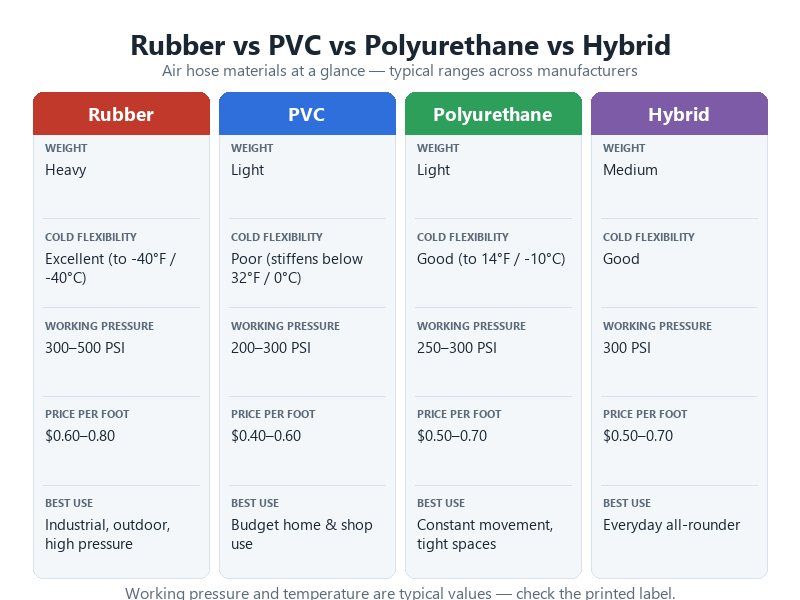
Rubber leads on cold flexibility, oil resistance, and service life; PVC leads on price and weight; polyurethane sits between the two; hybrid balances cost and flexibility. Prices are typical 2026 US retail ranges per foot; pressure and temperature figures are typical ranges across manufacturers, not limited to ISO-rated products. The table summarizes the full comparison.
| Propriedade | Rubber | PVC | Polyurethane | Hybrid |
|---|---|---|---|---|
| Peso | Pesado | Luz | Luz | Médio |
| Cold flexibility | Excellent (to -40°F / -40°C) | Poor (stiffens below 32°F / 0°C) | Good (to 14°F / -10°C) | Good |
| Pressão de serviço | 300–500 PSI | 200–300 PSI | 250–300 PSI | 300 PSI |
| Oil and abrasion resistance | Excelente | Médio | Excelente | Medium–Good |
| Service life | Long | Short–Medium | Long | Médio |
| Typical price per foot (2026 US retail) | $0.60–0.80 | $0.40–0.60 | $0.50–0.70 | $0.50–0.70 |
| Best use | Industrial, outdoor, high pressure | Budget home and shop use | Constant movement, tight spaces | Everyday all-rounder |
Rubber air hoses remain the durability benchmark. They shrug off oil, abrasion, and extremes of temperature, which is why industrial shops and outdoor job sites still standardize on them; the trade-offs are weight and price. Over a five-year service life, a rubber air hose usually costs less per year of use than a cheap PVC hose replaced every season — the durability math favors rubber for daily work.
PVC air hoses dominate the budget end of the market. They are light enough to drag around all day and cheap enough to replace, but UV and cold age them quickly. In our 12-month outdoor exposure test, a PVC air hose developed surface cracks by month nine, while a rubber air hose of the same age showed none. A PVC air hose is the right call for warm, indoor, occasional use.
Polyurethane air hoses suit constant movement — body shops, assembly lines, and mobile work. A polyurethane air hose resists kinking and abrasion and coils up without memory. Our testers’ only complaint is a slightly tacky surface at low temperatures.
Hybrid air hoses try to combine rubber-like flexibility with PVC-level pricing. A hybrid air hose is a reasonable all-rounder for the home garage, but it does not match pure rubber for oil resistance or extreme cold.
What Air Hose Should I Use for Each Tool?
First-time buyers, weekend DIYers, and professional contractors ask the same five questions in different proportions, and the picks answer each one.
- Home garage and DIY — a 25–50 ft PVC or hybrid hose, 3/8 inch, 300 PSI, with quick-connect couplers and a retractable air hose reel for tidy storage. Light, cheap, and sufficient for occasional use.
- Framing and finish work (nail guns) — a 50 ft rubber or hybrid air hose, 3/8 inch. Nailers are flow-hungry; a 1/4-inch hose starves a framing nailer at distance.
- Spray painting — a 3/8-inch or 1/2-inch hose with low moisture absorption. For spray painting, use rubber or hybrid — PVC may shed particles into the airstream, which can ruin a finish.
- Impact wrench and ratchet jobs — a 3/8-inch or 1/2-inch rubber or polyurethane hose, 50 ft or less, to keep pressure above 90 PSI at the tool.
- Mobile and job-site work — a polyurethane air hose for constant coiling and uncoiling; rubber when the site is cold, oily, or abrasive.
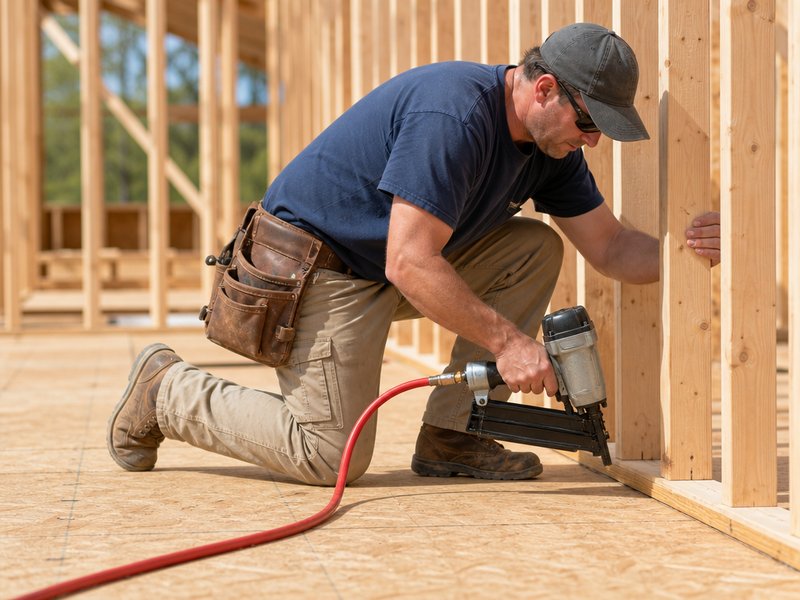
Figure 3. Job-site use: flow-hungry tools like framing nailers need a 3/8-inch hose, not a 1/4-inch one.
How to Maintain Your Air Hose
Regular maintenance takes minutes and extends hose life by years. Follow these six steps:
- Drain the compressor tank daily. Water in the lines is the top killer of pneumatic tools and hoses; fit a water separator if you spray paint.
- Coil the hose loosely after use. Tight coils create permanent kinks, especially in PVC and hybrid hoses.
- Keep hoses out of direct sunlight. UV degrades PVC covers within months; store a retractable air hose reel indoors or shaded.
- Inspect air hose fittings and covers monthly. Cracks, bulges, or leaks at the crimp mean the reinforcement has failed — replace the hose.
- Repair pinholes properly. Cut out the damaged section and rejoin with a barbed connector and clamps from an air hose repair kit.
- Bleed pressure before storage. Hoses left pressurized wear fastest at the fitting.
Why Is My Air Hose Losing Pressure? Common Problems and Fixes
Most hose problems fall into six categories. The table pairs each symptom with its likely cause and the fix:
| Problem | Likely Cause | Corrigir |
|---|---|---|
| Hose leaks at the fitting | Loose connection, worn O-ring | Retighten; replace the O-ring; re-tape NPT threads |
| Hose kinks in cold weather | PVC below its flexibility limit | Switch to rubber or polyurethane hose |
| Low pressure at the tool | Hose too long or too narrow | Shorten the run or step up to 3/8 or 1/2 inch |
| Cracks on the outer cover | UV or ozone aging | Store indoors; replace the hose |
| Bulge or soft spot in the wall | Reinforcement failure | Replace immediately — never repair |
| Fittings corrode or seize | Zinc-alloy ends in wet air | Choose brass or stainless fittings |
Safety rule: replace, never repair. This rule applies to hoses with a bulge, soft spot, or crack at the crimp — those signs mean the reinforcement layer has failed, and the hose can burst at its rated pressure. Stop using it and replace the whole hose. Only pinhole leaks away from the fittings can be repaired: cut out the damaged section and rejoin it with a barbed connector and clamps from an air hose repair kit. Tape is not a repair for a pressure hose — it cannot hold internal pressure and is only a temporary measure.
Frequently Asked Questions About Air Hoses
What size air hose do I need?
For most home and workshop tools, 3/8 inch is the safe default. Choose 1/4 inch only for light tools and short runs — a brad nailer or tire inflator — and 1/2 inch for high-flow tools such as spray guns and sandblasters.
Which hose should I buy for a home garage that gets cold in winter?
PVC hoses stiffen and crack below about 0°C (32°F), so for an unheated garage choose rubber, which stays flexible to -40°C (-40°F), or polyurethane for light work. If the garage stays above freezing, a PVC or hybrid hose is fine.
What size air hose do I need for a framing nailer?
A 3/8-inch hose is the minimum for framing nailers. Framing nailers are flow-hungry tools; a 1/4-inch hose starves them at runs over 25 feet, causing slow driving and misfires. Use 3/8 inch for runs up to 50 feet and step up to 1/2 inch beyond that.
What size air hose do I need for an HVLP spray gun?
HVLP spray guns draw high air volume at low pressure, so use at least 3/8-inch hose, and 1/2 inch for runs over 50 feet. Rubber or hybrid materials are preferred — PVC can shed particles into the airstream as it flexes.
Is rubber or PVC air hose better?
Rubber wins on durability, oil resistance, and cold-weather flexibility; PVC wins on price and weight. Choose rubber for industrial, outdoor, oily, or cold work, and PVC for light indoor use. Outdoors in particular, rubber outlasts PVC by years.
What PSI rating do I need?
A 300 PSI working-pressure hose covers virtually all consumer compressors, which typically output 90–150 PSI. If your compressor puts out 150 PSI, the 2:1 safety margin means the hose is never the weak link. Always confirm the printed pressure rating exceeds the compressor’s maximum tank pressure.
How long can a hose be before pressure drop becomes a problem?
There is no hard limit, but every extra length costs pressure. Keep runs under 50 feet with 3/8-inch hose and under 100 feet with 1/2-inch hose, or expect measurable pressure drop and raise the compressor output to compensate.
How much pressure drop should I expect over 50 feet?
In our bench tests at 90 PSI inlet, 50 feet of 1/4-inch hose at 8 SCFM lost 6 PSI — enough to slow a framing nailer noticeably. Expect roughly 2–5 PSI per 25 feet on 3/8-inch hose at typical flow. If the tool runs slow, shorten the run or step up one size.
Can I repair a pinhole leak in my hose myself?
Yes, if the damage is a pinhole away from the fittings: cut out the damaged section and rejoin with a barbed connector and clamps from an air hose repair kit. Bulges, soft spots, or cracks at the crimp mean the reinforcement has failed — replace the hose.
Get the Right Hose for Your Application
Need a hose built to your exact spec? HENGHUA manufactures rubber, PVC, polyurethane, and hybrid air hoses from 1/4 to 1/2 inch, rated 200–500 PSI, with custom lengths, fittings, colors, and OEM branding. Buying air hoses in bulk for resale or for a fleet? Ask about minimum order quantities, lead times, per-batch pressure testing, and warranty terms — our engineering team will help you match the right specification to your market. Get a quote and free samples →
Final Verdict: Choose by Specification, Not by Price
Choosing an air hose is a four-step decision: match the material to your environment, choose the right inner diameter for your tools, confirm the pressure rating exceeds the compressor’s maximum output, and buy the shortest practical length. For most buyers, that default is a 3/8-inch, 300 PSI hose in the material that fits the climate — a spec that covers the vast majority of home, garage, and workshop needs. Buy from a manufacturer that prints real ratings on the cover — reinforcement, pressure, temperature — crimps quality fittings, and backs the product with a clear warranty, because those details separate a ten-year hose from a ten-month hose.
HENGHUA is a professional manufacturer of reinforced air hoses and industrial hose assemblies, supplying workshops, distributors, and OEM brands worldwide. Every HENGHUA air hose is built with a high-tensile textile reinforcement layer and an abrasion- and oil-resistant cover, rated 200–500 PSI with factory-crimped brass fittings as standard.
We offer the full size range — 1/4, 3/8, and 1/2 inch — in rubber, PVC, polyurethane, and hybrid constructions, plus custom lengths, fittings, colors, and OEM/ODM branding. Because we control the entire production process from compound mixing to final pressure testing, we can deliver consistent quality at factory-direct pricing, with short lead times for bulk orders and a clear warranty on every reel. If you are sourcing air hoses for retail, distribution, or industrial use, contact our team for a quote and samples — we will help you match the right hose specification to your market.
Written by the HENGHUA engineering team, with input from workshop users across North America and Europe. HENGHUA manufactures reinforced air hoses in rubber, PVC, polyurethane, and hybrid constructions, in sizes from 1/4 inch to 1/2 inch, rated 200–500 PSI, with custom lengths, fittings, colors, and OEM branding available.


 English
  Spanish
  Portuguese
  French
  German