
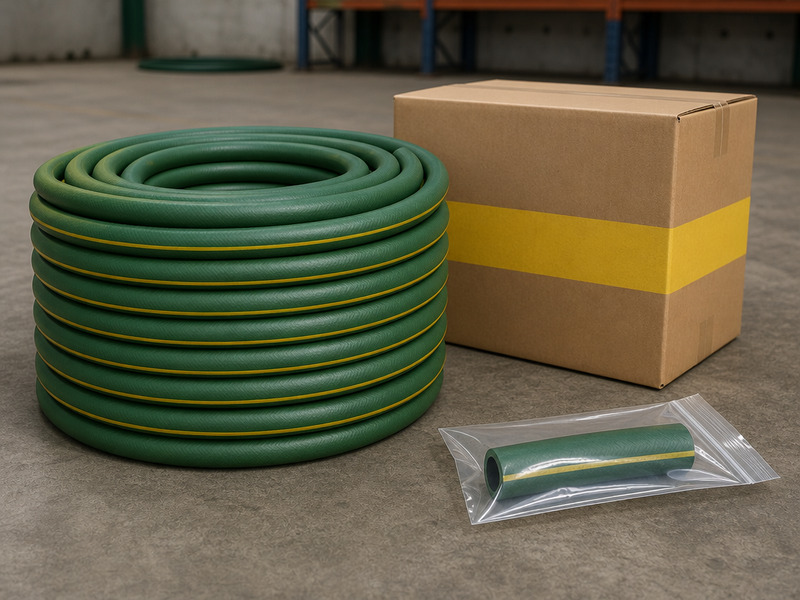
A chemical hose OEM program lets a distributor or brand owner sell hose built to their own specification, markings, and packaging.
HENGHUA supplies the base hose construction and applies the buyer’s artwork, so the finished product carries the buyer’s identity rather than the factory’s. The sections below explain how such a program is actually run.
A program is more than a logo printed on a cover. It defines what can change, what must stay fixed for safety, who owns tooling, how artwork is approved, and which records travel with every production run. The tables in this article summarize those decisions.
About a 13-minute read at 250 words per minute; the tables below map the customization scope, the approval flow, and the project stages of a private label launch.
What a Chemical Hose OEM Program Covers
A chemical hose OEM arrangement sits between a plain industrial sale and full custom development. The buyer already understands the service conditions. The factory already knows how to build a compliant hose. The program connects those two facts under one brand.
Two models are common. In a private label model, the factory’s proven construction is sold under the buyer’s name and packaging. In an ODM (original design manufacturing) model, the buyer may also shape construction details. Most distributors begin with the simpler model and add development later.
The buyer normally supplies artwork, packaging expectations, and target market data. The factory supplies construction knowledge, testing, and production records. Writing these duties down prevents disputes once volume begins.
Choosing an OEM hose manufacturer is the first real decision. The partner must already build the liner, reinforcement, and cover you need. Adding a brand on top of an unproven construction creates problems that no amount of artwork can fix. Screen the technical base first, using the checks in our supplier qualification guide (planned URL — publish before linking).
Why buyers launch a program
A brand owner launches a program to control presentation and margin. Owning the artwork and packaging lets a distributor build repeat demand around its own name. It also keeps the technical specification stable across repeat orders, which protects warranty conversations later.
A second reason is speed of service. A distributor who holds a stocked, branded line can answer a plant breakdown faster than a middleman. The brand becomes the promise; the factory remains the production engine.
A program also sets expectations for the buyer’s own team. Sales, purchasing, and quality each need to know which decisions are closed and which remain open.
A short written charter is usually enough. It keeps later questions from reopening settled choices. Clear roles also shorten the first review cycle, because nobody has to guess who decides.
Chemical Hose OEM Customization Scope: What Can and Cannot Change
Every program splits into two lists. One list holds the visual and commercial elements you can change. The other holds the technical and safety elements that must stay fixed. Keeping those lists separate is what makes a chemical hose OEM project controllable.
Table 1 sets out the usual split. The exact contents depend on the construction, but the pattern holds across liners and coupling systems.
Table 1. Customization scope: what can and cannot change
| Element | Changeable | Controlled by | Notas |
|---|---|---|---|
| Layline print text | Yes | Buyer | Brand, part code, or contact line |
| Print colors | Yes | Buyer | Matched to a supplied reference |
| Coupling branding | Yes | Buyer | Stamping or marking on the coupling |
| Hose color and cover finish | Yes | Buyer | Subject to compound availability |
| Cut lengths | Yes | Buyer | Coils, reels, or fixed assemblies |
| Packaging and cartons | Yes | Buyer | Carton print, inserts, pallet layout |
| Labels and barcodes | Yes | Buyer | Trade item codes and batch labels |
| Logos and inserts | Yes | Buyer | Hangers, leaflets, and tags |
| Underlying specification | Não | Padrão | Liner, reinforcement, and rating stay fixed |
| Safety and pressure markings | Não | Padrão | Working pressure and warnings remain |
The bottom rows matter most. A private label changes who sells the hose, not what the hose can safely do. If a marking states a working pressure of 10 bar, that value stays on the product even when your brand sits beside it.
Color is a useful example. You may choose a cover color that matches your catalog. You may not relabel a delivery hose as a suction hose by changing its cover. The helix that resists collapse is either present or it is not.
Length and packaging choices often look simple but interact with handling. A coil weight that suits one warehouse may not suit another. Agree the coil, reel, or pallet format early, because it affects carton design, transit protection, and freight planning.
Figure 1 shows how a printed line combines brand data and safety data.
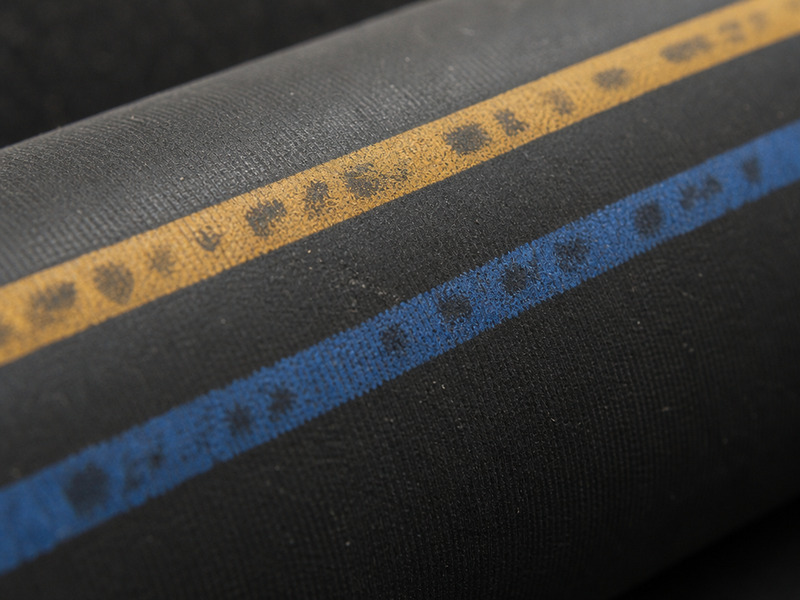
Figure 1. Layline print showing the brand name, part code, and print colors on a private label hose cover.
Where buyers push too far
Buyers sometimes ask to remove a safety line to make room for a logo. That request cannot be met. The safety marking protects the end user and the seller.
A supplier willing to hide a rating will not stop at the rating. Holding that line is part of the service.
How Artwork Approval and First-Article Sign-Off Work
Artwork is where a program usually slows down. The cause is rarely the design itself. It is a missing decision about who signs off each version. A short approval flow removes that friction.
Table 2 shows a flow that keeps ownership clear at every step.
Table 2. Artwork approval and first-article flow
| Passo | Buyer provides | Factory returns | Release gate |
|---|---|---|---|
| Artwork brief | Files, colors, and placement | Feasibility note | Brief accepted |
| Digital proof | Confirmation of layout | Proof on template | Proof signed |
| Print trial | Approval to print | Sample on real cover | Trial accepted |
| First article | Acceptance criteria | First full unit plus records | First article approved |
| Golden sample | Retention instruction | Sealed reference unit | Golden sample sealed |
| Production | Purchase release | Run plus documents | Run released |
In a private label hose project, the first article is approved before any packaging print is ordered. The first article for a chemical hose OEM program is one complete unit built with the final construction, the final print, and the final end fittings. Nothing after it should differ in any visible way.
The golden sample is the first article retained under seal. It becomes the physical definition of what the brand expects. If a later run is disputed, the sealed unit is the answer.
Choose an OEM hose manufacturer who can describe this flow without notes. The ability to explain each gate suggests the process is routine rather than improvised. Standard end options are covered in our hose couplings guide.
Records and samples reinforce each other. The sample shows what was agreed, and the record shows when it was agreed. Together they give a buyer a defensible position if a shipment ever falls short of expectation. Keeping both on file costs little and settles most disputes before they grow.
Figure 2 shows a sealed sample held beside its first-article record.
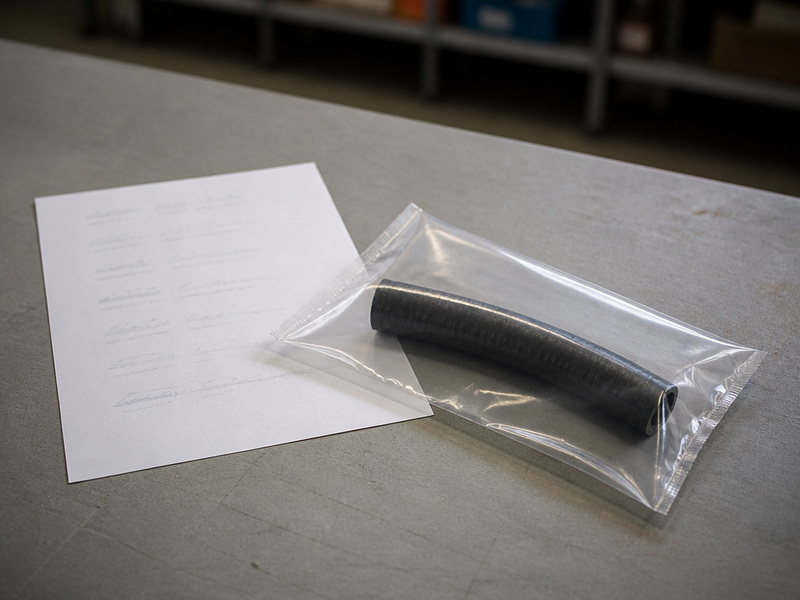
Figure 2. Golden sample retained with its signed first-article record and approval date.
Tooling, Mold Ownership, and Release Documents
Tooling is the quiet source of disputes in a program. Print plates, pads, dies, and any molds cost money and belong to someone. Deciding ownership before the first order avoids a painful conversation later.
The usual rule is simple. The buyer pays, so the buyer owns. The factory stores the tooling and maintains it. The agreement should name the storage site and the exit terms in writing.
Ownership of a mold does not transfer the underlying design rights. A coupling body might be a standard item that the factory already makes. You may own the marking on it, not the geometry inside it. Treat tooling as an asset with a location and a custodian.
Documents that travel with each run
Every release should carry a small, predictable document set. The point is not bureaucracy. The point is that every consignment can be verified from the buyer’s own files.
Table 3 lists the records that typically accompany a chemical hose OEM order.
Table 3. Records typically released with a chemical hose OEM production run
| Document | Purpose | Issued when |
|---|---|---|
| Approved artwork record | Fixes the printed identity | Before the run |
| First-article report | Confirms the first unit | At first article |
| Pressure test record | Supports the stated rating | During the run |
| Electrical test record | Confirms the resistance class | During the run |
| Batch traceability sheet | Links units to materials | At packing |
| Packing list | Matches cartons to order | At dispatch |
Two of those records deserve attention. A pressure test recorded to ISO 1402 supports the rating printed on the hose. An electrical test recorded to EN ISO 8031 supports the resistance class used for static control.
Material certificates are a separate matter. Where metal parts carry an EN 10204 3.1 certificate, that document belongs to the metal batch, not to the hose brand. A buyer should not assume that a certificate transfers with a logo.
Minimum Run Sizing for a Chemical Hose OEM Order
Minimum run size is a planning figure, never a fixed rule. It reflects the setup work that must be recovered, not a factory’s mood. Understanding the drivers helps a buyer choose a sensible first order.
Print setup is one driver. A layline print (the printed line running along the hose cover) needs a plate or pad, and that setup is paid once per design. Longer runs spread it across more meters. This is why a first order is often larger than a repeat order.
Material batching is another driver. Compounds are produced in batches, so a run sized to one batch avoids a second setup. Packaging print adds a third driver, because cartons are ordered in their own minimum quantities.
Color matching adds a fourth. A custom cover color may need a dedicated compound mix. A standard color avoids that step entirely. Buyers who accept a close standard color typically reach a smaller first order.
Buyers who work with an OEM hose manufacturer on a first order should model the whole order. Add print setup, packaging, and tooling to the meter cost. The number that results is the real entry point for the program. Distribution volumes are covered in our wholesale supply guide (planned URL — publish before linking).
Freight adds a final consideration. A larger first order can lower the unit cost but raise the storage burden. Buyers with limited space sometimes accept a higher unit price to keep the first shipment modest. It is better to plan honestly than to overbuy stock that a new program cannot yet sell.
Packaging, Cartons, and Custom Hose Branding Details
Packaging carries more of the brand than most buyers expect. A carton, a label, and a barcode all speak for the product before the hose is uncoiled. Getting them right protects both the brand and the warehouse.
Table 4 lists the packaging choices that come up most often in a custom hose branding project.
Table 4. Packaging and labeling options for a custom hose branding program
| Artigo | Options | Notas |
|---|---|---|
| Carton | Plain, printed, or customer-supplied | Print ties to artwork approval |
| Coil or reel | Loose coil, wound reel, or pallet | Chosen for handling and storage |
| Product label | Brand label or specification label | Must retain safety data |
| Barcode | Trade item code or batch code | Matches the packing list |
| Insert | Leaflet, tag, or hanger | Adds no technical claims |
A label has two jobs. It identifies the brand, and it repeats the essential safety information. If space is tight, the safety line wins. A label that hides the working pressure is a defect, not a design choice.
Barcodes deserve early attention in any chemical hose OEM program. The code on the carton should match the code on the packing list. When they differ, warehouse scanning fails and returns rise. Agree the code structure before the first print run.
Figure 3 shows how a carton carries brand and safety data together.
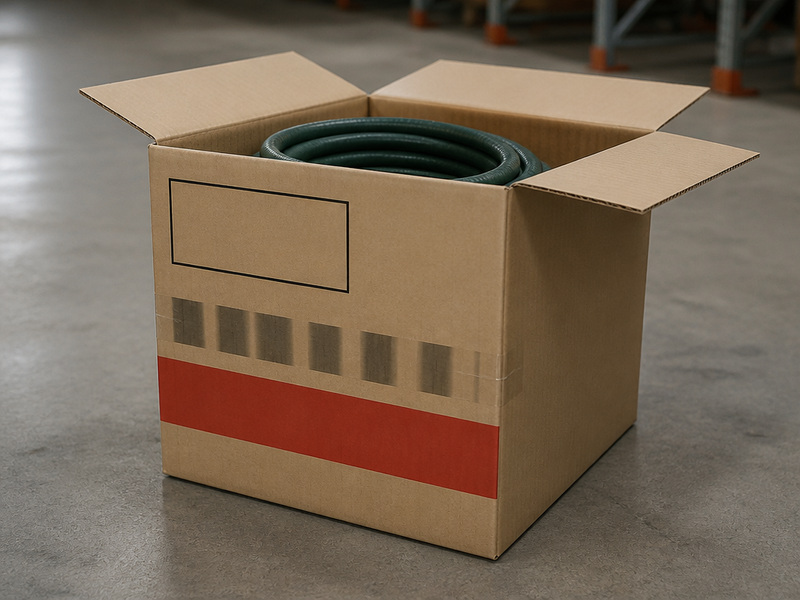
Figure 3. Carton layout combining a brand label, a barcode, and a safety line for a custom hose branding program.
Launch Timeline for a Private Label Hose Program
A launch follows a predictable sequence. Each stage produces something the next stage needs. Skipping a stage does not save time; it moves the delay to the end of the project.
Table 5 sets out the stages most programs use.
Table 5. Project stages for a private label hose program
| Stage | Objective | Key deliverable | Exit criterion |
|---|---|---|---|
| Scoping | Agree the specification and brand scope | Program brief | Brief signed |
| Design freeze | Lock construction and ratings | Frozen specification | Specification frozen |
| Artwork | Approve print and packaging | Signed proof | Proof approved |
| Sampling | Build the first article | First article and golden sample | First article approved |
| Pilot run | Confirm stability at volume | Pilot units and records | Pilot accepted |
| Production | Deliver repeatable output | Released run | Run shipped |
The design freeze is the stage buyers most often rush. It is tempting to approve artwork while the construction is still open. That order forces the print to change later, which resets the artwork approval. Freeze the specification first, then print.
The pilot run is where planning figures meet reality. A small pilot reveals whether the print sits correctly at production speed. It also tests whether the carton and label survive normal handling.
Findings from the pilot are cheaper to fix than findings from a full release. For assemblies built around these markings, see the composite assembly guide (planned URL — publish before linking).
Next steps before you commit
A program succeeds when the buyer arrives prepared. Define the medium, temperature, and pressure first. Then gather artwork files and exact color references.
Then decide packaging, carton print, and barcode structure. Finally, name one person who can sign proofs.
For a chemical hose OEM program, those early answers decide how quickly the project moves. The decision to launch is easier once the scope, the tooling owner, and the approval path are all written down. An OEM hose manufacturer who follows this sequence keeps the brand promise intact.
Communication cadence matters as much as the stages. A short weekly note covering open approvals and sample status keeps a project moving. It also creates a simple record of who approved what, and when. That record is useful when a later order tries to change a decision that was already settled.
Treat the hose line and its fittings as one system rather than a set of parts, as described in our system approach guide (planned URL — publish before linking). See the full chemical hose range for liner and coupling combinations. For rating and material background, read the chemical hose complete guide.
Chemical Hose OEM and Private Label FAQs
What does a private label program include?
A program covers identity rather than construction. It can include layline print, print colors, coupling branding, cover color, cut lengths, cartons, labels, barcodes, and inserts. The liner, reinforcement, pressure rating, and safety markings stay fixed. The buyer supplies artwork and packaging direction, and the factory applies them to a construction that already performs in service.
Who owns the tooling and molds?
The buyer normally owns tooling that the buyer has paid for. That covers print plates, pads, and any dedicated molds.
The factory stores and maintains the tooling while the program runs. A clear agreement should state where the tooling is held and what happens at the end of the relationship. Owning a mold does not transfer the design rights inside a standard part.
How does artwork approval work?
Artwork moves through proofs before it reaches production. The buyer supplies files, colors, and placement. The factory returns a digital proof, then a print trial on the real cover.
Each version is signed before the next begins. Skipping the print trial is risky, because cover texture and print method change how colors appear. A signed proof becomes the reference for every later run.
What is a golden sample?
A golden sample is the first approved article kept under seal. It represents one complete unit with the final construction, print, and end fittings. It becomes the physical definition of the brand’s expectation.
If a later batch is questioned, the golden sample settles the comparison. Traceability should run to a date, a run, and the signed artwork behind it.
Which documents come with each run?
A typical release set includes the approved artwork record, the first-article report, a pressure test record, an electrical test record, a batch traceability sheet, and a packing list. Together they let the buyer prove what was shipped without contacting the factory. The pressure record supports the printed rating, and the electrical record supports the static-control class. Extra certificates follow the part rather than the brand.
Why is there a minimum run?
A minimum run reflects setup work that must be recovered. Print needs a plate or pad set up once per design. Packaging is printed in its own minimum quantity.
Material compounds are made in batches, so a run that fits one batch usually costs less per meter. Buyers who accept a close standard color often reach a smaller first order. Ask for the setup charge as its own line item when you compare quotes.
Can the hose color be changed?
A cover color can often be changed, subject to compound availability. A standard color avoids a dedicated mix and is usually simpler. A fully custom shade may need its own batch, which raises the entry point.
Color is a visual choice, so it does not change the liner or the pressure rating. Print colors are handled separately from the cover color.
Can safety markings be removed for a logo?
Safety markings cannot be removed to make room for a logo. A working pressure value, a warning, or a standard reference protects the end user and the seller. Those markings stay on the product even when a brand sits beside them. This is the clearest line in any program.
A partner who agrees to hide a rating is not a safe partner.
How long does a launch take?
Durations are planning figures rather than fixed promises, because each stage depends on feedback. Scoping, design freeze, artwork, sampling, and a pilot run each produce a deliverable the next stage needs. Buyer review time usually drives the total more than factory work. A project with fast artwork decisions moves quickly, while one that reopens the specification midway restarts several stages.
What should a buyer prepare first?
A buyer should prepare four things. First, a clear service description covering medium, temperature, and pressure. Second, artwork files and exact color references.
Third, packaging direction, including carton print and barcode structure. Fourth, a single decision owner who can sign proofs without a second committee. These four inputs remove most of the early delay in a program.
About HENGHUA
HENGHUA is a professional hose and coupling manufacturer supplying global distributors, retailers, and OEM brands. Its chemical hose line includes UHMWPE (UPE), XLPE, and PTFE liners, plus rubber constructions such as EPDM and oil-resistant synthetic rubber. All of them use high-strength textile reinforcement, and suction duty can add a steel helix.
Coupling options include camlock (cam and groove), flange, threaded, and clamp-type terminations. The factory offers crimped assemblies, custom lengths, layline printing, and private label or OEM/ODM work. Commercial terms are factory-direct pricing, short lead times on volume, and warranty.
Written by the HENGHUA technical team, which supports hose and coupling selection for distributors, retailers, and OEM brands worldwide.






 English
  Spanish
  Portuguese
  French
  German
  Arabic
  Russian
  Indonesian
  Japanese
  Korean