goodheart786@gmail.com

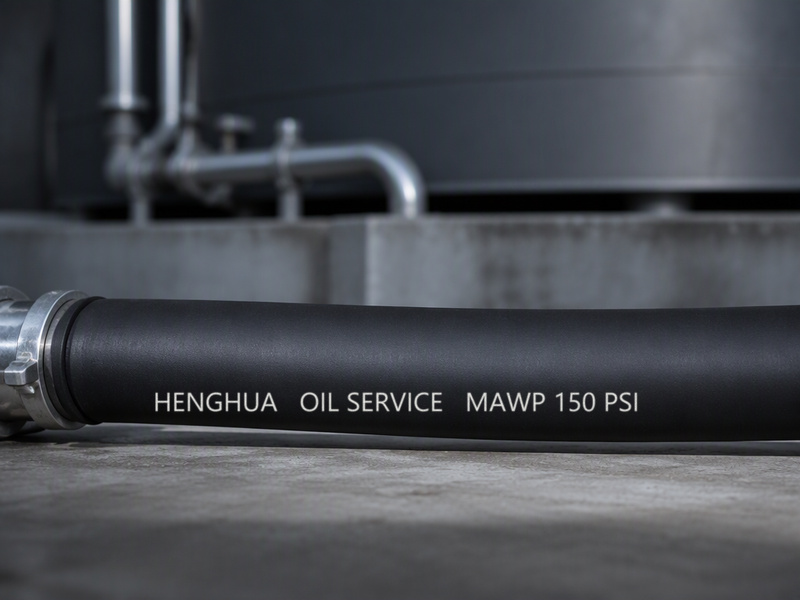
Chemical hose cover showing service marking and MAWP

Chemical Hose Marking and Electrostatic Requirements Explained

A chemical hose marking must state the service the hose is approved for and its maximum allowable working pressure (MAWP), and it must not state burst pressure or test pressure at all. Electrostatic performance is set by the electrical grade of the hose construction, and it is confirmed by measurement rather than by anything printed

Chemical Hose Marking and Electrostatic Requirements Explained Read More »

Shore-side transfer facility loading a vessel with a marked chemical transfer hose

USCG 33 CFR 154: Hose Requirements for Chemical Transfer Facilities

A US facility capable of transferring oil or hazardous material in bulk to or from a vessel has to meet the hose rules in USCG 33 CFR 154. The rules fix three hard numbers. Minimum design burst pressure must be at least 4 × (relief-valve setting plus static head). Maximum allowable working pressure (MAWP) must

USCG 33 CFR 154: Hose Requirements for Chemical Transfer Facilities Read More »

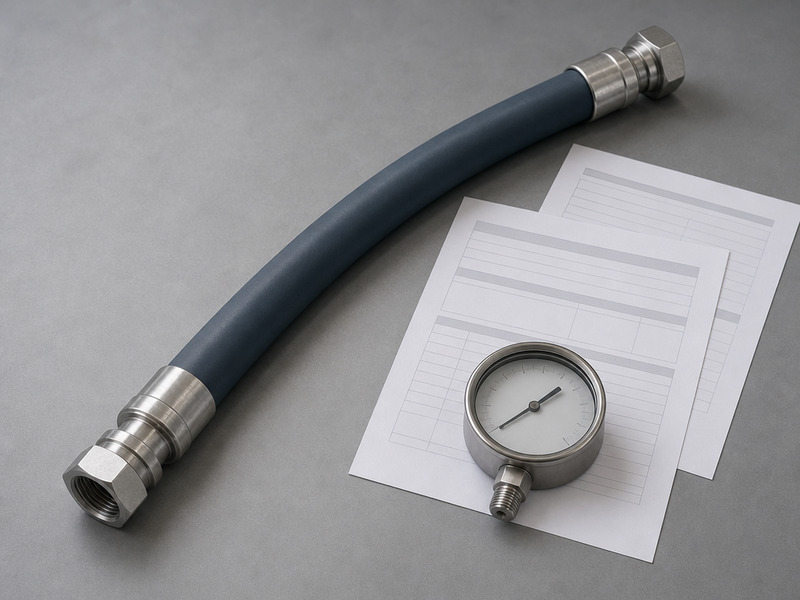
Chemical hose test certificates laid out with a pressure gauge

Chemical Hose Testing and Type Examination: What Certificates Prove

A chemical hose testing certificate proves exactly what its scope states, no more and no less. A design approval proves that a design or a product range met a named standard under stated conditions. A pressure test certificate proves that one assembly held a stated pressure at one point in time. A material certificate proves

Chemical Hose Testing and Type Examination: What Certificates Prove Read More »

Printed chemical resistance chart beside a hose tube sample on a bench

Hose Chemical Resistance Chart: How to Read It and Apply It

To read a hose chemical resistance chart, find the four conditions behind each rating: the medium and its concentration, the temperature, the exposure time, and whether contact is continuous or intermittent. Treat the printed grade as a screening aid, not a decision. The chart tells you where to look; it does not tell you what

Hose Chemical Resistance Chart: How to Read It and Apply It Read More »

Engineer matching a hose tube compound to a chemical medium at a plant workstation

Chemical Compatibility Database: Matching Hose Material to Media

A chemical compatibility database is a first screen, not a verdict. It narrows a long list of tube compounds down to the two or three worth investigating for a given medium. It cannot see your concentration, your temperature, your contamination or your cleaning chemicals. Matching hose material to media is therefore a short, ordered job,

Chemical Compatibility Database: Matching Hose Material to Media Read More »

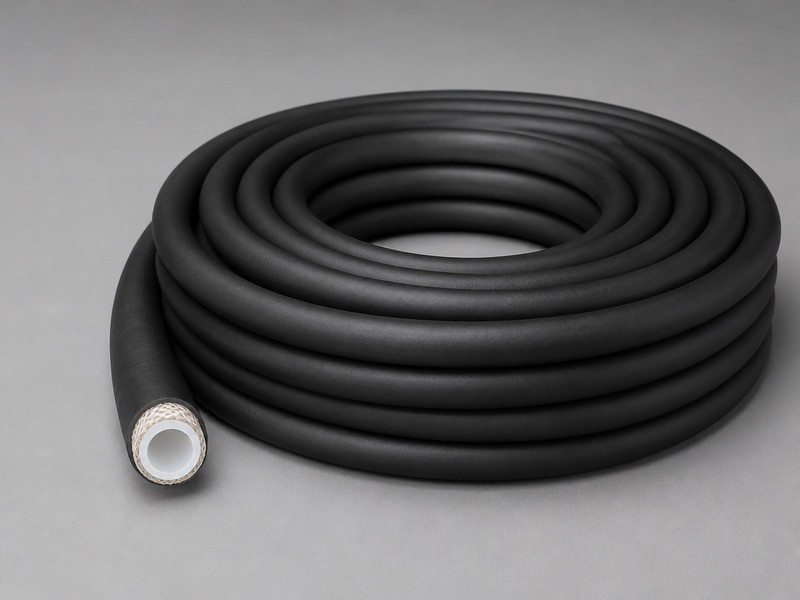
Stacked coils of acid resistant chemical hose in a plant

Acid Resistant Hose: Materials for Hydrochloric, Sulfuric and Nitric Acid

There is no single acid resistant hose that is correct for hydrochloric acid, sulfuric acid and nitric acid at the same time, because the three acids attack hose materials by different mechanisms. Scope of this page. This page covers tube, cover, fitting and gasket selection for three mineral acids: hydrochloric, sulfuric and nitric. Three values

Acid Resistant Hose: Materials for Hydrochloric, Sulfuric and Nitric Acid Read More »

Solvent hose coil for solvent and paint transfer service

Solvent Hose: Choosing a Hose for Solvents and Paint Transfer

A solvent hose is selected by its tube compound, not by its reinforcement, because each common solvent family attacks rubber in a different way. The tube has to carry toluene, xylene, acetone, MEK (methyl ethyl ketone), esters, glycol ethers and chlorinated cleaners without swelling, softening or releasing particles into the fluid. The four deciding variables

Solvent Hose: Choosing a Hose for Solvents and Paint Transfer Read More »

Caustic hose coil on an industrial alkali transfer line

Caustic Hose Selection for NaOH and KOH Service

In practice the answer is a compound choice: EPDM (ethylene propylene diene monomer) for dilute caustic and hot water, and a polyolefin or fluoropolymer tube for stronger, hotter or higher-purity duty. A caustic hose for sodium hydroxide or potassium hydroxide service must hold a strongly alkaline liquid, survive the heat it is usually handled at,

Caustic Hose Selection for NaOH and KOH Service Read More »

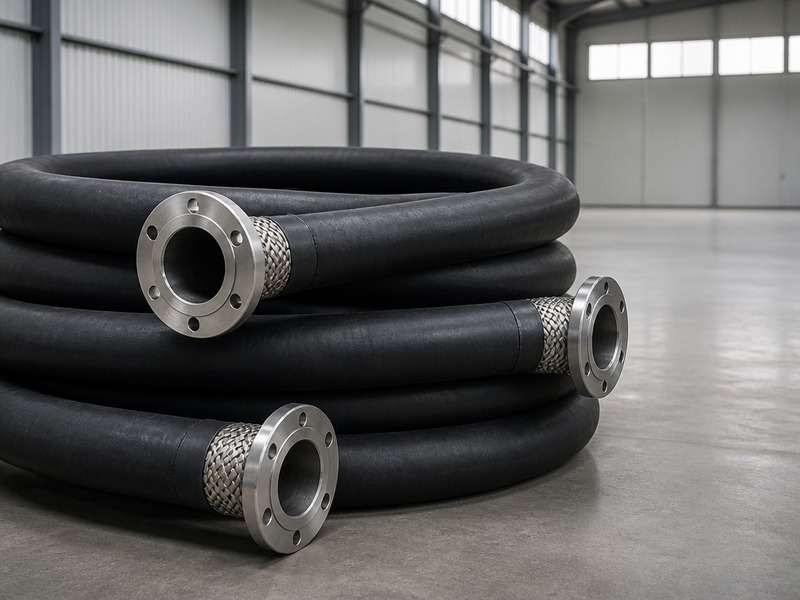
Composite hose coil on a loading rack at a chemical tank terminal

Composite Hose Chemical Resistance Table: Derating With Temperature

A composite hose chemical resistance table tells you what a medium does to the hose wall at the temperature the table was built for. Two things are usually missed: the temperature the rating belongs to, and the pressure it carries. The headline working pressure in a datasheet is stated at a reference condition, and it

Composite Hose Chemical Resistance Table: Derating With Temperature Read More »

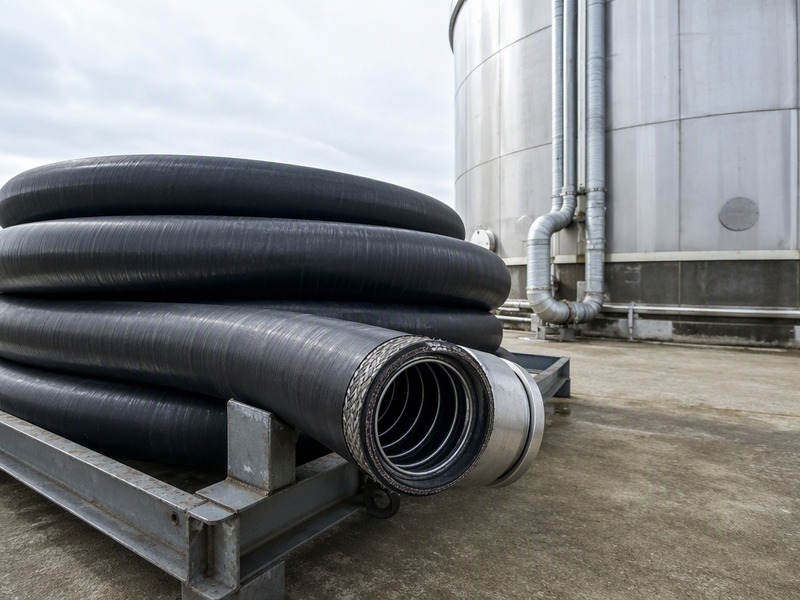
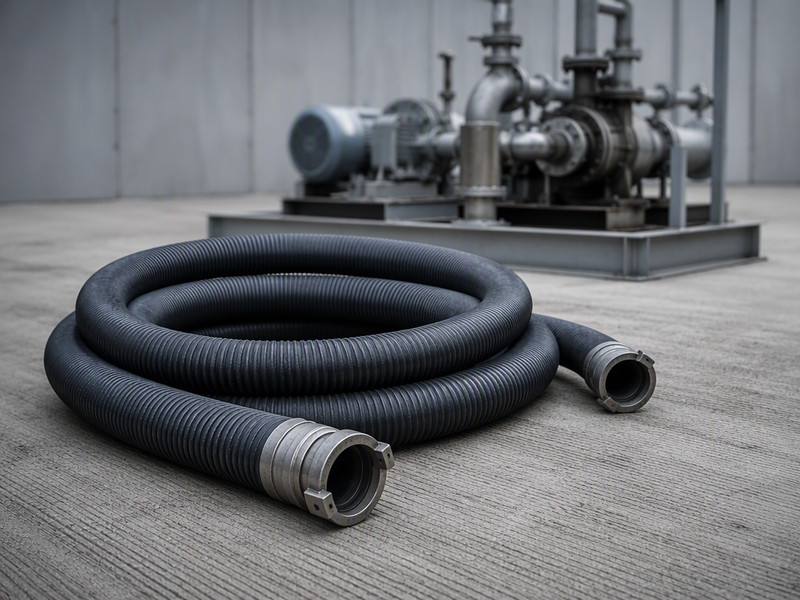
Chemical suction and discharge hose coil on a plant floor with pump skid

Chemical Suction and Discharge Hose: Types and Pressure Ratings

A chemical suction and discharge hose is one assembly that has to do two opposite jobs. It holds its shape against vacuum while the pump pulls, and it carries pressurized fluid on the way out. What a hose can do on each side depends on its construction, above all an internal helix or other embedded

Chemical Suction and Discharge Hose: Types and Pressure Ratings Read More »