goodheart786@gmail.com

High temperature hydraulic hose assembly coiled beside a cutaway sample showing tube, wire reinforcement and cover layers

High Temperature Hydraulic Hose Selection for Extreme Heat and Cold

Selecting a high temperature hydraulic hose comes down to one rule: match the hose’s continuous fluid-temperature limit to the hottest oil temperature your circuit actually reaches, and confirm the cold end is covered as well. What temperature can a hydraulic hose actually handle in your circuit? The five figures below answer that before the catalogue

High Temperature Hydraulic Hose Selection for Extreme Heat and Cold Read More »

Technician checking the cover of a steel-wire-braided hydraulic hose on an excavator with a flashlight during a pre-shift inspection

Hydraulic Hose Maintenance: The Complete Guide to Inspection & Service Life

How long do hydraulic hoses last? Hydraulic hose service life is a range rather than a date, and on a condition-based hydraulic hose maintenance routine the honest range is one to two years on severe mobile duty, four to six years on standard mobile equipment and five to ten years on cool, low-cycle industrial duty

Hydraulic Hose Maintenance: The Complete Guide to Inspection & Service Life Read More »

Coiled steel wire braided hydraulic hose assemblies with crimped couplings on a maintenance bench in a plant workshop

Hydraulic Hose Safety: Protecting Workers from High-Pressure Hazards

How do you protect workers from high-pressure hydraulic hazards? Hydraulic hose safety is the set of inspection, restraint, protection, and work-practice controls that keep stored hydraulic energy away from people, and the three that prevent most serious injuries are straightforward: inspect hoses and couplings before they fail, restrain every hose that could whip if it

Hydraulic Hose Safety: Protecting Workers from High-Pressure Hazards Read More »

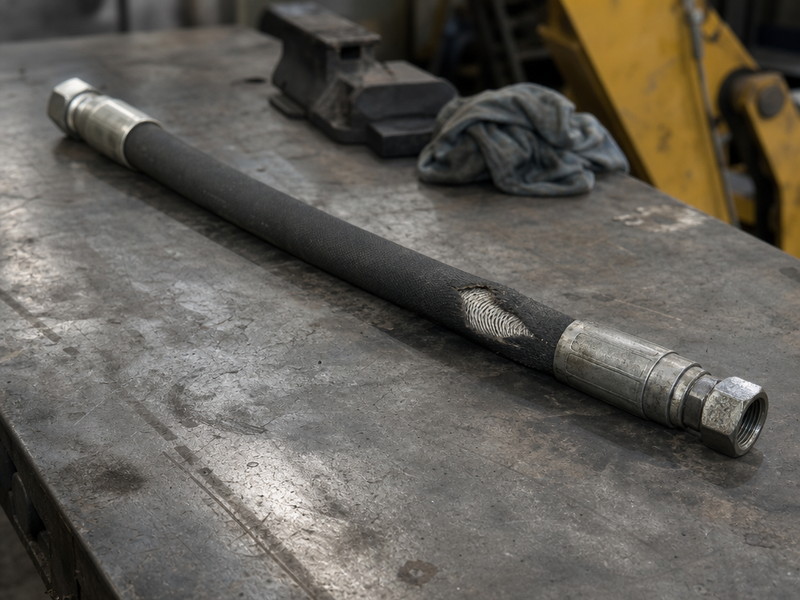
Failed hydraulic hose removed from an excavator with cover worn through and exposed steel wire braid at an abrasion point

Why Hydraulic Hoses Fail: 8 Common Causes and How to Prevent Them

Hydraulic hoses fail for eight recurring reasons — abrasion, mis-selection, installation twist, bend radius violations, pressure spikes, thermal degradation, fluid contamination, and fitting or crimp failure. Every one of these hydraulic hose failure causes is preventable with the right specification and a fixed inspection routine. Most failures are maintenance problems rather than manufacturing defects: the

Why Hydraulic Hoses Fail: 8 Common Causes and How to Prevent Them Read More »

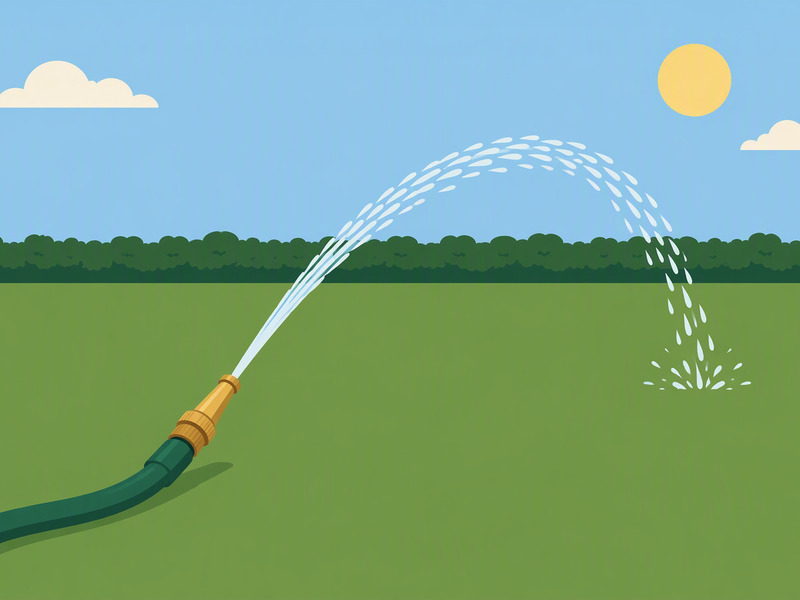
Garden hose watering a lawn, illustrating how flow rate becomes watering time

Garden Hose Flow Rate Calculator and Watering Time: Worked Tables for Lawn, Bed and Container

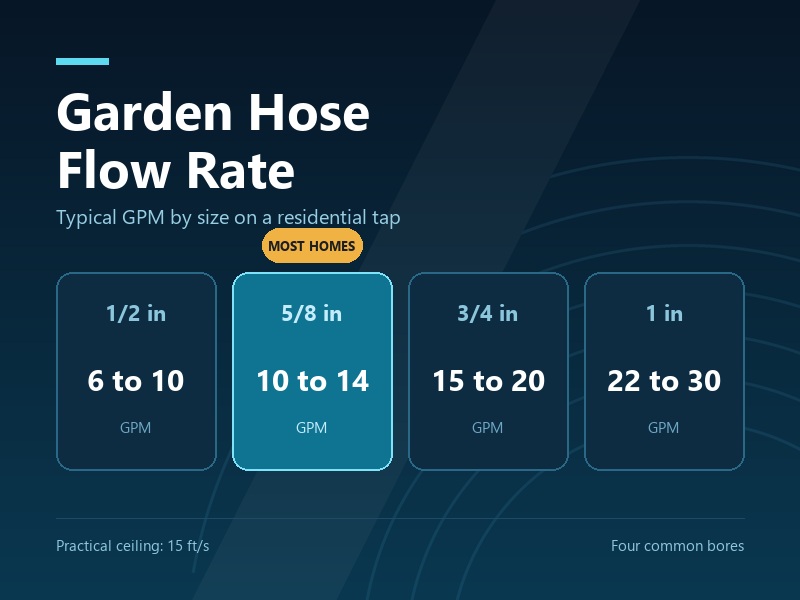
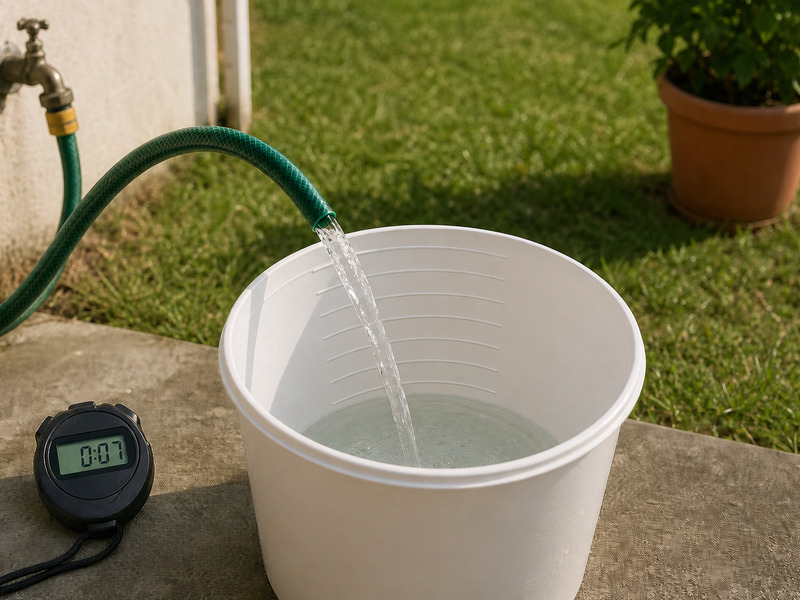
A garden hose flow rate calculator answers one practical question: how many minutes should the water run to put a target depth on a known area? Three inputs are enough. You need the area in square feet, the depth you want in inches, and the flow rate your hose actually delivers in gallons per minute

Garden Hose Flow Rate Calculator and Watering Time: Worked Tables for Lawn, Bed and Container Read More »

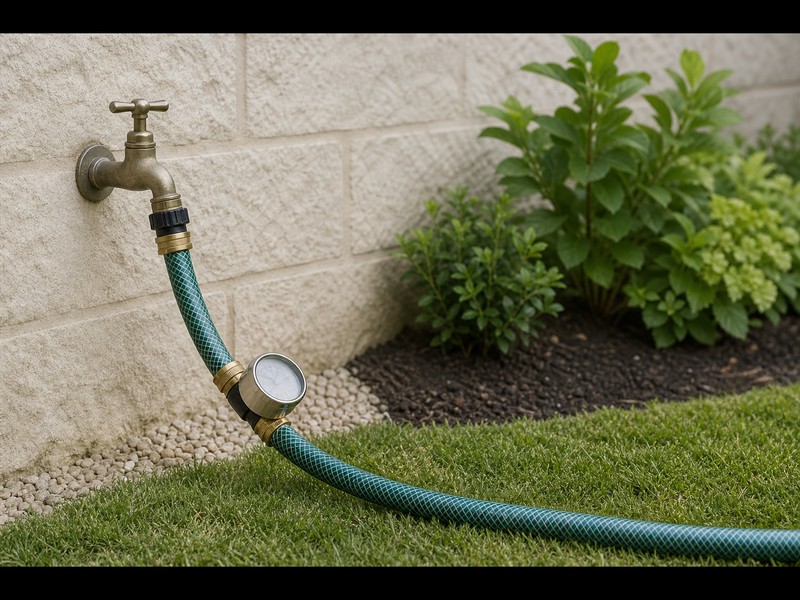
A reinforced garden hose coupled to an outdoor tap with a pressure gauge fitted in line, with a planted bed in the background

Garden Hose Pressure Rating: Working, Test and Burst Pressure Explained

A garden hose pressure rating is the highest pressure a hose is designed to carry continuously, and it is quoted as a working pressure rather than a failure pressure. Behind that single number sit three separate values: working pressure, proof or test pressure, and burst pressure. The gaps between them are deliberate safety margins, and

Garden Hose Pressure Rating: Working, Test and Burst Pressure Explained Read More »

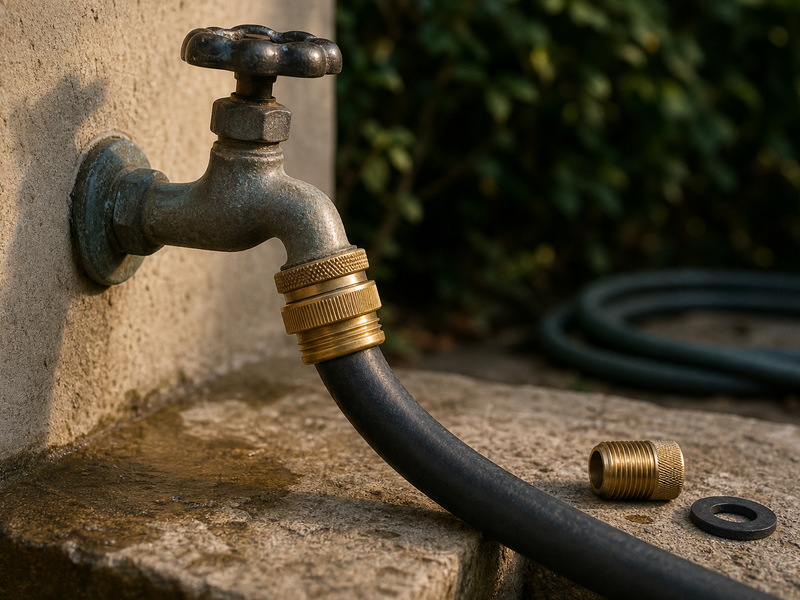
GHT thread vs NPT: a garden hose thread coupling screwed onto an outdoor hose bib, with a tapered NPT pipe fitting and a flat washer resting on the ledge beside the hose

GHT Thread vs NPT: What’s the Difference for Garden Hose Fittings?

Cover: a hose coupling sealed against the outlet of an outdoor hose bib, the everyday joint where the two thread families meet. The difference is the thread form: GHT is the straight 0.75-11.5 NH coupling thread sealed by a washer, while the tapered 3/4-14 NPT pipe thread seals by interference. That mechanical difference explains almost

GHT Thread vs NPT: What’s the Difference for Garden Hose Fittings? Read More »