goodheart786@gmail.com

Garden hose adapter guide cover showing the NST, NH, NPSH, GHT and NPT thread families

Garden Hose Adapter Guide: NST, NH, NPSH, GHT and NPT Explained

A garden hose adapter is a short two-ended fitting that changes one thread standard into another, so two couplings that were never designed to meet can still seal. The five abbreviations in this guide cover almost every connection a hose buyer meets. NST and NH belong to the fire-hose coupling family, NPSH covers straight pipe

Garden Hose Adapter Guide: NST, NH, NPSH, GHT and NPT Explained Read More »

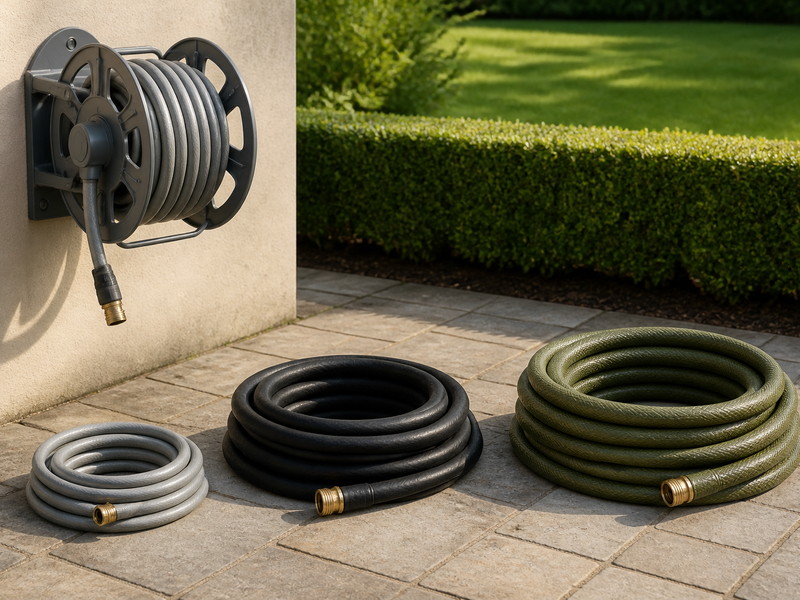
Three garden hoses of different sizes and materials: one coiled on a wall-mounted reel and two loose coils on a stone patio

Garden Hose Buying Guide: Types, Features and Sizes

A garden hose buying guide answers one question: which five values should you fix before you compare products? The answer is material, inside diameter, length, working pressure and the couplings. Get those five right and the hose matches the job; get one wrong and it is usually replaced within two seasons. This page works through

Garden Hose Buying Guide: Types, Features and Sizes Read More »

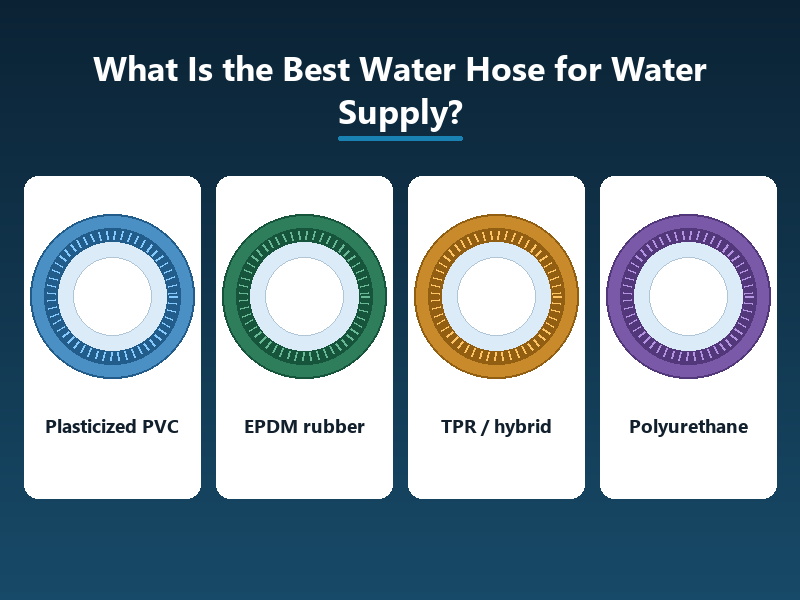
Four water supply hose constructions side by side: plasticized PVC, EPDM rubber, TPR hybrid and polyurethane.

What Is the Best Water Hose for Water Supply?

Four supply hose compounds side by side, from plasticized PVC to polyurethane. A reinforced rubber or TPR (thermoplastic rubber) hybrid hose with a food-grade liner and machined threaded ends is the best water hose for water supply when one hose must cover outdoor household use and occasional drinking-water duty. The answer changes when the duty

What Is the Best Water Hose for Water Supply? Read More »

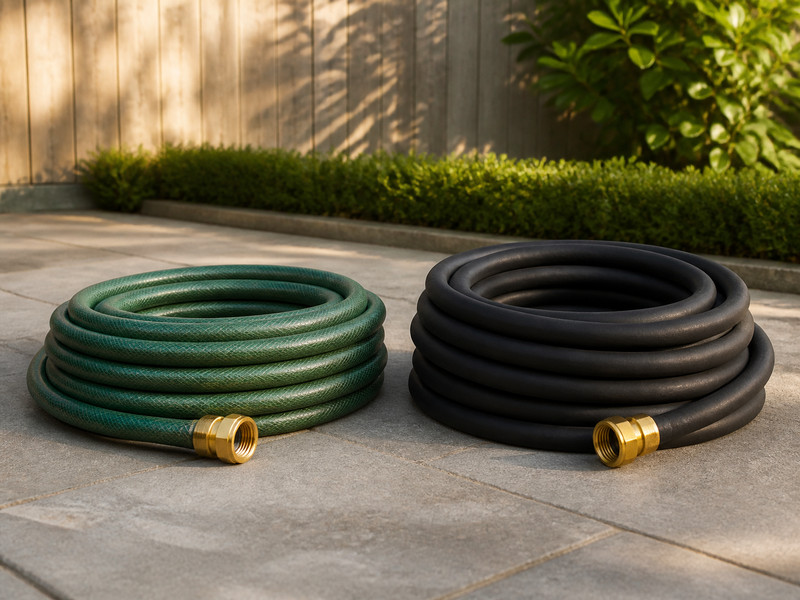
how long do garden hoses last shown as three failed hoses beside a new one: a cover cracked by ultraviolet light, a tube split at a fold and a corroded coupling, with a brass-fitted rubber hose on the right

How Long Do Garden Hoses Last? Why Most Fail Early and What to Look For Instead

Three of the seven failure mechanisms in this article are visible before the hose leaks: a cracked cover, a split at a repeated fold, and a corroded or crushed coupling. Most garden hoses last two to three seasons of residential use — two to three years in a temperate climate — and only the better

How Long Do Garden Hoses Last? Why Most Fail Early and What to Look For Instead Read More »

Two EPDM steam hose assemblies on a plant room floor: red and black perforated covers, bolted safety clamp ends, a steam header behind

EPDM Steam Hose: Why EPDM Is the Standard for Saturated Steam

An EPDM steam hose is the standard for saturated steam, and the reason is material: EPDM is the one widely available rubber that resists steam, hot water condensate and heat aging at the same time. It carries continuous service between roughly 150 °C and 210 °C while staying in permanent contact with hot water condensate.

EPDM Steam Hose: Why EPDM Is the Standard for Saturated Steam Read More »

garden hose size chart reference showing 1/2, 5/8, 3/4 and 1 inch hoses with brass GHT couplings connected to an outdoor faucet

Garden Hose Size Chart: Diameters, Flow Rates and Thread Types

Three dimensions define a garden hose: the inside diameter that sets flow, the outside diameter that sets bulk, and the 3/4-inch GHT thread that almost every residential hose shares. A garden hose size chart answers three separate questions at once. The first is the nominal inside diameter of the hose: 1/2, 5/8, 3/4 or 1

Garden Hose Size Chart: Diameters, Flow Rates and Thread Types Read More »

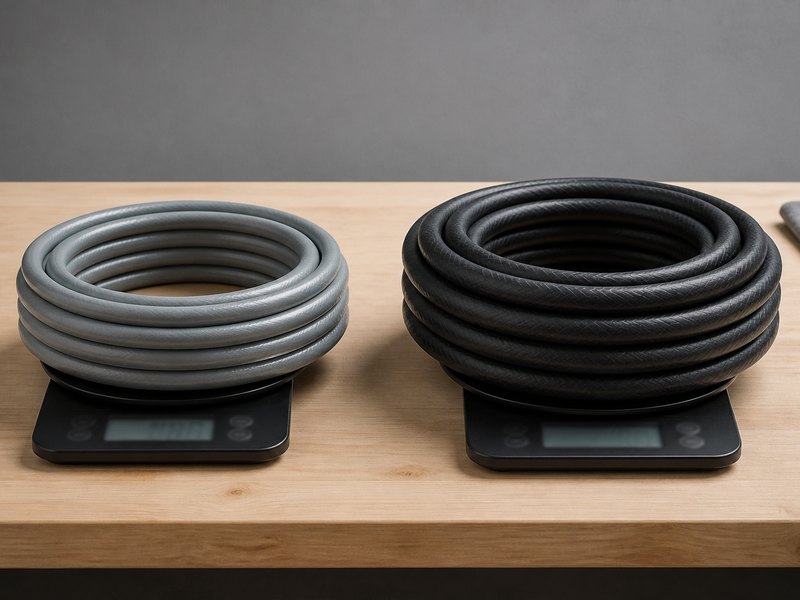
A coiled polyurethane garden hose and a coiled rubber garden hose side by side on a workshop bench, each on a digital scale showing its empty weight

Polyurethane vs Rubber Garden Hose: Weight, Flexibility and Durability

Choosing between a polyurethane vs rubber garden hose comes down to three trade-offs that pull in different directions. A polyurethane hose weighs roughly a third less when empty, resists kinks and abrasion better, and springs back out of a bend instead of holding a fold. A rubber hose tolerates heat, hot water and years of

Polyurethane vs Rubber Garden Hose: Weight, Flexibility and Durability Read More »

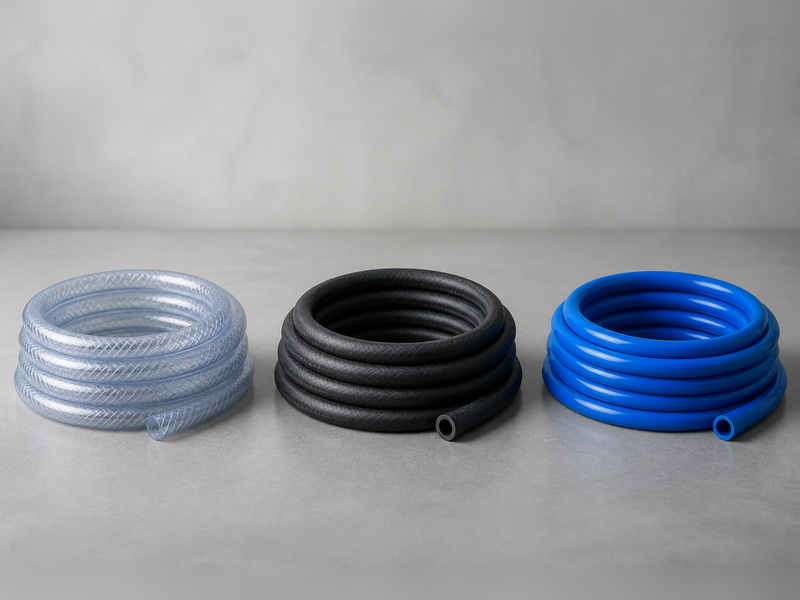
Three hose coils side by side on a workshop bench: a clear PVC water hose, a black TPR rubber-blend hose and a blue ether-based polyurethane hose

PVC vs TPR vs PU Hose: How to Choose the Right Material

PVC vs TPR vs PU hose comes down to five variables: water temperature, working pressure, abrasion, media chemistry, and whether the hose touches drinking water. Most water, air and general-purpose lines then have a short answer. Choose PVC hose for cold, low-pressure, low-abrasion duty where cost leads. Choose TPR hose (thermoplastic rubber) when the line

PVC vs TPR vs PU Hose: How to Choose the Right Material Read More »