
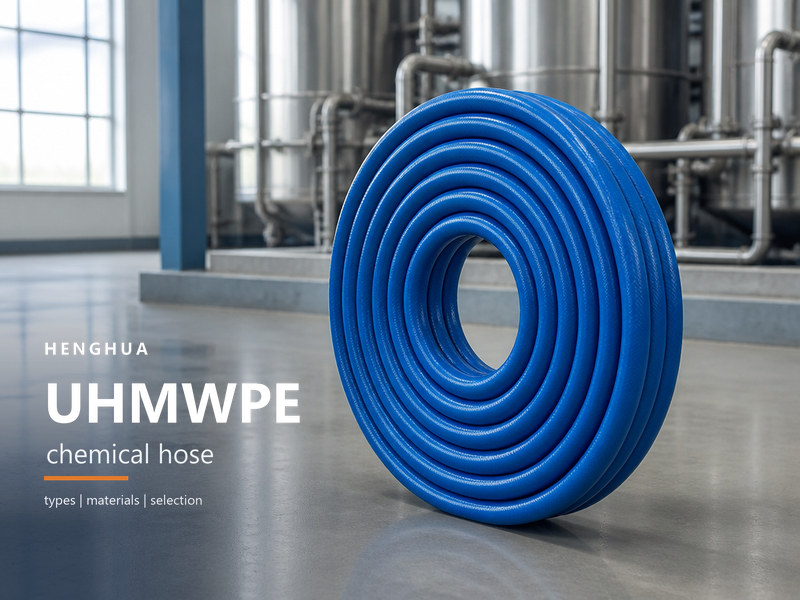
UHMWPE製化学用ホースは、超高分子量ポリエチレン製のライナーと青色のEPDM製カバーを組み合わせたもので、幅広い工業用化学薬品に耐えることができます。 メーカーのデータシートには通常、このライナーが約98%の工業用化学薬品に対応し、150 PSIの圧力下で−40 °Cから+120 °Cの温度範囲で使用可能であると記載されています。.
1本のライナーで化学物質リスト全体を収容できるかどうかを確認したい場合、簡単な答えとしては通常「はい」となります。例外は、1分でスクリーニングできるほど短いリストに限られます。このガイドの残りの部分では、非常に長いポリマー鎖がなぜ腐食に耐えられるのか、温度および圧力定格が実際に何をカバーしているのか、そしてUPEがどこで効力を失うのかについて詳しく説明します。.
1分あたり250語の速度で読むと、約14分かかります。以下の数値はメーカーの計画値ですので、お使いの化学物質の正確なデータについては、データシートをご確認ください。.
UHMWPE製ケミカルホースとは何か、そしてなぜライナーが重要な役割を果たすのか
UHMWPE製ケミカルホースは複合材料です。このホースは、超高分子量ポリエチレン製の接液ライナー、1層または複数の繊維補強層、吸引用途向けのオプションの鋼製ヘリックス、および外被で構成されています。 ホース本体の内部では、ライナーのみが流体と接触します。補強層、ヘリックス、およびカバーは、ライナーの形状を維持し、外部からの影響から保護するために存在します。.
選定の際には、「ライナー優先」の原則が重要です。2本のホースが同じカバーや同じ編組を共有していても、ライナーが異なるため、その挙動は全く異なってきます。選定は、カバーの色や継手のねじ山からではなく、ライナーから始める必要があります。.
UHMWPE(UPE)はポリエチレンの一種であり、ボトルや水道管などに使用される一般的なポリエチレンと同じ仲間です。違いは分子量にあります。 一般的なポリエチレンの鎖には数千の繰り返し単位が含まれていますが、UHMWPEの鎖には数十万の繰り返し単位が含まれています。この非常に長い鎖構造こそが、この材料が、分子量の小さい一般的なポリエチレンよりもはるかに優れた耐摩耗性と耐薬品性を発揮する理由です。.
ライナーが唯一のバリアであるため、その厚さと表面品質が耐用年数を決定づけます。ライナーが薄かったり傷がついていたりすると、補強材が化学物質にさらされ、繊維が液体に浸食されると、ホースは内側から破損してしまいます。.
各ホースシリーズにおいて、ライナー、補強材、カバーがどのように組み合わされているかについて、より広い視点から把握するには、以下のガイドをご覧ください。 フレキシブルホースの材質.
なぜ非常に長い高分子鎖は化学的攻撃に耐えるのか?
ポリマーの耐薬品性は、主に鎖長と鎖の配列によって決まります。超高分子量ポリエチレン(UHMWPE)の分子は、非常に長く、分岐のないポリエチレン鎖であり、これらの鎖は緩やかな束となって並んでいるのではなく、互いに絡み合っています。その結果、分子間の自由体積が極めて少なく、緻密で結晶度の高い表面が形成されます。.
腐食性の強い化学物質は、ポリマー内部に拡散して結合を切断することで、ポリマーを侵食します。表面が緻密であれば、侵食する分子が侵入する隙間が少ないため、その拡散が抑制されます。また、ポリエチレンは非極性であるため、酸、塩基、塩溶液などの極性媒体とは化学的親和性がほとんどありません。 水、希薄な無機酸、およびアルカリ溶液は、浸透するよりも流れ落ちやすい傾向があります。.
梱包以外にも、鎖長にはもう一つの利点があります。 化学物質によって結合が切断された場合、非常に長い鎖は強度のほんの一部しか失わないのに対し、短い鎖は完全に機能しなくなることがあります。これが、メーカーのデータシートでよく引用される「約98%の工業用化学物質に対応」という数値の根拠となっているのは、化学物質の正体だけでなく、分子量によるものである理由です。.
98%という数値は、標準的な適合性表をまとめたデータシート上の要約です。これは計画立案の有用な出発点ではありますが、あらゆる化学物質、あらゆる濃度、あらゆる温度における保証ではありません。以下のセクションでは、その境界がどこにあるかを示しています。.
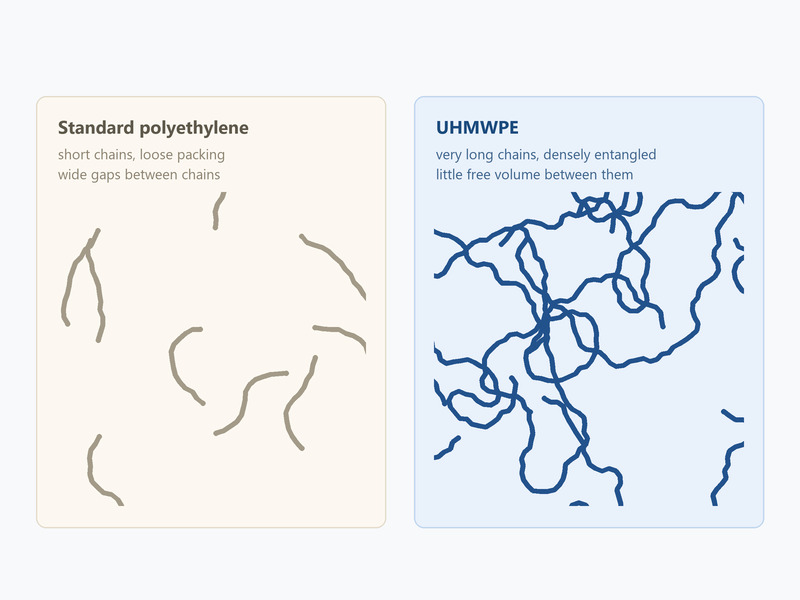
図1. 長く絡み合った超高分子量ポリエチレン(UHMWPE)の鎖が密に充填されているため、腐食性の化学物質がライナー内部へ拡散する速度が遅くなる。.
UHMWPEホースの耐温度範囲:−40 °C~+120 °C
UHMWPEホースの連続使用における温度範囲は、−40 °Cから+120 °Cです。低温側と高温側では、破損の原因が異なります。低温になるとポリマーが硬化します。下限温度を下回ると、ライナーは柔軟性を失い、急カーブでねじれが生じ、ひび割れを起こす可能性があります。 熱はこれとは逆の作用をもたらします。ライナーが軟化し、耐薬品性が徐々に低下し、透過性が高まります。.
上限の温度こそが、人々を驚かせるものです。ある材料が特定の温度に耐えうるとしても、その温度下では不適切な選択となる場合があります。なぜなら、温度が上昇するにつれて化学的腐食が加速するからです。 超高分子量ポリエチレン(UHMWPE)ホースの耐温度範囲が−40 °C~+120 °Cとされているのは、ポリマーそのものの特性を表しているに過ぎませんが、腐食性の強い化学物質に対する実用上の上限は、多くの場合、+120 °Cをはるかに下回ります。.
CIP(定置洗浄)の仕様は、人々を戸惑わせがちな点です。苛性アルカリを用いた高温洗浄液は、腐食性の強い洗浄媒体の場合、ライナーの許容上限値に近い温度で滞留する可能性があるため、洗浄温度と苛性アルカリ濃度の両方を仕様に明記する必要があります。.
この表は、ライナーを比較するために使用し、使用温度を選ぶためのものではありません。以下の表には、一般的なライナーおよびゴム材料を、設計値に基づいて並べて示しています。.
表1. 一般的な化学用ホースライナーおよびゴム材料の設計温度範囲(連続使用時。データシートを確認のこと)。.
| 素材 | 連続ウィンドウ(計画値) | 最適なサイズ | 主な制限 |
|---|---|---|---|
| UHMWPE(UPE) | −40 °C ~ +120 °C | 幅広い工業用化学品 | 強力な酸化性酸;高温の芳香族化合物 |
| XLPE | −40 °C ~ +100 °C | 酸、塩基、次亜塩素酸塩 | 芳香族溶剤 |
| PTFE(ポリテトラフルオロエチレン) | −70 °C ~ +260 °C | 最も幅広い化学物質の対応範囲 | 溶融アルカリ金属;元素状フッ素 |
| EPDM(エチレン・プロピレン・ジエン・モノマー) | −40 °C ~ +120 °C | 酸、塩基、ケトン、水蒸気 | 石油系油類;芳香族化合物 |
| NBR(ニトリルゴム) | −30 °C ~ +100 °C | 石油系油類および燃料 | ケトン、エステル、強酸 |
| FKM(フッ素エラストマー) | −20 °C ~ +200 °C | 炭化水素、酸、熱 | 熱を帯びた塩基、ケトン、アミン |
表1のUHMWPEの行とPTFEの行を比較してみてください。PTFEははるかに広い温度範囲と幅広い耐薬品性を備えていますが、このグループの中で最も柔軟性が低く、計画段階でのコストも高くなります。多くのプラント移管において、UPEは実用的な中間的な位置づけにあります。つまり、PTFEよりも低い計画コストで幅広い対応範囲を実現できるのです。.
なお、同シリーズのXLPEライナーは、許容温度範囲が−40 °C~+100 °Cと狭く、異なる仕様群に属している点にご注意ください。XLPE製化学薬品用吸込・吐出ホースに関する記事では、当該グレード、そのヘリックス構造、および独自の圧力クラスについて詳しく解説しています。.
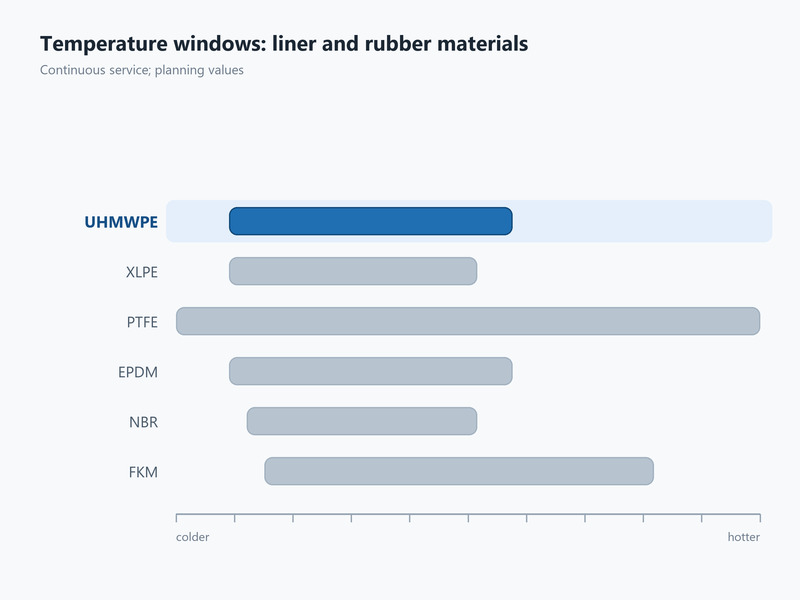
図2. UHMWPEの窓はXLPEとPTFEの間に位置しており、XLPEよりも幅が広い。.
150 PSIの化学用ホース:圧力クラスの本当の意味
圧力クラスとは、そのアセンブリが定格温度において連続的に耐えられるように設計された使用圧力を示します。 化学薬品の移送においては、150 PSIクラスの化学薬品用ホースが最も一般的な定格の一つであり、これは約10 barに相当します。これは、ゴムおよび熱可塑性樹脂製の化学薬品用ホースに対するEN 12115:2021の使用圧力10 barと一致するため、これら2つの規格は同一の使用範囲を規定しています。.
さらに高い耐圧クラスの製品も存在します。一部の化学用ホースは16 barまで対応しており、一部の吸込・吐出用グレードでは17 barに達するものもあります。150 PSI定格の化学用ホースは、より強度の高い継手を装着したからといって耐圧性能を高めることはできません。なぜなら、耐圧性能は補強材に由来するものであり、継手そのものにあるわけではないからです。.
破裂圧力は別の数値です。設計上の目安として、破裂圧力は使用圧力の約3~4倍に設定されます。この余裕は、水撃現象や水ハンマー、経年による強度の緩やかな低下を吸収するためのものです。これは破損点であり、決して目標値ではありません。.
表2. 一般的な化学用ホースの耐圧クラスと、それぞれが想定される用途(設計値)。.
| クラス | 代表的な業務 | バースト計画値 |
|---|---|---|
| 150 PSI | 一般的な化学物質の移送 | 使用圧力のおよそ3~4倍 |
| 16 bar | 高圧移送 | 使用圧力のおよそ3~4倍 |
| 17 bar | 吸込・吐出のグレード | 使用圧力のおよそ3~4倍 |
17 barという数値は、特定の吸込・吐出用製品に適用されるものであり、すべての化学用ホースに当てはまるわけではありません。カバーに印字されているクラスをご確認いただき、高温下では定格圧力がラベル記載値よりも低くなることにご留意ください。.
ライナー、ヘリックス、カバーはそれぞれどのような役割を果たしているのでしょうか?
ホースは複数の層で構成されており、各層にはそれぞれ特定の役割があります。ライナーは化学物質を封入する役割を担います。繊維補強層は圧力を支えます。ヘリックス層(ある場合)は、真空状態での潰れを防ぐ役割を果たします。カバーは、内部のすべての構成要素を摩耗、日光、およびこぼれた製品から保護します。.
カバーには通常、耐候性・耐オゾン性に優れ、酸、塩基、ケトンに対する耐性も備えているEPDMゴムが使用されています。カバーの色はメーカーによって異なります。同じUHMWPEとEPDMの組み合わせでも、青と緑の2色が販売されています。 再注文の際は、色ではなくライナーとカバーの材質を指定してください。カバーの仕上げは2番目の選択項目となります。波形カバーは柔軟性が高く軽量である一方、ラップカバーはドラッグルートでの耐摩耗性に優れています。.
ヘリックスは、吐出ホースと吸込ホースを区別する特徴です。吐出専用ホース(EN 12115 タイプD)にはヘリックスがなく、真空に耐えるようには設計されていません。吸込・吐出兼用ホース(タイプSD)にはスチール製のヘリックスが追加されており、ポンプが吸引を行う際に内径が開いた状態を維持します。 誤ったホースを選択すると、ライナーが潰れてしまいます。.
以下の表は、製品側から外側に向かって層を順に示したものです。.
表3. UHMWPEライナーの層構成と各層の機能。.
| レイヤー | 素材 | 機能 |
|---|---|---|
| インナーライナー | UHMWPE(UPE) | 当該化学物質が含まれている。銃身が明るく滑らかであれば、残留物が早期に確認できる。 |
| 補強 | 高引張強度の繊維 | 使用圧力に耐える |
| ヘリックス | 吸引用グレードの鋼線 | 真空下での崩壊を防ぐ |
| 表紙 | EPDM(標準) | 天候、オゾン、および摩耗からの保護 |
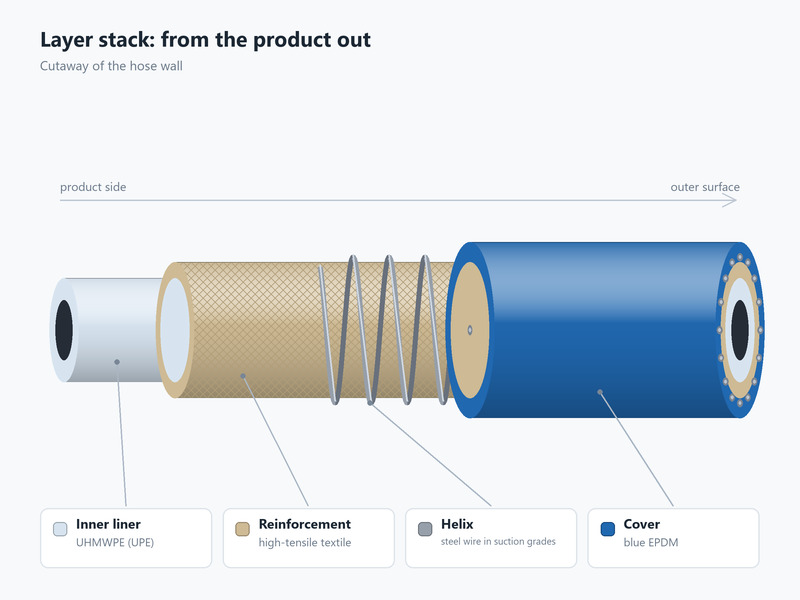
図3. 製品の外側からの構成:UHMWPEライナー、繊維補強材、吸引用のオプションの鋼製ヘリックス、および青色のEPDMカバー。.
業務に真空作業が含まれる場合、吐出構造と吸引構造のどちらを選ぶかによって、ホースが耐えられるかどうかが決まります。両者の比較は、 吸引ホースと吐出ホースの比較 らせん構造が圧力および真空下での挙動をどのように変化させるかを示している。.
UHMWPE製化学用ホースが機能しなくなる場合
万能なライナーなど存在せず、UPE素材も例外ではありません。98%のデータシートに記載されている図は、幅広い適用範囲を示していますが、残りの範囲については、UPEは適切な選択肢ではありません。こうしたケースを把握しておくことで、製品とそれを扱う人々を守ることができます。.
ケアを必要とするグループは3つあります:
- 高濃度の酸化性酸は、ポリマー鎖を直接攻撃するため、まずこれらを取り除いてください。.
- 次に、トルエンやキシレンなどの高温で揮発性の高い芳香族化合物を、高温の状態で取り分けておく。.
- 最後に、塩素系溶剤を再確認してください。これらは、製品が温まっているときにも同様の挙動を示します。.
適用範囲:UHMWPEライナーは、表4の上位4つのファミリーに適しています。下位の3つについては、ご注文の前に別のライナーをご指定いただく必要があります。.
表4. UHMWPEライナーで十分に処理できる化学物質群と、別のライナーを必要とする化学物質群(計画ガイド)。.
| 化学ファミリー | Guidance for UPE | Note |
|---|---|---|
| Dilute mineral acids | Good | Common transfer duty |
| Bases and alkalis | Good | Sodium hydroxide, ammonia |
| Salt solutions | Good | Wide concentration range |
| Alcohols | Good | Typical solvent transfer |
| Strong oxidizing acids | Use PTFE | Concentrated sulfuric, nitric |
| Hot aromatics | Use PTFE or FKM | Toluene, xylene at high temperature |
| Some chlorinated solvents | Use PTFE, and confirm warm duty | Check the data sheet when warm |
The practical rule is simple: confirm the liner against the actual chemical, concentration, and temperature before you order. A compatibility table is a starting point, and the manufacturer data sheet is the final word.
Send the chemical, its concentration, the highest temperature, and the bore when you ask for a quote, because those are the four selection inputs. Get a quote and free samples.
Matching UHMWPE Chemical Hose to Common Chemicals
A UHMWPE chemical hose appears most often where one liner must cover many products. Chemical plants, tank farms, and wastewater sites move different media through the same transfer points, and a liner that handles a broad range simplifies hose inventory. Instead of stocking a separate hose for each chemical, a plant can standardize on one UPE construction and re-check only the boundary chemicals. If you unload tankers and drums on one stand, a single UPE liner removes the need to swap hoses between products.
Typical duties include:
- Loading and unloading tankers, rail cars, and drums
- Transfer between process vessels and storage tanks
- Pump discharge on mild acids, bases, and salt solutions
- Waste and effluent movement
For the full decision path from chemical type to hose construction, the chemical hose complete guide maps the whole selection process, from liner choice to fittings and inspection. If you stock hoses for resale, expect the questions to arrive as a chemical list rather than a part number, so keep a compatibility table within reach.
Sizing, Fittings, and Installation for UPE Hose
A UPE hose only performs as well as its installation. Start with bore size, because an undersized bore raises velocity and abrasion while an oversized bore wastes product and slows transfer. Common chemical hose bores are 3/4 in, 1 in, 1-1/4 in, 1-1/2 in, 2 in, 3 in, and 4 in.
The hose size selection guide covers the flow math behind those sizes. Once the bore is fixed, match the fitting to both the chemical and the pressure class. Order a UPE hose with factory-crimped ends to avoid the field-assembly errors that account for many early failures.
Three installation rules keep the line safe:
- Choose a fitting material that also resists the chemical, not just the liner.
- Route the hose so it does not kink at bends or drag over sharp edges.
- Ask for the minimum bend radius on the data sheet before you route a tight run.
The hose couplings guide explains how coupling type and material follow the chemical, and the clamp choice must match both.
For flammable or charge-generating products, bond and ground the assembly. Conductive and antistatic grades are classified under EN 12115 and tested to EN ISO 8031, with a conductive limit of 10⁶ Ω (M class) and an antistatic limit of 10⁹ Ω (Ω class). Where the plant classifies the line for static, follow the OSHA requirements for bonding and grounding.
How to Specify and Inspect a UHMWPE Chemical Hose
When you write the specification, put the liner first. Name UHMWPE (UPE), then the bore, the pressure class, the temperature range, the construction type (Type D or Type SD), and the electrical class. That single line removes most of the ambiguity that causes wrong deliveries.
A UHMWPE chemical hose specification should also state the test basis. EN 12115:2021 is the reference standard for rubber and thermoplastic chemical hose and hose assemblies, with Type D for discharge and Type SD for suction and discharge. Hydrostatic testing follows ISO 1402, pulse testing follows ISO 6803, and abrasion testing follows ISO 4649.
If the hose touches food or potable products, add the food-contact basis. Polyolefin food contact falls under FDA 21 CFR 177.1520, and plastic food-contact materials in the EU fall under EU 10/2011.
Inspection is a routine rather than a one-time event:
- Check the cover for cuts, blisters, and exposed reinforcement.
- Check the fittings for weeping and the crimp for movement.
- If you own the inspection routine, check the liner ends first: scratched bores, cracking, and discoloration all show up there.
- Replace, never repair, a hose with a damaged liner.
Retire a hose as soon as the liner is compromised. A chemical hose is a consumable safety item, and a patch on a chemical line is a leak waiting to happen.
Final Verdict: When UHMWPE Chemical Hose Is the Right Choice
A UHMWPE chemical hose is the right choice when you need broad chemical coverage from a single liner at a moderate planning cost. It earns its place on mixed-duty transfer points where acids, bases, salts, and alcohols share the same hose stand. It is a poor fit for the three families in the lower rows of Table 4, where PTFE or another liner belongs.
The honest reading of the 98% claim is this: manufacturer data sheets commonly state that a UHMWPE liner handles about 98% of industrial chemicals, so treat the figure as a screening tool. Confirm the actual chemical, concentration, and temperature against the data sheet before you commit.
If the duty fits UPE, it rewards you with a wide working window and a construction that can be built for suction when the pump pulls.
UHMWPE Chemical Hose FAQs
What is a UPE chemical hose used for?
A UPE chemical hose is used for general chemical transfer where one liner must cover many products. Before you standardize on one liner, screen the chemical list against the boundary families, because that is the step that decides whether a single hose covers the whole duty.
Does a UHMWPE liner really handle 98% of chemicals?
Manufacturer data sheets commonly state that a UHMWPE liner handles about 98% of industrial chemicals, so the figure is widely quoted. It is a datasheet summary of compatibility testing rather than a guarantee. The remaining share is not random; it concentrates in three families, and those are worth screening first. Confirm your exact chemical, its concentration, and its temperature against the supplier data sheet.
How hot can a UPE liner safely run?
The planning window is −40 °C to +120 °C for continuous service. Treat that as a material property: if your product is aggressive and the duty temperature sits in the upper part of the range, make the data sheet answer the question rather than the table.
What does a 150 PSI pressure class mean?
A 150 PSI class means the assembly is built to carry that working pressure continuously at its rated temperature. Read the class on the printed cover rather than from a catalog line, because the same bore can be supplied in more than one class. The burst value is separate, and it is a failure point rather than a usable limit.
Can a UPE liner be used for suction duty?
A UPE liner can handle suction duty, if the hose is built for it. The build to look for is the suction-and-discharge type, which carries a helix; a delivery-only hose is not made for vacuum and will collapse. Confirm the vacuum rating on the grade you order rather than inferring it from the pressure class.
What chemicals are not suitable for a UPE liner?
A UHMWPE liner is the wrong answer for three families: concentrated oxidizing acids, hot aromatics, and some warm chlorinated solvents. The first group attacks the polyethylene chain directly, while the other two swell or soften the liner at temperature. For those duties, a PTFE liner is usually the better answer. Screen every boundary chemical against the manufacturer data sheet before ordering.
How do I know if UPE is the right liner for my chemical?
Start from the chemical, its concentration, and the highest temperature it reaches. Check those three against a compatibility table, then confirm with the manufacturer data sheet. If the chemical falls in the avoid group, or sits near the temperature ceiling, select a different liner such as PTFE. Never rely on a single headline percentage.
What is the difference between UHMWPE and XLPE liners?
Both are polyethylene-based, but they are different materials with different windows. UHMWPE has much longer chains, runs −40 °C to +120 °C, and resists a broad range of chemicals. XLPE has a continuous service window of −40 °C to +100 °C, tolerates acids, bases, and hypochlorite well, but is not suited to aromatic solvents. Match the liner to the chemical list.
How should I store and inspect the assembly?
Store the hose coiled, out of direct sun, away from sharp edges, and above freezing. Inspect it as a routine: check the cover for cuts and blisters, the fittings for weeping, and the liner ends for cracking. Set the inspection interval by how aggressive the product is, not by the calendar.
HENGHUAについて
HENGHUA is a professional hose and fitting manufacturer supplying global distributors, retailers, and OEM brands. The chemical hose line includes UHMWPE (UPE), XLPE, and PTFE liners alongside rubber constructions such as EPDM and oil-resistant synthetic rubber, all built with high-tensile textile reinforcement and an optional steel helix for suction duty.
We supply factory-crimped assemblies, custom lengths, fittings, cover printing, private label, and OEM/ODM. Commercial terms are factory-direct pricing, short bulk lead times, and warranty. Send your chemical list and we will quote against it. Get a quote and free samples.
About the author: The HENGHUA technical team writes practical guides on chemical hose materials, sizing, and safe transfer for plant engineers and distributors.






 English
  Spanish
  Portuguese
  French
  German
  Arabic
  Russian
  Indonesian
  Japanese
  Korean