
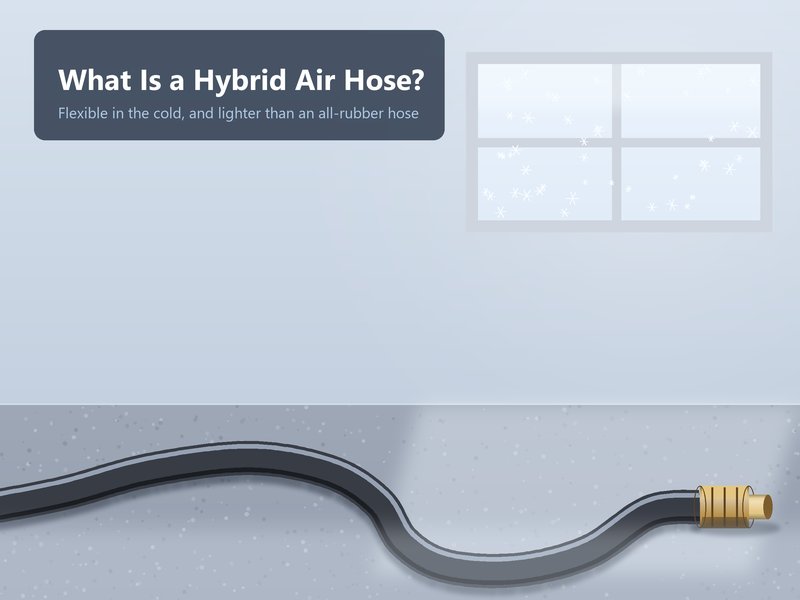
A hybrid hose is a compressed-air hose whose tube is made from a blend of PVC and a rubber or polyurethane polymer, rather than from either material alone. The blend is designed to combine PVC’s light weight and low cost with rubber’s elasticity, giving a hose that usually stays flexible to about -20°F (-29°C) yet weighs 20–30% less than an all-rubber hose. Most hybrids are textile-reinforced and rated 200–300 PSI working pressure.
This page explains what is inside a hybrid hose, why the blend behaves differently from plain PVC, how to tell a real hybrid from a relabelled PVC hose, and which jobs it suits.
About a 15-minute read at 250 words per minute; rated ranges follow ISO 5774:2023 and ISO 2398:2024.
What Is a Hybrid Air Hose? The Definition in Full
The term describes the tube compound, not the construction or the fittings. Three components define any air hose:
- The tube — the inner layer that touches the air. This is where “hybrid” applies.
- The reinforcement — textile braid or spiral, which sets the pressure rating.
- The cover — the outer layer, which sets abrasion and weather resistance.
A hybrid hose has a blended tube. Its reinforcement and cover can be made to the same specifications as any other air hose, which is why a good hybrid and a good rubber hose can look almost identical on a shelf and behave quite differently in use.
The naming follows the tube. When a catalog lists an air hose compound, it is describing the tube formulation — the polymer ratio, the plasticizer package, and the additives — not the reinforcement. A hybrid polymer air hose and a plain PVC hose can share an identical braid and cover. Both still differ in every rating that depends on the tube, which is why the compound is the only part of the specification you cannot inspect at the counter.
The head-to-head against rubber is in our hybrid vs rubber air hose comparison, and the three-material view is in our PVC vs rubber vs hybrid comparison.
What Is Inside a Hybrid Hose?
A typical hybrid compound contains four groups of ingredients:
- PVC resin — the base polymer. Cheap, chemically stable, easy to process, but rigid on its own.
- Rubber or polyurethane fraction — usually 20% to 50% of the polymer content. This restores elasticity and improves low-temperature behavior.
- Plasticizers — still present, because PVC needs them, but at lower levels than in a pure PVC hose, so there is simply less material available to migrate out over time.
- Stabilizers, fillers, and colorants — light and heat stabilizers to slow degradation, carbon black for UV resistance in black hose, and pigments for cover color.
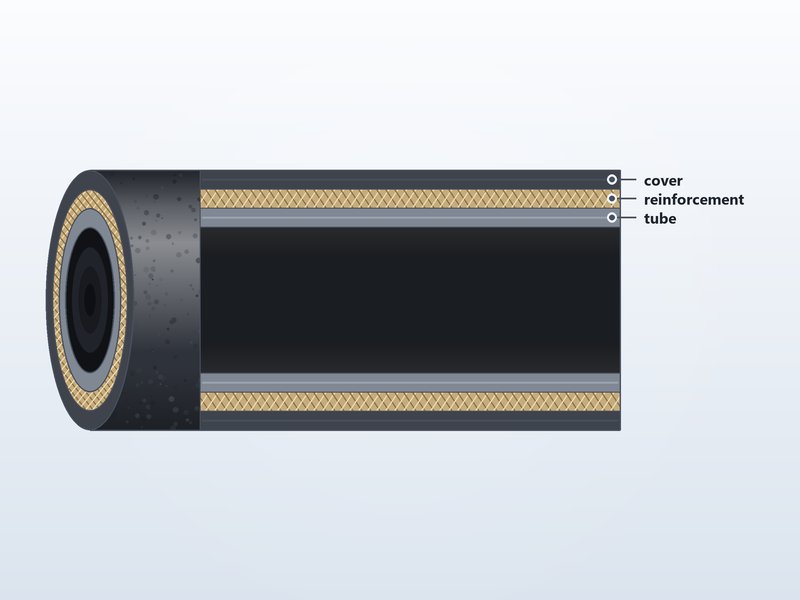
Figure 1. Hybrid hose construction, cutaway view: blended tube, textile reinforcement braid, abrasion-resistant cover. Only the inner tube is “hybrid” — reinforcement and cover are specified separately.
That middle point is the practical one. A hybrid hose is not a PVC hose with better marketing. It genuinely contains less of the additive that makes PVC hose harden, which is why the temperature rating and the aging curve both improve.
In practice, the rubber or polyurethane fraction is doing two jobs at once. It restores elasticity that pure PVC only gets from additives, and it does so through polymer structure rather than through a migrating plasticizer. That is the whole reason a hybrid polymer air hose keeps more of its flexibility after a few seasons in a cold shed than a plasticized PVC hose does.
Why Does a Hybrid Hose Stay Flexible in the Cold?
Flexibility in cold weather is a contest between two forces: plasticizer keeping polymer chains apart, and cold making the chains want to pack together.
In pure PVC, the whole burden falls on the plasticizer — and plasticizer is the ingredient that migrates away over time. A hybrid shares the load. The rubber or PU fraction contributes elasticity through its own polymer structure, so the hose does not depend entirely on an additive staying put.
The result is a usable range down to roughly -20°F (-29°C), against about 14°F (-10°C) for a general-purpose PVC hose. EPDM rubber hoses still go colder, to about -40°F (-40°C), and so do the lightest polyurethane hoses, though those are usually supplied as coils rather than braided line.
That single figure is what most buyers mean by the air hose temperature range, and it repays careful reading on a label. A cold weather air hose rated to -20°F is not claiming the performance of a rubber hose rated to -40°F; it is claiming the range most garages and service vans actually see. Where the winter low sits between those two numbers, the choice usually comes down to how much weight the user is willing to carry.
Table 1. Low-temperature limits by tube material, and what carries the flexibility in each case.
| Tube material | Usable low end | What carries the flexibility | Relative weight |
|---|---|---|---|
| Blended hybrid tube | about -20°F (-29°C) | Partly the polymer fraction, partly plasticizer | Between PVC and rubber |
| Plain PVC | about 14°F (-10°C) | Plasticizer alone | Light |
| Polyurethane (PU) | about -40°F (-40°C) | Polymer structure, no plasticizer | Lightest |
| EPDM rubber | about -40°F (-40°C) | Cross-linked polymer chains | Heaviest |
How to Tell a Hybrid Hose From a PVC Hose
Manufacturers are not obliged to print “hybrid” on the cover, so judge the hose by six observable signs:
Table 2. Field checks for distinguishing a genuine hybrid hose from a plasticized PVC hose.
| Check | Hybrid hose | Plain PVC hose |
|---|---|---|
| Stated temperature range | Typically -20°F (-29°C) to 140°F (+60°C) | Typically 14°F (-10°C) to 140°F (+60°C) |
| Feel at room temperature | Soft, slightly rubbery, matte | Glossier, stiffer, more “plastic” |
| Recovery after a tight fold | Returns to a straight line quickly | Leaves a visible crease |
| Coil memory after cold storage | Releases coil readily | Holds the stored shape |
| Smell out of the box | Mild | Pronounced plasticizer odor |
| Price position | Between PVC and rubber | Lowest |
The temperature range is the most reliable single indicator, because it is the property the blend exists to deliver. A hose claiming a -20°F rating at PVC prices is usually a PVC hose.
What a Hybrid Hose Is Not
- It is not a rubber hose with a cheaper name. Hybrids are lighter and cheaper, but they do not match rubber on abrasion, puncture, or maximum pressure rating. For oil-heavy or high-crush environments, rubber remains the correct choice. The two-way mechanism is in our PVC vs rubber air hose difference guide.
- It is not automatically oil-proof. Occasional oil mist is fine; continuous contact with oil or solvent is not.
- It is not a braided hose category. “Braided” describes reinforcement geometry and applies to PVC, hybrid, and rubber hoses alike.
- It is not always the best value in light indoor use. For a blow gun used once a month, a PVC hose will perform the same for less money.
What a hybrid compound is not
A hybrid compound is not simply a PVC tube with a rubber additive, and it is not a rubber hose built to a lower price. Hybrid polymer air hose uses a genuine blend in which the rubber or polyurethane fraction carries part of the flexibility load. That is also why the plasticizer content of a hybrid hose is lower than that of a PVC hose, and why a hybrid ages more slowly in storage.
Where a Hybrid Air Hose Makes Sense
Hybrid hoses earn their price in four recurring situations:
- Cold-starting work. A homeowner uncoiling a hose in a 15°F garage, or a mobile mechanic starting a job before sunrise.
- Carrying and moving the hose. Service vans, rooftop units, scaffolding — anywhere the hose is lifted and repositioned through the day.
- Tools that need maneuverability. Spray guns, blow guns, and small finishing tools where a heavy hose fights the wrist.
- Retail and distribution stock. A hybrid reduces the most common warranty complaint about entry-level hose — that it went stiff or cracked in the first winter.
Those four situations share a common thread: the hose is moved, or it is expected to work on the first cold morning of the year. A hose that lives in one place and is never lifted asks far less of its tube, which is why the material question becomes much less interesting on a fixed indoor line.
They make least sense on a shop floor where hoses are dragged over concrete and driven over by carts. In our abrasion testing, a rubber cover on a 3/8-inch hose ran roughly twice the cycles of a hybrid cover before the reinforcement became visible. That is exactly the environment where rubber pays for itself.
How a Hybrid Tube Is Compounded
Compound design is what separates one hybrid hose from another, and it is the part buyers cannot see. Four decisions matter, and none of them appears on the label of an air hose compound.
The polymer ratio
The proportion of PVC resin to rubber or polyurethane polymer sets the hose’s character. More PVC means lower cost and lower weight but a return toward PVC’s weaknesses. More rubber fraction means better cold flexibility, better recovery after folding, and a higher price. Most commercial hybrid hose sits in a middle band where the rubber or PU fraction is large enough to change the temperature rating but not so large that the hose becomes a rubber hose with a hybrid label.
The plasticizer package
Plasticizer is still required to soften the PVC fraction. What changes between a good hybrid and a poor one is how much is used and which type. Lower plasticizer content is the single largest factor in how the hose ages, because plasticizer loss is the mechanism that hardens a hose in storage.
The stabilizer system
Heat and light stabilizers slow both thermal degradation during processing and UV degradation in service. A hose with an adequate stabilizer package will hold its color and surface condition noticeably longer outdoors.
The reinforcement interface
The tube must bond to the reinforcement. If adhesion between the tube and the textile braid is weak, the braid moves against the tube under pressure cycling, and the hose fails from the inside out. Bonding is a compounding and processing question, and it is one of the reasons two hoses made to the same published specification can perform differently.
Table 3. The four decisions inside an air hose compound, and what each one controls.
| Decision | What it controls | Why a buyer should care |
|---|---|---|
| Polymer ratio | The character of the hose | More PVC lowers cost and weight; a larger rubber fraction improves cold flexibility and recovery, and raises the price |
| Plasticizer package | How the hose ages | Sets how much plasticizer can migrate out, and therefore how fast the tube hardens |
| Stabilizer system | UV and heat resistance | Sets how long color and surface condition survive in sunlight |
| Reinforcement interface | Adhesion of tube to braid | Weak bonding lets the braid move under pressure cycling, and the hose fails from the inside out |
None of these four variables appears on a retail label. That is precisely why buying hybrid hose from a manufacturer that controls compounding in-house is a different proposition from buying a relabelled import.
Why the four decisions are hard to verify at the counter
A buyer can check a reinforcement by looking at it, and a cover by rubbing it. The compound is the one part of the specification that stays invisible. Two practical proxies are the stated low-temperature figure, which tracks the polymer fraction, and the way the hose behaves after a tight fold, which tracks how much plasticizer is carrying the load. Neither is a laboratory measurement, but both separate a genuine blend from a plasticized PVC tube at the point of sale.
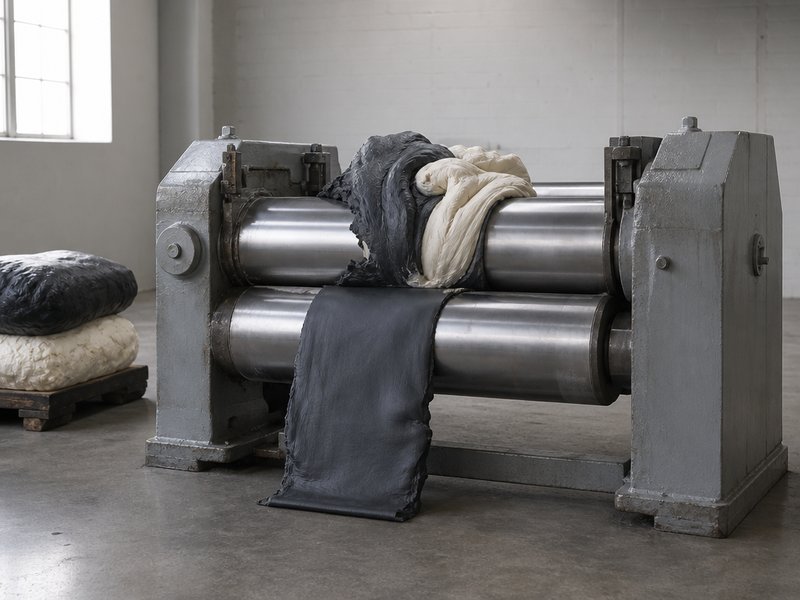
Figure 2. Tube compound being mixed before extrusion. Polymer ratio, plasticizer level, and the stabilizer package are set here — before any of the hose’s published ratings can be met.
Two ratings that matter as much as the compound
Air hose temperature range and cold weather air hose performance are the two figures that most often decide whether a hybrid is the right purchase. A hybrid rated to about -20°F covers the winter conditions most garages and service vans actually see. Where the working environment runs colder, the air hose temperature range stops being adequate and a rubber hose becomes the correct choice. Where a cold weather air hose is needed only a few weeks a year, the hybrid remains the better value because the rest of its working range is broader.
How Long Does a Hybrid Air Hose Last?
Service life depends far more on how the hose is used and stored than on the material itself. From warranty and returns feedback on hybrid hose sold into retail and trade channels, four patterns hold.
- Stored coiled on a hook indoors, used weekly: the hose typically outlasts the tool it is attached to. Failure, when it comes, is at the crimp after years of use.
- Stored coiled in a cold van or shed: the hose usually survives three to five seasons, with the first sign of aging being slower recovery from the coil.
- Left outdoors in sun year-round: surface dulling appears within a season, and flexibility drops measurably by the second or third year.
- Dragged daily over concrete: the cover wears through to the reinforcement in one to three years, regardless of the tube compound.
The pattern in that list is that abrasion shortens life in the way users expect, but storage shortens it in ways they do not. A hybrid hose retired early is usually one that spent its life coiled in a freezing shed or hanging in direct sunlight, not one that was used hard.
The storage rules that extend service life are set out in the section below.
The four patterns above share one explanation. A hose fails in storage because the tube is being asked to hold a shape it was not compounded to hold. Coiling tightly, hanging on a nail, or leaving the line pressurized all put the tube under constant strain at a specific point, and constant strain is what turns a slow chemical change into a visible crack. The same hose kept straight and depressurized ages on the material’s own schedule rather than on the storage schedule.
Hybrid Hose vs Other Materials: Quick Positioning
If you have read this far, the definition is settled. The remaining question is where a hybrid hose sits relative to its neighbors, in one line each.
- vs PVC: a hybrid costs a little more and buys cold flexibility and slower aging. PVC remains the lower-cost option for light indoor use at room temperature.
- vs rubber: a hybrid is lighter and cheaper, and gives up abrasion, puncture, and maximum pressure performance to get there.
- vs polyurethane: PU is lighter still and more abrasion-resistant, but it is usually sold as coiled or thin-wall hose and is not the right answer where a heavy textile-braided line is needed.
- vs braided hose as a category: braiding describes reinforcement, not the tube, so a hybrid hose is often also a braided hose. The two terms answer different questions.
The pattern behind those four lines is that the blend moves the hose along two axes at once. It buys back most of the cold flexibility that separates rubber from PVC, and it gives away a smaller amount of the abrasion and pressure headroom that separates rubber from everything else.
Table 4. Which tube material wins in each of the situations this page describes.
| Situation | Best choice | なぜ |
|---|---|---|
| Cold garage, hose uncoiled by hand | ハイブリッド | Flexible to about -20°F at 20–30% less weight than rubber |
| Dragged over concrete every day | Rubber | Roughly twice the abrasion cycles of a hybrid cover in our testing |
| Light indoor use at room temperature | PVC | Lowest cost, and the cold rating never comes into play |
| Coiled or thin-wall, maximum maneuverability | Polyurethane | Lightest and most abrasion-resistant of the group |
That positioning is the whole answer to what is a hybrid air hose: a tube-compound classification, designed to sit between PVC and rubber on the two dimensions buyers care about most — weight and cold performance.
How to Store a Hybrid Hose So It Keeps Its Rating
Storage is the largest single influence on how long a hybrid hose performs to specification, and it costs nothing to get right.
The reason storage outranks material is that every hose is a compromise between the shape it is made in and the shape it is asked to hold. A hybrid is compounded to be soft enough to handle in the cold and resilient enough to recover after a fold, and those two properties are the ones a poor storage habit attacks first.
- Coil it loosely, at roughly the diameter it arrived in. A hose forced into a tight coil takes a set at every bend, and those bends are where it will kink first.
- Keep it out of direct sunlight. UV attacks the cover and the surface of the tube, and the damage is cumulative rather than reversible.
- Avoid storing it pressurized. A pressurized hose held in a coil is under load for no reason.
- Do not hang it over a nail or a sharp hook. The contact point becomes a stress concentration where the cover wears through first.
- Store it away from oils and solvents. Even a hybrid hose, with its reduced plasticizer content, is not designed for continuous chemical contact.
Follow those five rules and a hybrid hose will normally reach the end of its useful life in service rather than in storage.
Hybrid Air Hose FAQs
Is a hybrid air hose better than rubber?
Not better — different. Hybrid is 20–30% lighter and cheaper and handles cold down to about -20°F. Rubber resists abrasion, puncture, and oil better and reaches -40°F. Choose on which failure mode the hose will actually meet. The price gap narrows once hybrid’s slower aging is counted.
Is a hybrid air hose better than PVC?
For anything beyond light indoor duty in a heated space, yes. The hybrid costs a little more but stays flexible in cold weather and ages more slowly, because it holds less plasticizer. For a blow gun used once a month, a PVC hose performs the same for less money.
What pressure is a hybrid air hose rated for?
Textile-reinforced hybrids are typically rated 200–300 PSI working pressure with a burst factor of three to four times that figure. Spiral-reinforced hybrids are available at higher ratings — always read the printing on the cover. Our 使用圧力と破裂圧力の解説 covers the safety arithmetic.
Can a hybrid air hose be used with a compressor of any size?
The compressor’s tank size does not restrict hose material. Match the hose’s working pressure rating to your system pressure, and match bore size to the air demand of the tool at the far end. Our エアホースのサイズ表 and measuring guide cover the bore side.
Does a hybrid air hose kink?
Less than PVC, and at least as well as most rubber hoses at the same bore. Kink behavior depends mainly on wall thickness and reinforcement, so compare bend radius and wall construction, not just the word on the label. A hose stored coiled under load takes a set at each bend, and that set is where it kinks first.
Is a hybrid hose oil-resistant?
Partly. Occasional oil mist from a lubricated tool is fine, and a hybrid handles it better than plain PVC. Continuous contact with oil or solvent is a different case, and it is where a nitrile rubber hose remains the correct choice. If the hose will sit in oil on a shop floor every day, hybrid is the wrong purchase regardless of price.
What is a hybrid hose made of?
A blended tube: PVC resin carries the base, and a rubber or polyurethane fraction — usually 20% to 50% of the polymer content — supplies elasticity. Plasticizers are still present because PVC needs them, but at lower levels than in a pure PVC hose. Stabilizers, fillers, and colorants make up the rest, with carbon black added for UV resistance in black hose.
How should I store a hybrid hose?
Coil it loosely, at roughly the diameter it arrived in, and keep it out of direct sunlight. Avoid storing it pressurized, do not hang it over a nail or a sharp hook, and keep it away from oils and solvents. If the hose overwinters in an unheated shed, check that its printed low-temperature figure covers the coldest night the shed sees; a hose stored below its rated low end will not fully recover its flexibility.
HENGHUAについて
HENGHUA manufactures hybrid air hoses and reinforced hose assemblies for workshops, distributors, and OEM brands worldwide. Our hybrid hose uses an in-house compounded blend — PVC with a rubber polymer fraction — around a high-tensile textile reinforcement, with an abrasion-resistant cover, typically rated 200–300 PSI and flexible to about -20°F. It is available in 1/4, 3/8, and 1/2 inch with factory-crimped brass fittings as standard.
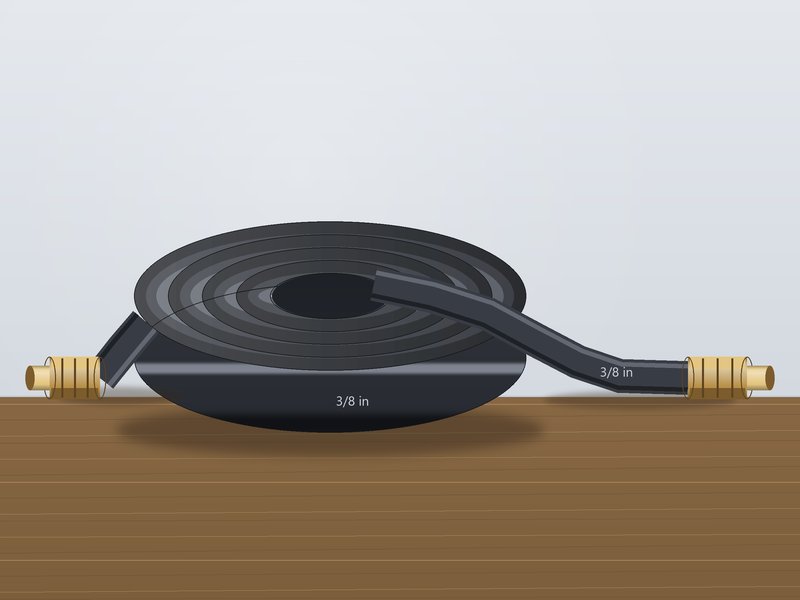
Figure 3. A HENGHUA 3/8-inch hybrid air hose: a finished coil with brass crimped fittings. The printed rating on the cover is the figure to design to.
Because we compound in-house, we can tell you honestly when a PVC or rubber hose suits your market better than a hybrid — and quote all three. Custom lengths, colors, cover printing, and OEM/ODM branding are available with factory-direct pricing. Contact our engineering team お見積もりとサンプルのご依頼はこちら。.
Written by the HENGHUA Engineering Team — the engineers who compound, build, and pressure-test the hoses we manufacture — with input from workshop users across the US and Europe. HENGHUA manufactures hybrid, PVC, rubber, and polyurethane air hose assemblies from 1/4 inch to 1/2 inch, rated 200–500 PSI, with custom lengths, fittings, and OEM branding available.






 English
  Spanish
  Portuguese
  French
  German
  Arabic
  Russian
  Indonesian
  Japanese
  Korean