
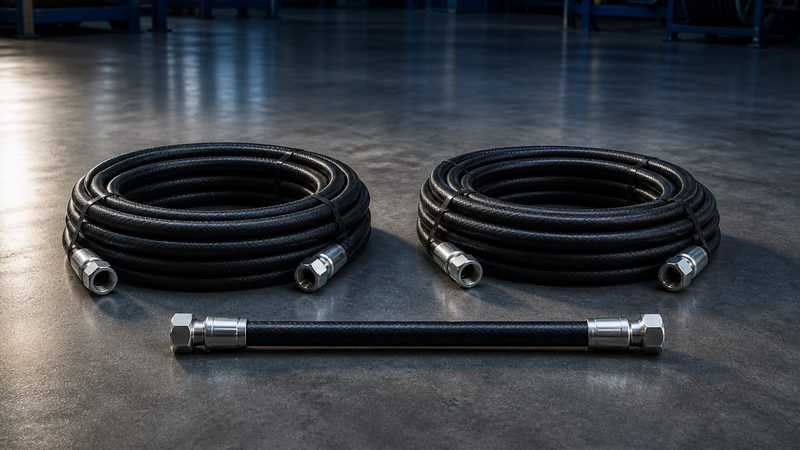
Which hose and couplings keep your machine running longest? The answer is a validated combination: a hydraulic hose is a flexible, reinforced tube that carries pressurized fluid between pumps, valves, cylinders, and tools, and couplings are the precision connectors that lock the hose to those components. Selection comes down to five factors — working pressure including surges, inside diameter and flow, fluid compatibility, temperature, and routing environment — and the reinforcement class that matches them: wire braided for general and mobile duty, spiral wire for high-impulse mining and construction, thermoplastic for weight- and cold-sensitive circuits, and textile braided for low-pressure return and drain lines. This guide explains hose types and standards, fittings and quick couplers, sizing and pressure ratings, crimping and assembly, installation rules, maintenance, and buying factors for volume procurement.
What Is a Hydraulic Hose?
A hydraulic hose is a flexible pressure conduit built from three layers: an inner tube that carries the fluid, a reinforcement layer that carries the pressure load, and a cover that protects the reinforcement from abrasion, weather, and chemicals. Unlike rigid pipe or steel tubing, the hose absorbs vibration, accommodates machine movement, and connects components that are not in fixed alignment. These properties make flexible hose the standard choice for mobile equipment, production machinery, and any circuit where components move relative to each other.
The reinforcement layer determines the performance class of the product. Braided wire, spiral wire, textile braid, and thermoplastic constructions each deliver a different balance of pressure capacity, flexibility, and cost. Standards bodies formalize the differences between reinforcement constructions: SAE International’s J517 defines the 100R series used widely in North America, the European Standards EN 853 and EN 856 govern 1SN/2SN and 4SP/4SH constructions in Europe, and ISO 18752 (International Organization for Standardization) groups products by pressure class rather than by construction recipe.
Market demand confirms how central this component is. A 2025 analysis by Precedence Research valued the global hydraulic hose market at roughly USD 12.2 billion in 2025, with growth of about 5 percent per year projected from 2025 through 2034. Behind that figure sit millions of daily operating hours in construction, agriculture, mining, manufacturing, and offshore applications, where a failed hose stops a machine instantly and costs money by the hour.

Figure 1. Every hydraulic hose has the same three-part anatomy: inner tube, reinforcement, and cover. The reinforcement decides the pressure class.
Hydraulic Hose Types: Which Reinforcement and Standard Do You Need?
Choosing among hose types is the first and most consequential decision in any system design. The reinforcement structure dictates pressure capacity, impulse life, bend radius, and cost, so you should match the construction to the most demanding condition in the circuit rather than to the average one.
Wire Braided Hoses (SAE 100R1AT/R2AT, EN 853 1SN/2SN)
One or two layers of high-tensile steel wire braid give these hoses the best balance of pressure capacity, flexibility, and price. Compact versions such as SAE 100R16 and 100R17 keep the same pressure rating in a thinner profile and a tighter bend radius, which makes them popular where space is tight. For which of the two braid counts your circuit needs, see the 1SN vs 2SN answer below. See the HENGHUA wire braided hose range for 1SN/2SN and R16/R17 options.
1SN vs 2SN hose: which do I need? 1SN (SAE 100R1AT / EN 853 1SN) has a single steel wire braid and suits medium-pressure return and pressure lines. 2SN (SAE 100R2AT / EN 853 2SN) adds a second braid and carries higher pressure in the same bore — up to roughly 42 MPa (6,100 psi) in smaller sizes — which is why it is the workhorse of mobile hydraulics. When in doubt between the two for a pressure line, 2SN is the safer default; keep 1SN for lighter, cost-sensitive circuits.
Manufacturers commonly rate wire braided lines for 400,000 or more impulse cycles in laboratory testing, which exceeds the minimum requirements of the governing standards. In our own production testing at HENGHUA, every batch of 1SN/2SN hose is impulse-tested per SAE J343 and documented, and test reports are provided on request.
Spiral Wire Hoses (SAE 100R12/R13/R15, EN 856 4SP/4SH)
Spiral constructions use four or six layers of helically wound steel wire, which distributes pressure pulses more evenly than braid. That architecture earns the highest pressure ratings in the rubber hose family, up to about 45 MPa (6,500 psi), and the longest fatigue life, typically exceeding one million impulse cycles in laboratory impulse testing. Spiral lines are specified for mining, construction, and offshore equipment where a burst is expensive, dangerous, or both. The practical rule of thumb: if the circuit regularly spikes above 20 MPa and the line size is large, a 4SP/4SH or 100R12-class spiral hose is the safe default.
Thermoplastic Hoses (SAE 100R7/R8)
Thermoplastic constructions replace rubber with a synthetic tube and cover over aramid or synthetic fiber reinforcement. They are roughly 30 to 50 percent lighter than steel-reinforced rubber of the same rating, stay flexible in cold weather down to about -40 degrees C, and resist many chemicals that degrade rubber. Applications include robotics, agricultural implements, and mobile circuits where weight, clean appearance, and tight routing matter. Pressure ratings reach about 35 MPa (5,000 psi) in SAE 100R8 constructions.
Textile Braided Hoses (SAE 100R3/R6)
Textile braided hoses suit low- to medium-pressure circuits up to roughly 12 MPa (1,750 psi) — return lines, drain lines, and low-pressure circuits. Their main advantages are excellent flexibility, kink resistance, and low cost. For high-pressure or high-impulse lines, specify a wire-braided or spiral construction instead; the textile reinforcement cannot carry that load, and failure is sudden.
Table 1. Hose types compared: construction, typical rating, and best use
| Hose type | Reinforcement | Max rated pressure (typical) | Common standards | Best suited for |
|---|---|---|---|---|
| Wire braided | 1 or 2 layers steel wire braid | Up to ~42 MPa (6,100 psi) | SAE 100R1AT/R2AT/R16/R17, EN 853 1SN/2SN | General pressure lines, mobile equipment |
| Spiral wire | 4 or 6 layers spiral wire | Up to ~45 MPa (6,500 psi) | SAE 100R12/R13/R15, EN 856 4SP/4SH | Mining, construction, high-impulse duty |
| Thermoplastic | Aramid / synthetic fiber | Up to ~35 MPa (5,000 psi) | SAE 100R7/R8 | Robotics, agriculture, weight-sensitive circuits |
| Textile braided | Textile braid | Up to ~12 MPa (1,750 psi) | SAE 100R3/R6 | Return lines, drain lines, low pressure |
Table 2. Typical applications and matching hose families (verify each selection against your circuit data)
| Application | Typical duty | Recommended hose family | Common fittings / quick couplers |
|---|---|---|---|
| Excavators and construction equipment | High pressure, high impulse | Spiral wire (EN 856 4SP/4SH, SAE 100R12/R13) | ORFS or flange; flat-face ISO 16028 where contamination is a risk |
| Agricultural tractors and implements | Medium pressure, frequent coupling | Wire braided (SAE 100R1AT/R2AT, EN 853 1SN/2SN) | ISO 5675 poppet couplers at remote outlets |
| Material handling and compact machines | Medium pressure, tight routing | Compact wire braided (SAE 100R16/R17) or thermoplastic (SAE 100R7/R8) | JIC or ORFS on the machine side |
| Mining and offshore equipment | Extreme pressure, continuous impulse | Spiral wire (SAE 100R13/R15) | Flange or ORFS; stainless steel fittings where corrosion is a risk |
| Machine tools and general industrial plants | Low to medium pressure | Textile braided (SAE 100R3/R6) for return and drain lines; wire braided for pressure lines | BSPP, NPT, or metric 24-degree by region |
What does the code printed on a hose mean? The SAE 100R designations are performance classes, not brand names. “100R2” means a two-wire braid construction built and tested to that specification; “EN 853 2SN” is the European equivalent with slightly different test conditions. When a label carries both markings, the product has been certified against both standards. Always read the printed layline, which lists the standard, size, pressure rating, and manufacturing date.
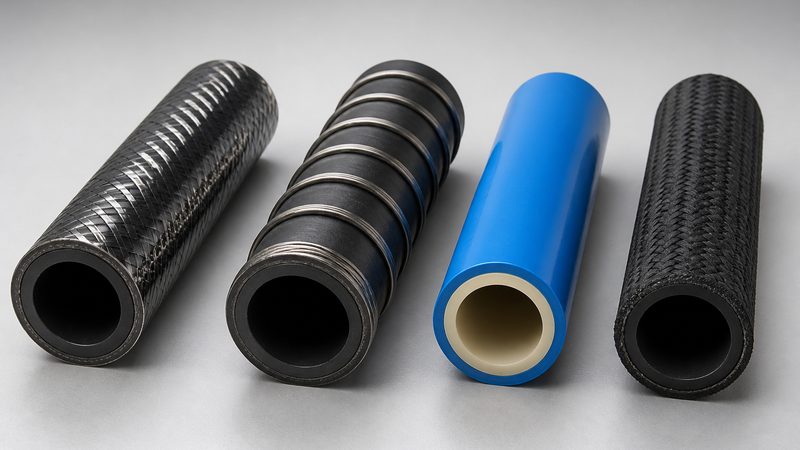
Figure 2. Four reinforcement families cover nearly all applications. Match the construction to pressure, impulse, and environment.
Fittings and Couplings: Every Connection Type Explained
The terms “fitting,” “coupling,” and “connector” are used interchangeably in the fluid power industry, and this guide treats them as synonyms. A hose fitting has two ends with two completely different jobs: one end attaches permanently to the hose, usually by crimping, and the other end connects to the machine port or to another line. Matching both ends correctly is where most selection errors happen. Throughout this guide, “coupling” means a hose-end connector — not a shaft coupling, which joins a motor to a pump.
How Fittings Attach to the Hose: Crimped vs. Reusable
A crimped fitting is compressed onto the hose with a hydraulic crimping machine, which squeezes a steel ferrule around the hose end to a controlled diameter. The crimp is permanent, machine-made, and repeatable, which is why OEMs and professional hose shops use crimped fittings almost exclusively. The alternative is a reusable (field attachable) fitting, which screws or bolts together around the hose end and can be removed and refitted in the field without a machine. Reusable fittings are convenient for emergency repairs, but they are heavier and less common in modern equipment; for permanent assemblies, crimped fittings are the industry standard.
Thread End Styles: JIC, ORFS, NPT, BSP, Metric, and Flange
The machine-port end of a fitting is defined by its thread and its sealing method. The thread holds the joint together; the seal keeps fluid in. Mixing thread standards is the most common cause of leaks, so identification accuracy matters. For the full range of end styles and sizes, browse our hydraulic hose fittings catalog (JIC, ORFS, NPT, BSP, metric).
- JIC (SAE J514, 37-degree flare): a flared metal-to-metal seal, very common in North American mobile equipment. Easy to assemble without special torque, but vibration can loosen the nut, and repeated re-tightening can work-harden the cone.
- ORFS (SAE J1453, O-ring face seal): an O-ring in a flat face provides a positive seal that resists vibration and high pressure. ORFS is the preferred choice for high-pressure, high-vibration circuits because it does not rely on metal-to-metal contact.
- NPT / NPTF (taper pipe): a tapered thread that seals by thread interference, often with sealant. NPT is common in industrial plumbing but less ideal for repeated assembly in hydraulics; the taper distorts when over-tightened.
- BSPP / BSPT (British Standard Pipe): parallel (BSPP) threads seal with a bonded washer or O-ring; tapered (BSPT) threads seal like NPT. BSP dominates Europe, Asia, and much of the global machinery market.
- Metric 24-degree cone (DIN 2353 / ISO 8434-1): standard on European and Asian machinery; seals with a cutting ring or O-ring and is sized in millimeters.
- SAE flange (SAE J518 / ISO 6162): a split-flange connection used on large-diameter, high-pressure lines, common on pumps, valves, and heavy equipment.
Table 3. Fittings end styles: thread type, seal method, and typical region
| End style | Thread | Seal method | Common where |
|---|---|---|---|
| JIC | UNF (imperial) | 37-degree metal flare | North America, mobile equipment |
| ORFS | UNF (imperial) | O-ring in flat face | High-vibration, high-pressure circuits |
| NPT / NPTF | Tapered pipe | Thread interference + sealant | Industrial plants, North America |
| BSPP / BSPT | Whitworth (parallel/taper) | Bonded washer, O-ring, or taper | Europe, Asia, global machinery |
| Metric 24-degree | Metric (DIN 2353) | Cutting ring or O-ring | European and Asian OEM equipment |
| SAE flange | Bolted split flange | O-ring under flange head | Large bores, high pressure |
JIC vs ORFS: which is better? Neither is universally “better”; they answer different problems. JIC is cheaper and adequate for moderate pressure and vibration, while ORFS seals positively under high pressure and severe vibration where flared joints can leak. If the circuit operates above about 28 MPa or shakes continuously, ORFS is the safer engineering choice. If you maintain legacy North American equipment, JIC may already dominate your fleet, and staying consistent avoids adapter clutter.
Can NPT and BSP fittings be interchanged? No. NPT and BSP threads look similar but have different pitch angles (60 vs 55 degrees) and different profiles. An NPT male will start into a BSP female and then bind, which often leaks and damages both threads. When a thread does not feel right, stop and verify the standard; forcing a connection is how ports get stripped.

Figure 3. Identify the end style before you buy: thread pitch, seat angle, and seal method are the three visual clues.
Quick-Disconnect Couplings
Which quick-disconnect coupling should you choose? Match the coupler standard to the machine and the contamination risk. Poppet-style couplers per ISO 7241-1 Series A and Series B are the general-purpose standard: they use a spring-loaded poppet, shut off flow when separated, and suit most industrial and mobile circuits. Flat-face couplers per ISO 16028 wipe clean on connection and are required for skid steer and high-contamination environments. Agricultural tractors typically use the larger ISO 5675 poppet style. (Here “quick coupler” always means a hydraulic quick-disconnect coupling for hose lines, not an excavator attachment changer.)
Flat-face hydraulic quick couplers cost more, but they leak less fluid on disconnect and keep dirt out of the circuit, which directly reduces contamination-related failures. When you specify hydraulic couplings for a fleet, standardize on one family and one thread size so every attachment, hose, and tool in the yard remains interchangeable. Compare flat-face and poppet hydraulic quick couplers before you standardize a fleet.
Table 4. Quick-disconnect coupling families compared
| Coupler type | Standard | Typical applications | Key trade-off |
|---|---|---|---|
| Poppet, Series A | ISO 7241-1 Series A | General-purpose industrial and agricultural circuits | Lowest cost; small fluid loss on disconnect |
| Poppet, Series B | ISO 7241-1 Series B | Construction equipment and European machinery | Interchangeable within Series B; small fluid loss |
| Flat-face | ISO 16028 | Skid steer, high-contamination, high-flow circuits | Clean, low-spill connection; higher cost |
| Tractor poppet | ISO 5675 | Agricultural tractor remote outlets | Rugged and large-flow; not flat-face clean |
The Assembly: How Hose and Couplings Work Together
What is a hydraulic hose assembly? A hose assembly is the complete unit: hose, two end fittings, and the crimp that holds them together. The assembly is only as strong as its weakest link, and in practice the crimp joint fails more often than the hose body. Standards address this: SAE J517 requires hose to withstand a minimum burst pressure of four times its rated working pressure, and assemblies are proof-tested to verify that the crimp holds at a defined multiple of rated pressure.
Two crimp designs matter at specification time. A skive-type fitting strips the outer cover before crimping so the ferrule grips the wire reinforcement directly, which maximizes holding power on spiral constructions. A no-skive fitting crimps over the intact cover and speeds assembly, at a small cost in grip on some high-pressure constructions. Use the fitting manufacturer’s recommendation for the specific hose; mixing brands of hose, ferrule, and die without validation is a known cause of assembly failure.
For distributors and OEMs, traceability converts an anonymous part into an auditable component: when a warranty claim or a customer quality audit asks where an assembly came from and how it was made, batch-level records provide the answer. Digital crimping records are kept per assembly so every unit can be traced to its hose batch.
Why does crimp quality matter so much? An under-crimped ferrule lets the hose pull out under pressure; an over-crimped ferrule crushes the reinforcement and shortens fatigue life. The acceptable window is narrow, often a few tenths of a millimeter of crimp diameter. This is why hand-tightened or improvised connections fail, and why professional shops use calibrated dies, gauges, and documented crimp diameters for every hose and fitting combination.
How to Select the Right Hose and Fittings: A 7-Factor Checklist
Selection is a systematic elimination, not a preference. Work through the seven factors below in order, and you will narrow the market to a short list of valid hose and fittings combinations.
- Working pressure, including surges. The hose rating must exceed the maximum system pressure, not the average. Most circuits see pressure spikes above the relief valve setting during directional changes; a 4:1 burst-to-working ratio gives the margin to survive them. If surges are frequent, choose a construction with an impulse rating that matches the duty cycle.
- Size and flow. Undersized hoses raise fluid velocity, which increases pressure drop and heat. General engineering guidance for pressure lines is to keep flow velocity between 4.5 and 6 m/s (15 to 20 ft/s) and below 1.5 m/s on suction lines. If the line runs hot or long, go up one size.
- Fluid compatibility. The inner tube must tolerate the fluid chemistry. Standard nitrile (NBR) tubes handle mineral oils and most hydraulic fluids; phosphate ester fluids require an EPDM tube, and some biodegradable fluids need special compounds. Confirm compatibility with the manufacturer’s fluid chart before ordering.
- Temperature. Consider both the fluid temperature and the ambient temperature at the hose surface. Standard rubber hoses typically cover -40 degrees C to +100 degrees C; thermoplastic and specialty constructions extend cold or hot limits. A hose rated for oil at 100 degrees C will age quickly if routed near a hot manifold at 150 degrees C.
- Bend radius and routing space. Every hose has a minimum bend radius, published in its data sheet. Bending tighter than this limit reduces the cross-section, stresses the reinforcement, and dramatically shortens impulse life. Measure the tightest routing point in the machine before you commit to a size.
- Environment and abrasion. Covers fail first in most field failures. Abrasion against frames, rocks, and other hoses is the leading cover killer, followed by ozone and UV exposure on outdoor equipment. Add spiral abrasion guards or choose a heavy, abrasion-resistant cover where contact is unavoidable.
- Application and standards compliance. Mobile, industrial, mining, and offshore duty each favor different reinforcement classes, and some regions require specific standards (EN for European OEM export, SAE for North American fleets). Certify your hydraulic hose fittings against the standard your customer or regulator expects.
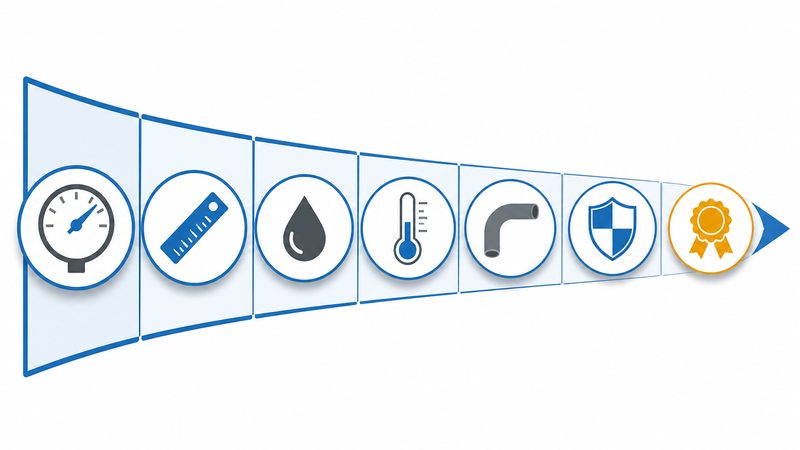
Figure 4. Run the seven selection factors in order. Each check eliminates invalid options until one hose class remains.
Fluid and Tube Compatibility: A Quick Reference
Table 5. Common hydraulic fluids and typical tube compounds (verify against the manufacturer’s compatibility chart)
| Fluid type | Typical tube compound | Notes |
|---|---|---|
| Mineral oil and most standard hydraulic fluids | NBR (nitrile), HNBR | Default choice for the majority of circuits |
| Phosphate ester (fire-resistant) | EPDM | NBR tubes degrade in phosphate ester; verify cover compatibility too |
| Water-glycol (HFC) | Verify with manufacturer | Compatibility depends on formulation and temperature limits |
| Biodegradable fluids (HEES, HETG) | NBR / HNBR, per manufacturer | Some biodegradable formulations require special compounds |
Need help narrowing the list? Send your pressure, size, fluid, and temperature data to the HENGHUA engineering team — we will confirm the right hose and fitting standard, certification, and lead time for your circuit. Start with a quote request.
Hydraulic Hose Sizes and Pressure Ratings: Reading the Numbers
Hose is sized by inside diameter (ID), and the industry speaks in “dash sizes.” A dash size is the nominal ID in sixteenths of an inch: -4 equals 4/16 inch (1/4 inch), -6 equals 3/8 inch, and so on. Metric markets use DN numbers that correspond approximately to millimeters of bore (DN6 is roughly 6 mm). Because dash sizes, DN numbers, and fractional inches all describe the same product, conversion errors are common and costly; always confirm the ID in millimeters on the data sheet before ordering. Hose is sized by its true bore, never by the outer diameter.
Table 6. Hydraulic hose sizes: dash size, nominal ID, and metric DN conversion
| Dash size | Nominal ID (inch) | Nominal ID (mm) | Metric DN |
|---|---|---|---|
| -4 | 1/4 | 6.3 | DN6 |
| -6 | 3/8 | 9.5 | DN10 |
| -8 | 1/2 | 12.7 | DN12 |
| -10 | 5/8 | 15.9 | DN16 |
| -12 | 3/4 | 19.0 | DN19 |
| -16 | 1 | 25.4 | DN25 |
| -20 | 1-1/4 | 31.8 | DN32 |
| -24 | 1-1/2 | 38.1 | DN40 |
| -32 | 2 | 50.8 | DN51 |
Keep a hydraulic hose sizes chart with dash-to-DN conversion in the workshop for quick checks.
Pressure ratings follow one universal rule: for a given construction, the larger the bore, the lower the rating. A two-wire braid hose rated near 42 MPa in a small bore may be rated below 10 MPa at 2-inch size, because the reinforcement must carry a larger pressurized area. Always read the working pressure at your exact size from the data sheet, never from the family maximum printed on marketing pages.
What is the difference between working pressure and burst pressure? Working pressure (WP) is the pressure a hose can carry continuously in service; burst pressure (BP) is the pressure at which the hose fails in testing. SAE J517 specifies a minimum burst ratio of 4:1, and impulse testing such as SAE J343 verifies that the hose survives repeated pressure cycles — the real predictor of service life in mobile equipment. Both ratings are printed on the hose layline and data sheet.
How do I measure a hose size? Measure the inside diameter, not the outside. If the hose is disconnected, measure the ID directly in millimeters. If the hose is installed, read the layline printing, which states the dash size or DN; measuring the OD of an installed hose is unreliable because the cover thickness varies by construction. For the fitting, measure the thread outside diameter and pitch, then match them against a thread identification chart.
How to Crimp a Hydraulic Hose Assembly, Step by Step
Crimping converts hose and fittings into a certified assembly. The process is mechanical and repeatable, but only when every step is controlled. Field experience shows that most premature assembly failures trace back to the crimp operation, not to the hose material.
- Cut the hose square. Use a hose cutter or abrasive saw, never a hand hacksaw. A square, clean end is the precondition for a straight crimp.
- Prepare the end. For skive-type fittings, remove the cover to the specified length so the ferrule grips the reinforcement. For no-skive fittings, leave the cover intact and clean the end.
- Select the fitting and ferrule. The hose, fitting, and ferrule must be a validated combination from the same manufacturer’s catalog. Mark the insertion depth on the hose, then push the fitting in until the tube bottoms against the fitting shoulder.
- Select the die and set the diameter. Use the die set and the published crimp diameter for your exact hose and fitting combination. The crimp diameter is a controlled dimension, often verified with a go/no-go gauge after crimping.
- Crimp and verify. Run the machine through one full cycle, then check the crimp diameter and the ferrule position. Log the result. Reputable shops record the crimp diameter and the operator for every assembly.
- Proof test. Test the finished assembly hydraulically to a defined multiple of rated pressure and check for leaks and ferrule movement. This step catches the small percentage of crimps that look right and are not.
Which crimping machine do I need? A bench-mounted hydraulic crimping machine with interchangeable dies covers nearly all sizes from -4 to -32, while portable crimpers support field repair. What matters more than brand is calibration: dies wear, gauges drift, and machines need periodic recalibration — a shop that cannot show its calibration records cannot guarantee its crimps. For high-volume OEM work, factory crimping with digital records is the most auditable path, which is why our hose assembly service at HENGHUA documents every crimp and proof tests every assembly before dispatch.

Figure 5. Factory crimping of a hydraulic hose assembly: die selection, controlled crimp diameter, and proof testing make the joint reliable.
Installation: Routing, Bend Radius, and Clamps
Installation quality decides whether a correctly specified assembly survives its first year. The five rules below follow SAE J1273, the recognized recommended practice for hose assemblies.
- Respect minimum bend radius under pressure. The published bend radius assumes the hose is pressurized; a hose that flexes fine on the bench can kink and fail when pressure straightens it into a tight bend. Use the largest practical bend radius, and never below the published minimum.
- Leave slack for movement. Lines connected to cylinders, pivoting arms, and suspended components must have enough extra length to flex through the full stroke without tension. A taut hose pulls on its fittings and accelerates failure at the crimp.
- Avoid twisting. Twisting under pressure changes the effective bend radius and can loosen the fitting seal. Route the hose so it bends in one plane; if a 90-degree change of direction is needed, use a 90-degree fitting rather than twisting the hose.
- Clamp and protect. Support long runs with clamps to prevent sagging and chafing, and add abrasion guards wherever the hose can rub against frames or other lines. On outdoor machines, keep lines away from hot exhaust surfaces and sharp edges.
- Use the right length, not the longest. Extra hose is not spare safety; it adds weight, cost, and opportunities to chafe. Order assemblies cut to the measured routing length with a modest allowance for movement.

Figure 6. Good routing on an excavator arm: supported clamps, generous bend radius, and guards where hoses cross the frame.
Maintenance, Inspection, and Common Failure Causes
A hydraulic hose rarely fails without warning, but the warning signs are easy to miss during a fast walk-around. Demand for preventive attention is real: published 2026 Google Ads keyword data shows “hydraulic hose repair near me” receives about 18,100 monthly searches in the United States alone — a strong signal of steady demand for repair services, and a reminder that most equipment owners discover failures the hard way.
Inspect assemblies on a fixed schedule, and more often for severe service. SAE J1273 recommends periodic inspection of all assemblies, with frequency matched to operating conditions; daily visual checks are reasonable for mining and demolition equipment, while monthly checks suit lighter industrial duty. Look for these specific failure signs:
- Cover cracks, blistering, or chafing that exposes reinforcement.
- Kinking, flattening, or a bend radius tighter than the published minimum.
- Leaks, wet spots, or bubbles at the fitting, which indicate a failing crimp or seal.
- Fitting corrosion, thread damage, or signs that the ferrule has slipped.
- Stiffness or hardening of the hose, which signals heat or ozone aging.
Table 7. Common failure modes, typical causes, and prevention
| Failure mode | Typical cause | Prevention |
|---|---|---|
| Leak at the fitting | Wrong crimp diameter, mixing hose and fitting brands | Use validated combinations, verify crimp with a gauge |
| Cover abrasion, wire exposed | Rubbing against frames or other hoses | Abrasion guards, proper clamps, routing review |
| Burst near the fitting | Bend radius too tight, twisting under pressure | Respect minimum bend radius, single-plane routing |
| Blistering or cover cracks | Heat, ozone, incompatible fluid on the cover | Match the temperature rating, shield from heat and UV |
| Sudden burst mid-length | Pressure rating exceeded, surge spikes | Up-rate the hose class, add an accumulator or snubber |
| Internal tube failure | Fluid incompatibility, contamination | Verify tube and fluid compatibility, maintain filtration |
Contamination deserves a special warning because it is the silent killer. A widely cited industry estimate attributes 70 to 80 percent of hydraulic component failures to contamination — a figure referenced across filtration-industry literature and ISO 4406 cleanliness guidance — and a worn or damaged hose is both a victim and a source of it: every burst pumps debris through the circuit. This is why flat-face hydraulic quick couplers, dust caps, and clean assembly practices matter as much as the hose itself.
How long does a hose last? There is no fixed service life; it depends on pressure cycling, temperature, fluid, and environment. A well-selected, properly installed assembly on moderate duty can last many years, while the same construction on a high-impulse mining circuit may need replacement annually. The practical answer is date-stamped laylines plus scheduled inspection, not calendar guesses. Manufacturers print a manufacturing date code on the layline, so a fleet manager can retire assemblies by age where policy requires it.
Can a damaged hose be repaired? No. A damaged hose should be replaced, not patched. The only legitimate repair is replacing one or both end fittings by cutting back to sound hose and re-crimping, which is a new assembly in effect. Tape, clamps, and sealant on a pressurized line are temporary emergency measures at best, and they fail without warning.
Storage and Shelf Life: How Long Can Hose Be Kept Before Use?
Hose is a polymer product: it ages even before it is installed, so storage discipline is part of reliability. Follow these five rules:
- Store in a cool, dry, dark place, away from direct sunlight, ozone sources (electric motors, welding areas), and solvent or chemical vapors.
- Keep coils flat or hanging at the manufacturer’s recommended coil diameter; do not stack heavy items on hose or fold it into tight kinks.
- Rotate stock first-in, first-out, and rely on the manufacturing date code printed on the layline rather than on memory.
- Rubber compounds age in storage too: before installation, check the cover for cracking, hardening, or ozone checking, and confirm the hose is within the manufacturer’s stated storage life from its date code.
- Follow the storage guidance in SAE J1273, the same recommended practice this guide applies to installation and inspection.
How to Identify Fittings: Threads, Seats, and Charts
Identification is a three-step process, and a hydraulic hose fittings chart converts your measurements into a part number.
- Measure the thread. Use a caliper for the outside diameter of the male thread and a thread gauge for the pitch. Imperial threads are stated in threads per inch (TPI); metric threads in millimeters of pitch.
- Inspect the seat. Look at the sealing surface: a 37-degree cone means JIC, a flat face with an O-ring means ORFS, a flat seat with a washer means BSPP, a tapered thread means NPT or BSPT, and a 24-degree cone with a cutting ring means metric DIN.
- Match against a chart. Cross-reference the measured OD and pitch with the seat type on a thread identification chart. If the measurement sits between two standards, the seat type is the tiebreaker; a JIC male and a metric male can share a similar OD but never the same seat.
Common confusion points: JIC and metric 24-degree male fittings both have flared seats and similar small sizes; ORFS and JIC use the same threads (UNF) but different seats, so an ORFS male will thread into a JIC female and leak; and BSPP and NPT male threads of similar size will engage a few turns and then seize. When in doubt, ask the supplier to identify the fitting from photos or a sample before you order a full set; identification errors are cheaper to fix on one sample than on 500 fittings.
Cost and Buying Guide for Bulk Buyers
Price differences between products are usually explained by construction, not by supplier margin. Spiral hoses cost more than braided because they contain more steel and tighter process control; stainless steel fittings cost several times more than zinc-plated carbon steel; and certified, traceable product with test reports carries a premium over uncertified stock. When comparing quotes, compare the same standard, size, pressure rating, and certification scope, or the price comparison is meaningless.
For procurement teams, the practical checklist covers more than unit price:
- Certification and traceability. Require batch traceability and test reports. A hose with no date code, no standard marking, and no test documentation is a liability, not a bargain.
- Sampling before volume. Order samples and proof-test them in your own circuit before committing to a container or an annual contract. Custom sampling turnaround is a useful test of the supplier’s responsiveness; 48-hour sampling is achievable by serious manufacturers.
- Quality documentation. Ask whether the supplier keeps digital crimping records and proof tests assemblies 100 percent. The answers separate hose factories from assembly shops.
- MOQ, lead time, and packaging. Confirm minimum order quantities, production lead time for standard and custom specifications, and whether product is supplied in bulk reels or cut lengths. A 7-day turnaround on standard bulk orders is a realistic benchmark for a factory with in-house crimping.
- Standards for your destination market. Confirm the hose and fittings comply with the standards your market expects, such as EN 853 and EN 856 for European machinery export or SAE J517 for North American fleets.
Comparing quotes for a volume order? Send your shortlist and destination-market standards to the HENGHUA engineering team — we will verify standards compliance, test documentation, and realistic lead time for each option before you commit. Request a quote comparison.
Frequently Asked Questions
What is the difference between a hose, a tube, and a pipe in hydraulics? Pipe is rigid and joined by threaded or welded connections; tube is rigid or semi-rigid metal or plastic joined by fittings; hose is flexible and joined by crimped fittings or hydraulic couplings. Hose is the only one of the three that absorbs vibration and accommodates relative movement between components.
What is the difference between a hydraulic hose and an air hose? Use each hose for its own fluid. A hydraulic hose is reinforced and tested for liquid pressures up to tens of megapascals. An air hose is built for compressed air, which stores energy and can whip dangerously if a line bursts, so it needs different pressure ratings and flex behavior. Before any substitution, check the pressure rating and fluid compatibility against the actual service.
Why does my hydraulic hose keep bursting? The usual causes, in order of frequency: the pressure rating is below the actual system pressure including surges; the bend radius is tighter than the minimum at the point of failure; the hose rubs against something until the reinforcement is exposed; or the assembly was crimped with the wrong die. Each of these is preventable with the selection and installation rules in this guide.
Should I buy hose and fittings from the same manufacturer? For crimped assemblies, yes. Hose, fitting, and ferrule combinations are validated together and tested as a system. Mixing brands invalidates the crimp specification and the warranty; a validated single-source combination is the documented, auditable choice.
Are cheaper hydraulic hoses safe? Price is not a safety rating. A cheap hose that carries the correct standard marking, date code, and test report may be perfectly serviceable, while an unmarked bargain hose of unknown construction is a risk regardless of price. Buy against the standard and the documentation, not against the price tag alone.
I am building my first hydraulic system — which hose and fittings should I start with? Start from the numbers, not the brand: record the maximum working pressure including surges, the inside diameter the flow requires, and the fluid type. Then pick the reinforcement class that matches — wire braided for most circuits up to about 42 MPa (6,100 psi) in smaller bores, spiral wire above that duty, textile for return and drain lines — and the thread standard already on your machine ports (JIC or ORFS in North America; BSP or metric 24-degree in Europe and Asia). Buy hose, fittings, and ferrules as a validated combination from one manufacturer, and proof-test a sample before you scale up.
My hoses keep failing in winter on outdoor equipment — what should I change? First confirm the rating covers your lowest ambient temperature: standard rubber hoses typically reach -40 degrees C. Then check routing — over-tight, frozen bends crack covers and fatigue reinforcement faster in cold weather, so increase bend radius and slack. Where extreme-cold flexibility matters most, thermoplastic constructions (SAE 100R7/R8) stay flexible down to about -40 degrees C and resist cold-weather cover cracking.
Which hydraulic hose and couplers do I need for agricultural tractors? For implement circuits, wire braided 1SN/2SN (SAE 100R1AT/R2AT or EN 853) covers most duties; move to larger-bore spiral constructions only where flow and pressure demand it. On the coupling side, tractor remote outlets typically use ISO 5675 poppet couplers; where implements face heavy contamination, flat-face ISO 16028 couplers give cleaner connections and less spill.
I run a mobile hose repair service — what stock should I carry? Carry the dash sizes your local equipment actually uses — typically -4, -6, -8, -10, and -12 in 2SN wire braided, plus a 4SP/4SH or 100R12-class spiral for high-pressure lines — with fittings in the thread standards of the local fleet (JIC and ORFS in North America; BSP and metric where European or Asian machinery dominates). Stock validated hose, fitting, and ferrule combinations from one manufacturer so every field crimp follows a published crimp specification, and keep a calibrated gauge plus the maker’s crimp chart in the van.
Are stainless steel fittings worth the extra cost? Specify stainless steel where corrosion threatens reliability — offshore, chemical washdown, and coastal equipment — because one in-service corrosion failure costs more than the premium on a whole batch of fittings. For general indoor and mobile duty, zinc-plated carbon steel at a fraction of the price is the standard choice. Match the fitting material to the fluid, the environment, and the expected service life.
Conclusion: Build the System Around the Assembly
The hose and its couplings are a single engineered system, and every decision, from reinforcement class to crimp diameter to routing, changes the reliability of the machine it serves. Start with the working pressure and impulse duty, select the hose type and size from the data sheets, pair it with fittings of the correct thread standard, crimp to a validated specification, install with respect for bend radius and abrasion, and inspect on a schedule. Do that, and the hose becomes one of the most predictable components in your fleet.
Get a free specification review before you buy. Whether you are specifying for a new machine, replacing a failing line, or sourcing hoses and fittings in volume, send your pressure, size, fluid, and temperature data to our engineering team — we will recommend a validated assembly and confirm specifications, certification, and lead time. Request a quote or sample or email henghua@hhgpipe.com.
About HENGHUA: Hose and Couplings Manufacturer
HENGHUA manufactures hose and matching couplings in one integrated factory, which means the hose, the fittings, and the crimp specification are validated together rather than stitched together from different suppliers. Our wire braided line covers SAE 100R1AT/R2AT, DIN EN 853 1SN/2SN, and SAE 100R16/R17 compact constructions from 6 mm to 51 mm inside diameter and rated to 42 MPa (6,100 psi), with a monthly capacity exceeding 800,000 meters. For high-impulse duty, our SAE 100R12/R13/R15 and DIN EN 856 4SP/4SH spiral hoses rated to 45 MPa (6,500 psi) deliver over one million impulse cycles in testing. We also produce SAE 100R7/R8 thermoplastic hoses, SAE 100R3/R6 textile hoses, and a full range of matching hydraulic hose fittings in metric, BSP, JIC, NPT, and ORFS styles, in carbon steel and stainless steel.
Every HENGHUA assembly is 100 percent proof tested before shipment, with digital crimping records and full batch traceability available on request. Custom sampling is completed within 48 hours, and standard bulk orders are turned around within 7 days. To discuss your application, request test reports, or receive a quotation, contact our team at henghua@hhgpipe.com; we will confirm specifications, certification, and delivery timing for your project.

 English
  Spanish
  Portuguese
  French
  German