
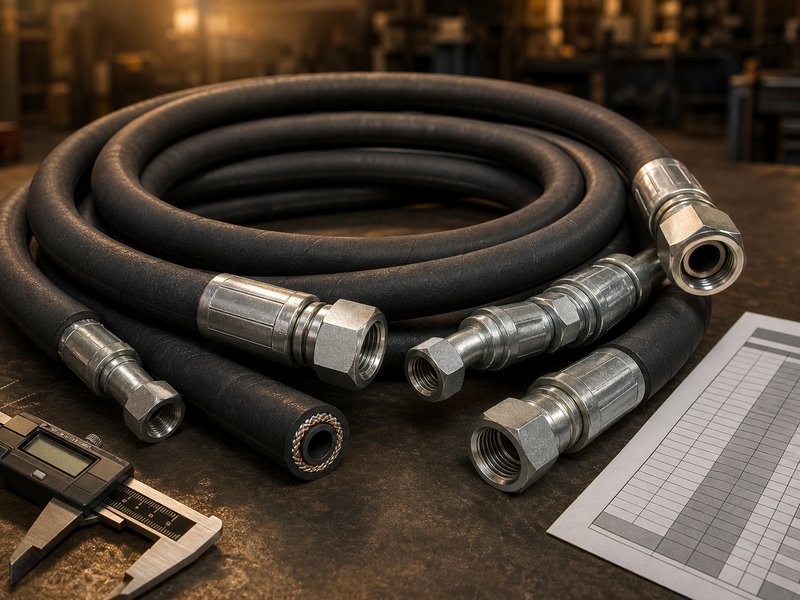
A hydraulic hose is a flexible, reinforced tube that carries pressurized hydraulic fluid between pumps, valves, and actuators to transmit power in machines of every size. If you are replacing a blown line on an excavator, specifying hoses for a new machine, or sourcing for a fleet, this guide covers construction, types, sizes, pressure ratings, fittings, service life, failure modes, and replacement — so you can select, maintain, and replace hoses with confidence.
What Is a Hydraulic Hose?
Hydraulic hoses are flexible pipes that move pressurized fluid — usually mineral hydraulic oil — from one component to another inside a hydraulic system. Unlike rigid steel tubing, it flexes with machine movement, absorbs vibration, and lets engineers route power around obstacles that a straight pipe could never cross.
The pump pushes fluid through the hose to a valve, which directs flow to a cylinder or motor. Pressure does the work; the hose contains the fluid and keeps it moving. This is why a failed hose stops the whole machine in seconds, and why choosing the right one matters.
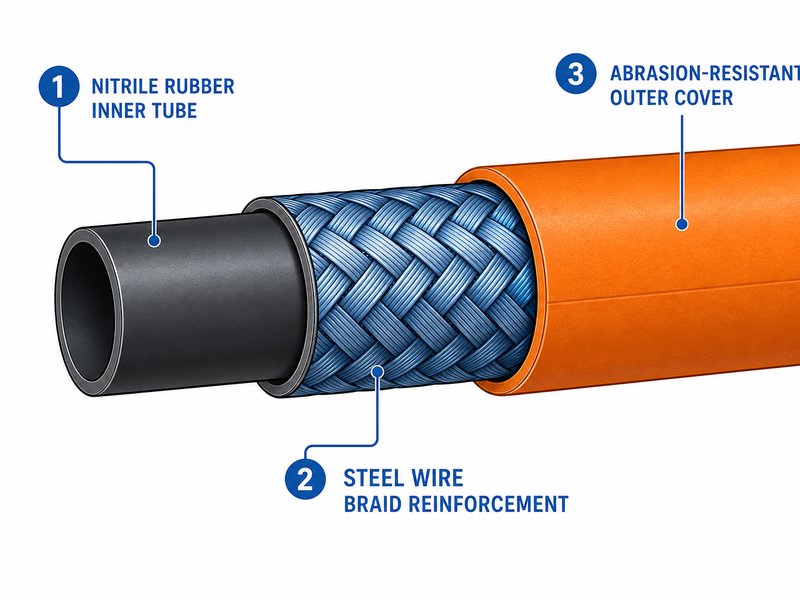
Figure 1. Every hose has three layers: inner tube, reinforcement, and outer cover.
The Three Layers of Every Hose
Every hose shares the same three-layer anatomy. The inner tube carries the fluid, the reinforcement carries the pressure, and the outer cover protects both from the environment. When you understand the layers, the whole selection process becomes logical.
Anatomy of a hose: layer, function, and typical material
| Layer | Function | Typical material |
|---|---|---|
| Inner tube | Contains the fluid; resists oil, heat, and swelling | Nitrile rubber (NBR) or synthetic rubber compound |
| Reinforcement | Carries the pressure; stops the hose from expanding | One or two steel wire braids, or spiral-wound wire |
| Outer cover | Protects against abrasion, oil splash, UV, and weather | Abrasion- and oil-resistant rubber compound |
The layer that decides the pressure rating is the reinforcement. More layers and spiral winding mean higher pressure capacity, less flexibility, and higher cost. This reinforcement trade-off is the core of every hydraulic oil hose buying decision.
How Does a Hydraulic Hose Work?
Hydraulic systems work on one simple fact: a liquid under pressure cannot be compressed, so pressure applied at the pump appears almost instantly at the actuator. The hose is simply the flexible conductor of that pressure.
Because the fluid is incompressible, the hose must hold its bore size steady under load. If it did not, every pump stroke would be absorbed by the hose wall instead of the cylinder. The steel wire reinforcement exists for exactly this reason — it holds the bore size steady while pressure tries to swell the hose outward.
Fluid velocity also matters. In pressure lines, engineers keep oil velocity between 15 and 20 ft/s (4.6–6.1 m/s); much faster, and pressure drop and heat rise sharply. This is why a hose that is too small for its flow runs hot and wastes pump power.
Flow and velocity are linked by one formula: Q (gpm) = V (ft/s) × A (in²) × 3.117, where A is the bore area, π/4 × ID². A quick check: a -6 hose (0.374 in bore) at 20 ft/s moves about 7 gpm — the low end of the 7–10 gpm range in the hose size chart. The hose size chart’s ranges are nominal planning values from industry flow tables; the formula gives the theoretical value at a chosen velocity. Confirm both against the manufacturer’s flow table before sizing. Keeping velocity inside the 15–20 ft/s band keeps pressure drop and heat in check.
What Materials Are Hydraulic Hoses Made Of?
The hose material has to resist oil, heat, flexing, and pressure all at the same time — no single material can do it, which is why the hose is a composite. The inner tube is almost always nitrile (NBR), the workhorse rubber for mineral oils and petroleum products. The reinforcement is high-tensile steel wire, braided or spiral-wound. The cover is a tougher rubber compound chosen for abrasion and weather resistance.
Special applications change the recipe. Thermoplastic hoses (SAE 100R7, 100R8) use polyamide or polyester instead of rubber for better chemical resistance and a tighter bend radius. Standard NBR covers mineral oil. Fire-resistant fluids — water-glycol (HFC), vegetable esters (HEES), phosphate esters (HFD-R) — require a tube compound certified compatible by the manufacturer. Check the fluid compatibility table in the data sheet before buying.
Types of Hydraulic Hoses: SAE 100R and Beyond
Types of hydraulic hoses are classified by international standards, mainly SAE J517 and its European equivalents DIN EN 853, EN 856, and ISO 18752. Each “100R” number defines a construction family with its own pressure range, temperature range, and typical use. The SAE 100R construction table lists the families you will meet most often.
Types of hydraulic hoses by construction family (typical ratings, SAE J517)
| Type | Reinforcement | Pressure rating (3/8 in) | Typical use |
|---|---|---|---|
| SAE 100R1 | One steel wire braid | 2,250 PSI | Light-duty pressure lines, mild duty cycles |
| SAE 100R2 | Two steel wire braids | 4,000 PSI | General mobile and industrial circuits |
| SAE 100R4 | Textile braid + wire helix | Low (suction-rated) | Suction and return lines |
| SAE 100R6 | Textile braid | 1,000 PSI | Low-pressure return, drain, and pilot lines |
| SAE 100R7 / 100R8 | Thermoplastic (aramid or fiber) | Up to 5,000 PSI | Compact routing, chemical resistance |
| SAE 100R12 | Four spiral-wound wire | 4,000 PSI | High-impulse and high-cycle applications |
| SAE 100R13 / 100R15 | Four to six spiral-wound wire | 5,000–6,000 PSI | Very high pressure and extreme duty |
What are the four types of hydraulic hoses? Hydraulic hoses fall into four reinforcement families: textile braid, one-wire braid, two-wire braid, and spiral-wound. Every SAE 100R number belongs to exactly one of these four — 100R6 is textile, 100R1 is one-wire, 100R2 is two-wire, and 100R12/100R13/100R15 are spiral-wound. Once you know which family you need, the specific 100R number narrows down the exact pressure and bend performance.
Which type is the industry default? SAE 100R2 — the two-wire-braid hose — is the default choice in general industry and mobile equipment. It covers the pressure range most machines actually run (roughly 1,000–4,000 PSI depending on size), costs less than spiral-wound, and is stocked everywhere. If a machine manual does not specify a type, 100R2 is the safe starting point; for deeper detail on the full family, see our SAE 100R hose guide. When impulse loads are severe, the comparison between 2-wire braid and 4-wire spiral hose decides the choice.
Hose Sizes: Dash Numbers and Inner Diameter
Hose size is expressed as a dash number, and each dash equals one-sixteenth of an inch: -4 is 1/4 inch, -6 is 3/8 inch, -8 is 1/2 inch, -12 is 3/4 inch, and -16 is 1 inch. Size always refers to the inner diameter (ID), never the outer diameter — the OD depends on the number of reinforcement layers and differs between, say, a 100R1 and a 100R6 of the same ID.
The bore must match the flow, not the port. Too small a hose raises fluid velocity, which raises pressure drop and heat; too large a hose is wasted money and extra weight. When you are selecting the right hydraulic oil hose, the size step comes before everything else, because pressure capacity depends on size.
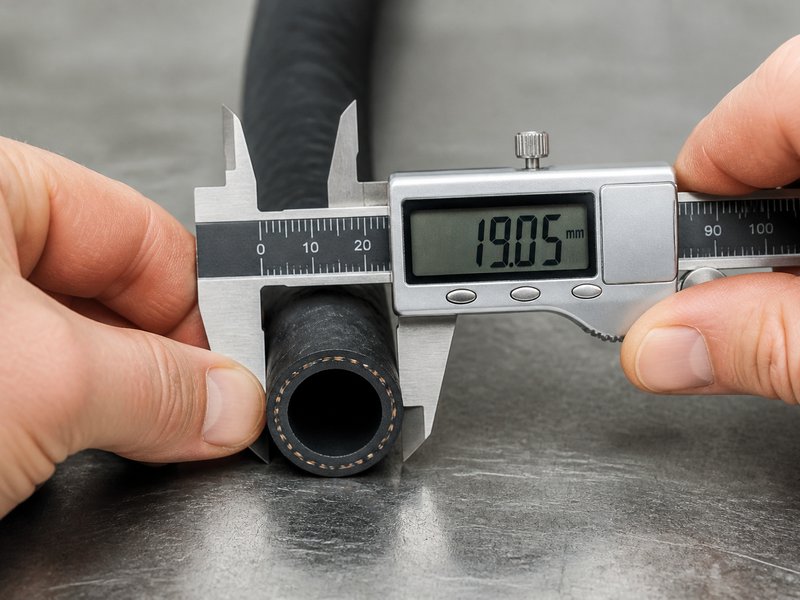
Figure 2. Measure the inner diameter of the cut end — the dash size is the ID in sixteenths of an inch.
Hose Size Chart: Flow Capacity by Dash Size
The hose size chart lists typical flow capacities drawn from industry flow tables; these are nominal planning values with practical allowance. Confirm against the manufacturer’s flow table for the exact hose family you choose.
Hose size chart — nominal planning values from industry flow tables
| Dash size | Inner diameter (in) | Inner diameter (mm) | Typical flow (US gpm) | Common use |
|---|---|---|---|---|
| -4 | 1/4 | 6.4 | 3–5 | Pilot lines, small cylinders, gauges |
| -6 | 3/8 | 9.5 | 7–10 | Standard work-port lines on many machines |
| -8 | 1/2 | 12.7 | 13–16 | Main pressure lines, tractor remotes |
| -12 | 3/4 | 19.0 | 28–35 | Return lines and large cylinder feeds |
| -16 | 1 | 25.4 | 50–60 | Large excavators, presses, mobile equipment |
| -24 | 1-1/2 | 38.1 | 110–130 | Heavy return and suction lines |
To identify an unmarked hose, measure the inside diameter across the bore of the cut end with a caliper, then convert: every 1/16 inch is one dash size. If the hose still has printed markings, the size line reads something like “SAE 100R2 AT 3/8” — that 3/8 inch is the answer directly. This sizing system is used worldwide, which is why a -8 hose ordered in Germany fits a machine built in Japan.
Minimum Bend Radius: The Number That Prevents Kinking
Minimum bend radius is the tightest curve a hose can take without collapsing the reinforcement or straining the cover. Rule of thumb: braided hoses allow roughly 10–20× the inner diameter depending on family and size; spiral-wound, about 15×. Example: a 3/8-in SAE 100R2 hose has a published minimum bend radius of about 5 in — roughly 13× its ID [verify against HENGHUA data sheets]. The exact value is in the data sheet and varies by size and construction. Route every bend wider than the published minimum — where a tight turn is unavoidable, add an elbow or 90° fitting instead of forcing the hose. Bending tighter than the minimum is the fastest way to turn a good hose into a kinked one, and it is the easiest failure to prevent: it costs nothing to route a bend wider than the spec.
Pressure Ratings: Working vs Burst Pressure
Two numbers define the pressure rating of a hose: working pressure and burst pressure. Working pressure is the maximum sustained pressure a hydraulic hose can carry in normal service. Burst pressure is a destruction test value — the pressure at which the hose fails on the test bench — and it is never an operating figure.
Per SAE J517 (latest edition), the minimum burst pressure of most SAE 100R series hoses is four times their rated working pressure. That 4:1 margin absorbs pressure spikes, fatigue, and aging. A 3/8-inch SAE 100R2 hose, for example, is rated at 4,000 PSI working and about 16,000 PSI burst; both numbers are printed on the cover. Before a design is approved, it must also pass impulse testing per SAE J343 (equivalent to ISO 6803) — 500,000 cycles at 133% of the rated pressure. Our own production hoses are impulse-tested and proof-tested to the same protocol before shipment — 100R2 samples from our 2026 production batches all passed the 500,000-cycle impulse test at 133% of rated pressure [batch figures to be confirmed from HENGHUA quality records]. One North American OEM customer cut its annual hose-related failures substantially after switching to our factory-crimped assemblies [case details to be confirmed from HENGHUA records].
Typical pressure ratings for common hose sizes (SAE 100R1 vs 100R2, typical values)
| Size | 100R1 rating (PSI) | 100R2 rating (PSI) | 100R2 burst pressure |
|---|---|---|---|
| 1/4 in (-4) | 3,000 PSI | 5,000 PSI | 20,000 PSI |
| 3/8 in (-6) | 2,250 PSI | 4,000 PSI | 16,000 PSI |
| 1/2 in (-8) | 2,000 PSI | 3,500 PSI | 14,000 PSI |
| 3/4 in (-12) | 1,500 PSI | 2,500 PSI | 10,000 PSI |
| 1 in (-16) | 1,000 PSI | 2,000 PSI | 8,000 PSI |
Pressure spikes matter more than steady pressure. When a valve shifts, the fluid column stops almost instantly and the pressure wave can briefly exceed the system setting by 25–50% — a spike measured at the valve port that lasts only milliseconds [magnitude to be confirmed against HENGHUA test records]. For circuits with shock loads — excavator booms, log splitters, compaction equipment — choose a hose whose rating exceeds the maximum system pressure by a further margin, commonly 125%. The full difference between the two ratings, and why you should never size a hose by burst, is explained in our burst pressure guide.
Temperature Range and Fluid Compatibility
Standard hydraulic hoses are rated from -40°C to +100°C (-40°F to +212°F) for the fluid and the environment. High-temperature compounds extend the upper limit to about +125°C, and special compounds can push it to roughly +150°C [verify against HENGHUA product data]. Every rating drops when heat and pressure combine — at maximum temperature, the pressure rating must be derated, so always check the derating curve in the data sheet.
Fluid compatibility is decided by the inner tube. NBR handles mineral hydraulic oil, the most common fluid, very well. Water-glycol (HFC), biodegradable vegetable esters (HEES), and phosphate esters (HFD-R) all require certified compatible compounds. Using the wrong tube material makes the hose swell, shed particles into the oil, and fail early — sometimes with no visible warning until the burst.
Hose Fittings and Assemblies
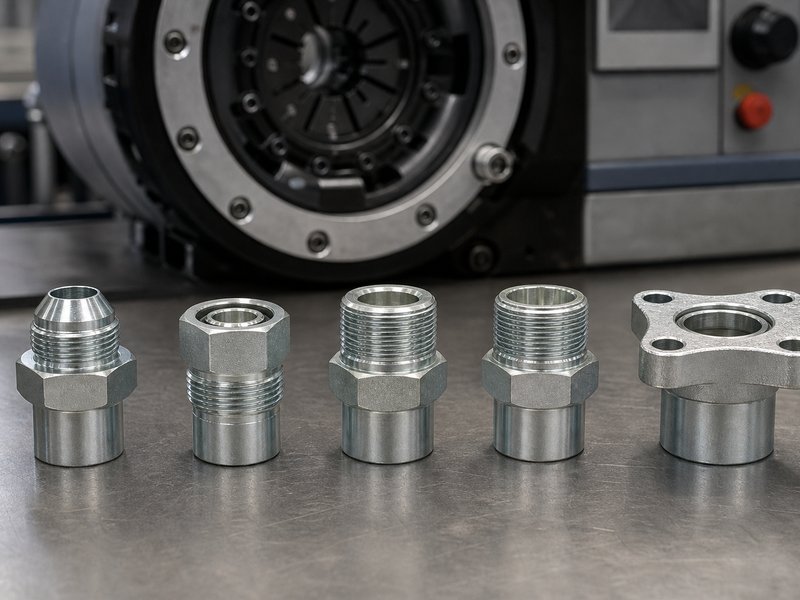
A hose without fittings is just a tube. The fitting is what turns it into a working assembly: a metal end, crimped or screwed onto the hose, that connects to a machine port. Matching the hydraulic fittings to the ports is non-negotiable — the leak is immediate and no amount of torque will fix a mismatched thread.
Common hydraulic fittings by thread type and typical use
| Fitting | Thread / seal | Typical use |
|---|---|---|
| JIC (37° flare) | UNF thread, cone seat | General industrial and mobile equipment |
| ORFS | UNF thread, O-ring face seal | Leak-critical high-pressure circuits |
| NPT | Tapered pipe thread | North American pipe ports |
| BSP (BSPP / BSPT) | British parallel / tapered thread | European and Asian equipment |
| SAE flange (code 61/62) | Four-bolt flange | Large bores, high flow, high pressure |
Assemblies are made two ways. Crimped fittings are pressed onto the hose with a machine, giving the strongest, most repeatable joint — the standard for factory-made hoses. Reusable fittings screw on by hand or with a small tool, which suits field repairs on large sizes. The assembly process matters as much as the parts — the four checks that decide a good crimp are in the Crimping Hydraulic Hoses section. For a complete rundown on connections, see our hydraulic fittings types guide.
Crimping Hydraulic Hoses: What a Good Crimp Looks Like
A factory-crimped assembly is only as good as the four checks around the crimp: the hose must be cut square, the cover stripped to the exact length for the fitting, the crimp die matched to the fitting spec, and the finished crimp diameter measured against the spec tolerance. A common acceptance rule is a crimp diameter within roughly ±0.5% of the value specified in the fitting manufacturer’s crimp spec [verify against HENGHUA crimp process tables]. A badly crimped assembly fails at the fitting, not in the hose — and it usually fails on the first pressure cycle. When you order factory-crimped assemblies, ask for the crimp certificate or the measured crimp diameter per batch. If you crimp in-house, record the crimping machine’s die and diameter settings for each fitting part number — that record is what turns a good crimp into a repeatable one.
How Long Do Hydraulic Hoses Last?
A common industry reference is five to ten years of service from the date code, under normal pressure, temperature, and environmental conditions. In hot, oily, UV-exposed, or high-cycle duty, that drops sharply — some excavator boom hoses are replaced every two to three years because of constant flexing.
Four factors shorten life faster than anything else: operating above the rated temperature (heat ages rubber from the inside out), pressure spikes above the rating, abrasion against other parts, and ozone or sunlight on the cover. The date code printed on the cover tells you the production quarter and year, so you always know how old a hose is. When in doubt about a hose’s age, replace it — the cost of a hose is a fraction of the cost of the downtime it causes.
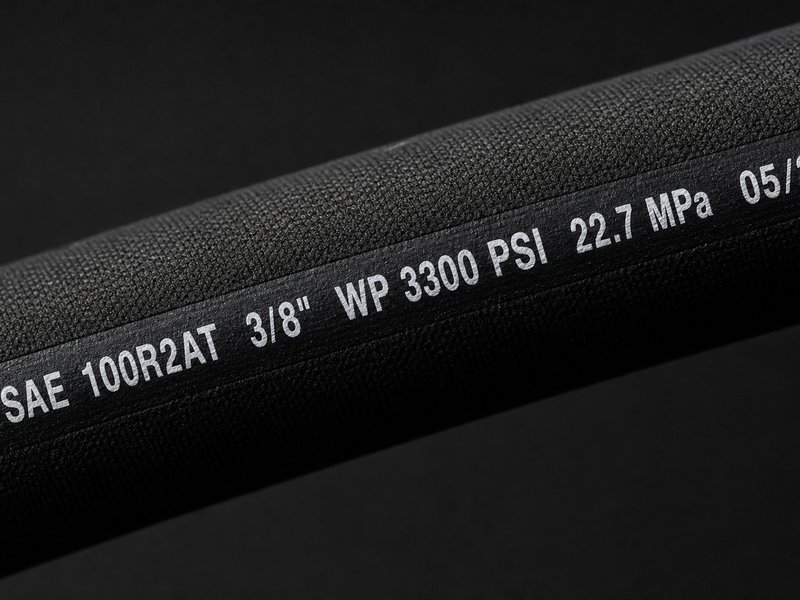
Figure 3. The printed layline carries the type, size, pressure rating, and date code — read it before installing.
Common Hose Failure Modes and How to Prevent Them
Most hose failures are predictable, and every one has a visible warning if you look in time. The failure modes table lists what you will actually meet in the field — what each failure looks like and what causes it.
Common hose failure modes: signs, causes, and prevention
| Failure mode | What you see | Typical cause | Prevention |
|---|---|---|---|
| Abrasion wear | Cover worn through, wire exposed | Rubbing on machine parts or other hoses | Sleeves, clamps, and proper routing |
| Kinking | Sharp fold, flattened section | Bend tighter than the minimum bend radius | Respect the published bend radius; add elbows |
| Burst | Sudden split, fluid release | Over-pressure, spikes, or aging | Correct pressure rating and 125% margin on shock loads |
| Cover cracking | Fine cracks, stiff surface | Ozone, UV, or heat aging | Shielded routing, covers, and age monitoring |
| Blistering | Bubbles under the cover | Fluid forced between layers | Correct tube compound for the fluid |
| Leaks at fittings | Oil seepage at the end | Bad crimp, wrong torque, or thread mismatch | Factory crimping and correct thread family |
Two safety facts belong in every conversation about hose failure. First, a burst hose whips violently and sprays oil at high pressure — keep everyone clear during testing. Second, never search for a pinhole leak with your hand or fingers: a jet of hydraulic oil can pierce skin and inject fluid into the body, a medical emergency that requires surgery within hours. If you suspect a leak, shut the machine down and use a piece of cardboard or wood to find it.
Hose Inspection and Maintenance
Inspect every hose at each oil change or every three months, whichever comes first. A two-minute visual check catches most problems before they stop the machine:
- Look for abrasion wear, exposed wire, soft spots, and bulges along the whole length.
- Check for oil seepage at every fitting — seepage means a failing seal or crimp.
- Confirm no hose is bent tighter than its minimum bend radius, especially near fittings.
- Verify clamps and abrasion sleeves are in place and not damaged.
- Check the date code and flag any hose older than the machine’s replacement policy.
Routing quality decides service life. A hose that hangs loose can chafe; one that is pulled tight at installation fails early at the fitting. Leave a little slack, keep bends gentle and well within the bend radius, and group hoses with clamps so they cannot rub each other. A well-routed hose outlives a carelessly installed one by years.
When and How to Replace a Hose
Replace a hose when inspection finds any of the six failure signs in the failure modes table, when it reaches the end of its planned life, or after any major impact or over-pressure event. Replacement is not difficult, but the order of operations is fixed:
- Stop the machine and relieve all hydraulic pressure — cycle the controls with the engine off until movement stops.
- Note the routing before removal; take a photo if it helps.
- Remove the old hose and compare it with the new one: same length, size, fittings, and pressure rating.
- Install with the same routing, gentle bends, and enough slack for movement.
- Pressure-test the circuit before returning the machine to service.
When can a hose be repaired? Reusable fittings make field repair practical on large sizes: unscrew the damaged end, cut back to sound hose, and re-attach. Repair is a stopgap for getting the machine through a shift. When must you replace? After a burst, when wire is exposed, when the hose is past the date-code life, or when the crimp is suspect — repair can never restore the original pressure rating.
Never reuse a hose that has burst, and never mix old and new hoses in a circuit that must share the same duty. When you order the replacement, match the exact SAE type — a 100R1 replacement for a 100R2 line is a downgrade, whatever the size says. For volume buyers, ordering replacements with factory-crimped ends, consistent lead times, and a clear warranty removes most of the risk from the process.
Where Hydraulic Hoses Work: Applications
Wherever a machine pushes, lifts, digs, or clamps with fluid power, a hose is moving the energy. The same 100R2 construction family that raises a forklift mast also powers a tractor’s loader, an excavator’s boom, a press’s ram, and a log splitter’s wedge. In mobile equipment the hose has to survive vibration, weather, and constant flexing; in industrial plants it has to survive oil mist, heat, and tight machine layouts.
Choosing for the application means weighting the trade-offs: high-impulse circuits (excavators, compactors) favor spiral-wound or heavy two-wire constructions; suction lines need 100R4-style suction-rated hose; compact machines favor thermoplastic for its tighter bend radius. The fluid being pumped matters too — mineral hydraulic oil is the default, but the machine’s spec plate is the final word. If you are sourcing hydraulic oil hose for a fleet, an OEM program, or a plant, tell the supplier the machine types and duty cycles, not just the size.
Replacing a Hose at the Job Site (Excavator / Tractor / Loader)
When a hose blows on site, the fix has to happen where the machine sits. The field checklist that saves our customers the most time:
- Kill the engine and cycle every control several times to bleed residual pressure — a stored load can move the machine after shutdown.
- Photograph the routing before removing anything; the new hose must follow the same bend path.
- Measure the overall length between fitting ends, not the straight-line distance.
- Match every spec on the old hose’s layline: type, size, pressure rating, and fittings.
- Install with gentle bends and leave slack for movement.
- Run the machine through a full cycle and check every fitting for seepage before returning to work.
Keep a spare factory-crimped assembly on the truck for the sizes your fleet uses most — the spare costs less than one hour of downtime.

Procurement Managers: What to Send a Manufacturer
A complete specification gets a complete quote. When you source hoses for a fleet, an OEM program, or a plant, send this list in one message:
- Machine types and duty cycles (excavator boom, tractor loader, press, and so on)
- Hose size (dash number or inner diameter) and length per line
- Pressure and temperature range
- SAE type from the manual (100R1, 100R2, 100R12, or the exact spec)
- Fitting thread and end style (JIC, ORFS, BSP, or flange)
- Annual volume, target MOQ, and delivery window
- Certification or documentation requirements
With that list, a manufacturer can answer all four — type, price, lead time, and warranty — and you can compare quotes on the same basis. Send this list through our contact form and get confirmation in one working day.
Frequently Asked Questions About Hydraulic Hoses
What is the purpose of a hydraulic hose?
Its purpose is to carry pressurized hydraulic fluid between components — pump, valve, cylinder, motor — so the system can transmit force and motion. It is the flexible link that lets a machine move while its fluid power stays contained.
Can you use a regular hose for hydraulics?
No. A regular garden or air hose is not built to contain high-pressure hydraulic fluid and can burst without warning. Hydraulic hoses have steel wire reinforcement, oil-resistant tubes, and pressure ratings verified by impulse testing. Only hoses marked for hydraulic service belong in a hydraulic circuit.
What are the four types of hydraulic hoses?
The four reinforcement families are textile braid, one-wire braid, two-wire braid, and spiral-wound. Every SAE 100R type belongs to one of them: 100R6 is textile, 100R1 is one-wire, 100R2 is two-wire, and 100R12/100R13/100R15 are spiral-wound.
What is the most common hydraulic hose?
SAE 100R2, the two-wire-braid hose, is the most common hose in general industry and mobile equipment. It handles the pressure range most machines run and is the default when a manual does not specify a type.
How long does a hydraulic hose last?
Five to ten years in normal service, measured from the date code, and less in hot, high-cycle, or UV-exposed duty. Heat, pressure spikes, and abrasion shorten life most. Inspect at every oil change and replace on the six failure signs in the failure modes table.
What is the difference between working pressure and burst pressure?
Burst pressure is the destruction value from testing, typically four times working per SAE J517. Working pressure is the sustained operating limit — always select and operate by it, never by burst.
How do you measure hose size?
Measure the inner diameter of the cut end in sixteenths of an inch: each sixteenth is one dash size (-4 = 1/4 inch, -6 = 3/8 inch, and so on). Size is always the ID, never the OD. If the hose is printed, the layline states the size directly.
How much do hydraulic hoses cost?
These are typical 2026 US market ranges: bulk prices run roughly 1.50–1.50–3.00 per foot for 100R1, 2.00–2.00–5.00 per foot for 100R2, and 5.00–5.00–12.00 per foot for spiral-wound, plus fittings and crimping — and they move with raw material costs, so confirm the current quote with the manufacturer. Factory-direct suppliers typically undercut distributors by 20–40%, and the total cost should be compared with MOQ, lead time, and warranty included.
What is the difference between hydraulic hoses and fuel or brake hoses?
Hydraulic hoses have steel wire reinforcement and carry pressure ratings of 1,000 PSI and up; fuel and brake hoses do not. A fuel hose may be rated for the same outside size but bursts far below hydraulic pressure, and its tube is not built for hydraulic oil. Never substitute one for the other — the SAE type printed on the hose is the only safe basis for matching.
What does a failed hose really cost?
The hose is the cheap part. A failed hose stops the machine; the real cost is downtime hours × hourly production loss, plus replacement labor, plus the hose and fitting cost. As a frame of reference, a 20-ton excavator stopped for four hours loses production value that typically exceeds the replacement hose price many times over [example values to be confirmed from HENGHUA customer records]. That gap is why factory-direct sourcing with short lead times and stocked sizes pays for itself on the first emergency.
Sourcing hoses for a fleet, an OEM program, or a plant? Send your specification — size, pressure, fittings, SAE type — and our engineers will confirm the right hose and quote. Get a factory-direct quote and free samples.
Final Verdict: Start With the Spec, End With the Supplier
Everything in this guide reduces to one sentence: the right hose is the one whose reinforcement matches the pressure, whose bore matches the flow, and whose fittings match the ports — installed with respect for bend radius and inspected on a schedule. That discipline is what separates a 10-year hose from a 10-week hose.
Whether you are replacing a single line on a loader or specifying hoses for a production program, work from the specification first: size, pressure, temperature, fittings, and the SAE type. Send that list to a manufacturer who controls the whole process — compound mixing, braiding, extrusion, crimping, and pressure testing — because consistency is what makes hoses predictable. HENGHUA manufactures hydraulic hoses and assemblies to SAE J517, DIN EN 853, and EN 856, with factory-crimped fittings, impulse and proof testing before shipment, and clear warranty terms. Ask about sample minimums, lead times, and written warranty terms when you request a quote. Send us your specification and we will confirm the correct hydraulic hose and quote within one working day. Contact HENGHUA for a quote and free samples.

 English
  Spanish
  Portuguese
  French
  German