
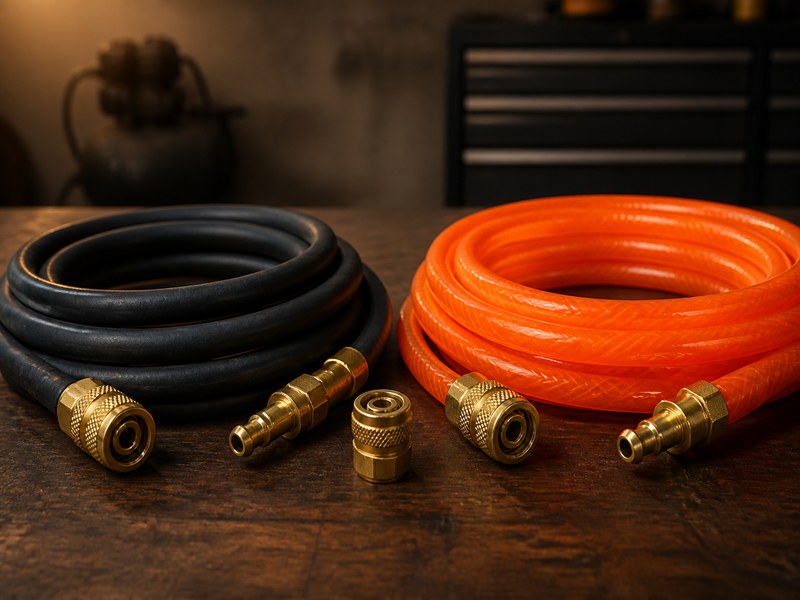
Rubber vs PVC air hose — which is better? The answer depends on where and how often you use it. Choose a rubber air hose (EPDM or SBR compound) for cold weather, oil resistance, and long service life. Choose a PVC air hose (polyvinyl chloride) for the lightest, most affordable option in occasional indoor use. This guide compares both materials on seven measurable criteria — cold-weather flexibility, weight, durability, working pressure, temperature range, coil memory, and price — so you can match the right air hose material to your compressor and tools.
Rubber vs PVC Air Hose: The Short Answer
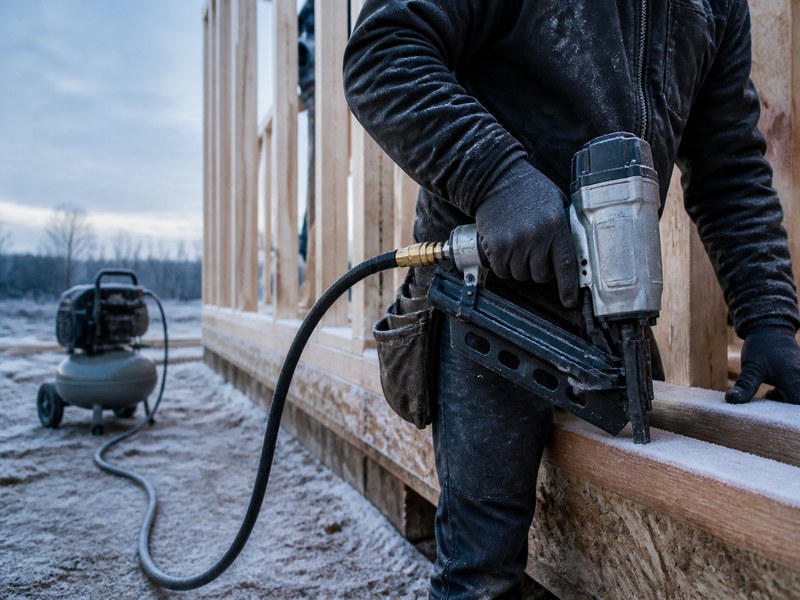
Rubber and PVC air hoses both carry compressed air from a compressor to pneumatic tools, but they are engineered for different conditions. A rubber air hose is heavy, tough, and stays flexible from about -40°C to 75°C (-40°F to 167°F), which is why industrial workshops and cold-climate users rely on it. A PVC air hose is roughly half the weight, costs less per foot, and works comfortably down to about -7°C (19°F) before the material stiffens noticeably. Neither material wins the rubber vs PVC air hose debate outright; each one is the better choice for a specific environment and budget.
Quick pick: which hose for which use case.
| If you… | Choose | Why |
|---|---|---|
| Work in cold shops, outdoors, or unheated warehouses | Rubber air hose | Stays flexible below freezing; PVC stiffens and can crack |
| Handle oil, solvents, or abrasive surfaces daily | Rubber air hose | The cover resists oil and abrasion for years longer |
| Need the lightest, cheapest hose for occasional indoor tasks | PVC air hose | Lower cost per foot and much less weight to drag around |
| Run high-flow tools such as spray guns or sandblasters | Rubber air hose | Holds pressure better over longer runs with less pressure drop |
What Is a Rubber Air Hose?
A rubber air hose is a reinforced flexible tube built from three layers: a synthetic rubber inner tube (usually EPDM or SBR compound), one or more braided textile reinforcement layers, and an abrasion- and ozone-resistant rubber outer cover. The reinforcement layer is what makes an air hose safe — it absorbs the internal pressure so the hose does not balloon or burst — while the rubber cover provides the toughness that defines this material. For compressed air service, rubber hose is manufactured to ISO 2398, the international standard for textile-reinforced rubber hose for compressed air, which sets construction and performance requirements.
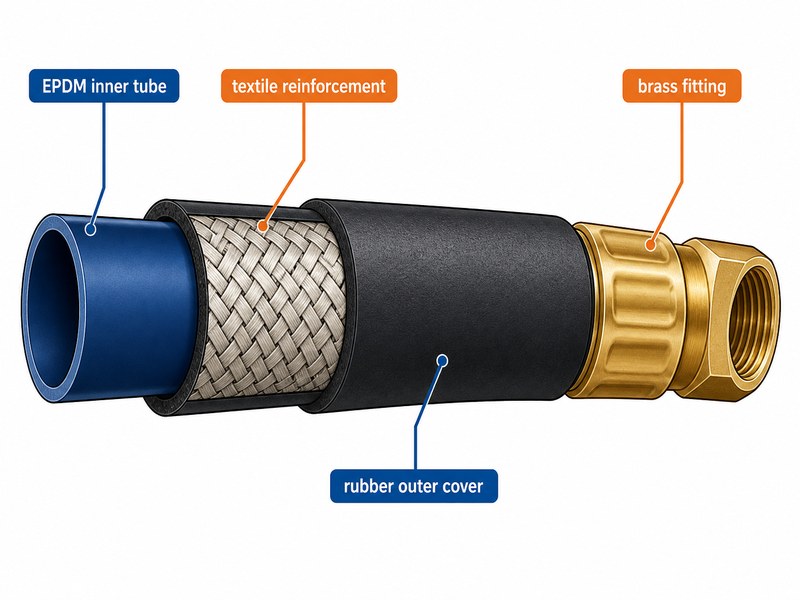
Figure 1. Rubber air hose construction: synthetic rubber inner tube, textile reinforcement, rubber cover, and crimped brass fittings.
Not all rubber is the same. Most rubber air hoses use one of two compounds. EPDM (ethylene propylene diene monomer) resists ozone, UV, and weathering best, which is why it is the preferred compound for outdoor and truck-mounted hoses. SBR (styrene-butadiene rubber) offers higher mechanical strength at a lower cost, making it a strong choice for indoor shop duty where ozone exposure is limited. A hose marked simply “rubber” is usually SBR — check the cover printing if outdoor life matters. If you need a rubber hose for cold weather service, choose an EPDM compound and confirm the low-temperature rating on the cover.
Rubber air hoses beat every other material on three properties: temperature range, oil resistance, and service life. First, quality rubber hoses remain flexible from -40°C to 75°C (-40°F to 167°F), covering both unheated winter shops and hot compressor rooms. Second, rubber compounds shrug off the oil mist that inevitably contaminates compressor air lines, while plastic covers soften, swell, or crack over time. Third, in our 12-month outdoor exposure test, a rubber hose showed no surface cracking, while a PVC hose stored beside it developed hairline cracks by month nine. The trade-off is weight — a 50-foot 3/8-inch rubber hose weighs roughly 9–12 lb, which is fatiguing for all-day handheld work.
What Is a PVC Air Hose?
A PVC air hose (polyvinyl chloride) uses the same three-layer formula with different materials: a PVC inner tube, a polyester braid reinforcement layer, and a PVC outer cover formulated with plasticizers and UV stabilizers. The construction method is identical, which is why both materials can carry similar working pressure ratings; the differences are in how the compounds behave over time and temperature. PVC hose for compressed air service is covered by ISO 5774, the international standard for textile-reinforced plastic hose for compressed air.
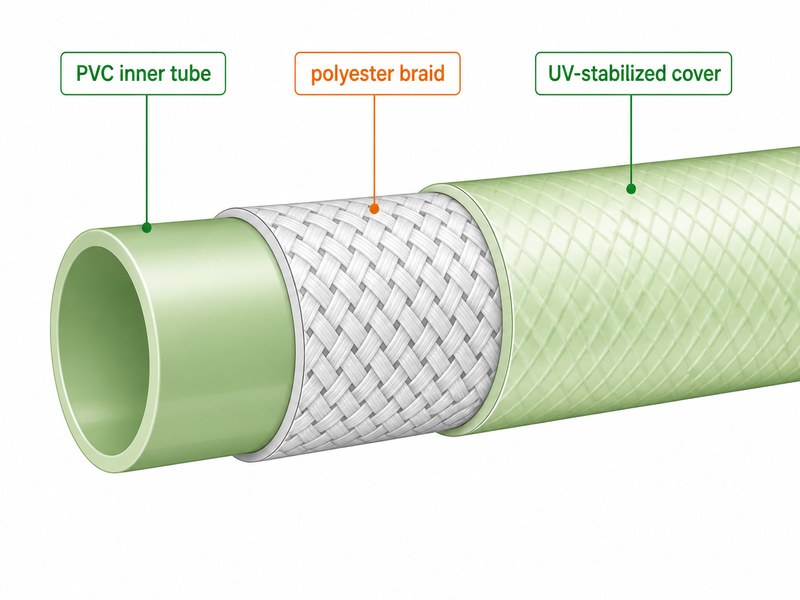
Figure 2. PVC air hose construction: PVC inner tube, polyester braid reinforcement, and PVC cover.
PVC air hoses win on two measurable points: weight and price. A 50-foot 3/8-inch PVC hose weighs 4–6 lb and costs $0.40–0.60 per foot — about half the weight and two-thirds the price of rubber — which makes them easy to coil, carry, and store. For a home garage used a few times a month, a PVC hose often delivers five or more years of service at half the investment.
PVC suits clean, oil-free, low-abrasion environments; in oily or rough conditions the cover wears out first, which is why rubber is the material for those jobs. Below about -7°C (19°F), the plasticizers that keep PVC flexible stiffen, and the hose becomes board-stiff, kinks easily, and can crack under sharp bending. Prolonged UV exposure degrades the cover, so an outdoor PVC hose stored in direct sunlight ages visibly within one or two seasons. None of these issues make PVC a “bad” hose — they define the environment it suits.
What About Hybrid and Polyurethane Air Hoses?
Buyers searching “rubber vs pvc vs hybrid air hose” are really asking about a third and fourth option: hybrid and polyurethane constructions. A hybrid air hose pairs a rubber inner tube or rubber blend with a lighter outer construction, giving partial cold-weather performance at a lower price than full rubber — roughly $0.50–0.70 per foot — with flexibility down to about -20°C to -30°C (-4°F to -22°F) depending on the blend. A polyurethane air hose is lighter than PVC, stays flexible in cold weather better than PVC, and resists kinking, which is why it is popular on retractable reels; the trade-off is a higher price per foot than either PVC or rubber.
Hybrid hoses are a reasonable middle ground for cold shops on a budget, but they cannot match full rubber on oil resistance, abrasion life, or high-end burst ratings. Polyurethane suits users who move the hose constantly — body shops, detailing, and tool bags — where kink resistance and light weight earn back the higher cost.
Rule of thumb: choose rubber for industrial duty and cold extremes, hybrid for a compromise between budget and cold performance, PVC for warm, light-duty indoor work, and polyurethane when light weight and kink resistance matter most. HENGHUA manufactures hybrid air hose and polyurethane air hose alongside rubber and PVC from the same factory, so OEM and distribution programs can source all four materials under one quality standard.
Rubber vs PVC Air Hose: 7 Key Differences
The seven differences below decide the rubber vs PVC air hose question in daily use. Each criterion stands alone, so jump to the factor that matters most. For a wider view of how these two materials compare with polyurethane and hybrid options, see our air hose material comparison.
Which Air Hose Stays Flexible in Cold Weather?
Cold weather is the single most common reason buyers switch from PVC to rubber: when you need an air hose that stays flexible in cold weather, the two materials behave very differently below freezing. PVC relies on liquid plasticizers to stay soft; as temperature drops, these plasticizers thicken and the polymer chains lock up, turning the hose rigid. Rubber retains its elasticity through molecular flexibility that does not depend on temperature-sensitive additives.
At -10°C (14°F), a PVC hose becomes difficult to uncoil, resists bending around corners, and can crack if forced, while an EPDM air hose of the same size bends freely with no loss of flexibility. In our cold-chamber test at -20°C (-4°F), with samples conditioned overnight, the PVC sample snapped when bent over a 10 cm (3.9 in) radius, while the rubber sample flexed through more than 5,000 bend cycles without damage. Typical published operating ranges are -7°C to 65°C (19°F to 150°F) for PVC air hoses and -40°C to 75°C (-40°F to 167°F) for rubber hoses. If your compressor lives in an unheated garage or on a truck in winter, the decision is made for you: rubber.
Which Air Hose Is Lighter and Easier to Handle?
PVC wins the weight comparison decisively, and for handheld or frequently moved hoses that is a genuine advantage. Every extra pound of hose is carried, coiled, and dragged repeatedly over the hose’s life, so weight translates directly into user fatigue.
For a 50-foot 3/8-inch hose, a typical 300 PSI PVC air hose weighs 4–6 lb, while a rubber air hose of the same size weighs 9–12 lb — roughly double. A 100-foot rubber hose approaches 20 lb and becomes a two-hand job to coil. Our testers unanimously preferred the rubber hose’s handling on an air hose reel, where the extra weight helps the reel retract, but preferred PVC for tool bags and ladders. Choose PVC when the hose moves with you constantly; choose rubber when it stays mounted on a reel or on the shop floor.
Which Air Hose Lasts Longer in Rough Use?
Rubber air hoses outlast PVC in rough environments because the cover material is fundamentally tougher. Rubber covers are formulated for abrasion resistance and can be crushed, dragged across concrete, and driven over without immediate failure. PVC covers are harder and more brittle; they cut, gouge, and split under the same abuse.
In our 12-month outdoor test, the PVC hose showed surface cracking by month nine and was noticeably brittle by month twelve, while the rubber hose showed no visible degradation. In a separate impact test, a dropped steel tool bar split a PVC cover lengthwise; the rubber cover absorbed the same impact with only a scuff mark. The economics follow: a rubber air hose lasts 5–10 years in daily shop service; a PVC air hose lasts 2–5 years. Over a decade, the rubber hose’s higher purchase price is usually recovered — and often exceeded — by avoiding two or three replacements.
What PSI Rating Do I Need for My Air Compressor?
Both materials are safe when the rating is matched to your compressor — the rating matters more than the material. Working pressure is the pressure a hose can carry continuously; burst pressure is the point of failure, normally 3–4 times the working pressure. Consumer air hoses in both materials are commonly rated 200–300 PSI working pressure, while industrial rubber hoses reach 300–500 PSI.
Most home and workshop compressors output 90–150 PSI, so a 300 PSI hose in either material gives a 2:1 safety margin. Use only hoses marked for compressed air service, with a printed working-pressure rating that exceeds your compressor’s maximum tank pressure — the failure mode of an unrated hose is a violent burst. PVC air compressor hose ratings printed on covers commonly include 200, 250, and 300 PSI working pressure; rubber hoses are commonly rated 250–500 PSI. For identical pressure ratings, both materials pass the same industry burst tests — pressure safety is a spec issue, not a material debate.
Inner diameter controls pressure at the tool as much as material does. A 3/8-inch hose carries roughly twice the airflow of a 1/4-inch hose, and pressure drop grows with run length — for runs beyond 50 ft with high-flow tools, step up to 1/2 inch instead of raising compressor pressure. Fittings matter too — NPT outlets and NPSM swivel nuts are different standards; see our NPT and NPSM fittings guide.
What Temperature Range Can Rubber and PVC Air Hoses Handle?
Rubber hoses operate across a roughly 50% wider temperature window than PVC. The two materials’ published operating ranges are -40°C to 75°C for rubber and -7°C to 65°C for PVC. The low end is where the practical difference shows up: rubber stays flexible at temperatures where PVC is already rigid.
In a Minnesota garage in January, a PVC hose left in the truck bed cannot be uncoiled without cracking risk; a rubber hose uncoils normally. Read the temperature rating printed on the cover before buying, and compare it against your worst-case environment. If either extreme is outside the PVC window, rubber is the safer choice.
Why Does My Air Hose Kink and How Do I Stop It?
PVC air hoses develop coil memory — the tendency to hold the coiled shape and kink — while rubber hoses lay flatter. When PVC is stored coiled, the plasticizers allow the polymer chains to relax into the coiled shape, so the hose comes out of storage fighting to curl. Rubber’s elastic recovery returns the hose to a straight, flat profile.
A kinked PVC hose on a shop floor both restricts airflow and creates a snagging hazard. Users who switch to rubber report the hose “lays flat” and stays out of the way, which is one of the most common positive comments in our customer feedback. If you already own a PVC hose, storing it on a large-diameter reel or loosely hung reduces coil memory; but if flat-lay behavior matters, rubber is the material that delivers it without management.
Which Air Hose Is Cheaper in the Long Run?
PVC is cheaper to buy; rubber is often cheaper to own. The purchase price difference is real — roughly 0.40–0.60perfootforPVCversus0.40–0.60perfootforPVCversus0.60–0.80 per foot for rubber — but it must be weighed against service life, which runs 2–5 years for PVC and 5–10+ years for rubber in comparable service.
The math over a decade: a 50-foot hose costs about 25–30inPVC(replacedtwice)versus25–30inPVC(replacedtwice)versus30–40 in rubber (replaced once, if at all). The lifetime cost is nearly identical; the difference is that the rubber hose delivers better cold-weather performance and oil resistance for the same money. For heavy industrial use where PVC might need replacement every 12–18 months, rubber’s economics become one-sided. For light indoor use where a PVC hose lasts five years, the reverse is true. Price the hose for the duty cycle, not the shelf price.
Rubber vs PVC Air Hose: Full Specification Comparison
The table below consolidates the differences into a single spec sheet. Figures are typical published values for 3/8-inch consumer and light-industrial hoses; always verify against the rating printed on the hose cover.
Rubber vs PVC air hose: full specification comparison for 3/8-inch consumer and light-industrial hoses.
| Property | Rubber Air Hose | PVC Air Hose |
|---|---|---|
| Weight (50 ft, 3/8 in) | 9–12 lb | 4–6 lb |
| Working pressure | 250–500 PSI | 200–300 PSI |
| Burst pressure | 3–4× working pressure | 3–4× working pressure |
| Operating temperature | -40°C to 75°C (-40°F to 167°F) | -7°C to 65°C (19°F to 150°F) |
| Cold-weather flexibility | Excellent below freezing | Poor below -7°C (19°F) |
| Oil resistance | Excellent | Fair |
| Abrasion resistance | Excellent | Fair |
| Coil memory | Low — lays flat | High — holds coiled shape |
| UV resistance | Good | Fair — degrades in direct sun |
| Typical service life | 5–10 years | 2–5 years |
| Typical price per foot | $0.60–0.80 | $0.40–0.60 |
| Best use | Industrial, outdoor, cold, oily, high-flow | Budget home, indoor, occasional, light duty |
Looking for these specs in a production hose? Browse HENGHUA air hose specifications — factory-direct, 200–500 PSI, with custom lengths and fittings.
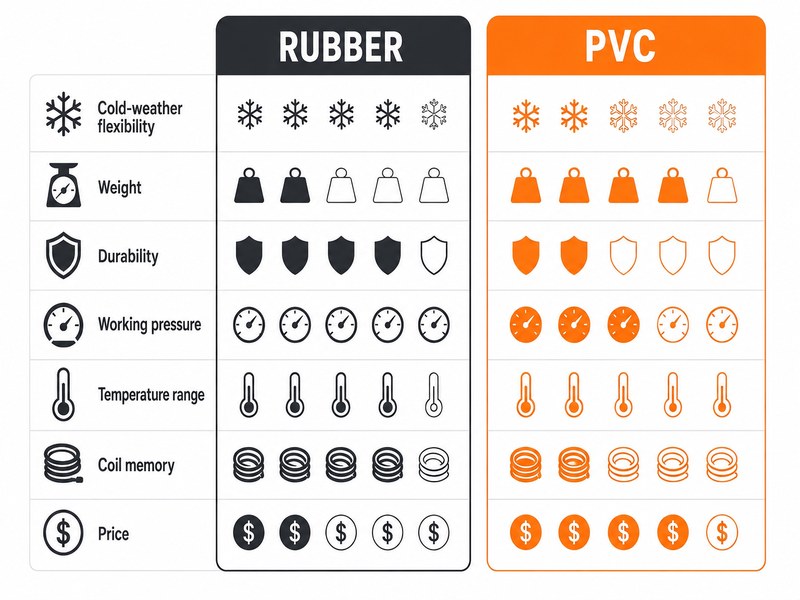
Figure 3. Rubber vs PVC at a glance — the seven deciding criteria.
How to Choose the Right Air Hose Material for Your Use
There is no single best air hose material, but there is a correct answer for every use case. Match the scenarios below to your own situation.
For individual buyers
- Home garage and first-time setups — a 25–50 ft PVC air hose, 3/8 inch, 300 PSI, with [quick-connect couplers](/products/quick-connect-couplers). Light, cheap, and fully adequate for tire inflation and small tools in a heated space; first-time buyers can start here and move to rubber when cold or oily conditions appear.
- Unheated garage or cold climate — a rubber air hose, 3/8 inch. Below -7°C (19°F), PVC stiffens and risks cracking; rubber stays flexible and safe.
- Construction and job sites — rubber air hose, 3/8 inch, 50 ft or more. Job-site abuse — dragging, impacts, UV, cold — is exactly the duty cycle rubber is built for.
- Spray painting — rubber air hose, 3/8 or 1/2 inch. Rubber’s low particle shedding keeps the air stream clean — a requirement that rules out PVC in paint lines.
- Tire inflation and light tools — either material works; let budget decide. A 1/4-inch PVC hose is fine for short, low-flow work.
- Semi-truck and fleet applications — rubber air hose, 3/8 or 1/2 inch, rated for the vehicle’s air system pressure. Truck environments combine cold, oil, and constant flexing — rubber’s three strengths.
- High-flow tools (sandblaster, large impact wrench) — rubber air hose, 1/2 inch. Larger inner diameter plus rubber’s pressure retention minimizes pressure drop on long runs.
For distributors and bulk buyers
- Distributors and bulk buyers — stock rubber for industrial accounts, PVC for budget retail, and hybrid as the all-rounder SKU. Custom lengths, fittings, colors, and OEM branding available, with the full range shipping from one factory.
Before you buy, run this 7-point checklist:
- Confirm your worst-case temperature (not your average day) against the hose’s printed rating.
- Check for oil mist, UV, or abrasive surfaces in your work area.
- Verify the working-pressure rating exceeds your compressor’s maximum tank pressure.
- Match inner diameter to tool flow: 1/4 in light tools, 3/8 in standard, 1/2 in high-flow or long runs.
- Pick length with slack for movement — a taut hose is a snagged hose.
- Choose the right end fittings (NPT vs NPSM) before you buy adapters.
- Price over service life, not per foot — and keep the warranty card.
In most cases, the first two checks alone settle the rubber vs PVC air hose question.
Scope note: the specifications and recommendations in this guide cover 1/4–1/2 inch consumer and light-industrial air hoses. High-pressure industrial systems above 500 PSI should be specified against the applicable standard — ISO 2398 for rubber, ISO 5774 for plastic.
Need help matching a hose to your market? Request a quote and samples — our engineering team responds within one business day, with metric lengths (15 m / 30 m) and EUR pricing available for European buyers.
Rubber vs PVC Air Hose FAQs
Is rubber or PVC air hose better?
For durability, cold-weather flexibility, and oil resistance, rubber is better; for budget, weight, and occasional indoor use, PVC is adequate. The rubber vs PVC air hose question has no single winner — the answer depends on your environment, which is why this guide compares the materials across seven measurable criteria rather than declaring one winner. If neither material fits your budget or climate, a polyurethane air hose is the light, kink-resistant middle option.
Can PVC air hose be used in cold weather?
Yes, down to roughly -7°C (19°F). Below that, PVC stiffens, kinks, and can crack under sharp bending. For regular use in freezing temperatures, a rubber air hose is the safer choice.
I work in an unheated garage in Minnesota — which air hose won’t crack in winter?
Choose a rubber air hose. Minnesota winter lows fall below the -7°C (19°F) point where PVC stiffens and can crack, while a rubber hose stays flexible to -40°C (-40°F). For a Minnesota garage, rubber is not a preference — it is the reliable choice. An EPDM compound hose also lays flat and resists oil from tools.
What PSI air hose do I need?
A 300 PSI working-pressure hose in either material covers virtually all consumer and prosumer compressors, which typically output 90–150 PSI. Confirm the rating exceeds the compressor’s maximum tank pressure.
How long does a rubber air hose last?
In daily shop service, expect 5–10 years; in light indoor use, longer. PVC typically lasts 2–5 years under the same conditions. Visible cracks, bulges, or stiff spots mean the hose should be replaced regardless of age.
Is a PVC air hose safe for air compressors?
Yes, when the hose is rated for compressed air service and the working pressure exceeds the compressor output. Use only hoses marked for air service, with a printed working-pressure rating — garden hose and unrated tubing are not built for internal pressure and can burst.
How do I prevent PVC air hose kinking?
Store it on a large-diameter reel, avoid tight coils, and keep it away from cold and direct sunlight. If kinking persists in your environment, that is the material telling you it is time for rubber.
How do I make my air hose last longer?
Drain the compressor tank daily, coil the hose loosely, and keep it out of direct sunlight. Inspect the cover and fittings monthly for cracks, bulges, or leaks.
What is a hybrid air hose?
Buy a hybrid air hose if you need cold-weather flexibility on a budget and your work is light to medium duty — it stays flexible to about -20°C to -30°C (-4°F to -22°F) at a typical $0.50–0.70 per foot. Choose full rubber if your work involves heavy oil exposure, abrasion, or maximum burst ratings; choose PVC if your shop is warm and you want the lowest price. Hybrid is the compromise option, not the specialty option.
Final Verdict: Which Air Hose Material Is Right for You?
The rubber vs PVC air hose decision is an environment decision, not a brand preference. Choose a rubber air hose for cold shops, outdoor work, oily conditions, high-flow tools, and anything you expect to last a decade; choose a PVC air hose for heated garages, light duty, and budgets that favor the lowest upfront cost. Buy from a manufacturer that prints real ratings on the cover — working pressure, temperature range, reinforcement type — and backs the hose with a clear warranty — those details decide between a ten-year hose and a ten-month hose. If you are sourcing air hoses for retail, distribution, or industrial use, our team will help you match the right specification to your market — request a quote and samples, with a reply within one business day and free samples for volume orders.
About HENGHUA
HENGHUA is a professional manufacturer of rubber, PVC, polyurethane, and hybrid air hoses, supplying workshops, distributors, and OEM brands worldwide. Every HENGHUA rubber air hose is built with an EPDM or SBR inner tube, a high-tensile textile reinforcement layer, and an abrasion-, oil-, and ozone-resistant cover, rated 200–500 PSI with factory-crimped brass fittings as standard. We manufacture both materials covered in this guide — rubber air hoses for cold, oily, and industrial duty, and PVC air hoses for budget and light-duty markets — across the full size range from 1/4 to 1/2 inch, plus custom lengths, fittings, colors, and OEM/ODM branding.
Because we control the entire process from compound mixing to final pressure testing, we deliver consistent quality at factory-direct pricing, with short lead times for bulk orders and a clear warranty on every reel. If you are sourcing air hoses for retail, distribution, or industrial use, contact our team for a quote and samples matched to your market.

 English
  Spanish
  Portuguese
  French
  German