
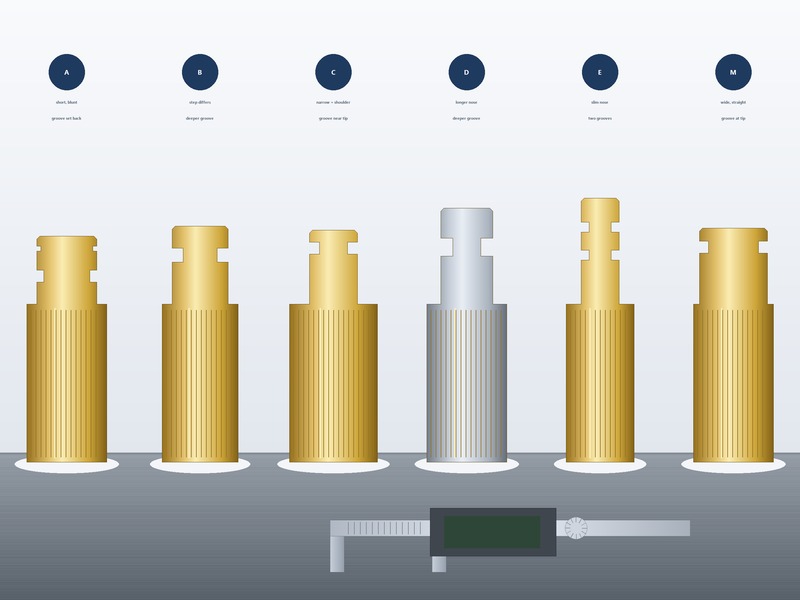
Air hose coupler types are set by the plug profile. The thread on the back end is a separate question. Measure the plug nose with calipers, check the locking groove and the overall plug length, then compare the result with a plug you know already fits. Here is the identification procedure, the profile chart, the shop-drawer sort, and a style-level interchange matrix.
All flow figures are our bench measurements at 100 PSI inlet; tool demand figures are manufacturer ratings at 90 PSI. About 13 min read.
Why Unmarked Couplers Are the Shop’s Most Common Wrong Purchase
Most wrong orders in this product family come from matching only one number. A buyer reads the thread on the old coupler, orders the same thread, and receives a coupler that screws onto the hose but refuses the tool plug. The thread is the back end of the coupler. The front end is the profile, and the profile decides whether the plug locks.
Couplers fail to mate for three mechanical reasons: the nose is too wide for the socket bore, the locking groove sits at the wrong depth or angle for the locking balls, or the seal seat does not line up the O-ring.
Four symptoms cover most of the warranty cases we see on the bench:
Table 1. Reported symptoms of a coupler mismatch, the mechanical cause, and the first check to run.
| What the user reports | Mechanical cause | First thing to check |
|---|---|---|
| “The new coupler is the wrong size” | Plug nose too wide for the socket bore | Nominal size and profile of both halves |
| “It almost fits” | Locking balls and groove out of alignment | Groove count and groove position on the nose |
| “It clicks but hisses” | Seal seat not contacting the O-ring | O-ring condition and seat depth |
| “It popped out under load” | Profile mismatch that held only at low pressure | Replace both halves with one profile |
A single part number cannot capture all of those causes. That is why the identification procedure below starts with a measurement instead of a catalogue lookup. The wider rules for choosing and installing fittings, including the compatibility matrix and leak diagnosis, live on our air hose fittings guide. This page stays on the identification job.
How to Identify Air Hose Coupler Types With Calipers
Digital calipers and one plug you already know fits are the whole toolkit. Work in this order and write every reading down:
- Measure the plug nose outside diameter across the very tip, in millimetres and inches.
- Count the locking grooves and note how far each one sits from the tip.
- Measure the overall plug length from tip to the shoulder that seats in the socket.
- Compare all three readings with a plug you know already fits your socket.
- Confirm the socket itself carries the same profile and the same nominal size.
Step five is the one people skip. A plug will sometimes enter a foreign socket without latching, and that half-fit feels like success until the line is pressurised. Confirming the socket, not just the plug, is what turns a guess into a match.
Record the numbers exactly as your caliper shows them, then compare against a known-good plug or the maker’s chart. Nose diameters differ between profiles at the same nominal size, so a memorised figure is a trap. The table below is an air coupler identification chart you can copy onto a bench card.
Table 2. Identification checklist: what to measure or inspect, why it matters, and how to record it.
| Step | Measure or inspect | Why it matters | Record it as |
|---|---|---|---|
| 1 | Nose outside diameter across the tip | Sets whether the plug enters at all | A number, in mm and in |
| 2 | Locking groove count and position | Sets whether the balls grip and hold | A count plus a description |
| 3 | Overall plug length to the shoulder | Sets how deep the plug seats | A number |
| 4 | Shoulder and body outline | Separates families that share a groove pattern | A sketch or silhouette match |
| 5 | Socket profile and nominal size | The socket must carry the same profile | A confirmation, never a guess |
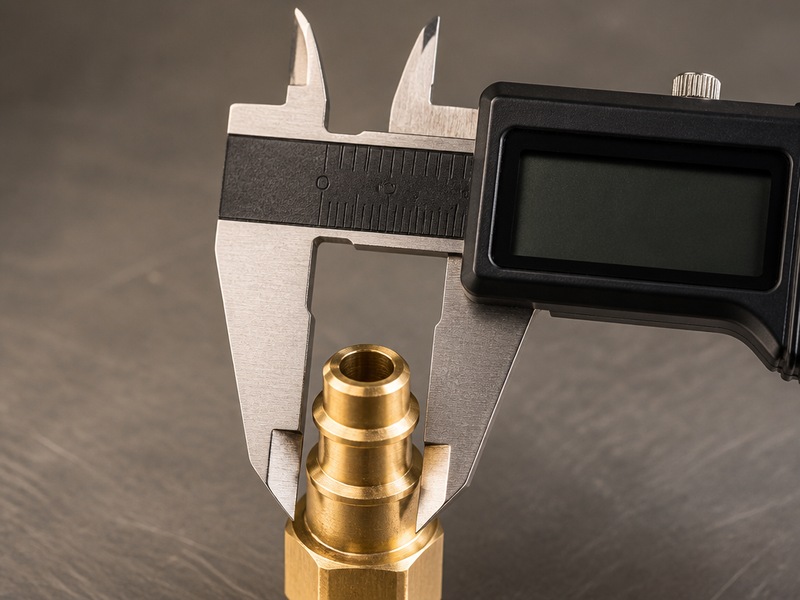
Figure 2. Measuring the plug nose across the tip. Record the reading rather than trusting a remembered number.
Air Hose Coupler Types: The Quick Connect Profile Chart (A, B, C, D, E, M)
The chart below lists the profiles you are most likely to meet in a mixed shop, followed by the adjacent families that appear in narrower catalogue ranges. The checklist above gets you to a shortlist; this table gets you to a name.
Table 3. Quick connect profile chart: identifying features, typical nominal sizes, and where each profile dominates. Letters follow common North American catalogue practice; the nose shape and the groove position decide the match.
| Style | Common name | Identifying feature on the plug | Typical nominal sizes | Where it dominates | Nearest look-alike |
|---|---|---|---|---|---|
| A | ARO-type industrial | Short, blunt nose with a shallow front step and one groove set back from the tip | 1/4 in, 3/8 in | Industrial assembly tools in North America; often the factory coupling on ARO-type tools | B, blunter nose |
| B | Older industrial variant | Nose step and groove position differ from A; verify against a catalogue silhouette | 1/4 in | Legacy industrial equipment; uncommon in new builds | A, deeper groove |
| C | Catalogue C profile | Narrow nose with a pronounced shoulder; groove sits close to the tip | 1/4 in | European and specialist industrial catalogues; some OEM machine building | L, softer shoulder |
| D | Catalogue D profile | Longer nose than A or C with a deeper groove; bodies are often plated steel | 1/4 in, 3/8 in | Heavier industrial ranges and some European catalogues | A, longer nose |
| E | European / slim-line | Slim nose with two distinct groove features and a longer body; brass or nickel-plated | 1/4 in, 3/8 in | Europe; portable tools sold into EU and UK markets | L, slimmer body |
| M | Milton-type industrial | Wide, straight nose with the groove nearest the tip; the North American shop default | 1/4 in, 3/8 in, 1/2 in | North American general industry and air tools sold at US retail | A, wider nose |
| H | Adjacent catalogue family | Short body with a single deep groove; confirm by trial | 1/4 in | Niche industrial equipment | B, shorter body |
| L | Adjacent catalogue family | Slim nose, similar body proportions to C; confirm by trial | 1/4 in | European catalogues and some service equipment | C, softer shoulder |
| P | Adjacent catalogue family | Stepped nose; often listed by series number rather than a letter | 1/4 in, 3/8 in | European industrial and OEM machine building | D, stepped nose |
| T | Tru-Flate / automotive | Short pilot with a stepped shoulder; common on tyre service equipment | 1/4 in, 3/8 in | Automotive service and tyre shops in North America | A, shorter pilot |
| V | High-flow | Standard M outline with a visibly larger through-bore | 1/4 in, 3/8 in | Shops feeding a 1/2 in impact wrench or a sandblaster | M, larger bore |
| S | Adjacent catalogue family | Distinct long-nose outline; confirm by trial | 1/4 in | Niche industrial and specialist equipment | L, longer nose |
Treat the identifying features as a starting point, then confirm by measurement. Silhouettes for profiles C, D, H, L, P and S are close enough that two of them can look alike on a bench. The only reliable confirmation is the one you already use: measure the nose, then click the plug into the socket you intend to use. Where a letter pair looks interchangeable in a cross-reference sheet, replace both halves with a single profile instead of trusting the sheet.
The named standard on this subject is ISO 6150, which covers pneumatic quick-action couplings, their dimensions and their interchangeability. In practice, the letter names most shops use come from catalogue ranges rather than from that standard. That gap is exactly why an identification procedure beats a lookup table.
Air Hose Coupler Sizes: 1/4, 3/8 and 1/2 Inch Plugs
Air hose coupler sizes run 1/4, 3/8 and 1/2 in for shop air, and the number refers to the nominal flow size of the coupling body. It is not the nose measurement and it is not the thread. Two air hose coupler types can share a nominal size and still refuse to mate because their profiles differ.
Table 4. Nominal coupler sizes, typical flow at 100 PSI, the tools they suit, and the usual back-end threads.
| Nominal size | Typical flow at 100 PSI | Tools it comfortably feeds | Typical back-end thread |
|---|---|---|---|
| 1/4 in | About 40 SCFM | Brad nailers, air ratchets, blow guns | 1/4 NPT or 1/4 BSP |
| 3/8 in | About 80 SCFM | Framing nailers, 1/2 in impact wrenches, longer runs | 3/8 NPT or 3/8 BSP |
| 1/2 in | About 140 SCFM | 3/4 in impact wrenches, sandblasting, high-demand tools | 1/2 NPT or 1/2 BSP |
Size sets the ceiling; profile sets the loss. At 1/4 in and 100 PSI our bench shows an M-style coupling at roughly 40 SCFM, while A-style and E-style couplings at the same nominal size come in around 35 SCFM. If a tool is already short of air, switching coupler profiles can cost flow before the hose is ever blamed.
The thread on the back end is a separate question from both size and profile. North American ports use NPT, a 60-degree taper thread specified in ASME B1.20.1. European and much of the rest of the world uses BSP: the taper form in ISO 7-1 and the parallel form in ISO 228-1. The two look similar at a glance and are not interchangeable. Our NPT vs BSP thread guide covers the difference, and the full measurement procedure for any fitting thread is set out in identifying air hose fittings by threads and sizes.
Coupler Styles Explained: Where Each Profile Dominates
Geography explains more than engineering here, and coupler styles explained by region is the fastest way to predict what is already in your shop. An M-style plug is the North American industrial default, an E-style plug is the European equivalent, and a T-style plug is so common in automotive service that tyre shops often treat it as the only option.
Regional dominance also predicts what arrives in a repair kit bought online. A kit sold to a US industrial buyer will be dominated by M-style parts. A kit sold into Europe will be built around E-style parts and the slim-line bodies that go with them.
A second point is harder to see: the same letter can mean slightly different things in different catalogues. One maker’s C profile is not guaranteed to match another maker’s C profile, and some catalogues skip letters entirely or list profiles by series number. Treat every letter as a label attached to a specific maker’s range, then verify by measurement.
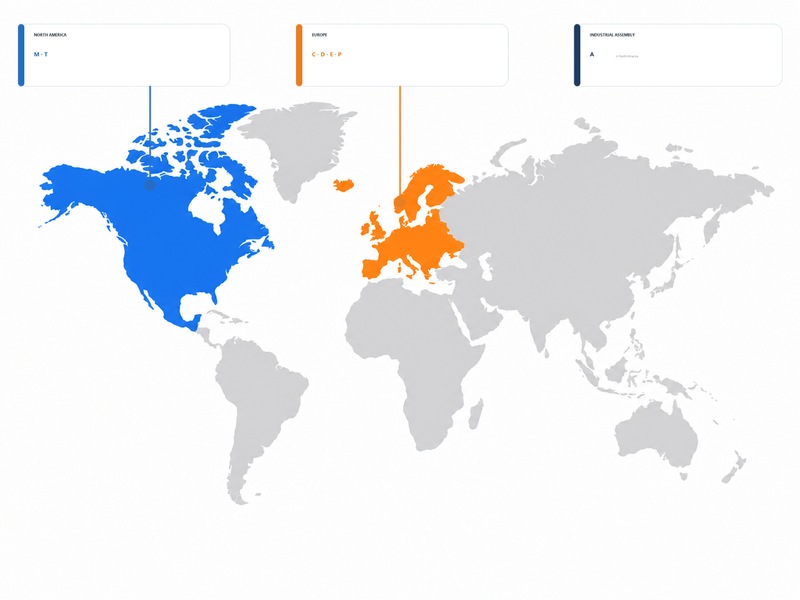
Figure 3. Regional and industrial dominance of the main coupler profiles. Installed base, not engineering merit, decides what a shop already owns.
For the shop-level decision about which profile to standardise on, and what mixing profiles costs in flow and downtime, the companion analysis sits in industrial pneumatic couplers: M-style, V-style and A-style. The general selection framework for couplings of every kind, including hydraulic and fluid-transfer families, is in the complete guide to hose couplings.
The Shop Drawer Test: Sorting Unknown Plugs in Ten Minutes
Once you have the coupler styles explained and the sizes, the test below turns a box of unknowns into labelled bins. It assumes a bench, a set of digital calipers and the sockets you actually own:
- Empty the drawer onto a tray and split plugs from sockets.
- Group the plugs by nose shape by eye: blunt and wide, slim and long, or stepped.
- Inside each group, measure the nose and the groove position and sub-group by reading.
- Test each sub-group against the sockets you own; anything that latches and seals gets binned with its socket.
- Label every bin with the profile name and the nominal size, then use the air coupler identification chart to write the label.
The final step is a decision, not a habit. Not every orphaned plug deserves to exist in your inventory. The table below is the swap-out rule we would apply to our own shop stock.
Table 5. Keep, adapt or discard: how to decide the fate of each group of sorted plugs.
| Group after sorting | Decision | Reasoning |
|---|---|---|
| Plugs that latch and seal in a socket you still use | Keep | Pair them with that socket and label both halves |
| Plugs from a profile you still buy in kits | Keep | They are reorderable spares, not dead stock |
| Plugs from a profile you have retired | Adapt only if flow is not critical | An adapter adds a joint and a restriction |
| Plugs with no socket and no adapter worth the cost | Discard | They will otherwise be re-used by mistake |
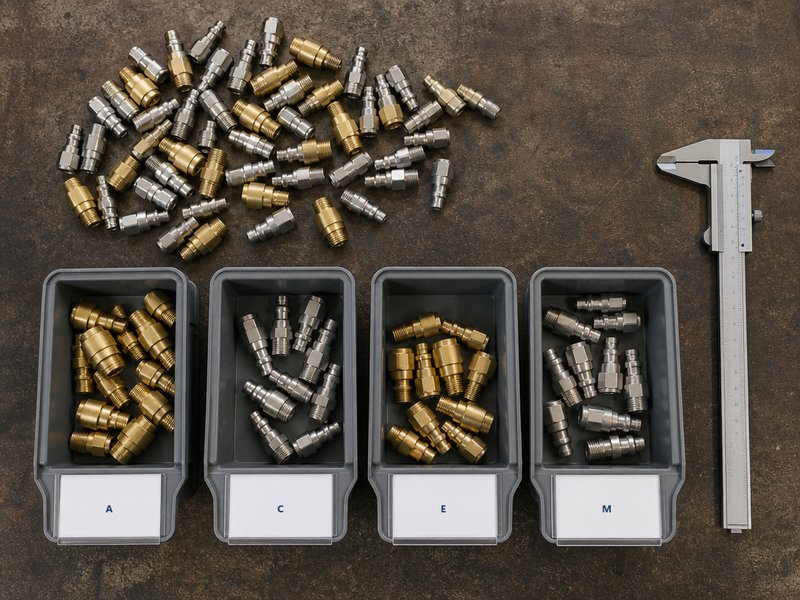
Figure 4. The drawer test in practice: measure, sub-group, trial-fit, then label. An unlabelled bin is the next wrong purchase.
Interchange at Style Level: Same Profile Plus Same Size Equals Sealed
The rule is short. Air hose coupler types seal only when the plug and the socket carry the same profile and the same nominal size. The matrix below shows the style-level result for the five most common profiles; read the plug style down the left and the socket style across the top.
Table 6. Style-level interchange matrix (M, A, E, T, V). A diagonal cell means the pairs were designed to work together; a blank cross-cell means the pair does not seal.
| Plug down / socket across | M socket | A socket | E socket | T socket | V socket |
|---|---|---|---|---|---|
| M plug | Уплотнения | Does not seal | Does not seal | Does not seal | Does not seal |
| A plug | Does not seal | Уплотнения | Does not seal | Does not seal | Does not seal |
| E plug | Does not seal | Does not seal | Уплотнения | Does not seal | Does not seal |
| T plug | Does not seal | Does not seal | Does not seal | Уплотнения | Does not seal |
| V plug | Does not seal | Does not seal | Does not seal | Does not seal | Уплотнения |
Names for the off-diagonal outcomes vary, but the physical results do not:
Table 7. What each kind of mismatch actually does when the line is pressurised.
| Scenario | Result | What you see |
|---|---|---|
| Same profile, same nominal size | Уплотнения | One clean click, then pressure holds |
| Same profile, different nominal size | Will not enter | The plug is simply too small or too large for the bore |
| Different profile, same nominal size | Half-inserts | The plug enters part-way or pops out under pressure |
| Different profile, forced into place | Leaks or blows off | Misaligned seal seat; unsafe at working pressure |
| Wrong national profile on a tool swap | Both symptoms | A US tool on a European socket, or the reverse |
How to read Table 6. A diagonal cell means the two halves were designed to seal together; a cross-cell means they were not. The matrix lists the profiles that have a published style-level rule; for B, C and D, confirm the match by trial fit. Some catalogue families publish limited one-way compatibility, so treat the matrix as a starting point.
Any joint that hisses, wobbles or fails to latch should be treated as a mismatch, not as a break-in period. For joints that already leak, the fix path is set out in our air hose leak repair guide.
Type C and D Couplers: Why Cross-References Fail
Type C and type D couplers cause more mis-orders than any other profile, and neither is exotic. A type c air coupler is a catalogue profile, not the third entry in a universal list. It is stocked in the same nominal sizes as M-style parts, so a size-based cross-reference sheet maps it straight onto an M part. That mapping is wrong, and the plug will not latch.
The same applies to a d style air coupler: the body size looks familiar and the nose does not. Cross-referencing by nominal size is how that profile ends up ordered in place of an A-style, and how the wrong part reaches the bench twice before anyone measures a plug.
The fix is a habit rather than a rule. Match two profiles by nose measurement, confirm by trial in the socket, and treat a C-profile substitute as a separate part that happens to share a bin. The same discipline applies to any other single-letter catalogue name.
Liquid Quick Connects Are Not Air Couplers
One family of quick connects looks close enough to fool a fast order: the liquid couplings used on pressure washers and garden hoses. They share the brass finish and the click-latch feel, and some are sold in the same 1/4 in body size.
Those fittings are built for water at pressures well above shop air and use their own profiles, including the common 1/4 in and M22 patterns. An air coupler is not rated for washer pressure, and a washer coupling will not seal shop air reliably even when it clicks. The two families belong in separate bins with separate labels. The distinctions are covered in our pressure washer quick connect guide.
Quick Connect Air Hose Coupler Types FAQs
How do I identify air hose coupler types without a label?
Start with calipers, not with a guess. Measure the plug nose across the tip, count the locking grooves and note where they sit, then measure the plug from tip to shoulder. Compare those readings with a plug you know fits, or with the maker’s table. The air coupler identification chart above turns the readings into a shortlist. Confirm the socket carries the same profile before you order.
What is the difference between a plug and a socket in a quick connect coupler?
The plug is the male half, usually mounted on the tool or the hose end. The socket is the female half that holds the locking balls and the spring. The socket contains the seal, normally an O-ring, and the release collar. Both halves carry the same profile and the same nominal size. Both halves must be paired.
Can I use an M-style plug in an A-style socket?
M-style and A-style are different profiles. To tell them apart, measure the plug nose and the groove position, then test the plug in the socket you own: it will either not enter or will enter without latching. Even if it holds at low pressure, the seal seat is misaligned and the joint can blow apart under load. The same rule applies to every cross-letter pairing in the matrix above. Match the profile first, then the nominal size, then the thread.
How do I measure an air hose coupler with calipers?
Measure three features on the plug: nose outside diameter across the tip, overall length from tip to the seating shoulder, and the position of each locking groove. Record the numbers in both millimetres and inches. Then confirm the socket by checking that a known-good plug latches into it. Nose diameters differ between profiles at the same nominal size, so write everything down.
I am replacing a worn plug: what sizes do air hose couplers come in?
Shop-air couplers come in 1/4, 3/8 and 1/2 in nominal sizes, with 1/4 in dominating hand tools and 3/8 in used for longer runs. The nominal size sets the flow ceiling, not the thread. At 100 PSI a 1/4 in coupling moves roughly 40 SCFM, a 3/8 in about 80 SCFM and a 1/2 in about 140 SCFM, measured on our bench.
Is a type c air coupler the same as an M-style coupler?
A type c air coupler is a separate catalogue profile that happens to be stocked in the same nominal sizes as M-style parts. Cross-reference sheets that map one letter to another by size are the usual source of wrong orders. Treat each letter as a distinct part, then confirm the match by measuring the nose and by a trial fit in the socket.
What is a d style air coupler used for?
A d style air coupler is a catalogue profile found in some European and specialist industrial ranges. It mates with its own family only, whatever the body size suggests. Order it by its own name and size, or replace both halves of the connection with a profile you have chosen to standardise on. Nominal size alone proves nothing.
Why does my coupler leak after it clicks?
A click only means the locking balls engaged, not that the seal is correct. Common causes are a worn or missing O-ring, a foreign profile that forces the seal seat out of alignment, or a plug short enough to sit too shallow in the socket. Check the O-ring first, then measure both halves against the profile chart.
Can two different coupler styles be joined with an adapter?
Yes, with limits. A style-to-style adapter lets an A-style tool feed from an M-style hose, but it adds a joint, a restriction and one more leak path. Adapters are a sound temporary fix, not a standard. Where flow matters, such as a 1/2 in impact wrench, replace one half so the run uses a single profile.
Are pressure washer quick connects the same as air couplers?
No. Liquid quick connects for pressure washers and garden hoses are built for water at much higher pressure and use their own profiles, including the common 1/4 in and M22 patterns. They do not seal shop air reliably, and air couplers are not rated for washer pressures. Keep the two families in separate, clearly labelled bins.
Final Verdict: Match the Profile, Then Buy What You Will Reorder
Identification is the whole method. Air hose coupler types are a two-condition choice, and both conditions must hold:
- Measure the plug nose, the groove and the length before you order anything.
- Confirm the socket carries the same profile and the same nominal size.
- Write the profile and the air hose coupler sizes on a bench card.
- Sort the drawer into labelled bins and scrap the orphans.
- Standardise on one profile and buy it in kits.
Everything else, including the thread on the back end, is a separate question with its own answer. Get the profile right and the thread becomes a simple choice between two standards. Our own range is listed in the industrial air hose collection.
HENGHUA is a professional manufacturer of air hose fittings, quick connect couplers, air hoses and hose assemblies, supplying distributors, retailers and OEM brands worldwide. Fittings are machined from brass, zinc-plated steel or stainless steel, thread-checked against NPT and BSP gauges, and pressure-tested to rated working pressure before shipment. Our core range covers 1/4, 3/8 and 1/2 in plugs and sockets in M-, A- and E-style interchange profiles, plus hose barbs, NPT-to-BSP adapters, reducers, complete kits and spare O-rings, all available with factory-direct pricing, private labeling and OEM/ODM branding.
For a quote and samples, contact our team with the profile letter, the nominal size and the thread standard you need. Send a photo of the plug beside a rule if you are unsure of the profile; a single measurement is usually enough to identify it.
About the author. The HENGHUA engineering team designs and pressure-tests pneumatic fittings and hose assemblies for distributor, retail and OEM programs. The team maintains its own flow benches and crimp test rigs and keeps the profile and thread gauges used to check every production lot. This article draws on that bench and quality-control work rather than on catalogue copy.

 English
  Spanish
  Portuguese
  French
  German
  Arabic
  Russian
  Indonesian
  Japanese
  Korean