
A gutteling hose range covers composite hose for chemical and petroleum transfer alongside specialised low-temperature products, which is why buyers often meet the name in two different conversations. One is a chemical terminal asking about a dock hose; the other is an LNG project asking about a transfer system. The two duties are not interchangeable, and the series that serves one does not automatically serve the other.
This page is an independent technical overview. It is not affiliated with the manufacturer, it does not reproduce catalogue data, and every specification should be taken from current manufacturer literature.

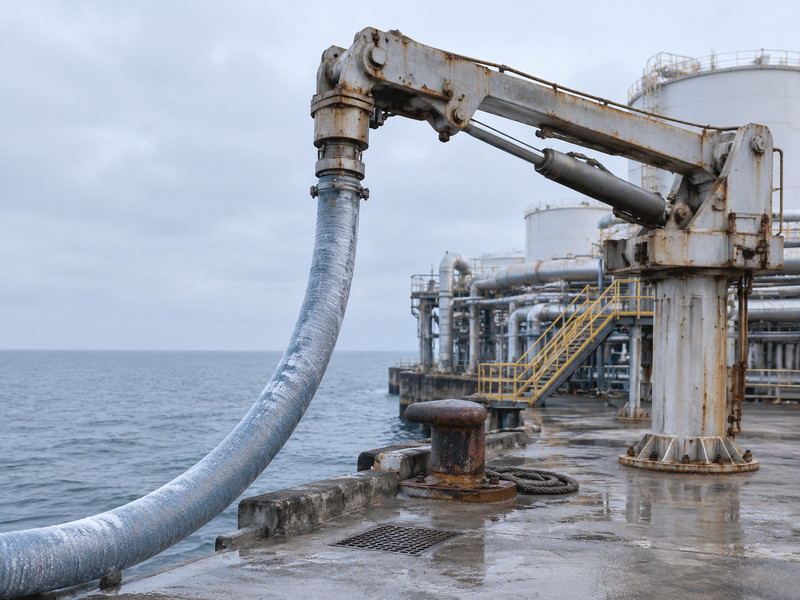
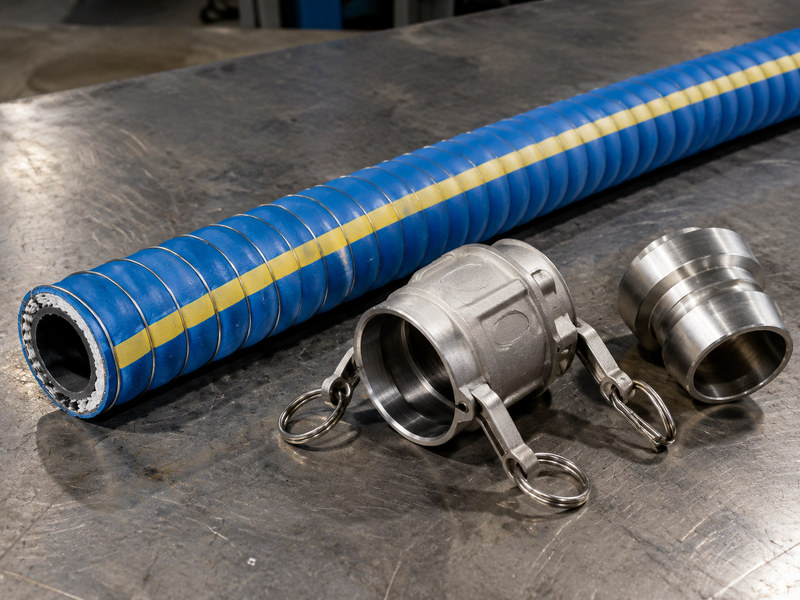
Figure 1. Two conversations, one name. A chemical dock hose and an LNG transfer system sit at opposite ends of the temperature range and are governed by different standards.
What Does a Gutteling Hose Range Cover?
Two families, broadly.
The first family in a gutteling hose range is composite hose for chemical, petroleum and dock transfer: a multilayer thermoplastic wall with a helix, used at ambient to moderate temperature. Its governing specification is the European composite hose standard, and its limits are the pressure and temperature bands in that standard.
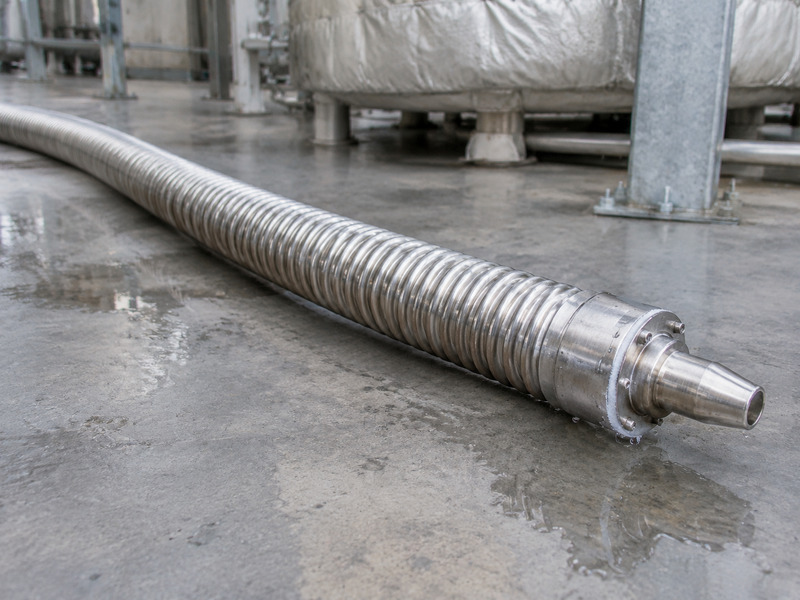
The second is low-temperature transfer, including LNG duty, where the products are cryogenic and the governing rules come from a different document. A composite product in that family is part of a system rather than a standalone hose, and the standards map shows where each document applies.
That split matters because a buyer searching for one family frequently lands on the other. The word composite appears in both, and the pressure and temperature figures are not comparable.
Where Does the Boundary Sit?
At the temperature range and the governing standard, not at the brand.
A composite hose for chemical transfer operates from roughly −30 °C to +150 °C depending on type, and is classified by type in the European specification. An LNG hose operates far below that, and the standard that applies is the LNG transfer standard, which addresses systems rather than hose types.
The practical consequence is that a lng hose series cannot be specified by quoting a chemical hose type number, and a chemical hose cannot be moved to cryogenic duty by changing the fittings.
Where a project spans both, treat them as two procurements. The approvals, the test regime and the inspection criteria all differ.
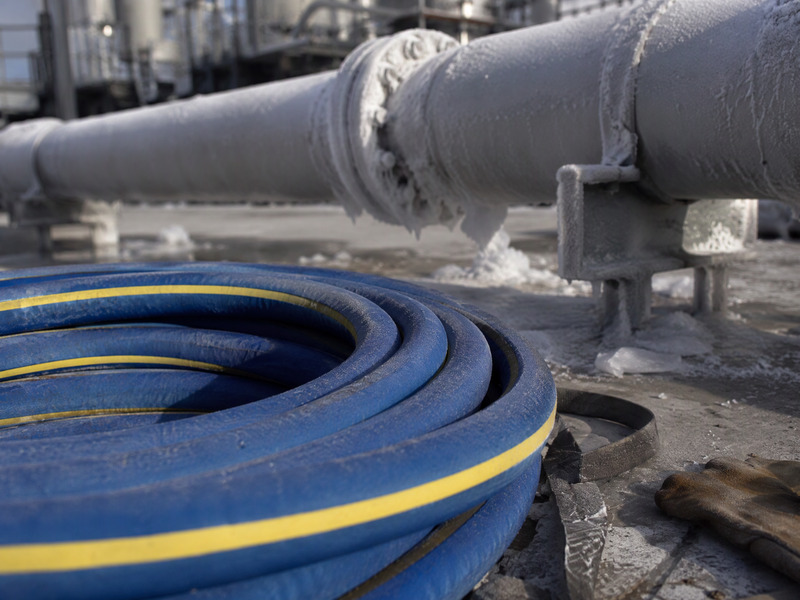
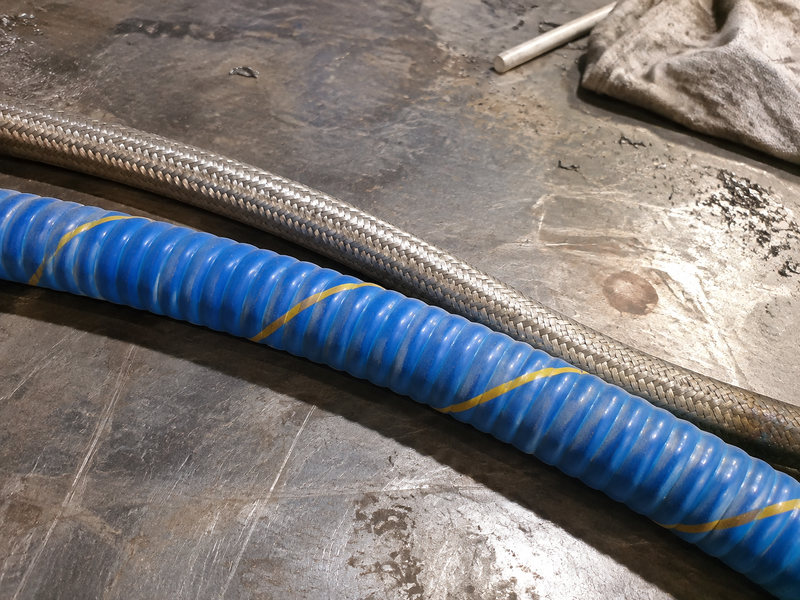
Figure 2. Two temperature regimes in one frame. The coil in the foreground is ambient stock; the frosted line behind it belongs to a different family and a different standard.
How Do You Compare a Gutteling Composite Series?
Use the same five values as any composite hose cross-reference: bore and length, pressure at temperature, liner material, end connections and approval scope.
| Value | What to establish | Why it decides |
|---|---|---|
| Bore and length | Marking or measurement | Flow and fit |
| Pressure at temperature | Datasheet plus derating | Duty limit |
| Liner material and grade | Datasheet or declaration | Chemistry |
| End connections | Drawing or photograph | Whether it connects |
| Approval scope | Certificate | Regulated duty |
Table 1. Five values for any composite hose series comparison. The fourth row is the one that most often turns out to be wrong after delivery.
A composite hose series comparison built on those five can be checked against the duty. One built on a series name cannot, because a series often spans several liners and more than one pressure class.
For a gutteling hose reference, the useful first step is to identify which family the reference belongs to. That single question eliminates most wrong comparisons before they start, and it costs one line in the enquiry.
How Should You Read the Manufacturer Literature?
In four passes.
First, the scope statement: what the document covers and what it excludes. A range document that covers chemical transfer will usually state that it does not cover cryogenic or LPG duty.
Second, the pressure and temperature table, read together rather than separately.
Third, the liner options, because a series name rarely identifies one.
Fourth, the end fitting options and the approval statement. If there is no approval statement, assume none applies.
Этот specification table gives the neutral values to compare against. Where a figure appears without a condition, treat it as the most favourable condition the maker can quote. That is not dishonesty; it is what a headline does.
| Family | Typical duty | Governing document | Inspection basis |
|---|---|---|---|
| Chemical composite | Acids, solvents, hydrocarbons | European composite hose standard | Type, marking, proof test |
| Dock and terminal | Ship to shore transfer | Compound of product and terminal rules | Annual test, continuity |
| Low temperature | LNG and cryogenic systems | LNG transfer system standard | System approval |
| Vapour recovery | Displaced vapour | Product standard plus local rules | Continuity, condensate |
Table 2. Families by duty and document. The third row is the one most often mistaken for the first.
Where Do Buyers Go Wrong?
Four ways, and each costs money.
Assuming the brand implies the liner. It does not; a range can offer several, and the part number often names none.
Assuming the pressure figure is constant. It is a figure at a temperature, and the derating curve decides the rest.
Assuming an LNG reference describes a hose rather than a system. That mistake leads to a hose specified without its system context.
And assuming an approval transfers with the name. Approvals belong to the product and the scope that was tested.
Each of these is corrected by the same request: the datasheet for the specific build, with the five values filled.
How Do You Build a Substitution File?
One page, five rows, two columns, and a source for every value.
The left column is the duty or the original build. The right column is the alternative. The source column names the datasheet, the drawing or the measurement that produced the figure.
That file is what a buyer needs when a project asks why a different product was supplied. It is also what makes the second order quick.
A comparison of that kind is not a claim of equivalence. It is a record that the alternative meets the stated values, which is a defensible position and a different one.
What Should a Procurement Request Say?
Product, concentration, temperature, pressure, bore, connection and the standard to be met. Seven lines, and they work for any supplier.
Where a gutteling hose is named, add the family and the reference. The family tells a supplier which standard applies; the reference tells them which build was intended.
Where the project is cryogenic, say so and name the system standard. A hose supplier who knows the answer is cryogenic will route the enquiry correctly rather than quoting a chemical hose that cannot survive the temperature.
How Does Temperature Decide the Family?
It decides it before any other variable, because the construction changes at the cryogenic boundary.
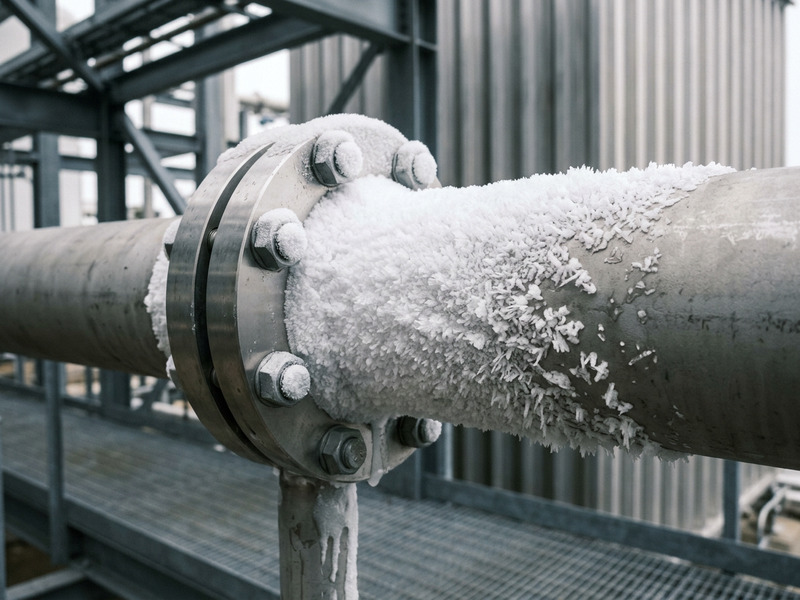
A chemical composite hose relies on thermoplastic films that remain flexible at ambient and soften as they warm. At cryogenic temperatures those same films become brittle, which is why a different construction is used below the range.
That is not a quality difference between makers. It is a physics boundary, and a gutteling hose intended for one side of it is not a candidate for the other.
Projects that cross the boundary, such as a terminal handling both chemical and LNG transfer, therefore run two procurements with two sets of documents, two stores and two inspection routines. Trying to unify them produces a specification that satisfies neither.
What Does an LNG Reference Actually Describe?
A system, not a hose in isolation.
The LNG transfer standard addresses the design and testing of transfer systems, including the hose strings within them. A hose maker’s data feeds that system approval; it does not replace it.
That is why an LNG enquiry that asks for a hose type number is asking the wrong question. The useful question is which system the hose sits in, what the system approval requires of the hose, and what documentation the system designer needs.
For a buyer, the practical consequence is that the system designer should be in the conversation from the start. A hose specified without them will be re-specified later.
How Do You Keep Two Families Apart in a Store?
The same way you keep two pressures apart: marking and records.
Mark the family on the hose and in the register, not only the bore. A chemical hose and a low-temperature hose can look similar in a photograph and behave completely differently in service.
Keep the documents with the family. A type test record for a chemical hose is not evidence for a cryogenic one, and filing them together invites the wrong one to be quoted.
Where a site handles both, separate the stores. Physical separation is the cheapest control and the one least dependent on training.
What Should a First Enquiry Contain?
Five lines, whichever family is involved.
The duty in plain terms: what is transferred, from where to where, at what temperature and pressure. The bore and length. The connection at each end. The standard the project requires. And the documents the project needs at delivery.
A gutteling hose reference can be added to that list, and the enquiry still works if the reference is absent. An enquiry that contains only the reference does not.
What Does the Duty Say About the Brand?
A duty list answers most of the questions a brand reference cannot. It states the product, the temperature, the pressure and the connection, and those four eliminate ranges before any catalogue is opened.
A lng hose series will be eliminated immediately by a duty list that says 80 °C and 12 bar, and a chemical composite will be eliminated by one that says minus 160 °C. That is the value of writing the duty first: it makes the shortlist honest before commercial pressure arrives.
The same list also reveals when a single hose cannot cover the duty, which happens more often than buyers expect. A line that loads cold product and is cleaned hot is two duty cases, and the hose has to satisfy the harder one or be two hoses.
Write the list once, keep it with the drawing, and the next enquiry starts from data rather than from a name. The list is also the only document that survives a change of supplier, which is the test of whether it was worth writing.
What Does a Comparison File Look Like in Practice?
One page, five rows, and a source for each figure. The duty or the original build on the left, the candidate on the right, and the evidence in the middle.
A buyer who keeps that page can answer a challenge two years later without reconstructing the decision from memory. A buyer who does not will be asked why a different product arrived and will have no answer beyond the price.
The same page is what a supplier verification file should attach to, because it names the values that were checked rather than the brand that was trusted.
It takes an hour to build and it replaces an argument.
Часто задаваемые вопросы
Is a gutteling hose suitable for LNG?
Some ranges are intended for low-temperature duty and LNG systems. The specific product, its system context and its approval have to be confirmed from current manufacturer literature.
Can an LNG hose be used for chemical transfer?
Generally not. The constructions and the governing standards differ, and the approvals do not transfer.
What standard applies to a gutteling composite hose for chemicals?
The European composite hose specification, which classifies hose by type and sets pressure, temperature and marking requirements.
How do I compare a series with another brand?
Use the five values: bore, pressure at temperature, liner, ends and approval. A composite hose series comparison that omits any of them is incomplete.
What if I only have a part number?
Ask for the datasheet, or measure the hose. Bore, length and ends are measurable; the liner may be identifiable from the marking.
Does a brand imply a quality level?
It implies a supply history. Whether the product suits the duty is answered by the five values, not by the name.
What documents should come with a delivery?
A datasheet for the build, a proof test record, and a marking that ties the hose to both.
About HENGHUA
HENGHUA builds composite hose for chemical, petroleum and dock transfer and works from the five values rather than from another maker’s reference. We do not claim cryogenic or LNG capability beyond what our product pages state, and we will say when a project needs a different construction.
Send the duty, the temperature and the standard the project requires, and we will confirm what we can supply and document.

 English
 Spanish
 Portuguese
 French
 German
 Arabic
 Russian
 Indonesian
 Japanese
 Korean