
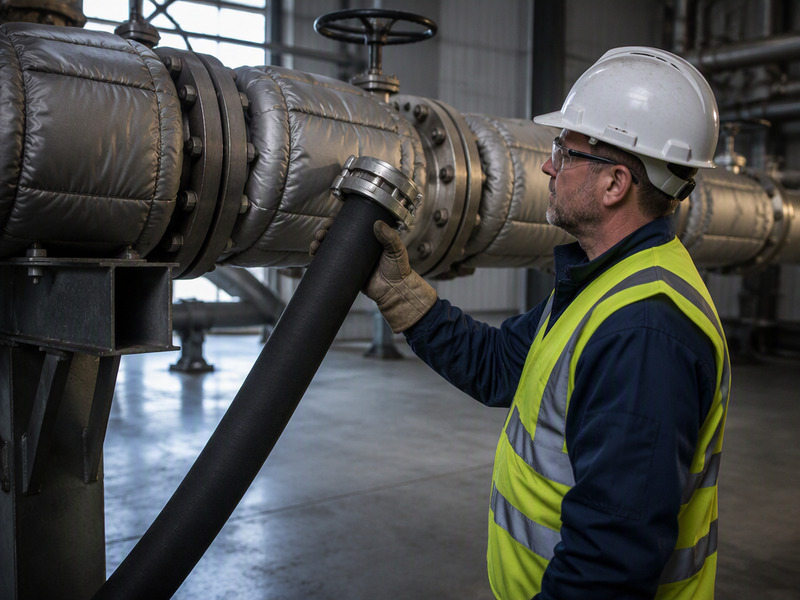
To learn how to choose a steam hose, match five variables in order: the steam condition, the working pressure, the bore, the length and route, and the end connection. Get that order right and most specification errors disappear before anyone quotes a price.
Saturated steam fixes temperature from pressure, so a single gauge reading usually settles the temperature grade first. From there the bore follows the steam load, the route sets the minimum bend radius, and the end connection must allow clamping force to be adjusted. This guide covers the five steps, the two-grade tie-breaker, two data tables, and the safety rules that decide the final specification.
How to Choose a Steam Hose in Five Steps
Selection is a sequence, not a menu. The fastest way to learn how to choose a steam hose is to answer one question at each step and write that answer down, because every later choice depends on the one before it. Jumping ahead to price, or to a familiar bore, is what produces returns and short service life.
Step 1: Confirm Saturated or Superheated Steam
Start with the steam, not the hose. Saturated steam sits at the boiling point for its pressure, so temperature and pressure travel together. Two standard points are 10 bar at 184 °C and 18 bar at 210 °C. Superheated steam has been heated above that saturation temperature at the same pressure, and rubber does not cover that duty.
If the line is superheated, move to a PTFE-lined hose rated to about 260 °C or to a corrugated metal hose. This first decision drives steam hose selection more than any other single choice, and saturated versus superheated service explains the boundary in detail. Every steam hose application starts from this field, so never leave it blank.
Step 2: Set the Working Pressure and the Safety Margin
Next, convert line pressure into a hose rating with a margin above it. The steam hose working pressure is the highest continuous pressure the hose should see, not the highest it can survive once. Steam picks up a burst safety ratio of 10:1, far higher than the 4:1 common on hydraulic hose and the 3:1 common on pneumatic hose.
A steam hose assembly rated 250 psi (17 bar), for example, is proof-tested hydrostatically at 1.5 times working pressure and bursts near 2,500 psi. ISO 6134:2024 sets Type 1 at 6 bar and 164 °C, and Type 2 at 18 bar and 210 °C. Treat the steam hose working pressure as a pair with temperature, then add the margin. Confirm the steam hose working pressure against the relief-valve setting, not against a design guess. If the duty sits above that envelope, change the grade, not the number in the paperwork.
Step 3: Size the Bore to the Steam Load
Size the bore to the steam load, not to the fitting that happens to be in the store. A bore that is too small pushes steam velocity up, which erodes the tube and adds pressure drop. A bore that is too large wastes steam and money on every meter.
The standard range runs from 3/8 inch to 4 inch. Take the required flow, then confirm the resulting velocity against the length of the run. If two bores look close on the chart, take the larger one only when the flow is genuinely continuous. At this point steam hose selection becomes a data question rather than a habit. The hose size selection method applies directly to steam lines.
Step 4: Set the Length, Route and Bend Radius
Steam hose length is set by the route, and the route decides whether the hose survives. Measure the actual path, add slack for movement, and keep the hose clear of hot surfaces and sharp edges. Support the run so its weight does not hang on the coupling, and avoid tight pulls around structural steel. Set the steam hose length only after the path is fixed.
The governing limit on a steam hose route is the minimum bend radius, and it belongs to the grade, not to the bore alone. For a 3/4 inch hose the published bend radius is 80 mm on the 230 °C grade and 70 mm on the 170 °C grade. That difference is exactly why a bend radius must be read from the correct grade. The reading a steam hose specification sheet walkthrough shows how that number is listed.
Step 5: Specify the End Connection
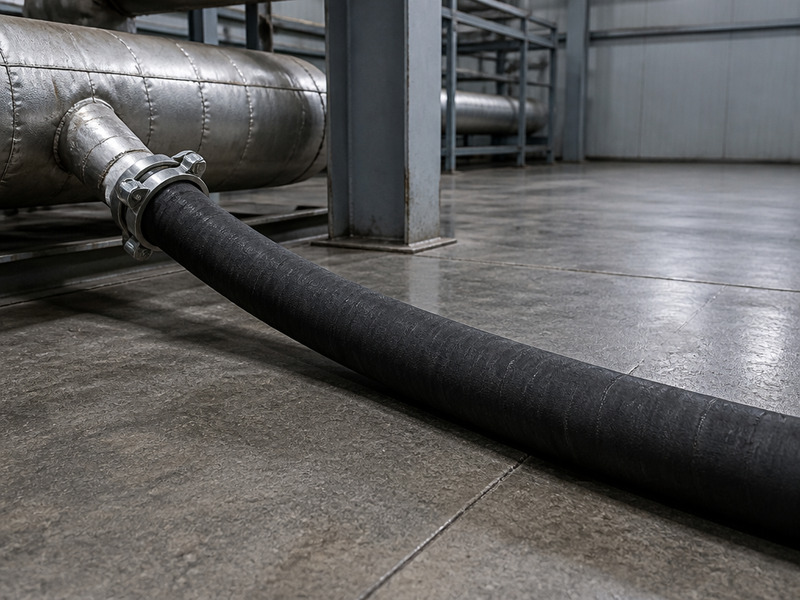
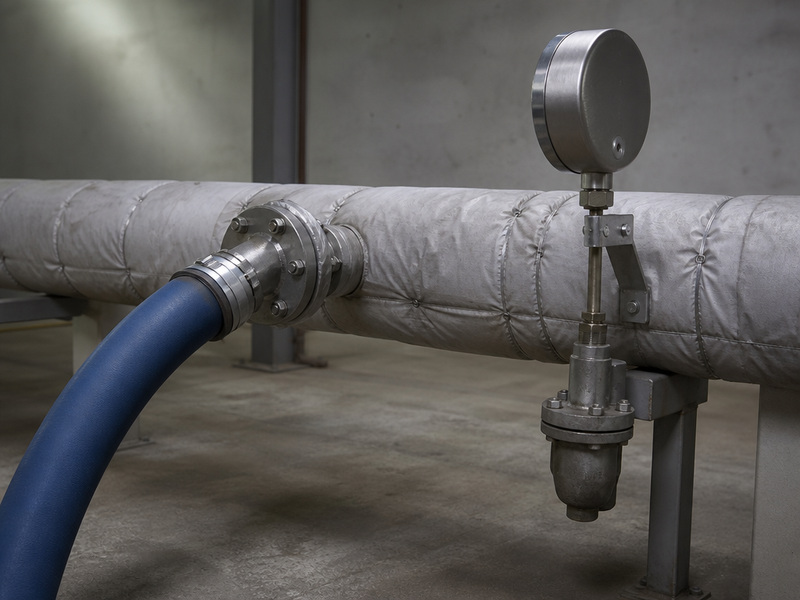
The end connection has to let a fitter adjust clamping force as the hose ages. A bolted safety clamp does this; a quick-release coupling does not, and the standard forbids quick-release couplings on steam service. Replace any clamp that has slipped or been overtightened.
When a supplier builds a steam hose assembly, the crimp, the clamp and the rated pressure must all be stated on the same line. A finished steam hose assembly is only as strong as its weakest connection. Steam hose safety is decided at the end connection as much as at the tube. The steam hose types and sizes overview lists the compatible ends by bore.
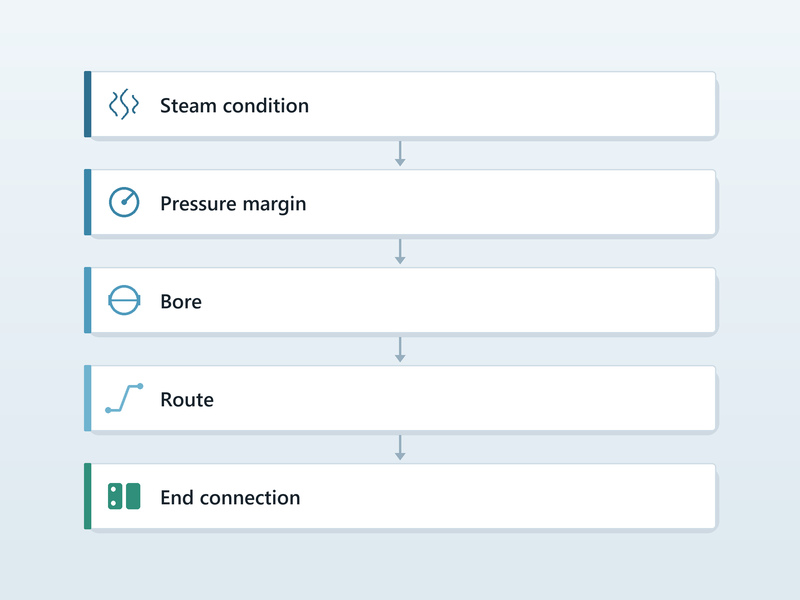
Figure 2. The five-step flow: steam condition, pressure margin, bore, route and end connection.
How to Choose a Steam Hose When Two Grades Both Look Suitable
Two grades can both look suitable until you test them against the real steam condition. The 170 °C and 230 °C EPDM grades share the same 250 psi (17 bar) working pressure and the same 10:1 safety ratio, so pressure alone will not separate them. What separates them is the saturation curve. Steam hose selection turns on that curve, not on the catalogue order.
Steam at 17 bar is about 207 °C, which sits above the 170 °C grade limit. The 170 °C grade cannot be used for 17 bar saturated steam, so that single fact resolves most two-grade cases. The harder part of learning how to choose a steam hose is resisting the habit of reaching for the higher number without checking the curve first.
Read the steam temperature from the saturation curve, then choose the lowest grade whose continuous rating sits above it with margin. If the continuous temperature exceeds 170 °C, the 230 °C grade is the only correct choice, because it holds −40 °C to +230 °C continuously and 250 °C intermittently. That boundary decides the grade; the 170 °C against 230 °C comparison carries the construction and service-life detail behind each grade.
Saturated Steam Temperature and Pressure by Grade
The steam temperature is fixed by gauge pressure, so the table below lets you read a grade straight off a pressure gauge. Find the pressure, read the temperature, and confirm the ISO 6134 grade covers it.
| Gauge pressure | Saturation temperature | Grade that covers it |
|---|---|---|
| 1 bar | 120 °C | Type 1 (textile) |
| 3 bar | 144 °C | Type 1 (textile) |
| 5 bar | 159 °C | Type 1 (textile) |
| 6 bar | 165 °C | Type 1 limit (6 bar at 164 °C) |
| 8 bar | 175 °C | Type 2 (steel wire) |
| 10 bar | 184 °C | Type 2 (steel wire) |
| 12 bar | 192 °C | Type 2 (steel wire) |
| 14 bar | 198 °C | Type 2 (steel wire) |
| 16 bar | 204 °C | Type 2 (steel wire) |
| 17 bar | 207 °C | Type 2 steel wire; 230 °C grade |
| 18 bar | 210 °C | Type 2 limit (18 bar at 210 °C) |
Read the table with the rating in mind. Type 1 is a low-pressure construction with textile reinforcement, capped at 6 bar and 164 °C; the saturation temperature at 6 bar g computes to 165 °C, so the table and the standard differ by one degree. Type 2 is a high-pressure construction with steel wire reinforcement, capped at 18 bar and 210 °C.
A glance at the rows above 6 bar shows why a textile hose stops being a candidate as soon as the steam climbs. Steam at 10 bar lands at 184 °C, already inside the steel-wire range.
The table also settles the two-grade question: at 17 bar the temperature is near 207 °C, and that puts the 170 °C grade out of scope. For saturated service, the 170 °C grade covers steam up to about 7 bar g, where the saturation temperature reaches 170 °C; above that point the 230 °C grade is the required choice. Used this way, the curve shows how to choose a steam hose without guesswork.
Steam Hose Selection by Application
Application drives the construction decision as much as the steam number does. The table below pairs common steam duties with the construction and grade that fit them.
| Application | Typical duty | Construction and grade |
|---|---|---|
| Steam cleaning | Intermittent, high flow, rough handling | Type 2 steel wire, 230 °C grade |
| Vulcanizing press steam | Continuous heat, tight routing | Type 2 steel wire, 230 °C grade |
| Process and jacketed vessels | Continuous medium pressure | Type 2 steel wire, 170 °C or 230 °C by temperature |
| Tank and drum heating | Continuous, moderate pressure | Type 2 steel wire, grade by saturation curve |
| Maintenance blowdown | Short bursts, low pressure | Type 1 textile where pressure stays under 6 bar |
| Superheated trace lines | Above saturation temperature | PTFE-lined or metal, not rubber |
The pattern is consistent. Where steam is continuous or handled hard, the steel-wire Type 2 build carries the duty. Where pressure stays low and use is short, a textile Type 1 build can be enough. Any steam hose application that runs above the saturation temperature leaves the rubber envelope entirely, and no grade fixes that, only a different material does.
Steam hose selection by application therefore starts from the duty cycle, then confirms the grade against the saturation curve, then confirms the bore against flow. That order is the practical core of how to choose a steam hose, and it keeps a cheap hose out of a hot line.
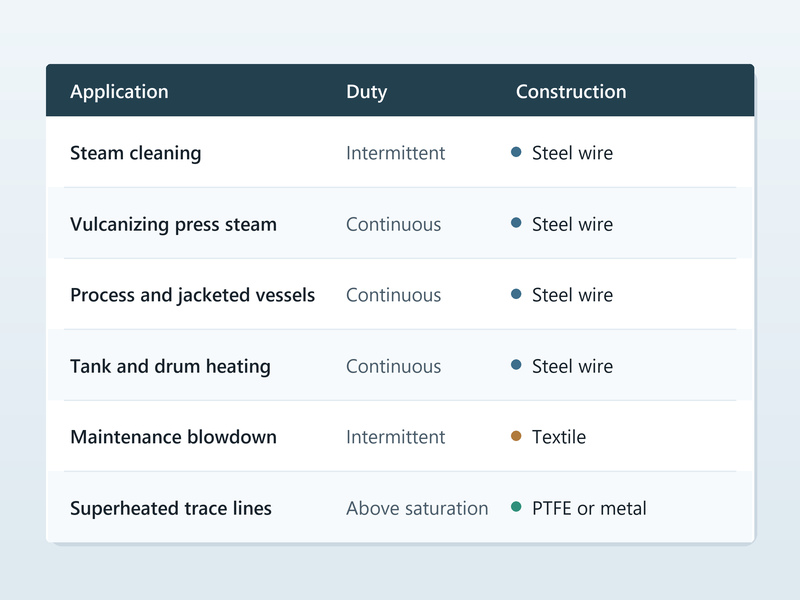
Figure 3. Application chart matching construction and grade to cleaning, vulcanizing and process steam duties.
The Five Selection Mistakes That Retire a Steam Hose Early
Most early failures trace back to a decision, not a defect. Knowing how to choose a steam hose well means avoiding these five recurring mistakes. In practice, steam hose safety begins with the grade you selected before the hose was ever ordered.
- Rated to the average, not the worst condition — Sizing to normal duty leaves the hose running hot most of its life.
- A bore borrowed from stock — Choosing the bore that is already on the shelf ignores steam velocity and pressure drop.
- Bend radius read across grades — Copying a bend radius from the 170 °C sheet onto a 230 °C hose kinks the hose at the fitting.
- A quick-release coupling — Quick-release couplings are forbidden on steam; the joint must allow clamping force to be adjusted.
- A cover treated as smooth — A pin-pricked cover is a requirement, not a defect, because it vents gas trapped between layers.
Each of the five mistakes looks minor on a quote and expensive in service. Steam hose length, for instance, is often cut to the shortest possible run, which removes the slack a hot hose needs to expand. The result is a pull at the coupling and a leak that appears within weeks.
What to Send a Steam Hose Supplier for an Accurate Quote
A steam hose supplier can only quote accurately against facts, so send the facts in one message. Include the working pressure, the steam temperature, the bore, and the end connection you need. Add the steam hose length, the minimum bend radius of the route, and whether the duty is continuous or intermittent. Name the steam hose application so the supplier can match construction to duty.
If the steam is at 17 bar, state that, because the temperature is then near 207 °C and the grade choice is fixed. A supplier who cannot ask for these details is guessing, and a guess shows up as an early failure. A clear request also proves that you already know how to choose a steam hose.
Copy this list into your request:
- Duty: continuous or intermittent steam, with the line gauge pressure
- Temperature: the steam temperature at that pressure
- Bore and length: nominal bore plus the measured route length
- Route and end: the tightest bend, plus the connection type and thread
Send the same list to two or three suppliers and compare like for like. The price and minimum order page explains how to line up quotes so that a lower price does not quietly mean a thinner cover or a shorter length. Ask for the marking line, the proof-test pressure and the grade in writing.
A legitimate steam hose supplier will quote against your numbers and flag any duty the range cannot meet. Browse the full steam hose range to see the sizes and ends available before you write the request.
Steam Hose Safety Rules That Decide the Specification
Steam hose safety is not a separate checklist; it shapes the specification from the start. Warm a cold hose for 2 to 3 minutes before full pressure, because a sudden shock can blister a cold cover. Open the drain valves first so condensate clears the line, and never send steam into a cold, undrained hose.
Keep the hose clear of sharp edges and hot surfaces, and support it so the weight does not hang on the coupling. Steam service requires an end that allows clamping force to be adjusted as the hose seats, and quick-release couplings stay outside steam service.
One boundary is absolute. When a steam hose shows a blister, a soft spot, a leak at the coupling, a kinked section, or a cover cut down to the reinforcement, retire it. The rule is replace, never repair. A patched steam hose has no verified rating, and steam will find the repair. Steam hose safety also depends on a pin-pricked cover that stays clear. Keep the perforations open: paint, tape and sleeves stop the cover venting.
Keep one end of a hot hose open to the air; a hose capped at both ends can pull a vacuum and lift the lining.
Steam Hose FAQs
How do I decide between Type 1 and Type 2 steam hose?
Check the steam pressure first. Type 1 uses textile reinforcement and is capped at 6 bar and 164 °C, so it suits low-pressure, short duties. Type 2 uses steel wire reinforcement and reaches 18 bar and 210 °C, which covers most continuous plant steam. If pressure climbs past 6 bar, the choice is already made. Confirm the temperature against the saturation curve before you buy.
Which temperature grade do I need for 17 bar saturated steam?
You need the 230 °C grade. Steam at 17 bar saturates near 207 °C, which sits above the 170 °C grade’s continuous limit, so the 170 °C grade cannot be used for steam at 17 bar. It is a hard boundary, not a preference. If your duty is near that pressure, confirm the exact steam temperature and specify the higher grade.
Why is the steam hose working pressure so much lower than the burst pressure?
Working pressure is the highest continuous pressure for normal life, while burst pressure is the single point of failure. Steam uses a 10:1 ratio, so a hose rated 250 psi (17 bar) bursts near 2,500 psi. That large gap exists because steam carries stored energy and a failure is dangerous. Never treat burst pressure as an operating target.
Does steam hose length affect performance?
Yes, and more than most buyers expect. Length sets pressure drop and the slack available for thermal expansion. A hose cut too short pulls on the coupling when hot, while one that is too long can kink or drag. Measure the true route, allow for movement, and respect the minimum bend radius for the grade you selected.
Can I use a quick-release coupling on a steam hose assembly?
No. The standard requires an end connection that allows clamping force to be adjusted, and it forbids quick-release couplings on steam service. A bolted safety clamp meets the requirement. A finished steam hose assembly should state its clamp type and rated pressure. If a supplier offers a push-fit coupling for steam, treat that as a warning sign.
How do I know when to replace a steam hose rather than repair it?
Replace it, never repair it, as soon as you see a blister, a soft or swollen section, a coupling leak, or a cover cut to the reinforcement. A repair leaves the hose without a verified rating. Continuous steam service typically gives 2 to 4 years, and intermittent use 5 to 7 years, but visible damage always overrides age.
What steam hose application suits a textile Type 1 build?
Type 1 fits low-pressure, intermittent work such as maintenance blowdown or short cleaning bursts where pressure stays under 6 bar. It is lighter and easier to handle. It is the wrong choice for continuous process steam or anything above 6 bar, where the steel-wire Type 2 build belongs.
How should I compare quotes from more than one steam hose supplier?
Compare against a fixed list: bore, working pressure, temperature grade, construction, cover, end connection and length. Ask each steam hose supplier to state the proof-test pressure and the grade in the marking line. Then compare like for like. A lower number only means something if everything above it matches.
Steam Hose Manufactured to Your Specification
HENGHUA manufactures reinforced industrial hose and complete hose assemblies for plants, distributors and OEM brands. Our EPDM steam hose range covers 3/8 inch to 4 inch bore, rated 250 psi (17 bar) working pressure with a 10:1 burst safety factor.
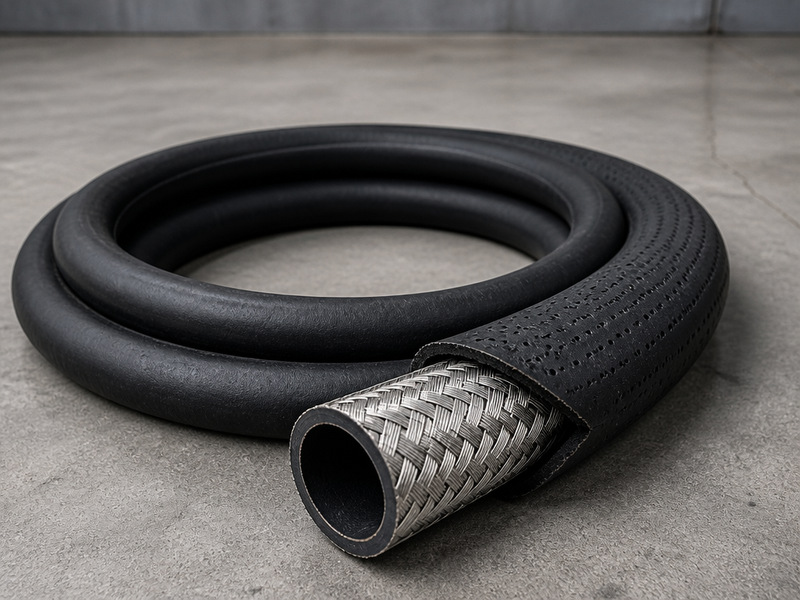
The construction is a smooth steam-resistant EPDM tube, one or two layers of high-tensile steel wire braid, and a pin-pricked cover that vents permeating gas instead of blistering. Every length is proof-tested at 1.5 times working pressure before it leaves the plant, and each batch is date-coded. Because compounding, extrusion, braiding, vulcanization and crimping all happen in one plant, bulk lead times stay short. Send us the working pressure, the steam temperature, the bore and the end connection, and we will quote against them.
We supply cut lengths, crimped ends, protective sleeves, colour coding and OEM branding. Get a quote and free samples
Final Verdict: Choose for the Worst Condition, Not the Average
The right method for how to choose a steam hose is to design for the worst condition the hose will meet, not the average one. Read the steam condition, set the pressure with a 10:1 margin, size the bore to the load, plan the length and route around the grade-specific bend radius, and specify an end that allows clamping force to be adjusted.
Then confirm the grade against the saturation curve, where 17 bar sits near 207 °C and rules out the 170 °C grade. Choose for the worst case, verify the marking line, and replace rather than repair. Send us your working pressure, steam temperature, bore and end connection, and we will quote a steam hose built to those numbers.
Written by the HENGHUA engineering team, with input from plant maintenance and steam-system reliability teams across North America, Europe and South East Asia. HENGHUA manufactures reinforced industrial hose and hose assemblies, including an EPDM steam hose range from 3/8 inch to 4 inch bore. Those assemblies are rated 250 psi (17 bar) working pressure with a 10:1 burst safety factor, and are supplied as cut lengths or as fully crimped assemblies. Fittings, protective sleeves, colours and OEM branding are available on request.

 English
  Spanish
  Portuguese
  French
  German
  Arabic
  Russian
  Indonesian
  Japanese
  Korean